- Product Description Description
- Table of Contents TOC
- List of Table & Figure LOT
- Get Free Sample PDF Sample PDF
Market Size, 2025
$6.30 BnMarket Estimate, 2026
$7.22 BnMarket Forecast, 2034
$21.50 BnCAGR, 2026–2034
14.61%Global Genome Engineering Market Size
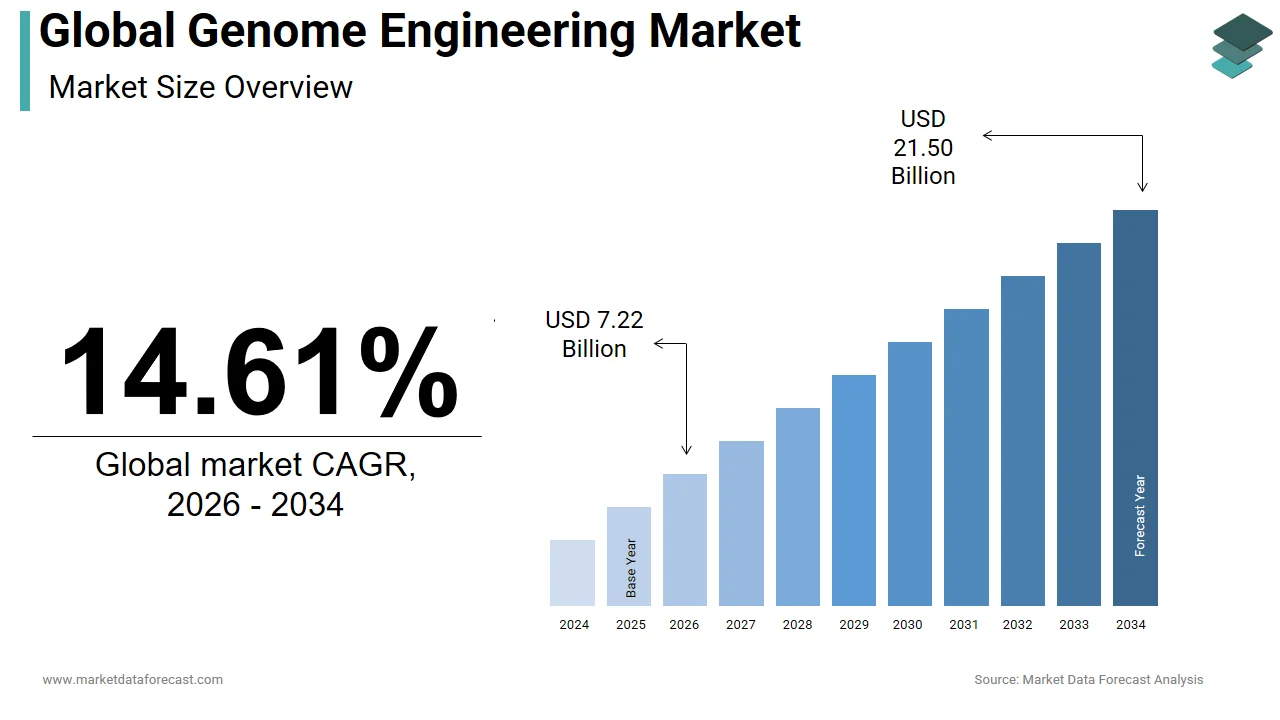
The size of the global genome engineering market was worth USD 6.30 billion in 2025. The global market is anticipated to grow at a CAGR of 14.61% from 2026 to 2034 and be worth USD 21.50 billion by 2034 from USD 7.22 billion in 2026.
Genome engineering is a compilation of technologies that enable the alteration of DNA. These methodologies are developed to help researchers add, remove, replicate, and alter DNA in multiple applications for various purposes. For instance, the genome editing process can be used in somatic and germline cells to perform research and development activities. In addition, these procedures aim to provide faster and more accurate diagnostic procedures, initiate personalized treatments, and find cures for genetic disorders. CRISPR-Cas9 is the most recognized and widely used genome engineering tool in the current industry due to its efficiency, speed, affordability, and extensive range of applications.
MARKET DRIVERS
The multiple applications and advantages of genome engineering are driving market growth.
Genome engineering is used to study gene functions, targets for novel drugs, visualize proteins, etc., which gives it the ability to have applications in medicine, agricultural studies, biomaterials, and even environmental studies. Genome engineering is continuously applied in drug discovery, therapeutics for diseases like sickle-cell anemia, better diagnostic procedures through biosciences, create models for diseases to study their physiology adequately, and in recent times there have been genome-engineered cattle and plants supporting the growth of the market due to vivid applications.
The growing need for a solution for the current-day prevalence of various diseases is propelling the global genome engineering market growth.
In addition, scientists from the Francis Crick Institute have discovered rules to determine the precision of CRISPR/Cas9 genome editing in human cells. These rules are expected to help improve the safety and efficiency of genome engineering in both clinics and labs. The growth of the global genome engineering market is further driven by the ease of using CRISPR technology for genome study and modifications, especially for cell line engineering applications. Also, the need for action against common cancers and infectious diseases is another primary driver of global market growth.
MARKET RESTRAINTS
However, there is a lack of R&D centers across the globe as they are required to pull the growth of the global market in the mentioned forecast period. Also, the global concentration of the genome engineering market in regions such as North America and Europe reduces the chances of global market expansion into areas such as Africa and the Middle East.
REPORT COVERAGE
| REPORT METRIC | DETAILS |
| Market Size Available | 2025 to 2034 |
| Base Year | 2025 |
| Forecast Period | 2026 to 2034 |
| Segments Covered | By Technology, Application, End-User, and Region. |
| Various Analyses Covered | Global, Regional, and Country-Level Analysis, Segment-Level Analysis, Drivers, Restraints, Opportunities, Challenges; PESTLE Analysis; Porter’s Five Forces Analysis, Competitive Landscape, Analyst Overview of Investment Opportunities |
| Regions Covered | North America, Europe, Asia Pacific, Latin America, Middle East & Africa |
| Market Leaders Profiled | Transposagen Biopharmaceuticals, Thermo Fisher Scientific, Editas Medicine, Inc., Merck, Lonza Group, OriGene Technologies, Horizon Discovery Group, Intellia Therapeutics, Inc., GenScript, Sangamo BioSciences, Cellectis S.A., Integrated DNA Technologies, Bluebird Bio, Inc., New England Biolabs, Sigma-Aldrich Corporation, CRISPR Therapeutics, and Others. |
SEGMENTAL ANALYSIS
By Technology Insights
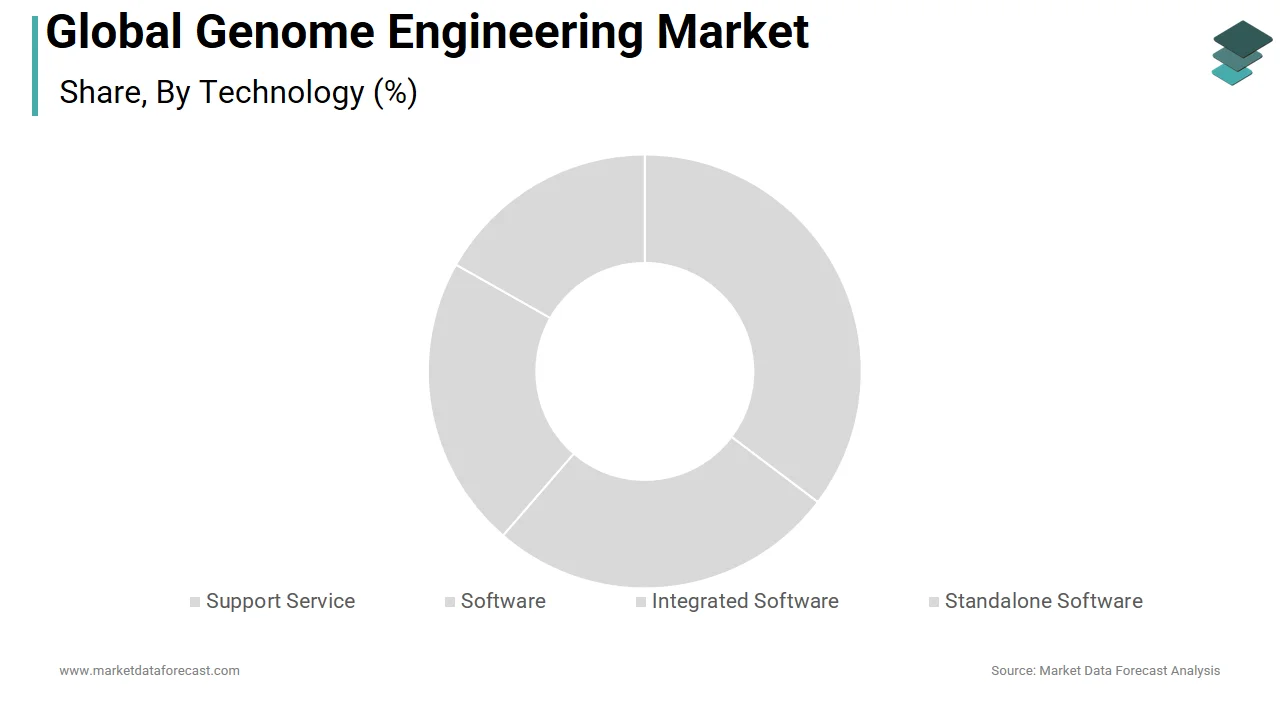
Among the mentioned technologies, the CRISPR segment is anticipated to account for the largest share of the global market for genome editing during the forecast period. The exceptional growth is attributed to the convenient usage of this technology and its multiple capabilities. CRISPR cas9 has a wide range of applications in biologics. It has also been used in the research and development of various kinds, like eliminating viral infections and biotechnological and agricultural applications.
By Application Insights
Of the mentioned applications, the cell line engineering segment is projected to have the largest share in the forecast period and the fastest growth rate among others. The growth is because industries focus on stem cell research, which has shown decent results recently.
However, the plant and animal genetic engineering segments are also expected to grow over the forecast period due to the growing applications of gene editing in agriculture for better crop production with better resistance from infestation and healthier produce, and drug discovery in the veterinary sector.
By End-User Insights
The pharmaceutical and biotechnology companies segment is expected to have the highest growth rate in the forecast, as mentioned earlier, due to the increase in the prevalent infectious diseases and cancer, which drive the research to prevent and cure these diseases worldwide.
The academics and research institutes are also expected to have sizable growth during the forecast period due to growing investments in R&D activities relating to biotechnological companies and biologics in the genome engineering field.
REGIONAL ANALYSIS
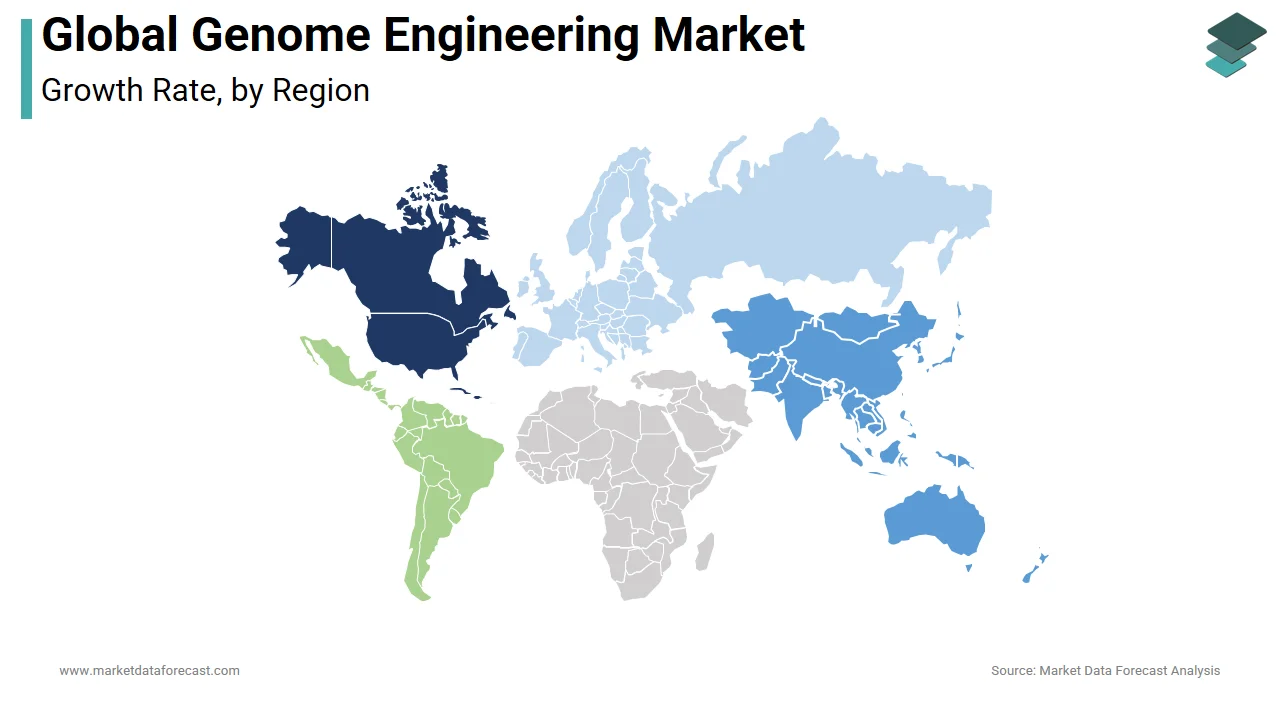
The North American region leads the global market by value and volume as of 2023. The domination of the North American region is anticipated to continue throughout the forecast period. The presence of key market participants in the North American region is one of the major factors supporting the market growth in this region. In addition, countries such as the United States and Canada play a vital role in the success of the North American region.
Europe is expected to account for the second-largest global market share during the forecast period. The presence of a considerable customer base in and around this region is helping in the growth of the genome engineering market in Europe, significantly supporting the market growth in this region. Also, the technological supremacy of Europe and North America over the rest of the world is the necessary condition that facilitates them to develop in this emerging field, creating an eye-catching performance in the global market.
The Asia-Pacific region is predicted to be the fastest-growing regional market in the global market during the forecast period. The presence of emerging economies and the advantages associated with the Asia-Pacific region, such as ease of setup, cheap resources, and the availability of a skillful workforce, are a few factors accelerating the market growth in the Asia-Pacific region. However, the lack of healthcare-related advancements and research initiatives in the Asia-Pacific region is anticipated to limit the market growth in this region.
On the other hand, the Middle East & Africa, and Latin America regions, being in the low developing countries due to the contribution of low GDP countries, have fewer opportunities for market growth. Hence, the Genome Engineering Market grows slowly in these regions.
KEY MARKET PLAYERS
Some of the companies that are playing a dominating role in the global genome engineering market include
- Transposagen Biopharmaceuticals
- Thermo Fisher Scientific
- Editas Medicine, Inc.
- Merck
- Lonza Group
- OriGene Technologies
- Horizon Discovery Group
- Intellia Therapeutics, Inc.
- GenScript
- Sangamo BioSciences
- Cellectis S.A.
- Integrated DNA Technologies
- Bluebird Bio, Inc.
- New England Biolabs
- Sigma-Aldrich Corporation
- CRISPR Therapeutics
GLOBAL GENOME ENGINEERING MARKET NEWS
- In December 2022, Tessera made significant investments in high-throughput DNA and RNA production to conduct extensive high-throughput screening. According to Rubens, Tessera routinely creates thousands of DNA plasmids each month, often converted into hundreds of different RNAs. Then, utilizing automated cell-handling equipment for transfections and cell passages, these RNAs are introduced into the cells.
- In December 2022, the largest genetic research organization in the world, BGI Group of China, is being investigated in Europe and is subject to U.S. sanctions because of alleged ties to the Chinese military. But in Serbia, the company has been welcomed with open arms.
- In December 2022, an underwritten offering and a private placement, with total gross proceeds of around $115.8 million, have been priced, according to Vor Bio (Nasdaq VOR), a clinical-stage cell and genome engineering firm.
- In December 2022, Primera Therapeutics, the first company to emerge from Mayflower BioVentures' cell and gene therapy (CGT) accelerator program, announced it had collaborated with Cellectis on the development of gene editing techniques for mutations in mitochondrial DNA (mtDNA) as potential in vivo therapies to treat mitochondrial disease.
MARKET SEGMENTATION
This research report on the global genome engineering market has been segmented & sub-segmented based on technology, application, end-user and region.
By Technology
- ZFN
- CRISPR
- Antisense
- TALEN
- Others
By Application
- Cell Line Engineering
- Animal Genetic Engineering
- Plant Genetic Engineering
- Others
By End User
- Biotechnology & Pharmaceutical Companies
- Contract Research Organizations
- Academic & Research Institutes
By Region
- North America
- Europe
- Asia Pacific
- Latin America
- Middle East and Africa