- Product Description Description
- Table of Contents TOC
- List of Table & Figure LOT
- Get Free Sample PDF Sample PDF
Market Size, 2025
$0.83 BnMarket Estimate, 2026
$0.86 BnMarket Forecast, 2034
$1.14 BnCAGR, 2026–2034
3.53%Executive Summary: Cereal Ingredients Market
- Market Scope: Comprehensive global cereal ingredients industry analysis covering grain types (wheat, oats), application categories (cold and hot breakfast cereals), regional leadership frameworks, strategic corporate developments, and competitive landscapes.
- Market Valuation: Valued at USD 838.48 million (2025), estimated at USD 868.08 million (2026), and projected to reach USD 1.14 billion by 2034, registering a steady CAGR of 3.53% (2026–2034).
- Primary Growth Drivers: Clean label and whole grain preferences, plant-based diet adoption for functional proteins/fibers, hot breakfast cereal premiumization (ancient grains), fortified micronutrient demands, milling tech innovations, and regenerative agriculture sourcing. Restraints include raw material price volatility and strict food safety regulations.
Key Market Segment Metrics (2026–2034)
| Category | Leading Segment / Region (Position) | Fastest-Growing Segment |
|---|---|---|
| By Grain Type & Application | Wheat segment (accounted for 34.2% share in 2025 via baking versatility) & Cold breakfast cereal (dominant at 48.1% share) | Oats (highest CAGR of 6.8% via beta-glucan health benefits) & Hot breakfast cereal (CAGR of 11.2% via premiumization) |
| By Functional Ingredient | Whole grain flours, cereal-derived proteins, and fortified micronutrient premixes | Prebiotic dietary fibers and ancient grain derivatives (quinoa, spelt) |
| By Region | North America (led regionally, capturing 34.6% of global share in 2025 via advanced infrastructure) | Asia-Pacific (fastest-growing region driven by rapid urbanization and diversified grain consumption in China/India) |
Major Market Players & Market Structure
Market Structure: Highly competitive global food ingredient and grain processing ecosystem characterized by sustainable farming initiatives (regenerative agriculture networks), data-driven logistics optimization, and heavy R&D investments in functional prebiotic and plant protein profiles.
Key Companies: Kerry Group, Ricebran Technologies, Associated British Food Plc, Archer Daniels Midland Company, Bunge Limited, SunOpta Inc, Cargill Inc, Cereal Ingredients Inc, Kellogg Company, and Nestle S.A.
Global Cereal Ingredients Market Size
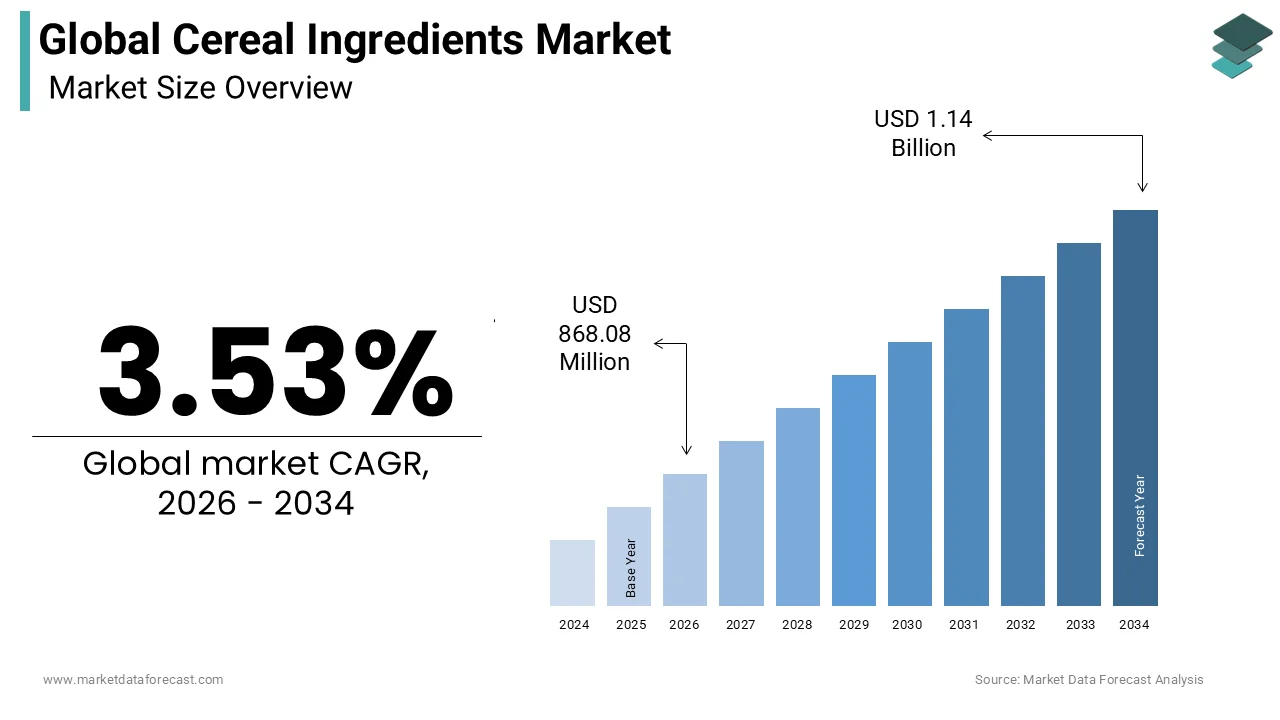
The size of the global cereal ingredients market was expected to be worth USD 838.48 million in 2025 and is anticipated to be worth USD 1.14 billion by 2034, from USD 868.08 million in 2026, growing at a CAGR of 3.53% during the forecast period.
The cereal ingredients are raw materials and processed components derived from grains such as wheat, rice, oats, barley, and corn that serve as foundational elements in food manufacturing. These ingredients include flours, starches, fibers, proteins, and functional additives that enhance texture, nutritional profile, and shelf life of finished products. The global consumption of cereals remains robust, with the Food and Agriculture Organization stating that world cereal production reached 2780 million tonnes in 2023, reflecting the enduring centrality of grains in human diets. Consumer preferences are shifting toward clean label products, which has prompted manufacturers to reformulate using whole grain ingredients and natural fortifiers. As per the United States Department of Agriculture, approximately 45% of American consumers actively seek products with whole grain content on their labels, indicating a strong demand for transparent and nutritious formulations. The European Union reported that per capita cereal consumption stands at 150 kilograms annually, demonstrating steady integration of grain-based foods in daily nutrition. Regulatory bodies worldwide continue to emphasize dietary guidelines that recommend increased intake of complex carbohydrates and fiber-rich foods, further solidifying the role of cereal ingredients in public health strategies.
MARKET DRIVERS
Rising Consumer Preference for Clean Label and Whole Grain Products Drives Formulation Innovation
The escalating demand for clean label and whole grain products is accelerating the growth of the cereal ingredients market. Modern consumers exhibit heightened awareness regarding food composition and actively avoid artificial additives, preservatives, and refined carbohydrates. This shift compels food manufacturers to replace synthetic enhancers with natural cereal-derived alternatives such as oat fiber, rice starch, and ancient grain flours. Manufacturers respond by incorporating ingredients like quinoa, amaranth, and spelt, which offer superior nutritional profiles including higher protein and fiber content. Ingredient suppliers invest in milling technologies that preserve bran and germ components, ensuring maximum nutrient retention. Retailers expand dedicated sections for whole grain cereals, breads and snacks reflecting sustained consumer interest. The emergence of health consciousness and transparency expectations creates persistent demand for high-quality cereal ingredients that meet stringent clean label standards.
Expansion of Plant-Based Diets Accelerates Adoption of Cereal-Derived Proteins and Fibers
The global surge in plant-based dietary patterns significantly amplifies demand for cereal ingredients, particularly those offering functional protein and fiber benefits. The expansion of plant-based diets is additionally amplifying the growth of the cereal ingredients market. Consumers increasingly replace animal-derived products with plant-based alternatives driven by ethical, environmental, and health considerations. Cereal grains such as peas, oats, and rice serve as crucial sources of plant protein and texturizing agents in meat analogues, dairy substitutes, and ready-to-eat meals. Consumers actively incorporate more plant-based foods into their weekly diets, creating sustained volume requirements for cereal processors. Ingredients like pea protein isolate and oat beta-glucan gain prominence due to their allergen-friendly profiles and functional properties, including water binding and emulsification capabilities. Manufacturers leverage cereal ingredients to improve mouthfeel and nutritional density of vegan products, addressing previous criticisms regarding taste and texture.
MARKET RESTRAINTS
Volatility in Raw Material Prices Disrupts Cost Stability and Supply Chain Planning
The fluctuating prices of key cereal crops for ingredient manufacturers and downstream food producers are restricting the growth of the cereal ingredients market. Weather anomalies, geopolitical tensions, and energy cost variations directly impact harvest yields and transportation expenses, creating unpredictable pricing environments. These supply constraints force ingredient suppliers to absorb margin compression or pass costs to customers, risking demand erosion. Small andmedium-sizedd manufacturers face disproportionate pressure, lacking hedging instruments available to larger corporations. Supply chain disruptions from port congestion and logistics disruptions further delay deliveries, increasing inventory holding costs. Manufacturers struggle to maintain consistent product quality when forced to switch suppliers due to price disparities. This instability discourages long-term contracts and promotes spot buying, which undermines strategic planning. The cumulative effect restricts investment in innovation and capacity expansion as companies prioritize short-term financial survival over growth initiatives.
Stringent Regulatory Compliance Requirements Increase Operational Complexity and Costs
The complex and evolving regulatory frameworks impose significant burdens on cereal ingredient producers, particularly regarding safety labeling and sustainability standards is additionally impeding the growth of the cereal ingredients market. Stringent regulations worldwide implement stricter controls on pesticide residues, heavy metal limits, and allergen management, requiring extensive testing and documentation. Compliance costs escalate as laboratories charge premium fees for accredited testing services, with single-batch analysis exceeding 500 dollars for comprehensive panels. Labeling regulations demand precise declaration of gluten content, organic certification, and country of origin, creating administrative overhead. The Codex Alimentarius establishes international standards that vary by region, forcing exporters to maintain multiple compliance protocols simultaneously. Sustainability mandates add another layer of complexity, with the European Union Deforestation Regulation requiring proof that soy and palm derivatives used in cereal blends do not contribute to forest loss. Traceability systems must track ingredients from farm to factory, demanding digital infrastructure investments. Non-compliance risks product recalls, brand damage, and legal penalties, with average recall costs reaching 10 million dollars per incident according to industry estimates. These regulatory pressures disproportionately affect emerging market suppliers, limiting their access to premium export destinations.
MARKET OPPORTUNITIES
Development of Functional and Fortified Cereal Ingredients Addresses Micronutrient Deficiencies
The opportunity to develop specialized functional cereal ingredients targeting specific health concerns presents substantial growth potential, particularly in regions facing widespread micronutrient deficiencies. The development of functional and fortified cereal ingredients that address micronutrient deficiencies are soelly promoting new opportunities for the growth of the cereal ingredients market. Cereal processors can capitalize on this need by engineering ingredients enriched with bioavailable nutrients through microencapsulation and extrusion technologies. Manufacturers collaborate with health agencies to create premixes that integrate seamlessly into staple foods without altering taste or texture. Emerging countries in Africa and Southeast Asia offer expansive opportunities, where government procurement programs prioritize fortified staples for school feeding and social welfare initiatives. Private sector participation increases as companies recognize brand enhancement potential through nutritional leadership. Innovation extends to prebiotic fibers derived from barley and oats, which support gut health, a growing consumer priority. These value-added ingredients command premium pricing, while delivering measurable public health benefits, creating win-win scenarios for manufacturers, regulators, and consumers.
Integration of Ancient and Alternative Grains Diversifies Product Portfolios and Appeals to Niche Markets
Incorporating ancient and alternative grains into mainstream cereal ingredient offerings enables manufacturers to differentiate products and capture discerning consumer segments willing to pay premiums for unique nutritional and sensory experiences. The integration of ancient and alternative grains diversifies product portfolio is also poses certain opportunities for the growth of the cereal ingredients market. Grains such as teff, sorghum, millet, and fonio possess distinct flavor profiles and superior nutrient densities compared to conventional wheat and rice. Ingredient suppliers develop standardized milling processes for these crops, ensuring consistent particle size and functionality for industrial applications. Bakery and snack manufacturers utilize ancient grain flours to create artisanal products with authentic storytelling appeal. The rise of gluten-free diets further boosts demand for naturally gluten-free alternatives like buckwheat and amaranth, which the Celiac Disease Foundation estimates benefit 1% of the global population. Retailers expand specialty aisles dedicated to heritage grains reflecting consumer curiosity and culinary experimentation. Export opportunities emerge as developed countries import unique varieties from producing regions in Africa and South America, fostering economic development.
MARKET CHALLENGES
Climate Change-Induced Crop Instability Threatens Long-Term Supply Security
Climate change poses an existential threat to the consistent availability of high-quality cereal crops required for ingredient production, which is a major challenge for the growth of the cereal ingredient market. Rising global temperatures, altered precipitation patterns, and increased frequency of extreme weather events disrupt traditional growing cycles and reduce yield reliability. Water scarcity affects 40% of global agricultural land according to the United Nations Water report, limiting irrigation capabilities for water-intensive crops like rice. Pests and diseases migrate to new latitudes as warming trends expand their habitable zones, causing unexpected crop losses. Ingredient manufacturers face difficulties in securinglong-termm contracts with farmers who cannot guarantee output volumes. Genetic modification offers potential solutions but faces consumer resistance and regulatory hurdles in many areas. Supply chain resilience requires geographic diversification, which increases logistical complexity and carbon footprint. Companies must invest in climate-smart agriculture technologies and drought-resistant seed varieties to mitigate risks.
Technological Gaps in Processing Efficiency Limit Value Addition Capabilities
Many cereal ingredient processors, particularly in developing economies, lack access to advanced processing technologies required to maximize value addition and meet international quality standards. Traditional milling and extraction methods often result in significant nutrient loss and inconsistent particle sizes that limit application versatility. This inefficiency reduces the volume of usable ingredients and increases waste disposal costs. Advanced technologies such as extrusion, cooking, spray drying, and enzymatic hydrolysis require substantial capital investment and technical expertise that small-scale operators cannot afford. The absence of automation leads to higher labor costs and greater variability in product quality, affecting buyer confidence. International buyers increasingly demand certified processes such as ISO 22000, which require digital monitoring systems and real-time data analytics. The digital divide prevents many suppliers from participating in global trade networks where traceability and transparency are mandatory. Lack of skilled personnel to operate and maintain sophisticated machinery further hinders adoption. Without technological modernization, the market remains fragmented with limited ability to innovate or respond to dynamic consumer demands for specialized functional ingredients.
REPORT COVERAGE
| REPORT METRIC | DETAILS |
| Market Size Available | 2025 to 2034 |
| Base Year | 2025 |
| Forecast Period | 2026 to 2034 |
| CAGR | 3.53% |
| Segments Covered | By Type, Application, & Region |
| Various Analyses Covered | Global, Regional and Country Level Analysis; Segment-Level Analysis; DROC; PESTLE Analysis; Porter’s Five Forces Analysis; Competitive Landscape; Analyst Overview of Investment Opportunities |
| Regions Covered | North America, Europe, APAC, Latin America, Middle East & Africa |
| Market Leaders Profiled | Kerry Group, Ricebran Technologies, Associated British Food Plc, Archer Daniels Midland Company, Bunge Limited, SunOpta Inc, Cargill Inc, Cereal Ingredients Inc, Kellogg Company, Nestle S.A and Others. |
SEGMENTAL ANALYSIS
By Type Insights
The wheat segment was the largest by accounting for 34.2% of the cereal ingredients market share in 2025 due to its unparalleled versatility in food applications and massive global production volume. The unique protein structure of wheat known as gluten provides essential elasticity and structure in baked goods, making it indispensable for bread, pasta, and noodles. This abundance ensures consistent supply and competitive pricing, which appeals to large-scale food manufacturers seeking cost-effective raw materials. Industrial milling infrastructure is highly developed in major producing regions such as North America, Europe and Asia,
enabling efficient processing into various forms including whole wheat flour, refined flour, and semolina. Furthermore, wheat bran and germ are valuable sources of dietary fiber and vitamins B and E, which align with growing consumer demand for fortified ingredients. Manufacturers leverage wheat derivatives to enhance texture and nutritional profiles in snacks, cereals, and ready meals. The extensive research and development support from agricultural institutions continues to improve yield resilience and quality, ensuring wheat remains the dominant choice for ingredient suppliers seeking reliability and broad market acceptance.
The oat segment is projected to register the highest compound annual growth rate of 6.8% during the forecast period, driven by increasing recognition of its superior health benefits and functional properties. Oats are rich in beta-glucan, a soluble fiber proven to lower cholesterol levels and improve heart health, which has attracted significant attention from health-conscious consumers and regulatory bodies. According to the study, regular consumption of oats can reduce low-density lipoprotein cholesterol by 5 to 10%, providing a measurable health advantage over other grains. The rising prevalence of lifestyle diseases such as diabetes and obesity further accelerates demand for low glycemic index ingredients like oats, which help regulate blood sugar levels. Its mild flavor and creamy texture make it ideal for beverages, yogurts, and infant foods. Agricultural advancements have improved oat yields in regions like Canada and Scandinavia, ensuring stable supply chains.
By Application Insights
The cold breakfast cereal segment was the largest, accounting for 48.1% of the cereal ingredients market, with the modern consumer preference for convenience, speed, and minimal preparation time. In fast-paced urban environments, where morning routines are compressed, cold cereals offer an immediate nutritious solution without requiring cooking or heating. This segment benefits from extensive variety in flavors, shapes, and fortification options, allowing manufacturers to target specific demographic groups, including children, athletes, and seniors. Marketing campaigns emphasizing whole grain content and added vitamins reinforce the perception of cold cereal as a healthy start to the day. Retailers dedicate substantial shelf space to cold cereals, often placing them at eye level to maximize visibility and impulse purchases. The introduction of premium and organic variants has expanded the customer base beyond traditional buyers to include health-focused adults willing to pay higher prices for clean-label products. Furthermore, cold cereals serve as versatile ingredients in snacking applications such as granola bars and trail mixes, extending their utility beyond breakfast.
The hot breakfast cereal segment is attributed to register the fastest CAGR of 11.2% during the forecast period with the premiumization trend and the enduring appeal of comfort foods that provide warmth and satiation. Consumers increasingly view hot cereals such as oatmeal porridge and multigrain blends as wholesome artisanal options that offer superior texture and flavor compared to processed cold alternatives. The rise of ancient grains like quinoa, buckwheat, and spelt in hot cereal formulations attracts discerning buyers seeking unique nutritional profiles and culinary experiences. Instant hot cereal packets have improved significantly in quality, offering restaurant-style taste with minimal preparation time, which addresses previous convenience barriers. Healthcare professionals often recommend hot cereals for individuals with digestive issues due to their soft texture and high fiber content, which aids gut health. Social media influence also plays a role as visually appealing bowls of hot cereal topped with fruits, nuts, andseeds, gain popularity on platforms like Instagram.
REGIONAL ANALYSIS
North America Cereal Ingredients Market Analysis
North America was the top performer of the global cereal ingredients market by capturing 34.6% of the share in 2025, with the high per capita consumption and continuous product innovation. The region benefits from established agricultural infrastructure and advanced processing technologies that ensure high-quality ingredient supply. Consumer demand in North America is heavily influenced by health trends, with a strong preference for whole grain, organic, and non-GMO certified products. The presence of key industry players such as General Mills and Kellogg fosters a competitive environment that accelerates innovation in functional ingredients like prebiotic fibers and plant proteins. Canada contributes significantly to the global oat supply, exporting over 3 million tonnes annually, which supports the growing plant-based dairy sector. Regulatory frameworks in the region emphasize transparency and safety, encouraging manufacturers to adopt clean-label practices. The high disposable income of consumers allows for premium product adoption, sustaining market value growth. Additionally, the widespread prevalence of lifestyle diseases has increased demand for fortified cereals that address specific health concerns such as heart health and diabetes management.
Europe Cereal Ingredients Market Analysis
Europe cereal ingredients market was ranked second, holding 21.6% of the share in 2025, where sustainability and traditional dietary patterns shape demand dynamics. The region has a long history of cereal consumption, particularly in countries like Germany, France, and Italy, where bread, pasta, and pastries are staple foods. The European Commission reports that the average European consumes 150 kilograms of cereals per year, reflecting deep cultural integration. Recent regulatory initiatives such as the Farm to Fork Strategy emphasize sustainable agriculture and reduced pesticide use, influencing sourcing decisions for ingredient suppliers. The demand for ancient grains like rye, barley and spelt remains strong due to their perceived health benefits and local heritage. Manufacturers in Europe focus on reducing sugar and salt content in cereal products to comply with public health guidelines issued by the World Health Organization regional office. The rise of plant-based diets has boosted demand for oat and pea-based ingredients, which are widely used in meat and dairy alternatives. Supply chain transparency is critical in Europe, with consumers demanding proof of ethical sourcing and fair trade practices.
Asia Pacific Cereal Ingredients Market Analysis
Asia Pacific cereal ingredients market growth is swiftly emerging at the fastest CAGR in the coming years, with the rapid urbanization, rising disposable incomes, and changing dietary habits. The expanding middle class in countries like China, India, and Indonesia is shifting from traditional rice-based diets to diversified grain consumption, including wheat, oats, and corn. Government initiatives in countries like India promote fortified staples to combat micronutrient deficiencies, creating large-scale demand for enriched flour and rice ingredients. The Chinese market shows strong growth in ready-to-eat cereals as busy professionals seek convenient breakfast options. Local manufacturers are investing in advanced processing facilities to meet international quality standards and export requirements. The prevalence of lactose intolerance in many Asian populations drives demand for plant-based cereal ingredients used in dairy alternatives. E-commerce platforms facilitate access to premium and imported cereal ingredients, expanding consumer choices beyond local offerings. The region's large population base provides immense volume potential, while increasing health awareness drives market growth.
Latin America Cereal Ingredients Market Analysis
Latin America cereal ingredients market growth is expected to grow at the fastest CAGR in the coming years, with the abundant agricultural resources and growing export capabilities. Countries like Brazil, Argentina, and Mexico are major producers of corn, wheat, and sorghum, contributing significantly to global supply chains. The region benefits from favorable climatic conditions that allow for multiple harvest cycles, enhancing supply stability. Domestic demand is increasing as urban populations adopt more diverse diets, including processed foods and breakfast cereals. Brazil is expanding its oat production to meet rising demand for plant-based ingredients in both domestic and export areas. Economic challenges, such as currency fluctuations and inflation, pose risks but also create opportunities for local substitution of imported ingredients. Regional trade agreements facilitate the movement of cereal ingredients within South America, reducing logistical costs. Consumer awareness regarding nutrition is growing, leading to increased demand for whole grain and fortified products. Manufacturers are investing in technology to improve processing efficiency and product quality.
Middle East And Africa Cereal Ingredients Market Analysis
The Middle East and Africa cereal ingredients market growth is driven by supply constraints, yet significant opportunities in fortification and staple food enhancement. Many countries in this region rely heavily on imports for wheat and other cereals due to limited arable land and water scarcity. However, this dependency drives demand for high-quality ingredients that meet international standards. Governments in countries like Egypt and Saudi Arabia implement subsidy programs for bread and staple foods ensuring consistent demand for basic cereal ingredients. The prevalence of micronutrient deficiencies creates a strong case for fortified flour and rice, which are increasingly mandated by health authorities. The World Health Organization reports that iron deficiency affects 30% of women in the region, making fortification a public health priority. Local processing industries are developing to add value to imported raw materials, reducing reliance on finished product imports. Climate change poses significant risks to local agriculture, prompting investment in drought-resistant crop varieties. The growing youth population drives demand for convenient and affordable food options including cereals and snacks.
COMPETITION OVERVIEW
The competition in the cereal ingredients market is characterized by the presence of large multinational corporations alongside numerous regional and local players who compete on price, quality, and innovation. Major companies leverage their scale and global supply networks to offer consistent product availability and competitive pricing while smaller firms differentiate themselves through niche offerings such as ancient grains and organic certifications. Innovation serves as a key differentiator, with companies investing in research to develop ingredients with improved nutritional profiles and functional properties such as higher fiber content and better texture. Regulatory compliance and sustainability credentials increasingly influence buyer decisions, forcing competitors to adopt transparent sourcing practices and eco-friendly processing methods. Price volatility of raw materials creates pressure on margins, prompting firms to optimize operational efficiency and hedge against risks. Customer loyalty is driven by reliability, technical support, and the ability to provide customized solutions for specific applications.
KEY MARKET PLAYERS
A few major key players in the global cereal ingredients market include
- Kerry Group
- Ricebran Technologies
- Associated British Food Plc
- Archer Daniels Midland Company
- Bunge Limited
- SunOpta Inc
- Cargill Inc
- Cereal Ingredients Inc
- Kellogg Company
- Nestle S.A
- Others
Top Strategies Used by the Key Market Participants
Key players in the cereal ingredients market primarily focus on strategic acquisitions and partnerships to expand their product portfolios and geographic reach. Companies invest heavily in research and development to innovate functional ingredients such as plant-based proteins and prebiotic fibers that align with health trends. Sustainability initiatives form a core strategy where firms adopt regenerative agriculture and reduce carbon footprints to appeal to environmentally conscious consumers. Vertical integration is another common approach, allowing companies to control supply chains from farm to factory ensuring quality and cost efficiency. Manufacturers also prioritize digital transformation by implementing advanced analytics and automation to enhance operational efficiency and traceability. Collaborations with health organizations and regulatory bodies help in creating fortified ingredients that address public health needs.
Leading Players in the Market
- Cargill Incorporated stands as a global leader in agricultural processing and ingredient supply with extensive operations in cereal sourcing and milling. The company leverages its vast network of farmers and processors to deliver high-quality wheat, corn, and oat ingredients to food manufacturers worldwide. Cargill focuses on sustainability initiatives such as regenerative agriculture practices that enhance soil health and crop resilience. Recent actions include expanding its specialty grain facilities in North America to produce value-added ingredients like ancient grain flours and protein concentrates. The company invests heavily in research and development to create functional ingredients that meet clean label demands. Cargill collaborates with food brands to develop customized solutions for baked goods and plant-based products. Its commitment to traceability and transparency strengthens trust among consumers and regulatory bodies.
- Archer Daniels Midland Company operates as a major processor of oilseeds, corn, wheat, and other agricultural commodities, providing essential ingredients for the food industry. The company utilizes advanced biotechnology and fermentation processes to extract proteins, fibers, and starches from cereal grains. ADM has recently expanded its portfolio of plant-based ingredients by launching new pea and oat protein isolates tailored for meat and dairy alternatives. The company emphasizes nutritional wellness by developing fortified ingredients that address micronutrient deficiencies in emerging markets. ADM invests in sustainable sourcing programs that support farmer livelihoods and environmental stewardship. Its global footprint allows for efficient distribution and risk mitigation across diverse geographic regions. The company partners with startups and research institutions to innovate in alternative proteins and functional carbohydrates.
- Bunge Global SA is a prominent agribusiness and food company that plays a critical role in the global supply chain of cereal ingredients. The company specializes in milling wheat and corn into flours, starches, and sweeteners used in various food applications. Bunge has strengthened its market position by acquiring specialized milling assets in Europe and South America to increase production capacity. The company focuses on delivering consistent quality and food safety standards to meet stringent regulatory requirements. Bunge integrates sustainability into its operations by promoting responsible farming practices and reducing water usage in processing plants. It collaborates with customers to develop innovative formulations that improve the texture and nutritional value of finished products. The company also expands its presence in the health and wellness segment by offering whole grain and fiber-rich ingredients. Bunge leverages data analytics to optimize logistics and inventory management, ensuring timely delivery to clients.
DETAILED SEGMENTATION OF THE GLOBAL CEREAL INGREDIENTS MARKET INCLUDED IN THIS REPORT
This research report on the global cereal ingredients market has been segmented and sub-segmented based on type, application, and region.
By Type
- Wheat
- Rice
- Oat
- Corn
- Barley
By Application
- Hot Breakfast Cereal
- Cold Breakfast Cereal
By Region
- North America
- Europe
- Asia-Pacific
- Latin America
- Middle East and Africa