- Product Description Description
- Table of Contents TOC
- List of Table & Figure LOT
- Get Free Sample PDF Sample PDF
Market Size, 2025
$9.61 BnMarket Estimate, 2026
$10.22 BnMarket Forecast, 2034
$16.66 BnCAGR, 2026–2034
6.3%Global Gourmet Salt Market Size, Trends, and Forecast (2025–2034)
The global gourmet salt market size was valued at USD 9.61 billion in 2025, stands at USD 10.22 billion in 2026, and is projected to reach USD 16.66 billion by 2034, expanding at a compound annual growth rate (CAGR) of 6.30% from 2026 to 2034. Market expansion is propelled by rapid urbanization in emerging economies, shifting consumer lifestyles, and an increasing preference for clean-label, artisanal, and mineral-rich ingredients.
Key Executive Metrics (At-a-Glance)
- 2025 Base Valuation: USD 9.61 Billion
- 2026 Current Valuation: USD 10.22 Billion
- 2034 Forecast Valuation: USD 16.66 Billion
- Compound Annual Growth Rate (CAGR): 6.30% (2026–2034)
- Dominant Type Segment: Himalayan Salt (38.3% share in 2025)
- Fastest-Growing Type Segment: Specialty Salt (9.7% CAGR)
- Dominant Application Segment: Bakery & Confectionery (32.1% share in 2025)
- Fastest-Growing Application Segment: Seafood Products (10.3% CAGR)
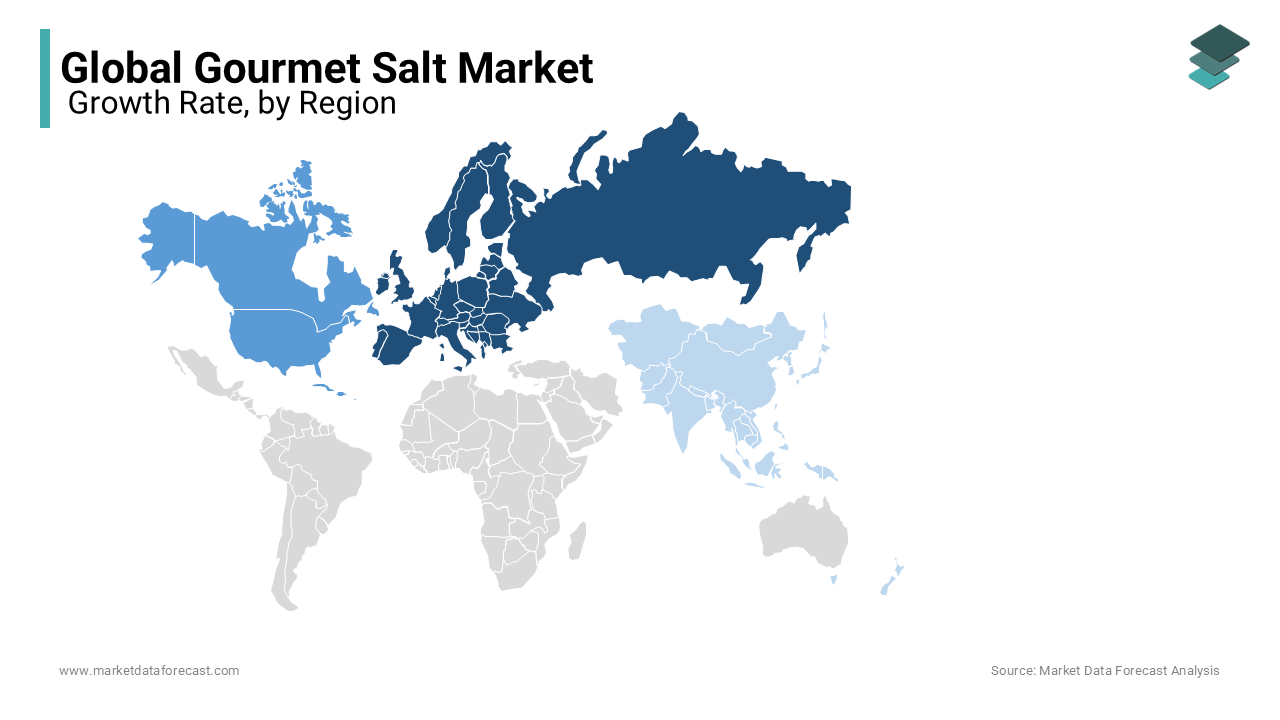
- Leading Regional Market: Europe (37.3% share in 2025)
- Fastest-Growing Regional Market: Asia-Pacific
Core Market Drivers
- Clean-Label & Ingredient Transparency: Rising consumer scrutiny over food additives, with 74% of U.S. shoppers actively avoiding non-natural additives.
- Culinary Globalization: International travel and fusion cuisine exploration driving post-travel demand for authentic, origin-specific sea and rock salts.
Primary Market Restraints & Challenges
- Mislabeling and Counterfeiting: Unregulated supply chains leading to high product adulteration rates and an absence of globally recognized certification frameworks for artisanal salt.
- Environmental Vulnerability: Climate change-induced sea-level rise and monsoon variability threatening traditional salt pan yields in sensitive coastal and mountainous ecologies.
- Economic Inaccessibility & Regulations: High labor-intensive retail pricing ($20–$30 per pound for genuine fleur de sel) limiting penetration in price-sensitive markets alongside complex, fragmented cross-border import regulations.
Global Gourmet Salt Market Segmentation Breakdown
| Segment Category | Leading Sub-Segment | Fastest-Growing Sub-Segment |
|---|---|---|
| By Type | Himalayan Salt (38.3% share) | Specialty Salt (9.7% CAGR) |
| By Application | Bakery & Confectionery (32.1% share) | Seafood Products (10.3% CAGR) |
| By Region | Europe (37.3% share) | Asia-Pacific |
Major Industry Players Profiled
Key corporations shaping the global gourmet salt market include Morton Salt, Inc., SaltWorks, Inc., Murray River Gourmet Salt, Infosa, Alaska Pure, Cheetham Salt Ltd., Cargill Inc., Pyramid Salt Pty. Ltd., Maldon Crystal Salt Co., and Amagansett Sea Salt Co.
Global Gourmet Salt Market Size
The global gourmet salt market size was worth USD 9.61 billion in 2025 and the global market size is expected to grow at a CAGR of 6.3% from 2026 to 2034 and be worth USD 16.66 billion by 2034 from USD 10.22 billion in 2026. The rapid urbanization of emerging economies and the changing lifestyle of consumers have increased the call for gourmet salt.
The gourmet salt is a premium-grade salts harvested through artisanal or specialized methods, distinguished by unique mineral profiles, textures, and origins, such as Himalayan pink salt, French fleur de sel, and Maldon sea salt. According to the United States Department of Agriculture, over 68% of American households now purchase specialty food items regularly, reflecting a broader cultural embrace of artisanal ingredients. According to the Food and Agriculture Organization, artisanal salt harvesting supports over 12,000 small-scale producers globally in coastal and mountainous regions with the socio-economic dimension of this market.
MARKET DRIVERS
The escalating consumer demand for clean-label and minimally processed food ingredients is leveraging the growth of the gourmet salt market. Modern consumers in North America and Western Europe are increasingly scrutinizing ingredient lists, favoring products free from additives, anti-caking agents, and synthetic fortifications. According to the Clean Label Project, 74% of U.S. shoppers actively avoid food products containing non-natural additives, a sentiment echoed in the European Consumer Survey conducted by EFSA, which found that 62% of respondents prioritize ingredient transparency. This shift has prompted premium food brands and artisanal chefs to incorporate gourmet salts not only for flavor complexity but as symbols of purity.
The globalization of culinary experiences and the proliferation of fusion cuisines, which has elevated the role of gourmet salts in both professional and home kitchens is amplifying the growth of the gourmet salt market. According to the World Tourism Organization, over 1.4 billion international trips were recorded in 2023, exposing travelers to diverse gastronomic traditions and driving post-travel demand for authentic ingredients. This phenomenon is mirrored in the e-commerce sector, where platforms like Amazon and specialty retailers report a 30% year-on-year increase in sales of exotic salts, as per data from NielsenIQ.
MARKET RESTRAINTS
The prevalence of mislabeling and lack of standardized authentication, which undermines consumer trust and market integrity is limiting the growth of the gourmet salt market. Numerous products marketed as Himalayan pink salt or Celtic sea salt have been found to contain contaminants or lack verifiable geological provenance. This inconsistency poses health concerns and diminishes brand credibility. Moreover, the absence of a globally recognized certification framework for artisanal salts complicates differentiation between authentic and counterfeit products. As per the International Salt Institute, unregulated supply chains in South Asia and North Africa, contribute to a 40% rate of product adulteration in exported gourmet salts.
The environmental vulnerability of artisanal salt production in ecologically sensitive coastal and mountainous zones is also impeding the growth of the gourmet salt market. Traditional salt pans and evaporation ponds, such as those in Guérande, France, or Maras, Peru, are increasingly threatened by climate change-induced sea-level rise, erratic rainfall, and temperature fluctuations. According to UNESCO, over 60% of historic salt marshlands in the Mediterranean are at risk of submersion or salinity imbalance by 2030 due to rising sea levels. In India, the Central Water Commission reports that monsoon variability has reduced salt yield in Gujarat’s artisanal farms by up to 35% in the past five years. These disruptions not only diminish supply reliability but also increase production costs, making small-scale operations economically unsustainable.
MARKET OPPORTUNITIES
The integration of functional and wellness-focused food products is ascribed to amplify the new opportunities for the growth of the gourmet salt market. With rising consumer interest in mineral supplementation and electrolyte balance, brands are formulating sports nutrition bars, hydration beverages, and dietary supplements using mineral-rich salts like Himalayan and Red Alaea. Gourmet salts, naturally containing magnesium, calcium, and potassium, offer a clean-label alternative to synthetic electrolytes. Furthermore, the National Institutes of Health acknowledges that dietary sodium from unrefined sources may offer better mineral bioavailability than table salt, reinforcing the scientific credibility of this trend.
The digitalization of artisanal salt trade through blockchain-enabled traceability and direct-to-consumer e-commerce platforms is leveraging the growth of the gourmet salt market. Producers in remote regions, such as Bolivian salar harvesters or Portuguese salt masters, are leveraging digital marketplaces to bypass intermediaries and reach global consumers. As per the International Trade Centre, small-scale food producers using e-commerce platforms experienced a 45% increase in export revenues between 2020 and 2023. Blockchain technology allows buyers to verify the origin, harvest date, and mineral content of salts via QR codes, enhancing transparency. For instance, the French cooperative Fleur de Sel de Guérande implemented a blockchain system in 2022, which is resulting in a 30% premium on sales due to verified authenticity.
MARKET CHALLENGES
The economic inaccessibility of authentic products for consumers is to restrict the growth of the gourmet salt market. Premium pricing, driven by labor-intensive harvesting and limited geographical yield, restricts widespread adoption. For example, genuine fleur de sel from Brittany retails at $20–$30 per pound, compared to $0.50 for iodized table salt, as per U.S. Bureau of Labor Statistics data. This price disparity limits penetration in price-sensitive markets, particularly in developing economies. Additionally, the McKinsey Global Institute reports that only 18% of global consumers can afford regular purchases of premium food products, constraining market scalability.
The regulatory fragmentation across international markets regarding labeling, food safety, and import standards for artisanal salts is also hampering the growth of the gourmet salt market. Countries vary significantly in permissible mineral limits, contaminant thresholds, and terminology usage, complicating global distribution. For instance, the European Union mandates strict limits on lead and arsenic in edible salts—set at 0.1 mg/kg and 0.5 mg/kg respectively—while U.S. FDA guidelines are less prescriptive, creating compliance hurdles for exporters. According to the World Trade Organization, 38% of rejected food shipments from developing nations in 2022 were due to non-compliance with destination-country salt regulations. These regulatory asymmetries increase operational complexity and legal risk for small producers seeking international market entry
REPORT COVERAGE
| REPORT METRIC | DETAILS |
| Market Size Available | 2025 to 2034 |
| Base Year | 2025 |
| Forecast Period | 2026 to 2034 |
| CAGR | 6.3% |
| Segments Covered | By Type, Application, and Region |
| Various Analyses Covered | Global, Regional & Country Level Analysis, Segment-Level Analysis, DROC, PESTLE Analysis, Porter’s Five Forces Analysis, Competitive Landscape, Analyst Overview of Investment Opportunities |
| Regions Covered | North America, Europe, APAC, Latin America, Middle East & Africa |
| Market Leaders Profiled | Morton Salt, Inc, Saltworks, Inc, Murray River Gourmet Salt, Infosa, Alaska Pure, Cheetham Salt Ltd, Cargill Inc, Pyramid Salt Pty. Ltd, Maldon Crystal Salt Co, Amagansett Sea Salt Co and Others. |
SEGMENTAL ANALYSIS
By Type Insights
The himalayan salt segment was accounted in holding 38.3% of the global gourmet salt market share in 2025 from widespread consumer perception of health benefits and aggressive branding in wellness and culinary sectors. The pink hue, attributed to trace iron oxide, has become synonymous with natural purity and detoxification in lifestyle marketing. According to the U.S. National Institutes of Health, Himalayan salt contains up to 84 trace minerals, though in minimal dietary quantities, a fact often amplified in consumer narratives. This scientific veneer, combined with its use in non-culinary applications such as salt lamps and bath products, has broadened its appeal.
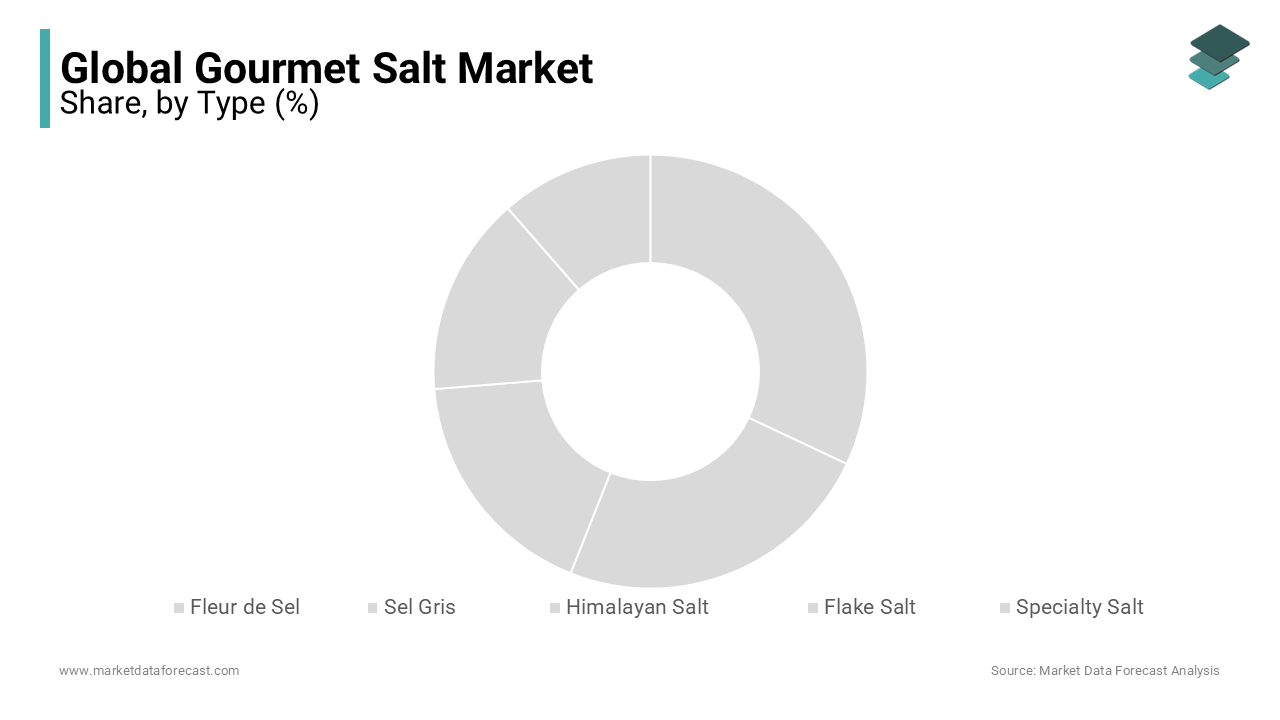
The specialty salt segment is lucratively growing with a CAGR of 9.7% from 2026 to 2034 with the category includes infused, flavored, and region-specific salts such as yuzu-kosho salt, activated charcoal salt, and smoked alderwood varieties. As per the Culinary Institute of America, over 70% of fine-dining establishments in the U.S. and Europe have introduced at least one specialty salt-based seasoning in their 2023–2025 menus. Additionally, the rise of plant-based and alternative protein products has created demand for complex umami enhancers, with specialty salts offering sodium reduction without compromising taste.
By Application Insights
The bakery and confectionery segment was accounted in holding 32.1% of the share in 2025 with the premiumization of baked goods and the strategic use of salt to balance sweetness and enhance mouthfeel. Artisanal bakeries have embraced flake and sel gris salts for their textural contrast in products like sea salt chocolate bars, croissants, and sourdough. According to the American Bakers Association, sales of premium bakery items containing gourmet salt increased by 18% between 2021 and 2023. The trend is further amplified by the rise of “salted-sweet” flavor profiles, with NielsenIQ data showing that confectionery products labeled “sea salt” or “fleur de sel” achieved a 27% higher repeat purchase rate than standard variants.
The seafood products segment is anticipated to grow at a CAGR of 10.3% throughout the forecast period with the increasing emphasis on clean-label processing and premiumization in seafood preservation and seasoning. Gourmet salts, particularly sel gris and flake varieties, are favored for their moisture retention and crust-forming properties during dry-brining and grilling. The National Oceanic and Atmospheric Administration states that U.S. per capita seafood consumption reached 16.5 pounds in 2023, the highest in two decades, driven by health-conscious consumers. Additionally, the Global Aquaculture Alliance reports that 68% of premium seafood exporters in Southeast Asia now use artisanal salts in packaging and curing to meet Western gourmet standards.
REGIONAL ANALYSIS
Europe Gourmet Salt Market Insights
Europe was the largest contributor in the gourmet salt market by holding 37.3% of the share in 2025 with its deep-rooted culinary traditions and regulatory support for geographical indications, such as Fleur de Sel de Guérande and Sel Gris de Bretagne. France alone produces over 12,000 metric tons of artisanal sea salt annually, with 85% designated for gourmet and export markets, according to FranceAgriMer. The European Union’s Farm to Fork Strategy has further incentivized sustainable salt harvesting, with over €4.2 million allocated to coastal salt marsh restoration between 2021 and 2023. Additionally, the Eurostat Food Consumption Survey reveals that 58% of European households purchase specialty salts regularly, reflecting ingrained consumer appreciation for terroir-driven ingredients.
North America Gourmet Salt Market Insights
North America gourmet salt market held 19.2% of the share in 2025 with the rapid adoption of clean-label and functional foods. Consumer demand for transparent ingredient sourcing has elevated the status of Himalayan and flake salts in both retail and foodservice. The U.S. Department of Agriculture notes that sales of specialty condiments, including gourmet salts, rose by 14.6% in 2023 compared to the previous year. Moreover, the proliferation of gourmet food subscription boxes over 6.2 million active subscribers as reported by Packaged Facts has introduced curated salt varieties to mainstream audiences.
Asia Pacific Gourmet Salt Market Insights
Asia Pacific gourmet salt market is expected to grow in the next coming years. While traditional diets in countries like Japan and South Korea have long incorporated natural sea salts such as amasake-jio and Cheonilyeom, the modern gourmet segment is expanding due to rising disposable incomes and exposure to global cuisines. In India, gourmet salt imports increased by 22% between 2021 and 2023, as per data from the Directorate General of Foreign Trade. Furthermore, luxury hotels and fine-dining establishments in cities like Singapore and Sydney are increasingly featuring locally sourced and imported artisanal salts, signaling a shift in culinary standards.
Latin America Gourmet Salt Market Insights
Latin America gourmet salt market growth is likely to grow steadily in the next coming years. The region’s unique advantage lies in its rich natural salt deposits, including the ancient Maras salt pans in Peru, which produce over 400 metric tons annually, according to Peru’s Ministry of Culture. These heritage sites attract both tourism and premium export opportunities, with Maras salt now available in over 30 countries. Additionally, the growing popularity of Latin fusion cuisine in global markets has increased demand for region-specific salts.
Middle East & Africa Gourmet Salt Market Insights
Middle East & Africa gourmet salt market is to grow with a blend of ancient harvesting techniques and modern luxury branding. South Africa has seen a 17% rise in gourmet salt usage in premium hospitality, driven by eco-luxury resorts emphasizing indigenous ingredients, as noted by the Southern African Tourism Services Association. Moreover, Morocco’s artisanal sea salt from the Atlantic coast is gaining traction in European gourmet markets, with exports increasing by 28% since 2021, as reported by the Moroccan Ministry of Agriculture.
KEY MARKET PLAYERS AND COMPETITIVE LANDSCAPE
Companies playing a major role in the global gourmet salt market include Morton Salt, Inc., Saltworks, Inc., Murray River Gourmet Salt, Infosa, Alaska Pure, Cheetham Salt Ltd., Cargill Inc., Pyramid Salt Pty. Ltd., Maldon Crystal Salt Co., and Amagansett Sea Salt Co.
Competition in the Gourmet Salt Market is intensifying as both artisanal producers and multinational food companies vie for dominance in a niche rapidly expanding sector. The market is characterized by a blend of heritage-driven small-scale harvesters and commercially agile brands leveraging global distribution networks. Differentiation hinges on origin authenticity, flavor innovation, and sustainability claims, with companies investing heavily in storytelling and traceability. Price premiums are justified through perceived health benefits and culinary exclusivity. While regional producers maintain strong local loyalty, international players are gaining ground through e-commerce, celebrity collaborations, and retail partnerships.
TOP PLAYERS IN THE MARKET
Morton & Bassett
Morton & Bassett has established a significant presence in the Asia Pacific gourmet salt market by leveraging its dual expertise in culinary spices and food safety compliance. The company has expanded its artisanal salt portfolio to include smoked Himalayan varieties and citrus-infused sea salts, tailored to suit regional palates in Japan, Australia, and South Korea. In 2023, it launched a direct-to-consumer e-commerce platform in Singapore, enhancing accessibility for urban food enthusiasts. The company also partnered with premium spice retailers across India and New Zealand to strengthen distribution.
Spice Hunter
The Spice Hunter is a subsidiary of B&G Foods has intensified its focus on the Asia Pacific region by introducing region-specific gourmet salt blends that cater to fusion cuisines and plant-based diets. The company launched a line of umami-enhancing salts in 2022, formulated with kombu and shiitake extracts, targeting the growing health-conscious consumer base in Taiwan and Malaysia. It has also collaborated with celebrity chefs in Australia to co-brand limited-edition flake salt collections, boosting visibility in high-end retail. The Spice Hunter’s investment in cold-chain logistics ensures product integrity across tropical markets. Its participation in food expos such as Food & Hotel Asia has further promoted its reputation as an innovator in functional, flavor-forward gourmet salts tailored to dynamic culinary trends.
SaltWorks
SaltWorks, Inc. has deepened its footprint in the Asia Pacific gourmet salt market through strategic alliances with luxury hotels and gourmet importers in Thailand, Hong Kong, and New Caledonia. Known for its diverse range of sel gris, flake, and smoked salts, the company introduced a premium subscription service in 2023, delivering curated salt collections to affluent consumers in major metropolitan areas. SaltWorks also launched a sustainability initiative in partnership with Pacific Island salt harvesters, promoting eco-friendly production and fair-trade practices. Its focus on experiential marketing and traceable sourcing differentiates its offerings in a region increasingly valuing authenticity and culinary storytelling.
TOP STRATEGIES USED BY KEY MARKET PLAYERS
Key players in the gourmet salt market are deploying innovation-driven strategies to capture evolving consumer preferences. Product differentiation through flavor infusion and mineral enhancement is widespread, with companies introducing smoked, herbal, and citrus-infused salts to appeal to adventurous palates. Strategic partnerships with chefs and culinary institutions bolster brand credibility and visibility. Geographic expansion, particularly into high-growth regions like Asia Pacific, is supported by localized product development and e-commerce integration. Sustainability initiatives, including eco-harvesting and plastic-free packaging, are increasingly used to align with environmentally conscious consumers. Additionally, digital traceability via QR codes and blockchain technology is being adopted to authenticate origin and build trust, which is reinforcing premium positioning in a competitive, transparency-sensitive market.
RECENT HAPPENINGS IN THE MARKET
- In January 2022, The Spice Hunter launched a line of umami-infused gourmet salts in Malaysia, combining kombu and sea salt to target plant-based food consumers and expand its presence in the Asia Pacific market.
- In August 2022, SaltWorks, Inc. partnered with luxury resorts in Thailand and Hong Kong to supply exclusive artisanal salt blends by enhancing brand visibility among high-net-worth consumers and strengthening its premium market positioning.
- In March 2023, Morton & Bassett introduced blockchain-enabled traceability for its Himalayan pink salt range, which is allowing consumers in Singapore and Australia to verify origin and mineral content, thereby boosting trust and product authenticity.
- In September 2023, The Spice Hunter collaborated with a renowned Sydney-based chef to co-create a limited-edition citrus-flavored flake salt by launching it at Food & Hotel Asia to drive engagement and media attention.
- In April 2025, SaltWorks, Inc. launched a direct-to-consumer subscription model in New Caledonia, delivering curated gourmet salt collections monthly that aimed at deepening customer loyalty and increasing regional market penetration.
MARKET SEGMENTATION
This research report on the global gourmet salt market has been segmented and sub-segmented based on type, application, and region.
By Type
- Fleur de Sel
- Sel Gris
- Himalayan Salt
- Flake Salt
- Specialty Salt
By Application
- Bakery & Confectionery
- Meat & Poultry Products
- Seafood Products
- Sauces & Savory
By Region
- North America
- Europe
- Asia-Pacific
- Latin America
- Middle East and Africa