- Product Description Description
- Table of Contents TOC
- List of Table & Figure LOT
- Get Free Sample PDF Sample PDF
Market Size, 2025
$69.15 BnMarket Estimate, 2026
$71.56 BnMarket Forecast, 2034
$94.08 BnCAGR, 2026–2034
3.48%Executive Summary: Global Vision Care Market
- Market Scope: Comprehensive analysis of the global vision care sector, covering product types, distribution channels, and regional market distributions.
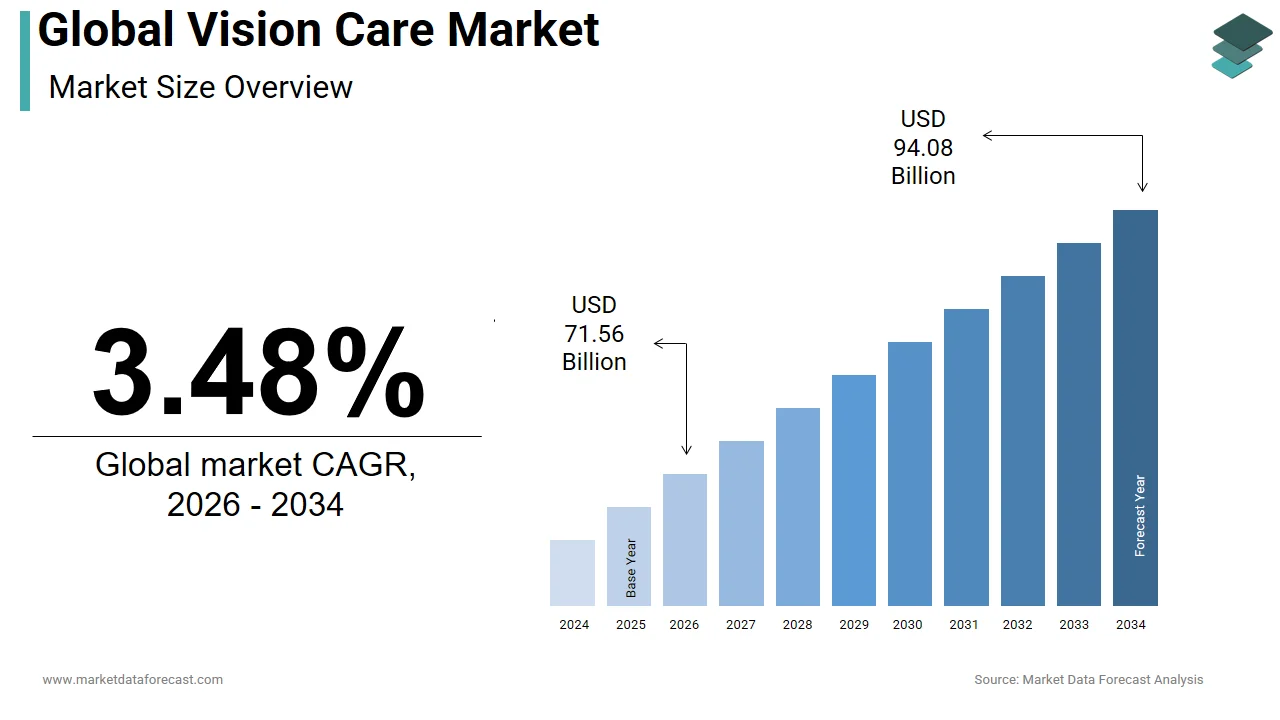
- Market Valuation: Valued at USD 69.15 billion in 2025, reaching USD 71.56 billion in 2026, and projected to expand to USD 94.08 billion by 2034, growing at a steady CAGR of 3.48% from 2026 to 2034.
- Primary Growth Drivers: Increasing patient population suffering from eye diseases (such as cataracts, glaucoma, and macular degeneration), growing geriatric population, rising adoption of eyewear as a fashion accessory, and rapid urbanization/digitalization.
Key Market Segment Metrics
| Category | Leading Segment (Base Position) | Fastest-Growing / High-Growth Segment |
|---|---|---|
| By Product Type | Glass Lenses (leading share driven by strong preference for eyeglasses, older demographics, and advanced coatings) | Contact Lenses (substantial share growth via refractive error corrections and colored/cosmetic lenses) |
| By Distribution Channel | Retail Stores (largest share owing to try-before-buy convenience and personalized staff recommendations) | Online Stores & Clinics (expanding via digital commerce and specialized eye care treatments) |
| By Region | North America (market leader in 2025, driven by high vision problem incidence and advanced ophthalmic tech) | Asia-Pacific (second most dominant, growing at the highest CAGR due to rising ocular disease patients and disposable incomes) |
Major Market Players & Industry Landscape
Market Structure: Competitive global market characterized by technological innovations (such as non-mydriatic fundus cameras and smart glasses), increasing refractive error treatments, and established multinational healthcare providers.
Key Companies: Carl Zeiss Meditec, Valeant Pharmaceuticals, Paragon Vision Sciences, Luxottica, Johnson & Johnson Vision Care, Bausch + Lomb, Menicon, Essilor International S.A., CooperVision, Alcon, and GrandVision.
 Download Free Sample Report
Global Vision Care Market Size
The global vision care market was valued at USD 69.15 billion in 2025. The global market is anticipated to grow at a CAGR of 3.48% from 2026 to 2034 and be worth USD 94.08 billion by 2034 from USD 71.56 billion in 2026.
MARKET DRIVERS
The growing patient population suffering from eye diseases primarily drive the vision care market growth.
According to the WHO World Report on Vision (2019), more than 50% of the world's blindness is caused due to cataracts. In 2019, there were at least 2.2 billion cases of vision impairment, out of which more than 1 billion could have been prevented. Therefore, an increase in the awareness of ocular diseases in emerging countries has led to an increase in the adoption of vision care products globally.
The growing number of cataract cases across the globe propel the growth of the vision care market. India and USA are among the leading nations in terms of the number of cataract surgeries performed annually. Cataract cases are more prevalent among the older generation 50 plus years of age. Therefore, with the growing geriatric population, the vision care market is likely to see growth as older people suffer from age-related vision problems. In developed countries, favourable reimbursement policies for cataract surgeries are estimated to drive the market. The increase in the prevalence of eye diseases such as glaucoma, diabetic retinopathy, and age-related macular degeneration (AMD) globally is likely to drive the demand for vision care products and services. There has been increasing popularity of coloured contact lenses and other eyewear.
The adoption of eyewear as a fashion accessory supports the vision care market growth.
In addition to that, the rising affordability of people will continue to boost the demand for eyecare products during the forecast period as people continue to adopt innovations in the eye care segment like laser eye surgery, smart glasses for the visually impaired, blue ray protective glasses and advanced contact lenses. Eyes are an essential sense organ of the body as it is proven that 80% of what we perceive comes from our eyes. It is important to not only have treatments available for eye problems but also take diagnosis and precautions further to avoid having them. The growing awareness among the populations about the struggles of eye problems are supporting the growth of the market. In an era where eye problems are becoming more common by the da, owing to increasing exposure t technology and rising jobs in the software industry, there is a need to spread awareness about eye health and have better care services. Therefore, the rapid urbanization and digitalization of the world is also leading to an increased demand for vision care.
MARKET RESTRAINTS
In certain developing countries, there is limited access to vision care services due to a shortage of trained eye care professionals and limited resources. Lack of awareness about the benefits of eye care products and services in emerging nations is anticipated to act as a restraint for vision care market growth in emerging nations. High cost of vision care treatment hinders the market growth. Vision care treatment can be expensive, particularly for complex procedures such as cataract surgery or laser eye surgery. This can act as a barrier for many consumers who have low income or inadequate medical insurance coverage. Also, some vision care services and products are not covered by insurance policies which forces consumers to pay out of their pockets. This can deter consumers from spending on vision care.
REPORT COVERAGE
| REPORT METRIC | DETAILS |
| Market Size Available | 2025 to 2034 |
| Base Year | 2025 |
| Forecast Period | 2026 to 2034 |
| Segments Covered | By Type, Distribution Channel, and Region. |
| Various Analyses Covered | Global, Regional and Country-Level Analysis, Segment-Level Analysis, Drivers, Restraints, Opportunities, Challenges; PESTLE Analysis; Porter’s Five Forces Analysis, Competitive Landscape, Analyst Overview of Investment Opportunities |
| Regions Covered | North America, Europe, Asia Pacific, Latin America, Middle East & Africa |
| Market Leaders Profiled | Carl Zeiss Meditec, Valeant Pharmaceuticals, Paragon Vision Sciences, Luxottica, Johnson & Johnson Vision Care, Bausch + Lomb, Menicon, Essilor International S.A, CooperVision, Alcon, and GrandVision.
|
SEGMENTAL ANALYSIS
By Product Type Insights
Based on product type, the glass lenses segment is expected to account for the leading share of the global market during the forecast period. Factors such as strong preference for eyeglasses among individuals accustomed to them for vision correction, rapid adoption among older individuals and those seeking non-invasive solutions for vision problems and the emergence of advanced lens materials and coatings for improved durability and vision clarity drive the growth of the glass lenses segment in the global vision care market.
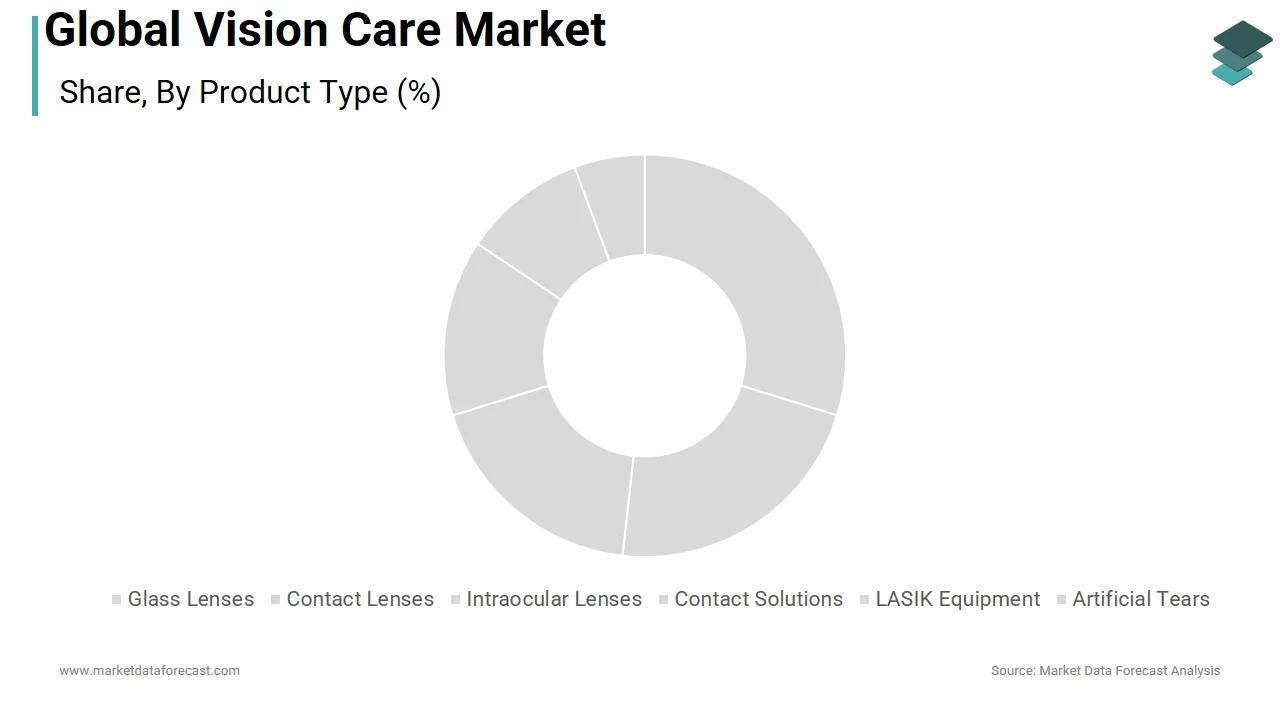
The contact lenses segment is anticipated to capture a substantial share of the worldwide market in the coming years owing to the growing prevalence of refractive errors such as myopia, hyperopia, and astigmatism, technological advancements and rising preference for cosmetic or colored contact lenses among younger populations.
By Distribution Channel Insights
Based on distribution channel, the retail stores segment is expected to hold the largest share of the global market during the forecast period. The convenience of trying on eyewear before purchasing in retail mode and the availability of trained staff to provide personalized recommendations in the retail stores primarily drive the segmental growth in the worldwide market. The ability of retail stores to cater to immediate needs for prescription eyewear and sunglasses further fuel the growth rate of the retail stores segment in the global market.
REGIONAL ANALYSIS
North America led the vision care market in 2025 and the domination of the North American market is anticipated to continue throughout the forecast period. Factors such as the high incidence of vision problems, increasing aging population and rising digital device usage primarily drive the growth of the North American market. The availability of advanced ophthalmic treatments, diagnostics, and surgical procedures and strong consumer awareness and spending on vision care products and services further fuel the growth rate of the North American market. The U.S. is estimated to capture the largest share of the North American market in the coming years owing to the well-established healthcare infrastructure, increasing prevalence of vision-related disorders and advanced technologies.
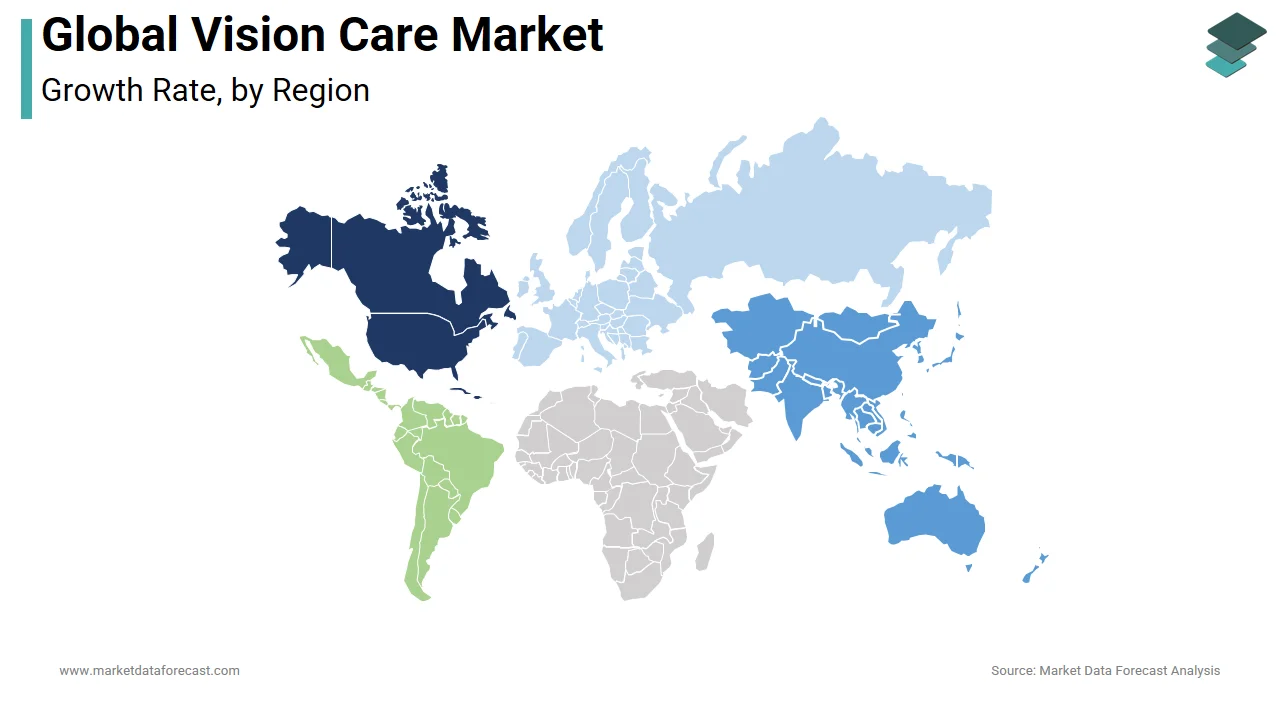
Europe is a promising regional market for vision care worldwide and is estimated to occupy a substantial share of the worldwide market during the forecast period. The growing prevalence of age-related eye conditions such as cataracts and macular degeneration in Europe, the presence of well-established reimbursement systems supporting eye care procedures and treatments and rapid adoption of telemedicine and digital health solutions for remote eye care majorly drive the growth of the vision care market in Europe. Germany followed by UK are expected to lead the vision care market in Europe during the forecast period owing to the growing aging population, rising focus on healthcare quality, and robust eye care infrastructure.
Asia-Pacific holds the second most dominant position in the global vision care market. It is expected to grow at the highest CAGR during the forecast period. This can be attributed to the rising population of patients with ocular diseases in the region. Countries in Asia Pacific hold the top position in terms of the number of cataract surgeries performed annually. The rising disposable incomes and awareness among people will drive the market growth by the end of the forecast period.
KEY MARKET PLAYERS
A few of the promising players operating in the global vision care market profiled in this report are
- Carl Zeiss Meditec
- Valeant Pharmaceuticals
- Paragon Vision Sciences
- Luxottica
- Johnson & Johnson Vision Care
- Bausch + Lomb
- Menicon
- Essilor International S.A.
- CooperVision
- Alcon
- GrandVision
GLOBAL VISION CARE MARKET NEWS
- Non-mydriatic Fundus Camera (NMFC) is a recent invention that aids in the early diagnosis of Diabetic Retinopathy by capturing high-resolution images of the retina. If any retinopathy is detected, the patient can then be referred to a retina specialist and vision loss can be avoided. Additionally, NMFC also captures a large amount of data that is key to driving further research in the treatment of Diabetic Retinopathy.
- In 2022, Twin sisters Matlhogonolo and Masego Mphahlele brought a revolution in the ophthalmology industry with a life-changing invention. They came up with an idea of digital X-ray glasses that was presented at the Red Bull Basement Global Final in Turkey and backed the third position out of dozens of representatives from 43 countries.
- In May 2022, HOYA Vision, the leading provider of ophthalmic lens technology released the first packaged Sun Lenses Portfolio for vision care professionals.
MARKET SEGMENTATION
This research report on the global vision care market has been segmented and sub-segmented into the following categories.
By Product Type
- Glass Lenses
- Contact Lenses
- Intraocular Lenses
- Contact Solutions
- LASIK Equipment
- Artificial Tears
By Distribution Channel
- Retail Stores
- Online Stores
- Clinics
- Hospitals
By Region
- North America
- Europe
- Asia Pacific
- Latin America
- The Middle East and Africa