- Product Description Description
- Table of Contents TOC
- List of Table & Figure LOT
- Get Free Sample PDF Sample PDF
Market Size, 2025
$1642 MnMarket Estimate, 2026
$1960.5 MnMarket Forecast, 2034
$8099 MnCAGR, 2026–2034
19.4%Global Healthcare Contract Management Software Market Report Summary
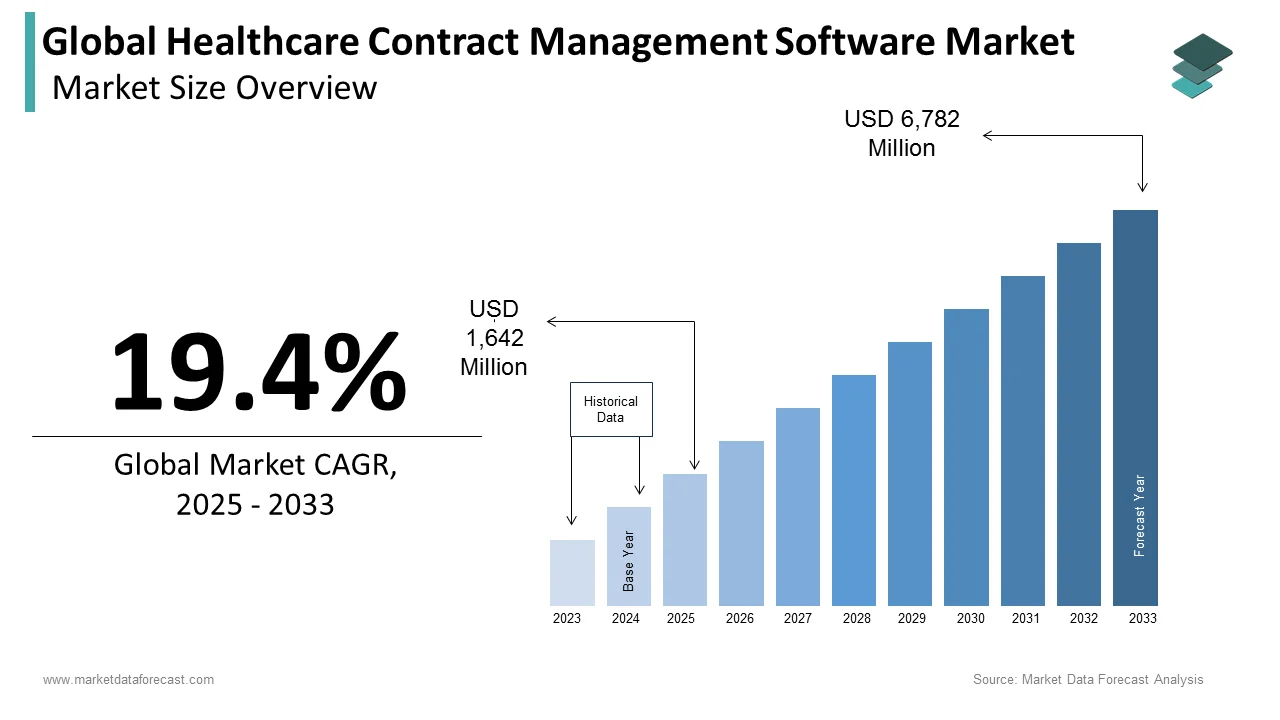
The global healthcare contract management software market was valued at USD 1,642 million in 2025 and is projected to grow from USD 1,960.55 million in 2026 to USD 8,099 million by 2034, registering a CAGR of 19.4% from 2026 to 2034. Market growth is driven by the increasing complexity of healthcare contracts, growing regulatory compliance requirements, and the rising adoption of digital solutions to streamline contract lifecycle management. Healthcare organizations are increasingly deploying contract management software to improve operational efficiency, reduce legal risks, enhance supplier and payer contract visibility, and ensure compliance with evolving healthcare regulations. The growing digital transformation of healthcare administration and the integration of artificial intelligence and automation technologies are further accelerating market expansion.
Key Market Trends
- Increasing adoption of cloud-based contract lifecycle management solutions.
- Growing emphasis on regulatory compliance and risk mitigation in healthcare operations.
- Rising integration of artificial intelligence and workflow automation in contract management platforms.
- Increasing demand for centralized management of payer, provider, supplier, and vendor contracts.
- Expansion of digital transformation initiatives across healthcare organizations.
Segmental Insights
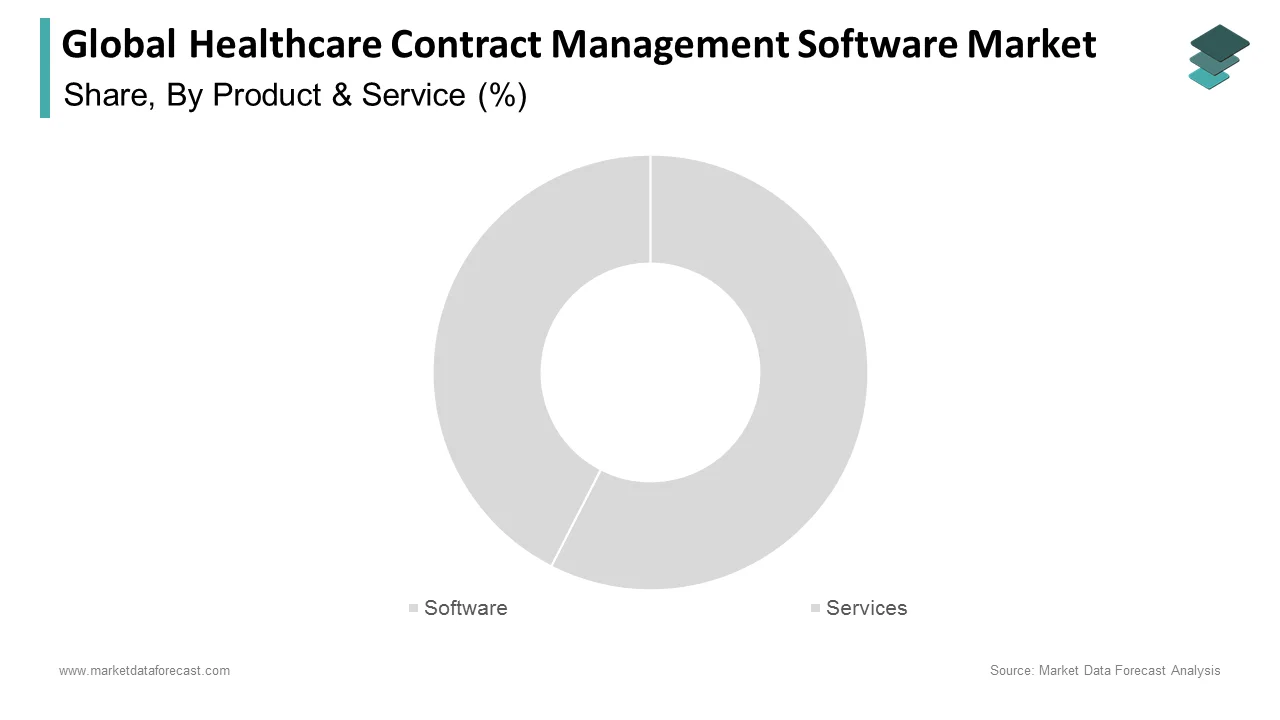
Based on product and service, the software segment dominated the global healthcare contract management software market by accounting for 44.6% market share in 2025, driven by the growing need for automated contract creation, tracking, compliance monitoring, and analytics capabilities.
Based on end user, the healthcare providers segment held the largest share of 34.6% in 2025, supported by increasing contract complexity, growing administrative workloads, and the need to improve operational efficiency across hospitals, clinics, and healthcare networks.
Regional Insights
The global healthcare contract management software market is witnessing significant growth across major regions, supported by healthcare digitalization, regulatory requirements, and increasing investments in healthcare IT infrastructure.
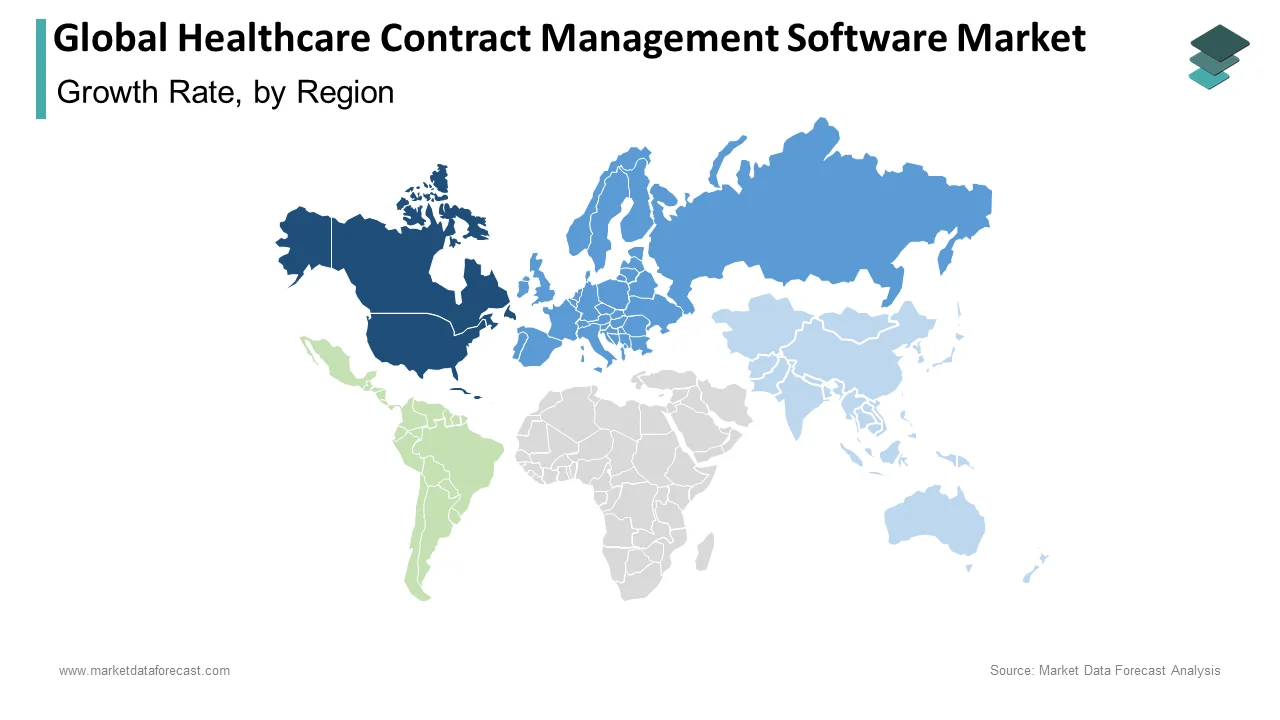
- North America dominated the global market in 2025 with 37.2% share, driven by widespread adoption of healthcare IT solutions, stringent compliance requirements, and the presence of major software vendors.
- Europe held the second-largest position with 19.2% share in 2025, supported by growing healthcare digitization initiatives, increasing regulatory oversight, and rising investments in healthcare administration technologies.
- Asia-Pacific is projected to register the fastest growth during the forecast period, driven by rapid healthcare infrastructure development, increasing healthcare expenditure, and growing adoption of digital healthcare management solutions.
Competitive Landscape
The global healthcare contract management software market is characterized by strong competition among contract lifecycle management providers, healthcare IT vendors, and enterprise software companies focusing on automation, compliance, and operational efficiency. Market participants are investing in artificial intelligence, cloud-based platforms, analytics capabilities, and workflow automation tools to strengthen market positioning. Strategic partnerships, acquisitions, and product innovations continue to shape competitive dynamics across the market.
Prominent companies operating in the global healthcare contract management software market include Icertis, Optum Inc., CobbleStone Software, ScienceSoft, Concord, Contract Logix LLC, Apttus Corporation, Determine Inc., Experian Plc, nThrive Inc., Agiloft, SirionLabs, Coupa Software Inc., Volody, Mize, 2Agree, Jaggaer, IBM Corporation, and Newgen Software Technologies Limited.
Global Healthcare Contract Management Software Market Size
The size of the global healthcare contract management software market was worth USD 1,642 million in 2025. The global market is anticipated to grow at a CAGR of 19.4% from 2026 to 2034 and be worth USD 8,099 million by 2034 from USD 1,960.55 million in 2026.
The healthcare contract management software is a digital platform designed to streamline the creation, negotiation, execution, and monitoring of agreements within healthcare organizations. These solutions address the complex web of contracts involving physicians, suppliers, insurers, and regulatory bodies, ensuring compliance and financial integrity. According to the American Hospital Association, hospitals employ an average of 1 physician for every 4 support staff, highlighting the administrative burden that contract management systems aim to alleviate. As healthcare entities navigate value-based care models, the volume of performance-based agreements has surged, requiring robust tracking mechanisms. The integration of artificial intelligence enables automated clause extraction and risk assessment, transforming static documents into actionable data assets. Regulatory frameworks, such as the Stark Law and Anti-Kickback Statute, impose strict penalties for non-compliance, driving adoption of software that ensures transparency.
MARKET DRIVERS
Increasing Regulatory Complexity and Compliance Requirements Driving Adoption
The escalating complexity of healthcare regulations for the adoption of contract management software, which is propelling the growth of the healthcare contract management software market. Healthcare providers must navigate a labyrinth of federal, state, and local laws, including the Physician Payments Sunshine Act, which mandates transparency in financial relationships between manufacturers and physicians. Non-compliance can result in severe penalties with fines reaching up to 10000 dollars per violation and up to 150000 dollars for intentional failures to report as outlined by the Department of Health and Human Services. Additionally, the transition to value-based care models requires intricate contracts that tie reimbursement to quality metrics rather than volume, necessitating sophisticated tracking capabilities. Traditional manual methods fail to monitor these dynamic terms effectively, leading to missed obligations and revenue loss. Software solutions provide automated alerts for renewal dates, compliance checkpoints, and performance benchmarks, ensuring that organizations remain aligned with legal standards. The Office of Inspector General regularly audits healthcare entities for fraud and abuse, making rigorous documentation essential for defense during investigations. As regulatory scrutiny intensifies globally, healthcare administrators prioritize tools that mitigate legal exposure while maintaining operational continuity.
Consolidation of Healthcare Providers and Mergers and Acquisitions Activity
The wave of mergers and acquisitions within the healthcare sector for advanced contract management software is another factor boosting the growth of the healthcare contract management software market. Large health systems frequently acquire smaller practices, hospitals, and specialty clinics to expand their market reach and achieve economies of scale. Each transaction involves the integration of thousands of existing contracts with vendors, payers, and employed physicians, creating a massive administrative burden. Disparate legacy systems often lack interoperability, leading to duplicated services, missed renewal opportunities, and inconsistent terms across the newly formed entity. Contract management software facilitates the due diligence process by providing a centralized repository for reviewing and analyzing contractual obligations before deal closure. Post-merger integration relies on these platforms to harmonize terms, negotiate better rates through aggregated volume, and eliminate redundant agreements. The complexity of integrating electronic health records, billing systems, and supplier contracts necessitates a unified view of all legal commitments. Without standardized management tools, merged entities face prolonged inefficiencies and increased operational costs. Therefore, acquiring organizations view robust contract lifecycle management as critical infrastructure for realizing the promised synergies of mergers.
MARKET RESTRAINTS
High Implementation Costs and Resource Intensity Restraining Small Providers
The substantial upfront investment and ongoing resource requirements for small and medium-sized practices are hindering the growth of the healthcare contract management software market. Implementing these enterprise-grade solutions involves licensing fees, customization costs, and extensive training expenses that can strain limited budgets. For these entities, allocating tens of thousands of dollars for software implementation is often financially prohibitive compared to larger health systems with dedicated IT departments. The complexity of migrating historical contract data from disparate formats, such as paper files, spreadsheets, and emails, requires significant labor hours and technical expertise. Many small practices lack the internal personnel to manage this transition, leading to prolonged implementation timelines and operational disruptions. Furthermore, ongoing maintenance subscription renewals and potential upgrade costs create a recurring financial burden that may outweigh perceived benefits for low-volume users. The return on investment is less immediate for smaller entities that manage fewer contracts compared to large hospitals. Many small providers continue to rely on manual processes or basic spreadsheet tools, despite the associated risks.
Interoperability Issues with Legacy Healthcare Systems Impeding Integration
The technical incompatibility between modern contract management software and existing legacy healthcare information systems is additionally impeding the growth of the healthcare contract management software market. Many healthcare organizations operate on outdated infrastructure, including older electronic health record systems, billing platforms, and enterprise resource planning tools that lack application programming interfaces for easy integration. A significant portion of healthcare providers still utilize legacy systems that do not support modern data exchange standards like Fast Healthcare Interoperability Resources. This fragmentation forces contract management software to operate in silos, requiring manual data entry and double handling of information, which increases the risk of errors and reduces efficiency. The lack of real-time data synchronization means that contract terms may not automatically update related financial or clinical systems, leading to discrepancies in billing and compliance reporting. Custom integrations are often expensive and time-consuming to develop, requiring specialized IT resources that many healthcare organizations do not possess internally. Furthermore, frequent updates to either the contract software or the legacy systems can break existing connections, necessitating continuous technical support and maintenance. These technical hurdles discourage organizations from fully leveraging the automation capabilities of contract management solutions.
MARKET OPPORTUNITIES
Integration of Artificial Intelligence for Automated Clause Analysis
The incorporation of artificial intelligence and machine learning technologies for enhancing the efficiency and accuracy of healthcare contract management is setting up new opportunities for the growth of the healthcare contract management software market. AI-driven tools can automatically extract key terms, dates, and obligations from unstructured contract documents, reducing the time required for review by up to 80%, according to the survey. Natural language processing algorithms identify risky clauses, deviations from standard templates, and missing regulatory language, enabling proactive risk mitigation. This automation allows legal and administrative teams to focus on strategic negotiations rather than mundane data entry tasks. Predictive analytics powered by machine learning can forecast contract performance renewal probabilities and potential disputes based on historical data patterns. Healthcare organizations can leverage these insights to optimize vendor relationships, negotiate better terms, and ensure timely renewals without manual tracking. The ability to analyze vast volumes of contracts rapidly supports better decision-making during mergers and acquisitions or vendor consolidations. Vendors are developing specialized models trained on healthcare-specific contracts, ensuring higher relevance and precision. This technological advancement positions AI-enabled contract management as a competitive differentiator, allowing early adopters to achieve superior operational efficiency and cost savings.
Expansion into Value-Based Care and Risk-Sharing Agreements
The global shift toward value-based care models for specialized contract management software tailored to performance-based agreements is expected to promote new opportunities for the growth of the healthcare contract management software market. Unlike traditional fee-for-service contracts, value-based arrangements involve complex metrics linking reimbursement to patient outcomes, quality scores, and cost efficiency. Managing these dynamic contracts requires sophisticated software capable of tracking real-time performance data against contractual thresholds. This transition necessitates tools that can integrate clinical data with financial terms to calculate accurate reimbursements and identify areas for improvement. Contract management platforms that offer dashboards for monitoring key performance indicators enable providers to maximize revenue under these models. Additionally, risk-sharing agreements with insurers require precise tracking of patient populations and cost containment measures, which manual systems cannot handle effectively. Software solutions that facilitate collaboration between providers and payers enhance transparency and trust in these partnerships. As more healthcare entities participate in accountable care organizations and bundled payment initiatives, the demand for specialized contract management tools will grow. Providers seeking to thrive in value-based environments will prioritize software that offers deep analytical capabilities and seamless integration with clinical data sources to manage these intricate financial relationships effectively.
MARKET OPPORTUNITIES
Data Security Concerns and Cybersecurity Threats
Protecting sensitive contractual and patient-related data within contract management systems due to escalating cybersecurity threats is a huge challenge for the growth of the healthcare contract management software market. Healthcare contracts often contain protected health information, personally identifiable information, and proprietary financial details, making them attractive targets for cybercriminals. Hundreds of healthcare data breaches affecting 500 or more individuals are reported annually, exposing millions of records. Contract management software vendors must implement robust encryption, multi-factor authentication, and access controls to safeguard this data, yet no system is entirely immune to sophisticated attacks. Compliance with regulations, such as the Health Insurance Portability and Accountability Act in the United States and the General Data Protection Regulation in Europe, adds layers of complexity to security protocols. Breaches can result in substantial fines, legal liabilities, and reputational damage that erode patient and partner trust. Healthcare organizations must conduct regular security audits and employee training to mitigate human error, which remains a leading cause of data leaks.
Resistance to Change and Lack of Digital Literacy Among Staff
The organizational resistance to change and varying levels of digital literacy among healthcare staff are hindering the successful implementation of contract management software, hindering the growth of the healthcare contract management software market. Many healthcare professionals and administrative staff are accustomed to traditional manual processes and may view new digital tools as cumbersome or unnecessary interruptions to their workflow. Older employees or those with limited technical experience may struggle to navigate complex software interfaces, leading to frustration and reduced productivity during the transition period. Effective training programs require time and resources that busy healthcare organizations often find difficult to allocate amidst clinical demands. Cultural inertia within established institutions can slow down the realization of expected efficiencies. Furthermore, the high turnover rate in healthcare administrative roles means that training efforts must be ongoing to accommodate new hires.
REPORT COVERAGE
| REPORT METRIC | DETAILS |
| Market Size Available | 2025 to 2034 |
| Base Year | 2025 |
| Forecast Period | 2026 to 2034 |
| Segments Covered | By Product & Service, End-User, and Region. |
| Various Analyses Covered | Global, Regional and Country-Level Analysis, Segment-Level Analysis, Drivers, Restraints, Opportunities, Challenges; PESTLE Analysis; Porter’s Five Forces Analysis, Competitive Landscape, Analyst Overview of Investment Opportunities |
| Regions Covered | North America, Europe, Asia Pacific, Latin America, the Middle East, and Africa |
| Market Leaders Profiled | Icertis, Optum Inc., CobbleStone Software, ScienceSoft, Concord, Contract Logix LLC., Apttus Corporation, Determine Inc., Experian Plc., nthrive Inc., Coupa Software Inc., Volody, Mize, 2Agree, Jaggaer, IBM Corporation, Newgen Software Technologies Limited, and others., and Others. |
SEGMENTAL ANALYSIS
By Product & Service Insights
The software segment was the dominant one by holding 44.6% of the Healthcare Contract Management Software Market share in 2025, owing to the need for automated solutions to handle the increasing volume and complexity of healthcare agreements. The transition from manual paper-based processes to digital platforms that offer centralized visibility and control. These platforms provide essential features such as automated workflow routing, clause libraries, and compliance tracking, which are indispensable for managing relationships with thousands of vendors and providers. The scalability of cloud-based software allows healthcare organizations to expand their contract repositories without significant infrastructure investments. Furthermore, the integration of artificial intelligence within software enables predictive analytics and risk assessment capabilities that manual systems cannot replicate. As healthcare regulations become more stringent, the ability of software to enforce compliance through automated alerts and standardized templates becomes a non-negotiable requirement. The recurring revenue model associated with software licenses also encourages vendors to continuously update features, ensuring that the technology remains relevant to evolving industry needs.
The implementation and integration services segment is expected to grow at the fastest CAGR of 14.5% during the forecast period, owing to the technical complexities involved in deploying contract management solutions within existing healthcare IT ecosystems. Healthcare organizations typically operate with disparate legacy systems, including electronic health records, enterprise resource planning, and billing platforms that require seamless connectivity with new contract software. These services ensure that data migration from legacy formats is accurate and that application programming interfaces are correctly configured to enable real-time data exchange. The customization requirements of healthcare contracts, which often include unique clauses for value-based care and regulatory compliance, necessitate expert configuration during the implementation phase. Additionally, the shortage of internal IT resources within many healthcare providers forces them to rely on external specialists for deployment. Vendors are increasingly offering managed implementation packages to reduce time to value and ensure successful adoption.
By End User Insights
The healthcare segment was the largest by holding 34.6% of the healthcare contract management software market share in 2025 due to the sheer volume of contractual obligations they manage daily. Hospitals and health systems engage in thousands of contracts annually with physicians, suppliers, insurers, and service providers, creating a massive administrative burden. The American Hospital Association reports that the average hospital has over 1000 active vendor contracts requiring meticulous tracking to prevent revenue leakage and ensure compliance. The complexity of these agreements, which often include performance-based metrics and regulatory stipulations, necessitates sophisticated management tools. Healthcare providers face intense pressure to reduce operational costs while maintaining high-quality care, making efficient contract oversight essential for financial stability. The shift toward value-based care models further increases the complexity of provider contracts, requiring detailed tracking of quality outcomes and reimbursement rates. Large integrated delivery networks particularly benefit from centralized contract management systems that provide visibility across multiple facilities. Regulatory requirements such as the Stark Law and Anti-Kickback Statute impose strict penalties for non-compliance, driving providers to adopt software that ensures transparency and audit readiness. The high stakes involved in provider contracts, where errors can lead to significant financial losses or legal liabilities, make this segment the primary adopter of advanced contract management solutions.
The medical device manufacturers and pharmaceutical and biotechnology companies segment is growing at an anticipated CAGR of 13.8% during the forecast period, owing to the increasing complexity of commercial agreements and the need for rigorous compliance in highly regulated environments. These companies manage extensive networks of distributors group, purchasing organizations, and healthcare providers requiring precise contract tracking to optimize pricing and rebates. According to the Pharmaceutical Research and Manufacturers of America, the industry spends billions annually on research and development, necessitating complex licensing and collaboration agreements that require specialized management. The introduction of new drugs and devices often involves intricate launch contracts with strict performance clauses and milestone payments that must be monitored closely. Regulatory scrutiny regarding transparency in financial relationships with healthcare professionals, as mandated by laws like the Physician Payments Sunshine Act, drives the adoption of software that ensures accurate reporting. Additionally, the rise of personalized medicine and gene therapies introduces novel contracting models that traditional systems cannot handle effectively. Companies are increasingly leveraging contract management software to gain insights into channel performance and negotiate better terms with partners. The global expansion of pharmaceutical markets further increases the volume and diversity of contracts requiring management.
REGIONAL ANALYSIS
North America Healthcare Contract Management Software Market Analysis
North America was the top performer in the global Healthcare Contract Management Software Market by occupying 37.2% of the share in 2025, owing to its advanced healthcare infrastructure and stringent regulatory environment. The United States accounts for the majority of this regional demand, driven by the complexity of its multi-payer system and high volume of healthcare transactions. The presence of major software vendors and early adoption of digital health technologies further strengthen the market position. Regulatory frameworks such as the Health Insurance Portability and Accountability Act and the Affordable Care Act impose strict compliance requirements that drive software adoption. The high prevalence of mergers and acquisitions among hospital systems creates a continuous need for contract consolidation and standardization tools. Additionally, the shift toward value-based care models in the United States requires sophisticated tracking of performance metrics embedded in contracts. High labor costs encourage automation to reduce administrative overhead. The region benefits from a robust IT infrastructure and high digital literacy among healthcare administrators.
Europe Healthcare Contract Management Software Market Analysis
Europe healthcare contract management software market held the second position by holding 19.2% of the market share in 2025, with the diverse regulatory landscapes and increasing digital health initiatives. The European Union General Data Protection Regulation imposes strict data privacy standards, influencing software design and deployment strategies across member states. Countries like Germany, France, and the United Kingdom lead adoption due to their large healthcare systems and focus on cost containment. The fragmentation of healthcare systems across different nations creates challenges but also opportunities for standardized software solutions. Government programs promoting digital transformation in healthcare, such as the Digital Healthcare Act in Germany, encourage the use of advanced management tools. The aging population in Europe increases the volume of healthcare services and associated contracts, driving demand for efficiency. Cross-border healthcare initiatives within the EU require interoperable contract management systems to facilitate seamless operations. Public healthcare systems prioritize transparency and accountability, making contract visibility a key requirement.
Asia Pacific Healthcare Contract Management Software Market Analysis
Asia Pacific healthcare contract management software market growth is driven by rapid healthcare infrastructure development and increasing healthcare spending. The expansion of private hospitals and clinics creates a surge in vendor and provider contracts requiring management. Digital health initiatives in countries like Singapore and South Korea promote the adoption of advanced software solutions. The outsourcing of medical tourism services in Thailand and Malaysia increases the complexity of international contracts. Rising awareness of compliance and governance standards among Asian healthcare providers drives the shift from manual to digital processes. Government reforms aimed at reducing corruption and improving transparency in healthcare procurement support software adoption. Increasing internet penetration and mobile connectivity facilitate cloud-based software deployment.
Latin America Healthcare Contract Management Software Market Analysis
Latin America healthcare contract management software market growth is growing with the healthcare reforms and increasing private sector participation. Brazil and Mexico are the key contributors to the region, contributing significantly to adoption rates. The healthcare spending in Latin America has increased as governments strive to improve access and quality of care. The privatization of healthcare services in several countries leads to more complex commercial agreements requiring professional management. Economic volatility in some nations encourages organizations to seek efficiency gains through automation to protect margins. Regulatory improvements in countries like Chile and Colombia promote transparency in public procurement, driving software adoption. The growing middle class increases demand for private healthcare services, expanding the volume of provider and insurer contracts. International healthcare providers entering the region bring best practices, including advanced contract management systems.
Middle East and Africa Healthcare Contract Management Software Market Analysis
The Middle East and Africa healthcare contract management software market is growing with the government investments in healthcare infrastructure. Gulf Cooperation Council countries like Saudi Arabia and the United Arab Emirates lead adoption due to ambitious healthcare vision plans and digital transformation agendas. The healthcare expenditure in the Eastern Mediterranean Region is rising as countries invest in modern facilities and services. The establishment of new medical cities and hospitals creates immediate demand for contract management solutions to handle vendor and staff agreements. Regulatory frameworks in these countries are evolving to include stricter governance and compliance standards, encouraging software adoption. The presence of international healthcare operators brings global best practices, including advanced contract management tools. In Africa, South Africa and Kenya are emerging markets with growing private healthcare sectors driving demand. Limited local expertise often leads to reliance on international vendors and cloud-based solutions. Government initiatives to improve healthcare access and efficiency support digital adoption. The region faces challenges related to infrastructure and budget constraints, but long-term growth prospects remain positive. Increasing focus on healthcare tourism in countries like Jordan and Turkey adds complexity to contracts requiring management.
COMPETITIVE LANDSCAPE
The competition in the Healthcare Contract Management Software Market is characterized by intense rivalry among established enterprise software vendors and specialized niche players. Large technology companies leverage their broad product portfolios and existing customer relationships to cross-sell contract management solutions to healthcare clients. Specialized vendors compete on depth of functionality, offering industry-specific features, such as physician credentialing tracking and rebate management. Price competition is moderate as healthcare organizations prioritize compliance and reliability over cost savings. Innovation in artificial intelligence and predictive analytics serves as a key differentiator, with vendors striving to offer superior insights and automation capabilities. The barrier to entry remains high due to the need for robust security certifications and complex integration capabilities. Customer lock-in is significant once implementations are complete, making retention strategies crucial for long-term success. Vendors increasingly focus on user experience and ease of configuration to appeal to healthcare, legal, and procurement teams. Strategic alliances with consulting firms and system integrators help vendors reach larger healthcare networks.
KEY MARKET PLAYERS
Some of the promising companies operating in the global healthcare contract management software market analyzed in this report are
- Icertis
- Optum Inc.
- CobbleStone Software
- ScienceSoft
- Concord
- Contract Logix LLC
- Apttus Corporation
- Determine Inc.
- Experian Plc
- nThrive Inc.
- Agiloft
- SirionLabs
- Coupa Software Inc.
- Volody
- Mize
- 2Agree
- Jaggaer
- IBM Corporation
- Newgen Software Technologies Limited
TOP PLAYERS IN THE MARKET
- Icertis stands as a global leader in contract intelligence, providing an enterprise-grade platform that manages complex agreements for healthcare organizations. The company leverages artificial intelligence to extract insights from contracts, enabling better compliance and risk management. Recent strategic moves include expanding its healthcare-specific templates and integrations with major electronic health record systems. Icertis actively partners with leading healthcare providers to streamline vendor management and physician contracting processes. The company invests heavily in research and development to enhance its natural language processing capabilities, ensuring accurate clause identification. Its cloud native architecture supports scalability, allowing large health systems to manage thousands of contracts efficiently. These initiatives reinforce its position as a trusted partner for digital transformation in healthcare contract lifecycle management.
- Agiloft offers a highly configurable contract lifecycle management solution that caters to the unique needs of the healthcare sector. The platform allows healthcare organizations to tailor workflows without extensive coding, facilitating rapid adaptation to changing regulations. Agiloint recently enhanced its integration capabilities with enterprise resource planning and procurement systems used by hospitals. The company focuses on providing robust reporting tools that help healthcare administrators track performance metrics and renewal dates. Agiloft emphasizes customer success through dedicated support teams that assist with implementation and optimization. The company also strengthens its market presence by participating in industry conferences and publishing thought leadership on healthcare compliance.
- SirionLabs provides an AI-driven contract analytics platform that transforms how healthcare organizations manage supplier and payer agreements. The company specializes in identifying value leakage and compliance risks through advanced machine learning algorithms. SirionLabs has recently expanded its healthcare vertical by developing specialized modules for group purchasing organization contract management. The platform integrates with existing procurement systems to provide real-time visibility into contract obligations and performance. SirionLabs collaborates with healthcare consultants to deliver comprehensive solutions that address specific industry challenges. The company focuses on delivering actionable insights that help healthcare providers negotiate better terms and reduce costs.
TOP STRATEGIES USED BY THE KEY MARKET PARTICIPANTS
Key players in the Healthcare Contract Management Software Market predominantly focus on product innovation through the integration of artificial intelligence and machine learning technologies. Companies invest heavily in developing natural language processing capabilities to automate clause extraction and risk assessment. Strategic partnerships with electronic health record vendors and enterprise resource planning providers enable seamless data integration and workflow automation. Expansion into specialized healthcare verticals, such as physician contracting and group purchasing organization management, allows vendors to address niche requirements. Cloud-based deployment models are prioritized to offer scalability and reduced infrastructure costs for healthcare organizations. Continuous investment in cybersecurity measures ensures compliance with strict data privacy regulations like HIPAA and GDPR. Customer success programs, including training and dedicated support, enhance user adoption and retention rates. Mergers and acquisitions are utilized to acquire complementary technologies and expand geographic reach.
MARKET SEGMENTATION
This research report on the global Healthcare Contract Management Software Market has been segmented and sub-segmented based on product & service, end-users, and region.
By Product & Service
- Software
- Contract Lifecycle Management
- Contract Repository/Document Management
- Services
- Support & Maintenance
- Implementation and Integration
- Training & Education
By End-User
- Healthcare Providers
- Hospitals
- Physician Clinics
- Other Healthcare Providers
- Healthcare Payers
- Medical Device Manufacturers and Pharma & Biotechnology Companies
- Research Organizations
By Region
- North America
- Europe
- Asia-Pacific
- Latin America
- The Middle East and Africa