- Product Description Description
- Table of Contents TOC
- List of Table & Figure LOT
- Get Free Sample PDF Sample PDF
Market Size, 2025
$181 BnMarket Estimate, 2026
$206.7 BnMarket Forecast, 2034
$597.9 BnCAGR, 2026–2034
14.2%Global Healthcare Information Systems Market Size
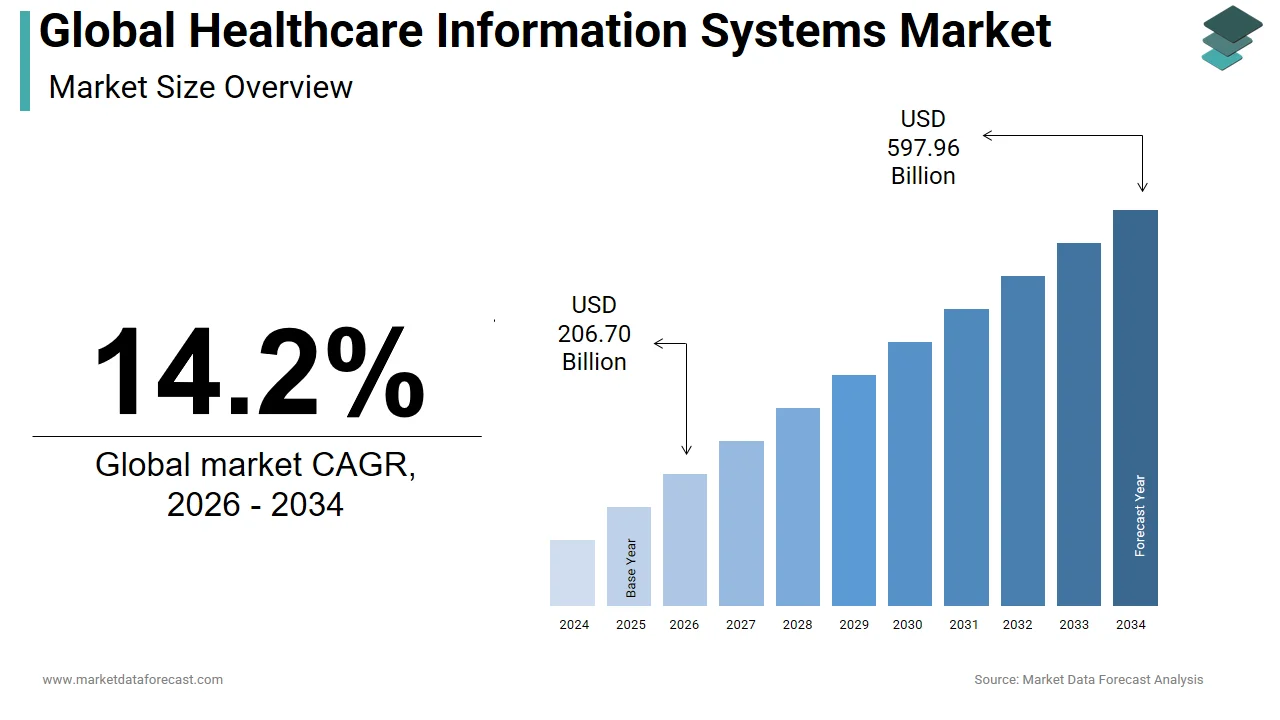
The size of the global healthcare information systems market was worth USD 181 billion in 2025. The global market is anticipated to grow at a CAGR of 14.2% from 2026 to 2034 and be worth USD 597.96 billion by 2034 from USD 206.70 billion in 2026.
Health information systems are playing a major role in revamping healthcare services across the world. These systems have changed the monitoring and evaluation methods of patients. In the research activities, the healthcare information systems contribute predictive analysis, planning and supporting systems, enhanced communication, and warning systems, which help them develop an effective product.
MARKET DRIVERS
Y-O-Y growth in the prevalence and incidence of chronic diseases such as cancer, cardiovascular, diabetes, and others is a major factor in the growth of the global healthcare information systems market.
Advancement in technologies such as cloud computing services, task management software, and data analytics is ascribed to propel the market's demand. According to HealthIT.gov, 94% of the Electronic Health Records (EHR) are readily available at the point of care, and 88% of the EHR provides quality information for clinical practices. More than half of the countries have already adopted EHRs around the world.
Also, healthcare information systems have the ability to improve healthcare services widely. These systems set up various hospitals, home care settings, rural health centers, and large urban hospitals. This attribute is to propel the demand of the market to an extent. The increasing population globally and rising demand to improve the healthcare facilities are fuelling the market’s growth rate.
Healthcare information systems focus on delivering quality treatment procedures to the patients. It generally integrates complex information from many sources. The existence of major key players and adopting these systems to deliver excellent services are elevating the growth rate of the healthcare information system market. The launch of various applications in the android and IoS platforms is expanding the demand of the market. Creating awareness over the benefits of these systems digitally is one more factor impelling the growth rate of the market. Besides, the increasing usage of smartphones and tablets across the world is tremendously accelerating the market demand. In the past 12 months, the number of total unique mobile users has increased to 102 million, which is a boosting factor for the market demand.
MARKET RESTRAINTS
However, increasing concern towards privacy is one major restraining factor for the market growth. Lack of complete knowledge over the utilization of the systems in a proper way is slowly impeding the demand of the market. Less number of skilled people in analyzing the information in various systems is expected to impede the market's demand. Also, people in rural areas are less aware of the advanced technologies limiting the growth rate of the healthcare information systems market.
The complex regulatory structure in approving the new applications by the government remains a challenging attribute for the market players.
REPORT COVERAGE
| REPORT METRIC | DETAILS |
| Market Size Available | 2025 to 2033 |
| Base Year | 2025 |
| Forecast Period | 2026 to 2034 |
| Segments Covered | By End-users, Application, Component, and Region. |
| Various Analyses Covered | Global, Regional, and Country-Level Analysis, Segment-Level Analysis, Drivers, Restraints, Opportunities, Challenges; PESTLE Analysis; Porter’s Five Forces Analysis, Competitive Landscape, Analyst Overview of Investment Opportunities |
| Regions Covered | North America, Europe, Asia Pacific, Latin America, Middle East & Africa |
| Market Leaders Profiled | Dedalus S.p.A (Agfa-Gevaert Group), Allscripts Healthcare Solutions Inc., Cerner Corporation, GE Healthcare, Integrated Medical Systems, Koninklijke Philips NV, McKesson Corporation, Carestream Health, and Wipro Limited. |
SEGMENTAL ANALYSIS
By End-users Insights
Based on the end-user, the hospital segment is expected to hold the largest share in the healthcare information systems market in 2025. The rising occurrence of various chronic diseases and growth in older adults are propelling the market demand globally.
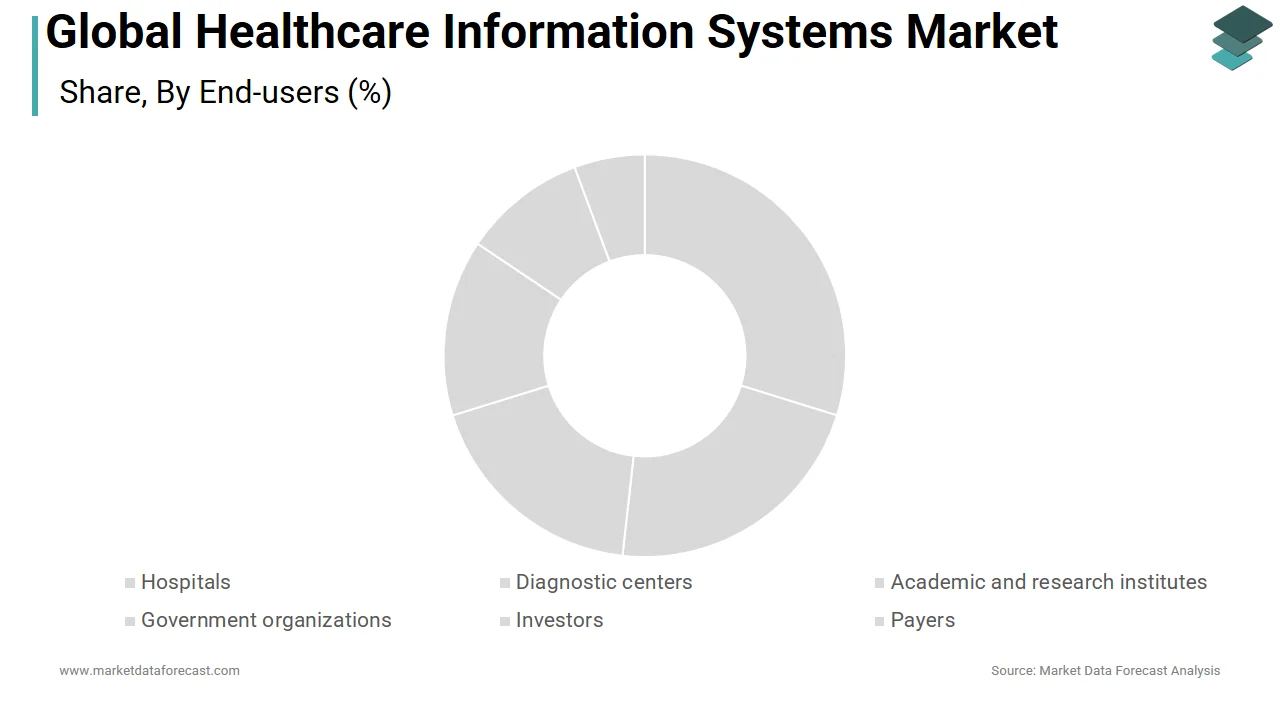
The diagnostic center’s segment is next to the hospital's segment to contribute to the market growth. The segment growth is attributed to the rise in demand for technologies to store and feed the data in bulk. These devices have provided flexibility in tracking patient records and billing records.
The academic and research institutes category is likely to have substantial growth in the healthcare information systems market globally.
By Application Insights
The hospital information systems segment is estimated to hold the largest share in the market during the forecast period based on the application owing to its colossal data preservation and protection from thefts and hackings. Hospital information systems have data collected from staff, and patients. Hence patient data is the primary concern. It needs to be protected, as well.
The pharmacy information systems segment is expected to have the second-largest share in the market share globally. The growing adoption of technological advancements solutions ensuring pharmacists manage medication workflow to develop the effectiveness and efficiency of services impels market growth.
The medical imaging information systems segment is projected to have the quickest growth with the highest CAGR rate during the analysis period. Increasing expenditure on healthcare, particularly in urban areas, is propelling the demand of the market.
By Component Insights
Based on the component, the software segment is predicted to occupy a leading share in the market. Software functioning and software updates are the main factors in this market. System updates and software tools regulations are most important to maintain servers properly. Hence the software segment holds the most massive revenue.
The system services segment is expected to globally stand at the 2nd leading position in the healthcare information systems market. The rise in the number of hospitals and clinics allowing the administrative employees to back up the bulk data boosts the market growth. Implementing the software solution in the hospitals and institutions by providing education and training leads the market with the highest share globally.
The second-largest segment is the hardware in terms of revenue. The segment growth is due to the high adoption of advanced hardware among the medical facilities to store and access huge data from the databases.
The software segment is predicted as the quick growing segment in the healthcare information systems market. The factors like rising perforation of Information Technology in the medical field and amplifying acquisition of enhancements in technology web-based software and e-health platforms are expected to surge the market growth in the forthcoming years. Adopting electronic health records in hospitals and clinics is also greatly influencing this segment's demand.
REGIONAL ANALYSIS
North America Healthcare Information Systems Market Analysis
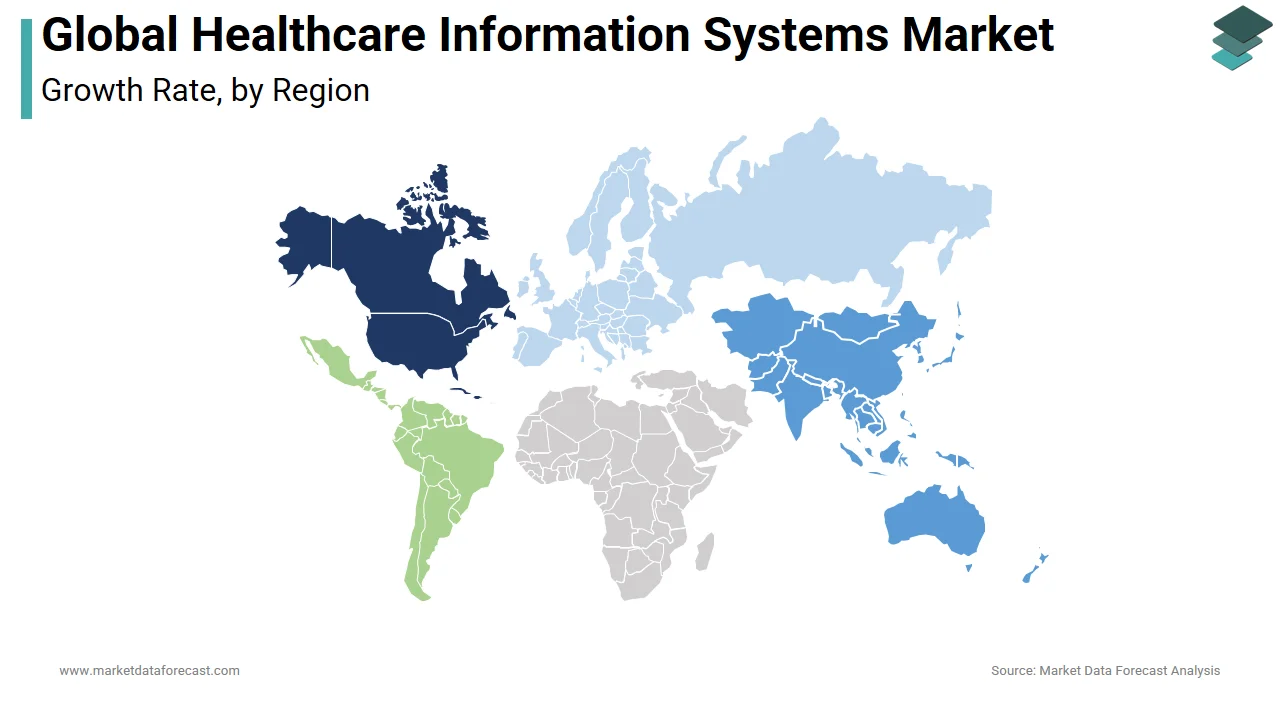
Geographically, the North American market is the one holding with the highest shares of the market. Increasing investments in developing new technologies in healthcare is a key driving factor for growth in this region. Increasing prevalence for telemedicine platforms due to surging COVID-19 is propelling the demand in the market. The growing occurrence rate of cancer is propelling the market growth. Also, the rapid adoption of advanced technologies in healthcare is merely leveraging the market demand. The growing demand for wearable devices and increasing smartphone users worldwide are elevating the demand in the market. The United States has the majority of the market due to its high digital healthcare adoption in the region.
Europe Healthcare Information Systems Market Analysis
The European market is positioned second in leading the market shares by owing to constant economic growth in developed and developing countries. The increasing scale of hospitals and clinics and the rise in the demand for advanced technologies are leveling up the growth rate of the market. Also, rising awareness over the benefits of telemedicine is evaluating the market demand in Europe. UK and Germany are ruling with the highest shares of the healthcare information systems market. The rise in disposable income and escalating healthcare expenditure are promoting the growth rate of the market to the extent in these countries. Besides, the availability of the internet of things, even in the rural areas, is fuelling the market's demand.
Asia Pacific Healthcare Information Systems Market Analysis
The Asia Pacific is expected to see massive growth in the forecast period. This growth in the Asia Pacific region is due to development with the most elevated CAGR from the vast patient base and improving medical services spending, and enhancing the foundation of medical services. Additionally, expanding population and development of medical services costs enhance market development in the Asia Pacific. Growing infectious diseases and rising awareness over the use of the latest healthcare techniques are escalating the growth rate of the market in this region. China is leading with the highest shares of the market. An increasing number of R&D activities to improve the quality of healthcare services elevate the demand of the market.
Middle East and Africa Healthcare Information Systems Market Analysis
In the Middle East and Africa, countries such as Nigeria and South Africa experienced slow growth due to a lack of technological developments. Healthcare and infrastructure are also low. With its vast population, which has a high geriatric ratio and increased patient population, Europe expects steady growth in the healthcare information systems market.
KEY MARKET PARTICIPANTS
Some of the companies that are playing a dominating role in the global healthcare information systems market include
- Dedalus S.p.A (Agfa-Gevaert Group)
- Allscripts Healthcare Solutions Inc.
- Cerner Corporation
- GE Healthcare
- Integrated Medical Systems
- Koninklijke Philips NV
- McKesson Corporation
- Carestream Health
- Wipro Limited
MARKET SEGMENTATION
This research report on the global healthcare information systems market has been segmented and sub-segmented into the following categories.
By End-users
- Hospitals
- Diagnostic centers
- Academic and research institutes
- Government organizations
- Investors
- Payers
By Application
- Hospital information systems
- Pharmacy information systems
- Revenue cycle management
- Medical imaging information systems
- Laboratory information systems
By Component
- Hardware
- Software
- System services
By Region
- North America
- Europe
- Asia Pacific
- Latin America
- The Middle East and Africa