- Product Description Description
- Table of Contents TOC
- List of Table & Figure LOT
- Get Free Sample PDF Sample PDF
Market Size, 2025
$3.13 BnMarket Estimate, 2026
$3.39 BnMarket Forecast, 2034
$6.36 BnCAGR, 2026–2034
8.8%Global Laboratory Information System (LIS) Market Report Summary
The Global Laboratory Information System (LIS) Market was valued at USD 3.13 Bn in 2025, is estimated to reach USD 3.39 Bn in 2026, and is projected to reach USD 6.36 Bn by 2034, growing at a CAGR of 8.8% during the forecast period from 2026 to 2034. The growth of the global laboratory information system market is driven by the increasing volume of diagnostic testing, rising prevalence of chronic diseases, and growing demand for workflow automation in clinical laboratories. Stringent regulatory compliance requirements, increasing adoption of electronic health records (EHRs), and the shift toward digital laboratory management are further accelerating market expansion. Additionally, cloud-based deployments, AI-powered analytics, and decentralized laboratory services are creating significant growth opportunities for the global laboratory information system market.
Key Market Trends
-
Growing adoption of cloud-based laboratory information systems across healthcare facilities.
-
Increasing integration of artificial intelligence and predictive analytics into laboratory workflows.
-
Rising demand for workflow automation and interoperability with electronic health records.
-
Expansion of point-of-care testing and decentralized laboratory services.
-
Strengthening cybersecurity measures to safeguard laboratory and patient data.
Segmental Insights
- Based on component, the LIS software segment accounted for 34.2% of the global laboratory information system market share in 2025. The segment’s dominance is attributed to increasing laboratory automation, digital workflow management, regulatory compliance requirements, and growing adoption of advanced software platforms for specimen tracking and reporting.
- The LIS services segment is projected to witness the fastest growth during the forecast period, registering a CAGR of 9.8%. The growth is driven by rising demand for implementation, integration, migration, training, cybersecurity, and managed support services as laboratories modernize their digital infrastructure.
- Based on delivery mode, the on-premises segment held 34.2% of the global laboratory information system market share in 2025 due to strong data security, greater system customization, and widespread deployment across large hospitals and reference laboratories. Meanwhile, the cloud-based segment is expected to witness the fastest growth, registering a CAGR of 11.5%, supported by lower infrastructure costs, greater scalability, remote accessibility, and increasing adoption among small and medium-sized laboratories.
- Based on end user, the hospitals segment accounted for 34.3% of the market share in 2025, driven by high diagnostic testing volumes, integrated healthcare systems, and increasing demand for laboratory workflow automation. The independent laboratories segment is projected to witness the fastest growth, registering a CAGR of 10.2%, owing to expanding outsourced diagnostic services, laboratory consolidation, and increasing adoption of cloud-based LIS platforms.
Regional Insights
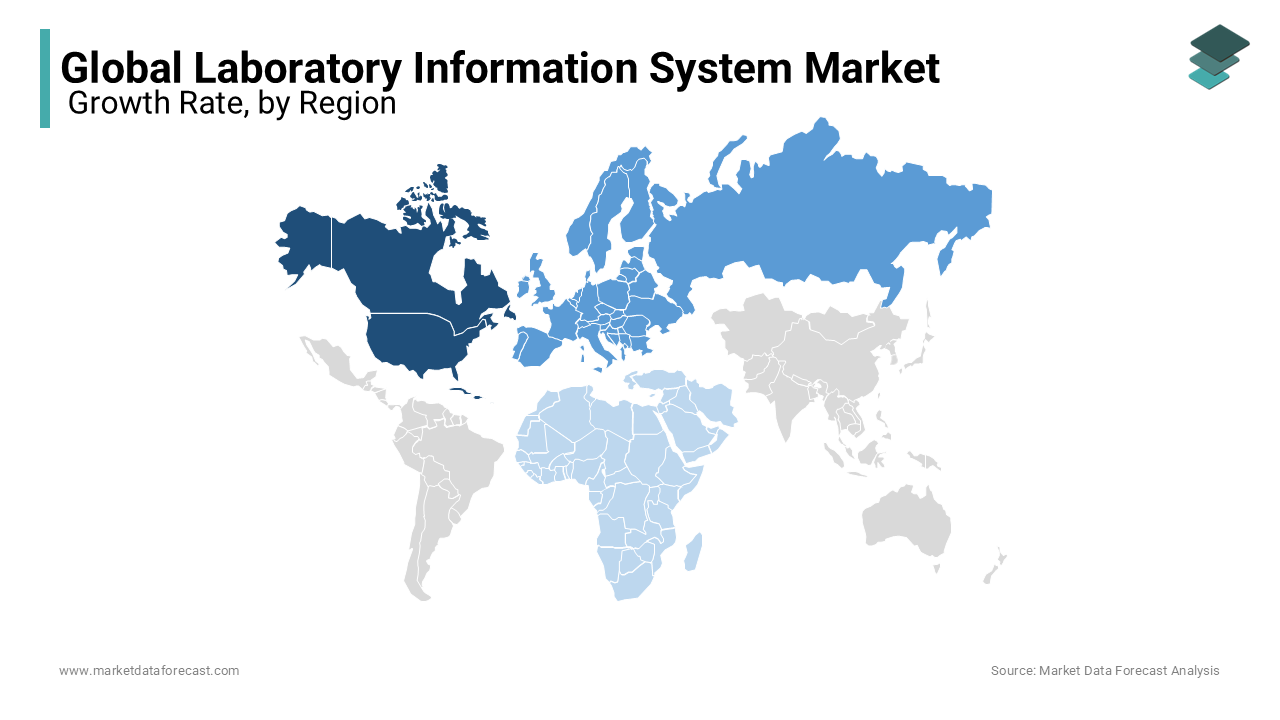
The global laboratory information system market is witnessing significant growth across all major regions, driven by healthcare digitalization, laboratory modernization, and increasing diagnostic testing volumes.
- North America dominated the global laboratory information system market by accounting for 34.7% of the global market share in 2025. The region's leadership is supported by advanced healthcare infrastructure, widespread adoption of digital health technologies, stringent regulatory compliance, and increasing investments in AI-enabled laboratory management systems.
- Europe accounted for 22.1% of the market share in 2025, driven by universal healthcare systems, strong laboratory automation, strict data privacy regulations such as GDPR, and increasing investments in digital healthcare infrastructure.
- Asia-Pacific is projected to witness the fastest growth during the forecast period, supported by rapid healthcare infrastructure development, increasing healthcare expenditure, growing private diagnostic laboratory networks, and government-led digital healthcare initiatives across China, India, Japan, and Australia.
- Latin America continues to experience steady market growth owing to healthcare reforms, expanding diagnostic laboratory networks, increasing private healthcare investments, and rising adoption of digital laboratory management solutions.
- The Middle East & Africa is also expected to witness growing adoption, supported by government investments in healthcare infrastructure, smart hospital initiatives, medical tourism, and increasing deployment of cloud-based laboratory information systems.
Competitive Landscape
The global laboratory information system market is highly competitive, with multinational healthcare technology companies and specialized software providers focusing on cloud computing, artificial intelligence, interoperability, cybersecurity, and workflow automation. Companies are strengthening their market positions through strategic partnerships, acquisitions, continuous product innovation, and expansion into emerging healthcare markets. Increasing investments in secure, scalable, and AI-enabled laboratory management platforms are intensifying competition across the global laboratory information system market. Prominent players in the global laboratory information system market include Cerner Corporation, McKesson, Epic Systems Corporation, Medical Information Technology, SCC Soft Computer, Sunquest Information Systems, LabWare, CompuGroup Medical, and Evident.
Global Laboratory Information System Market Size
The global laboratory information system (LIS) market size was valued at USD 3.13 billion in 2025. The global market is estimated to grow to USD 6.36 billion by 2034 from USD 3.39 billion in 2026 and register a CAGR of 8.8% during the forecast period.
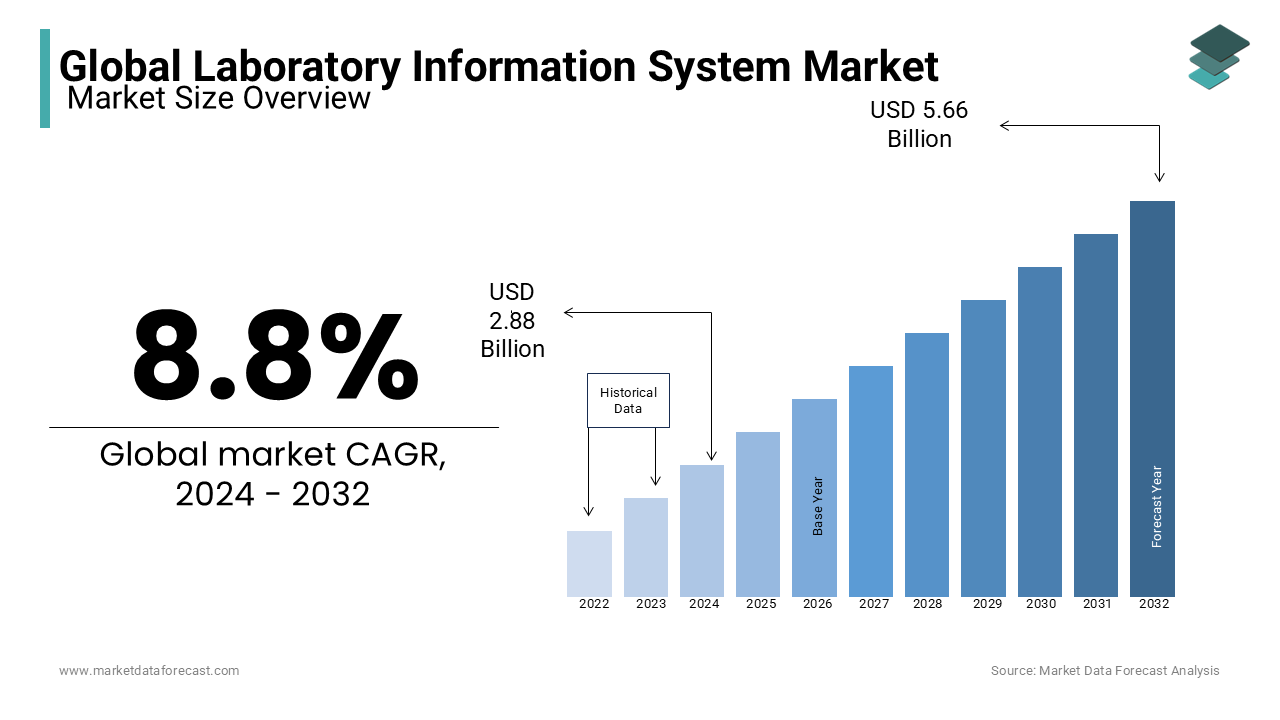
The laboratory information system is specialized software solutions designed to manage laboratory operations patient data test results and workflow automation, across clinical diagnostic and research facilities. The primary function involves tracking specimens from collection to final reporting while maintaining strict compliance with regulatory standards, such as Health Insurance Portability and Accountability Act and Clinical Laboratory Improvement Amendments. According to the Centers for Disease Control and Prevention, clinical laboratories in the United States perform approximately 7 billion tests annually highlighting the immense volume of data that requires accurate management and storage. Furthermore, the World Health Organization states that timely and accurate diagnostic information is for effective disease management and public health surveillance, particularly in the context of emerging infectious diseases. As healthcare providers transition towards value-based care models, the demand for integrated laboratory information systems increases to reduce turnaround times minimize manual errors and enhance patient safety. The shift from paper-based records to digital platforms enables real time access to health data facilitating better clinical decision making and interoperability among diverse healthcare stakeholders.
MARKET DRIVERS
Increasing Volume of Diagnostic Testing and Chronic Disease Prevalence
The escalating prevalence of chronic diseases and the subsequent rise in diagnostic testing volumes is majorly fuelling the growth of the laboratory information systems market. Conditions, such as diabetes cardiovascular diseases and cancer require continuous monitoring and frequent laboratory assessments to manage patient health effectively. According to the International Diabetes Federation, approximately 537 million adults were living with diabetes in 2021 a number projected to rise to 643 million by 2030, necessitating regular blood glucose and other metabolic tests. Laboratory Information Systems automate sample tracking result entry and report generation ensuring that high throughput laboratories can maintain accuracy and speed. Consequently, laboratories must invest in robust software infrastructure to manage the influx of samples and deliver timely results to clinicians. The ability of these systems to integrate with electronic health records allows for comprehensive patient history tracking which is essential for managing complex chronic conditions.
Stringent Regulatory Compliance and Quality Assurance Requirements
The strict regulatory frameworks mandating data integrity patient privacy and quality assurance standards is additionally promoting the growth of the laboratory information system market. Healthcare laboratories operate under rigorous guidelines enforced by bodies, such as the Food and Drug Administration and the College of American Pathologists, which require meticulous documentation and audit trails for all testing processes. According to the research, violations of patient privacy laws can result in substantial financial penalties and reputational damage compelling laboratories to adopt secure digital systems that protect sensitive health information. Laboratory Information Systems provide built compliance features that ensure adherence to legal requirements. The Clinical and Laboratory Standards Institute emphasizes the importance of standardized procedures and accurate record keeping to maintain accreditation status. Manual record keeping is prone to human error and lacks the transparency required for regulatory audits, whereas digital systems offer traceability and consistency. Additionally, the transition to value based care models requires laboratories to demonstrate quality metrics and outcome data, which these systems can generate automatically.
MARKET RESTRAINTS
High Implementation Costs and Financial Constraints
The substantial initial investment required for implementing for small and medium sized laboratories and healthcare facilities in developing regions is hindering the growth of the laboratory information systems market. The total cost of ownership includes not only software licensing fees but also expenses for hardware upgrades network infrastructure customization and staff training. The technology implementation projects often exceed initial budgets due to unforeseen integration challenges and extended deployment timelines. Additionally, ongoing maintenance fees subscription costs for cloud based solutions and periodic software updates add to the long term financial burden. This financial constraint slows the adoption rate of advanced laboratory management systems in regions where they are needed most to improve diagnostic accuracy. Furthermore, the return on investment may take several years to materialize making it difficult for cash strapped organizations to justify the expenditure.
Complexity of Integration with Legacy Systems and Interoperability Issues
The technical complexity associated with integrating new systems with existing legacy infrastructure and disparate healthcare information systems is limiting the growth of the laboratory information system market. Many healthcare facilities operate on older software platforms that lack standardized application programming interfaces making seamless data exchange difficult and costly. The interoperability remains a persistent challenge in the healthcare industry with varying data formats and protocols hindering effective communication between systems. Customizing Laboratory Information Systems to work with legacy electronic health records and hospital information systems requires significant technical expertise and time often leading to project delays and operational disruptions. The poor interoperability can result in data silos fragmented patient records and increased administrative workload for laboratory staff. Additionally, the lack of universal standards for data exchange means that each integration project may require unique solutions increasing development costs and complexity. Laboratories face the risk of data loss or corruption during migration further discouraging adoption
MARKET OPPORTUNITIES
Expansion into Point of Care Testing and Decentralized Laboratories
The growing trend towards point of care testing and the decentralization of laboratory services is to create new opportunities for the growth of the laboratory information system market. Point of care testing allows for rapid diagnostic results at the patient bedside or in remote clinics improving treatment speed and patient outcomes. The demand for point of care testing is increasing due to its convenience and ability to support immediate clinical decisions in emergency and primary care settings. Traditional centralized Laboratory Information Systems are being adapted to manage data from distributed point of care devices ensuring that results are accurately recorded and integrated into the main patient record. Cloud based Laboratory Information Systems facilitate this decentralization by enabling real time data synchronization across multiple locations without the need for extensive local infrastructure. This capability is particularly valuable in rural areas and developing regions where access to central laboratories is limited. By offering scalable and flexible solutions that support remote testing Laboratory Information System providers can tap into a rapidly expanding segment.
Adoption of Artificial Intelligence and Predictive Analytics
The integration of artificial intelligence and predictive analytics to enhance diagnostic accuracy and operational efficiency is also to promote the growth opportunities for the growth of the laboratory information system market. Artificial intelligence algorithms can analyze vast amounts of laboratory data to identify patterns predict equipment failures and flag abnormal results for review. The artificial intelligence applications in pathology and laboratory medicine are showing promise in improving diagnostic precision and reducing turnaround times. Predictive analytics can optimize inventory management by forecasting reagent usage and scheduling maintenance before breakdowns occur thereby reducing downtime and costs. Laboratory Information Systems equipped with these advanced capabilities can provide clinicians with actionable insights beyond simple test results supporting personalized medicine and proactive patient care.
MARKET CHALLENGES
Data Security Risks and Cybersecurity Threats
The increasing digitization of laboratory data exposes to significant cybersecurity threats, including ransomware attacks data breaches and unauthorized access is also to act as a barrier for the growth of laboratory information system market. The healthcare industry has the highest average cost of a data breach among all sectors reflecting the severity and complexity of security incidents. A successful cyberattack can disrupt laboratory operations compromise patient privacy and lead to severe regulatory penalties and loss of trust. Laboratory Information Systems must incorporate robust security measures, such as end-to-end encryption multi factor authentication and continuous monitoring to protect sensitive information. However, maintaining up to date security protocols requires constant vigilance and investment which can be challenging for resource constrained organizations. Balancing accessibility for authorized users with stringent security controls is a complex task that requires specialized expertise.
Shortage of Skilled IT and Laboratory Personnel
The scarcity of professionals possessing both laboratory science expertise and information technology is additionally to leverage the growth of the laboratory information system market. Operating and maintaining these complex software platforms requires specialized knowledge in database management system administration and workflow optimization, which is often lacking in traditional laboratory staff. There is a growing workforce shortage in the laboratory profession exacerbated by an aging workforce and insufficient training programs for digital competencies. This skills gap leads to underutilization of system features increased reliance on vendor support and higher operational costs. Training existing staff to manage Laboratory Information Systems is time consuming and expensive while recruiting new talent with dual competencies is difficult due to high demand in the broader tech sector. The Bureau of Labor Statistics projects steady growth in healthcare occupations but notes that specialized roles requiring technical proficiency face tighter labor markets. Without adequate personnel to manage these systems laboratories may experience inefficiencies data errors and delayed implementations.
REPORT COVERAGE
| REPORT METRIC | DETAILS |
| Market Size Available | 2025 to 2034 |
| Base Year | 2025 |
| Forecast Period | 2026 to 2034 |
| Segments Covered | By Component, Delivery Mode, End-User, and Region |
| Various Analyses Covered | Global, Regional & Country Level Analysis, Segment-Level Analysis; DROC, PESTLE Analysis, Porter's Five Forces Analysis, Competitive Landscape, Analyst Overview of Investment Opportunities |
| Regions Covered | North America, Europe, APAC, Latin America, Middle East & Africa |
| Market Leaders Profiled | Cerner Corporation, Mckesson, Epic System Corporation, Medical Information Technology, SCC Soft Computer, Sunquest Information Systems, Labware, Compugroup Medical, and Evident. |
SEGMENTAL ANALYSIS
By Component Insights
The LIS software segment was the largest by holding 34.2% of the laboratory information system market share in 2025 due to its role as the core functional engine that manages data processing workflow automation and result reporting. The need for laboratories to replace manual paper based records with digital solutions that ensure accuracy and compliance. The clinical laboratories in the United States process billions of tests annually requiring robust software infrastructure to handle high volume data entry and retrieval without errors. Furthermore, the complexity of modern diagnostic testing requires sophisticated algorithms for quality control instrument interfacing and regulatory reporting which are embedded within the software architecture. As laboratories upgrade from legacy systems to modern platforms, the demand for advanced software features such as artificial intelligence driven analytics and mobile accessibility continues to drive growth.
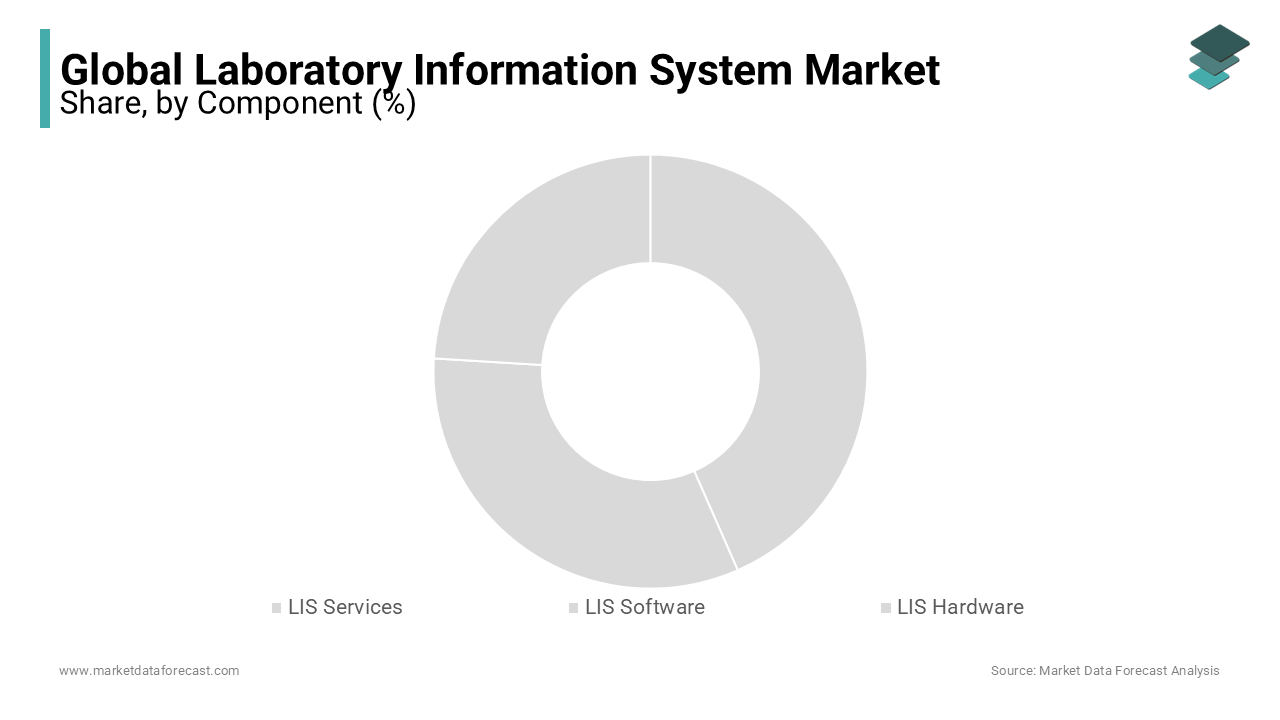
The LIS services segment is esteemed to witness a fastest CAGR of 9.8% during the forecast period with the increasing complexity of system implementation integration and the need for ongoing technical support and training. Many healthcare organizations lack the internal IT expertise required to deploy and maintain sophisticated laboratory information systems leading them to outsource these functions to specialized service providers. Implementation services, include system configuration data migration and workflow customization, which are for ensuring that the software meets the specific operational needs of the laboratory. Additionally, managed services, such as remote monitoring cybersecurity management and regular software updates are becoming essential as laboratories face rising cyber threats and regulatory requirements. The shift towards cloud based solutions also drives demand for migration services as laboratories transition from on premises servers to cloud environments.
By Delivery Mode Insights
The on-premises delivery mode segment was the largest by accounting for 34.2% of the laboratory information system market share in 2025 due to established infrastructure in large hospitals and reference laboratories that prioritize data control and security. Many large healthcare institutions have historically invested heavily in local server infrastructure and prefer keeping sensitive patient data within their physical premises to mitigate perceived cybersecurity risks associated with external hosting. The strict regulations regarding patient privacy and data sovereignty often lead larger organizations to favor on-premises solutions, where they have direct oversight of security protocols and access controls. This model allows for greater customization and integration with existing legacy hospital information systems, which may not be easily compatible with cloud based architectures. Some accredited laboratories maintain on-premises systems to ensure uninterrupted operation during internet outages or connectivity issues, which is for emergency diagnostics. Additionally, institutions with substantial IT budgets prefer the capital expenditure model of on-premises deployment over recurring operational expenses associated with cloud subscriptions.
The cloud-based delivery mode segment is anticipated to grow at a fastest CAGR of 11.5% during the forecast period with the need for scalability cost efficiency and remote accessibility. The lower total cost of ownership compared to on-premises solutions, as it eliminates the need for expensive hardware investments and dedicated IT maintenance staff. The cloud computing offers significant advantages in terms of resource pooling and rapid elasticity allowing laboratories to scale their operations up or down based on testing volumes without infrastructure constraints. Small and medium sized laboratories are increasingly adopting cloud-based LIS to access enterprise grade features without the prohibitive upfront costs. Furthermore, cloud platforms enable seamless updates and patches ensuring that laboratories always operate on the latest compliant version of the software without downtime. The rise of telemedicine and point of care testing also supports cloud adoption as it allows real time data synchronization between remote testing sites and central laboratories. As cybersecurity measures in cloud environments improve and trust in third party providers grows, the migration from on-premises to cloud based LIS accelerates particularly among newer healthcare entrants and expanding diagnostic chains.
By End User Insights
The hospitals segment was the largest by capturing 34.3% of the laboratory information system market share in 2025 due to their high volume of diagnostic tests complex operational requirements and extensive integration needs with other hospital departments. Large hospital networks perform a vast array of laboratory tests ranging from routine blood work to specialized molecular diagnostics generating massive amounts of data that require efficient management. The integration of LIS with hospital information systems and electronic health records is critical for coordinated patient care reducing duplicate testing and improving clinical outcomes. Hospitals also face stringent regulatory compliance requirements such as those mandated by the Joint Commission, which drive the adoption of comprehensive LIS solutions that offer audit trails and quality control features. The financial capacity of large hospital systems allows them to invest in advanced LIS platforms with artificial intelligence capabilities and automated workflow tools. Additionally, the consolidation of healthcare providers into larger integrated delivery networks increases the demand for centralized laboratory management systems that can standardize processes across multiple facilities.
The independent laboratories segment is esteemed to grow at a fastest CAGR of 10.2% from 2026 to 2034 with the outsourcing of diagnostic services by hospitals and clinics. As healthcare providers seek to reduce operational costs and focus on core clinical activities, they are increasingly referring patients to independent reference laboratories for specialized and high volume testing. The independent laboratory sector has seen significant consolidation and expansion creating a need for scalable and efficient LIS to manage increased sample throughput. Independent laboratories operate on thin margins and rely on operational efficiency to remain competitive making the automation and workflow optimization provided by modern LIS crucial for their success. Cloud based LIS solutions are particularly attractive to independent laboratories as they offer lower entry costs and easier scalability. Furthermore, the ability of independent labs to offer faster turnaround times through efficient digital workflows enhances their value proposition to referring physicians.
REGIONAL ANALYSIS
North America Laboratory Information System Market Analysis
North America was the top performer in the global Laboratory Information System market by holding 34.7% characterized by advanced healthcare infrastructure high adoption of digital health technologies and stringent regulatory frameworks. The region benefits from a well-established network of large hospital systems and reference laboratories that have early adopted comprehensive LIS solutions. The implementation of the Health Insurance Portability and Accountability Act and the Clinical Laboratory Improvement Amendments mandates strict data management and quality standards driving continuous upgrades in laboratory systems. The presence of major LIS vendors in the region fosters innovation and competition leading to the development of advanced features such as artificial intelligence and predictive analytics. Additionally, the high prevalence of chronic diseases in North America results in a large volume of diagnostic tests necessitating efficient laboratory management. The shift towards value-based care models further encourages the adoption of integrated LIS that can provide data for quality reporting and population health management.
Europe Laboratory Information System Market Analysis
Europe laboratory information system market was ranked second by holding 22.1% of share in 2025 with the universal healthcare systems government initiatives for digital health and strict data privacy regulations. The European Union’s General Data Protection Regulation imposes rigorous requirements on patient data handling compelling laboratories to adopt secure and compliant LIS solutions. Countries, such as Germany, France, and the United Kingdom have well developed healthcare infrastructures with high levels of laboratory automation and digitalization. The aging population in Europe increases the demand for diagnostic services driving the need for efficient laboratory management systems. Furthermore, cross border healthcare initiatives require standardized data exchange formats encouraging the adoption of LIS with strong interoperability capabilities.
Asia-Pacific Laboratory Information System Market Analysis
The Asia-Pacific laboratory information system market is likely to grow at a fastest CAGR during the forecast period with the rapid healthcare infrastructure development increasing healthcare expenditure and rising awareness of diagnostic services. Countries, such as China, India, Japan, and Australia are witnessing significant investments in hospital construction and laboratory modernization. The large population base and increasing prevalence of infectious and chronic diseases drive high demand for diagnostic testing necessitating efficient laboratory management solutions. In China, the Healthy China 2030 initiative promotes the digitalization of healthcare services including laboratory information systems to improve efficiency and accessibility. India is seeing a boom in private diagnostic chains that are adopting cloud based LIS to manage multiple locations and streamline operations.
Latin America Laboratory Information System Market Analysis
Latin America laboratory information system market growth is driven by healthcare reforms increasing private insurance coverage and urbanization. Brazil, Mexico, and Argentina are the largest contributors in the region with ongoing efforts to modernize public and private healthcare facilities. The expansion of private hospital chains and diagnostic centers is driving the adoption of LIS to enhance operational efficiency and patient service quality. However, economic volatility and budget constraints in the public sector limit the pace of technology adoption compared to North America and Europe. The international collaborations and foreign investments in healthcare infrastructure are facilitating the introduction of advanced LIS solutions. The growing awareness of preventive healthcare among the middle class is increasing the volume of outpatient diagnostic tests creating demand for scalable laboratory management systems.
The Middle East and Africa Laboratory Information System Market Analysis
The Middle East and Africa laboratory information system market growth is likely to grow with the government investments in healthcare infrastructure and the expansion of medical tourism. Countries in the Gulf Cooperation Council, such as Saudi Arabia and the United Arab Emirates are heavily investing in smart healthcare initiatives, as part of their economic diversification strategies. In the Middle East, the establishment of world class medical cities and hospitals creates demand for advanced LIS with integration capabilities. International aid and non-governmental organizations are supporting the deployment of digital health solutions, including LIS to improve disease surveillance and diagnostic accuracy. Mobile health technologies and cloud-based LIS are particularly relevant in Africa due to limited fixed infrastructure.
COMPETITIVE LANDSCAPE
The competition in the Laboratory Information System market is intense and characterized by the presence of large multinational corporations specialized software vendors and emerging technology startups who vie for dominance through innovation and strategic alliances. Major competitors leverage their extensive expertise in healthcare informatics data analytics and cloud infrastructure to offer comprehensive solutions that meet stringent regulatory standards. The market sees frequent mergers and acquisitions as larger firms seek to expand their product portfolios and geographic reach. Price competition is significant particularly for small and medium sized laboratories where cost sensitivity is high. However, differentiation through superior interoperability user experience and advanced analytics capabilities helps premium suppliers maintain higher margins. The shift towards cloud based solutions has intensified competition as companies race to provide secure and scalable platforms. Regulatory compliance across different regions adds complexity requiring companies to maintain flexible and adaptable product portfolios. Supply chain resilience for hardware components has become a key competitive advantage.
KEY MARKET PLAYERS
The list of key competitors in the global laboratory information system market profiled in this report is
- Cerner Corporation
- Mckesson
- Epic System Corporation
- Medical Information Technology
- SCC Soft Computer
- Sunquest Information Systems
- Labware
- Compugroup Medical
- Evident.
Top Players in the Global Laboratory Information System Market
Oracle Corporation
Oracle Corporation is a major provider of laboratory information systems through its Cerner division which offers comprehensive digital health solutions. The company delivers robust LIS platforms that integrate seamlessly with electronic health records and hospital information systems to streamline laboratory workflows. Oracle strengthens its market position by leveraging cloud infrastructure to enhance data security and scalability for healthcare providers. Recent actions, include investing heavily in artificial intelligence capabilities within its health suite to improve diagnostic accuracy and operational efficiency. The company focuses on interoperability standards to ensure smooth data exchange across diverse healthcare ecosystems.
Thermo Fisher Scientific Inc
Thermo Fisher Scientific Inc is a leading global supplier of laboratory information systems specifically designed for clinical diagnostics and research environments. The company offers specialized software such as SampleManager LIMS that manages complex sample workflows and ensures strict regulatory compliance. Recent initiatives involve enhancing cloud-based offerings to provide remote access and real time data analytics for laboratories. The company collaborates with healthcare institutions to customize systems that meet specific therapeutic area requirements. By focusing on automation and digital transformation, Thermo Fisher enables laboratories to increase throughput and reduce errors.
LabVantage Solutions Inc
LabVantage Solutions Inc is a prominent player in the laboratory information system market known for its flexible and scalable LIMS platforms. The company serves various industries including clinical diagnostics pharmaceuticals and environmental testing with tailored software solutions. LabVantage strengthens its market position by emphasizing user friendly interfaces and rapid deployment capabilities that reduce implementation time. The company invests in continuous product innovation to support emerging technologies, such as next generation sequencing and molecular diagnostics. LabVantage focuses on delivering high quality customer service and training to ensure successful adoption of its systems.
Top Strategies Used by Key Market Participants
Key players in the Laboratory Information System market employ several strategic approaches to maintain competitiveness and drive growth. Strategic partnerships and collaborations are primary strategies where companies join forces with healthcare providers and technology firms to co-develop innovative solutions. This approach allows for shared resources and accelerated time to market for new features. Investment in research and development is another critical strategy focusing on advancements in artificial intelligence cloud computing and interoperability standards. Companies prioritize creating scalable and modular platforms that can be easily integrated into various healthcare settings. Geographic expansion is also important as firms establish presence in emerging markets to serve local demand efficiently. Additionally, companies focus on cybersecurity measures to protect sensitive patient data and ensure regulatory compliance.
RECENT MARKET HAPPENINGS
- In November 2022, a Hamburg-based manufacturer of laboratory products, Starlab, invented sterile TipOne to help scientists in their work by improving the sustainability of the lab, which also has been shortlisted for the 'Products of Sustainable Laboratory of category award of the year.
- In November 2022, Oracle ORCL Cerner partnered with Labcorp for increased management of hospital labs in 10 states, supporting complex needs of a laboratory operation to standardize workflows for greater efficiency and support information sharing across the entire laboratory system.
- In November 2022, Fluence Energy, Inc., a leading global provider of energy storage products, expanded its product testing facilities network through a new lab in Pennsylvania, serving as the primary location for system-level testing, supporting quality assurance with increased speed and flexibility.
MARKET SEGMENTATION
This research report on the global laboratory information system market has been segmented and sub-segmented into the following categories.
By Component
- LIS Services
- LIS Software
- LIS Hardware
By Delivery Mode
- Cloud-Based
- On-Premises
By End User
- Hospitals
- Independent Laboratories
- Clinical Laboratories
- Others
By Region
- North America
- Europe
- Asia Pacific
- Latin America
- Middle East and Africa