- Product Description Description
- Table of Contents TOC
- List of Table & Figure LOT
- Get Free Sample PDF Sample PDF
Market Size, 2025
$231 BnMarket Estimate, 2026
$247.68 BnMarket Forecast, 2034
$432.61 BnCAGR, 2026–2034
7.22%Executive Summary: Herbal Medicine Market
- Market Scope: Comprehensive global herbal medicine market analysis covering product types, source categories, delivery forms, regional leadership frameworks, and traditional healthcare utilization metrics.
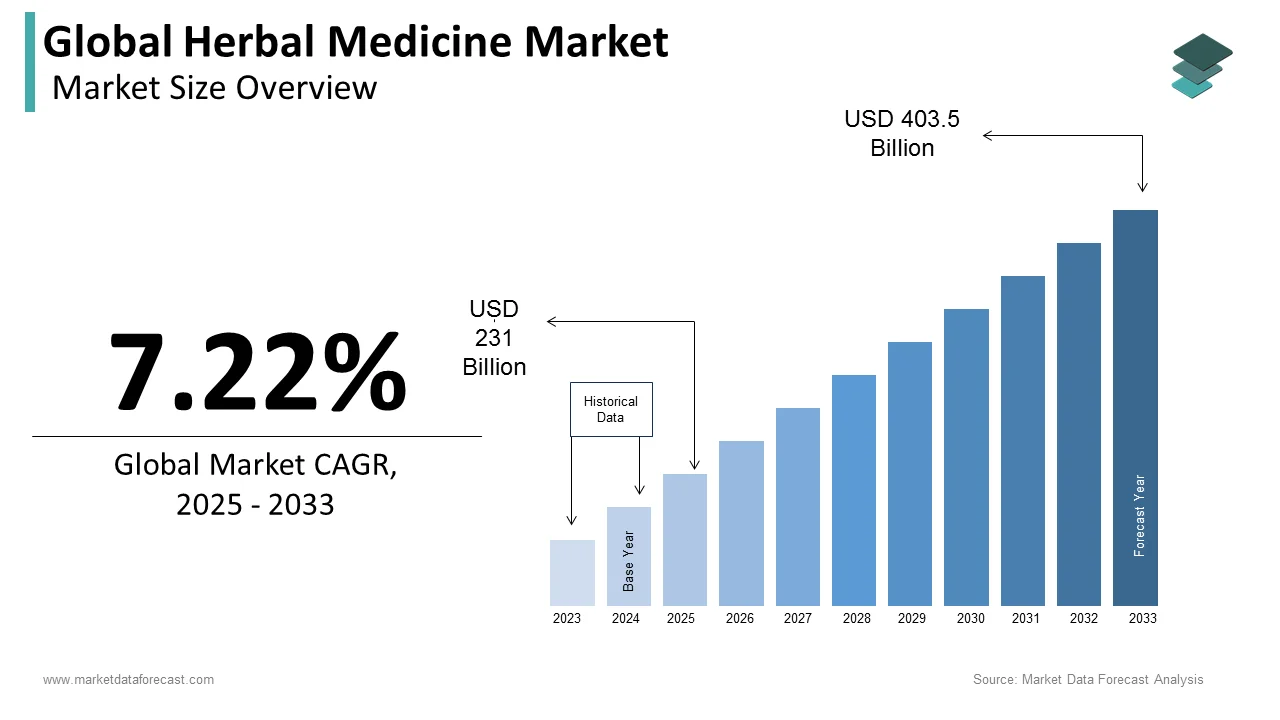
- Market Valuation: Valued at USD 231 billion (2025 base year), estimated at USD 247.68 billion (2026), and projected to reach USD 432.61 billion by 2034, registering a steady CAGR of 7.22% (2026–2034).
- Primary Growth Drivers: High reliance on traditional healthcare, rising non-communicable disease prevalence, and consumer demand for natural wellness products. Key public health and ecological highlights include approximately 80% of people in developing nations depending on herbal remedies for primary healthcare, non-communicable diseases accounting for 74% of global deaths annually, and nearly 15,000 medicinal plant species being threatened by overharvesting and habitat loss.
Key Market Segment Metrics (2026–2034)
| Category | Leading Segment (2025 Position) | Fastest-Growing Segment |
|---|---|---|
| By Product Type | Herbal Dietary Supplements (dominated with a 44% market share in 2025) | Herbal Beauty & Personal Care Products (projected to grow at a 14.7% CAGR) |
| By Source Category | Roots and Bark (led the source category with 36.07% of the global market in 2025) | Herbal Leaves & Specialized Botanicals (projected to expand at a 13.2% CAGR) |
| By Delivery Form | Capsules (dominated by form with a 38.05% share in 2025) | Liquid Extracts & Concentrates (forecasted to register the fastest CAGR of 15.3%) |
| By Region / Country | Asia-Pacific (leading region, accounting for 48.3% of the global market in 2025; Japan covers 148 Kampo formulas) | Asia-Pacific & Emerging Alternative Healthcare Markets |
Major Market Players & Market Structure
Market Structure: Highly competitive global botanical and herbal healthcare landscape featuring major international producers and traditional medicine enterprises competing intensely on vertical integration, scientific validation, rigorous clinical research, sustainable sourcing, supply-chain traceability, and standardized herbal formulations.
Key Companies: MATSUMURA & CO., Dr. Willmar Schwabe India Pvt. Ltd., Blackmores Limited, NATURE'S ANSWER, Arkopharma, Arizona Natural Products, Bio-Botanica Inc., Herbal Africa, Sidomuncul, and Nature Herbs.
Global Herbal Medicine Market Size
The size of the global herbal medicine market was worth USD 231 billion in 2025. The global market is anticipated to grow at a CAGR of 7.22% from 2026 to 2034, reaching USD 432.61 billion by 2034, up from USD 247.68 billion in 2026.
Herbal medicine refers to the therapeutic use of plant-derived substances for disease prevention, symptom management, and holistic well-being. Unlike synthetic pharmaceuticals, herbal medicine relies on bioactive compounds extracted from leaves, roots, seeds, bark, and flowers, often administered in the form of teas, tinctures, capsules, powders, or topical applications. This modality forms the cornerstone of traditional medical systems such as Ayurveda, Traditional Chinese Medicine (TCM), Unani, and Indigenous healing practices, which collectively serve billions of people worldwide.
According to the World Health Organization, approximately 80% of individuals in developing nations depend on herbal remedies as primary healthcare solutions due to cultural affinity, affordability, and accessibility. The global resurgence of interest in natural therapeutics has been amplified by rising consumer skepticism toward chemical-laden products and a growing preference for preventive, lifestyle-integrated health approaches. Furthermore, as per the International Union for Conservation of Nature, nearly 15,000 medicinal plant species are currently threatened by overharvesting and habitat loss, underscoring the ecological stakes involved in sustainable sourcing. Regulatory frameworks vary widely; while the European Medicines Agency recognizes traditional herbal registrations, many countries lack standardized quality controls. As urban populations increasingly seek alternatives to conventional medicine, herbal therapeutics are transitioning from folk remedies to scientifically scrutinized interventions, supported by expanding research into phytochemistry and clinical efficacy.
MARKET DRIVERS
Rising Global Burden of Chronic Diseases and Preventive Healthcare Adoption
The escalating prevalence of chronic non-communicable diseases (NCDs) such as diabetes, cardiovascular disorders, and autoimmune conditions has significantly amplified demand for herbal medicine as a complementary and preventive therapeutic approach. According to the World Health Organization, NCDs account for 74% of all global deaths annually, with lifestyle-related ailments driving a shift toward long-term, non-invasive management strategies. Herbal remedies such as Withania somnifera (ashwagandha) for stress-induced hypertension, Curcuma longa (turmeric) for inflammation, and Allium sativum (garlic) for lipid regulation are increasingly integrated into daily health regimens due to their perceived safety and multi-targeted physiological effects. Like, In China, traditional herbal formulations like Shenmai and Danshen are routinely prescribed in public hospitals for cardiovascular support, reflecting institutional recognition. The preventive orientation of herbal medicine, emphasizing immune modulation, detoxification, and metabolic balance, aligns with evolving healthcare paradigms that prioritize wellness over crisis intervention. As populations age and healthcare costs soar, the appeal of plant-based, low-risk interventions continues to grow, particularly in regions where integrative medicine is culturally embedded and increasingly validated by clinical research.
Expansion of E-commerce and Direct-to-Consumer Health Platforms
The digital revolution in retail has dramatically expanded access to herbal medicine, transforming how consumers discover, purchase, and engage with plant-based therapeutics. The proliferation of e-commerce platforms and specialized health marketplaces has dismantled traditional distribution barriers, enabling global reach for both established brands and artisanal producers. In India, online sales of Ayurvedic and herbal products grew notably in 2022, driven by platforms like 1mg, PharmEasy, and Amazon India. Social media and influencer marketing further amplify visibility; Instagram and YouTube campaigns promoting adaptogens, herbal tonics, and gut-health blends have reached hundreds of millions of users, particularly among Millennials and Gen Z. In Southeast Asia, startups like Honestbee in Singapore and Tokopedia in Indonesia have integrated certified herbal vendors into their ecosystems, ensuring product authenticity and consumer trust. The convenience of home delivery, coupled with AI-driven recommendations and teleconsultations with naturopaths, enhances user experience and adherence. As digital literacy improves and payment infrastructure strengthens, particularly in rural and semi-urban areas, e-commerce is emerging as a pivotal enabler of democratized access to herbal medicine, reshaping consumer behavior and accelerating market penetration.
MARKET RESTRAINTS
Lack of Standardization and Quality Control in Herbal Product Manufacturing
A critical impediment to the global scalability and credibility of herbal medicine is the widespread absence of standardized manufacturing protocols and quality assurance mechanisms. Unlike pharmaceuticals, which undergo rigorous batch testing and Good Manufacturing Practice (GMP) compliance, many herbal products, especially those from small-scale or traditional producers, lack consistent potency, purity, and labeling accuracy. Furthermore, variations in plant sourcing, cultivation methods, and extraction techniques result in inconsistent active compound concentrations, undermining clinical reliability. Without universally accepted benchmarks for identity, strength, and composition, consumers and healthcare providers remain skeptical of efficacy claims. This lack of standardization also hinders international trade, as importers in the EU and North America increasingly impose strict phytochemical profiling and contaminant screening. Until robust, harmonized quality control systems are enforced globally, the herbal medicine sector will continue to face reputational and regulatory challenges that limit its integration into mainstream healthcare.
Limited Clinical Evidence and Regulatory Recognition in Mainstream Medicine
Despite centuries of traditional use, a significant portion of herbal medicine lacks robust clinical validation, posing a major barrier to its acceptance within evidence-based medical systems. While some botanicals like Panax ginseng, Echinacea purpurea, and Hypericum perforatum (St. John’s Wort) have undergone extensive study, the majority of herbal formulations remain under-researched in controlled, large-scale trials. Like, only a limited share of published systematic reviews on herbal interventions conclude with high-certainty evidence supporting efficacy, with most studies limited by small sample sizes, methodological flaws, or publication bias. In public healthcare systems such as the UK’s NHS, most herbal treatments are excluded from formularies due to insufficient proof of benefit. This evidentiary gap discourages physician endorsement and insurance reimbursement, limiting patient access in high-income countries. Moreover, the complex, multi-component nature of herbal extracts complicates pharmacological analysis, making it difficult to isolate active compounds and establish dose-response relationships. As a result, many healthcare professionals remain cautious, viewing herbal medicine as anecdotal rather than therapeutic. So, without increased investment in randomized controlled trials, pharmacovigilance, and transparent data sharing, the sector will struggle to overcome scientific skepticism and achieve parity with conventional pharmaceuticals.
MARKET OPPORTUNITIES
Integration of Herbal Medicine into National Healthcare Systems and Universal Health Coverage
A transformative opportunity lies in the formal integration of herbal medicine into national healthcare frameworks, particularly in countries seeking cost-effective, culturally resonant solutions for universal health coverage. Governments in regions with deep-rooted traditional medicine systems are increasingly institutionalizing herbal therapeutics within public clinics and hospitals. Rwanda has pioneered a hybrid model by training community health workers in traditional plant-based remedies for malaria and gastrointestinal ailments, reducing dependency on imported pharmaceuticals. The institutional endorsement not only enhances accessibility but also legitimizes herbal medicine as a viable component of primary care. Furthermore, integrating traditional knowledge with modern diagnostics can improve treatment adherence in rural populations where cultural trust in herbal healers exceeds that in Western medicine. As healthcare systems face mounting fiscal pressures, the low-cost, preventive orientation of herbal medicine offers a sustainable complement to high-tech interventions, particularly in managing chronic and lifestyle-related conditions.
Advancements in Phytochemical Research and Biotechnological Extraction Methods
Recent breakthroughs in phytochemistry and biotechnology are unlocking new potential for herbal medicine by enhancing the precision, efficacy, and scalability of plant-based therapeutics. Modern analytical techniques such as high-performance liquid chromatography (HPLC), mass spectrometry, and nuclear magnetic resonance (NMR) enable the identification and quantification of bioactive compounds with unprecedented accuracy, allowing for standardized formulations. Biotechnological innovations such as tissue culture propagation, metabolic engineering, and enzyme-assisted extraction are improving yield and sustainability; for instance, the Korean Institute of Science and Technology developed a cell culture method to produce ginsenosides without cultivating whole ginseng plants, reducing harvest time from six years to weeks. In Europe, the Horizon Europe program has funded projects like Phytobiome, which uses AI to map plant-microbe interactions for optimized medicinal crop cultivation. Additionally, nanoencapsulation technologies are being employed to enhance the bioavailability of poorly soluble herbal compounds, increasing their therapeutic impact. These scientific advancements not only validate traditional claims but also facilitate the development of patentable, high-purity herbal derivatives that meet pharmaceutical standards. As research bridges the gap between ancient knowledge and modern science, herbal medicine is poised to evolve from empirical practice to a discipline grounded in molecular precision, opening doors to regulatory approval, clinical adoption, and global commercialization.
MARKET CHALLENGES
Overharvesting and Biodiversity Loss of Medicinal Plant Species
The sustainability of the herbal medicine market is increasingly threatened by the overexploitation of wild medicinal plants, leading to biodiversity depletion and ecosystem imbalance. Species such as Panax ginseng, Taxus brevifolia (source of paclitaxel), and Pterocarpus santalinus (red sandalwood) have experienced severe population declines, as documented in the IUCN Red List. In the Himalayan region, wild Aconitum heterophyllum and Dactylorhiza hatagirea have declined in the past two decades due to unregulated harvesting for the herbal trade. Habitat destruction from agriculture and climate change exacerbates the crisis, reducing natural regeneration capacity. The loss of genetic diversity also undermines future drug discovery, as many pharmaceuticals originate from plant compounds. Despite the Convention on International Trade in Endangered Species (CITES) regulating the cross-border movement of certain species, enforcement remains weak in many producer countries. Sustainable cultivation, community-based conservation, and certification schemes like FairWild are emerging but lack widespread adoption. Without urgent intervention, the depletion of medicinal flora could destabilize both traditional healing systems and the commercial herbal industry, jeopardizing the long-term viability of plant-based medicine.
Intellectual Property Rights and Biopiracy Concerns in Traditional Knowledge Exploitation
A persistent and ethically complex challenge confronting the herbal medicine market is the misappropriation of indigenous knowledge through biopiracy, where corporations patent plant-based remedies without compensating or acknowledging originating communities. Like, the U.S. patent on neem-based antifungal formulations was successfully challenged by India’s Council of Scientific and Industrial Research, highlighting the vulnerability of traditional knowledge to commercial exploitation. The inequity undermines trust and discourages knowledge-sharing, particularly in biodiverse regions like the Amazon, Southeast Asia, and sub-Saharan Africa. The Nagoya Protocol on Access and Benefit-Sharing aims to address this by mandating equitable compensation, yet implementation remains inconsistent. Without enforceable legal frameworks that recognize collective rights and ensure fair remuneration, the commercialization of herbal medicine risks perpetuating colonial patterns of extraction. Ethical sourcing, transparent partnerships, and the digitization of traditional knowledge databases such as India’s Traditional Knowledge Digital Library are critical steps toward justice, but broader international cooperation is essential to prevent exploitation and preserve the integrity of ancestral healing systems.
REPORT COVERAGE
| REPORT METRIC | DETAILS |
| Market Size Available | 2025 to 2034 |
| Base Year | 2025 |
| Forecast Period | 2026 to 2034 |
| Segments Covered | By Type, Source, Form, and Region. |
| Various Analyses Covered | Global, Regional and Country-Level Analysis, Segment-Level Analysis, Drivers, Restraints, Opportunities, Challenges; PESTLE Analysis; Porter’s Five Forces Analysis, Competitive Landscape, Analyst Overview of Investment Opportunities |
| Regions Covered | North America, Europe, Asia Pacific, Latin America, Middle East & Africa |
| Market Leaders Profiled | MATSUMURA & CO., Dr. Willmar Schwabe India Pvt. Ltd., Blackmores Limited, NATURE'S ANSWER, Arkopharma, Arizona Natural Products, Bio-Botanica Inc., Herbal Africa, Sidomuncul, and Nature Herbs. |
SEGMENTAL ANALYSIS
By Type Insights
The herbal dietary supplements segment dominated the global herbal medicine market, capturing 44% of the global market share in 2025. This lead position is underpinned by widespread consumer reliance on plant-based formulations for daily health maintenance, immune support, and chronic condition management. A further driver of this segment’s dominance is the growing integration of herbal supplements into preventive healthcare regimens, particularly in high-income nations where consumers seek natural alternatives to synthetic pharmaceuticals. Furthermore, regulatory recognition plays a crucial role. The availability of standardized dosages, combined with extensive retail distribution through pharmacies and e-commerce platforms, enhances consumer trust and accessibility. As public awareness of lifestyle-related diseases grows and scientific validation of certain botanicals increases, herbal dietary supplements remain the most trusted and widely adopted form of plant-based medicine globally.
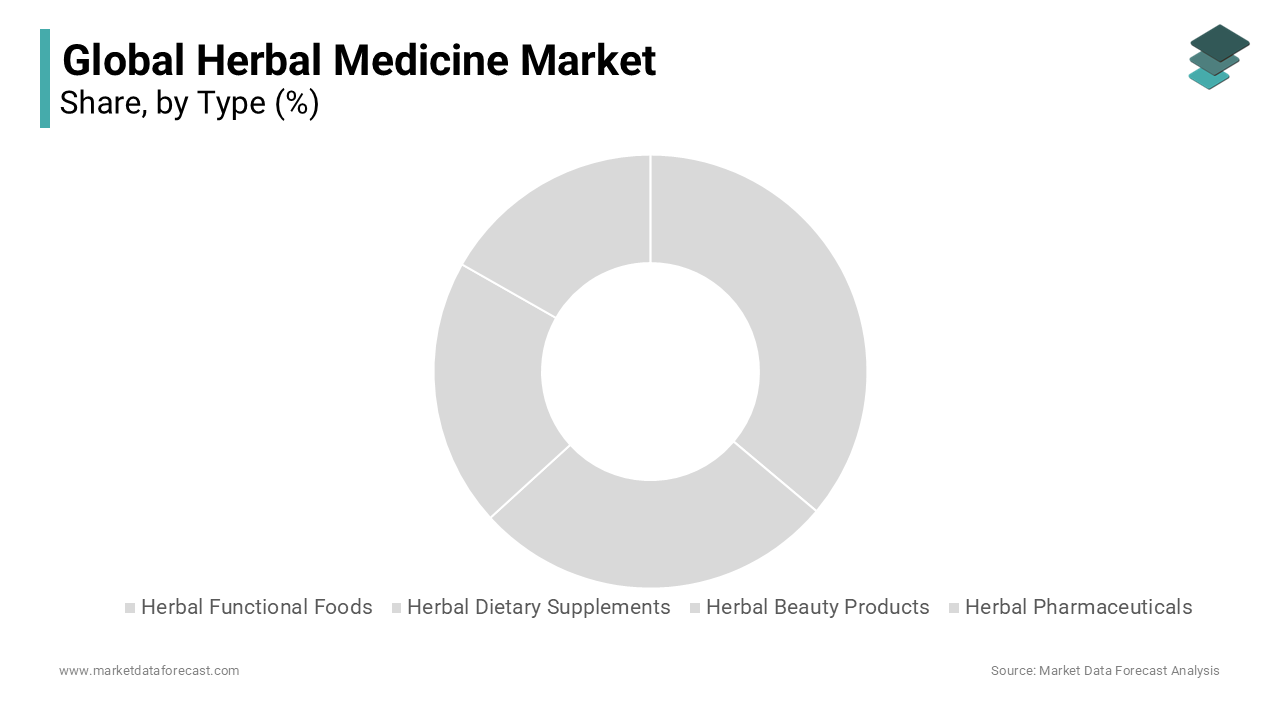
The herbal beauty products segment is experiencing the most rapid expansion and is projected to grow at a compound annual growth rate (CAGR) of 14.7% from 2025 to 2033. This surge is fueled by a paradigm shift in consumer preferences toward clean, non-toxic, and naturally derived personal care ingredients. The global clean beauty movement, particularly influential in North America and Asia-Pacific, has elevated demand for botanical extracts such as aloe vera, turmeric, neem, and green tea in skincare and haircare formulations. South Korea’s K-beauty industry has also embraced herbal formulations. Additionally, the rise of eco-conscious millennials and Gen Z consumers has accelerated demand for cruelty-free, sustainable, and ethically sourced beauty solutions. The integration of herbal actives into anti-aging, acne treatment, and hyperpigmentation products has further enhanced clinical credibility. As regulatory bodies tighten restrictions on synthetic additives and consumers demand transparency, herbal beauty products are transitioning from niche offerings to mainstream essentials, positioning this segment for sustained high-growth momentum.
By Source Insights
The roots and bark segment holds the largest share of the herbal medicine market by source and held 36.07% of the global market share in 2025. This dominance is rooted in the high concentration of bioactive compounds found in subterranean plant parts, which have been traditionally revered for their potent therapeutic properties. A further key driver of this segment’s leadership is the pharmacological significance of alkaloids, glycosides, and terpenoids, predominantly found in roots and barks. Panax ginseng, whose root contains ginsenosides known for adaptogenic and immunomodulatory effects, is cultivated across China, Korea, and North America. The bark of Salix Alba (white willow), a natural source of salicin, precursor to aspirin, remains widely used in pain relief formulations. In traditional systems like Ayurveda and Traditional Chinese Medicine, roots such as Withania somnifera (ashwagandha) and Angelica sinensis (dong quai) are considered foundational for rejuvenation and hormonal balance. Harvesting practices, though often sustainable in small-scale settings, face scrutiny due to overexploitation; the International Union for Conservation of Nature lists Taxus brevifolia, source of the anticancer compound paclitaxel, as a vulnerable species. Despite sustainability concerns, the unmatched phytochemical potency of roots and barks ensures their continued primacy in herbal medicine formulation.
The leaves segment is emerging as the fastest-growing source category and is projected to expand at a CAGR of 13.2% between 2025 and 2033. This acceleration is driven by the rising cultivation of medicinal leafy plants due to their renewable nature, shorter growth cycles, and compatibility with sustainable agricultural practices. Unlike roots and barks, which often require plant destruction upon harvest, leaves can be repeatedly collected without killing the plant, making them ideal for ethical and scalable sourcing. Azadirachta indica (neem) leaves are extensively used in India for antimicrobial and anti-inflammatory applications. In sub-Saharan Africa, Moringa oleifera leaves are gaining recognition for their high nutrient density and antidiabetic properties. Additionally, the popularity of herbal teas and tisanes, such as peppermint, hibiscus, and rooibos, has surged. As environmental and ethical considerations shape sourcing strategies, leaves are increasingly favored for their ecological sustainability and versatility in modern herbal formulations.
By Form Insights
The capsules form segment led the market by representing 38.05% of the global market share in 2025. This dominance is primarily attributed to consumer preference for precise dosing, ease of ingestion, and shelf stability, which collectively enhance compliance and trust in herbal therapeutics. Capsules allow for standardized delivery of powdered or liquid herbal extracts, ensuring consistent concentrations of active compounds across batches—a critical factor for quality assurance. The pharmaceutical-grade appearance of capsules also improves consumer perception, particularly among those transitioning from conventional medications. Furthermore, capsules effectively mask the bitter taste and strong odor of many herbal powders, increasing palatability. The scalability of automated encapsulation processes has also reduced manufacturing costs, enabling mass production without compromising quality. As demand for reliable, convenient, and scientifically aligned herbal products grows, capsules remain the preferred delivery system for both manufacturers and consumers in the global marketplace.
The extracts segment is growing at the fastest CAGR of 15.3% over the forecast period. This rapid expansion is driven by the increasing demand for concentrated, bioavailable, and clinically potent herbal formulations. Extracts, whether liquid tinctures, dry powders, or standardized isolates, offer higher concentrations of active phytochemicals compared to raw plant material, enabling lower dosages and faster physiological effects. The rise of functional beverages and nutraceuticals has further amplified demand; beverage manufacturers are incorporating liquid herbal extracts into energy shots, immunity tonics, and sleep aids. Additionally, advancements in extraction technologies, such as supercritical CO2 and ultrasound-assisted extraction, have improved yield and purity while preserving thermolabile compounds. As consumers and clinicians alike prioritize potency and reproducibility, extracts are becoming the gold standard in evidence-based herbal medicine, driving innovation and premiumization across the sector.
REGIONAL ANALYSIS
Asia-Pacific Herbal Medicine Market Analysis
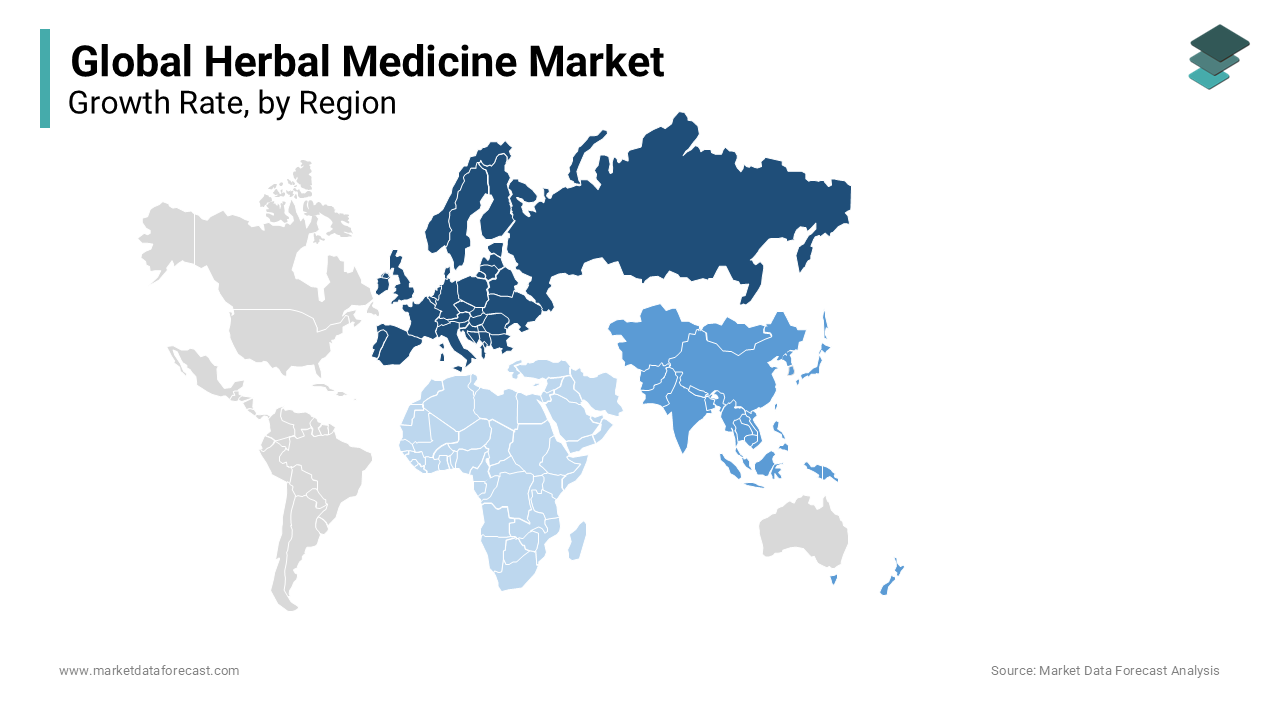
Asia-Pacific stood as the most dominant region in the global herbal medicine market and occupied 48.3% of the global market share in 2025. The region’s lead position is anchored in its deep-rooted traditions of Ayurveda, Traditional Chinese Medicine, and Indigenous healing systems, which have institutionalized plant-based therapeutics for millennia. China, the largest producer and consumer of herbal medicine, operates a significant number of TCM hospitals and regulates numerous herbal formulations. Japan integrates Kampo medicine into its national healthcare system, with 148 Kampo formulas covered by public insurance. The region benefits from abundant biodiversity, low-cost cultivation, and government support for traditional medicine modernization. Rising urban health consciousness and e-commerce penetration are further accelerating domestic consumption. With strong cultural legitimacy, expanding R&D, and growing global demand for authentic herbal products, Asia-Pacific remains the epicenter of innovation and production in the herbal medicine industry.
North America Herbal Medicine Market Analysis
North America holds a significant share of the herbal medicine market. The United States drives the region’s market, where consumer demand for natural, preventive, and holistic health solutions has fueled steady growth in herbal supplement usage. Regulatory frameworks such as the Dietary Supplement Health and Education Act (DSHEA) provide a legal pathway for market entry, though quality oversight remains decentralized. Canada complements this landscape with Health Canada’s Natural and Non-Prescription Health Products Directorate. The presence of major retailers like GNC, Whole Foods, and CVS ensures wide distribution, while e-commerce platforms enhance accessibility. Scientific validation efforts, including NIH-funded clinical trials on turmeric and ashwagandha, are improving credibility. As integrative medicine gains traction in mainstream healthcare and younger demographics embrace plant-based wellness, North America continues to be a high-value, innovation-driven market for herbal therapeutics.
Europe Herbal Medicine Market Analysis
Europe represents a mature and highly regulated segment of the herbal medicine market. The region’s strength lies in its rigorous quality standards, scientific evaluation, and integration of herbal remedies into public health systems. Germany leads in consumption. The country’s Commission E monographs provide evidence-based guidelines for several herbal substances. The United Kingdom, despite regulatory changes post-Brexit, maintains strong consumer demand. France and Italy also exhibit high acceptance, particularly for phytotherapy in cardiovascular and digestive care. The European Medicines Agency’s traditional herbal registration pathway ensures product safety and transparency, fostering consumer trust. With growing emphasis on sustainability, organic certification, and clean labeling, European markets are shifting toward premium, traceable herbal products, positioning the region as a leader in quality-driven, scientifically backed herbal medicine adoption.
Latin America Herbal Medicine Market Analysis
Latin America accounts for a significant share of the global herbal medicine market. The region’s rich biodiversity and Indigenous healing traditions, such as Amazonian shamanism and Mexican folk medicine, provide a vast repository of medicinal plant knowledge. Brazil has integrated traditional remedies into its Unified Health System (SUS). Urban populations are increasingly turning to herbal products for immune support and stress management. However, challenges such as informal trade, lack of standardization, and limited regulatory enforcement persist. Despite these hurdles, rising health awareness, government support for ethnobotanical research, and growing domestic manufacturing are positioning Latin America as a region of untapped potential and cultural authenticity in the global herbal market.
Middle East and Africa Herbal Medicine Market Analysis
The Middle East and Africa collectively represent a small share of the global herbal medicine market in 2025, with growth concentrated in South Africa, Nigeria, and Gulf Cooperation Council (GCC) countries. Traditional healing systems such as Unani, Ayurveda, and African phytotherapy remain deeply embedded in public health practices, particularly in rural areas. Nigeria’s herbal medicine sector is largely informal but economically significant. The UAE and Saudi Arabia are investing in integrative medicine. However, challenges including a lack of standardization, limited clinical research, and weak intellectual property protection, hinder formalization. As governments prioritize healthcare diversification and digital platforms improve access, the region is gradually transitioning from traditional use to structured, scalable herbal medicine systems with growing regional and global relevance.
COMPETITIVE LANDSCAPE
The competitive landscape of the herbal medicine market is characterized by a dynamic interplay between legacy brands, traditional healers, and disruptive wellness startups, all navigating a space where cultural authenticity, scientific legitimacy, and consumer trust converge. Established players leverage their decades-long reputations, regulatory compliance, and distribution networks to maintain dominance in retail and e-commerce channels. At the same time, regional manufacturers rooted in traditional medicine systems—such as Ayurvedic, Chinese, or African herbal practices—are gaining global visibility by emphasizing indigenous knowledge and holistic health paradigms. The rise of direct-to-consumer digital brands has intensified competition, with agile startups using social media, influencer marketing, and personalized wellness narratives to capture younger, health-conscious demographics. However, differentiation remains challenging due to inconsistent quality, limited standardization, and the absence of universal regulatory oversight. Companies that succeed are those that combine rigorous quality control with compelling storytelling, scientific backing, and sustainable sourcing. The market is further complicated by the dual demand for affordability in emerging economies and premiumization in developed ones. As consumers become more discerning, competition is shifting from mere product availability to transparency, traceability, and ethical integrity. The most resilient players are those that balance tradition with innovation, ensuring their offerings are not only effective but also trustworthy, culturally respectful, and environmentally responsible.
KEY MARKET PARTICIPANTS
Companies playing a major role in the global herbal medicine market include
- MATSUMURA & CO.
- Dr. Willmar Schwabe India Pvt. Ltd.
- Blackmores Limited
- NATURE'S ANSWER
- Arkopharma
- Arizona Natural Products
- Bio-Botanica Inc.
- Herbal Africa
- Sidomuncul
- Nature Herbs
TOP STRATEGIES USED BY KEY MARKET PARTICIPANTS
One of the most impactful strategies employed by leading herbal medicine companies is vertical integration, where firms control the entire supply chain from cultivation to final product formulation. This approach ensures ingredient authenticity, reduces contamination risks, and enhances quality consistency, which is critical in a market often plagued by adulteration. By owning or partnering with organic farms and extraction facilities, companies can guarantee traceability and meet rising consumer demand for transparency.
Another key strategy is scientific validation and clinical research investment. Leading players are increasingly collaborating with academic institutions and research bodies to conduct pharmacological studies, clinical trials, and pharmacovigilance on herbal formulations. This effort strengthens credibility, supports regulatory submissions, and differentiates products in a crowded marketplace where consumers and healthcare providers seek evidence-based solutions.
A third major tactic is brand storytelling and cultural authenticity, where companies emphasize heritage, traditional knowledge, and ethical sourcing to build emotional resonance with consumers. By highlighting regional origins, time-honored preparation methods, and community partnerships, firms create a narrative of trust and authenticity that transcends functional benefits, fostering loyalty in an increasingly values-driven market.
TOP LEADING PLAYERS IN THE MARKET
- Nature’s Way has established itself as a globally recognized leader in the herbal medicine sector by consistently delivering high-quality, science-backed botanical supplements. Rooted in a philosophy of natural wellness, the company sources ingredients from verified farms and wildcrafting regions, emphasizing purity, traceability, and sustainability. It has played a pivotal role in bridging traditional herbal knowledge with modern manufacturing standards, earning consumer trust through rigorous testing and transparent labeling. Nature’s Way offers a broad portfolio spanning immune support, cognitive health, and digestive wellness, making herbal remedies accessible to mainstream audiences. Its integration into larger health and wellness ecosystems, including retail and digital platforms, has amplified its reach across North America and Europe. By investing in research partnerships and consumer education, the brand has elevated the credibility of herbal products, positioning itself as a benchmark for quality and integrity in an often unregulated market.
- Himalaya Wellness stands as a cornerstone of the global herbal medicine industry, leveraging centuries-old Ayurvedic principles to develop clinically validated, plant-based health solutions. Originating in India, the company has successfully translated traditional formulations into standardized, globally trusted products that meet international regulatory standards. Its commitment to research and development is evident in its extensive portfolio covering respiratory, cardiac, liver, and metabolic health, supported by over 1,200 scientific studies. Himalaya has pioneered the modernization of Ayurveda by aligning ancient wisdom with evidence-based practices, enabling acceptance in both emerging and developed markets. The brand’s strong presence in over 100 countries, coupled with its ethical sourcing and sustainability initiatives, reinforces its reputation as a responsible and innovative leader. By promoting preventive healthcare and cultural authenticity, Himalaya Wellness has not only commercialized herbal medicine but also preserved its therapeutic integrity, making it a dominant force in the global natural health landscape.
- Gaia Herbs has emerged as a vanguard of transparency and sustainability in the herbal medicine market, distinguished by its farm-to-bottle traceability model and commitment to ecological stewardship. The company operates its own certified organic farms in the United States, ensuring control over cultivation, harvesting, and extraction processes. Gaia Herbs emphasizes potency and bioavailability, utilizing advanced extraction techniques to preserve the full spectrum of plant compounds. Its educational initiatives, including herbal literacy programs and digital transparency tools, empower consumers to make informed health choices. By prioritizing regenerative agriculture and carbon-neutral operations, the company aligns with the values of environmentally conscious users. Gaia Herbs’ formulations focus on adaptogenic, immune, and nervous system support, catering to a growing demand for holistic, long-term wellness. Through its integration of science, sustainability, and ethical practice, Gaia Herbs has redefined what it means to be a responsible leader in the herbal sector, setting new standards for integrity and efficacy.
GLOBAL HERBAL MEDICINE MARKET NEWS
- In March 2023, Nature’s Way launched a blockchain-enabled traceability platform allowing consumers to scan product labels and view the entire journey of herbal ingredients from farm to capsule. This initiative strengthens consumer trust by providing real-time access to sourcing, testing, and manufacturing data.
- In July 2023, Himalaya Wellness partnered with a leading research institute in India to establish a dedicated center for Ayurvedic pharmacology, focusing on clinical validation of traditional formulations for global regulatory acceptance. This collaboration aims to enhance scientific credibility and support international market expansion.
- In November 2023, Gaia Herbs opened a regenerative agriculture training center on its organic farm in North Carolina, designed to educate farmers on the sustainable cultivation of medicinal plants. This move reinforces its commitment to ecological stewardship and long-term ingredient security.
- In February 2024, Nature’s Way acquired a vertically integrated turmeric farm in India to secure a sustainable supply of high-potency curcumin, ensuring quality control and reducing dependency on third-party suppliers.
- In May 2024, Himalaya Wellness introduced a digital consultation platform integrating Ayurvedic practitioners with patients across the Middle East and Southeast Asia, combining traditional diagnostics with modern telehealth to expand access to personalized herbal care.
MARKET SEGMENTATION
This research report on the global herbal medicine market has been segmented and sub-segmented based on type, source, form, and region.
By Type
- Herbal Functional Foods
- Herbal Dietary Supplements
- Herbal Beauty Products
- Herbal Pharmaceuticals
By Source
- Roots and barks
- Fruits
- Whole plants
- Leaves
- Others
By Form
- Tablets
- Capsules
- Extracts
- Syrups
- Powders
- Others
By Region
- North America
- Europe
- Asia Pacific
- Latin America
- The Middle East and Africa