- Product Description Description
- Table of Contents TOC
- List of Table & Figure LOT
- Get Free Sample PDF Sample PDF
Market Size, 2025
$16.09 BnMarket Estimate, 2026
$17.09 BnMarket Forecast, 2034
$27.70 BnCAGR, 2026–2034
6.22%Executive Summary: Global Intravenous Immunoglobulin Market
- Market Scope: Global analysis of the intravenous immunoglobulin (IVIG) therapeutics sector, covering clinical applications, distribution channels, and regional market dynamics.
- Market Valuation: Valued at USD 16.09 billion in 2025, reaching USD 17.09 billion in 2026, and projected to expand to USD 27.70 billion by 2034, growing at a robust CAGR of 6.22% from 2026 to 2034.
- Primary Growth Drivers: Rising geriatric populations, increasing prevalence of primary and acquired immunodeficiency diseases, and expanding research into antibody-based treatments for severe infections and autoimmune disorders.
Key Market Segment Metrics
| Category | Leading Segment (Base Position) | Fastest-Growing / High-Growth Segment |
|---|---|---|
| By Application | Immunodeficiency Diseases (dominated market share driven by increasing global incidence of primary and acquired immunodeficiency conditions) | Chronic Inflammatory Demyelinating Polyneuropathy (CIDP) & Hypogammaglobulinemia (high-growth neurological and immunological segments) |
| By Distribution Channel | Hospital Pharmacies (held the largest market share backed by rising inpatient admissions for immune disorders and favorable reimbursement policies) | Specialty Pharmacies (fastest-growing distribution channel propelled by increased licensing and availability of specialty biologic drugs) |
| By Region | North America (market leader holding over 45% share supported by well-established healthcare infrastructure, high healthcare spending, and FDA approvals) | Asia-Pacific (fastest-growing regional market driven by expanding geriatric populations, rising healthcare expenditures, and increasing awareness of IG therapies) |
Major Market Players & Industry Landscape
Market Structure: Highly consolidated global biopharmaceutical and plasma-fractionation industry featuring major multinational biotechnology corporations competing on plasma collection networks, product purity, and clinical indications.
Key Companies: CSL Behring, Grifols SA, Takeda (Baxalta Incorporated), Octapharma AG, Baxter International Inc., Biotest AG, and Kedrion Biopharma.
 Download Free Sample Report
Global Intravenous Immunoglobulin Market Size
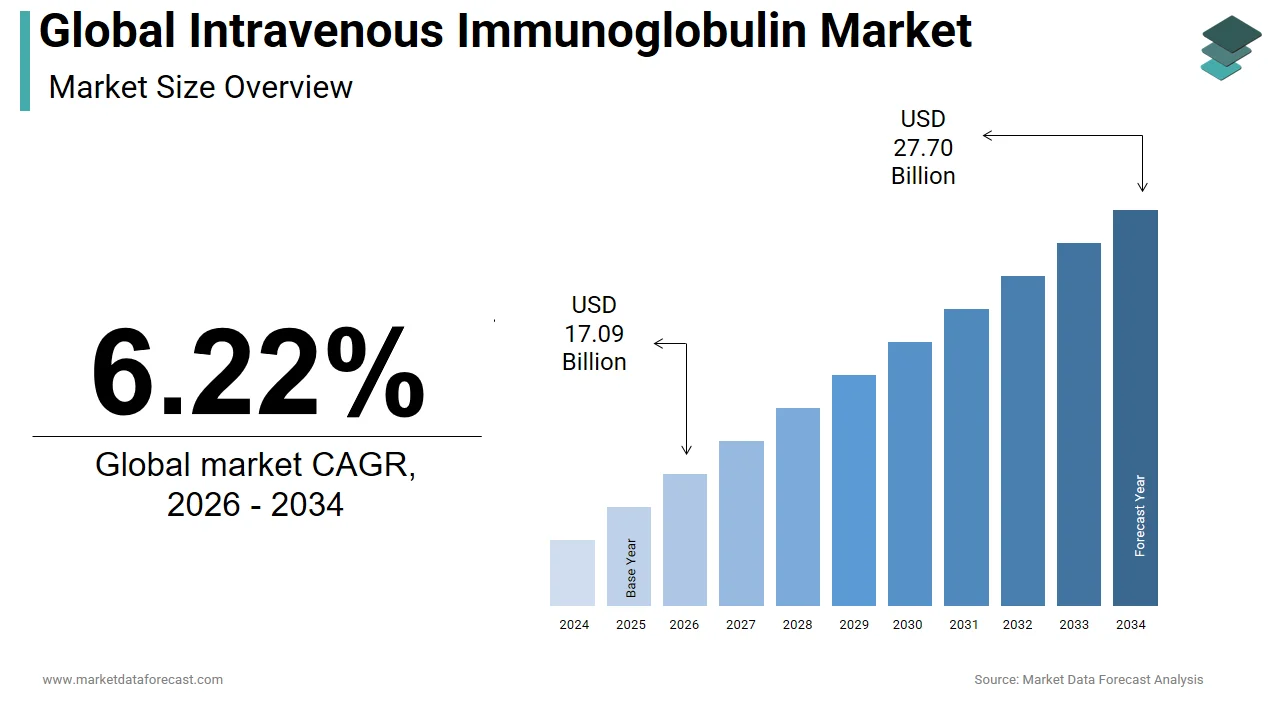
The global intravenous immunoglobulin market was valued at USD 16.09 billion in 2025, is estimated to reach USD 17.09 billion in 2026, and is projected to reach USD 27.70 billion by 2034, growing at a CAGR of 6.22% from 2026 to 2034.
Immunoglobulins are proteins made by the plasma and B-type cells of the white blood cells (WBC) in the human body and are tasked to act as the antibodies of the system. The immunoglobulins are of different types like IgA, IgG, IgM, IgD, IgE, and are tasked with various functions and areas in the body. All of these antibodies protect the body from diseases and advance the body's immune system to keep the individual healthy.
MARKET DRIVERS
The global market for intravenous immunoglobulin is growing due to the rise in the geriatric population and the adoption of sedentary lifestyles such as the consumption of fats, salts, and sugars and habits like alcohol ingestion and less physical exercise. In addition, the market is promoted by the rise in immunodeficiency diseases, bleeding issues, and patients with (CIDP) chronic inflammatory demyelinating polyneuropathy. Along with spreading awareness and adoption of the intravenous immunoglobulin procedure by the common public. Intravenous immunoglobulin treatment is the only method to treat immunodeficiency; therefore, it has high demand in the healthcare industry. Additionally, the rising research and development activities in the field and the heightened investments and government funding are pushing the market's growth.
The COVID-19 research and the prevalence of immunodeficiency diseases encourage market growth.
The WHO statistics claim that around 6 million people worldwide suffer from primary immune deficiencies (PIDs). There are approximately 50 different types of PIDs, and people are affected by 176 different types of hereditary PIDs every day. These various types of immunodeficiencies make the population prone to falling ill. An article titled: "The use of Intravenous Immunoglobulin Gamma for the Treatment of severe coronavirus disease 2019: a randomized placebo-controlled double-blind clinical trial" used intravenous immunoglobulin to help the covid ridden patients, and the effects were being researched, and the Phase 3 trial, known as Inpatient Treatment with Anti-Coronavirus Immunoglobulin, or ITAC, was sponsored and funded by the National Institute of Allergy and Infectious Diseases (NIAID), a division of the National Institutes of Health. Anti-coronavirus hyperimmune intravenous immunoglobulin, often known as hIVIG, was the antibody treatment studied in the ITAC study. Therefore, the rising rates of immunoglobulin diseases and the research related to and after covid are significant drivers for the market.
MARKET RESTRAINTS
The impending high costs associated with receiving long-term intravenous immunoglobulin treatment, which makes it difficult to afford the treatment, is expected to cause a hindrance to the growth of the intravenous immunoglobulin market.
REPORT COVERAGE
| REPORT METRIC | DETAILS |
| Market Size Available | 2025 to 2034 |
| Base Year | 2025 |
| Forecast Period | 2026 to 2034 |
| Segments Covered | By Application, Distribution Channel, & Region. |
| Various Analyses Covered | Global, Regional, and Country-Level Analysis, Segment-Level Analysis, Drivers, Restraints, Opportunities, Challenges; PESTLE Analysis; Porter’s Five Forces Analysis, Competitive Landscape, Analyst Overview of Investment Opportunities |
| Regions Covered | North America, Europe, Asia Pacific, Latin America, Middle East & Africa |
| Market Leaders Profiled | China Biologics Products Inc., Kedrion Biopharma, BDI Pharma Inc., Biotest AG, Baxter International Inc., Octapharma AG, LFB Biotechnologies, Grifols SA, CSL Behring, Baxalta Incorporated, and Sanquin Plasma Products B.V. |
SEGMENT ANALYSIS
By Application Insights
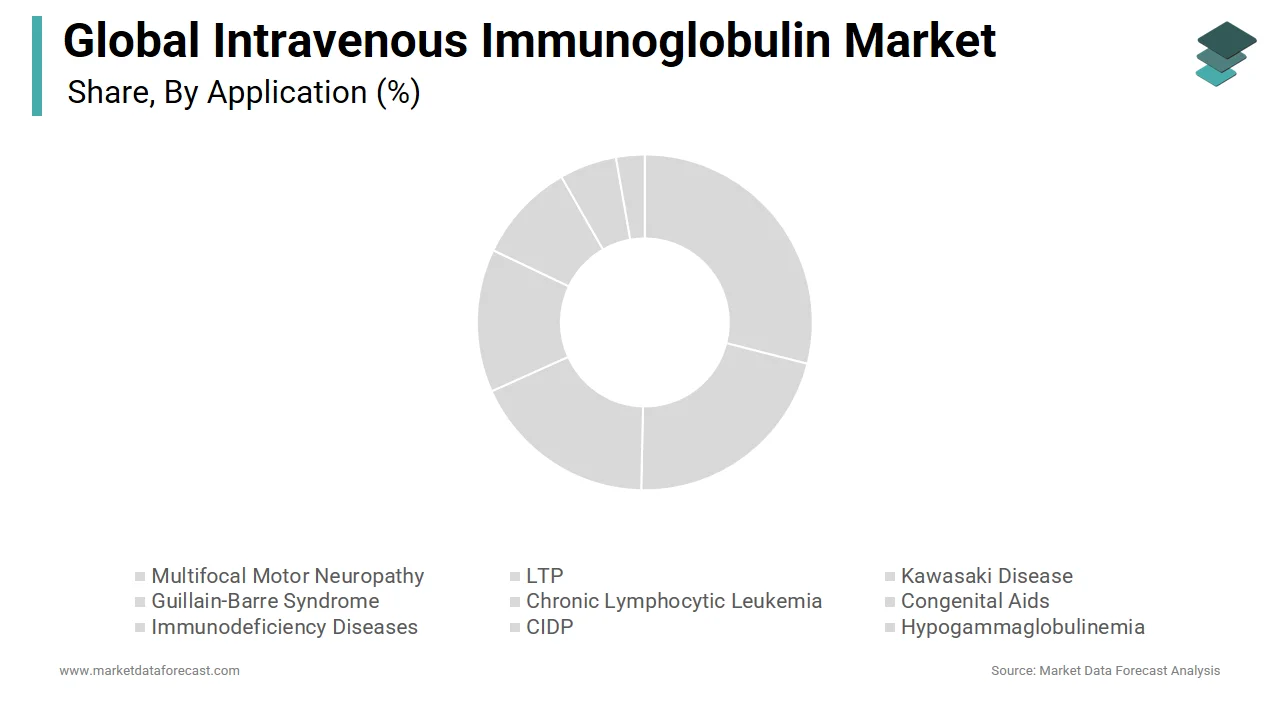
Due to the rising incidents of PID (primary immunodeficiency disease) and AID (acquired immunodeficiency disease) worldwide, the immunodeficiency disease segment is expected to dominate the market during the forecast period. On the other hand, chronic inflammatory demyelinating polyneuropathy followed by hypogammaglobulinemia followed by Kawasaki disease are expected to dominate the market in descending order after the immunodeficiency diseases. The primary reason for using intravenous immunoglobulin in these procedures is because it is a relatively safe, user-friendly, and less invasive process and is widely accepted by populations.
By Distribution Channel Insights
Based on the distribution channel, the hospital pharmacy segment is expected to dominate the market during the forecast period. This segment's dominance is due to the rising cases of immunodeficiency diseases resulting in more hospital admissions and a wide range of medications available in hospital pharmacies. In addition, hospitals have good service and reimbursement policies and therefore are a credible source of treatment for populations.
The specialty pharmacy segment is also expected to grow owing to the increased licensing of specialty drugs.
REGIONAL ANALYSIS
With a share of more than 45% in 2022, North America dominated the market and is expected to continue dominating during the forecast period. The primary drivers of market expansion include expanding clinician propensity for these medicines, raising awareness of items used in treating immunodeficiency illnesses and increasing healthcare spending. Additionally, it is projected that the administration of IVIG therapies for the treatment of sickness will increase, as will the presence of a well-established healthcare and research infrastructure and the steadily rising number of product approvals from the U.S. FDA. The prevalence of immunity-related diseases in the North American region also leads to the market's need. For example, Autoimmune disorders are the third most common cause of chronic illnesses in the United States.
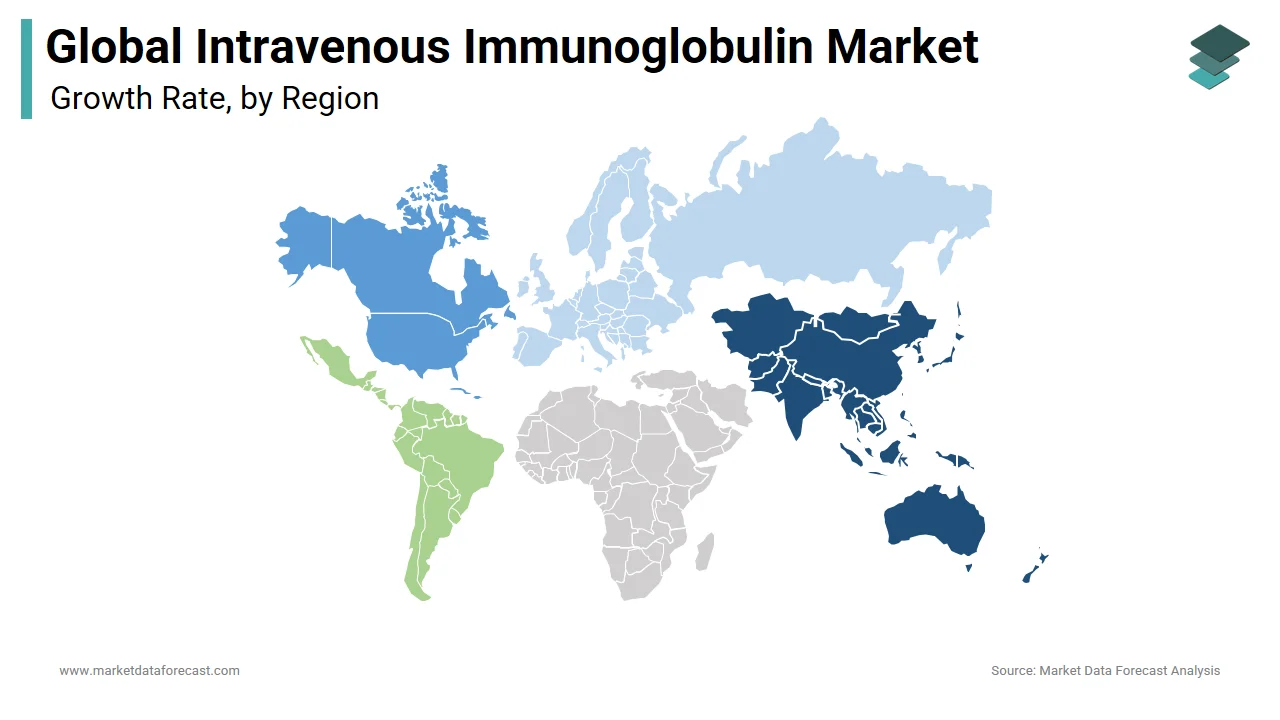
As a result of growing awareness and potential opportunities for adopting immunoglobulin-based therapies for the treatment of primary immune deficiencies, combined with a growing geriatric population, the Asia Pacific is predicted to experience a lucrative growth rate over the forecast period. In addition, emerging countries, rising healthcare spending, and the quickly expanding immunoglobulin market are other reasons boosting the development of the industry in countries like China, India, Japan, etc.
TOP COMPANIES IN THIS MARKET
Some of the companies that are playing a dominating role in the global intravenous immunoglobulin market include
- China Biologics Products Inc.
- Kedrion Biopharma
- BDI Pharma Inc.
- Biotest AG
- Baxter International Inc.
- Octapharma AG
- LFB Biotechnologies
- Grifols SA
- CSL Behring
- Baxalta Incorporated
- Sanquin Plasma Products B.V.
MARKET SEGMENTATION
This research report on the global intravenous immunoglobulin market has been segmented and sub-segmented based on application, distribution channel, and region.
By Application
- Multifocal Motor Neuropathy
- LTP
- Kawasaki Disease
- Guillain-Barre Syndrome
- Chronic Lymphocytic Leukemia
- Congenital Aids
- Immunodeficiency Diseases
- CIDP
- Hypogammaglobulinemia
- Myasthenia Gravis
- Others
By Distribution Channel
- Specialty Hospitals
- Hospital Pharmacies
- Others
By Region
- North America
- Europe
- Asia-pacific
- Latin America
- Middle East and Africa