- Product Description Description
- Table of Contents TOC
- List of Table & Figure LOT
- Get Free Sample PDF Sample PDF
Latin America Molecular Weight Marker Market Report Summary
The Latin America molecular weight marker market was valued at USD 34.73 million in 2025 and is projected to grow from USD 39.20 million in 2026 to USD 103.34 million by 2034, registering a CAGR of 12.88% from 2026 to 2034. Market growth is driven by increasing investments in molecular biology research, expanding biotechnology and pharmaceutical industries, and growing adoption of genomic and proteomic technologies. Rising demand for polymerase chain reaction (PCR), electrophoresis, DNA sequencing, and molecular diagnostics in academic research, clinical laboratories, and biotechnology applications is further supporting market expansion.
Key Market Trends
- Increasing adoption of molecular biology and genomic research techniques.
- Growing demand for DNA and protein molecular weight markers in electrophoresis applications.
- Rising use of PCR, DNA sequencing, and molecular diagnostics across research laboratories.
- Expansion of biotechnology, pharmaceutical, and life sciences research throughout Latin America.
- Continuous advancements in genomics, proteomics, and precision medicine technologies.
Segmental Insights
- Based on product, the DNA molecular weight markers segment dominated the Latin America molecular weight marker market in 2025, driven by their widespread application in DNA electrophoresis, sequencing workflows, PCR analysis, and molecular diagnostics.
- Based on application, the polymerase chain reaction (PCR) applications segment held the largest market share in 2025, supported by the central role of PCR in genetic research, infectious disease diagnostics, forensic analysis, and molecular biology studies.
- Based on end user, the academic institutes segment accounted for the largest share of the market in 2025, owing to increasing government and institutional funding for life sciences research, expanding genomics programs, and growing academic collaborations.
Regional Insights
The Latin America molecular weight marker market continues to expand across key countries, supported by growing research infrastructure, biotechnology investments, and increasing adoption of molecular diagnostic technologies.
- Brazil dominated the regional market in 2025 by accounting for 40.3% share, driven by its well-established biotechnology sector, expanding academic research institutions, increasing pharmaceutical research activities, and strong government support for life sciences innovation.
- Mexico held the second-largest position with 25.7% share in 2025, supported by its robust pharmaceutical industry, growing biotechnology investments, and close trade and technology collaboration with the United States.
- Argentina continues to hold a significant share of the regional market, driven by its advanced agricultural biotechnology sector, strong medical research capabilities, and expanding adoption of molecular biology technologies.
Competitive Landscape
The Latin America molecular weight marker market is highly competitive, with leading life sciences companies focusing on molecular biology reagents, genomics research tools, and advanced electrophoresis products. Market participants are investing in product innovation, research collaborations, and expanding distribution networks to strengthen their regional presence. Strategic partnerships, acquisitions, and continuous advancements in molecular diagnostics and genomic technologies continue to shape the competitive landscape.
Prominent companies operating in the Latin America molecular weight marker market include F. Hoffmann-La Roche AG, Thermo Fisher Scientific Inc., Agilent Technologies, Sigma-Aldrich, Affymetrix, Inc., QIAGEN, Takara Bio Inc., Merck KGaA, Bio-Rad Laboratories, Promega Corporation, and New England Biolabs.
Latin America Molecular Weight Marker Market Size
The Latin America molecular weight marker market was valued at USD 34.73 million in 2025. This market is expected to grow at a CAGR of 12.88% from 2026 to 2034 and be worth USD 103.34 million by 2034 from USD 39.20 million in 2026.

Molecular Weight Markers are specialized biochemical reagents utilized as reference standards in gel electrophoresis and blotting procedures to determine the precise size of proteins and nucleic acids. These essential laboratory tools consist of mixtures containing molecules of known molecular masses, enabling researchers to estimate the dimensions of unknown biological samples accurately. The application of these markers spans academic research, clinical diagnostics, pharmaceutical development, and agricultural biotechnology across nations including Brazil, Mexico, Argentina, and Chile. The Pan American Health Organization reveals that vector-borne diseases present a severe threat to public health in the Americas, with historic dengue transmission spikes surpassing 13 million cases annually. Furthermore, the Food and Agriculture Organization advocates for advanced agricultural biotechnology and sustainable farming practices to strengthen crop resilience against drought and ensure food security in Latin America. Public health directives from the World Health Organization focus on building robust diagnostic laboratory capacities across low- and middle-income regions to manage endemic infectious outbreaks. Academic institutions and private research centers increasingly adopt advanced molecular biology workflows to address regional healthcare and food security challenges. This scientific ecosystem creates a foundational demand for high-quality molecular weight markers, ensuring precise experimental validation and reliable data generation across diverse life science disciplines within the region.
MARKET DRIVERS
Expansion Of Agricultural Biotechnology And Genomic Research Accelerates Reagent Consumption
The robust growth of agricultural biotechnology across the region is a key factor propelling the Latin America molecular weight marker market. Nations such as Brazil and Argentina are global leaders in cultivating genetically modified crops requiring extensive genomic verification during the research and development phases. Researchers utilize nucleic acid ladders to confirm the successful integration of specific genetic traits through polymerase chain reaction and subsequent gel electrophoresis. The International Service for the Acquisition of Agri-biotech Applications (ISAAA) shows that Latin America is a leading global region for agricultural biotechnology, with Brazil and Argentina driving a significant portion of worldwide biotech crop cultivation. This massive scale of agricultural research necessitates continuous procurement of molecular weight markers for routine quality control and genetic validation. Furthermore, government initiatives aimed at improving food security drive funding toward public universities and research institutes. The National Advisory Commission on Agricultural Biotechnology (CONABIA) focuses on evaluating genetic modifications in crops to support sustainable agricultural production and innovation in Argentina. The reliance on molecular techniques to develop climate-resilient crops ensures that precise size estimation tools remain indispensable in the regional agricultural biotechnology sector for maintaining rigorous scientific standards.
Increasing Prevalence Of Infectious Diseases Requiring Molecular Diagnostics Fuels Demand
The high burden of endemic and emerging infectious diseases in the region significantly drives the requirement for these markers in clinical and reference laboratories, which further boosts the expansion of the Latin America molecular weight markers market. Vector-borne illnesses such as dengue, Zika, and chikungunya pose severe public health threats necessitating accurate pathogen detection and genomic surveillance. The Pan American Health Organization indicates that mosquito-borne diseases present a massive public health emergency in the region, with historic dengue spikes reaching over 12 million cases annually. Molecular diagnostics, including polymerase chain reaction, are critical for identifying viral serotypes and tracking mutations, which requires precise nucleic acid markers to validate amplification products. Additionally, neglected tropical diseases like Chagas disease require protein analysis through Western blotting techniques, where protein molecular weight markers are essential for confirming specific antibody responses. The financial commitment translates into the procurement of essential laboratory reagents for regional epidemiological networks. As public health authorities expand genomic sequencing and molecular surveillance to monitor viral evolution, the consumption of reference ladders increases proportionally. This proportional increase ensures the accurate identification and characterization of circulating pathogen strains across the entire continent.
MARKET RESTRAINTS
High Import Dependency And Currency Volatility Restrict Laboratory Procurement
Heavy reliance on imported biochemical reagents combined with severe currency fluctuations is a major restraint impeding the Latin America molecular weight marker market. The vast majority of high-quality protein and nucleic acid ladders are manufactured by multinational life science companies based in North America and Europe. Also, the Economic Commission for Latin America and the Caribbean (ECLAC) highlights that structural trade imbalances in high-technology manufacturing emphasize the need to build regional industrial capacity. When local currencies depreciate against the United States dollar, the cost of importing essential research consumables increases dramatically, straining fixed academic and institutional budgets. The World Bank indicates that high currency volatility and depreciation in several Latin American economies exert significant pressure on general import-dependent sectors and household purchasing power. Research institutions often struggle to secure consistent funding for routine laboratory supplies, leading to intermittent shortages of critical markers. Furthermore, complex customs procedures and import tariffs add additional financial and logistical burdens, delaying the delivery of temperature-sensitive biological products. As per national customs authorities in countries like Brazil and Argentina, clearing biological reagents can take several weeks, requiring expensive cold chain logistics to prevent degradation. These economic and logistical barriers force laboratories to ration existing supplies or resort to lower quality alternatives, ultimately limiting the overall market expansion.
Limited Funding For Basic Scientific Research Constrains Reagent Utilization
The chronic underinvestment in basic scientific research across many nations in the region is a major barrier to the widespread consumption of molecular biology reagents, and in turn, hinders the expansion of the Latin America molecular weight marker market. While applied research in agriculture and specific clinical areas receives support, fundamental academic research often suffers from inadequate financial backing. The UNESCO Institute for Statistics shows that average research and development expenditure in Latin America sits below 1% of GDP, highlighting a substantial investment gap compared to the global average. This limited financial allocation restricts the capacity of universities and independent research centers to conduct large-scale molecular studies that require substantial volumes of reference markers. The Inter-American Development Bank emphasizes that fiscal consolidation and budget constraints in several regional economies require more efficient management of public investments and innovation resources. Consequently, researchers must prioritize essential consumables and often reduce the frequency of experimental replicates to conserve expensive molecular weight ladders. Furthermore, the lack of robust domestic manufacturing capabilities for specialized biochemicals means that institutions cannot rely on lower-cost local alternatives. This structural funding deficit stifles innovation and reduces the overall volume of molecular experiments performed, thereby directly suppressing the demand for routine electrophoresis standards across the regional scientific community.
MARKET OPPORTUNITIES
Growth Of Local Biotechnology Startups and Incubators Creates New Demand Avenues
The rapid emergence of local biotechnology startups and innovation incubators offers a substantial opportunity for the Latin America molecular weight marker market expansion. Entrepreneurial ecosystems in countries like Brazil, Mexico, and Chile are increasingly focusing on developing novel diagnostic tools, therapeutic proteins, and synthetic biology applications. These emerging enterprises require extensive molecular characterization and quality control processes, driving the procurement of protein and nucleic acid markers. Government-backed incubators and technology parks provide subsidized laboratory spaces equipped with electrophoresis systems, fostering a new generation of reagent consumers. As these startups scale their operations and transition from research to commercial production, their consumption of reference standards increases exponentially. Furthermore, collaborations between academic spin-offs and private investors accelerate the translation of laboratory discoveries into marketable products. This vibrant startup culture not only diversifies the customer base beyond traditional academic institutions but also stimulates sustained demand for high-precision molecular weight markers.
Expansion Of Contract Research Organizations Drives Commercial Reagent Procurement
The increasing presence and expansion of contract research organizations in the region creates a pathway for manufacturers in the Latin America molecular weight marker market. Global pharmaceutical companies are increasingly outsourcing preclinical research and clinical trial analytics to regional contract research organizations to capitalize on diverse patient populations and cost efficiencies. Contract research organizations operate high-throughput laboratories that process thousands of biological samples, necessitating the continuous use of standardized reference ladders for quality assurance and regulatory compliance. These commercial entities possess larger procurement budgets compared to public universities and prioritize premium high-quality reagents to ensure data integrity for international regulatory submissions. As multinational pharmaceutical firms deepen their partnerships with local research providers, the volume of standardized molecular testing expands significantly. This shift toward commercialized outsourced research creates a reliable and high-volume revenue stream for suppliers of electrophoresis standards and related biochemical consumables.
MARKET CHALLENGES
Cold Chain Logistics and Temperature Excursions Compromise Product Integrity
Maintaining strict temperature control during transportation and storage is a formidable challenge for the Latin America molecular weight marker market. Biological reference standards are highly sensitive to thermal degradation and require continuous refrigeration or freezing to maintain their structural integrity and accuracy. Temperature excursions during transit can render expensive molecular ladders useless, leading to financial losses and experimental inaccuracies. Distributors must invest heavily in specialized packaging, real-time temperature monitoring devices, and expedited shipping methods, which drastically increase operational costs. Furthermore, frequent power outages in certain areas threaten the stability of laboratory freezers where these reagents are stored. As per national energy regulatory bodies, some regions experience dozens of unplanned outages annually, jeopardizing valuable biological inventories. Overcoming these logistical vulnerabilities requires substantial capital investment and sophisticated supply chain management strategies to ensure that end users receive viable and accurate molecular weight markers.
Proliferation Of Counterfeit and Substandard Reagents Threatens Experimental Validity
The infiltration of counterfeit and substandard biochemical reagents into the supply chain is a severe obstacle to the Latin America molecular weight marker market. Due to the high cost of authentic products from established global manufacturers, a secondary market of unverified and poorly synthesized alternatives has emerged. The Organization for Economic Cooperation and Development (OECD) warns that the illicit trade of counterfeit pharmaceutical products presents severe economic challenges and serious risks to global public health. Researchers utilizing substandard molecular ladders often encounter smeared bands, inaccurate size estimations, and complete experimental failures, which waste valuable samples and delay critical research projects. Local procurement officers sometimes unknowingly purchase these inferior products through unauthorized online vendors or grey market distributors to circumvent budget constraints. As per regional customs enforcement agencies, seizures of illicit laboratory chemicals and biologicals have increased significantly in recent years, reflecting the scale of the problem. This proliferation of fake reagents erodes trust in the supply chain and forces legitimate manufacturers to invest heavily in fraud prevention technologies and authorized distribution verification systems to protect their brand integrity and ensure scientific reliability.
REPORT COVERAGE
| REPORT METRIC | DETAILS |
| Market Size Available | 2025 to 2034 |
| Base Year | 2025 |
| Forecast Period | 2026 to 2034 |
| Segments Covered | By Test Panels Type, Sample Type, Sample Collection Site, and Country. |
| Various Analyses Covered | Global, Regional, and Country-Level Analysis, Segment-Level Analysis, Drivers, Restraints, Opportunities, Challenges; PESTLE Analysis; Porter’s Five Forces Analysis, Competitive Landscape, Analyst Overview of Investment Opportunities |
| Countries Covered | Brazil, Mexico, Argentina, Chile, Rest of Latin America |
| Market Leaders Profiled | F Hoffmann-La Roche AG, Thermo Fisher Scientific Inc., Agilent Technologies, Sigma-Aldrich, Affymetrix, Inc., QIAGEN, Takara Bio Inc., Merck KGaA, Bio-Rad Laboratories, Promega Corporation, and New England Biolabs. |
SEGMENTAL ANALYSIS
By Product Insights
The DNA molecular weight markers segment dominated the Latin America Market and accounted for a substantial share in 2025. This dominance of the segment was driven by its ubiquitous application in genetic research, clinical diagnostics, and agricultural biotechnology. Moreover, this segment includes ladders used for agarose and polyacrylamide gel electrophoresis to determine the size of DNA fragments generated during polymerase chain reaction and restriction enzyme digestion. The dominance is mainly driven by the massive scale of agricultural biotechnology in the region, particularly in Brazil and Argentina, where genetically modified crops require rigorous genomic validation. Data published by the International Service for the Acquisition of Agri-biotech Applications (ISAAA) confirms that Brazil remains one of the world's largest cultivators of biotech crops, driving agricultural innovation and bio-economic growth across Latin America. Furthermore, the high prevalence of infectious diseases such as dengue and zika virus drives public health laboratories to perform millions of molecular diagnostic tests annually. Academic institutions across the region also contribute significantly to this demand, with thousands of undergraduate and graduate students conducting routine DNA cloning and sequencing experiments. The established infrastructure for DNA-based research, combined with the critical need for accurate fragment sizing in both commercial and public sectors, ensures that DNA markers remain the most consumed product type in the regional market.
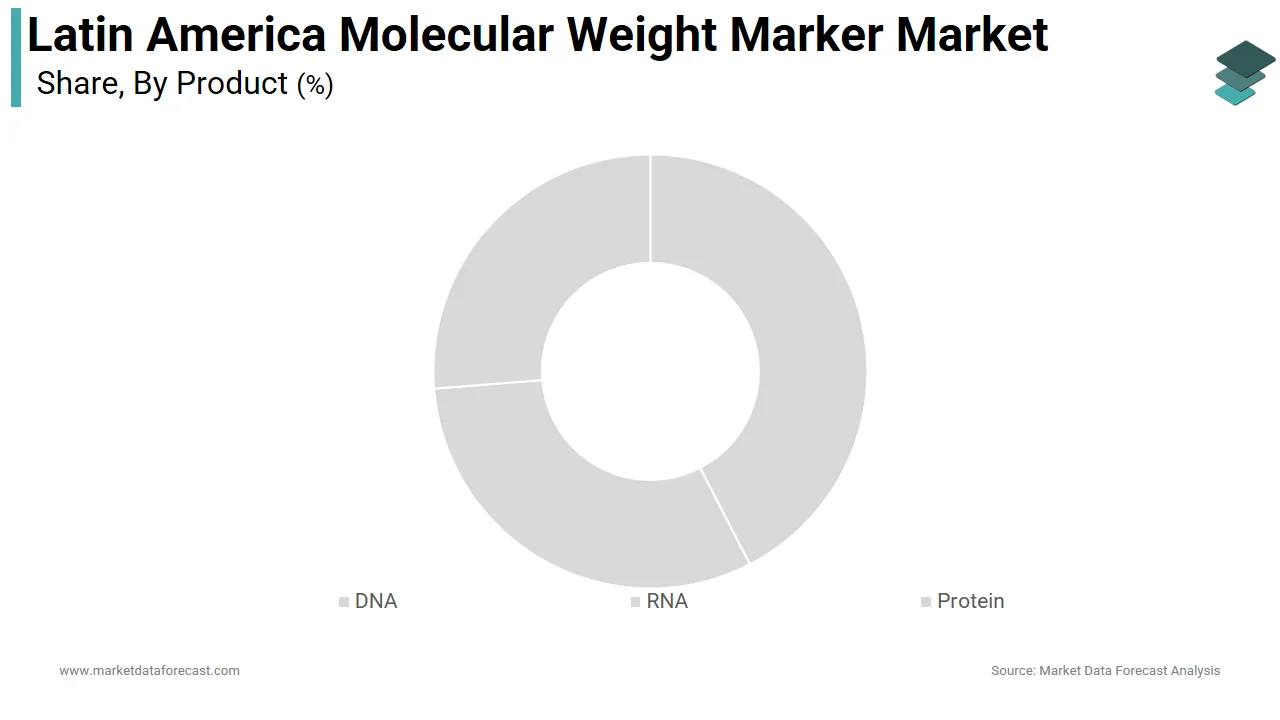
On the other hand, the RNA molecular weight markers segment is anticipated to witness the fastest CAGR of 9.2% during the forecast period. This accelerated growth of the segment is fuelled by the increasing focus on transcriptomics gene expression studies and RNA-based therapeutics. The global shift toward understanding gene regulation at the mRNA level has prompted Latin American research institutions to adopt advanced RNA analysis techniques such as northern blotting and reverse transcription polymerase chain reaction. Universities in countries like Chile and Mexico have expanded their molecular biology curricula to include RNA handling and analysis requiring specialized denaturing gels and RNA ladders that prevent degradation. Additionally, the rise of RNA interference technologies in agricultural research to develop pest-resistant crops without genetic modification drives demand for high-quality RNA markers. The sensitivity of RNA to ribonucleases necessitates the use of premium stabilized markers, further driving value growth in this segment as researchers prioritize data integrity and reproducibility in their experimental workflows.
By Application Insights
In 2025, the Polymerase Chain Reaction (PCR) applications segment held the majority share of the Latin America Molecular Weight Marker Market because of the technique's central role in modern molecular biology and diagnostics. PCR is the foundational method for amplifying specific DNA sequences, making it indispensable for genetic testing, disease diagnosis, and forensic analysis. The domination of this segment is driven by the widespread adoption of molecular diagnostics in clinical laboratories across the region. Each successful PCR experiment requires subsequent gel electrophoresis to verify the size and purity of the amplified products using DNA ladders. The expansion of private diagnostic chains in urban centers has standardized the use of PCR protocols, ensuring consistent consumption of molecular weight markers. Furthermore, academic research grants frequently mandate the use of PCR for validating genetic modifications in model organisms and crop plants. The simplicity, cost-effectiveness, and high sensitivity of PCR make it the preferred method for initial genetic screening, thereby sustaining the highest volume demand for associated molecular weight markers in the laboratory workflow.
However, the western blotting segment is likely to experience the fastest CAGR of 8.5% from 2026 to 2034 due to the increasing emphasis on proteomics and protein expression analysis in pharmaceutical development and biomedical research. Western blotting allows researchers to detect specific proteins in a complex sample mixture, providing critical insights into disease mechanisms and drug targets. Regional clinical networks in Latin America collaborate with international pharmacological bodies to standardize preclinical biomarker validation and protect clinical trial integrity. Pharmaceutical companies operating in the region are expanding their research and development capabilities to formulate biologics and monoclonal antibodies, which require precise protein sizing using protein molecular weight markers. Academic institutions are also investing in advanced proteomics facilities to study neurodegenerative diseases and cancer pathways prevalent in the local population. As researchers move beyond genomic data to understand functional protein dynamics, the demand for high-resolution protein ladders capable of distinguishing closely spaced bands continues to rise rapidly. This surging demand is driving the accelerated growth of this application segment.
By End User Insights
The academic institutes segment was the largest in the Latin America Molecular Weight Marker Market and occupied a commanding share in 2025. This supremacy of the segment was supported by the vast network of universities and research centers engaged in life science education and basic research. These institutions serve as the primary training grounds for future scientists and conduct a wide array of molecular biology experiments ranging from undergraduate labs to doctoral dissertations. The dominance is driven by the sheer volume of students and faculty members performing routine electrophoresis procedures. Educational databases compiled by the UNESCO Institute for Statistics show that expanding access to higher education across Latin America has increased student enrollment in science and technology disciplines. Each student laboratory session typically consumes multiple aliquots of DNA or protein ladders, creating a steady baseline demand. Furthermore, public funding agencies such as the National Council for Scientific and Technological Development in Brazil and the National Council of Science and Technology in Mexico provide grants specifically for laboratory consumables supporting ongoing research projects. The cultural emphasis on academic publication and scientific advancement ensures that universities maintain well-stocked laboratories. Additionally, many academic institutes collaborate with international partners on large-scale genomic and proteomic projects, further increasing their reagent consumption. This extensive educational and research infrastructure establishes academic institutes as the largest and most consistent consumer base for molecular weight markers in the region.
But the Contract Research Organizations segment is on the rise and is expected to be the fastest-growing segment in the market by witnessing a CAGR of 10.1% over the forecast period owing to the increasing outsourcing of clinical trials and preclinical research by global pharmaceutical companies to the region. Latin America offers diverse genetic populations, favorable regulatory environments, and cost advantages, attracting multinational corporations to conduct local studies. These organizations operate high-throughput laboratories that process thousands of biological samples for biomarker analysis, pharmacokinetics, and safety assessments. To meet international regulatory standards such as those set by the Food and Drug Administration, CROs must use validated and high-quality molecular weight markers to ensure data accuracy and reproducibility. As CROs expand their service offerings to include advanced genomics and proteomics, their consumption of specialized reference ladders increases significantly. This trend toward commercialized outsourced research creates a dynamic and high-growth revenue stream for molecular weight marker suppliers.
COUNTRY LEVEL ANALYSIS
Brazil Molecular Weight Marker Market Analysis
Brazil was the top performer in the Latin America Molecular Weight Marker Market and accounted for a 40.3% share in 2025. This dominance of the Brazilian market was driven by a robust agricultural biotechnology sector and a large network of public research institutions. The country is a global powerhouse in genetically modified crop production, which drives immense demand for DNA analysis tools. According to the Brazilian Agricultural Research Corporation (Embrapa), state-backed investments in public agricultural research generate massive social returns and promote long-term agrosilvopastoral productivity. This intensive research activity requires continuous procurement of molecular weight markers for genetic verification. Additionally, Brazil faces a significant burden of infectious diseases, prompting the Ministry of Health to maintain an extensive network of molecular diagnostic laboratories. The presence of major pharmaceutical companies and growing contract research organizations further stimulates demand for high-quality protein and nucleic acid ladders. Government initiatives to strengthen local manufacturing of laboratory supplies are beginning to emerge, but import dependency remains high. The combination of agricultural prowess, public health needs, and academic strength solidifies Brazil as the primary engine of market growth in the region.
Mexico Molecular Weight Marker Market Analysis
Mexico was positioned second in the regional market and captured a 25.7% share in 2025 because of its strong pharmaceutical industry and proximity to the United States, which facilitates technology transfer and trade. The country hosts numerous multinational pharmaceutical manufacturers that conduct preclinical and clinical research requiring precise molecular analysis. As per the Mexican Association of Pharmaceutical Laboratories (AMELAF), local pharmaceutical manufacturing groups contribute significantly to the domestic economy by acting as key providers of affordable, high-quality generic medicines. Academic institutions such as the National Autonomous University of Mexico lead regional research in genomics and proteomics, fostering a culture of scientific inquiry. The government has implemented policies to promote biomedical research and improve public health diagnostics, particularly for chronic diseases like diabetes and obesity. The integration of Mexican laboratories into global supply chains ensures access to premium reagents, although currency fluctuations can impact procurement budgets. The growing presence of contract research organizations catering to North American clients further accelerates market expansion. These factors position Mexico as a critical hub for molecular biology research and diagnostic services in Latin America.
Argentina Molecular Weight Marker Market Analysis
Argentina holds a significant share of the regional market due to its advanced agricultural biotechnology sector and strong tradition in medical research. The country is a major producer of soybeans and corn, many of which are genetically modified, requiring rigorous molecular characterization. Also, the Secretariat of Agriculture, Livestock, and Fisheries shows that agricultural and livestock sectors represent a primary foundation of the country's GDP and act as major drivers of foreign exchange earnings. Public research institutes like the National Scientific and Technical Research Council conduct extensive studies in genetics and molecular biology supporting steady demand for electrophoresis reagents. However, economic volatility and inflation pose challenges to consistent procurement, forcing laboratories to optimize usage and seek cost-effective alternatives. Despite these economic hurdles, the scientific community remains active and engaged in international collaborations. The healthcare system also prioritizes molecular diagnostics for infectious diseases and cancer, contributing to market stability. Argentina's commitment to scientific excellence despite economic constraints ensures it remains a key player in the regional molecular weight marker market.
Chile Molecular Weight Marker Market Analysis
Chile is moving ahead steadfastly in the regional market owing to its stable economy and high investment in scientific research relative to its size. The market status is characterized by advanced infrastructure and strong government support for innovation. The National Research and Development Agency (ANID) of Chile administers competitive public funding to support advanced scientific research projects and cultivate high-tier academic talent across universities. According to the Chilean Economic Development Agency (CORFO), targeted institutional support for economic diversification positions the nation as a leading regional hub for entrepreneurial innovation and commercial startups. The mining and agricultural sectors also utilize molecular techniques for environmental monitoring and crop improvement, respectively. Chile serves as a gateway for international life science companies entering the South American market due to its favorable business environment and trade agreements. The healthcare system is increasingly incorporating molecular diagnostics for personalized medicine, driving demand for precise reference standards. The combination of political stability, economic strength, and scientific ambition positions Chile as a sophisticated and growing market for molecular biology reagents in Latin America.
COMPETITIVE LANDSCAPE
The competition in the Latin America Molecular Weight Marker Market is characterized by the dominance of global life science giants alongside a growing number of regional distributors and emerging local manufacturers. Established multinational corporations leverage their brand reputation, technological superiority, and broad product portfolios to maintain leadership positions while facing increasing pressure from price-sensitive customers. Local players are gaining traction by offering cost-effective alternatives and faster delivery times, although they often struggle with consistency and quality assurance. The market exhibits moderate fragmentation with no single entity holding absolute control due to the diverse economic and regulatory landscapes across different countries. Competitive dynamics are heavily influenced by factors such as currency fluctuations, import tariffs, and logistical efficiency. Companies differentiate themselves through superior customer service, technical support, and reliable supply chain management rather than just product features. Strategic alliances with local entities are crucial for navigating bureaucratic hurdles and ensuring market access. The entry of innovative products such as stabilized RNA ladders is disrupting traditional models and creating opportunities for agile competitors. Overall, the market remains dynamic, with continuous adaptation to local needs shaping the competitive landscape.
KEY MARKET PLAYERS
Companies playing a notable role in the Latin America molecular weight marker market profiled in this report are
- Hoffmann-La Roche AG
- Thermo Fisher Scientific Inc.
- Agilent Technologies
- Sigma-Aldrich
- Affymetrix, Inc.
- QIAGEN
- Takara Bio Inc.
- Merck KGaA
- Bio-Rad Laboratories
- Promega Corporation
- New England Biolabs
TOP PLAYERS IN THE MARKET
- Thermo Fisher Scientific maintains a robust presence in the Latin America Molecular Weight Marker Market through its extensive portfolio of high-quality DNA, RNA, and protein ladders. The company actively supports regional research by providing reliable reagents to academic institutions and pharmaceutical companies across Brazil, Mexico, and Argentina. Thermo Fisher recently expanded its distribution network in São Paulo to ensure faster delivery of temperature-sensitive products and reduce supply chain delays. This strategic enhancement improves accessibility for laboratories in remote areas and strengthens customer loyalty. The company also offers comprehensive technical training programs for local scientists, ensuring proper usage of molecular weight markers in complex electrophoresis applications. By integrating digital inventory management tools, Thermo Fisher helps laboratories optimize their reagent consumption and minimize waste. These initiatives reinforce its commitment to advancing scientific discovery and maintaining high standards of experimental accuracy throughout the region.
- Merck KGaA contributes significantly to the market by offering premium molecular biology reagents, including specialized molecular weight markers for advanced genomic and proteomic studies. The company focuses on building strong partnerships with leading contract research organizations and universities in Latin America to support cutting-edge research. Merck recently launched a series of stabilized RNA ladders designed to withstand challenging logistical conditions common in the region, ensuring product integrity upon arrival. This innovation addresses critical pain points related to cold chain logistics and enhances trust among researchers. The company also invests in local regulatory compliance teams to streamline import processes and reduce customs delays for biological products. By sponsoring scientific conferences and workshops, Merck engages directly with the scientific community to understand evolving needs and tailor its product offerings accordingly. These efforts solidify its reputation as a dependable partner for high-precision molecular analysis in Latin America.
- Bio Rad Laboratories plays a vital role in the Latin America Molecular Weight Marker Market by providing versatile and cost-effective electrophoresis solutions, including a wide range of molecular weight markers. The company emphasizes accessibility and affordability, making its products suitable for both well-funded research centers and resource-constrained academic labs. Bio Rad recently established a new technical support hub in Mexico City to provide localized assistance and rapid troubleshooting for laboratory equipment and reagents. This move enhances customer satisfaction and ensures minimal downtime for critical experiments. The company also collaborates with regional distributors to expand its reach into emerging markets such as Colombia and Peru. By offering bundled packages that include markers, buffers, and gels, Bio-Rad simplifies procurement processes for laboratories. These strategic actions demonstrate its dedication to supporting the growth of molecular biology capabilities and fostering scientific excellence across Latin America.
TOP STRATEGIES USED BY KEY MARKET PARTICIPANTS
Key players in the Latin America Molecular Weight Marker Market primarily employ strategies focused on strengthening local distribution networks and enhancing technical support services to overcome logistical challenges. Companies invest in regional warehouses and cold chain infrastructure to ensure the timely delivery of temperature-sensitive reagents and maintain product integrity. Strategic partnerships with local distributors and academic institutions help navigate complex regulatory environments and build trust within the scientific community. Product customization is another major strategy where firms develop stabilized markers resistant to thermal degradation, addressing specific regional infrastructure limitations. Additionally, companies engage in educational initiatives such as workshops and training programs to promote best practices in electrophoresis and increase brand loyalty. Competitive pricing models and bundled offerings are utilized to attract budget-conscious academic and public sector laboratories. These multifaceted approaches enable market participants to mitigate economic volatility and sustain growth in diverse healthcare and research landscapes.
MARKET SEGMENTATION
This research report on the Latin America molecular weight marker market has been segmented into the following categories
By Product
- DNA
- RNA
- Protein
By Type
- Pre-stained
- Specialty
By Application
- PCR
- Western Blotting
- Gel Extraction
By End-User
- Contract Research Organizations (CRO)
- Pharmaceutical Companies
- Academic Institutes
By Country
- Brazil
- Argentina
- Chile
- Mexico
- Rest of Latin America