- Product Description Description
- Table of Contents TOC
- List of Table & Figure LOT
- Get Free Sample PDF Sample PDF
Market Size, 2025
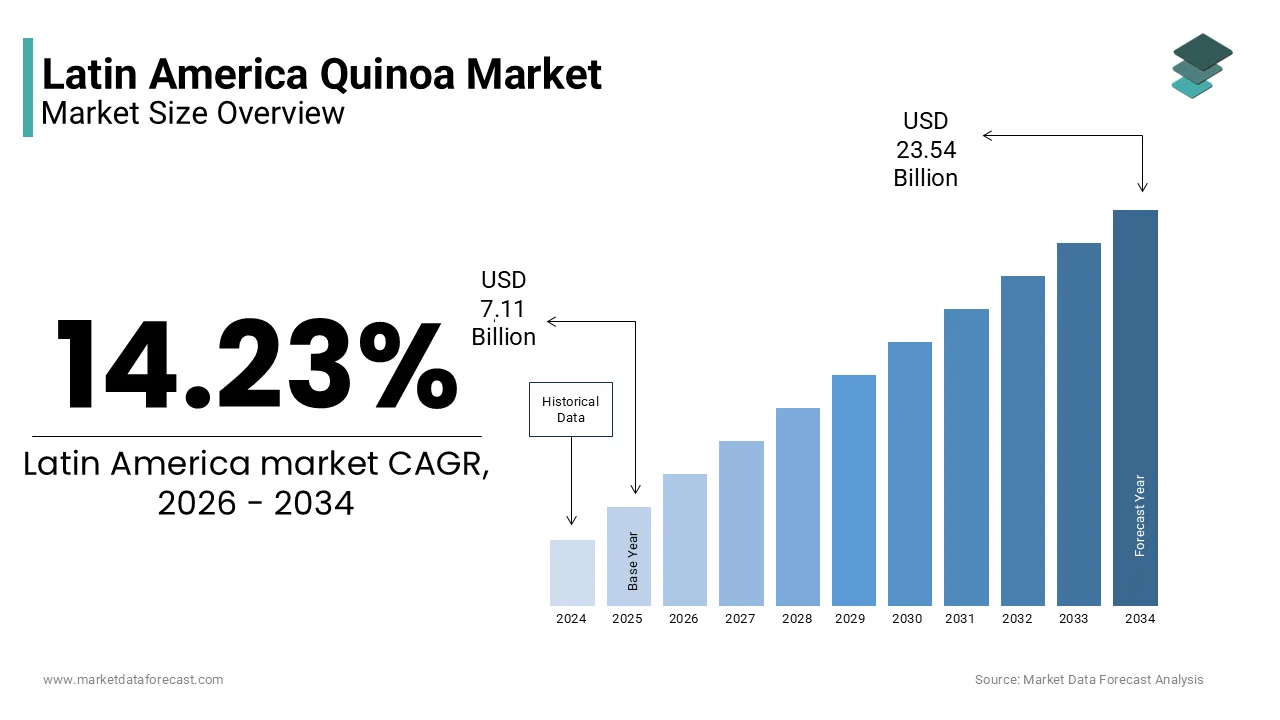
$7.11 BnMarket Estimate, 2026
$8.12 BnMarket Forecast, 2034
$23.54 BnCAGR, 2026–2034
14.23%Executive Summary: Latin America Quinoa Market
- Market Scope: Comprehensive analysis of the Latin America quinoa market covering farming types, industrial applications, regional country dynamics, growth drivers, and competitive landscapes.
- Market Valuation: Valued at USD 7.11 billion (2025), estimated at USD 8.12 billion (2026), and projected to reach USD 23.54 billion by 2034, registering an impressive CAGR of 14.23% during the forecast period (2026–2034).
- Primary Growth Drivers: Exceptional nutrient profile (rich in fiber, minerals, and gluten-free protein), rising consumer demand for organic and natural foods, expanding industrial uses in bakery, cosmetics, and pharmaceuticals, and growing popularity in breakfast meal formulations.
Key Market Segment Metrics (2026–2034)
| Category | Leading Segment (2025 Position) | Fastest-Growing Segment |
|---|---|---|
| By Type | Inorganic / Conventional Quinoa (captures the larger volume share due to mass-scale farming economics) | Organic Quinoa (propelled by clean-label trends, health consciousness, and chemical-free preferences) |
| By Application | Food Industry (dominates consumption via bread, pasta, noodles, snacks, and breakfast cereals) | Cosmetics & Pharmaceuticals (expanding through demand for natural plant extracts and nutrient-dense medical foods) |
| By Region / Country | Peru, Bolivia, & Ecuador (core Andean production and export powerhouses anchoring Latin American supply) | Brazil, Argentina, & Chile (driven by rising domestic middle-class disposable incomes and health trends) |
Major Market Players & Market Structure
Market Structure: Moderately fragmented agricultural and specialty food processing landscape featuring dedicated Andean cooperatives, organic grain suppliers, and multinational health-food corporations competing on certification standards, sourcing traceability, and product diversification.
Key Companies: Quinoa Foods Company, Northern Quinoa Production Corporation, Quinoa Corporation, Andean Valley S.A., Keen One Quinoa, The British Quinoa Company, The Hain Celestial Group, Andean Naturals Inc., Inca Organics, and others.
 Download Free Sample Report
Latin America Quinoa Market Size
The Latin America quinoa market size was valued at USD 7.11 billion in 2025 and is expected to reach USD 23.54 billion by 2034 from USD 8.12 billion in 2026. The market is projected to grow at a CAGR of 14.23%.
Quinoa (pronounced "keen-wah") is an edible seed from a South American flowering plant that is cooked and eaten like a grain. This market is defined not merely by commodity trading but by the preservation of indigenous genetic diversity and the socio-economic empowerment of smallholder farming communities who have stewarded this crop for millennia. The region serves as the undisputed epicenter of global production supplying over 80% of the world’s quinoa according to data from the Food and Agriculture Organization of the United Nations. This dominance stems from unique altiplano conditions that impart distinct nutritional profiles including complete amino acid sequences and high mineral content. Furthermore as per sources, over 70,000 families in the Bolivian Andean region depend on quinoa cultivation for their livelihood. These figures underscore the market’s dual role as a critical node in global food security networks and a vital engine for rural poverty alleviation. The sector is characterized by a transition from subsistence farming to export-oriented agribusiness while maintaining strict adherence to organic and fair trade standards that command premium pricing in Western markets. Consequently the Latin America Quinoa Market is a complex ecosystem balancing heritage conservation with modern commercial demands.
MARKET DRIVERS
Global Surge in Demand for Gluten-Free Ancient Grains
The escalating international preference for gluten-free dietary options is a potent factor propelling the Latin America quinoa market forward. Consumers in North America and Europe increasingly seek alternatives to wheat due to rising diagnoses of celiac disease and non-celiac gluten sensitivity. According to the Celiac Disease Foundation approximately 1% of the global population suffers from celiac disease requiring strict lifelong avoidance of gluten-containing grains. This medical necessity creates a sustained baseline demand for safe starches like quinoa which is naturally devoid of gluten proteins. Moreover as per studies, the global gluten-free food landscape has demonstrated strong annual growth driven by expanding dietary preferences and wellness trends beyond medical necessity alone. Manufacturers leverage these statistics to formulate breads pastas and snacks using quinoa flour thereby increasing industrial procurement volumes from Latin American suppliers. The perception of quinoa as a premium health-enhancing ingredient rather than just a filler drives higher price realization for exporters. Retailers in developed nations dedicate significant shelf space to these products reinforcing visibility and adoption. As awareness grows through digital media and nutritional counseling the demographic base expands beyond specific health conditions to general wellness seekers. This structural shift in global dietary norms ensures consistent order books for cooperatives in Peru and Bolivia sustaining long-term growth trajectories within the regional agricultural economy.
Government Policies Promoting Agro-Export Diversification
State-led initiatives aimed at reducing dependency on traditional commodities like coffee and coca significantly drive the Latin America quinoa market. Governments recognize quinoa as a strategic asset for foreign exchange earnings and rural development. According to research, the Peruvian Ministry of Agrarian Development and Irrigation conducts sectoral initiatives to improve agricultural infrastructure and support certification for Andean crops. This fiscal injection enables farmers to access modern drying facilities and storage silos enhancing post-harvest quality and reducing spoilage losses. Furthermore as per sources, governmental and research initiatives in Bolivia seek to foster certified organic quinoa cultivation. Such policy frameworks encourage compliance with international safety standards making local produce more competitive against emerging producers in North America and Europe. Public-private partnerships facilitate technology transfer improving yield stability despite climatic variability. Tax exemptions for agro-industrial zones attract private investment into processing plants creating value-added products domestically before export. These regulatory environments foster confidence among international buyers who prioritize supply chain reliability and ethical sourcing. By institutionalizing support mechanisms, states transform quinoa from a niche crop into a pillar of national agricultural strategy. This approach ensures sustained momentum and expanded market access for local stakeholders across the Andean corridor.
MARKET RESTRAINTS
Soil Degradation Due to Monoculture Practices
Intensive, continuous cropping of quinoa has led to severe nutrient depletion and erosion in fragile Andean ecosystems, which threaten long-term sustainability in the Latin American quinoa market. Farmers often neglect fallow periods required for soil regeneration prioritizing immediate yields over ecological balance. According to sources, the intensive expansion of quinoa cultivation in the Bolivian Altiplano contributes to soil degradation and nutrient depletion in highland agricultural zones. This degradation reduces water retention capacity and increases susceptibility to wind erosion during dry seasons. Moreover as per studies, continuous monoculture cultivation practices in highland ecosystems alter soil properties and reduce microbial community diversity. Higher input costs squeeze profit margins for smallholders who lack capital for remediation measures. The loss of fertility necessitates expansion into marginal lands potentially encroaching on protected biodiversity areas. Regulatory bodies struggle to enforce sustainable rotation schedules due to economic pressures on farmers. Without widespread adoption of integrated soil management techniques such as cover cropping or composting the productive capacity of existing farmland will continue to erode. This biological constraint poses a fundamental risk to supply consistency undermining the market’s ability to meet growing global demand without compromising environmental integrity or future harvest viability.
Price Volatility and Speculative Trading Dynamics
Fluctuating global commodity prices create significant uncertainty for producers, discouraging long-term investment in farm improvements, which impedes the growth of the Latin American quinoa market. Speculators amplify minor supply disruptions causing sharp spikes or crashes in futures markets disconnected from local production realities. According studies, quinoa prices are primarily influenced by regional weather events, harvest yields, and traditional supply-demand dynamics rather than regulated exchange-traded grain derivatives. This volatility makes budgeting difficult for cooperatives needing upfront capital for seeds and labor. Moreover as per research, currency depreciation in exporting nations increases the local currency cost of importing specialized agricultural equipment and machinery. Farmers face squeezed margins when input prices rise faster than crop sale values leaving them vulnerable to debt traps. Hedging instruments are rarely accessible to small entities due to complexity and collateral requirements. Buyers hesitate to sign fixed-price contracts fearing loss if markets move unfavorably resulting in fragmented negotiations. This mistrust prevents consolidation and efficient resource allocation across the value chain. Stabilizing revenues demands robust policy frameworks and financial literacy programs which remain underdeveloped in rural Andean communities impacting overall sector confidence and hindering planned expansion efforts necessary for meeting international quality standards consistently.
MARKET OPPORTUNITIES
Expansion into Processed Food Ingredients Beyond Whole Grain
Developing diverse derivative products offers a lucrative avenue to capture higher margins and broaden application scopes in the Latin America quinoa market. Raw quinoa faces limitations in texture and preparation time whereas processed forms like flakes puffs and flours integrate seamlessly into convenience foods. According to research, sales and adoption of alternative and plant-based protein ingredients have experienced steady growth due to demand for functional food formulations. This trend supports innovation in quinoa-based meat analogues and dairy alternatives where binding properties are crucial. Moreover as per research, convenient ready-to-eat formats incorporating ancient grains into snacks and breakfast bars have captured growing retail interest among health-conscious consumers. Producers can invest in extrusion technologies to create crispy textures appealing to younger demographics seeking healthy indulgence. Local brands partnering with multinational food giants gain access to global distribution networks amplifying reach. Certification of non-GMO and clean-label status enhances appeal in regulated markets like the European Union. By moving up the value chain cooperatives retain more profits domestically reducing vulnerability to raw commodity price swings. This strategic pivot transforms quinoa from a bulk export item into a branded ingredient solution fostering deeper customer engagement and sustainable revenue streams for Andean agricultural enterprises.
Leveraging Geographical Indications for Premium Branding
Establishing strong geographical indication protections allows producers in the region to differentiate their offerings from imitations grown elsewhere, which is expected to fuel the expansion of the Latin American quinoa market. Authenticity commands premium pricing and builds consumer trust regarding origin and quality. According to sources, registered geographical indications can enhance origin identity and allow agricultural producers to command price premiums in international markets. This legal framework safeguards traditional knowledge and prevents generic labeling by competitors. Besides, as per studies, ethical sourcing standards and origin-verified certifications often support higher retail price points compared to uncertified commodity products. Marketing campaigns emphasizing the cultural heritage and specific terroir of the Altiplano resonate with ethically conscious buyers. Digital traceability platforms using blockchain verify each step from farm to fork enhancing transparency. Collaborations with chefs and influencers showcase culinary versatility tied to authentic roots strengthening brand equity. By controlling narrative and quality standards regions can resist commoditization pressures. This approach not only secures economic benefits but also preserves intangible cultural assets ensuring that the legacy of Andean agriculture remains intact while adapting to modern commercial dynamics effectively.
MARKET CHALLENGES
Climate Change Impacts on High-Altitude Cultivation Zones
Rising temperatures and erratic precipitation patterns threaten the delicate ecological balance required for optimal quinoa growth, which holds back the expansion of the Latin American quinoa market. The crop thrives in specific cold-hardy conditions now becoming unpredictable due to glacial melt and shifting weather systems. According to research, agricultural regions in the Andes face long-term warming trends and shifts in historical precipitation patterns. This shift forces cultivation to higher elevations where land availability is scarce and terrain steepens erosion risks. Moreover as per sources, changing environmental patterns and extreme weather conditions present operational challenges for traditional farmers across the Peruvian highlands. Farmers lack resources for irrigation infrastructure adaptation leaving them exposed to seasonal shocks. Pest migrations driven by warming introduce new diseases previously absent in cooler climates. Insurance coverage remains limited in remote areas exacerbating financial instability after bad seasons. The inability to guarantee consistent supply erodes trust among international retailers who prioritize predictability. As climate change intensifies, these risks become more frequent. This trend directly challenges the sector’s capacity to scale operations sustainably without significant adaptive infrastructure investments and resilient breeding programs.
Labor Shortages and Rural Urban Migration Trends
Demographic shifts away from agricultural communities deprive the quinoa sector of an experienced workforce necessary for labor-intensive harvesting, which challenges the growth of the Latin American quinoa market. Younger generations migrate to cities seeking education and industrial jobs viewing farming as economically unviable. According to studies, limited economic opportunities in rural highland regions drive significant youth migration toward urban economic centers. This brain drain results in aging farmer populations struggling with physical demands of manual sowing and picking. In addition, as per reports, the reliance on traditional, manual harvesting techniques makes agricultural operations vulnerable to localized labor availability during peak periods. Mechanization is hindered by rugged terrain and small plot sizes preventing efficient equipment use. Cooperatives face difficulties recruiting skilled workers for quality control tasks essential for export standards. Social fragmentation weakens community support systems traditionally aiding collective farming efforts. Without incentives to retain talent or automate processes productivity stagnates. This human capital crisis threatens long-term viability as knowledge transfer halts and operational efficiency declines amidst growing global competition from larger-scale producers in other continents.
 REPORT COVERAGE
| REPORT METRIC | DETAILS |
| Market Size Available | 2025 to 2034 |
| Base Year | 2025 |
| Forecast Period | 2026 to 2034 |
| CAGR | 14.23% |
| Segments Covered | By Type, Application, and Region |
| Various Analyses Covered | Global, Regional, & Country Level Analysis; Segment-Level Analysis; DROC; PESTLE Analysis; Porter’s Five Forces Analysis; Competitive Landscape; Analyst Overview of Investment Opportunities |
| Regions Covered | Latin America include Brazil, Argentina, Mexico, and the Rest of Latin America |
| Market Leaders Profiled | Quinoa Foods Company, Northern Quinoa Production Corporation, Quinoa Corporation, Andean Valley S.A., Keen One Quinoa, The British Quinoa Company, Hain Celestial Group, Andean Naturals Inc., and Inca Organics |
SEGMENTAL ANALYSIS
By Type Insights
In 2025, the organic quinoa segment held the majority share in the Latin America quinoa market because of stringent international food safety standards and consumer preference for chemical-free produce. Buyers in Europe and North America prioritize certified organic grains to avoid pesticide residues common in conventional farming. According to the Research Institute of Organic Agriculture FiBL, global retail sales of organic food and drink reached almost 135 billion euros in 2022. This substantial figure underscores the economic weight of certification schemes that validate sustainable practices. Furthermore as per reports, a substantial portion of quinoa imported into the United States carries organic certification due to strong consumer demand for organic grains. This high compliance rate reflects the market’s structural reliance on eco-friendly production methods to access premium retail channels. Producers invest heavily in obtaining USDA NOP and EU organic labels which act as gateways to lucrative contracts. The perception of health benefits associated with organic cultivation drives repeated purchases among wellness-focused demographics. Retailers offer shelf stability to these products ensuring consistent demand visibility. Consequently the organic segment maintains its leadership through regulatory alignment and brand trust established over decades of Andean agricultural tradition. Non-organic varieties struggle to compete on price alone given the added value propositions of sustainability and purity inherent in organic labeling.
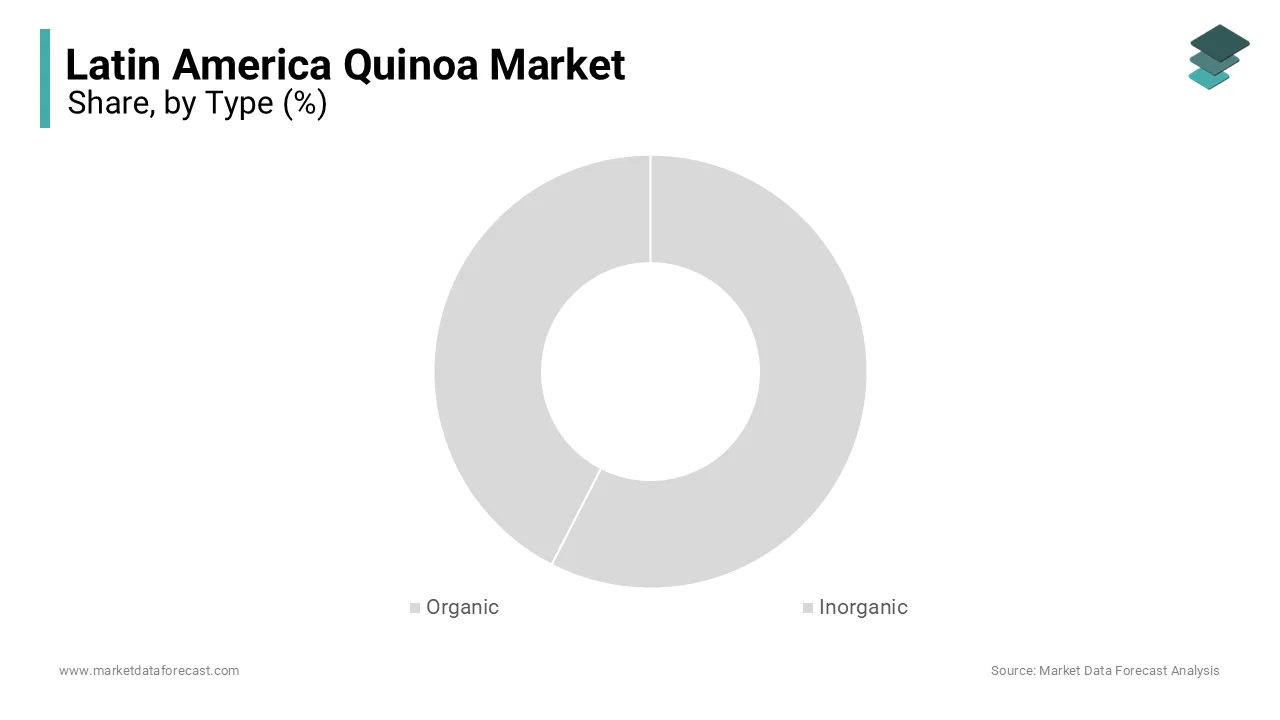
The conventional or inorganic quinoa segment is on the rise and is expected to be the fastest growing segment in the market by witnessing a CAGR of 6.8% from 2026 to 2034. This acceleration is propelled by rising domestic consumption in Latin America, where affordability outweighs certification premiums for local households. According to studies, national nutritional and food security programs in Andean nations promote the localized consumption of native grains like quinoa. These initiatives distribute subsidized conventional grains to school children and low-income families expanding the internal market base. Moreover as per research, conventional cultivation methods utilizing standard synthetic fertilizers often produce varying yield differences when compared directly to organic farming methods. This productivity advantage allows farmers to meet bulk industrial demands for flour and starch extraction more efficiently. Manufacturers in the region utilize non-certified quinoa for cost-sensitive product lines targeting mass markets. The absence of lengthy certification processes reduces time-to-market for new harvests. As urbanization progresses in Andean nations local consumers increasingly adopt quinoa as a staple replacing traditional potatoes and rice. This shift creates a robust buffer against export volatility stabilizing overall sector volumes. Thus the conventional segment grows rapidly by catering to essential nutritional needs within producing countries rather than relying solely on foreign premium buyers.
By Application Insights
The food segment was the largest in 2025 and occupied a commanding share of the Latin America quinoa market. It absorbed the majority of harvested volumes for direct human consumption. Quinoa serves as a primary ingredient in ready-to-eat meals baked goods and infant formulas globally. According to sources, retail availability and packaged food sales featuring alternative or ancient grains have grown steadily in response to broad consumer dietary shifts. This expansion ensures steady off-take agreements between cooperatives and multinational food processors. Furthermore as per research, culinary professionals frequently incorporate ancient grains like quinoa into restaurant menus because of their nutritional appeal and culinary versatility. Such professional adoption drives restaurant supply chain procurement increasing bulk orders. The grain’s complete protein content makes it ideal for vegetarian and vegan product formulations gaining traction among flexitarians. Processors convert raw seeds into flakes puffs and flours enhancing shelf life and convenience. Supermarkets dedicate significant aisle space to quinoa-based snacks and breakfast cereals boosting visibility. Consumer education campaigns highlight the crop’s low glycemic index appealing to diabetics and health-conscious individuals. Consequently the food sector remains the cornerstone of market revenue supported by diverse product innovations and widespread culinary integration across various dietary regimes worldwide.
The cosmetics segment is likely to experience the fastest CAGR of 8.5% during the forecast period. This surge is fueled by the discovery of quinoa saponins and proteins with superior skin conditioning properties. According to reports, personal care formulations have experienced a rising trend in incorporating natural and plant-derived active ingredients into skincare lines. Quinoa extracts provide hydration and anti-inflammatory benefits attracting premium beauty brands. Moreover as per research, hydrolyzed quinoa protein is utilized in hair care products to condition, strengthen, and protect hair strands from breakage. These scientific validations empower marketers to claim efficacy without synthetic additives. Manufacturers extract bioactive compounds for serums creams and shampoos targeting aging populations. The trend toward clean beauty aligns perfectly with quinoa’s hypoallergenic nature suitable for sensitive skin. Brands leverage the exotic origin story of Andean quinoa to differentiate their product lines in crowded shelves. Investment in biotechnology facilities improves extraction efficiency lowering costs for large-scale cosmetic producers. As consumers seek sustainable and ethical beauty solutions quinoa derivatives offer a compelling alternative to petroleum-based ingredients. Thus the cosmetics sector expands rapidly by tapping into the lucrative wellness economy and leveraging novel biochemical applications beyond traditional nutrition.
REGIONAL ANALYSIS
Brazil Market Analysis
Brazil maintains a significant position in the Latin America quinoa market. Its role is primarily that of a major consumer and emerging processor rather than a primary grower. The country’s vast agricultural infrastructure supports efficient distribution networks for imported quinoa from neighboring Andean nations. According to sources, urban wellness trends in Brazil have expanded consumer demand and commercial retail availability for ancient grains and alternative cereals. This demand stimulates local milling operations that package quinoa for domestic retail chains. Furthermore as per studies, agricultural research institutions and small agribusiness networks explore crop diversification opportunities in southern agricultural regions. Although yields remain lower than Andean highs this diversification reduces import dependency over time. Urban centers like São Paulo lead consumption with gyms and health stores stocking premium organic varieties. Government nutrition guidelines now include quinoa as a recommended protein source for public schools. Logistics hubs facilitate rapid movement of goods from ports to inland distributors ensuring freshness. Consequently Brazil acts as a critical market anchor influencing regional trade flows and processing standards while gradually integrating local production into the broader Latin American supply chain ecosystem.
Mexico Market Analysis
Mexico is a high-growth landscape within the Latin American quinoa market. It leverages its proximity to the United States for re-export, and domestic processing. The nation has developed a robust food manufacturing sector that incorporates quinoa into tortillas snacks and beverages. According to research, the Mexican food processing sector increasingly integrates functional ingredients into processed food manufacturing for domestic and foreign distribution. This growth positions Mexico as a value-addition hub transforming raw imports into finished goods. Besides, as per research, public health campaigns and nutritional awareness initiatives encourage dietary shifts toward whole and nutritious grains across Mexican consumer segments. Consumers increasingly seek gluten-free alternatives making quinoa a popular substitute for wheat in traditional dishes. Maquiladora factories process bulk shipments for North American brands benefiting from favorable trade agreements. Local startups innovate with quinoa-based beers and spirits appealing to younger demographics. Infrastructure investments in cold storage preserve quality during transit from Peruvian suppliers. Thus Mexico combines cultural culinary adaptation with industrial prowess to drive market expansion serving both domestic health needs and international export obligations effectively.
Argentina Market Analysis
Argentina is also a key player in the Latin America quinoa market. The country focuses on high-quality organic production in Patagonian regions. The country’s temperate climate allows for off-season harvesting complementing Andean supplies. According to sources, certified organic agricultural commodities produced in Argentina primarily serve international demand across European and North American markets. This specialization enables Argentine producers to command premium prices distinct from bulk commodities. Innovations enhance competitiveness against traditional growers facing water scarcity. Domestic consumption remains modest but growing among fitness enthusiasts who prefer locally sourced superfoods. Export logistics benefit from well-established port facilities in Buenos Aires facilitating swift shipment to global markets. Collaborative ventures with Italian and French gourmet brands elevate product positioning. Consequently Argentina contributes diversity to the regional portfolio by offering alternative origins and specialized organic certifications that appeal to discerning international retailers seeking supply chain resilience.
Chile Market Analysis
Chile is growing steadily in the Latin American quinoa market. The country is effectively utilizing its advanced logistics infrastructure to support this expansion. Moreover, the country imports raw quinoa from Bolivia and Peru for cleaning sorting and packaging before re-exporting to Asia and Oceania. According to research, Chilean agricultural trade associations actively pursue the diversification and international logistics routing of non-traditional agro-industrial goods. Value-added services such as vacuum sealing and branded packaging generate higher margins than raw commodity trading. Furthermore as per sources, ongoing modernization of port digital logistics and border management systems aims to shorten trade documentation processing times across Chilean shipping hubs. Santiago hosts numerous multinational distribution centers managing inventory for regional clients. Domestic demand is stable with supermarkets offering wide assortments of imported quinoa products. Innovation in ready-cook formats caters to busy urban professionals. Thus, Chile enhances the overall market liquidity by providing high-standard processing capabilities and reliable export channels that connect Andean production with distant consumer markets globally.
COMPETITIVE LANDSCAPE
The competitive landscape of the Latin America Quinoa Market is characterized by intense rivalry among established exporters and emerging regional processors vying for dominance in premium segments. Major incumbents leverage economies of scale to offer cost-effective solutions while simultaneously investing in high-quality organic tiers for health-conscious consumers. New entrants face significant barriers due to stringent regulatory requirements for phytosanitary certificates and the need for advanced processing technologies. Differentiation occurs through unique genetic profiles of heirloom varieties that provide distinct flavors and textures appealing to gourmet chefs. Companies engage in aggressive patent filings for novel extraction methods preventing imitation by competitors in the nutraceutical sector. Price competition remains moderate as buyers prioritize consistency and reliability over marginal cost savings given the critical nature of ingredient functionality in food safety. Strategic alliances between quinoa producers and end users foster long-term contracts reducing churn rates and stabilizing revenue streams. Furthermore sustainability credentials increasingly influence procurement decisions forcing all participants to adopt eco-friendly practices to meet corporate social responsibility goals. The market exhibits fragmentation at the farm level but consolidation dominates among top-tier global players striving for broader geographic coverage and diversified application portfolios across various food categories including bakery snacks and beverages. This dynamic environment requires continuous innovation and robust supply chain management to maintain competitive advantages amidst fluctuating global demand patterns and climatic uncertainties affecting production yields in the Andean region.
KEY MARKET PLAYERS
Some of the key players in Latin America quinoa market are
- Quinoa Foods Company
- Northern Quinoa Production Corporation
- Quinoa Corporation
- Andean Valley S.A.
- Keen One Quinoa
- The British Quinoa Company
- Hain Celestial Group
- Andean Naturals Inc.
- Inca Organics
Top Players in the Market
- Andean Grain Co. operates as a leading exporter specializing in certified organic quinoa from Peru and Bolivia. The company focuses on direct trade relationships with smallholder cooperatives ensuring fair wages and sustainable farming practices. Recent initiatives involve investing in solar powered drying facilities to reduce carbon footprints and improve grain quality. They have expanded their processing capabilities to offer ready-to-cook quinoa pouches for Western markets. By securing USDA and EU organic certifications they maintain premium pricing structures. Their strategic emphasis on traceability through blockchain technology enhances buyer confidence. These actions strengthen their brand reputation as an ethical supplier while securing long-term contracts with major retail chains globally thereby reinforcing their dominant position in the high-value segment of the market.
- Quinoa Real International is a prominent Bolivian entity dedicated to preserving heirloom quinoa varieties and promoting national heritage. The firm emphasizes geographical indication protection to differentiate its products from generic competitors. Recently they launched a global marketing campaign highlighting the nutritional superiority of white royal quinoa grown at extreme altitudes. Investments in laboratory testing ensure compliance with strict pesticide residue limits required by European importers. They collaborate with culinary institutes to educate chefs on proper preparation techniques boosting demand. By focusing on niche premium segments rather than bulk commodities they achieve higher profit margins. This strategy allows them to navigate price volatility effectively while maintaining strong relationships with luxury food brands and specialty grocers across North America and Europe enhancing their market resilience.
- Inca Harvest Solutions serves as a key aggregator and processor based in Peru connecting remote Andean farmers with international buyers. The company provides technical assistance for crop rotation and soil health management to combat degradation issues. Recent actions include establishing a centralized logistics hub in Lima to streamline export procedures and reduce transit times. They have diversified their product line to include quinoa flour and protein isolates catering to the gluten-free and plant-based trends. Partnerships with NGOs help certify fair trade status adding value to their exports. By integrating upstream farming support with downstream processing efficiency they secure consistent supply volumes. This holistic approach strengthens their operational reliability and positions them as a preferred partner for large-scale industrial food manufacturers seeking dependable raw material sources in the region.
Top Strategies Used by Key Market Participants
Key players in the Latin America Quinoa Market predominantly employ vertical integration strategies to control quality from seed selection to final packaging. By acquiring or partnering with local cooperatives companies ensure consistent raw material availability while supporting community development. Another critical tactic involves heavy investment in certification processes such as Organic Fairtrade and Non-GMO Project Verified which command premium prices in developed markets. Firms also pursue product diversification by developing value-added items like quinoa flakes puffs and protein powders to broaden application scopes beyond whole grains. Digital transformation initiatives include implementing blockchain traceability systems that provide consumers with transparent origin stories enhancing brand trust. Strategic alliances with research institutions facilitate the breeding of climate-resilient quinoa varieties capable of withstanding droughts and pests prevalent in the Andes. Additionally geographic expansion into emerging consumer markets in Asia and the Middle East reduces dependency on saturated Western economies. Marketing efforts focus on educating consumers about the complete amino acid profile of quinoa positioning it as a superior alternative to rice and wheat. These multifaceted strategies enable participants to mitigate risks associated with commodity price fluctuations while capturing higher margins through branding and innovation.
MARKET SEGMENTATION
This research report on the Latin America quinoa market is segmented and sub segmented into following categories
By Type
- Organic
- Inorganic
By Application
- Food Industry
- Cosmetics Industry
- Pharmaceuticals Industry
By Country
- Brazil
- Argentina
- Mexico
- Rest of Latin America