Europe Quinoa Market Research Report - Segmented By Type, Application, End Users And Region(United Kingdom, France, Spain, Germany, Italy, Russia, Sweden, Denmark) - Industry Analysis, Size, Share, Growth, Trends, And Forecasts (2026 to 2034)
Market Size, 2025
$27.03 BnMarket Estimate, 2026
$30.38 BnMarket Forecast, 2034
$77.40 BnCAGR, 2026–2034
12.40%Europe Quinoa Market Report Summary
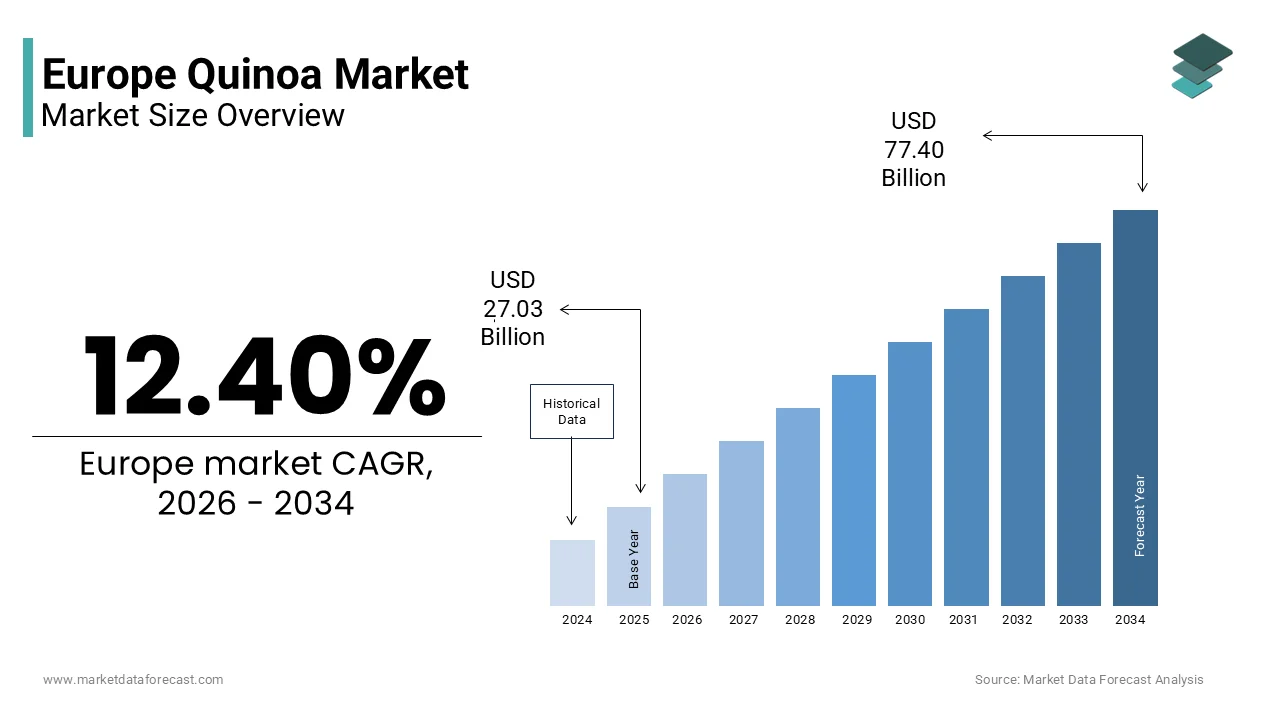
The Europe quinoa market was valued at USD 27.03 billion in 2025, is estimated to reach USD 30.38 billion in 2026, and is projected to reach USD 77.40 billion by 2034, growing at a CAGR of 12.40% during the forecast period. Market growth is driven by increasing consumer preference for healthy and plant based foods, rising awareness of gluten free diets, and expanding use of quinoa in packaged and functional food products. Quinoa is widely valued for its high protein content, essential amino acids, and nutritional benefits. The growing demand for superfoods and clean label products is further supporting strong market expansion across Europe.
Key Market Trends
- Rising demand for plant based and nutrient rich foods is driving market growth.
- Increasing awareness of gluten free and healthy diets is boosting quinoa consumption.
- Growing use of quinoa in packaged and functional food products is supporting market expansion.
- Expansion of organic and clean label food trends is enhancing product demand.
- Innovation in quinoa based snacks and ready to eat foods is influencing consumer preferences.
Segmental Insights
- Based on application, the food industry segment held a substantial share of the Europe quinoa market in 2025. This dominance is attributed to the extensive use of quinoa in bakery, cereals, snacks, and processed food products.
- Based on end user, the packed food segment accounted for 30.1% of the Europe quinoa market share in 2025, driven by increasing demand for convenient and health focused packaged food products.
Regional Insights
- The Europe quinoa market is experiencing strong growth across key countries, supported by changing dietary preferences and rising health awareness.
- The United Kingdom was the leading contributor, accounting for 18.7% of the Europe quinoa market share in 2025, driven by high consumer demand for superfoods, plant based diets, and organic food products.
Competitive Landscape
The Europe quinoa market is moderately competitive, with key players focusing on product diversification, organic sourcing, and expansion of retail distribution networks to strengthen their market position. Companies are investing in quinoa based product innovation and sustainable sourcing practices. Prominent players in the Europe quinoa market include Quinoa Foods Company, Northern Quinoa Production Corporation, Quinoa Corporation, Andean Valley S.A, Keen One Quinoa, The British Quinoa Company, Hain Celestial Group, Andean Naturals Inc, European Quinoa Group, and Inca Organics.
Europe Quinoa Market Size
The Europe quinoa market size was valued at USD 27.03 billion in 2025, and the market is expected to reach USD 77.40 billion by 2034 from USD 30.38 billion in 2026, with a growing CAGR of 12.40%.
Quinoa is a highly nutritious, gluten-free, edible seed harvested from the Chenopodium quinoa plant, native to the Andes region of South America. This market is defined by the transition of quinoa from a niche health food to a mainstream ingredient utilized in retail households food service and industrial food processing. The definition extends beyond raw grain trade to include value added products such as quinoa flour flakes pasta and ready to eat meals. According to the Food and Agriculture Organization of the United Nations quinoa is recognized for its exceptional nutritional profile containing all nine essential amino acids which aligns with the growing European focus on plant based nutrition. The European Commission has promoted quinoa cultivation within member states to reduce dependency on imports and enhance agricultural biodiversity. Current industry data indicates that quinoa cultivation area in Europe remained under 5,000 hectares in 2025, with Spain and France as the primary producers; contrary to claims of significant expansion, acreage gains have been constrained by strict planting windows and processing costs. The market dynamics are influenced by stringent food safety regulations organic certification standards and consumer preferences for sustainable and ethically sourced ingredients. The World Health Organization emphasizes the role of diverse grains in combating non communicable diseases further validating quinoa’s position in public health initiatives. This foundational status ensures that quinoa remains a critical component of the European functional food sector driving innovation in product formulation and supply chain sustainability.
MARKET DRIVERS
Rising Prevalence of Gluten Free Diets and Celiac Disease Awareness
The increasing prevalence of gluten free diets and heightened awareness of celiac disease are primary drivers of the Europe Quinoa Market. Quinoa is naturally gluten free making it an ideal alternative to wheat barley and rye for individuals with gluten intolerance or celiac disease. According to the European Society for Paediatric Gastroenterology, Hepatology and Nutrition, celiac disease affects approximately 1 percent of the pediatric population in Europe, though diagnosis rates remain suboptimal with many cases undetected. This medical reality drives a consistent demand for safe and nutritious gluten free grains. The Association of European Coeliac Societies (AOECS) estimates that celiac disease affects 1 in 100 people in Europe, noting that only approximately 25% of cases are currently diagnosed, while EU regulations have improved the availability and labeling of gluten-free products. Quinoa’s versatility allows it to be used in breads pastas and baked goods providing texture and nutritional value that other gluten free flours often lack. Furthermore the broader adoption of gluten free lifestyles by non celiac individuals seeking to reduce inflammation and improve digestive health has expanded the consumer base. Research indicates that sales of gluten free products in Europe have grown steadily outpacing conventional grain categories. Retailers have responded by dedicating shelf space to gluten free options including quinoa based items. The regulatory framework in the European Union, which mandates clear labeling of 14 major allergens including gluten, further supports consumer confidence in naturally gluten-free options like quinoa. This combination of medical necessity and lifestyle choice ensures sustained growth for the quinoa market across the continent.
Shift Toward Plant Based Proteins and Sustainable Nutrition
The strategic shift toward plant-based proteins and sustainable nutrition is greatly propelling the demand for quinoa in the region and the growth of the Europe quinoa market. Consumers are increasingly seeking alternatives to animal-derived foods. Quinoa is a complete protein source containing all essential amino acids which makes it highly valued by vegans vegetarians and flexitarians. According to the Good Food Institute Europe the plant based food market is expanding rapidly with consumers prioritizing environmental sustainability and ethical sourcing. The European Green Deal aims to make food systems fair healthy and environmentally friendly encouraging the adoption of crops with lower ecological footprints. Quinoa requires less water than many traditional cereals and can grow in marginal soils aligning with these sustainability goals. The World Resources Institute highlights that shifting toward plant rich diets is crucial for reducing greenhouse gas emissions from the food sector. In countries like Germany and the United Kingdom where veganism is gaining traction quinoa is a staple ingredient in meat substitutes salads and bowls. The European Commission’s Farm to Fork Strategy promotes biodiversity and reduced pesticide use which favors the cultivation of resilient crops like quinoa. Additionally the high fiber and mineral content of quinoa appeals to health conscious consumers looking to enhance their nutrient intake without relying on supplements. This alignment with broader environmental and health trends positions quinoa as a key component of the future European food system driving robust market growth.
MARKET RESTRAINTS
High Price Volatility and Supply Chain Dependencies
High price volatility and dependence on imported supplies pose significant restraints to the Europe Quinoa Market. This affects both affordability and market stability. Europe relies heavily on imports from South America particularly Peru and Bolivia which account for the majority of global quinoa production. According to the International Trade Centre fluctuations in global supply due to weather conditions political instability or logistical disruptions can lead to sharp price increases. The European Commission notes that reliance on single source regions creates vulnerability to external shocks impacting the consistency of supply for European manufacturers. Climate change effects in the Andes such as droughts and frost have occasionally reduced yields leading to scarcity and higher costs. The Food and Agriculture Organization of the United Nations reports that extreme weather events are becoming more frequent threatening agricultural productivity in key producing regions. These price spikes make quinoa less accessible to price sensitive consumers limiting its penetration into mass market segments. Additionally the long transportation distances contribute to higher carbon footprints and logistics costs which are passed on to retailers. Currency exchange rate fluctuations between the Euro and South American currencies further exacerbate price instability. Importers and distributors struggle to maintain stable pricing strategies amidst these uncertainties. The lack of sufficient domestic production to meet demand means that Europe remains exposed to global market dynamics. This structural dependency restricts the market’s ability to offer competitive pricing compared to locally produced grains thereby restraining broader adoption.
Consumer Perception of Authenticity and Ethical Sourcing Concerns
Consumer perception regarding authenticity and ethical sourcing continues to be a substantial restraint to the Europe Quinoa Market. Shoppers are becoming more conscious of the social and environmental impacts of their food choices. The surge in global demand for quinoa has raised concerns about its impact on indigenous communities in the Andes where it is a traditional staple. Contrary to early concerns, recent welfare impact studies (including those referenced by the International Trade Centre) indicate that increased export prices have largely improved the livelihoods of rural Andean communities, rather than causing a domestic food security crisis. This narrative has influenced European consumers who prioritize ethical consumption and fair trade practices. The European Fair Trade Association emphasizes the importance of ensuring that producers receive fair compensation and that local food security is not compromised. Some consumers hesitate to purchase quinoa due to fears that their consumption contributes to social inequity or environmental degradation in source regions. Although certifications such as Fairtrade and Organic aim to address these issues skepticism remains regarding their effectiveness. The lack of transparency in complex supply chains makes it difficult for buyers to verify ethical claims. Additionally the carbon footprint associated with transporting quinoa from South America to Europe conflicts with the sustainability values of many eco conscious shoppers. This ethical dilemma creates a barrier to purchase for a segment of the market that values social responsibility. Manufacturers must invest in transparent and verifiable sourcing practices to overcome these perceptions which adds to operational costs and complexity.
MARKET OPPORTUNITIES
Expansion of Domestic Cultivation in European Countries
The expansion of domestic quinoa cultivation in European countries paves the way to reduce import dependency and enhance market sustainability within the Europe quinoa market. Several member states including France Italy Spain and the United Kingdom have successfully initiated quinoa farming projects adapting the crop to local climatic conditions. According to the European Commission the Common Agricultural Policy supports the diversification of crops to improve soil health and reduce environmental impact. Domestic production eliminates the need for long distance transportation lowering the carbon footprint and appealing to eco conscious consumers. The Food and Agriculture Organization of the United Nations highlights that growing quinoa in Europe can provide farmers with a high value alternative to traditional cereals especially in marginal lands. Local sourcing ensures fresher products and shorter supply chains which enhances quality and reduces logistical risks. Retailers are increasingly interested in promoting locally grown quinoa as a premium sustainable option differentiating it from imported varieties. The European Quinoa Initiative facilitates knowledge exchange and best practices among farmers accelerating the adoption of suitable varieties. Government subsidies and research grants further support the development of agronomic techniques tailored to European soils. This shift toward local production not only strengthens food security but also creates new economic opportunities for rural communities. By branding European quinoa as a sustainable and ethical choice manufacturers can capture a premium segment of the market. This strategic move aligns with the European Green Deal objectives and offers a resilient supply model.
Innovation in Value Added Quinoa Products and Formats
Innovation in value added quinoa products and formats offers a lucrative opportunity for market participants to diversify offerings and attract broader consumer segments in the Europe quinoa market. Beyond raw grains manufacturers are developing quinoa based pasta snacks breakfast cereals and baking mixes that cater to convenience oriented lifestyles. According to Mintel the launch of innovative quinoa products in Europe has increased as companies seek to differentiate themselves in a crowded health food market. Quinoa flour is being used in gluten free breads and pastries addressing the needs of celiac patients while improving texture and nutritional content. The European Food Safety Authority supports the use of novel food ingredients provided they meet safety standards enabling the creation of fortified quinoa products. Ready to eat quinoa bowls and salads are gaining popularity among urban professionals seeking quick and healthy meal solutions. The NielsenIQ data indicates that convenience foods with health benefits are experiencing strong growth in the retail sector. Collaborations between food technologists and chefs help create appealing flavors and textures that overcome the natural bitterness of quinoa. Packaging innovations such as resealable bags and single serve portions enhance usability and reduce waste. By transforming quinoa into versatile and convenient formats companies can increase consumption frequency and expand into new usage occasions. This product diversification not only drives revenue growth but also reinforces quinoa’s position as a modern and adaptable ingredient in the European diet.
MARKET CHALLENGES
Agronomic Challenges and Lack of Standardized Farming Practices
Agronomic challenges and the lack of standardized farming practices are a formidable challenge to the scalability of quinoa production in the Europe quinoa market. While quinoa is resilient it requires specific conditions for optimal growth including well drained soils and moderate temperatures which vary across European regions. According to the Joint Research Centre of the European Commission adapting quinoa to diverse European climates requires extensive research and development to identify suitable varieties. Farmers often face difficulties with pest management as quinoa is susceptible to certain insects and diseases that are not yet well understood in European contexts. The lack of established agronomic protocols leads to inconsistent yields and quality affecting the reliability of supply. The European Innovation Partnership for Agricultural Productivity and Sustainability notes that knowledge gaps in crop rotation and soil management hinder widespread adoption. Additionally the absence of specialized harvesting equipment for quinoa in Europe increases labor costs and efficiency losses. Small scale farmers may struggle to achieve economies of scale making domestic production less competitive against imports. The variability in seed quality and germination rates further complicates planting schedules and output predictions. Without standardized best practices the risk of crop failure remains high discouraging investment in large scale cultivation. Addressing these agronomic hurdles requires coordinated efforts between research institutions governments and farmers to develop robust farming systems. Until these challenges are mitigated the potential for domestic quinoa production to fully replace imports remains limited.
Regulatory Hurdles and Novel Food Classification Complexities
Regulatory hurdles and complexities related to novel food classification are major barriers for the introduction of innovative quinoa derivatives in the Europe quinoa market. The European Union maintains strict regulations on food safety and labeling which can delay the approval of new quinoa based ingredients or processes. According to the European Food Safety Authority any significant change in the production method or composition of quinoa products may require a novel food assessment which is time consuming and costly. This regulatory burden disproportionately affects small and medium sized enterprises that lack the resources to navigate complex approval procedures. The European Commission's "Better Regulation" reports acknowledge that while stringent safety and environmental standards protect consumers, the "compliance burden" can be a barrier for SMEs. This is particularly true in the plant-based sector where rapid innovation often outpaces regulatory updates. Additionally varying national interpretations of EU regulations across member states create inconsistencies in compliance requirements. According to the International Trade Centre (ITC), non-tariff measures, such as Maximum Residue Levels (MRLs) and organic certification, primarily complicate trade for non-EU producers (e.g., from Peru or Bolivia). Within Europe, the EU Single Market rules generally prevent differing national labeling standards from hindering cross-border trade. Manufacturers must ensure that their products meet stringent criteria for contaminants such as heavy metals and pesticides which requires rigorous testing and quality control. The uncertainty surrounding regulatory approvals discourages investment in research and development for new quinoa applications. Furthermore the need for continuous monitoring and documentation increases operational costs. These regulatory complexities slow down the pace of innovation and limit the speed at which new quinoa products can reach the market. Overcoming these challenges requires harmonization of standards and streamlined approval processes to foster a more dynamic and competitive industry.
REPORT COVERAGE
| REPORT METRIC | DETAILS |
| Market Size Available | 2025 to 2034 |
| Base Year | 2025 |
| Forecast Period | 2026 to 2034 |
| CAGR | 12.4% |
| Segments Covered | By Application, End User, and Region |
| Various Analyses Covered | Global, Regional, & Country Level Analysis; Segment-Level Analysis; DROC, PESTLE Analysis; Porter’s Five Forces Analysis; Competitive Landscape; Analyst Overview of Investment Opportunities |
| Regions Covered | UK, France, Spain, Germany, Italy, Russia, Sweden, Denmark, Switzerland, Netherlands, Turkey, and the Czech Republic |
| Market Leaders Profiled | Quinoa Foods Company, Northern Quinoa Production Corporation, Quinoa Corporation, Andean Valley S.A, Keen One Quinoa, The British Quinoa Company, Hain Celestial Group, Andean Naturals Inc, European Quinoa Group, Inca Organic |
SEGMENTAL ANALYSIS
By Application Insights
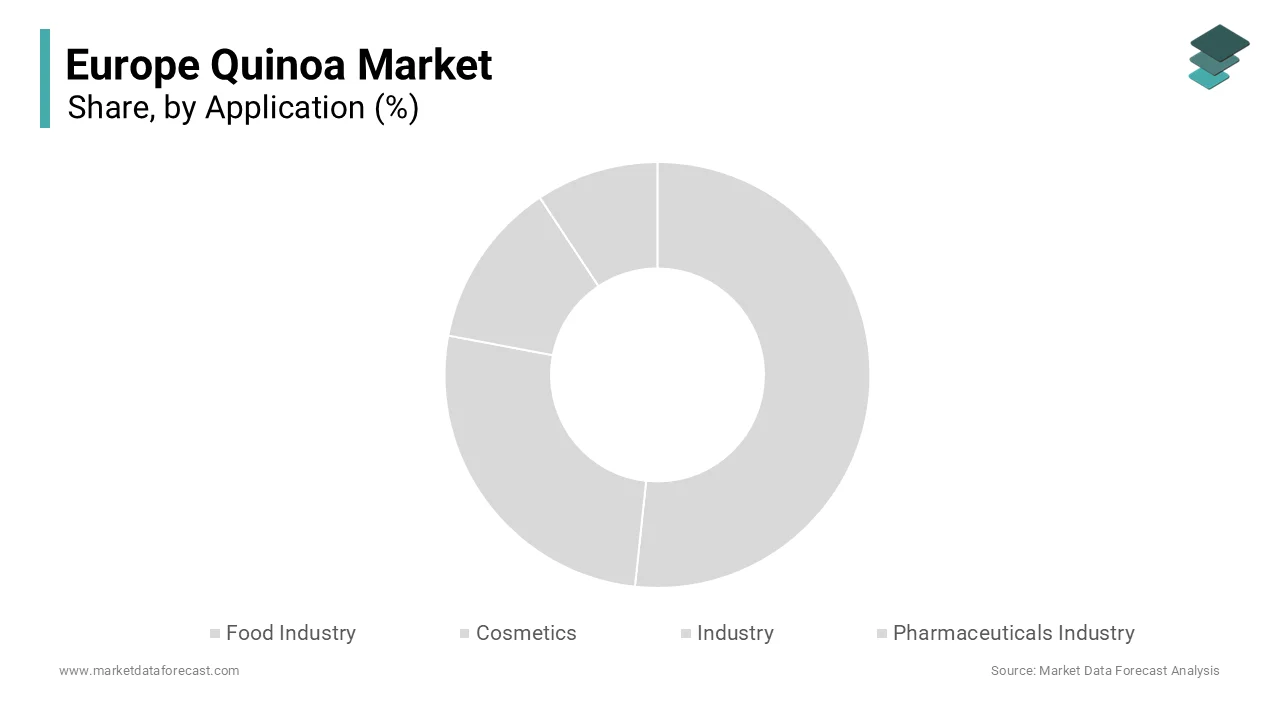
The food industry segment maintained dominance by accounting for a substantial share of the Europe Quinoa Market in 2025. This dominance of the segment is driven by the widespread integration of quinoa into daily diets across various culinary applications ranging from staple grains to innovative ready meals. Quinoa’s neutral flavor profile and ability to absorb spices make it a versatile ingredient for salads soups side dishes and main courses which appeals to diverse European palates. According to the European Commission the consumption of alternative grains has risen significantly as consumers seek to diversify their carbohydrate sources beyond traditional wheat and rice. The versatility of quinoa allows it to be used in both hot and cold preparations making it suitable for year round consumption. In countries like Germany and the United Kingdom quinoa is a common ingredient in health focused meal kits and supermarket deli sections. The International Food Information Council notes that consumers are increasingly experimenting with global cuisines where quinoa plays a central role such as Mediterranean and Latin American dishes. This culinary adaptability ensures that quinoa remains a staple in household pantries and restaurant menus. Furthermore the availability of pre cooked and instant quinoa products caters to the busy lifestyles of urban populations enhancing convenience without compromising nutritional value. The food industry’s ability to innovate with quinoa based snacks bars and breakfast cereals further expands its application scope. This broad utility across multiple meal occasions and product categories cements the food industry as the leading application segment driving consistent volume growth throughout the region. Regulatory support for healthy and sustainable food choices significantly drives the dominance of the food industry segment in the Europe Quinoa Market. The European Union’s Farm to Fork Strategy aims to promote sustainable food systems and encourage the consumption of plant based proteins which aligns perfectly with quinoa’s nutritional profile. According to the World Health Organization reducing the intake of processed meats and increasing whole grain consumption is essential for preventing non communicable diseases. Quinoa is recognized as a whole grain rich in fiber and protein making it a recommended component of balanced diets by national health agencies across Europe. Public health campaigns in countries like France and Sweden actively promote the inclusion of diverse grains in school meals and institutional catering. This institutional demand creates a stable baseline for quinoa consumption independent of retail trends. Additionally the European Commission’s guidelines on nutrition labeling help consumers identify high quality quinoa products facilitating informed purchasing decisions. The alignment of quinoa with public health objectives ensures its continued presence in dietary guidelines and food assistance programs. This regulatory backing not only validates the health benefits of quinoa but also encourages food manufacturers to prioritize it in product formulations. The synergy between policy and consumer behavior sustains the leadership of the food industry segment in the regional market.
The cosmetics segment is predicted to witness the highest CAGR of 6.5% from 2026 to 2034 due to the increasing demand for natural and organic personal care ingredients. Quinoa extract is rich in antioxidants vitamins and amino acids which offer significant benefits for skin and hair health including hydration protection and anti aging effects. Quinoa oil is particularly valued for its ability to strengthen hair fibers and improve scalp health making it a popular ingredient in shampoos conditioners and serums. The European Cosmetic Toiletry and Perfumery Association reports that the natural cosmetics sector is outpacing the conventional market reflecting a shift toward sustainability and transparency. Brands are leveraging the exotic and nutritious image of quinoa to differentiate their products in a crowded marketplace. The rise of clean beauty movements in countries like Germany and France has accelerated the adoption of quinoa based formulations. Consumers are increasingly aware of the environmental impact of their purchases preferring brands that use sustainably sourced botanicals. Quinoa fits this criterion as it can be grown with minimal pesticides and water. This alignment with eco conscious values drives the rapid expansion of the cosmetics segment. The ability of quinoa to deliver tangible beauty benefits while adhering to ethical standards ensures its growing popularity in the European personal care industry. Innovation in bio active skincare solutions contributes significantly to the rapid growth of the cosmetics segment for quinoa in Europe. Research into the bioactive properties of quinoa has revealed its potential to protect skin from environmental stressors and improve barrier function. According to the Journal of Cosmetic Dermatology quinoa peptides exhibit strong antioxidant activity which helps neutralize free radicals and reduce signs of aging. This scientific validation has encouraged cosmetic manufacturers to incorporate quinoa extracts into high performance skincare products such as creams masks and essences. The European Society for Dermatological Research highlights the growing interest in plant derived actives that offer clinical efficacy without irritation. Quinoa’s hypoallergenic nature makes it suitable for sensitive skin types expanding its target audience. Companies are investing in advanced extraction technologies to preserve the potency of quinoa compounds ensuring maximum benefit in final products. The trend toward personalized skincare has also led to the development of customized formulations featuring quinoa for specific skin concerns. Social media influencers and dermatologists play a crucial role in educating consumers about these benefits driving trial and adoption. The premium positioning of quinoa based cosmetics allows brands to command higher prices appealing to affluent consumers seeking luxury natural products. This focus on innovation and efficacy drives the exceptional growth trajectory of the cosmetics segment in the European quinoa market.
By End User Insights
In 2025, the packed food segment held the majority share of 30.1% of the Europe Quinoa Market. The prevailing convenience culture and the rising popularity of ready to eat meals are the factors attributed to the leading position of this segment. Urban consumers in Europe increasingly prioritize time saving food solutions without compromising on health and nutrition. Quinoa based packed foods such as microwaveable bowls salad mixes and snack bars offer a quick and nutritious option for lunch and dinner. The ease of preparation appeals to working professionals students and families who seek balanced meals with minimal effort. Retailers have expanded their offerings of chilled and ambient quinoa products making them easily accessible in supermarkets and convenience stores. Packed quinoa products often feature clean labels and simple ingredients aligning with consumer preferences for transparency. The portability of these items makes them ideal for on the go consumption further boosting demand. Manufacturers continuously innovate with new flavors and combinations to keep the category exciting and relevant. This combination of convenience health and accessibility ensures that packed food remains the dominant end user segment in the European quinoa market. Retail expansion and the development of private label quinoa products significantly contribute to the dominance of the packed food segment. Major supermarket chains across Europe such as Tesco Carrefour and Aldi have introduced their own brands of quinoa based meals and snacks offering competitive pricing and consistent quality. These private label initiatives make quinoa more affordable and accessible to a broader audience breaking down price barriers associated with premium branded items. The widespread distribution networks of these retailers ensure that quinoa products are available in both urban and rural areas. Promotional activities and shelf placement strategies further drive visibility and trial among shoppers. The European Retail Roundtable notes that retailers are increasingly focusing on health and wellness categories to differentiate their assortments. By offering a variety of packed quinoa options retailers cater to diverse dietary needs including gluten free vegan and organic preferences. This strategic focus on private label development enhances market penetration and volume sales. The reliability and affordability of retailer brands foster customer loyalty and repeat purchases. This robust retail infrastructure supports the sustained leadership of the packed food segment in the European quinoa market.
The ingredients segment is estimated to register the fastest CAGR of 7.2% during the forecast period owing to the rise of home baking and culinary experimentation. Moreover, the pandemic induced lockdowns sparked a lasting interest in cooking from scratch with consumers seeking high quality and nutritious ingredients for their homemade meals. Quinoa flour flakes and puffed quinoa are increasingly used in breads pancakes cookies and granolas offering a gluten free and protein rich alternative to traditional wheat products. The versatility of quinoa ingredients allows home cooks to enhance the nutritional profile of their favorite recipes without sacrificing taste or texture. Social media platforms and cooking blogs play a significant role in inspiring consumers to try new ingredients and techniques. Quinoa’s mild flavor makes it an easy addition to both sweet and savory dishes encouraging frequent use. The availability of quinoa ingredients in mainstream grocery stores has further facilitated this trend. This cultural shift toward homemade and health focused cooking drives the rapid growth of the ingredients segment in the European market. Industrial demand for gluten free formulations contributes significantly to the rapid growth of the ingredients segment for quinoa in Europe. Food manufacturers are increasingly incorporating quinoa flour and starch into their products to meet the rising demand for gluten free options. Quinoa provides superior structural integrity and nutritional value compared to other gluten free flours making it a preferred choice for industrial applications. It is used in the production of pasta crackers biscuits and baby food ensuring that these products meet strict gluten free standards. Manufacturers benefit from quinoa’s ability to improve texture and shelf life in gluten free formulations. The trend toward clean label products also favors quinoa as it is perceived as a natural and wholesome ingredient. Collaborations between ingredient suppliers and food processors facilitate the development of innovative quinoa based solutions. This industrial adoption drives volume growth and establishes quinoa as a key component in the gluten free supply chain. The focus on functionality and compliance ensures the sustained expansion of the ingredients segment in the European quinoa market.
REGIONAL ANALYSIS
United Kingdom Quinoa Market Analysis
The United Kingdom led the Europe Quinoa Market and captured a 18.7% share in 2025. This lead position of the UK market is supported by a strong health consciousness and well-developed retail sector. Urban consumers in the UK are driving high adoption rates for alternative grains. They prioritize these products due to a focus on wellness and sustainability. According to a study, health concerns have driven a rise in 'superfoods' like quinoa, though ONS data indicates that overall adherence to nutrient-dense dietary recommendations (such as 5-a-day) remains stable rather than shifting dramatically. The UK is a leader in the plant based food movement with numerous startups and established brands offering quinoa based products. Supermarkets such as Waitrose and Marks Spencer have extensive ranges of organic and fair trade quinoa catering to affluent shoppers. The British Dietetic Association promotes quinoa as a key component of a balanced diet reinforcing its popularity. The rise of meal kit services like HelloFresh has also integrated quinoa into weekly menus exposing more households to the grain. Government initiatives supporting sustainable agriculture encourage local trials although imports still dominate supply. The UK’s exit from the European Union has introduced new trade dynamics but demand remains resilient due to strong consumer preference. The focus on ethical sourcing and environmental impact drives the preference for certified quinoa products. The market continues to grow through innovation in ready meals and snacks. The robust e commerce sector facilitates access to niche quinoa brands. The UK remains a key driver of trends in the European quinoa landscape.
France Quinoa Market Analysis
France was the second largest region in the Europe Quinoa Market and accounted for a 15.7% share in 2025. This growth of the French market is propelled by its strong culinary tradition and emphasis on quality. In France, quinoa has transitioned into a staple that bridges the gap between high-end culinary, organic dining, and health-conscious consumer choice. France has established itself as a key European importer and producer of quinoa, with consumption growing faster than in neighboring Germany, driven by organic and health-conscious market trends. Quinoa is widely used in salads side dishes and vegetarian meals in both homes and restaurants. The French National Institute for Agricultural Research supports the cultivation of quinoa in certain regions promoting local production and sustainability. Organic quinoa is particularly popular in France with consumers willing to pay a premium for certified products. The French Agency for Food Environmental and Occupational Health and Safety emphasizes the nutritional benefits of whole grains encouraging their inclusion in public health guidelines. Retailers like Leclerc and Carrefour offer extensive selections of quinoa products including private label options. The trend toward flexitarianism drives demand for plant based proteins including quinoa. Culinary schools and chefs incorporate quinoa into modern French cuisine enhancing its prestige. The market benefits from strong distribution networks and consumer education. France’s focus on gastronomy and health ensures steady growth for quinoa. The emphasis on origin and quality differentiates the French market from others in Europe.
Spain Quinoa Market Analysis
Spain is a growing landscape in the Europe Quinoa Market due to increasing health awareness and agricultural adaptation. Rising domestic production and a surge in consumption define the growing, sustainable, and local quinoa sector in Spain. According to sources, Spanish quinoa cultivation has expanded significantly in Andalusia, where companies like Algosur have pioneered production due to favorable climatic conditions, contrasting with the traditional cereal focus of northern regions. This local production reduces reliance on imports and supports rural economies. Spanish consumers are increasingly adopting Mediterranean diets enriched with diverse grains including quinoa. The Spanish Agency for Food Safety and Nutrition promotes quinoa as a healthy alternative to refined carbohydrates. Supermarkets such as Mercadona and El Corte Inglés have increased their quinoa offerings reflecting growing demand. The tourism sector also contributes to market growth as hotels and restaurants serve quinoa based dishes to international visitors. The rise of vegan and vegetarian lifestyles in urban centers like Madrid and Barcelona drives retail sales. Spanish manufacturers are innovating with quinoa based pasta and snacks catering to local tastes. The government’s support for sustainable agriculture aligns with quinoa’s low water requirements. The market benefits from a strong export orientation as well. Spain’s combination of production and consumption positions it as a key player in the European quinoa sector.
Germany Quinoa Market Analysis
Germany is moving ahead steadfastly in the Europe Quinoa Market owing to a strong organic food sector and health conscious population. The market status in Germany is defined by high demand for organic and fair trade quinoa products. According to the Federal Ministry of Food and Agriculture (BMEL), Germany is the largest market for organic food in Europe with a turnover of €15.87 billion (2021), though quinoa remains a growing niche import rather than a widely adopted staple. Consumers prioritize sustainability and ethical sourcing influencing purchasing decisions. The German Nutrition Society recommends whole grains like quinoa for a balanced diet reinforcing consumer confidence. Retailers such as Rewe and Edeka offer extensive ranges of organic quinoa products including private labels. The rise of plant based diets in Germany has boosted quinoa consumption as a protein source. Discounters like Aldi and Lidl have made quinoa more accessible through affordable private label options. The German food processing industry uses quinoa in various products including breads and snacks. Government initiatives support sustainable agriculture and biodiversity favoring quinoa cultivation trials. The market benefits from high consumer awareness and education. Germany’s focus on quality and sustainability drives premiumization in the quinoa sector. The strong regulatory framework ensures high standards for imported and local products. Germany remains a critical market for quinoa growth in Europe.
Italy Quinoa Market Analysis
Italy is likely to expand significantly in the Europe quinoa market from 2026 to 2034 due to its rich culinary heritage and growing interest in healthy eating. The market status in Italy is characterized by the integration of quinoa into traditional and modern Italian cuisine. Research supported by agricultural bodies indicates that quinoa cultivation is being tested across Italy, with significant trials in the Marche (Central) and Puglia (South) regions to assess adaptability to Mediterranean climates, rather than exclusively expanding in the north. Italian consumers are increasingly open to experimenting with non traditional grains in risottos salads and soups. The Italian National Institute of Health promotes the benefits of whole grains for cardiovascular health supporting market growth. Retailers like Coop and Conad offer diverse quinoa products catering to health conscious shoppers. The popularity of gluten free diets in Italy drives demand for quinoa flour and pasta. Artisanal producers are creating high quality quinoa based products appealing to gourmet segments. The restaurant sector incorporates quinoa into menus offering healthy and innovative dishes. The Italian government supports sustainable farming practices aligning with quinoa’s environmental benefits. The market benefits from a strong food culture that values quality and authenticity. Italy’s combination of tradition and innovation ensures steady growth for quinoa. The focus on local production enhances sustainability and reduces carbon footprint.
COMPETITIVE LANDSCAPE
The competition in the Europe Quinoa Market is characterized by a mix of established organic brands private label retailers and specialized importers vying for dominance through quality and sustainability. Major players leverage their extensive distribution networks and brand recognition to maintain strong market positions while smaller niche firms compete on unique varieties and ethical sourcing stories. The market is moderately fragmented with no single entity controlling the entire supply chain. Price competitiveness remains a crucial factor as consumers compare private label options with premium branded products. Innovation in convenient formats such as pre cooked pouches and snacks serves as a key differentiator. Regulatory compliance regarding organic certification and labeling standards shapes competitive dynamics significantly. Companies increasingly focus on transparency and traceability to build consumer trust amidst growing awareness of supply chain ethics. The rise of domestic European production introduces new competitors who emphasize local sourcing and reduced carbon footprints. Retailers play a pivotal role by influencing shelf space and promotional activities. Strategic alliances between suppliers and distributors enhance market access and efficiency. Overall the market demands continuous adaptation to changing consumer preferences and regulatory requirements to sustain profitability and growth.
KEY MARKET PLAYERS
Some of the key players in Europe quinoa market are
- Quinoa Foods Company
- Northern Quinoa Production Corporation
- Quinoa Corporation
- Andean Valley S.A
- Keen One Quinoa
- The British Quinoa Company
- Hain Celestial Group
- Andean Naturals Inc
- European Quinoa Group
- Inca Organics
Top Players in the Market
- Eco Real Foods is a prominent distributor of organic and natural products with a strong focus on quinoa within the European market. The company sources high quality quinoa directly from sustainable farms ensuring ethical practices and superior product integrity. Recent strategic initiatives include expanding their portfolio of value added quinoa products such as pre cooked grains and flour blends to meet consumer demand for convenience. Eco Real Foods has strengthened its logistics network to ensure faster delivery across major European hubs. They actively participate in trade fairs to showcase their commitment to sustainability and quality. By partnering with local retailers and health food stores the company enhances brand visibility and accessibility. Their dedication to transparent sourcing and environmental responsibility resonates with eco conscious consumers. These actions collectively solidify their reputation as a trusted supplier in the European quinoa sector driving growth through innovation and reliability.
- Naturya is a leading brand in the superfood sector specializing in organic quinoa and related products for the European market. The company emphasizes purity and nutritional value offering a wide range of quinoa formats including white red and black varieties. Recent efforts to strengthen their position include launching innovative packaging solutions that preserve freshness and reduce environmental impact. Naturya has expanded its distribution channels by partnering with major online retailers and specialty health stores across Europe. They invest heavily in marketing campaigns that educate consumers about the health benefits of quinoa. The company also collaborates with nutritionists and chefs to create engaging content and recipes. By focusing on premium quality and customer engagement Naturya builds strong brand loyalty. Their commitment to organic certification and sustainable sourcing appeals to health conscious shoppers. These strategies enhance their competitive edge and drive sustained growth in the dynamic European superfood landscape.
- Alnatura is a key player in the European organic food market with a significant presence in the quinoa segment through its extensive retail network. The company offers a diverse range of organic quinoa products under its private label catering to health aware consumers in Germany and beyond. Recent actions to bolster its market position include increasing the availability of locally sourced quinoa varieties to support regional agriculture. Alnatura has enhanced its supply chain transparency by implementing blockchain technology for traceability. They actively promote quinoa through in store demonstrations and educational materials highlighting its versatility and nutritional benefits. The company focuses on affordable pricing strategies to make organic quinoa accessible to a broader audience. By integrating quinoa into ready meal options and bakery products Alnatura expands its usage occasions. Their strong commitment to biodynamic farming principles reinforces consumer trust. These initiatives strengthen their market presence and drive volume growth in the competitive organic food sector.
Top Strategies Used by Key Market Participants
Key players in the Europe Quinoa Market predominantly focus on product diversification and sustainability to maintain competitive advantage. Companies expand their portfolios to include value added formats such as flakes flour and ready to eat meals catering to convenience seeking consumers. Strategic partnerships with local farmers enhance supply chain resilience and support domestic production initiatives. Investment in organic and fair trade certifications builds consumer trust and aligns with ethical purchasing trends. Digital marketing campaigns educate shoppers about nutritional benefits and culinary uses driving adoption. Expansion into e commerce platforms increases accessibility and reach across diverse geographic regions. Innovation in packaging solutions reduces environmental impact and preserves product quality. Collaborations with health professionals and chefs promote quinoa integration into daily diets. These multifaceted strategies enable participants to navigate market dynamics and sustain growth in the evolving European landscape.
MARKET SEGMENTATION
This Research Report on Europe quinoa market is segmented and sub segmented into following categories
By Application
- Food Industry
- Cosmetics
- Industry
- Pharmaceuticals Industry
By End User
- Ingredients
- Packed Food
By Region
- UK
- France
- Spain
- Germany
- Italy
- Russia
- Sweden
- Denmark
- Switzerland
- Netherlands
- Turkey
- Czech Republic
- Rest of Europe
Frequently Asked Questions
1. What is quinoa and why is it popular in Europe?
Quinoa is a nutrient-rich grain alternative valued for its high protein, fiber, and gluten-free properties.
2. What is driving the Europe Quinoa Market?
Market growth is driven by health awareness, plant-based diets, and rising demand for gluten-free foods.
3. Which types of quinoa are commonly sold in Europe?
White, red, black, and blended quinoa varieties are widely available across retail and foodservice.
4. How is quinoa typically consumed in Europe?
Quinoa is used in salads, breakfast bowls, snacks, bakery products, and ready-to-eat meals.
5. Who are the main consumers in the Europe Quinoa Market?
Health-conscious consumers, vegans, athletes, and gluten-intolerant individuals drive market demand.
6. How is quinoa distributed across Europe?
Distribution channels include supermarkets, specialty health stores, online platforms, and foodservice outlets.
7. What role does organic quinoa play in Europe?
Organic quinoa is growing due to demand for clean-label, chemical-free, and sustainably sourced foods.
8. Which European countries show strong demand for quinoa?
Germany, France, the UK, Italy, and Spain are major markets for quinoa consumption in Europe.
9. What regulatory factors affect the Europe Quinoa Market?
EU food safety, organic certification, and labeling regulations govern quinoa imports and sales.
10. What challenges exist in the Europe Quinoa Market?
Price volatility, supply dependence on imports, and competition from alternative grains are key challenges.
Related Reports
Access the study in MULTIPLE FORMATS
Purchase options starting from
$ 2000
Didn’t find what you’re looking for?
TALK TO OUR ANALYST TEAM
Need something within your budget?
NO WORRIES! WE GOT YOU COVERED!
Call us on: +1 888 702 9696 (U.S Toll Free)
Write to us: sales@marketdataforecast.com