North America Quinoa Market Research Report - Segmented By Type, Application, End User, And Region(United States, Canada And Rest Of North America) - Industry Analysis, Size, Share, Growth, Trends, And Forecasts 2026 to 2034
Market Size, 2025
$30.41 BnMarket Estimate, 2026
$34.37 BnMarket Forecast, 2034
$91.50 BnCAGR, 2026–2034
13.02%North America Quinoa Market Report Summary
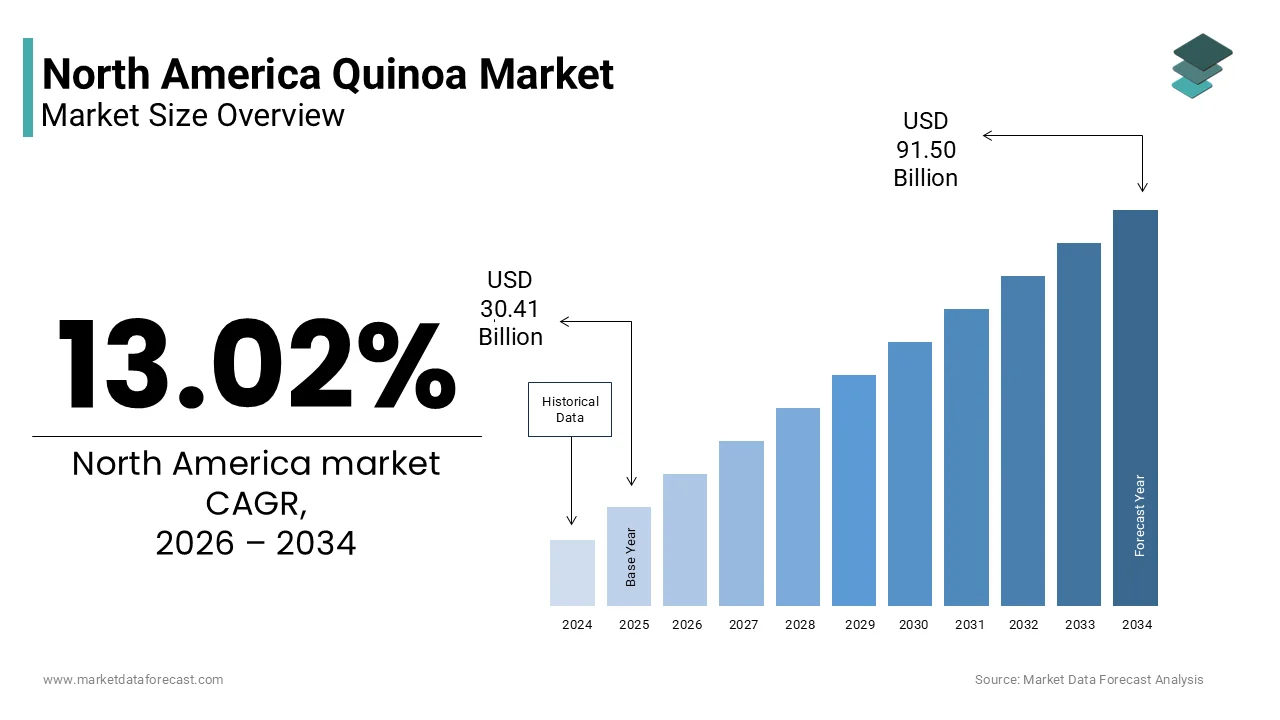
The North America quinoa market was valued at USD 30.41 billion in 2025, is estimated to reach USD 34.37 billion in 2026, and is projected to reach USD 91.50 billion by 2034, growing at a CAGR of 13.02% during the forecast period. Market growth is driven by rising consumer preference for healthy grains, increasing demand for plant based nutrition, and expanding adoption of gluten free food products. Quinoa is widely consumed due to its high protein content, nutritional benefits, and versatility in food applications. The growing popularity of functional foods and convenient ready to eat meals is further supporting strong market expansion across North America.
Key Market Trends
- Rising demand for plant based and protein rich foods is driving market growth.
- Increasing consumer preference for gluten free and functional grains is boosting quinoa consumption.
- Growing adoption of healthy packaged and ready to eat meals is supporting market expansion.
- Expansion of organic and health focused retail channels is enhancing product accessibility.
- Innovation in quinoa based snacks, cereals, and convenience foods is influencing consumer preferences.
Segmental Insights
- Based on type, the inorganic quinoa segment accounted for 64.4% of the North America quinoa market share in 2025. This dominance is attributed to broader commercial availability and cost competitiveness.
- Based on application, the food industry segment held 86.4% of the North America quinoa market share in 2025, driven by extensive use in snacks, cereals, bakery products, and ready meals.
- Based on end user, the packed food segment accounted for 54.4% of the North America quinoa market share in 2025, supported by increasing demand for convenient and healthy packaged food products.
Regional Insights
- The North America quinoa market is experiencing rapid growth across the region, supported by rising health awareness and changing dietary habits.
- The United States was the leading contributor in 2025 and is expected to maintain its dominance during the forecast period, driven by growing demand for value added quinoa snacks, ready to eat meals, and convenient health food products among urban consumers.
Competitive Landscape
The North America quinoa market is moderately competitive, with key players focusing on product diversification, organic product development, and expansion of retail distribution channels to strengthen their market position. Companies are investing in quinoa based snacks, convenience foods, and premium grain products. Prominent players in the North America quinoa market include Quinoa Foods Company, Northern Quinoa Production Corporation, Quinoa Corporation, Andean Valley S.A., Keen One Quinoa, The British Quinoa Company, Hain Celestial Group, Andean Naturals Inc., European Quinoa Group, and Inca Organ.
North America Quinoa Market Size
The North America quinoa market size was valued at USD 30.41 billion in 2025, and the market size is expected to reach USD 91.50 billion by 2034 from USD 34.37 billion in 2026. The market's promising CAGR for the predicted period is 13.02%.
Quinoa is a nutrient dense pseudocereal native to the Andean region but increasingly cultivated in the United States and Canada. This sector is deeply rooted in agricultural heritage and modern nutritional science reflecting evolving consumer preferences for convenience and health. The region benefits from domestic production of quinoa which has expanded significantly in states like Colorado and Washington, reducing reliance on imports from South America. As per Statistics Canada, the acreage dedicated to quinoa cultivation in provinces such as Saskatchewan has seen steady growth, reflecting increasing agricultural interest. Consumer awareness regarding the environmental benefits of quinoa farming compared to water intensive crops further supports market expansion. Regulatory standards for organic certification and non GMO verification play a crucial role in shaping consumer trust. The integration of quinoa into school lunch programs and institutional feeding initiatives highlights its growing acceptance.
MARKET DRIVERS
Rising Prevalence of Gluten Intolerance and Celiac Disease Fuels Demand
The increasing diagnosis of celiac disease and non-celiac gluten sensitivity in North America is primarily driving the expansion of the North American quinoa market. Consumers diagnosed with these conditions must strictly avoid wheat, barley, and rye, making quinoa an ideal carbohydrate source due to its naturally gluten free composition. According to the Celiac Disease Foundation, approximately 1 in 133 Americans, or about 1% of the population, suffers from celiac disease, with many more experiencing gluten sensitivity without formal diagnosis. This substantial patient population drives consistent demand for safe, certified gluten free grains. Quinoa offers a nutritious alternative that does not compromise on texture or versatility in cooking. The grain’s ability to mimic the consistency of rice or couscous allows it seamlessly replace traditional staples in familiar dishes. Retailers respond by prominently labeling quinoa products as gluten free, ensuring visibility for concerned shoppers. Medical professionals frequently recommend quinoa as part of a balanced gluten free diet, which is reinforcing its credibility.
Growing Consumer Preference for Plant Based Protein Sources
The shifting dietary landscape towards plant based nutrition significantly boosts the consumption of quinoa in North America, which is further boosting the regional market growth. As consumers seek to reduce meat intake for health, ethical, or environmental reasons, they require high quality protein sources that are entirely plant derived. According to the Plant Based Foods Association, retail sales of plant based foods in the United States grew 7% in 2022, which is totaling $8 billion. Quinoa is unique among plant foods because it contains all nine essential amino acids, making it a complete protein. This nutritional profile appeals to vegans, vegetarians, and flexitarians who prioritize muscle maintenance and overall health. The grain’s versatility allows it to be incorporated into salads, bowls, and side dishes, providing satiety and nutritional density. Food service establishments increasingly feature quinoa based menus to cater to this demand. The perception of quinoa as a superfood enhances its appeal among health conscious individuals seeking optimal nutrition. Marketing campaigns highlighting its protein content resonate with fitness enthusiasts and athletes.
MARKET RESTRAINTS
High Production Costs and Price Volatility Limit Mass Adoption
The relatively high cost of quinoa compared to conventional grains such as rice and wheat is hampering the North American quinoa market growth. Quinoa cultivation requires specific agronomic conditions and labor intensive harvesting processes, which contribute to higher production costs. According to the United States Department of Agriculture, the price of quinoa can often be 3 to 4 times higher per pound than staple grains like rice, making it less accessible to budget conscious consumers. Price volatility exacerbated by weather events in major producing regions affects supply stability and retail pricing. Small scale farmers in North America face challenges in achieving economies of scale, keeping domestic production costs elevated. Import dependence on South American countries exposes the market to currency fluctuations and trade barriers, further impacting affordability. For low income families, quinoa is often perceived as a luxury item rather than a daily staple. Until production efficiencies improve and costs decrease, quinoa will struggle to compete with established low cost grains.
Limited Consumer Awareness Regarding Preparation And Culinary Uses
Despite its growing popularity, a lack of knowledge about how to properly prepare and cook quinoa remains a barrier for many North American consumers. Unlike rice or pasta, which have straightforward cooking methods, quinoa requires rinsing to remove saponins and precise water ratios to achieve the desired texture. According to market surveys conducted by NielsenIQ, approximately 30% of consumers report uncertainty about how to correctly prepare ancient grains, leading to hesitation in purchasing. Improper preparation can result in a bitter taste or mushy consistency, negatively impacting consumer perception and repeat purchases. Many individuals are unfamiliar with the variety of quinoa types, such as white, red, and black, and their respective culinary applications. Educational efforts by manufacturers and retailers are often insufficient to overcome this hurdle. Without clear instructions or recipe ideas on packaging, consumers may feel intimidated by the product. The perception of quinoa as a complex ingredient discourages trial among novice cooks.
MARKET OPPORTUNITIES
Expansion into Value Added and Convenience Food Products
The development of value added and convenience food products featuring quinoa presents a lucrative opportunity for market growth in North America. Busy consumers seek quick and healthy meal solutions, which is driving demand for ready to eat quinoa bowls, salads, and snacks. According to the International Food Information Council, 52% of consumers say convenience is a top driver in their food purchasing decisions. Manufacturers can leverage this trend by offering pre-cooked quinoa packs that require minimal preparation time. Innovations such as quinoa based pasta, crackers, and breakfast cereals expand the ingredient’s usage occasions beyond traditional side dishes. Retailers are expanding their healthy convenience sections, providing ample shelf space for such items. The introduction of flavored quinoa blends with vegetables and proteins enhances appeal and simplifies meal planning. Online grocery platforms facilitate the discovery and purchase of these innovative products. By transforming quinoa into convenient formats, companies can overcome preparation barriers and increase consumption frequency.
Integration into Institutional Feeding and School Lunch Programs
The inclusion of quinoa in institutional feeding programs and school lunches offers a significant opportunity for volume growth in the North America Quinoa Market. Government initiatives aimed at improving child nutrition and promoting diverse grain consumption support this trend. According to the United States Department of Agriculture, modern school nutrition standards require that at least 80% of grains offered weekly be whole grain-rich, creating a favorable environment for quinoa adoption. Educational institutions are increasingly incorporating quinoa into menus to provide students with nutrient dense meals. This exposure familiarizes younger generations with the grain, fostering long term consumption habits. Hospitals and corporate cafeterias are also adopting quinoa as part of wellness focused dining options. Partnerships between quinoa producers and food service providers can streamline supply chains and ensure consistent quality. Marketing campaigns targeting parents and educators highlight the health benefits of quinoa for children.
MARKET CHALLENGES
Competition from Other Ancient Grains And Superfoods
The intense competition from other ancient grains and superfoods that offer similar nutritional benefits is one of the significant challenges to the North American quinoa market growth. Grains such as amaranth, farro, spelt, and millet are gaining popularity among health conscious consumers, fragmenting market share. According to Mintel, there has been a 25% increase in the launch of food products containing ancient grains over the last five years. Amaranth, for instance, shares quinoa’s complete protein profile and gluten free status, appealing to the same demographic. Farro and spelt attract those seeking hearty textures and distinct flavors. The abundance of options dilutes consumer loyalty to any single grain. Marketing efforts by competitors often highlight unique selling points, such as higher fiber content or lower glycemic index. Retailers must balance shelf space among various ancient grains, limiting visibility for quinoa. Quinoa manufacturers must invest in branding and differentiation to maintain relevance. Maintaining market leadership requires distinguishing quinoa from its numerous alternatives.
Supply Chain Vulnerabilities and Climate Change Impacts
Climate change poses a significant challenge to the stability of quinoa supply chains, which is affecting the North America quinoa market expansion. Extreme weather events such as droughts, floods, and temperature fluctuations impact crop yields in both domestic and international producing regions. According to the National Oceanic and Atmospheric Administration, 2023 was the warmest year on record, contributing to unpredictable growing seasons for many specialty crops. These disruptions lead to inconsistent supply volumes and price spikes, affecting market stability. Dependence on imports from South America exposes the market to geopolitical risks and logistical delays. Domestic production in North America is still developing and may not fully meet demand during shortages. Farmers face uncertainties regarding planting schedules and harvest outcomes. Supply chain bottlenecks can delay product availability in retail outlets, frustrating consumers. Companies must invest in resilient supply chain strategies, including diversified sourcing and local partnerships. Climate adaptive farming practices are essential to mitigate risks.
REPORT COVERAGE
| REPORT METRIC | DETAILS |
| Market Size Available | 2025 to 2034 |
| Base Year | 2025 |
| Forecast Period | 2026 to 2034 |
| CAGR | 13.02% |
| Segments Covered | By Type, Application, End User, and Region |
| Various Analyses Covered | Global, Regional and Country Level Analysis; Segment-Level Analysis; DROC; PESTLE Analysis; Porter’s Five Forces Analysis; Competitive Landscape; Analyst Overview of Investment Opportunities |
| Regions Covered | United States, Canada and Rest of North America |
| Market Leaders Profiled | Quinoa Foods Company, Northern Quinoa Production Corporation, Quinoa Corporation, Andean Valley S.A., Keen One Quinoa, The British Quinoa Company, Hain Celestial Group, Andean Naturals Inc., and European Quinoa Group, Inca Organ. |
SEGMENTAL ANALYSIS
By Type Insights
The inorganic quinoa segment dominated the market by capturing 64.4% of the North American market share in 2025. This dominance is primarily driven by the lower price point of conventionally grown quinoa which makes it accessible to a broader consumer base beyond niche health enthusiasts. According to the United States Department of Agriculture Economic Research Service, conventional produce and grains typically cost 20% to 30% less than organic versions, appealing to budget conscious shoppers. Major retail chains such as Walmart and Kroger prioritize inorganic quinoa in their staple grain aisles because it appeals to shoppers who seek nutritional benefits without the premium price tag. The widespread availability of inorganic quinoa in bulk bins and standard packaging ensures that it remains a household staple for millions of families. The supply chain for inorganic quinoa is well established with large scale imports from South America and increasing domestic production in the United States ensuring consistent stock levels. This reliability encourages repeat purchases and integrates quinoa into regular meal planning.
However, the organic quinoa segment is projected to register the highest CAGR of 9.05% during the forecast period in the regional market owing to the increasing consumer preference for food products free from synthetic pesticides and genetically modified organisms. According to the Organic Trade Association, organic food sales in the U.S. reached a record $61.7 billion in 2022, with the "breads and grains" category showing robust growth. Consumers are becoming more educated about the potential health risks of pesticide residues and are willing to pay a premium for certified organic options. The Non GMO Project Verified label often accompanies organic certification further enhancing consumer trust and driving purchase decisions. In Canada, where environmental awareness is high organic quinoa is increasingly featured in health food stores and mainstream supermarkets. The perception of organic quinoa as a cleaner and more sustainable choice resonates with millennials and Gen Z shoppers who prioritize ethical consumption.
By Application Insights
The food industry segment led the market by accounting for 86.4% of the regional market share in 2025. The growth of the food industry segment in the regional market is attributed to the widespread use of quinoa in various culinary preparations ranging from home cooked meals to restaurant dishes and processed food products. According to the National Restaurant Association, "ancient grains" like quinoa have consistently ranked in the top 10 food trends for the past decade. It is used in salads soups side dishes and even as a rice substitute in stir fries. The food processing industry also utilizes quinoa flour and flakes in the production of gluten free breads crackers and breakfast cereals. Consumer awareness of the health benefits of quinoa including its high fiber and mineral content drives consistent consumption. Retailers promote quinoa through recipe ideas and cooking demonstrations encouraging its integration into daily diets. The adaptability of quinoa to different flavors and textures makes it a preferred choice for chefs and home cooks alike.
On the other side, the cosmetics industry segment is experiencing the fastest growth and is expected to exhibit a CAGR of 8.1% during the forecast period owing to the increasing incorporation of quinoa extracts and oils in skincare and hair care products due to their antioxidant and moisturizing properties. According to the Personal Care Products Council, nearly 40% of new cosmetic launches in 2023 featured botanical or food-based ingredients as consumers seek natural alternatives. Quinoa oil is rich in vitamin E and essential fatty acids which help protect the skin from environmental damage and improve hydration. Beauty brands are launching serums creams and shampoos featuring quinoa as a key ingredient targeting consumers interested in clean beauty. The anti-aging benefits of quinoa extracts appeal to the aging population seeking natural solutions for skin rejuvenation. Social media influencers and beauty bloggers play a significant role in promoting these products raising awareness among younger demographics.
By End User Insights
The packed food segment dominated the market with 54.4% of the regional market share in 2025. The growth of the packaged food segment in the North American market is driven by the busy lifestyles of North American consumers who prioritize convenience and quick meal solutions. According to NielsenIQ, sales of "convenient health" products grew by 12% in 2023, as shoppers seek to save time on cooking. Pre-cooked quinoa cups microwaveable bowls and quinoa based snack bars are popular choices for office workers students and travelers. These products offer the nutritional benefits of quinoa without the need for rinsing and boiling making them highly appealing. Major food manufacturers have invested in developing flavorful and convenient quinoa products that cater to diverse tastes. Retailers prominently display these items in the healthy snack and frozen food aisles ensuring high visibility. The longer shelf life of packed quinoa products reduces food waste and allows for bulk purchasing.
However, the ingredients segment is a promising segment and is estimated to register a CAGR of 7.4% during the forecast period in the North American market owing to the increasing trend of home cooking and do it yourself meal preparation among North American consumers. According to the International Food Information Council, 64% of Americans are cooking at home as much or more than they did a year ago. Bulk bins of raw quinoa grains and quinoa flour are gaining popularity in health food stores and supermarkets as shoppers look to control portion sizes and reduce packaging waste. The flexibility of using quinoa as an ingredient in various recipes from salads to baked goods appeals to creative home cooks. Online cooking tutorials and social media recipes inspire consumers to experiment with quinoa in new ways. The demand for organic and non GMO raw quinoa ingredients is particularly strong among health conscious individuals. As culinary skills improve and interest in nutrition deepens the use of quinoa as a raw ingredient continues to expand.
REGIONAL ANALYSIS
United States Quinoa Market Analysis
The United States dominated the quinoa market in North America in 2025 and is expected to see a continued shift toward value-added quinoa snacks and ready-to-eat meals over the next few years as convenience remains a top priority for its urban population. The United States holds the leading position in the North America Quinoa Market capturing approximately 85% of the regional share. The market status is characterized by high consumer awareness and widespread availability of quinoa products across all retail channels. According to the United States Department of Agriculture, the U.S. remains the world's largest importer of quinoa, though domestic production in the Pacific Northwest and Rocky Mountains is rising to meet demand. The prevalence of health conscious consumers in states like California New York and Colorado drives substantial demand for both organic and conventional quinoa. Government initiatives promoting whole grain consumption in school lunch programs further boost market volume.
Canada Quinoa Market Analysis
Canada is likely to experience significant growth in domestic quinoa cultivation in the Prairies for the next few years as farmers seek drought-resistant alternatives to traditional cereal crops. Canada occupies a significant position in the regional market holding approximately 12% of the share distinguished by a strong preference for organic and sustainably sourced products. The market status is defined by high environmental awareness and strict regulatory standards for food safety and labeling. According to Statistics Canada, Canadian quinoa production has grown to several thousand acres, with Saskatchewan emerging as a key hub. Canadian consumers are willing to pay premiums for certified organic quinoa driven by concerns over pesticide use and genetic modification. The multicultural population in cities like Toronto and Vancouver contributes to diverse culinary uses of quinoa integrating it into various ethnic dishes. Continued focus on sustainability and quality will maintain Canada’s strong position in the North American quinoa landscape.
COMPETITIVE LANDSCAPE
The competition in the North America quinoa market is characterized by a mix of established agribusinesses specialized health food brands and emerging startups. This fragmented landscape fosters intense rivalry as companies strive to differentiate themselves through product quality branding and sustainability credentials. Large players leverage their extensive distribution networks and economies of scale to offer competitive pricing and wide availability. Smaller niche brands focus on premium organic and locally sourced products to appeal to discerning consumers. The barrier to entry is moderate due to the need for reliable supply chains and compliance with food safety regulations. Companies compete on factors such as taste convenience nutritional value and ethical sourcing. Innovation in packaging and product formats serves as a key differentiator. Strategic alliances with retailers and food service providers help secure shelf space and drive volume. The emphasis on transparency and environmental responsibility further intensifies competition as consumers become more informed. This dynamic environment drives continuous improvement and adaptation among market participants ensuring a vibrant and evolving industry landscape across North America.
Key Market Players
Some of the major players in the market are
- Quinoa Foods Company
- Northern Quinoa Production Corporation
- Quinoa Corporation
- Andean Valley S.A.
- Keen One Quinoa
- The British Quinoa Company
- Hain Celestial Group
- Andean Naturals Inc.
- European Quinoa Group
- Inca Organ
Top Players in the Market
- The Quinoa Corporation is a leading supplier of high quality quinoa products in North America with a significant impact on the global market through its extensive sourcing network. The company specializes in providing organic and conventional quinoa to retailers food manufacturers and food service providers. Its contribution to the global market involves establishing sustainable supply chains with farmers in South America and North America. Recent actions to strengthen its market position include expanding its processing facilities in the United States to improve efficiency and reduce lead times. The company has also launched new value added products such as pre cooked quinoa cups and quinoa flour blends to meet growing consumer demand for convenience. By focusing on quality assurance and traceability The Quinoa Corporation builds trust with consumers and partners. These strategic initiatives enhance its competitive edge and support sustained growth in the dynamic North American market.
- Ancient Harvest is a pioneer in the gluten free industry and a key player in the North America Quinoa Market known for its innovative product offerings. The company contributes to the global market by popularizing quinoa based pasta and other convenient food items that cater to health conscious consumers. Ancient Harvest focuses on making nutritious eating accessible and enjoyable through creative formulations. Recent actions to strengthen its market position include introducing new flavors and formats of quinoa pasta to diversify its product portfolio. The company has also enhanced its sustainability practices by partnering with ethical suppliers and using eco friendly packaging. Marketing campaigns highlighting the benefits of gluten free and plant based diets have increased brand visibility. By continuously innovating and responding to consumer trends Ancient Harvest maintains its reputation as a trusted brand. These efforts drive customer loyalty and expand its reach in the competitive health food sector.
- NorQuin is a major producer and distributor of quinoa in North America with a strong focus on domestic cultivation and processing. The company contributes to the global market by promoting the growth of quinoa farming in Canada and the United States reducing reliance on imports. NorQuin works closely with local farmers to ensure high quality standards and sustainable agricultural practices. Recent actions to strengthen its market position include investing in research and development to create drought resistant quinoa varieties suited for North American climates. The company has expanded its distribution network to reach more retailers and food service providers across the continent. NorQuin also engages in educational initiatives to raise awareness about the nutritional benefits of quinoa. By supporting local agriculture and ensuring consistent supply NorQuin strengthens its role as a key industry stakeholder. These strategic moves enhance its resilience and competitiveness in the evolving market landscape.
Top Strategies Used by the Key Market Participants
Key players in the North America Quinoa Market employ diverse strategies to maintain competitive advantage and drive growth. Product innovation is central with companies developing convenient ready to eat options and value added items like pasta and snacks. Strategic partnerships with local farmers ensure stable supply chains and promote sustainable agricultural practices. Expansion into e commerce platforms enhances accessibility and reaches broader consumer segments. Marketing campaigns focus on health benefits and culinary versatility to educate consumers and stimulate demand. Companies also invest in organic certification and non GMO verification to build trust and appeal to health conscious buyers. Sustainability initiatives including eco friendly packaging and ethical sourcing resonate with environmentally aware consumers. These comprehensive strategies enable participants to adapt to changing preferences and strengthen their market positions effectively.
MARKET SEGMENTATION
This Research Report on the North America quinoa market is segmented and sub-segmented into the following categories.
By Type
- Organic
- Inorganic
By Application
- Food Industry,
- Cosmetics Industry
- Pharmaceuticals Industry
By End User
- Ingredients
- Packed Food
By Region
- United States
- CanadIt a
- Mexico
Frequently Asked Questions
1.What is the North America quinoa market?
The North America quinoa market covers the production, import, and consumption of quinoa, a nutrient-rich pseudocereal used in food products and dietary applications.
2.What factors are driving growth in the North America quinoa market?
Growth is driven by rising health awareness, increasing demand for gluten-free foods, expanding product innovations, and growing consumer preference for plant-based nutrition.
3.Which countries dominate the North America quinoa market?
The United States and Canada are the key markets due to high consumption levels and increasing adoption of healthy eating habits.
4.What are the major forms of quinoa available in the market?
Major forms include white quinoa, red quinoa, black quinoa, and quinoa flakes and flour used in food formulation.
5.How is quinoa used in food applications?
Quinoa is used in breakfast cereals, salads, snacks, baked goods, energy bars, and ready-to-eat meals.
6.What role do health and wellness trends play in market growth?
Health trends focusing on high protein, fiber, and antioxidant-rich foods increase consumer interest in quinoa.
7.What are the key distribution channels for quinoa products?
Key channels include supermarkets, health food stores, online retail, and specialty organic stores.
8.How do consumer preferences impact the quinoa market?
Consumers prefer clean label, organically grown, gluten-free, and sustainably sourced quinoa products.
9.Who are the major players in the North America quinoa market?
Major players include Andean Naturals, Ancient Harvest, Sun Valley Trading, CAVA Group, and Alter Eco.
10.What challenges does the North America quinoa market face?
Challenges include price fluctuations, supply chain dependence on imports, and competition from other ancient grains.
Related Reports
Access the study in MULTIPLE FORMATS
Purchase options starting from
$ 2000
Didn’t find what you’re looking for?
TALK TO OUR ANALYST TEAM
Need something within your budget?
NO WORRIES! WE GOT YOU COVERED!
Call us on: +1 888 702 9696 (U.S Toll Free)
Write to us: sales@marketdataforecast.com