Latin America Soft Tissue Repair Market Size, Share, Trends & Growth Forecast Report By Product, Application and Country (Brazil, Mexico, Argentina, Chile, Rest of Latin America) – Industry Analysis From 2026 to 2034
Latin America Soft Tissue Repair Market Report Summary
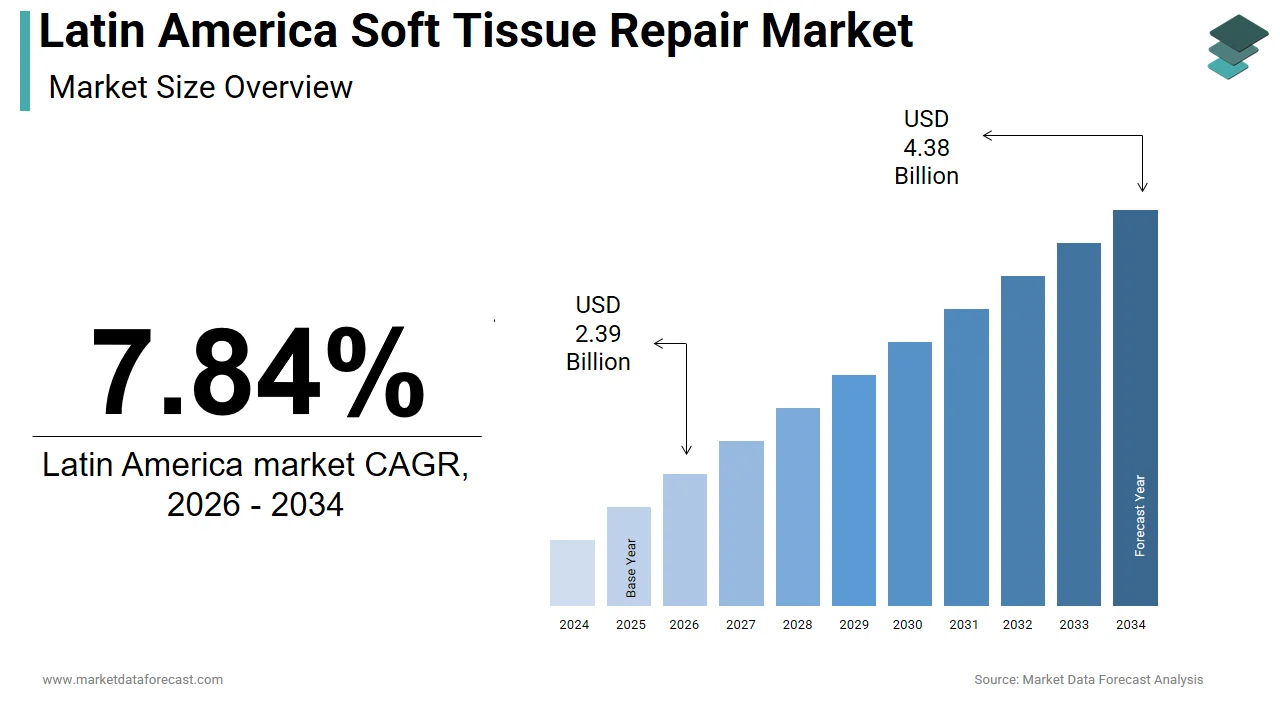
The Latin America soft tissue repair market was valued at USD 2.22 billion in 2025 and is projected to grow from USD 2.39 billion in 2026 to USD 4.38 billion by 2034, registering a CAGR of 7.84% from 2026 to 2034. Market growth is driven by the rising prevalence of hernias, sports injuries, and traumatic soft tissue damage, along with increasing surgical procedures across the region. Advancements in biologic meshes, tissue repair technologies, and minimally invasive surgical techniques, coupled with expanding healthcare infrastructure and improving access to specialized surgical care, are further supporting market expansion.
Key Market Trends
- Increasing incidence of hernias, ligament injuries, and soft tissue disorders.
- Growing adoption of biologic meshes and advanced tissue repair products.
- Rising demand for minimally invasive and laparoscopic surgical procedures.
- Expansion of healthcare infrastructure and surgical capabilities across Latin America.
- Continuous innovation in regenerative medicine and biomaterial-based tissue repair technologies.
Segmental Insights
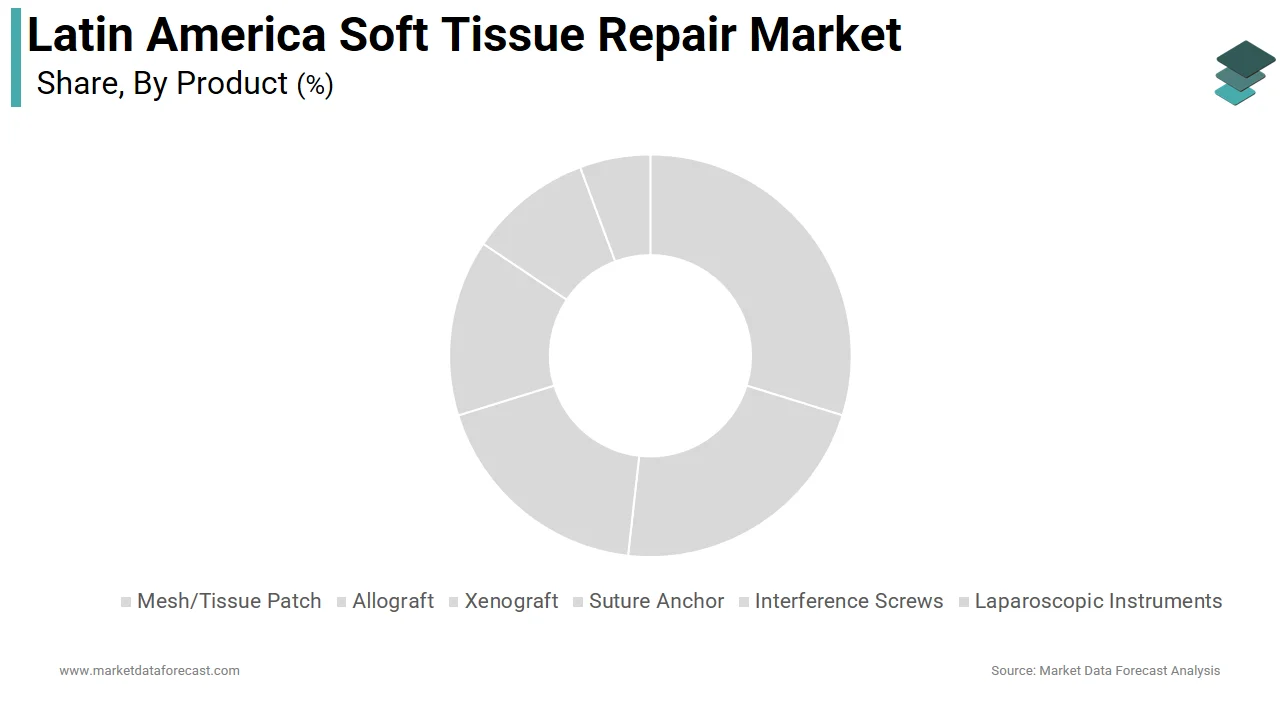
- Based on product, the mesh and tissue patch segment dominated the Latin America soft tissue repair market by accounting for 44.3% market share in 2025, driven by their widespread use in hernia repair procedures, superior tissue reinforcement, and favorable long-term clinical outcomes.
- Based on application, the hernia segment held the largest market share with 42.1% in 2025, supported by the high prevalence of abdominal wall hernias, increasing surgical interventions, and growing adoption of advanced mesh-based repair techniques.
Regional Insights
The Latin America soft tissue repair market continues to expand across key countries, supported by improving healthcare infrastructure, increasing surgical volumes, and growing adoption of advanced medical technologies.
- Brazil dominated the regional market in 2025 by accounting for a 33.2% share, driven by its large patient population, expanding healthcare infrastructure, high surgical procedure volumes, and increasing adoption of advanced soft tissue repair products.
- Mexico held the second-largest position with a 18.2% share in 2025, supported by its growing medical tourism industry, expanding private healthcare sector, and increasing availability of specialized surgical services.
- Argentina is expected to witness steady market growth during the forecast period, supported by its highly skilled medical workforce, well-developed healthcare system, and increasing adoption of advanced surgical technologies.
Competitive Landscape
The Latin America soft tissue repair market is moderately competitive, with leading medical device manufacturers focusing on innovative biologic meshes, tissue repair products, and minimally invasive surgical solutions. Companies are investing in research and development, product launches, strategic collaborations, and regional expansion to strengthen their market position. Continuous advancements in biomaterials, regenerative medicine, and surgical technologies continue to shape the competitive landscape.
Prominent companies operating in the Latin America soft tissue repair market include LifeCell Corporation, Organogenesis, C.R. Bard Inc., Johnson & Johnson, Covidien plc, Arthrex Inc., Smith & Nephew plc, Medtronic plc, Integra LifeSciences Corporation, Wright Medical Technology, Baxter International Inc., and Stryker Corporation.
Latin America Soft Tissue Repair Market Size
The Latin America soft tissue repair market was valued at USD 2.22 billion in 2025. This market is expected to grow at a CAGR of 7.84% from 2026 to 2034 and be worth USD 4.38 billion by 2034 from USD 2.39 billion in 2026.
Soft tissue repair is regenerative medicine focused on biological and synthetic solutions for healing damaged tendons, ligaments, muscles, and fascia. These products, including surgical meshes, bone graft substitutes, and biologic scaffolds, are critical in orthopedic, general, and plastic surgeries to restore structural integrity and function. According to the Pan American Health Organization, non-communicable diseases account for over 70% of deaths in Latin America, with musculoskeletal conditions being a leading cause of disability among adults. The proportion of the population aged 65 and older in countries like Brazil and Mexico is projected to double by 2050, intensifying the demand for reconstructive procedures. Additionally, the high incidence of road traffic accidents contributes to a steady volume of traumatic injuries requiring surgical intervention. Healthcare systems across the region are increasingly adopting minimally invasive surgical approaches, which rely heavily on innovative soft tissue repair materials. Regulatory bodies, such as ANVISA in Brazil and COFEPRIS in Mexico, are strengthening frameworks to ensure the safety and efficacy of these medical devices, fostering a conducive environment for market growth and technological adoption.
MARKET DRIVERS
Rising Prevalence of Sports Injuries and Traumatic Accidents
The rising prevalence of sports injuries and traumatic accidents is propelling the growth of the Latin America soft tissue repair market. The region has a strong cultural affinity for sports such as football, which leads to a high incidence of ligament tears, particularly anterior cruciate ligament injuries, and tendon ruptures. According to the study, Latin America produces a significant number of professional athletes, but amateur participation also results in substantial injury rates requiring surgical repair. Furthermore, road traffic accidents remain a major public health concern, with the World Health Organization reporting that the Americas have one of the highest rates of traffic fatalities globally. These accidents often result in complex soft tissue damage that necessitates the use of surgical meshes and biologics for reconstruction. In countries like Colombia and Peru, urbanization has increased physical activity levels among the middle class, leading to more recreational sports injuries.
Expansion of Healthcare Infrastructure and Medical Tourism
The expansion of healthcare infrastructure and the growth of medical tourism are significantly propelling the growth of the Latin America soft tissue repair market. Countries such as Mexico, Costa Rica, and Brazil have emerged as prominent destinations for medical tourists seeking high-quality orthopedic and cosmetic surgeries at competitive prices. According to the Patients Beyond Borders report, millions of international patients travel to Latin America annually for procedures that often involve soft tissue reconstruction, such as abdominoplasty and joint repairs. This influx of patients drives hospitals to invest in state-of-the-art facilities and adopt advanced surgical technologies, including premium soft tissue repair products. Governments in the region are also increasing public spending on health infrastructure to improve access to care for local populations. The investments in hospital modernization have increased by enabling the adoption of newer biologic and synthetic repair materials. Private healthcare providers are partnering with international device manufacturers to offer comprehensive treatment packages. This strategic focus on quality and affordability enhances the region’s reputation by encouraging both domestic and international patients to choose Latin American facilities for complex soft tissue repairs, thereby boosting market demand.
MARKET RESTRAINTS
High Cost of Advanced Biologic Products
The high cost of advanced biologic products is hindering the growth of the Latin America soft tissue repair market. Biologic scaffolds and growth factor-based therapies are substantially more expensive than traditional synthetic meshes, limiting their accessibility in a region characterized by economic disparity. A significant portion of the population in Latin America lives below the poverty line, relying on public healthcare systems that often have limited budgets for high-cost medical devices. Public insurers frequently exclude coverage for premium biologic products, restricting their use to private sector patients who can afford out-of-pocket payments. As per data from national health agencies, reimbursement policies for soft tissue repair materials vary widely and often favor lower-cost alternatives. This financial barrier prevents widespread adoption of innovative technologies that could offer better clinical outcomes. Hospitals in public sectors must prioritize cost-effectiveness, leading to the continued use of conventional methods despite the availability of superior biologics. The economic volatility in several Latin American countries further exacerbates this issue, as currency fluctuations increase the cost of imported medical devices.
Regulatory Hurdles and Approval Delays
Regulatory hurdles and approval delays is declining the growth of the Latin American soft tissue repair market. Each country in the region has its own regulatory authority with distinct requirements for medical device registration by creating a fragmented and complex compliance landscape. According to the Pan American Health Organization, the lack of harmonization in regulatory standards across Latin American countries leads to prolonged approval times for new products. Manufacturers must navigate diverse documentation processes, clinical data requirements, and local testing mandates, which increase time to market and operational costs. In countries like Argentina and Brazil, bureaucratic inefficiencies can delay product launches by several years compared to North America or Europe. As per reports, these delays hinder the introduction of innovative soft tissue repair technologies, leaving patients with fewer treatment options. Small and medium-sized enterprises often lack the resources to manage these complex regulatory pathways, limiting competition and innovation. Additionally, frequent changes in regulatory policies create uncertainty for investors and manufacturers. The absence of a unified regional regulatory framework means that companies must approach each market individually, which is straining resources and slowing down the overall adoption of advanced soft tissue repair solutions in the region.
MARKET OPPORTUNITIES
Development of Locally Manufactured Biologics
The development of locally manufactured biologics is primarily to foster new opportunities for the growth of the Latin America soft tissue repair market. Reducing dependence on imports can lower costs and improve supply chain stability by making advanced products more accessible to local populations. According to the Economic Commission for Latin America and the Caribbean, there is a growing emphasis on regional industrialization and self-sufficiency in the pharmaceutical and medical device sectors. Several countries are investing in biotechnology hubs to produce human cell-derived tissues and synthetic biologics domestically. As per data, research and development funding for regenerative medicine has increased, fostering collaborations between universities and private companies. Local manufacturing allows for customization of products to meet specific regional needs and regulatory standards. It also reduces exposure to currency fluctuations and international trade barriers. This strategic shift supports government initiatives to improve healthcare accessibility and affordability.
Integration of 3D Printing in Surgical Planning
The integration of 3D printing technology in surgical planning is also to promote new opportunities for the growth of the Latin America soft tissue repair market. Additive manufacturing allows for the creation of patient-specific implants and scaffolds that match individual anatomical structures, improving surgical precision and outcomes. The adoption of 3D printing in healthcare is accelerating globally, with Latin America beginning to embrace this technology for complex reconstructive surgeries. Hospitals in major cities like Sao Paulo and Mexico City are investing in 3D printing capabilities to produce custom guides and models for preoperative planning. As per reports, this technology reduces surgery time and improves the fit of soft tissue repair materials, leading to faster recovery rates. The ability to print biocompatible materials directly opens new avenues for personalized medicine. Educational programs and training for surgeons on 3D printing applications are expanding, facilitating wider adoption. This technological advancement enables healthcare providers to offer superior care for complex cases, differentiating themselves in the competitive medical tourism market.
MARKET CHALLENGES
Limited Reimbursement Coverage for Innovative Procedures
The limited reimbursement coverage for innovative soft tissue repair procedures is one of the major challenges for the growth of the Latin America soft tissue repair market. Public healthcare systems often have strict formularies that exclude newer, higher-cost biologics and advanced surgical techniques due to budget constraints. According to the study, out-of-pocket expenditure remains high in many Latin American countries, indicating gaps in insurance coverage for essential and advanced medical treatments. Private insurers may also impose restrictive criteria for approving coverage for soft tissue repair products, requiring extensive documentation and proof of medical necessity. As per data from patient advocacy groups, many individuals face financial hardship when seeking treatment for chronic soft tissue injuries that require advanced repair methods. The lack of standardized health technology assessment frameworks across the region leads to inconsistent coverage decisions. This uncertainty discourages hospitals from stocking expensive innovations and limits patient access to cutting-edge therapies. Manufacturers struggle to demonstrate value to payers in a cost-sensitive environment, hindering market growth. Addressing these reimbursement gaps requires collaborative efforts between industry stakeholders, governments, and insurers to develop sustainable funding models for advanced medical technologies.
Shortage of Skilled Surgical Professionals
The shortage of skilled surgical professionals trained in advanced soft tissue repair techniques is to decline the growth of the Latin America soft tissue repair market. While medical education has improved, there remains a gap in specialized training for complex reconstructive procedures involving biologics and advanced meshes. According to the Pan American Health Organization, the distribution of healthcare workers is uneven, with rural areas facing severe shortages of specialists. Even in urban centers, the rapid evolution of surgical technologies requires continuous professional development, which is not always accessible. As per data, the number of orthopedic and plastic surgeons per capita is lower than in developed regions, leading to longer wait times and limited access to specialized care. The complexity of using new soft tissue repair products demands a high level of technical proficiency, and inadequate training can result in suboptimal outcomes. This skills gap limits the adoption of innovative products as surgeons may prefer familiar, traditional methods. Investing in training programs and fellowships is essential to build capacity and ensure that healthcare providers can effectively utilize advanced soft tissue repair technologies.
REPORT COVERAGE
| REPORT METRIC | DETAILS |
| Market Size Available | 2025 to 2034 |
| Base Year | 2025 |
| Forecast Period | 2026 to 2034 |
| Segments Covered | By Product, Application, and Country. |
| Various Analyses Covered | Global, Regional and Country-Level Analysis, Segment-Level Analysis, Drivers, Restraints, Opportunities, Challenges; PESTLE Analysis; Porter’s Five Forces Analysis, Competitive Landscape, Analyst Overview of Investment Opportunities |
| Countries Covered | Brazil, Mexico, Argentina, Chile, Rest of Latin America |
| Market Leaders Profiled | LifeCell Corporation, Organogenesis, C.R. Bard Inc., Johnson & Johnson, Covidien plc, Arthrex Inc., Smith & Nephew plc, Medtronic plc, Integra Lifesciences Corporation, Wright Medical Technology, Baxter International Inc, and Stryker Corporation. |
SEGMENTAL ANALYSIS
By Product Insights
The mesh and tissue patch segment was the largest by holding 44.3% of the Latin America soft tissue repair market share in 2025 due to its extensive application in hernia repairs and general surgical procedures. Hernias are among the most common surgical conditions globally, and the use of synthetic and biologic meshes has become the standard of care to reduce recurrence rates. According to the study, abdominal wall hernias affect millions of individuals annually, with a significant portion requiring surgical intervention using mesh implants. In Latin America, the high prevalence of inguinal and ventral hernias, driven by factors such as obesity and aging, sustains the demand for these products. Synthetic meshes are preferred for their cost-effectiveness and durability, making them accessible to a broader patient base in regions with varying economic capabilities. The versatility of mesh products allows them to be used in open and laparoscopic procedures, further enhancing their adoption. Additionally, continuous advancements in mesh technology, such as lightweight and absorbable materials, have improved patient outcomes and reduced complications.
The allograft segment is swiftly emerging at the fastest CAGR of 7.8% during the forecast period owing to the increasing preference for biological solutions that promote natural tissue regeneration and reduce the risk of immune rejection compared to synthetic alternatives. Allografts, derived from human donor tissue, are extensively used in orthopedic surgeries, particularly for anterior cruciate ligament reconstruction and rotator cuff repairs. The demand for sports medicine procedures is rising globally, influenced by similar trends in Latin America, where sports participation is high. The growing awareness of the benefits of biologics among surgeons and patients is accelerating the adoption of allografts. The establishment of stricter standards for tissue processing and safety has increased confidence in the use of allografts. Furthermore, the expansion of medical tourism in countries like Mexico and Costa Rica has introduced international patients to advanced biological repair techniques, driving local demand. The ability of allografts to integrate with host tissue and provide structural support without the long-term complications associated with some synthetic materials makes them an attractive option for complex repairs, which is fueling their accelerated growth.
By Application Insights
The hernia application segment was the largest by holding 42.1% of the Latin America soft tissue repair market share in 2025 due to the high incidence of abdominal wall defects and the established clinical protocols for their repair. Hernias are prevalent across all age groups but are particularly common in older adults and individuals with obesity, both of which are significant demographic trends in the region. According to the Pan American Health Organization, the rising rates of obesity in Latin America have contributed to an increase in ventral and incisional hernias, necessitating surgical intervention. Hernia repair is one of the most frequently performed general surgery procedures, ensuring a consistent and high-volume demand for soft tissue repair products. As per data from hospital associations in major markets like Brazil and Argentina, thousands of hernia repairs are conducted annually, with mesh reinforcement being the standard practice to prevent recurrence. The availability of various mesh types, including synthetic and biologic options, allows surgeons to tailor treatments to patient-specific needs and economic constraints. Public healthcare systems prioritize hernia repairs due to the impact on quality of life and workforce productivity. Additionally, the shift toward minimally invasive laparoscopic hernia repairs has increased the utilization of specialized mesh products designed for these techniques.
The orthopedic application segment is lucratively growing at the fastest CAGR of 8.2% from 2026 to 2034, with increasing participation in sports and physical activities leading to a higher incidence of soft tissue injuries such as tendon tears and ligament ruptures. According to the International Olympic Committee, Latin America has a strong tradition in sports like football and volleyball, which are associated with high rates of musculoskeletal injuries. The aging population is also contributing to the rise in degenerative joint conditions and rotator cuff tears that require surgical repair. There is a growing trend toward arthroscopic surgeries, which utilize advanced soft tissue repair devices, such as suture anchors and interference screws. The expansion of private healthcare facilities and insurance coverage for orthopedic procedures has improved access to these treatments. Furthermore, the influence of medical tourism has introduced advanced orthopedic techniques and biologics to the local market, driving adoption. Patients are increasingly seeking faster recovery times and better functional outcomes, prompting surgeons to adopt innovative soft tissue repair solutions.
COUNTRY LEVEL ANALYSIS
Brazil Soft Tissue Repair Market Analysis
Brazil was the top performer of the Latin America soft tissue repair market by capturing 33.2% of the share in 2025 with its large population, robust healthcare infrastructure, and high volume of surgical procedures. The country has a well-developed private healthcare sector that facilitates the adoption of advanced medical technologies, including biologic and synthetic repair products. Millions of surgeries are performed annually, with hernia and orthopedic repairs representing a significant portion. The presence of major international medical device manufacturers and local distributors ensures wide availability of products. The regulatory framework managed by ANVISA has become more streamlined, encouraging the introduction of innovative soft tissue repair solutions. The growing middle class and increasing health insurance coverage have expanded access to elective surgeries. Additionally, Brazil is a hub for medical research and clinical trials in the region, fostering innovation and early adoption of new technologies. The high prevalence of sports-related injuries and obesity further sustains demand. Government initiatives to improve public hospital infrastructure also contribute to market growth.
Mexico Soft Tissue Repair Market Analysis
Mexico soft tissue repair market was next, occupying 18.2% of the share in 2025 with its strong medical tourism industry and expanding healthcare services. The country attracts thousands of international patients annually for orthopedic and cosmetic surgeries, which often involve soft tissue repair techniques. According to the Mexican Ministry of Tourism, medical tourism generates substantial revenue, driving investment in high-quality medical facilities and technologies. The local population also benefits from improved access to healthcare through social security institutions and private insurers. As per data from COFEPRIS, the regulatory authority has enhanced its approval processes for medical devices, facilitating faster market entry for new products. The rising incidence of chronic diseases and trauma cases increases the demand for surgical interventions. Local manufacturing capabilities are growing, supported by trade agreements that facilitate the import of raw materials and export of finished goods.
Argentina Soft Tissue Repair Market Analysis
Argentina soft tissue repair market growth is likely to be driven by its highly educated medical workforce and advanced healthcare system. The country has a strong tradition of medical excellence, particularly in orthopedics and plastic surgery, which drives the use of sophisticated repair products. According to the Argentine Ministry of Health, the public and private healthcare sectors work in tandem to provide comprehensive coverage, although economic fluctuations can impact purchasing power. The high density of physicians per capita ensures that patients have access to specialized care and the latest treatment options. There is a strong emphasis on continuing medical education, which promotes the adoption of new surgical techniques and devices. Despite economic challenges, the demand for high-quality healthcare remains resilient, particularly in urban centers.
Chile Soft Tissue Repair Market Analysis
Chile soft tissue repair market is likely to grow with the efficient healthcare system and high regulatory standards. The country has one of the highest healthcare expenditures per capita in the region, supporting the adoption of advanced medical technologies. According to studies, the public insurance system covers a wide range of surgical procedures, including hernia and orthopedic repairs. The private sector complements this by offering premium services and faster access to specialized treatments. This creates a favorable environment for reputable international manufacturers. The aging population and active lifestyle of Chileans contribute to the demand for soft tissue repair solutions. The country serves as a gateway for new products entering the Southern Cone market. Strong economic fundamentals and political stability attract investment in healthcare infrastructure.
COMPETITIVE LANDSCAPE
The competition in the Latin America soft tissue repair market is characterized by a mix of global medical device giants and emerging regional manufacturers vying for dominance through innovation and service excellence. Multinational corporations leverage their extensive research capabilities and brand recognition to offer premium products with proven clinical efficacy. These companies often compete on technological superiority and comprehensive support offerings, including surgeon training and logistical assistance. Local manufacturers counter with cost-effective alternatives tailored to the specific budget constraints of public healthcare systems. Regulatory compliance serves as a significant barrier to entry, favoring established players with resources to navigate complex approval processes. Competitive dynamics are further influenced by the rising demand for minimally invasive procedures, prompting firms to innovate rapidly.
KEY MARKET PLAYERS
Companies profiled in the report that are playing a prominent role in the Latin America soft tissue repair market are
- LifeCell Corporation
- Organogenesis
- R. Bard Inc.
- Johnson & Johnson
- Covidien plc
- Arthrex Inc.
- Smith & Nephew plc
- Medtronic plc
- Integra LifeSciences Corporation
- Wright Medical Technology
- Baxter International Inc.
- Stryker Corporation
TOP PLAYERS IN THE MARKET
- Johnson & Johnson maintains a robust presence in the Latin America soft tissue repair market through its Ethicon subsidiary, which offers a comprehensive portfolio of surgical meshes and wound closure devices. The company focuses on providing innovative solutions for hernia repair and general surgery, leveraging its extensive distribution network across the region. Johnson & Johnson recently expanded its training programs for surgeons in Brazil and Mexico to promote the adoption of advanced laparoscopic techniques and biologic materials. They have introduced next-generation absorbable meshes that reduce chronic pain and improve patient recovery times. Their commitment to clinical education and technological innovation strengthens their position as a trusted partner for healthcare providers seeking high-quality soft tissue repair solutions in Latin America.
- Medtronic plc contributes significantly to the Latin America soft tissue repair market with its diverse range of surgical staples, meshes, and biologics designed for complex reconstructive procedures. The company leverages its global expertise to deliver tailored solutions that address the specific needs of patients in the region. Medtronic recently launched new lightweight synthetic meshes that offer improved flexibility and integration with host tissue, catering to the growing demand for minimally invasive surgeries. They have strengthened their partnerships with private hospital networks in Argentina and Chile to facilitate faster product adoption and supply chain efficiency. The company actively engages in research initiatives to develop cost-effective biologics that align with local reimbursement landscapes. These strategic efforts demonstrate Medtronic’s dedication to improving surgical outcomes and expanding access to advanced soft tissue repair technologies throughout Latin America.
- Baxter International Inc plays a pivotal role in the Latin America soft tissue repair market by offering specialized hemostatic agents and tissue sealants that support surgical interventions. The company focuses on enhancing patient safety and reducing operative time through its innovative biological products. Baxter recently introduced advanced fibrin sealants in key markets such as Colombia and Peru, which are widely used in orthopedic and general surgeries to control bleeding and promote healing. They have invested in local manufacturing capabilities to ensure consistent supply and reduce dependency on imports. The company’s emphasis on quality and reliability has established it as a preferred supplier for hospitals seeking effective soft tissue management solutions in the dynamic Latin American healthcare sector.
TOP STRATEGIES USED BY KEY MARKET PARTICIPANTS
Key players in the Latin America soft tissue repair market primarily employ strategic partnerships and localized manufacturing to maintain competitive advantage. Companies collaborate with local distributors and healthcare providers to navigate complex regulatory environments and enhance product accessibility. This includes establishing regional training centers to educate surgeons on advanced surgical techniques and product usage. Manufacturers also focus on developing cost-effective solutions that align with local reimbursement policies and economic conditions. Investment in local production facilities helps mitigate currency fluctuations and supply chain disruptions. Additionally, firms pursue digital health initiatives to support remote patient monitoring and post-operative care.
MARKET SEGMENTATION
This research report on the Latin America soft tissue repair market has been segmented and sub-segmented into the following categories
By Product
- Mesh/Tissue Patch
- Allograft
- Xenograft
- Suture Anchor
- Interference Screws
- Laparoscopic Instruments
By Application
- Hernia
- Dural
- Orthopedic
- Skin
- Dental
- Vaginal
- Breast Augmentation
By Country
- Mexico
- Brazil
- Argentina
- Chile
- Rest of Latin America
Frequently Asked Questions
What is the Latin America soft tissue repair market?
The Latin America soft tissue repair market includes devices and implants used to repair ligaments, tendons, hernias, and other soft tissue injuries.
How does the Latin America soft tissue repair market work?
The Latin America soft tissue repair market works by supplying surgical products that support tissue fixation, reconstruction, and healing.
What drives growth in the Latin America soft tissue repair market?
The Latin America soft tissue repair market grows from sports injuries, higher surgery volumes, and wider access to advanced medical devices.
Which application leads the Latin America soft tissue repair market?
Hernia repair and orthopedic procedures lead the Latin America soft tissue repair market because they are common and clinically important.
Why is sports injury treatment important in the Latin America soft tissue repair market?
Sports injury treatment is important in the Latin America soft tissue repair market because it drives demand for ligament and tendon repair.
What role do meshes play in the Latin America soft tissue repair market?
Meshes play a key role in the Latin America soft tissue repair market by providing support for hernia and surgical reconstruction procedures.
How do biologic grafts support the Latin America soft tissue repair market?
Biologic grafts support the Latin America soft tissue repair market by helping repair damaged tissue with natural healing compatibility.
What is the role of fixation devices in the Latin America soft tissue repair market?
Fixation devices support the Latin America soft tissue repair market by stabilizing repaired tissue and improving surgical outcomes.
Which end users drive the Latin America soft tissue repair market?
Hospitals and ambulatory surgical centers drive the Latin America soft tissue repair market through regular orthopedic and reconstructive procedures.
What trends shape the Latin America soft tissue repair market?
The Latin America soft tissue repair market is shaped by rising sports medicine demand, advanced implants, and better surgical access.
Related Reports
Access the study in MULTIPLE FORMATS
Purchase options starting from
$ 1600
Didn’t find what you’re looking for?
TALK TO OUR ANALYST TEAM
Need something within your budget?
NO WORRIES! WE GOT YOU COVERED!
Call us on: +1 888 702 9696 (U.S Toll Free)
Write to us: sales@marketdataforecast.com