- Product Description Description
- Table of Contents TOC
- List of Table & Figure LOT
- Get Free Sample PDF Sample PDF
Market Size, 2025
$0.92 BnMarket Estimate, 2026
$0.98 BnMarket Forecast, 2034
$1.62 BnCAGR, 2026–2034
6.5%Executive Summary: Middle East and Africa Hyaluronic Acid Products Market
- Market Scope: Comprehensive Middle East and Africa (MEA) hyaluronic acid products market analysis covering product types (single, three, and five-cycle injections), clinical applications (osteoarthritis, ophthalmic, dermal fillers), country-level landscapes, and regional healthcare frameworks.
- Market Valuation: Valued at USD 0.92 billion in 2025, estimated at USD 0.98 billion in 2026, and projected to reach USD 1.62 billion by 2034, registering a compound annual growth rate (CAGR) of 6.50% from 2026 to 2034.
- Primary Growth Drivers: Rapidly aging senior populations across Africa and the Middle East, increasing prevalence of osteoarthritis and joint degeneration, rising demand for aesthetic and dermal filler procedures, and the expansion of domestic pharmaceutical and biopharmaceutical manufacturing hubs. Key market restraints include high product costs, inadequate medical awareness and infrastructure in lower-income areas, and potential side effects such as redness, soreness, and itchiness.
Key Market Segment Metrics (2026–2034)
| Category | Leading Segment (2025 Position) | Fastest-Growing Segment |
|---|---|---|
| By Product Type | Single-Cycle & Three-Cycle Injection Products (commanded major market shares due to high clinical preference in osteoarthritis therapy) | Five-Cycle Injection & Advanced Derma-Filler Formulations (growing steadily with rising aesthetic demands) |
| By Application | Osteoarthritis & Dermal Fillers (held the largest market shares driven by chronic joint pain therapies and booming cosmetic procedures) | Ophthalmic Surgeries & Aesthetic Fillers (expanding rapidly alongside specialized surgical care centers) |
| By Country / Region | Middle East Region / UAE & Saudi Arabia (dominated the regional market backed by high healthcare expenditures and advanced pharmaceutical infrastructure) | Saudi Arabia (projected to record a high CAGR of ~7% supported by a rapidly aging demographic and drug production growth) |
Major Market Players & Market Structure
Market Structure: Highly competitive pharmaceutical and aesthetic medical device landscape featuring major international biopharmaceutical giants expanding manufacturing, R&D, and distribution networks across MEA economies.
Key Companies: Allergan, Sanofi, Ferring B.V., Zimmer Biomet, Fidia Farmaceutici, Salix Pharmaceuticals, Anika Therapeutics, Seikagaku Corporation, Hoffmann-La Roche Ltd, Alcon, Inc., Smith & Nephew plc, and Merz Aesthetics, Inc.
Middle East and Africa Hyaluronic Acid Products Market Size
The size of the Middle East and Africa hyaluronic acid products market was worth USD 0.92 billion in 2025. The market is anticipated to grow at a CAGR of 6.5% from 2026 to 2034, reaching USD 1.62 billion by 2034, up from USD 0.98 billion in 2026.
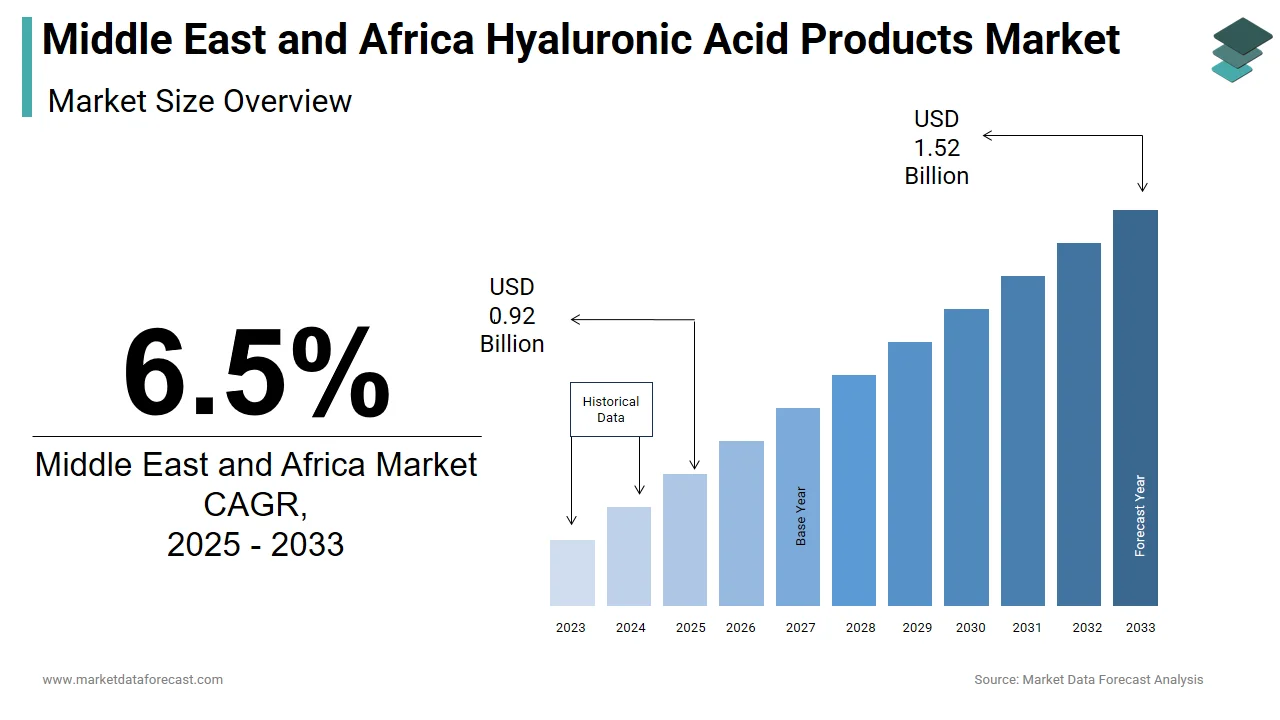
The Middle East and Africa hyaluronic acid products market is experiencing robust growth driven by rising aesthetic consciousness and increasing prevalence of age-related skin conditions across the region. As per the World Health Organization, the population aged 60 years and older in the African region is projected to triple by 2050, creating a substantial demographic base for anti-aging interventions. As per the International Society of Aesthetic Plastic Surgery, the Middle East accounts for approximately 7.38% of global non-surgical cosmetic procedures, with hyaluronic acid injections being the most sought-after treatment. These statistics underscore the critical role of hyaluronic acid in both medical and aesthetic applications. The harsh, arid climate in many Gulf countries exacerbates skin dryness, further fueling demand for topical hydrating products. Regulatory bodies in countries like Saudi Arabia and South Africa are strengthening frameworks to ensure product safety and efficacy. This evolving landscape supports the integration of advanced cross-linked hyaluronic acid technologies. Consequently, the market serves as a pivotal component of the broader dermatological and cosmetic healthcare ecosystem in the region.
MARKET DRIVERS
Surging Demand for Minimally Invasive Aesthetic Procedures
The escalating preference for minimally invasive aesthetic procedures is a primary catalyst for the expansion of the hyaluronic acid products market in the Middle East and Africa. Consumers are increasingly seeking alternatives to surgical facelifts due to lower costs, reduced recovery time, and minimal scarring. As per the International Society of Aesthetic Plastic Surgery, non-surgical procedures in the Middle East increased by 11.2% in the last year, with hyaluronic acid fillers constituting the largest share of these treatments. This trend is particularly pronounced in urban centers like Dubai and Riyadh, where aesthetic enhancement is socially accepted and widely practiced. As per the American Society of Plastic Surgeons, hyaluronic acid injections offer immediate results with high patient satisfaction rates, driving repeat usage. Social media influence and celebrity endorsements further amplify the desire for youthful appearances among younger demographics. Clinics are expanding their service offerings to include advanced injection techniques that require specialized hyaluronic acid formulations. The availability of skilled practitioners in major cities ensures safe administration, building consumer trust. This cultural shift toward preventive aesthetics sustains consistent demand for high-quality dermal fillers. The ease of access to these procedures in medical tourism hubs also attracts international clients, boosting local market volume.
Rising Prevalence of Osteoarthritis and Joint Disorders
The growing incidence of osteoarthritis and other joint disorders significantly propels the demand for hyaluronic acid-based viscosupplementation therapies in the Middle East and Africa. Hyaluronic acid injections are widely used to alleviate pain and improve mobility in patients with knee osteoarthritis by restoring the viscosity of synovial fluid. As per the World Health Organization, musculoskeletal conditions are the leading contributor to disability globally, with prevalence rates rising sharply in aging populations across Africa. As per the Egyptian Ministry of Health, over 30% of adults over 50 suffer from some form of joint degeneration, creating a large patient pool for therapeutic interventions. As per the European League Against Rheumatism, viscosupplementation can delay the need for joint replacement surgery by up to 5 years in moderate cases. This clinical benefit drives adoption among patients seeking conservative management options. Healthcare providers in South Africa and Nigeria are increasingly incorporating hyaluronic acid injections into standard treatment protocols for osteoarthritis. Insurance coverage for these therapies is expanding in certain private health plans, improving accessibility. The aging demographic in the region ensures a steady increase in the number of individuals requiring joint care. This medical necessity complements the aesthetic demand, diversifying the market base.
MARKET RESTRAINTS
High Cost of Premium Hyaluronic Acid Formulations
The substantial financial burden associated with premium hyaluronic acid formulations is a significant restraint on market penetration in many parts of the Middle East and Africa. Advanced cross-linked hyaluronic acid products, which offer longer-lasting results and superior stability, command high prices that are often prohibitive for the average consumer. As per the World Bank, out-of-pocket health expenditure in several African nations exceeds 40% of total health spending, limiting disposable income for elective aesthetic or advanced therapeutic procedures. In countries like Kenya and Ghana, the cost of a single syringe of branded hyaluronic acid filler can equal a month’s salary for many workers. This economic disparity restricts access primarily to affluent urban populations. The absence of comprehensive insurance coverage for cosmetic procedures further exacerbates the affordability issue. Even for medical indications like osteoarthritis, patients often face high co-payments or full self-payment requirements. The high import duties on medical devices and cosmetics in some Gulf countries also inflate final retail prices. Manufacturers struggle to balance quality with affordability in price-sensitive markets. Consequently, many consumers opt for cheaper, unregulated alternatives or forego treatment entirely. This financial barrier limits the overall volume of legitimate hyaluronic acid products sold in the region.
Prevalence of Counterfeit and Unregulated Products
The widespread availability of counterfeit and unregulated hyaluronic acid products acts as a major restraint on the growth of the legitimate market in the Middle East and Africa. The lack of stringent regulatory enforcement in some regions allows substandard and fake products to enter the supply chain, posing serious health risks to consumers. As per the World Health Organization, up to 10% of medical products in low- and middle-income countries are substandard or falsified, including dermal fillers and injectables. These counterfeit products often contain impurities or incorrect concentrations of hyaluronic acid, leading to severe adverse reactions such as infections, nodules, and tissue necrosis. High-profile cases of complications from illegal injections have eroded public trust in aesthetic procedures. The Saudi Food and Drug Authority has issued multiple warnings against unlicensed clinics offering cheap filler treatments, highlighting the scale of the problem. Legitimate manufacturers face reputational damage and liability issues due to the actions of illicit operators. The difficulty in distinguishing authentic products from fakes discourages potential users from seeking professional treatment. Regulatory bodies struggle to monitor the vast informal market effectively. This environment creates uncertainty and hesitation among consumers, slowing down the adoption of safe and approved hyaluronic acid products.
MARKET OPPORTUNITIES
Expansion of Medical Tourism Hubs
The rapid development of medical tourism hubs in the Middle East is a substantial opportunity for the expansion of the hyaluronic acid products market. Countries like the United Arab Emirates, Turkey, and Egypt are positioning themselves as global destinations for affordable and high-quality cosmetic and medical treatments. As per the Global Wellness Institute, the Middle East and North Africa region saw a 12% annual growth in wellness tourism expenditure, with aesthetic procedures being a key driver. International patients traveling for hyaluronic acid injections and joint therapies contribute significantly to local revenue. These tourists often seek premium brands and advanced formulations, driving demand for high-end products. Clinics in Dubai and Istanbul invest in state-of-the-art facilities and certified practitioners to attract this clientele. Government support for medical tourism infrastructure facilitates easier visa processes and accreditation for healthcare providers. This influx of foreign patients encourages local distributors to stock a wider variety of hyaluronic acid products. Partnerships between international manufacturers and local hospitals enhance the availability of genuine products. The reputation of these hubs for safety and quality builds confidence among regional consumers. This trend creates a sustainable demand channel that is less susceptible to local economic fluctuations.
Growing Awareness of Skincare and Hydration Benefits
The increasing consumer awareness regarding the importance of skincare and hydration in arid climates creates fertile ground for the growth of topical hyaluronic acid products in the Middle East and Africa. Residents in Gulf countries and North Africa face extreme heat and low humidity, which severely dehydrate the skin and accelerate aging. As per the Journal of Clinical and Aesthetic Dermatology, transepidermal water loss is significantly higher in arid environments, necessitating effective humectants like hyaluronic acid. Consumers are becoming more educated about ingredient efficacy through digital platforms and dermatologist recommendations. This knowledge drives demand for serums, moisturizers, and masks containing hyaluronic acid. Local beauty brands are launching specialized lines formulated for desert climates, capturing market share from international competitors. The rise of e-commerce platforms makes these products accessible to consumers in remote areas. Social media influencers in the region frequently promote hydration routines, normalizing the use of active ingredients. Retailers are expanding their skincare sections to include a wider range of hyaluronic acid-based items. This shift from purely aesthetic injections to daily skincare routines broadens the customer base. The recurring nature of skincare purchases ensures steady revenue streams for manufacturers.
MARKET CHALLENGES
Stringent and Varied Regulatory Frameworks
Navigating the complex and varied regulatory frameworks for medical devices and cosmetics poses a significant challenge to the hyaluronic acid products market in the Middle East and Africa. Each country has its own registration requirements, approval timelines, and compliance standards, creating a fragmented landscape for manufacturers. The Gulf Cooperation Council has made strides in harmonizing regulations, but differences still exist between member states and other African nations. The South African Health Products Regulatory Authority requires rigorous clinical data for product registration, which can delay market entry by several months. The Egyptian Drug Authority has recently tightened controls on imported cosmetics, requiring additional documentation and local testing. These bureaucratic hurdles increase operational costs and time to market for global players. Small and medium enterprises often lack the resources to navigate these complex processes effectively. Changes in regulatory policies can occur with little notice, disrupting supply chains. The lack of mutual recognition agreements means that approvals in one country do not automatically apply to others. This fragmentation hinders the efficient distribution of hyaluronic acid products across the region. Manufacturers must maintain dedicated regulatory affairs teams for each market, adding to the overhead. These challenges slow down the introduction of innovative products and limit consumer access.
Shortage of Trained Medical Professionals
The acute shortage of trained medical professionals qualified to administer hyaluronic acid injections safely presents a persistent challenge to the market in the Middle East and Africa. Proper administration of dermal fillers and viscosupplementation requires specialized knowledge of anatomy and injection techniques to avoid complications. As per the World Health Organization, many African countries face a critical deficit of healthcare workers, with physician density often below the recommended threshold. In rural areas of countries like Nigeria and Ethiopia, access to qualified dermatologists or orthopedic specialists is extremely limited. This scarcity forces patients to travel to urban centers or seek treatment from unqualified practitioners, increasing the risk of adverse events. The lack of standardized training programs for aesthetic medicine in some regions exacerbates the problem. Professional societies are working to establish certification courses, but uptake is slow due to cost and time constraints. The fear of complications from improper injection techniques deters potential users from seeking treatment. Clinics struggle to find and retain skilled staff, limiting their capacity to serve patients. This human resource gap restricts the safe expansion of the injectable hyaluronic acid market. Addressing this challenge requires significant investment in education and training infrastructure.
REPORT COVERAGE
| REPORT METRIC | DETAILS |
| Market Size Available | 2025 to 2034 |
| Base Year | 2025 |
| Forecast Period | 2026 to 2034 |
| Segments Covered | By Product Type, Application, and Country. |
| Various Analyses Covered | Global, Regional, and Country-Level Analysis, Segment-Level Analysis, Drivers, Restraints, Opportunities, Challenges; PESTLE Analysis; Porter’s Five Forces Analysis, Competitive Landscape, Analyst Overview of Investment Opportunities |
| Countries Covered | KSA, UAE, Israel, Rest of GCC, South Africa, Ethiopia, Kenya, Egypt, Sudan, Rest of MEA |
| Market Leaders Profiled | Allergan Aesthetics, Ferring B.V., Zimmer Biomet, Fidia Farmceutici, Salix Pharmaceutical, Anika Therapeutics, Seikagaku Corporation, Galderma, Hoffmann-LA Roche Ltd, Alcon, Inc., Sinclair Pharma, Smith & Nephew plc and F.Merz Asthetics, Inc. |
SEGMENTAL ANALYSIS
By Product Type Insights
The single-cycle injection segment held the major share of the Middle East and Africa hyaluronic acid products market in 2025 due to its convenience, cost-effectiveness, and high patient compliance. These products require only one administration session to achieve therapeutic or aesthetic results, making them highly attractive in regions with limited healthcare access. The dominance of single-cycle injection products is primarily driven by the superior patient compliance they offer compared to multi-dose regimens. In many parts of Africa and the Middle East, patients face logistical challenges such as long travel distances to clinics and limited availability of specialized healthcare providers. As per the World Health Organization, adherence to multi-visit treatment protocols drops by approximately 50% in rural areas due to transportation costs and time constraints. Single injection therapies eliminate the need for repeated visits, ensuring that patients receive the full therapeutic benefit in one session. This convenience is particularly valuable for working professionals in urban centers like Dubai and Riyadh who prefer minimal disruption to their schedules. As per the American Academy of Orthopaedic Surgeons, single-injection viscosupplementation has shown comparable efficacy to three injection cycles for mild to moderate osteoarthritis, further validating its use. Patients are more likely to complete the treatment course when it requires only one appointment. This factor reduces the rate of incomplete treatments and improves overall clinical outcomes. Healthcare providers also benefit from streamlined scheduling and reduced administrative burden. The preference for efficiency drives the widespread adoption of single-cycle products across both medical and aesthetic applications.
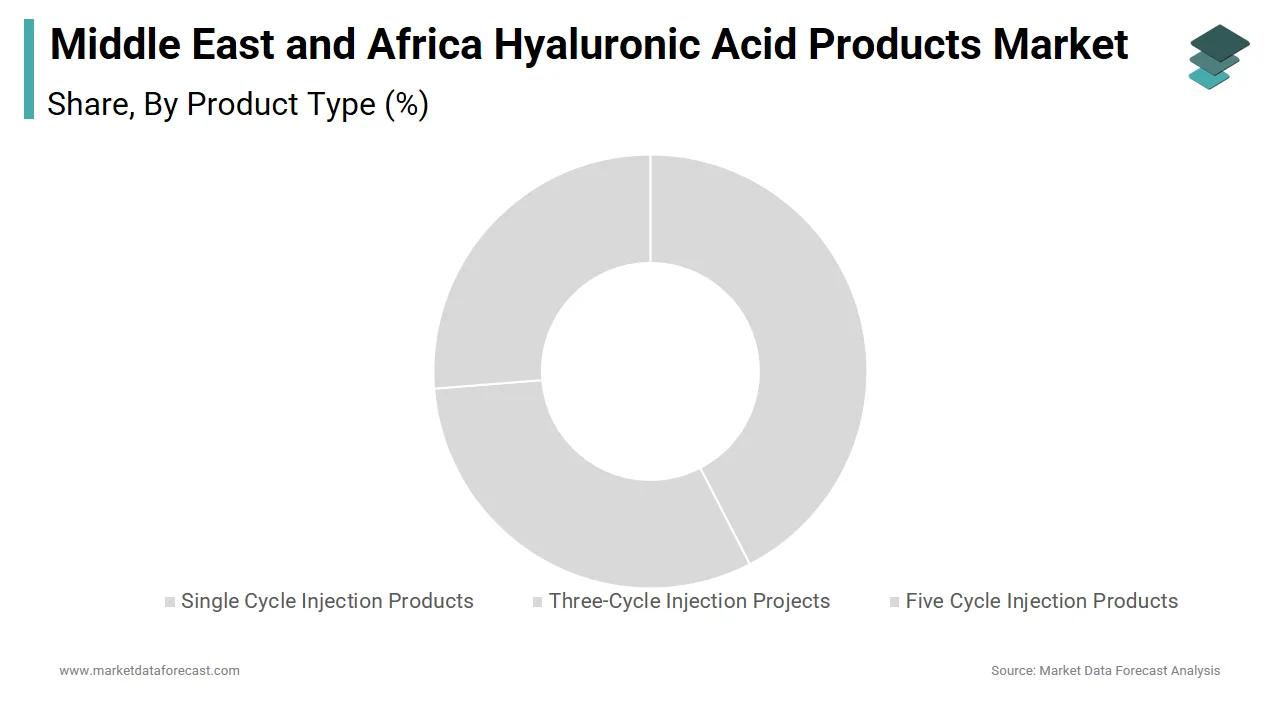
However, the three-cycle injection products segment is anticipated to grow at a notable CAGR of 10.5% over the forecast period in this regional market owing to the growing clinical preference for gradual tissue expansion and correction, which allows for more precise aesthetic outcomes and reduced risk of complications. Many practitioners in the Middle East favor this approach for facial rejuvenation as it enables real-time assessment of tissue response between sessions. As per the International Society of Aesthetic Plastic Surgery, staged injections reduce the incidence of overcorrection and vascular compromise by allowing the provider to adjust volume and placement incrementally. This method is particularly popular for complex areas such as the lips and nasolabial folds where precision is critical. Patients appreciate the ability to see progressive improvements and provide feedback during the treatment course. In countries like Turkey and Lebanon, which are hubs for cosmetic surgery, three-cycle protocols are standard for premium aesthetic services. As per the Journal of Cosmetic Dermatology, patient satisfaction scores are 15% higher with multi-session approaches due to the personalized nature of the treatment. This clinical advantage drives demand among high-end clinics and discerning consumers. The structured timeline also facilitates better patient engagement and follow-up care. As awareness of safety and precision grows, more providers are adopting three-cycle regimens for optimal results.
By Application Insights
The dermal fillers segment accounted for the dominant share of the regional market in 2025. The leading position of the dermal fillers segment in this regional market is attributed to the strong cultural emphasis on aesthetics and high disposable income in Gulf countries. Social norms in countries like Saudi Arabia, Kuwait, and the United Arab Emirates place high value on youthful appearance and well-maintained skin. As per the International Society of Aesthetic Plastic Surgery, the Middle East has one of the highest per capita rates of non-surgical cosmetic procedures globally, with lip augmentation and cheek filling being the most popular treatments. Hyaluronic acid is the preferred material due to its safety profile and reversibility. The stigma associated with aging is decreasing, encouraging older demographics to seek preventive treatments. Men are also increasingly participating in aesthetic procedures, expanding the customer base. Social media platforms like Instagram and Snapchat are widely used in the region, driving trends and normalizing cosmetic enhancements. Influencers frequently share their experiences with dermal fillers, creating aspirational demand among followers. This cultural acceptance ensures a consistent and growing volume of procedures. Clinics compete by offering advanced techniques and premium brands, further stimulating market activity. The social imperative to look presentable and youthful sustains the leadership of dermal fillers in the regional market.
However, the osteoarthritis segment is experiencing the fastest growth and is predicted to register a CAGR of 11.2% over the forecast period in this regional market owing to the rapidly aging population in the Middle East and Africa and increasing awareness of joint health management. Life expectancy in the region has improved significantly, leading to a larger elderly demographic prone to degenerative joint diseases. As per the World Health Organization, the number of people aged 60 and above in Africa will triple by 2050, creating a massive patient pool for osteoarthritis treatments. Hyaluronic acid viscosupplementation is gaining recognition as an effective conservative therapy to delay joint replacement surgery. As per the African League Against Rheumatism, early intervention strategies improve mobility and quality of life for seniors. Governments in countries like Egypt and Morocco are launching public health campaigns to address chronic pain and disability. This increased awareness drives patients to seek medical advice and treatment earlier in the disease progression. Physicians are more inclined to prescribe hyaluronic acid injections as part of multimodal pain management plans. The shift from purely palliative care to functional restoration supports market expansion. As the elderly population grows, the demand for joint health solutions will continue to accelerate.
COUNTRY-LEVEL ANALYSIS
Saudi Arabia Hyaluronic Acid Products Market Analysis
Saudi Arabia had the largest share of the Middle East and Africa hyaluronic acid products market in 2025 due to its large population, high healthcare spending, and strong cultural focus on aesthetics. Saudi Arabia is likely to experience sustained market expansion over the next few years, driven by ongoing healthcare privatization and strategic investments in specialized aesthetic centers. The country is undergoing significant healthcare transformation under Vision 2030, which includes improving access to advanced medical treatments. The Saudi Food and Drug Authority has streamlined regulations for importing medical devices, facilitating the entry of global hyaluronic acid brands. The Ministry of Health reports a rising prevalence of osteoarthritis due to an aging population and high obesity rates, driving demand for viscosupplementation. Simultaneously, the aesthetic sector is booming, with Riyadh and Jeddah hosting numerous high-end clinics offering dermal filler services. The government’s support for medical tourism further boosts the market by attracting patients from neighboring countries. Local distributors are expanding their portfolios to include premium and mid-range products to cater to diverse consumer segments. The increasing participation of women in the workforce has also led to greater spending on personal care and aesthetic maintenance. These factors combine to maintain Saudi Arabia’s leadership in the regional market.
United Arab Emirates Hyaluronic Acid Products Market Analysis
The United Arab Emirates represents a mature and sophisticated market for hyaluronic acid products, characterized by high per capita income and a thriving medical tourism industry. The United Arab Emirates is expected to maintain its position as a leading regional healthcare innovator over the next few years, supported by robust regulatory standards and continuous luxury wellness investments. Dubai and Abu Dhabi are global hubs for cosmetic procedures, attracting patients from around the world. The Dubai Health Authority enforces strict licensing standards for aesthetic clinics, ensuring high-quality care and building consumer trust. As per the International Society of Aesthetic Plastic Surgery, the UAE has one of the highest densities of plastic surgeons per capita in the region. This abundance of skilled practitioners drives demand for advanced hyaluronic acid formulations. The hot climate also increases the need for hydrating skincare products containing hyaluronic acid. Retail pharmacies and beauty stores widely stock these topical items. The government’s initiative to position the UAE as a center for medical excellence supports the adoption of innovative therapies. High disposable income allows consumers to purchase premium brands regularly. The diverse expatriate population brings varied aesthetic preferences, further diversifying the market. These dynamics sustain the UAE’s prominent position in the regional landscape.
Israel Hyaluronic Acid Products Market Analysis
Israel features a highly innovative and technologically advanced market for hyaluronic acid products, driven by a strong biotechnology sector and high healthcare standards. Israel is poised for accelerated growth and technological advancement over the next few years, fueled by robust research and development funding and strong export partnerships. The country is home to several leading manufacturers of hyaluronic acid-based medical devices and cosmetics. The Israeli Ministry of Health maintains rigorous regulatory oversight, ensuring product safety and efficacy. The universal healthcare system provides coverage for certain medical indications of hyaluronic acid, such as osteoarthritis and ophthalmic surgeries. As per the Journal of Cosmetic Dermatology, Israeli consumers are well educated about skincare ingredients, driving demand for science-backed topical products. The aesthetic market is also robust, with a high prevalence of minimally invasive procedures. Research and development investments lead to continuous innovation in cross-linking technologies and formulation stability. Export-oriented companies based in Israel contribute significantly to the regional supply chain. The integration of digital health tools allows for personalized treatment planning and monitoring. These factors make Israel a key player in the development and consumption of hyaluronic acid products.
COMPETITIVE LANDSCAPE
The competition in the Middle East and Africa hyaluronic acid products market is characterized by the presence of established global pharmaceutical giants and emerging regional distributors. Major international players dominate the premium segment with branded dermal fillers and advanced viscosupplementation therapies, leveraging their strong clinical data and brand recognition. Local firms compete primarily on price and accessibility, offering generic alternatives and basic skincare formulations. The market sees intense rivalry in urban centers like Dubai and Riyadh, where consumer purchasing power is high and aesthetic awareness is widespread. Companies differentiate themselves through superior after-sales support, practitioner training, and anti-counterfeit measures. Strategic alliances with government health bodies are crucial for securing approvals and participating in public health tenders for osteoarthritis treatments. The fragmented regulatory landscape across African nations creates barriers to entry, favoring companies with robust compliance capabilities. Innovation in product longevity and safety profiles is key to retaining customer loyalty in the aesthetic sector. Continuous investment in local infrastructure and education is essential for sustaining growth and overcoming logistical challenges in this diverse and evolving region.
KEY MARKET PLAYERS
The leading companies operating in the Middle East and Africa hyaluronic acid products market include:
- Allergan Aesthetics
- Ferring B.V.
- Zimmer Biomet
- Fidia Farmaceutici
- Salix Pharmaceuticals
- Anika Therapeutics
- Seikagaku Corporation
- Galderma
- Hoffmann-La Roche Ltd.
- Alcon, Inc.
- Sinclair Pharma
- Smith & Nephew plc
- Merz Aesthetics, Inc.
TOP PLAYERS IN THE MARKET
- Galderma contributes significantly to the Middle East and Africa hyaluronic acid products market through its portfolio of aesthetic dermal fillers and skincare solutions. The company focuses on providing scientifically backed products that meet the high standards of consumers in Gulf countries. Recently, Galderma expanded its educational initiatives in Saudi Arabia and the United Arab Emirates to train healthcare professionals on advanced injection techniques. This strategy strengthens their position by ensuring safe and effective product usage. They also launched new marketing campaigns targeting the growing demand for non-surgical facial rejuvenation. These efforts enhance brand visibility and trust among both practitioners and patients. Their commitment to innovation drives the adoption of premium hyaluronic acid formulations in the region.
- Allergan Aesthetics plays a vital role in the market by offering widely recognized hyaluronic acid fillers under the Juvéderm brand. Their products are known for their longevity and natural-looking results, appealing to affluent consumers in the Middle East. Allergan recently strengthened its distribution network in South Africa and Egypt to improve product accessibility. This expansion addresses the logistical challenges of reaching remote areas. The company also partners with local clinics to host workshops on facial anatomy and safety protocols. These collaborations build professional loyalty and promote best practices. Their focus on patient satisfaction and clinical excellence maintains their strong reputation in the competitive aesthetic landscape.
- Sinclair Pharma supports the market with its innovative hybrid hyaluronic acid products that combine volumizing and skin quality benefits. The company targets the premium segment in countries like Kuwait and Qatar where consumers seek comprehensive aesthetic solutions. Sinclair recently introduced new product lines specifically designed for the unique climatic conditions of the Middle East. This adaptation enhances product performance and user comfort. They also engage in digital marketing strategies to reach younger demographics interested in preventive aesthetics. These actions help them capture a niche but growing segment of the market. Their emphasis on scientific differentiation sets them apart from traditional filler manufacturers.
TOP STRATEGIES USED BY KEY MARKET PARTICIPANTS
Key players in the Middle East and Africa hyaluronic acid products market employ strategic partnerships with local distributors to navigate complex regulatory environments and enhance supply chain efficiency. Companies frequently invest in medical education and training programs for healthcare professionals to ensure safe administration and build clinical trust. This approach fosters long-term relationships with key opinion leaders and clinics. Another prevalent strategy involves launching region-specific marketing campaigns that resonate with cultural beauty standards and preferences. Firms focus on product innovation to address the harsh climatic conditions of the region, such as extreme heat and dryness. Acquisitions of local aesthetic brands allow global companies to gain immediate market access and consumer loyalty. Furthermore, participants actively engage in combating counterfeit products through authentication technologies and regulatory advocacy. These combined strategies enable companies to maintain competitive advantage while addressing the unique challenges of the diverse Middle East and Africa markets.
MARKET SEGMENTATION
This Middle East and Africa hyaluronic acid products market research report is segmented and sub-segmented into the following categories.
By Product Type
- Single Cycle Injection Products
- Three-Cycle Injection Projects
- Five Cycle Injection Products
By Application
- Osteoarthritis
- Ophthalmic
- Dermal Fillers
- Vesicoureteral Reflux
By Country
- KSA
- UAE
- Israel
- Rest of the GCC countries
- South Africa
- Ethiopia
- Kenya
- Egypt
- Sudan
- rest of MEA