- Product Description Description
- Table of Contents TOC
- List of Table & Figure LOT
- Get Free Sample PDF Sample PDF
Market Size, 2025
$9.08 BnMarket Estimate, 2026
$9.90 BnMarket Forecast, 2034
$19.73 BnCAGR, 2026–2034
9.09%Executive Summary: Dermal Fillers Market
- Market Scope: Comprehensive global dermal fillers market analysis covering product categories, therapeutic areas, regional leadership frameworks, non-surgical aesthetic procedure drivers, and bioengineered hyaluronic acid advancements.
- Market Valuation: Valued at USD 9.08 billion (2025), estimated at USD 9.90 billion (2026), and projected to reach USD 19.73 billion by 2034, registering a steady CAGR of 9.09% (2026–2034).
- Primary Growth Drivers: Increasing demand for non-surgical aesthetic procedures (over 3.4 million soft tissue filler procedures in the U.S. in 2023), rising facial aesthetic awareness among aging populations, and volumetric facial rejuvenation tech.
Key Market Segment Metrics (2026–2034)
| Category | Leading Segment (Position) | Fastest-Growing Segment |
|---|---|---|
| By Product Type | Absorbable Fillers (accounted for ~82% market share due to hyaluronic acid preference) | Non-Absorbable Fillers (projected to grow at a CAGR of 7.3%) |
| By Therapeutic Area | Wrinkles (represented largest therapeutic area with a 43.2% revenue share in 2025) | Sagging Skin (fastest-growing segment at an 8.1% CAGR driven by volumetric rejuvenation) |
| By Region | North America (held the largest regional share at 36.4% in 2024) | Emerging Markets (expanding via rising disposable incomes and aesthetic demand) |
Major Market Players & Market Structure
Market Structure: Highly competitive global aesthetics landscape featuring specialized biopharmaceutical and medical device companies competing on biomaterial science, biocompatibility, longevity, and injector certification ecosystems.
Key Companies: Allergan Inc., AQTIS Medical, Bio ha Laboratories, Suneva Medical, Galderma, Merz Aesthetics, Cynosure, Syneron, and Cytophil Inc.
Global Dermal Fillers Market Size
In 2025, the global dermal fillers market was valued at USD 9.08 billion and it is expected to reach USD 19.73 billion by 2034 from USD 9.90 billion in 2026, growing at a CAGR of 9.09% during the forecast period.
Dermal Fillers are injectable substances designed to restore volume, smooth wrinkles, and enhance facial contours by supplementing the skin’s natural structural components. Predominantly composed of hyaluronic acid, calcium hydroxylapatite, poly-L-lactic acid, and polymethylmethacrylate microspheres, these fillers function by volumizing subcutaneous tissue and stimulating collagen synthesis. Their clinical application extends beyond cosmetic enhancement to include reconstructive procedures, such as correcting facial asymmetries and managing soft tissue deficits caused by trauma or disease. The increasing consumer emphasis on non-surgical aesthetic interventions has elevated dermal fillers as a cornerstone of modern minimally invasive dermatology.
Furthermore, according to the American Society of Plastic Surgeons (ASPS), injectable dermal fillers consistently rank as the second most common minimally invasive cosmetic procedure in the US, after botulinum toxin (Botox) injections. The aging population, rising disposable incomes, and growing social media influence have collectively amplified aesthetic consciousness, particularly in urban demographics.
Additionally, technological advancements have improved product safety, longevity, and biocompatibility, fostering greater consumer confidence. Regulatory frameworks in regions such as the European Union and North America have also evolved to ensure product standardization, further legitimizing clinical adoption.
MARKET DRIVERS
Growing Demand for Non-Surgical Aesthetic Procedures
The global shift toward minimally invasive cosmetic interventions has become a pivotal force propelling the dermal fillers market. Consumers are increasingly favoring treatments that offer immediate aesthetic enhancement with minimal downtime, reduced risk, and no surgical scars. According to the American Society of Plastic Surgeons, in 2023, over 3.4 million soft tissue filler procedures were performed in the United States alone, representing a 4% increase from 2018. This surge reflects a broader cultural transition where aesthetic maintenance is integrated into personal wellness regimens, akin to skincare or fitness. The appeal lies in the procedural efficiency; most filler injections take less than 30 minutes and allow patients to resume daily activities immediately. Moreover, the proliferation of social media platforms has intensified appearance consciousness, particularly among younger demographics. A 2022 survey conducted by the American Academy of Facial Plastic and Reconstructive Surgery found that nearly 75% of patients under the age of 30 have considered or undergone non-surgical facial treatments, with Instagram and TikTok being primary influencers in decision-making. The normalization of aesthetic enhancements, coupled with increased accessibility through medspas and dermatology clinics in urban centers, further accelerates adoption. Manufacturers are responding with longer-lasting, reversible, and biocompatible formulations, enhancing consumer trust.
Rising Awareness of Facial Aesthetics and Anti-Aging Solutions
Public consciousness regarding facial aesthetics and the physiological effects of aging has intensified, significantly influencing the demand for dermal fillers. As life expectancy increases and healthspan extends, individuals are seeking ways to maintain a youthful appearance that aligns with their vitality. The global population aged 60 and over is projected to reach 2.1 billion by 2050, as per the United Nations Department of Economic and Social Affairs, creating a vast demographic base predisposed to age-related volume loss and skin laxity. Concurrently, advancements in dermatological education and patient outreach have improved understanding of how hyaluronic acid depletion and collagen degradation contribute to facial aging. The Skin Cancer Foundation points out that by age 50, the average person has lost up to 30% of their facial volume, making dermal fillers a scientifically grounded solution. Medical professionals are now more equipped to educate patients on preventive aesthetic care, shifting the paradigm from corrective to maintenance-based treatments. This awareness is no longer confined to high-income nations; emerging economies are witnessing rapid adoption due to increased access to dermatologists and aesthetic training programs.
MARKET RESTRAINTS
Stringent Regulatory Scrutiny and Product Approval Delays
The dermal fillers market faces significant headwinds due to the rigorous regulatory environment governing medical aesthetics. Regulatory bodies such as the U.S. Food and Drug Administration (FDA) and the European Medicines Agency (EMA) enforce strict evaluation protocols for injectable products, requiring extensive clinical trials, biocompatibility testing, and post-market surveillance. As per the FDA, the average time for approval of a new dermal filler ranges between 3 to 5 years, with failure rates exceeding during preclinical and clinical phases. These delays hinder innovation and market entry, particularly for smaller biotech firms lacking the financial resilience to sustain prolonged development cycles. In the European Union, the implementation of the Medical Device Regulation (MDR) in 2021 intensified conformity assessment requirements, mandating more robust clinical evidence and traceability. According to MedTech Europe, nearly 40% of aesthetic medical devices faced re-evaluation or temporary withdrawal during the MDR transition period. Additionally, inconsistent regulatory standards across regions create complexities for global manufacturers. For instance, while hyaluronic acid fillers are widely approved in North America and Europe, countries like India and Indonesia require localized clinical data, increasing time-to-market. While regulation ensures patient safety, excessive bureaucratic hurdles can stifle competition and delay the availability of advanced formulations, ultimately constraining market growth
Prevalence of Unlicensed Practitioners and Counterfeit Products
The proliferation of unqualified providers and substandard dermal filler products poses a critical threat to market integrity and patient safety. Despite the medical nature of injectable procedures, a growing number of treatments are administered in non-clinical settings by personnel lacking formal medical training. Fake products often contain non-resorbable or industrial-grade substances such as silicone or hydrogel, leading to severe complications including granulomas, vascular occlusion, and permanent disfigurement. As per the estimates by the World Health Organization, one in ten medical products in low- and middle-income countries is substandard or falsified, exacerbating risks in rapidly growing markets like Southeast Asia and Latin America. Social media platforms have inadvertently facilitated this black market by enabling direct-to-consumer sales of unapproved injectables. In response, regulatory agencies have intensified enforcement; the U.S. FDA issued several warning letters to illegal filler distributors between 2021 and 2023. However, the decentralized nature of online commerce and weak cross-border enforcement continue to enable the circulation of dangerous products, undermining consumer confidence and threatening the credibility of legitimate aesthetic medicine.
MARKET OPPORTUNITIES
Expansion into Emerging Markets with Rising Disposable Incomes
Emerging economies across Asia-Pacific, Latin America, and the Middle East present transformative opportunities for the dermal fillers market, driven by economic growth and evolving consumer behaviour. As per the World Bank, per capita income in countries like Vietnam and Indonesia, has increased by over 60% since 2015, enabling greater expenditure on personal aesthetics. In China, the number of licensed aesthetic clinics grew significantly in 2023 compared to that in 2018, reflecting institutional expansion to meet rising demand. Cultural attitudes toward cosmetic procedures are shifting, particularly among younger, urban populations who view aesthetic treatments as a form of self-investment. South Korea remains a regional trendsetter, with a portion of the population having undergone at least one cosmetic procedure. This normalization is spreading across Southeast Asia, where medical tourism hubs such as Thailand and Malaysia attract a large number of international patients annually, many seeking affordable, high-quality aesthetic care. Furthermore, multinational manufacturers are localizing production and distribution to reduce costs and comply with regional regulations. Allergan and Galderma have established regional manufacturing facilities in Singapore and India to serve the Asia-Pacific market more efficiently. As healthcare infrastructure improves and insurance coverage for reconstructive procedures expands, the accessibility of dermal fillers is expected to rise. These developments position emerging markets as key growth engines, offering scalable opportunities for innovation, education, and brand loyalty development.
Advancements in Bioengineered and Long-Lasting Filler Formulations
Technological innovation in biomaterial science is unlocking new frontiers in dermal filler development, offering enhanced safety, longevity, and tissue integration. Recent breakthroughs in cross-linking technologies and viscoelastic optimization have led to next-generation hyaluronic acid fillers with durations exceeding 18 to 24 months, compared to the 6–12 month efficacy of earlier formulations. As per a 2023 clinical study published in Dermatologic Surgery, hyaluronic acid fillers such as Vycross and XpresHAn Technology demonstrated an improvement in volume retention at 18 months, reducing the need for frequent touch-ups and improving patient satisfaction. Additionally, the emergence of hybrid and stimulatory fillers, such as those based on poly-L-lactic acid and calcium hydroxylapatite, triggers neocollagenesis, offering structural rejuvenation rather than mere volume replacement. Furthermore, companies like Ellansé are commercializing fillers that combine immediate volume restoration with gradual collagen regeneration, validated in several clinical trials across Europe and Asia. These advancements not only extend product performance but also align with consumer demand for natural-looking, sustainable outcomes. As biotechnology converges with aesthetic medicine, the line between cosmetic enhancement and tissue engineering continues to blur, opening avenues for personalized, long-term facial rejuvenation solutions.
MARKET CHALLENGES
Standardization of Training and Certification for Aesthetic Practitioners
The lack of uniform training standards for injectors, leading to inconsistent outcomes and elevated complication rates, is a critical challenge in the dermal fillers market. While the procedure is minimally invasive, it requires in-depth knowledge of facial anatomy, vascular mapping, and emergency response protocols. In many countries, there are no mandatory certification requirements for administering fillers, allowing non-physicians such as nurses, aestheticians, or even unlicensed individuals to perform injections. As per a 2023 study by University College London (UCL), 31% of UK aesthetics practitioners offering injectables were not doctors, dentists, or nurses. The remaining 69% included professionals with medical qualifications such as doctors (32%), nurses (13%), dentists (24%), and dental nurses (8%). The World Aesthetic Forum has advocated for global harmonization of training curricula, emphasizing simulation-based learning and competency assessments. However, implementation remains fragmented. In the United States, only some states regulate aesthetic injector qualifications, while in India, no national certification exists despite a large number of aesthetic procedures performed monthly. This variability undermines patient safety and deters mainstream medical institutions from embracing aesthetic medicine as a legitimate specialty. Professional bodies such as the American Academy of Facial Plastic Surgery have introduced voluntary credentialing programs, but uptake is limited. Without enforceable international standards, the risk of complications will persist, threatening public trust and impeding the professionalization of the field.
Managing Patient Expectations in the Age of Digital Influence
The digital era has fundamentally altered patient expectations, presenting a complex challenge for practitioners in the dermal fillers market. Platforms like Instagram, TikTok, and YouTube have popularized "filter aesthetics," where digitally altered appearances set unrealistic benchmarks for facial symmetry and youthfulness. As per a 2023 study by the Journal of Plastic, Reconstructive & Aesthetic Surgery, a notable share of patients seeking fillers brought filtered selfies as reference images, expecting identical results. This phenomenon, termed "Snapchat dysmorphia," correlates with higher rates of post-procedural dissatisfaction and psychological distress. Such digital distortions may exacerbate body dysmorphic disorder, particularly among adolescents and young adults. Clinicians report increased pressure to deliver hyper-feminine or exaggerated features, such as overly augmented lips or sharp jawlines, which may compromise natural facial harmony. Moreover, the rapid dissemination of aesthetic trends, such as the "fox eye" or "Russian lip" look, encourages impulsive decision-making without adequate medical consultation. Managing these expectations requires extended consultation times, digital morphing tools, and psychological screening, increasing operational burdens. Without effective communication strategies and ethical guidelines, the gap between digital fantasy and anatomical reality will continue to challenge the credibility and sustainability of aesthetic practice.
REPORT COVERAGE
| REPORT METRIC | DETAILS |
| Market Size Available | 2025 to 2034 |
| Base Year | 2025 |
| Forecast Period | 2026 to 2034 |
| CAGR | 9.09% |
| Segments Covered | By Product, Therapeutic Area, and Region |
| Various Analyses Covered | Global, Regional & Country Level Analysis, Segment-Level Analysis, Drivers, Restraints, Opportunities, Challenges; PESTLE Analysis; Porter's Five Forces Analysis; Competitive Landscape; Analyst Overview of Investment Opportunities |
| Regions Covered | North America, Europe, Asia Pacific, Latin America, Middle East & Africa |
| Market Leaders Profiled | Allergan Inc., AQTIS Medical, Bio ha Laboratories, Suneva Medical, Galderma, Merz Aesthetics, Cynosure, Syneron, and Cytophil Inc. |
SEGMENTAL ANALYSIS
By Product Insights
The absorbable fillers segment accounted for a substantial portion of the global market share in 2025. This overwhelming dominance is primarily anchored in the widespread clinical preference for hyaluronic acid (HA)-based fillers, which constitute a significant share of all absorbable products used worldwide. The biocompatibility and enzymatic degradation of HA via hyaluronidase render it a low-risk option, enabling corrective intervention in case of adverse outcomes. Furthermore, a multi-center study revealed that the majority of dermatologists and plastic surgeons prefer absorbable fillers for first-time patients due to their favorable safety profile. The growing incidence of vascular complications linked to non-absorbable agents, such as polyacrylamide gel and silicone, has further deterred clinical adoption. Coupled with increasing consumer demand for natural, reversible enhancements, these factors solidify the supremacy of biodegradable fillers in contemporary aesthetic practice.
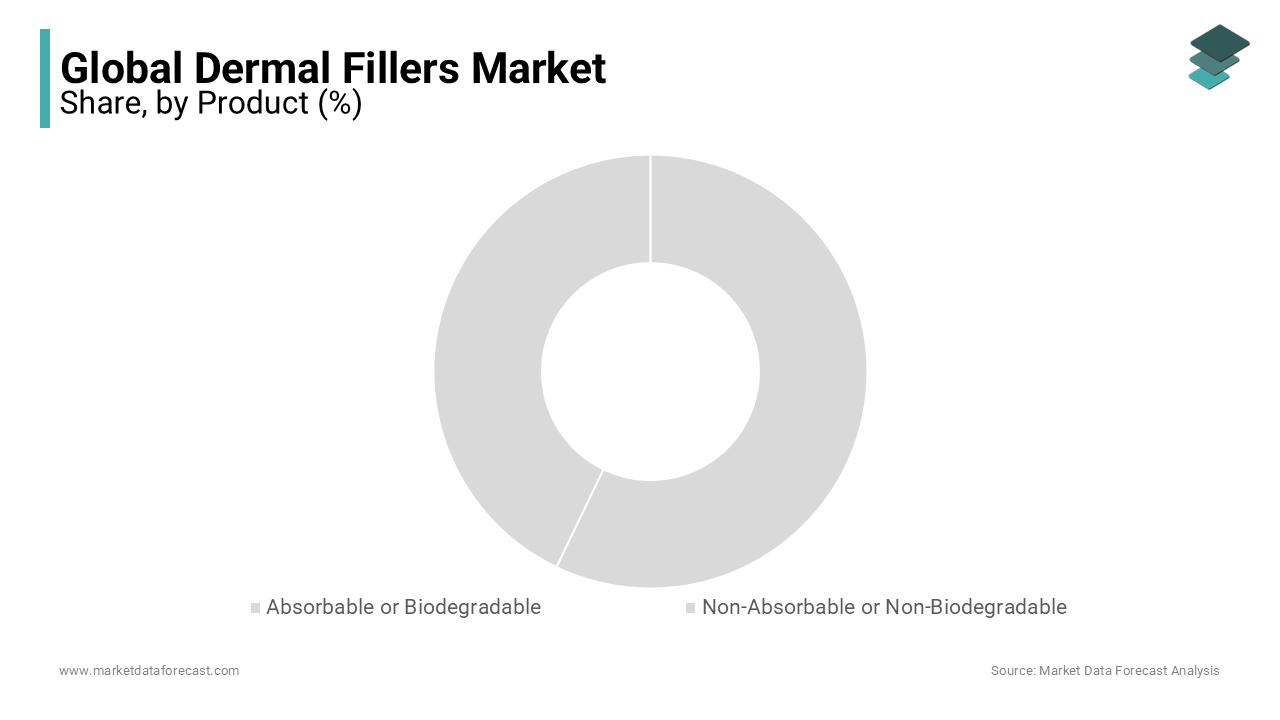
The non-absorbable or non-biodegradable segment is projected to expand at the fastest CAGR of 7.3% from 2026 to 2034. This accelerated growth stems from increasing demand for long-term and cost-effective solutions among repeat aesthetic patients. Unlike transient fillers requiring re-injection every 6–18 months, permanent or semi-permanent options such as poly-L-lactic acid (PLLA) and calcium hydroxylapatite (CaHA) offer sustained volume restoration with fewer maintenance sessions. As per a 2023 clinical analysis by the European Academy of Dermatology and Venereology, PLLA stimulates collagen production for up to 24 months post-treatment, with patient satisfaction rates exceeding 80% at the two-year mark. Additionally, rising interest in structural facial rejuvenation, particularly midface volumization and jawline contouring, has elevated the appeal of stimulatory fillers that remodel underlying tissue architecture. Moreover, advancements in microsphere technology have improved the safety of non-absorbable formulations, reducing nodule formation and migration risks. The introduction of Ellansé, a polycaprolactone-based filler with adjustable duration (1–4 years), has gained regulatory approval in over 70 countries, reflecting growing acceptance. So, the non-biodegradable segment is gaining momentum despite higher upfront costs and procedural complexity because patient cohorts shift from temporary enhancements to sustained facial remodeling.
By Therapeutic Area Insights
The wrinkles segment represented the largest therapeutic application in the dermal fillers market by capturing an estimated 43.2% of total revenue in 2025. This preeminence is driven by the universal visibility and social perception of periorbital and perinasal lines as primary indicators of aging. The glabellar lines, crow’s feet, and nasolabial folds are among the most frequently treated areas. The biological basis for this demand lies in the progressive degradation of dermal hyaluronic acid and elastic fibers; research from the National Institutes of Health points out that individuals lose some of their skin’s HA content per decade after age 30, accelerating wrinkle formation. Consumer behavior further amplifies this trend. The integration of dermal fillers into preventive aesthetics regimens, often initiated in the late 20s or early 30s, has transformed wrinkle correction from a reactive to a proactive treatment. Clinicians increasingly adopt a “soft-tissue balancing” approach, using microdroplet injections to delay deep line formation. Additionally, the availability of ultra-low viscosity HA fillers, such as Belotero Balance, allows for precise correction of superficial rhytids with minimal swelling. As societal norms continue to prioritize youthful appearance and minimally invasive care, the focus on wrinkle mitigation remains the cornerstone of global dermal filler utilization.
The sagging skin segment is emerging as the fastest-growing therapeutic area within the dermal fillers market and is projected to grow at a CAGR of 8.1% from 2026 to 2034. This surge is fueled by a paradigm shift from surface-level correction to volumetric facial rejuvenation, particularly in addressing midface atrophy and jawline descent. Unlike static wrinkles, sagging skin results from deep structural volume loss and ligamentous laxity, necessitating advanced filler techniques such as deep plane injection and structural scaffolding. The demand for such interventions is amplified by demographic trends: as per projections by the United Nations by 2030, over 1.4 billion people globally will be aged 60 or older, creating a vast pool of individuals experiencing age-related facial deflation. The advent of high-cohesion, high-G’ fillers, such as Voluma and RHA Collection, has enabled effective lifting and contouring with natural-looking outcomes. Furthermore, the rise of “liquid facelifts,” which combine multiple filler types for comprehensive rejuvenation, has elevated the clinical relevance of sagging skin correction. As both patient and practitioner understanding of facial aging evolves, the emphasis on restoring three-dimensional volume ensures this segment’s accelerated trajectory.
REGIONAL ANALYSIS
North America Dermal Fillers Market Analysis
North America held a commanding position in the global dermal fillers market by securing a 36.4% of the total share in 2024. The region’s lead position is underpinned by a mature aesthetic medicine ecosystem, high consumer awareness, and robust reimbursement frameworks for reconstructive applications. The United States alone accounts for a significant share of North America’s filler volume. The cultural normalization of aesthetic care, combined with widespread insurance coverage for post-oncological or trauma-related facial reconstruction, has broadened the clinical scope of dermal fillers. Additionally, the U.S. Food and Drug Administration’s accelerated approval pathway has facilitated rapid market entry for innovative formulations, with many new filler products cleared between 2021 and 2023. The presence of key market players such as Allergan (maker of Juvederm) and Galderma (Restylane) further consolidates the region’s dominance. Moreover, the proliferation of medical spas in urban centers has increased accessibility. With rising demand among younger demographics and continuous product innovation, North America remains the epicenter of clinical and commercial advancement in the dermal filler landscape.
Europe Dermal Fillers Market Analysis
Europe maintains a significant regional share. The region exhibits a balanced mix of medical rigor and aesthetic sophistication, with countries like Germany, France, and Italy leading in both clinical adoption and regulatory standardization. The implementation of the Medical Device Regulation (MDR) in 2021 has elevated product safety standards, requiring manufacturers to submit extensive clinical evidence for market authorization. This has bolstered consumer confidence, particularly in nations with strong public healthcare systems. In Scandinavia, where patient safety is paramount, the use of CE-marked fillers is high. Additionally, medical tourism plays a pivotal role; countries like Poland and Hungary offer high-quality aesthetic care at competitive prices, attracting a large number of international patients annually. The region also leads in training infrastructure, with mandatory certification programs in countries such as the UK and the Netherlands. As Europe continues to harmonize aesthetic practice standards and respond to rising demand for non-surgical rejuvenation, its market position remains resilient and strategically influential.
Asia-Pacific Dermal Fillers Market Analysis
The Asia-Pacific region is rapidly ascending as a key player in the market. Characterized by dynamic consumer behavior and rapid urbanization, the region is witnessing unprecedented growth in aesthetic consciousness, particularly in East and Southeast Asia. South Korea stands at the forefront, with per capita filler consumption being the highest globally. Cultural emphasis on flawless skin and facial symmetry, combined with advanced dermatological infrastructure, has created a fertile ground for market expansion. China follows closely. The rise of domestic manufacturers such as Huaxi Bio and Sinclair Healthcare has reduced dependency on imports and lowered treatment costs. Furthermore, social media platforms like Xiaohongshu and WeChat Drive consumer decisions, with aesthetic content views increasing year-on-year. Regulatory improvements, including China’s 2021 Medical Device Supervision Regulation, have enhanced product traceability and safety. As disposable incomes rise and stigma diminishes, Asia-Pacific is poised to challenge North America’s dominance in the coming decade.
Latin America Dermal Fillers Market Analysis
Latin America holds a modest but growing share of the global dermal fillers market, with Brazil emerging as the regional leader. The region’s market is characterized by a strong cultural affinity for aesthetic enhancement, where physical appearance is deeply intertwined with social and professional identity. Brazil alone performs a large number of filler procedures annually, globally in volume. The country’s robust plastic surgery tradition, supported by board-certified plastic surgeons, provides a solid foundation for injectable adoption. However, regulatory fragmentation across countries poses challenges. Despite this, the expansion of accredited medspas in cities like São Paulo and Bogotá reflects improving service quality. Additionally, medical tourism contributes significantly, with Colombia and Costa Rica attracting a notable number of aesthetic tourists annually. As regulatory harmonization progresses and education improves, Latin America’s market potential remains substantial.
MEA Dermal Fillers Market Analysis
The Middle East and Africa collectively account for a smaller share of the global dermal fillers market, with the Gulf Cooperation Council (GCC) nations driving regional demand, according to BMI Research, a Fitch Group company. The United Arab Emirates, particularly Dubai and Abu Dhabi, serves as the aesthetic hub of the region, hosting several licensed aesthetic clinics as of 2023. Cultural shifts, rising female workforce participation, and government support for medical tourism have catalyzed market growth. Saudi Arabia’s Vision 2030 initiative includes the development of specialized health zones dedicated to cosmetic and wellness services, with significant funds allocated for aesthetic infrastructure. The region’s young, tech-savvy population is increasingly influenced by global beauty trends. Regulatory advancements, such as the Gulf Standardization Organization’s unified medical device regulations, have improved product safety. In South Africa, the private healthcare sector supports a growing aesthetic industry, with Johannesburg and Cape Town clinics reporting an annual increase in filler treatments since 2020. While challenges related to affordability and awareness persist in sub-Saharan Africa, the region’s upward trajectory is evident, supported by urbanization and digital connectivity.
COMPETITIVE LANDSCAPE
The competitive landscape of the dermal fillers market is characterized by a blend of scientific innovation, clinical authority, and strategic brand positioning. Leading players distinguish themselves not merely through product portfolios but through comprehensive ecosystems that encompass medical education, injector support, and patient engagement. The market is driven by a race to achieve superior biocompatibility, natural aesthetic outcomes, and longer-lasting results, prompting continuous R&D investment in biomaterial science. Companies are increasingly focused on understanding facial dynamics and tissue behavior to develop fillers that adapt to movement and aging patterns. Brand credibility is built on clinical evidence, physician trust, and post-market surveillance, with companies investing in long-term studies to validate safety and efficacy. Competition also extends to training initiatives, where firms establish themselves as knowledge leaders by certifying practitioners and standardizing best practices. Regional nuances influence competitive tactics, with Western markets emphasizing regulatory excellence and emerging regions focusing on accessibility and education. The rise of premium, anatomically tailored products has intensified differentiation, while digital tools and tele-aesthetic platforms are redefining patient engagement. Ultimately, the market favors organizations that combine technological advancement with medical legitimacy and a deep understanding of evolving consumer expectations in aesthetic care.
Key Market Participants
A few of the major companies in the global dermal fillers market include
- Allergan Inc.
- AQTIS Medical
- Bio ha Laboratories
- Suneva Medical
- Galderma
- Merz Aesthetics
- Cynosure
- Syneron
- Cytophil Inc.
Top Players in the Dermal Fillers Market
- Allergan Aesthetics, a subsidiary of AbbVie, stands as a dominant force in the global dermal fillers market, renowned for its flagship Juvederm portfolio. The company has consistently shaped clinical standards through extensive research, physician training, and patient education initiatives. Allergan’s focus on innovation in hyaluronic acid technology has enabled differentiated product offerings tailored to specific facial zones and patient needs. Its global outreach, robust regulatory compliance, and strong relationships with dermatologists and plastic surgeons have solidified its reputation as a leader in aesthetic medicine, influencing treatment protocols and setting benchmarks for safety and efficacy.
- Galderma, a pioneer in dermatological solutions, has established itself as a key innovator with its Restylane family of fillers. The company emphasizes scientific rigor, biocompatibility, and sustainable aesthetics, investing heavily in long-term clinical studies and injector certification programs. Galderma’s global footprint spans diverse markets, where it integrates medical expertise with patient-centric design. By advancing stimulation-based and adaptive filler technologies, the company has broadened the scope of non-surgical rejuvenation, earning trust among clinicians seeking reliable, predictable outcomes in complex facial corrections.
- Merz Aesthetics has emerged as a formidable player through its Belotero and RHA (Resilient Hyaluronic Acid) product lines. The company distinguishes itself with a commitment to anatomical precision and dynamic facial movement preservation. Merz supports comprehensive medical education and digital tools for treatment planning, enhancing clinical adoption. Its strategic focus on physician collaboration and real-world evidence generation has strengthened its credibility. By prioritizing natural-looking results and tissue integration, Merz has carved a niche in the premium segment, driving long-term loyalty among practitioners and patients alike.
Top Strategies Used by Key Market Participants
One major strategy employed by leading companies is the advancement of proprietary hyaluronic acid technologies to differentiate product performance. Firms are investing in cross-linking methods, viscoelastic properties, and particle homogeneity to enhance longevity, tissue integration, and injection precision. These innovations allow brands to address specific anatomical zones and patient concerns, creating a competitive edge through clinical superiority and physician preference.
Another key approach is the expansion of global training and certification programs for aesthetic practitioners. By establishing medical education platforms, companies ensure proper technique, safety awareness, and brand loyalty among injectors. These initiatives not only elevate procedural standards but also strengthen trust in product reliability, fostering long-term relationships with healthcare providers across diverse regions.
A third pivotal strategy involves strategic collaborations with dermatology clinics, medspas, and digital health platforms. Companies are integrating into aesthetic ecosystems by supporting practice growth, offering digital consultation tools, and enhancing patient journey experiences. This deepens brand engagement, improves treatment adherence, and positions fillers as part of holistic aesthetic wellness, rather than isolated cosmetic interventions.
Global Dermal Fillers Market News
- In March 2023, Allergan Aesthetics launched a global injector certification program aimed at standardizing best practices and enhancing clinical outcomes with the Juvederm portfolio, reinforcing its leadership in medical education and training.
- In June 2023, Galderma introduced an augmented reality consultation tool integrated with its Restylane brand, enabling physicians to simulate treatment results and improve patient communication and decision-making.
- In November 2023, Merz Aesthetics expanded its RHA Collection with a new formulation designed for dynamic facial areas, emphasizing natural movement and tissue adaptability in real-world expressions.
- In February 2024, AbbVie announced a strategic collaboration with a digital health platform to integrate virtual aesthetic consultations into the patient journey, enhancing accessibility and pre-treatment engagement.
- In May 2024, Galderma initiated a pan-Asian medical affairs network to support clinical research, regulatory alignment, and physician training across high-growth markets in Southeast Asia and India.
MARKET SEGMENTATION
This market research report on the global dermal fillers market has been segmented and sub-segmented based on the product, therapeutic area, and region.
By Product
- Absorbable or Biodegradable
- Non-Absorbable or Non-Biodegradable
By Therapeutic Area
- Wrinkles
- Deep Facial Lines
- Sagging Skin
- Scars
By Region
- North America
- Europe
- Asia Pacific
- Latin America
- The Middle East and Africa