- Product Description Description
- Table of Contents TOC
- List of Table & Figure LOT
- Get Free Sample PDF Sample PDF
Market Size, 2025
$3.45 BnMarket Estimate, 2026
$3.67 BnMarket Forecast, 2034
$6.04 BnCAGR, 2026–2034
6.42%Middle East and Africa Soy Desserts Market Report Summary
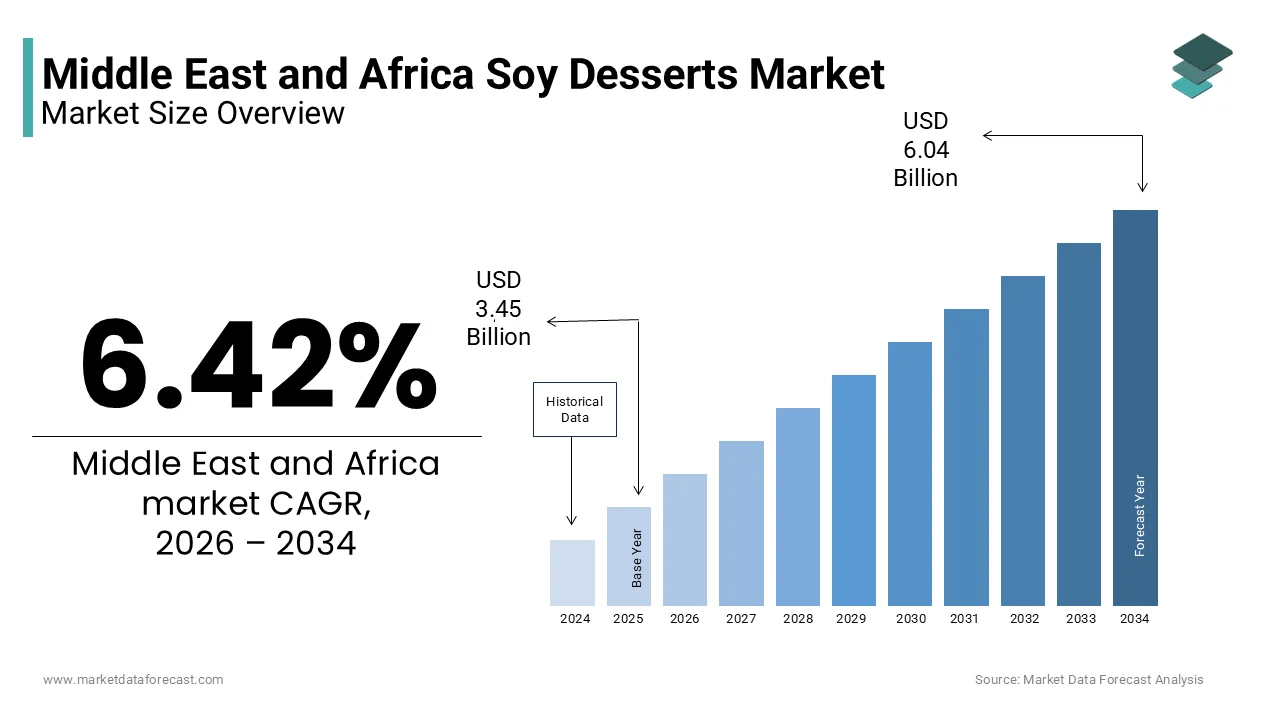
The Middle East and Africa soy desserts market was valued at USD 3.45 billion in 2025, is estimated to reach USD 3.67 billion in 2026, and is projected to reach USD 6.04 billion by 2034, growing at a CAGR of 6.42% during the forecast period from 2026 to 2034. The growth of the Middle East and Africa soy desserts market is driven by increasing consumer demand for plant-based dairy alternatives, rising awareness of lactose intolerance, and growing preference for healthier dessert options. The expanding vegan population, rising health consciousness, and continuous product innovation in plant-based foods are further supporting market growth. Additionally, improving retail accessibility and the expansion of the foodservice sector are contributing to the steady adoption of soy-based desserts across the region.
Key Market Trends
-
Rising consumer preference for plant-based and dairy-free desserts is driving demand for soy desserts across the Middle East and Africa.
-
Growing awareness of lactose intolerance and vegan lifestyles is supporting the adoption of soy-based dessert products.
-
Manufacturers are introducing innovative flavors, fortified formulations, and clean-label products to attract health-conscious consumers.
-
Expanding supermarkets, hypermarkets, and modern retail outlets are improving product availability across the region.
-
Increasing investments in plant-based food production and marketing are creating new growth opportunities.
Segmental Insights
-
Based on distribution channel, the hypermarkets and supermarkets segment dominated the Middle East and Africa soy desserts market in 2025. The segment's leadership is attributed to extensive product availability, organized retail expansion, attractive promotional activities, and consumers' preference for one-stop shopping destinations.
Regional Insights
-
The Middle East and Africa soy desserts market is witnessing steady growth due to rising health awareness, increasing demand for plant-based foods, and expanding retail infrastructure.
-
Saudi Arabia dominated the Middle East and Africa soy desserts market in 2025. The country's leadership is supported by rising disposable incomes, growing demand for dairy alternatives, expanding modern retail networks, and increasing consumer interest in healthy and plant-based food products.
-
The United Arab Emirates remains a significant market due to its diverse consumer base, expanding vegan food offerings, and strong presence of premium retail chains.
Competitive Landscape
The Middle East and Africa soy desserts market is moderately competitive, with manufacturers focusing on product innovation, nutritional enhancement, and expansion of distribution channels to strengthen their market presence. Companies are investing in plant-based product development, strategic partnerships, and premium soy dessert offerings to meet the evolving preferences of health-conscious consumers across the region. Key players operating in the Middle East and Africa soy desserts market include The Hershey Company, Almarai Company, Tiger Brands Limited, WhiteWave Services Inc., Danone Group, Arla Foods amba, and Dean Foods Co.
Middle East and Africa Soy Desserts Market Size
The Middle East and Africa soy desserts market size was valued at USD 3.45 billion in 2025, and the market size is expected to reach USD 6.04 billion by 2034 from USD 3.67 billion in 2026. The market's promising CAGR for the predicted period is 6.42%.
Soy desserts are sweet treats made primarily from soybeans, soy milk, or tofu. They serve as popular plant-based, dairy-free, and lactose-free alternatives to traditional dairy desserts. This market caters primarily to health-conscious consumers, lactose-intolerant individuals and those adhering to vegan or vegetarian lifestyles across diverse cultural landscapes. The region exhibits unique dietary patterns where traditional dairy-based desserts dominate, but urbanisation is gradually shifting preferences toward functional and alternative nutrition. According to the Food and Agriculture Organization (FAO) modeling and agricultural tracking data, soybean production in Africa is experiencing rapid expansion driven by countries like South Africa and Nigeria increasing cultivation to bolster food security and reduce import dependency. As per global epidemiological data published in the World Population Review and regional clinical studies, the prevalence of adult lactose intolerance impacts 65% to over 80% of the population in various African regions, driving demand for non-dairy alternatives. Regulatory frameworks governing food labelling and safety standards vary significantly between Gulf Cooperation Council nations and Sub-Saharan African states, influencing product formulation and market entry strategies. The rising incidence of lifestyle diseases such as diabetes and obesity prompts consumers to seek lower-calorie and cholesterol-free alternatives. Retail infrastructure improvements in major cities facilitate the distribution of perishable soy-based products requiring cold chain logistics. Cultural acceptance remains a critical factor as manufacturers adapt flavours to align with local palates preferring dates, cardamom and pistachio over traditional vanilla or chocolate profiles. This dynamic interplay of health trends, cultural adaptation and supply chain development defines the current trajectory of the soy desserts sector in the region.
MARKET DRIVERS
Rising Prevalence of Lactose Intolerance and Dairy Allergies Drives Alternative Demand
The high prevalence of lactose intolerance and dairy allergies across many populations in the region drives the adoption of soy-based desserts, which in turn boosts the growth of the Middle East and Africa soy desserts market. Unlike Western markets, where lactose intolerance is less common, genetic predispositions in African and some Middle Eastern demographics result in significant portions of the population being unable to digest lactose effectively. According to the National Institutes of Health, studies indicate that up to 90 per cent of adults in some East African communities exhibit lactase non-persistence, making traditional dairy desserts inaccessible or uncomfortable to consume. As per the World Gastroenterology Organisation, this physiological constraint drives consumers to seek plant-based alternatives that provide similar sensory experiences without digestive distress. Soy desserts offer a viable solution due to their creamy texture and nutritional profile, which mimics dairy products closely. Healthcare professionals increasingly recommend soy-based options for patients with dairy sensitivities, further validating their consumption. In urban centres like Nairobi and Lagos, awareness campaigns regarding food intolerances have educated consumers about the benefits of switching to plant-based diets. Manufacturers respond by launching clearly labelled lactose-free soy puddings and ice creams that appeal to this specific demographic. The medical necessity combined with growing health literacy ensures a steady baseline demand for soy desserts independent of trendy vegan movements. This biological driver creates a resilient market segment that persists regardless of economic fluctuations, as it addresses a fundamental dietary requirement for a large portion of the regional population.
Increasing Health Consciousness and Lifestyle Disease Management Influences Choices
Escalating health consciousness driven by the rising burden of lifestyle diseases such as obesity, type 2 diabetes, and cardiovascular conditions, further contributes to the expansion of the Middle East and Africa soy desserts market. This significantly influences consumer preference for these desserts in the region. Governments and health organizations are actively promoting healthier dietary habits to combat these public health challenges leading to a shift away from high sugar and high saturated fat traditional sweets. According to the International Diabetes Federation, the Middle East and North Africa region has one of the highest prevalence rates of diabetes globally affecting over 73 million adults which necessitates strict dietary management including reduced sugar and fat intake. As per the World Health Organization, obesity rates in Gulf countries have surged with some nations reporting over 35 percent of the adult population as obese prompting regulatory measures such as sugar taxes on sweetened beverages and snacks. Soy desserts typically contain lower levels of saturated fats and no cholesterol compared to dairy based counterparts making them an attractive option for health aware consumers. Fitness enthusiasts and individuals managing weight actively seek out protein rich low calorie dessert alternatives. Social media influencers and nutritionists in the region promote soy-based recipes and products amplifying this trend among younger demographics. Retailers capitalize on this by dedicating shelf space to healthy snacking categories featuring soy options. The alignment of soy desserts with preventive healthcare goals ensures sustained interest from consumers prioritizing long term well-being over immediate indulgence.
MARKET RESTRAINTS
Limited Local Soybean Production And Supply Chain Dependencies Restrict Availability
The scarcity of local soybean cultivation across much of the region creates major supply chain vulnerabilities that hamper the growth of the Middle East and Africa soy desserts market. As a result, the affordability and overall availability of these desserts are severely restricted. Unlike regions such as North America or Brazil, where soy is a staple crop, most nations in this geography rely heavily on imports from global suppliers, exposing manufacturers to volatile international prices and logistical disruptions. According to the United States Department of Agriculture, Africa accounts for less than 1 per cent of global soybean production, with only a few countries like South Africa and Zambia producing commercially viable quantities. As per the Food and Agriculture Organization of the United Nations, import dependency leads to higher raw material costs which are passed on to consumers, making soy desserts a premium-priced item inaccessible to the mass market. Currency fluctuations in countries like Egypt and Nigeria further exacerbate cost pressures, reducing profit margins for local manufacturers. The lack of integrated processing facilities means that soy milk and isolates must also be imported, adding layers of complexity and expense to the production process. Cold chain infrastructure deficiencies in many African regions compromise the quality and shelf life of perishable soy desserts, limiting their distribution to major urban centres. These structural constraints hinder market penetration in rural areas and smaller towns where potential demand exists but accessibility is limited. Local agricultural policies must prioritise soybean cultivation and improve processing infrastructure. Until then, the market will remain constrained by external supply dynamics.
Cultural Preference For Traditional Dairy Based Desserts Impedes Market Acceptance
Deep-rooted cultural preferences for traditional dairy-based desserts is a substantial barrier to the Middle East and Africa soy desserts market. Culinary traditions in these regions heavily feature ingredients such as camel milk goat milk yogurt and ghee in popular sweets like baklava kunafa and malabi which are associated with hospitality celebration and heritage. According to Euromonitor International traditional, confectionery continues to dominate the dessert category in the Middle East with consumers viewing plant based alternatives as inferior substitutes rather than viable replacements. The distinct taste profile of soy which can have a beany or earthy note often clashes with local palates accustomed to the rich creamy flavor of animal dairy. Many consumers perceive soy desserts as lacking authenticity or indulgence leading to low repeat purchase rates. Religious and social norms also play a role as dairy products are often central to communal dining experiences. Overcoming these entrenched preferences requires extensive consumer education and product reformulation to mimic traditional tastes accurately. Without successful cultural integration, soy desserts risk remaining a niche product. They could end up confined to expatriate communities and specific health segments rather than achieving mainstream adoption across the broader population.
MARKET OPPORTUNITIES
Expansion Of Vegan and Plant Based Lifestyle Trends Creates Niche Growth
The gradual but steady expansion of vegan and plant-based lifestyle trends, particularly among younger urban demographics in the region, offers a significant opportunity for manufacturers in the Middle East and Africa soy desserts market. Global connectivity through social media and travel has exposed consumers in cities like Dubai Johannesburg and Cairo to international food trends fostering curiosity and willingness to experiment with non-animal products. According to research, rising regional interest in health and wellness has significantly expanded the plant-based footprint, driving a substantial increase in dedicated retail spaces and health food establishments across the Middle East. As per sources, a growing segment of consumers in South Africa and Kenya identify as flexitarians actively reducing meat and dairy consumption for ethical environmental or health reasons. This demographic is more open to trying soy based ice creams puddings and cakes especially when marketed as sustainable and cruelty free options. Restaurants and cafes in cosmopolitan hubs are introducing vegan menus featuring soy desserts to attract this audience creating visibility and trial opportunities. Collaborations with international vegan brands allow local distributors to introduce high quality products that set benchmark standards. The association of soy desserts with modernity and global citizenship appeals to affluent millennials and Gen Z consumers. By targeting this progressive segment, manufacturers can build a loyal customer base that values innovation and ethical consumption. This approach drives niche but high-value growth in the market.
Innovation In Flavor Localization and Product Diversification Enhances Appeal
Manufacturers can boost soy dessert sales by innovating with localized flavors and diverse products tailored to regional tastes, which is likely to propel the expansion of the Middle East and Africa soy desserts market. Instead of offering generic vanilla or chocolate variants companies can develop soy desserts infused with locally beloved ingredients such as dates saffron cardamom rose water and pistachios. According to a study, developing dairy-free formulations that integrate localized taste profiles dramatically enhances commercial viability and helps brands overcome regional taste barriers. As per research, culinary fusion is a key trend in the Middle East food service sector with chefs experimenting with plant based versions of classic desserts. Manufacturers can leverage this by launching premium soy based kunafa fillings or date sweetened soy puddings that resonate culturally. Diversification into ready to eat formats such as single serve cups or frozen bars caters to the convenience seeking urban workforce. Partnerships with local pastry shops and hotels can introduce soy desserts in familiar settings reducing consumer hesitation. Educational campaigns highlighting the nutritional benefits of soy combined with familiar tastes can bridge the gap between tradition and innovation. By respecting cultural culinary heritage while introducing plant based alternatives manufacturers can create products that feel authentic rather than foreign. This strategy not only broadens the consumer base but also differentiates brands in a crowded market fostering deeper emotional connections with customers.
MARKET CHALLENGES
Regulatory Ambiguity and Labeling Standards Create Compliance Complexities
Navigating the complex and often ambiguous regulatory landscape regarding food labelling and safety standards for plant-based products is a significant challenge for manufacturers in the Middle East and Africa soy desserts market. Each country maintains distinct requirements for ingredient disclosure, allergen warnings and health claims, which complicates the development of standardised products for regional distribution. According to the Gulf Standardization Organization harmonizing, food regulations across member states remains an ongoing challenge with varying definitions of what constitutes a dairy alternative or plant-based product. Manufacturers face difficulties in obtaining halal certification for soy desserts if cross-contamination risks with non-halal substances are not strictly managed during production. Mislabelling issues can lead to product recalls and reputational damage, eroding consumer trust. The absence of clear standards for terms like 'natural' or 'organic' allows competitors to make unsubstantiated claims, confusing consumers. Compliance costs increase as companies must adapt packaging and formulations for each market individually. Small and medium enterprises often lack the legal resources to navigate these bureaucratic hurdles effectively. This regulatory fragmentation slows down market entry and limits the ability of brands to scale operations efficiently across borders, hindering overall market growth and consistency.
Consumer Skepticism Regarding Genetic Modification And Safety Concerns
Widespread consumer skepticism regarding genetically modified organisms and the safety of processed soy products impedes the acceptance of these desserts in many parts of the region, which constrains the growth of the Middle East and Africa soy desserts market. A significant portion of the population perceives soy as a highly processed or artificial ingredient rather than a natural food source, leading to hesitancy in adoption. According to the Pew Research Center, concerns about food safety and genetic modification are higher in developing regions where trust in regulatory oversight may be lower. As per the National Institutes of Health (NIH), unverified claims circulating on social channels frequently mischaracterize soy isoflavones by linking them to endocrine disruption, creating consumer skepticism despite a total lack of supporting scientific evidence in human trials. This negative perception is particularly strong among parents who are cautious about introducing soy-based foods to children. Manufacturers struggle to counteract these myths with factual information due to limited marketing budgets and reach. The lack of transparent sourcing information further fuels suspicion as consumers are unaware of whether the soy used is non-GMO or organically grown. High-profile food safety scandals in the past have made consumers generally wary of new food technologies. Building trust requires extensive education campaigns and third-party certifications, which are costly and time-consuming. Until these safety concerns are adequately addressed through transparency and engagement, consumer resistance will remain a persistent obstacle. This will ultimately hinder market expansion.
REPORT COVERAGE
| REPORT METRIC | DETAILS |
| Market Size Available | 2025 to 2034 |
| Base Year | 2025 |
| Forecast Period | 2026 to 2034 |
| CAGR | 6.42% |
| Segments Covered | By Distribution Channel, and Region |
| Various Analyses Covered | Global, Regional, & Country Level Analysis; Segment-Level Analysis; DROC; PESTLE Analysis; Porter’s Five Forces Analysis; Competitive Landscape; Analyst Overview of Investment Opportunities |
| Regions Covered | KSA, UAE, Israel, South Africa, And Ethiopia, Kenya, Egypt, Sudan, Rest of GCC Countries, and Rest of MEA |
| Market Leaders Profiled | The Hershey Company, Almarai Company, Tiger Brands Limited, WhiteWave Services Inc., Danone Group, Arla Foods amba, and Dean Foods Co. |
SEGMENTAL ANALYSIS
By Distribution Channel
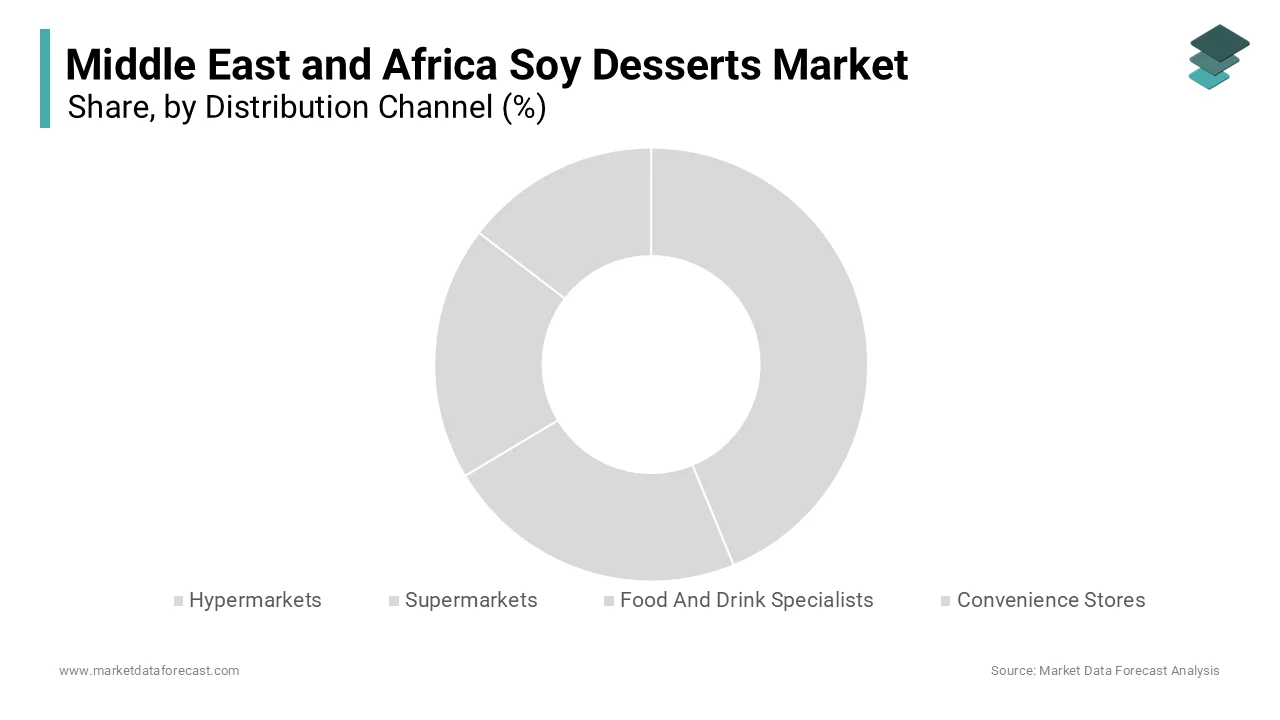
The hypermarkets and supermarkets segment led the Middle East and Africa soy desserts market and captured a significant share in 2025. This leading position of the segment was attributed to its extensive reach, cold chain capabilities, and ability to offer a wide variety of plant-based products under one roof. These large-format retailers serve as the primary touchpoint for mainstream consumers seeking health-orientated food options in urban centres across the region.
The perishable nature of soy desserts such as puddings, yoghurts and ice cream alternatives necessitates robust cold chain logistics which hypermarkets and supermarkets are uniquely equipped to provide. Unlike smaller retail formats, these large outlets maintain consistent refrigeration temperatures from storage to display, ensuring product integrity and extending shelf life. According to sources, capital investment in Middle Eastern cold storage networks is expanding robustly year-over-year to support skyrocketing consumer demand for fresh, frozen, and temperature-sensitive food items. As per the Food and Agriculture Organization of the United Nations, post-harvest losses for perishable goods in Africa can exceed 30 per cent without proper temperature control, making the advanced logistics of major supermarket chains critical for market viability. Retail giants like Carrefour, Spinneys and Shoprite have invested heavily in dedicated chilled aisles for plant-based products, allowing manufacturers to distribute sensitive soy desserts without spoilage risks. This reliability builds consumer trust as shoppers associate large supermarkets with higher quality standards. The ability to stock diverse brands and flavours in a temperature-controlled environment encourages trial and repeat purchases. Manufacturers prioritise partnerships with these retailers to ensure their products reach consumers in optimal condition. The logistical advantage of hypermarkets thus creates a high barrier to entry for other channels securing their dominant position in the distribution landscape.
The convenience of one-stop shopping offered by hypermarkets and supermarkets significantly drives the volume sales of soy desserts as consumers prefer to purchase all grocery items, including speciality health foods, in a single trip. Busy urban professionals and families in the Middle East and Africa increasingly value time efficiency, leading to larger basket sizes during weekly shopping excursions. According to sources, over 60 per cent of household grocery spending in the Gulf Cooperation Council countries occurs in hypermarkets and supermarkets, reflecting their central role in food procurement. As per a study, the rise of dual-income households in cities like Dubai, Johannesburg and Cairo has amplified the demand for convenient shopping experiences where niche products like soy desserts are readily available alongside staples. Retailers leverage this behaviour by placing soy desserts in prominent positions within the health food or dairy alternative sections, increasing visibility and impulse buys. Promotional activities such as bundle deals and tasting stations further enhance engagement and conversion rates. The broad demographic reach of these stores ensures that soy desserts are exposed to both early adopters and curious mainstream shoppers. This mass exposure combined with the ease of access makes hypermarkets and supermarkets the most effective channel for driving widespread adoption and sustaining high sales volumes for soy-based dessert products.
On the other hand, the food and drink specialists segment is on the rise and is expected to be the fastest-growing segment in the market by witnessing a CAGR of 8.5% over the forecast period due to the proliferation of specialty health food stores, vegan cafes and gourmet boutiques that cater to niche consumer segments.
The emergence of specialized health food stores and vegan boutiques across major cities in the Middle East and Africa is accelerating the distribution of soy desserts to targeted consumer groups. These outlets curate high-quality plant-based products, offering expert advice and a focused shopping experience that appeals to health-conscious and ethically motivated buyers. According to studies, the operational footprint of specialty health food retailers in South Africa and the United Arab Emirates has expanded significantly to mirror a broader, sustained consumer demand for clean-label, functional, and plant-based foods. These retailers educate consumers about the benefits of soy, addressing misconceptions and providing recipe ideas that enhance product utility. The personalised service and community engagement fostered by specialty shops create strong customer relationships that drive repeat business. Consumers visiting these stores are typically more knowledgeable and willing to pay premium prices for high-quality soy desserts. The focused assortment reduces choice overload, allowing shoppers to discover unique flavours and textures not found in general supermarkets. This niche but highly engaged customer base fuels rapid growth in the specialty channel as it aligns perfectly with the values and preferences of the core soy dessert demographic.
The integration of soy desserts into menus of gourmet cafes and dessert bars is a key driver of growth in the food and drink specialists channel, as it introduces consumers to soy-based treats in an experiential setting. Many upscale cafes in cosmopolitan hubs like Tel Aviv, Cape Town and Riyadh now offer soy milk ice creams, tofu mousses and soy-based pastries to cater to diverse dietary needs. According to Gira Foodservice, independent urban cafes throughout the region are actively expanding their plant-based and dairy-free dessert selections to successfully capture traffic from younger, health-conscious patrons. As per the Specialty Coffee Association, the pairing of specialty coffee with non-dairy desserts has become a popular trend, encouraging cafes to source high-quality soy dessert components from specialized suppliers. This on-premise consumption allows customers to taste soy desserts in a prepared form, reducing hesitation associated with buying packaged products. Positive experiences in cafes often translate into retail purchases as consumers seek to replicate the taste at home. Collaborations between cafe owners and soy dessert manufacturers facilitate product innovation and feedback loops that improve formulations. The visual appeal and social media shareability of artisanal soy desserts served in cafes further amplify awareness. This experiential distribution channel thus plays a crucial role in normalising soy desserts and driving trial among broader audiences beyond the immediate vegan community.
COUNTRY LEVEL ANALYSIS
The Kingdom of Saudi Arabia was the top performer in the Middle East and Africa soy desserts market and accounted for a substantial share in 2025. This dominance of the KSA market was driven by government-led health initiatives and a young population increasingly open to global food trends. The country is undergoing a major transformation in its healthcare sector, aiming to reduce lifestyle diseases, which supports the demand for healthier dessert alternatives. According to the Saudi Ministry of Health tracking data and Vision 2030 health transformation targets, national public health campaigns actively promote balanced diets to combat obesity, which affects approximately 60% to 70% of the adult population, and related chronic conditions like diabetes. As per the USDA Foreign Agricultural Service Retail Foods Annual for Saudi Arabia, the domestic retail food sector surpassed $50 billion with major hypermarket chains proactively expanding healthy retail offerings to meet growing plant-based dairy alternative demand. Local manufacturers are beginning to produce soy desserts infused with traditional flavours like dates and cardamom to appeal to local palates. Regulatory support for food security and local production encourages investment in soy processing facilities. The high disposable income of consumers allows for premium pricing of specialized health products. Social media influence plays a strong role in shaping dietary choices among millennials who are active users of digital platforms. The presence of international hotel chains and restaurants also drives demand for diverse dessert options, including soy-based varieties. These factors combine to create a dynamic and growing market environment for soy desserts in the Kingdom.
The United Arab Emirates followed closely behind in the Middle East and Africa soy desserts market in 2025 because of a highly diverse population and advanced retail infrastructure that facilitates the introduction of innovative plant-based products. The country boasts one of the highest concentrations of health-conscious consumers and expatriates in the region who drive demand for vegan and lactose-free options. According to the Dubai Chamber of Commerce, the food and beverage sector contributes significantly to the non-oil economy, with healthy eating trends gaining momentum among residents. As per sources, the UAE has one of the most developed supermarket networks in the Middle East, ensuring wide availability of imported and local soy dessert brands. Government initiatives promoting wellness tourism and sustainable living further support the growth of plant-based foods. High levels of health awareness among the population lead to proactive seeking of functional foods. The hospitality industry in Dubai and Abu Dhabi frequently features soy desserts in luxury dining establishments, setting trends for the wider market. Strict food safety standards ensure high-quality products, building consumer trust. The cosmopolitan nature of the society encourages experimentation with new flavours and textures. These elements position the UAE as a leader in adopting and popularising soy desserts across the Middle East and Africa region.
Israel occupies a significant position in the Middle East and Africa soy desserts market due to a strong culture of health consciousness, technological innovation in food tech and a high prevalence of lactose intolerance. The country is a global leader in plant-based food innovation with numerous startups developing novel soy and alternative protein desserts. According to the World Population Review, Israel has established a robust domestic market for plant-based sweets due to hosting one of the highest per-capita vegan populations in the world at approximately 5%. As per the Israeli Dairy Council and the Times of Israel, despite stable domestic dairy production baselines, market shifts and rising demand for soy alternatives are primarily driven by cost-of-living adjustments and independent consumer lifestyle choices rather than government-led anti-dairy health campaigns. Local supermarkets widely stock a variety of soy puddings, ice creams and yoghurts from both domestic and international brands. The high level of education and health literacy among consumers drives informed purchasing decisions. Research institutions collaborate with food companies to improve the taste and texture of soy desserts, making them more appealing to mainstream buyers. The small geographic size allows for efficient distribution and rapid market penetration of new products. Cultural openness to innovation and health trends ensures continuous growth in this segment. Israel serves as a testing ground for new soy dessert concepts that may later expand to other regional markets.
South Africa holds a noteworthy share of the regional soy desserts market owing to a well-developed retail sector, high health awareness and a significant population managing lactose intolerance. The country serves as a gateway for plant-based products entering the African continent. According to clinical epidemiological studies archived by the National Institutes of Health (NIH), adult lactase deficiency is highly prevalent within specific regional demographic groups in South Africa, creating a natural, genetically-driven consumer segment for non-dairy alternatives. As per the Consumer Goods Council of South Africa, major retailers like Pick n Pay and Woolworths have dedicated plant-based aisles featuring a wide range of soy desserts. The strong influence of Western dietary trends and a vibrant vegan community drive innovation and demand. Local manufacturers produce affordable soy-based options catering to middle-income consumers. Health campaigns addressing diabetes and heart disease promote the benefits of plant-based diets. The mature retail infrastructure ensures efficient distribution even to semi-urban areas. Consumer education regarding the nutritional benefits of soy is relatively advanced compared to other African nations. Economic challenges sometimes limit discretionary spending, but the health imperative sustains demand. South Africa leads the region in terms of product variety and market maturity for soy desserts.
Ethiopia is an emerging player in the regional soy desserts market due to local soybean production and government efforts to improve nutrition. While currently small, the market is growing as urbanisation increases and health awareness spreads. According to the Ministry of Agriculture, Ethiopia is one of the few African countries with substantial local soybean cultivation, providing a cost advantage for local manufacturers. As per the World Food Programme, initiatives to combat malnutrition include promoting soy-based foods as affordable protein sources. Urban centres like Addis Ababa are seeing the emergence of health food stores and cafes offering soy-based products. Traditional diets are evolving with younger populations adopting modern eating habits. Local entrepreneurs are developing simple soy desserts like puddings and ice creams using locally sourced ingredients. Limited cold chain infrastructure remains a challenge, but investments are improving. Government support for agro-processing industries encourages value addition to raw soybeans. Cultural acceptance of soy as a food source is growing due to educational campaigns. The low base effect means that even small increases in adoption result in high percentage growth. Ethiopia offers long-term potential as infrastructure and consumer awareness develop.
COMPETITIVE LANDSCAPE
The competitive landscape in the Middle East and Africa soy desserts market is characterized by a mix of established multinational dairy companies diversifying into plant based segments and agile local startups focusing on niche health trends. Large incumbents leverage their extensive distribution networks and brand recognition to introduce soy desserts alongside traditional dairy products creating immediate visibility in mainstream retail channels. Local entrepreneurs compete by offering authentic flavors and affordable price points that resonate with cultural preferences and economic realities. Price competition is intense in mass market segments where consumers are highly sensitive to cost differences between dairy and soy alternatives. Differentiation strategies focus on health claims such as non GMO organic and halal certification to appeal to specific consumer values. Regulatory variations across countries create barriers to entry for smaller players lacking resources for compliance. Private label brands from major supermarket chains pose a threat by offering lower priced alternatives that mimic leading brands. Innovation in texture and flavor remains a key battleground as manufacturers strive to overcome the beany taste associated with soy. Digital marketing plays a crucial role in reaching younger demographics who are more open to experimenting with plant based diets. This dynamic environment requires continuous adaptation and strategic investment to maintain relevance and drive growth in a culturally diverse and economically varied region.
KEY MARKET PLAYERS
Some of the notable companies in the Middle East and Africa soy desserts market are
- The Hershey Company
- Almarai Company
- Tiger Brands Limited
- Whitewave Services Inc.
- Danone Group
- Arla Foods amba
- Dean Foods Co.
Top Players in the Market
- Almarai Company leverages its extensive dairy distribution network across the Gulf Cooperation Council to introduce plant based alternatives including soy desserts to health conscious consumers. The company focuses on product innovation by launching lactose free and vegan friendly options that align with regional dietary preferences. Recently Almarai expanded its research and development capabilities to improve the texture and flavor profiles of soy based puddings ensuring they meet local taste expectations. They also invested in sustainable packaging solutions to appeal to environmentally aware shoppers in Saudi Arabia and neighboring markets. These strategic initiatives strengthen their brand presence as a holistic nutrition provider while capitalizing on the growing demand for functional foods. By utilizing existing cold chain infrastructure Almarai ensures wide availability of perishable soy desserts in hypermarkets and convenience stores maintaining high product quality and consumer trust throughout the region.
- Tiger Brands Limited contributes significantly to the South African soy desserts market through its diverse portfolio of food products including plant based alternatives under various subsidiary brands. The company focuses on affordability and accessibility making soy desserts available to a broader demographic beyond niche health segments. Recently Tiger Brands launched new soy based ice cream variants infused with local flavors such as rooibos and marula to enhance cultural relevance. They also strengthened partnerships with major retail chains like Shoprite and Pick n Pay to secure prominent shelf space in dedicated health food aisles. These actions reinforce their position as a key player in the plant based sector while addressing consumer demand for nutritious and affordable dessert options. Their robust distribution network ensures consistent supply across urban and semi urban areas driving volume growth and brand recognition in the Southern African market.
- Arla Foods amba operates in the Middle East and Africa market by offering premium dairy and plant based products including soy desserts through strategic export partnerships and local collaborations. The company emphasizes high quality standards and sustainability appealing to affluent consumers in the United Arab Emirates and South Africa. Recently Arla Foods introduced a range of organic soy based yogurts and puddings certified for halal compliance to cater to religious and ethical dietary requirements. They also engaged in digital marketing campaigns targeting health conscious millennials and expatriates who seek international quality standards. These efforts enhance brand visibility and trust among discerning customers willing to pay for premium attributes. By focusing on clean label ingredients and transparent sourcing Arla Foods differentiates itself from local competitors. Their commitment to innovation and quality ensures a strong foothold in the competitive premium segment of the regional soy desserts market.
Top Strategies Used by Key Market Participants
Key participants in the Middle East and Africa soy desserts market prioritize product localization by incorporating traditional flavors such as dates cardamom and pistachio to align with regional palates and overcome cultural resistance to plain soy tastes. Companies invest heavily in consumer education campaigns to address misconceptions about genetically modified organisms and highlight the health benefits of soy for lactose intolerant individuals. Strategic partnerships with major hypermarkets and specialty health stores ensure optimal shelf placement and cold chain integrity for perishable items. Manufacturers focus on obtaining halal certification and clear labeling to build trust and comply with religious dietary laws prevalent in the region. Pricing strategies are adapted to offer both premium organic options and affordable mass market variants to cater to diverse economic segments. Innovation in packaging extends shelf life and enhances convenience for urban consumers. Collaborations with local distributors facilitate market entry in fragmented regions with complex regulatory environments. These combined approaches help vendors navigate cultural and logistical challenges while building brand loyalty and expanding their customer base across the diverse Middle East and Africa landscape.
MARKET SEGMENTATION
This research report on the Middle East and Africa soy desserts market is segmented and sub-segmented into the following categories.
By Distribution Channel
- Hypermarkets
- Supermarkets
- Food And Drink Specialists
- Convenience Stores
By Country
- KSA
- UAE
- Israel
- rest of GCC countries
- South Africa
- Ethiopia
- Kenya
- Egypt
- Sudan
- rest of MEA