- Product Description Description
- Table of Contents TOC
- List of Table & Figure LOT
- Get Free Sample PDF Sample PDF
Market Size, 2025
$0.91 BnMarket Estimate, 2026
$0.96 BnMarket Forecast, 2034
$1.53 BnCAGR, 2026–2034
5.98%Middle East and Africa Wellness Supplements Market Size, Growth, Trends & Forecast (2025–2034)
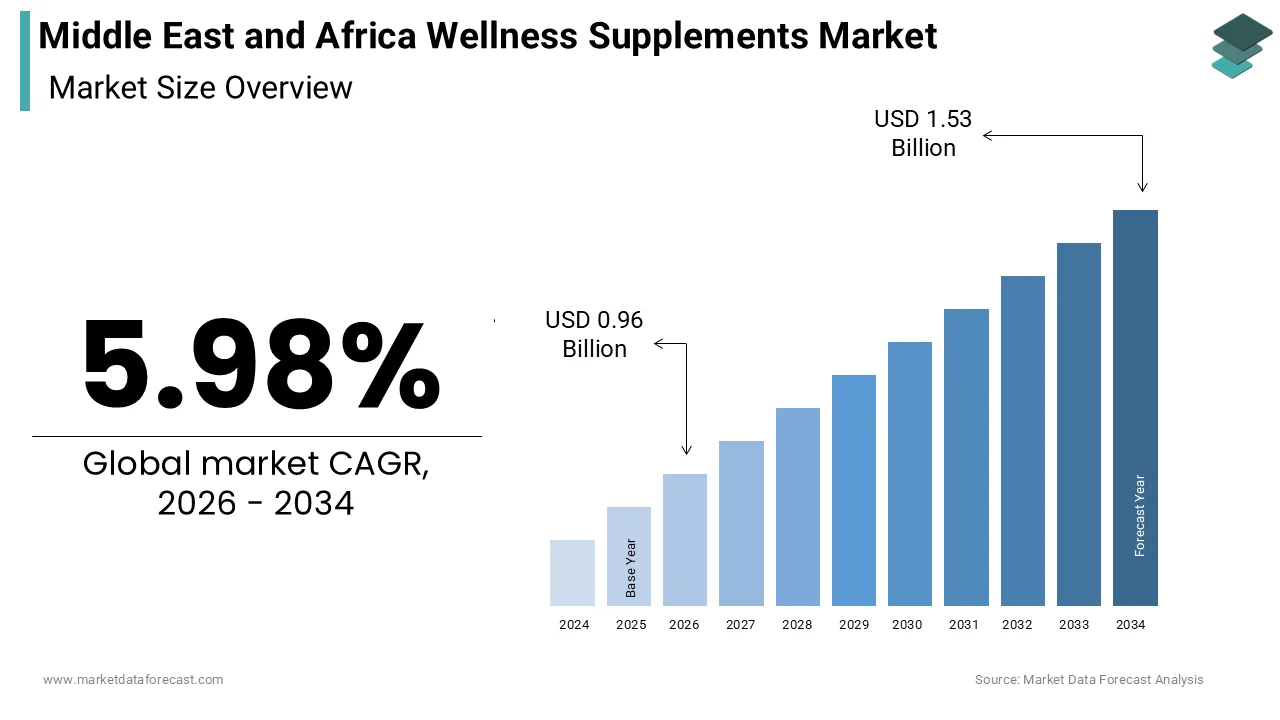
The size of the wellness supplements market in the Middle East and Africa was valued at USD 0.91 billion in 2025, is estimated to reach USD 0.96 billion in 2026, and is projected to expand up to USD 1.53 billion by 2034, registering a compound annual growth rate (CAGR) of 5.98% from 2026 to 2034. Driven by a high prevalence of lifestyle-related chronic diseases like type 2 diabetes, widespread micronutrient deficiencies (such as vitamin D and iron), rapid urbanization, and a strong cultural shift toward preventive healthcare, the regional market continues to modernize across dietary, functional food, and dermo-cosmetic categories.
Key Executive Metrics (At-a-Glance)
- 2025 Base Valuation: USD 0.91 Billion
- 2026 Current Valuation: USD 0.96 Billion
- 2034 Forecast Valuation: USD 1.53 Billion
- Compound Annual Growth Rate (CAGR): 5.98% (2026–2034)
- Dominant Product Segment: Dietary Supplements (holding 36.35% of the regional market share in 2025 driven by vitamins, minerals, and widespread micronutrient needs)
- Fastest-Growing Product Segment: Probiotic Food (estimated to witness a leading CAGR of 12.2% over the forecast period driven by rising awareness of gut-health and immune links)
- Dominant Country: Saudi Arabia (accounting for 25.5% of the regional market share in 2025 backed by Vision 2030 healthcare transformations and preventive health policies)
- Fastest-Growing Country: United Arab Emirates & Egypt (expanding rapidly due to wellness tourism, high health awareness, and expanding urban middle-class populations)
Core Market Drivers
- Rising Chronic Diseases: Escalating incidence of lifestyle-related conditions like type 2 diabetes, obesity, and cardiovascular issues prompting adjunctive supplement usage.
- Preventive Care Adoption: Deepening health consciousness post-pandemic, with consumers proactively seeking immunity-boosting vitamins and minerals.
Primary Market Restraints & Challenges
- Regulatory Fragmentation: The absence of harmonized frameworks and distinct national regulations across MEA creating compliance complexities.
- Counterfeit Products: Widespread circulation of substandard or fake supplements in informal retail and online channels undermining consumer trust.
Middle East and Africa Wellness Supplements Market Segmentation Breakdown
| Segment Category | Leading Sub-Segment | Fastest-Growing Sub-Segment |
|---|---|---|
| By Product | Dietary Supplements (36.35% share in 2025 via vitamins, minerals, and herbal extracts) | Probiotic Food (12.2% CAGR driven by gut health, immunity, and digestive awareness) |
| By Region | Saudi Arabia (25.5% share in 2025 supported by Vision 2030 and strong health initiatives) | UAE & Egypt (strong growth via medical tourism, retail expansion, and healthcare reforms) |
Major Industry Players Profiled
Key enterprises shaping the competitive Middle East and Africa wellness supplements market include Nestlé S.A., Pfizer Consumer Healthcare, Amway Corporation (Nutrilite), Abbott Laboratories, Otsuka Holdings Co., Ltd., Herbalife Ltd., Archer Daniels Midland Company, Glanbia plc, NBTY, Inc., GNC Holdings Inc., and Nu Skin Enterprises, Inc.
Middle East and Africa Wellness Supplements Market Size
The size of the wellness supplements market in the Middle East and Africa was calculated to be USD 0.91 billion in 2025 and is anticipated to be worth USD 1.53 billion by 2034, from USD 0.96 billion in 2026, growing at a CAGR of 5.98% during the forecast period.
Wellness supplements encompass a diverse array of dietary products designed to enhance overall health, prevent disease, and support physiological functions beyond basic nutrition. This sector includes vitamins, minerals, herbal extracts, probiotics, and specialized formulations targeting immunity, digestive health, and mental well-being. The market is deeply influenced by the region's rich tradition of using natural remedies and botanicals, which are now being modernized through scientific validation and standardized manufacturing. According to the International Diabetes Federation, 84.7 million adults were living with diabetes in the Middle East and North Africa in 2024, representing approximately 17.6% of the adult population. Furthermore, as per the data from the Food and Agriculture Organization, micronutrient deficiencies remain a public health concern in several African nations, particularly regarding iron and vitamin A, necessitating targeted nutritional interventions. The market is characterized by a blend of traditional practices and modern wellness trends, with increasing urbanization leading to lifestyle changes that favor convenience and proactive health management. Regulatory bodies across the region are strengthening frameworks to ensure product safety and efficacy, fostering consumer trust. The integration of digital health platforms further facilitates access to personalized supplement recommendations, marking a shift towards holistic and preventative healthcare strategies in the region.
MARKET DRIVERS
Rising Prevalence of Lifestyle-Related Chronic Diseases
The escalating incidence of lifestyle-related chronic diseases is one of the major factors driving the wellness supplements market expansion in the Middle East and Africa. Rapid urbanization and shifting dietary patterns have led to increased rates of obesity, type 2 diabetes, and hypertension across the region. According to the International Diabetes Federation, the Middle East and North Africa region has one of the highest prevalence rates of diabetes globally, with approximately 84.7 million adults affected in 2024. Consumers are increasingly turning to supplements such as chromium, magnesium, and omega-3 fatty acids to manage blood sugar levels and support cardiovascular health. As per the World Health Organization, cardiovascular diseases account for nearly 45% of all deaths in the Eastern Mediterranean Region. The growing middle class in Gulf Cooperation Council countries has higher disposable income to spend on health-enhancing products, further driving demand. Healthcare providers are also recommending supplements as adjunct therapies to conventional treatments, validating their role in disease management.
Increasing Health Consciousness and Preventive Care Adoption
A profound shift in consumer mindset towards health consciousness and preventive care is further fuelling the growth of the Middle East and Africa wellness supplements market. Individuals are becoming more informed about the benefits of maintaining optimal nutrient levels for long-term vitality and immune function. According to a survey by NielsenIQ, 68% of consumers in the Middle East stated that they actively seek products that boost immunity and overall well-being. The post-pandemic era has accelerated this trend, with a marked increase in the consumption of vitamin C, vitamin D, and zinc supplements. As per the European Society of Clinical Nutrition and Metabolism, vitamin D deficiency occurs in up to 80% of individuals in Middle Eastern countries. Social media influencers and health practitioners play a crucial role in educating the public about the benefits of regular supplement intake. Governments in countries like Saudi Arabia and the United Arab Emirates are launching national wellness initiatives that encourage healthy living and nutritional balance.
MARKET RESTRAINTS
Lack of Standardized Regulatory Frameworks across Regions
The absence of harmonized and stringent regulatory frameworks across the Middle East and Africa is hampering the regional market expansion. Each country often has distinct regulations regarding ingredient approval, labeling requirements, and quality control standards, creating complexity for manufacturers and distributors. According to the World Health Organization, many African nations lack comprehensive regulatory authorities capable of effectively monitoring the safety and efficacy of dietary supplements. This regulatory ambiguity allows substandard or counterfeit products to enter the supply chain, undermining consumer trust. As per the Gulf Standardization Organization, discrepancies still exist in the classification of certain herbal ingredients and novel compounds, even as member states move toward alignment. Inconsistent enforcement of regulations results in varying product quality, making it difficult for reputable brands to differentiate themselves from lower-quality competitors. The lack of clear guidelines also delays product launches as companies navigate bureaucratic hurdles in multiple jurisdictions.
Prevalence of Counterfeit And Substandard Products
The widespread presence of counterfeit and substandard wellness supplements acts as a major barrier to market integrity and consumer safety in the Middle East and Africa. The lucrative nature of the health supplement industry has attracted illicit manufacturers who produce fake products containing incorrect dosages, harmful contaminants, or inactive ingredients. According to Interpol, coordinated operations have led to massive seizures of synthetic drugs and illicit products valued at approximately 6.5 billion dollars in 2025. These fraudulent products pose serious health risks to consumers and erode trust in legitimate brands. As per the Pharmaceutical Security Institute, incidents of fraud in the Middle East involving health products increased by 15% in 2024. Consumers often struggle to distinguish between authentic and fake products due to sophisticated packaging replicas and a lack of verification tools. This issue is exacerbated in informal retail channels and online marketplaces where oversight is minimal.
MARKET OPPORTUNITIES
Expansion of E-Commerce and Digital Health Platforms
The rapid expansion of e-commerce and digital health platforms is a substantial opportunity for the Middle East and Africa wellness supplements market. Increasing internet penetration and smartphone usage enable consumers to access a wider variety of supplements and receive personalized health recommendations online. According to Statista, e-commerce sales in the Middle East and Africa are projected to grow by 12% annually through 2026. Online platforms allow manufacturers to reach remote and underserved populations who lack access to specialized physical stores. Telemedicine services are increasingly integrating supplement recommendations into patient care plans, creating a seamless pathway from diagnosis to purchase. As per the International Telecommunication Union, 5G networks are estimated to cover 55% of the world's population in 2025, although connectivity quality gaps persist in lower-income regions. Subscription models and automated replenishment services enhance customer retention and convenience.
Growing Demand for Herbal and Traditional Remedies
The growing demand for herbal and traditional remedies offers a lucrative opportunity for innovation and differentiation in the wellness supplements market. The Middle East and Africa have rich histories of using indigenous plants such as black seed, moringa, and baobab for medicinal purposes. Modern consumers are seeking natural alternatives that align with cultural traditions while offering scientifically backed benefits. According to the World Health Organization, approximately 80% of the population in Africa relies on traditional medicine for primary healthcare. Manufacturers can leverage this trend by developing standardized extracts and formulations that combine traditional knowledge with modern processing techniques. As per the African Union, the commercialization of indigenous knowledge systems is a priority for economic development. Certifications such as organic and fair trade further enhance the appeal of these products to ethical consumers. Collaborations with local farmers ensure sustainable sourcing and community benefit.
MARKET CHALLENGES
Supply Chain Instabilities and Logistics Constraints
Supply chain instabilities and logistics constraints present significant challenges to the efficient distribution of wellness supplements in the Middle East and Africa. Infrastructure deficits, including inadequate transportation networks and storage facilities, hinder the timely delivery of temperature-sensitive products. According to the World Bank, logistics performance remains low in several African countries due to friction from regulatory differences and compliance costs. These inefficiencies can compromise product quality, particularly for probiotics and liquid supplements that require strict temperature control. As per the African Development Bank, fragile supply chains pull down job creation and industrial growth while slowing regional competitiveness. Political instability in certain regions further disrupts trade routes and creates uncertainty for investors. Currency fluctuations and import restrictions also affect the affordability and availability of imported ingredients and finished goods.
Low Consumer Awareness and Misinformation
Low consumer awareness and the prevalence of misinformation regarding the benefits and usage of wellness supplements pose a persistent challenge in the Middle East and Africa. Many consumers lack accurate information about appropriate dosages, potential interactions with medications, and the specific health conditions that supplements can address. According to the Journal of Public Health in Africa, a lack of health literacy and reliance on unverified sources for medical advice can lead to inappropriate supplement use. This knowledge gap can result in ineffective consumption patterns or adverse health effects, discouraging long-term adoption. As per the World Health Organization, there is an urgent need for improved health literacy programs to educate communities about evidence-based nutritional practices. Misinformation spread through social media further complicates the landscape, with false claims about miracle cures gaining traction. Regulatory bodies struggle to monitor and correct misleading advertising effectively.
REPORT COVERAGE
| REPORT METRIC | DETAILS |
| Market Size Available | 2025 to 2034 |
| Base Year | 2025 |
| Forecast Period | 2026 to 2034 |
| CAGR | 5.98% |
| Segments Covered | By Product, And Region |
| Various Analyses Covered | Global, Regional & Country Level Analysis; Segment-Level Analysis; DROC, PESTLE Analysis; Porter’s Five Forces Analysis; Competitive Landscape; Analyst Overview of Investment Opportunities |
| Regions Covered | KSA, UAE, Israel, the rest of GCC countries, South Africa, Ethiopia, Kenya, Egypt, Sudan, and the Rest of MEA |
| Market Leaders Profiled | Nestle S.A., Abbott Laboratories, Amway, Otsuka Holdings Co., Ltd., Herbalife Ltd., Archer Daniels Midland Company, Glanbia plc, NBTY, Inc., GNC Holdings Inc., Nu Skin Enterprises, Inc., Grupo Omnilife, Forever Living, Pola, Inc., Shaklee Corporation, and Usana Health Sciences Inc. |
SEGMENTAL ANALYSIS
By Product Insights
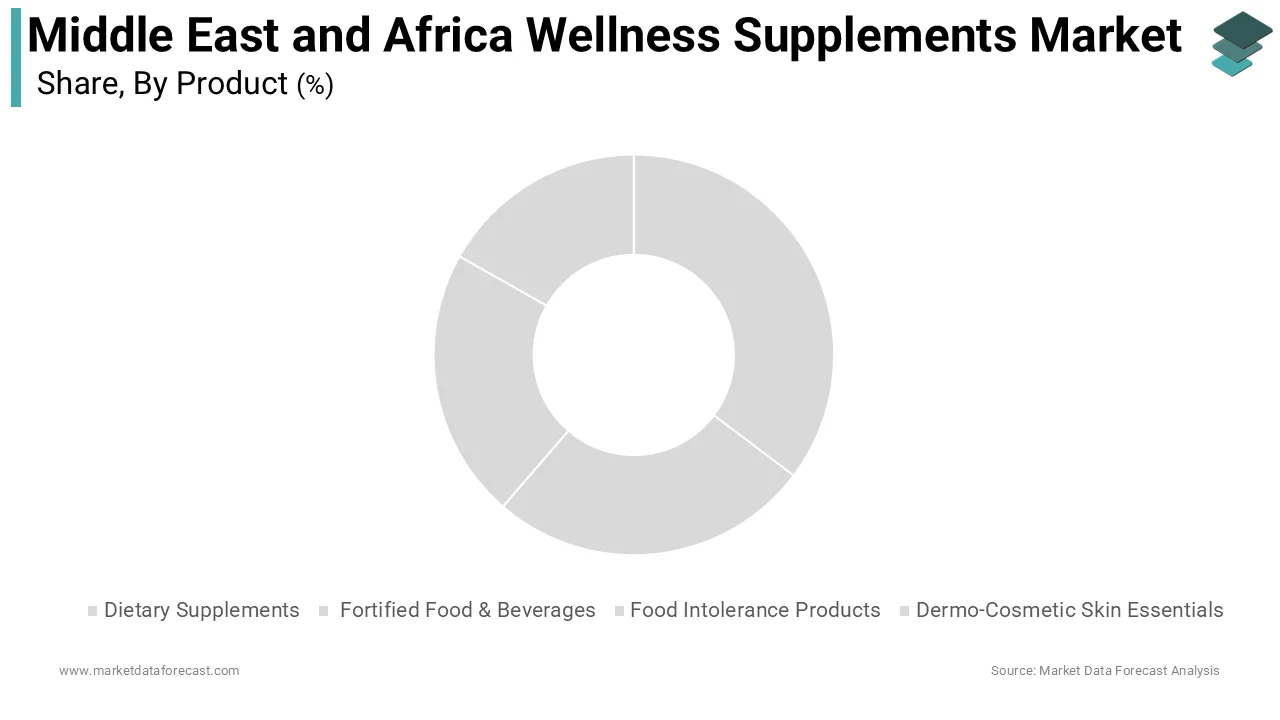
The dietary supplements segment was the leading segment in the Middle East and Africa wellness supplements market by holding 36.35 of the regional market share in 2025. This category encompasses a broad range of vitamins, minerals, and herbal extracts consumed to supplement the diet. The dominance is driven by the widespread recognition of micronutrient deficiencies and the cultural inclination towards preventive health measures. The primary driver for the dominance of dietary supplements is the high prevalence of micronutrient deficiencies across the Middle East and Africa regions. Vitamin D deficiency is particularly widespread due to cultural clothing practices and extreme heat that limit sun exposure, despite the sunny climate. According to the World Health Organization, approximately 80% of the population in some Middle Eastern countries suffers from vitamin D deficiency. Similarly, as per the United Nations Children's Fund, iron deficiency affects nearly 40% of women and children in sub-Saharan Africa. These public health challenges compel governments and healthcare providers to recommend regular supplement intake. Data from the Global Nutrition Report indicates that micronutrient malnutrition remains a critical issue affecting over 2 billion people globally.
On the other side, the probiotic food segment is estimated to witness a CAGR of 12.2% over the forecast period in this regional market, owing to the increasing awareness of gut health and its connection to overall immunity and mental well-being. The accelerated growth of probiotic food is primarily driven by rising consumer awareness of the critical link between gut health and overall immunity. The post-pandemic era has heightened interest in immune-boosting foods, with probiotics recognized for their role in enhancing digestive health and strengthening the body's defense mechanisms. As per the International Scientific Association for Probiotics and Prebiotics, research linking gut health to immune function has increased significantly. In the Middle East and Africa, where infectious diseases remain a concern, consumers are actively seeking functional foods that offer protective benefits. According to NielsenIQ, sales of probiotic yogurts and drinks in the region grew by 18% in 2024. Educational campaigns by healthcare professionals and nutritionists have further reinforced the importance of maintaining a balanced gut flora.
REGIONAL ANALYSIS
Saudi Arabia Wellness Supplements Market Analysis
Saudi Arabia held the leading position in the Middle East and Africa wellness supplements market by holding 25.5% of the regional market share and is expected to maintain its dominant trajectory during the forecast period. The market in the Kingdom is characterized by strong government support for healthcare transformation and a young, health-conscious population. Vision 2030 initiatives prioritize preventive healthcare and lifestyle improvements, driving demand for wellness products. According to the Ministry of Health, national campaigns are actively encouraging healthy eating and supplementation to address obesity and diabetes. As per the General Authority for Statistics, 94.8% of adults in Saudi Arabia enjoyed basic healthcare coverage in 2024. The growing fitness culture, supported by new sports facilities and events, further boosts demand for protein supplements and vitamins. Local manufacturing initiatives under the National Industrial Development and Logistics Program aim to reduce reliance on imports, fostering domestic production of supplements. Regulatory reforms by the Saudi Food and Drug Authority have streamlined approval processes for new health products, encouraging international brands to enter the market.
United Arab Emirates Wellness Supplements Market Analysis
The United Arab Emirates captured a notable share of the Middle East and Africa wellness supplements market in 2025 and is likely to witness steady growth through the forecast years. The market in the UAE is defined by a highly developed healthcare infrastructure and a cosmopolitan population with high health awareness. Dubai and Abu Dhabi are hubs for wellness tourism and luxury health products, driving demand for premium supplements. According to the Dubai Health Authority, the emirate aims to become a global center for medical tourism. As per the Department of Economic Development, the health and wellness sector in Dubai grew by 12% in 2024. The presence of numerous international health brands and specialized retail outlets ensures wide product availability. High prevalence of vitamin D deficiency due to indoor lifestyles drives consistent demand for supplementation. The government’s focus on smart health initiatives and digital health records facilitates personalized wellness recommendations. Additionally, the large expatriate community brings diverse health preferences and trends, enriching the market variety.
South Africa Wellness Supplements Market Analysis
South Africa is anticipated to witness a healthy CAGR in the Middle East and Africa wellness supplements market during the forecast period. The South African market is influenced by a dual economy with a sophisticated private healthcare sector and a growing middle class. The country has a well-established retail network and a high level of health literacy compared to other African nations. According to Stats SA, the middle class in South Africa accounts for nearly 40% of the population. As per the Council for Scientific and Industrial Research, the local nutraceutical industry is expanding with increased investment in research and development. High rates of non-communicable diseases such as hypertension and diabetes motivate consumers to seek preventive solutions. The popularity of traditional African medicines alongside modern supplements creates a unique market dynamic. Regulatory oversight by the South African Health Products Regulatory Authority ensures compliance with safety standards. The presence of major international retailers and local pharmacies facilitates widespread distribution.
Egypt Wellness Supplements Market Analysis
Egypt is expected to achieve robust performance throughout the forecast period due to a large population and increasing urbanization, which leads to lifestyle-related health issues. The government is implementing health insurance reforms that emphasize preventive care, boosting supplement adoption. According to the Central Agency for Public Mobilization and Statistics, Egypt’s population exceeded 110 million in 2024. As per the Ministry of Health and Population, efforts to combat micronutrient deficiencies through fortification and supplementation programs are ongoing. The rising middle class in Cairo and Alexandria is increasingly adopting Western wellness trends, including gym culture and dietary supplements. Local pharmaceutical companies are expanding into the nutraceutical space, offering affordable alternatives to imported brands. Regulatory improvements by the Egyptian Drug Authority aim to streamline product registration and enhance market transparency.
Israel Wellness Supplements Market Analysis
Israel did well in 2025 and is likely to continue its path of technological leadership during the forecast period. The market in Israel is characterized by advanced technological innovation and a high standard of living. The country is a global leader in health tech and biotechnology, fostering the development of innovative supplement formulations. According to the Israeli Ministry of Health, the population has one of the highest life expectancies globally. As per the Central Bureau of Statistics, household spending on health and wellness products remains among the highest in the region. The vibrant startup ecosystem produces cutting-edge personalized nutrition solutions based on genetic and microbiome data. High health literacy and access to information empower consumers to make informed choices. The kosher certification requirement influences product formulation and labeling, creating a distinct market segment. Regulatory standards are stringent, ensuring high quality and safety of supplements. The integration of digital health apps with supplement recommendations enhances user engagement.
COMPETITION OVERVIEW
The Middle East and Africa Wellness Supplements Market features a competitive landscape characterized by a mix of multinational corporations and local manufacturers. Global giants leverage brand recognition and extensive resources to dominate premium segments while local players compete on price and cultural relevance. Competition intensifies as companies strive to differentiate through unique formulations and targeted health benefits. Regulatory variations across countries create barriers to entry, requiring firms to adapt strategies for each market. Price sensitivity among consumers drives competition for affordable yet effective products. Counterfeit goods pose a significant challenge, undermining trust in legitimate brands and forcing companies to invest in authentication technologies. Digital channels are becoming crucial battlegrounds with brands vying for online visibility and customer engagement. Collaborations with healthcare professionals enhance credibility and influence purchasing decisions. Innovation in delivery formats such as gummies and powders attracts younger demographics. The market remains fragmented with no single entity holding absolute dominance, allowing room for niche players to thrive. Continuous adaptation to local preferences and regulatory changes is essential for sustained success in this dynamic environment.
KEY MARKET PLAYERS
A few major players of the Middle East and Africa Wellness Supplements Market include
- Nestle S.A
- Abbott Laboratories
- Amway
- Otsuka Holdings Co., Ltd
- Herbalife Ltd
- Archer Daniels Midland Company
- Glanbia plc
- NBTY, Inc
- GNC Holdings Inc
- Nu Skin Enterprises, Inc
- Grupo Omnilife
- Forever Living
- Pola, Inc
- Shaklee Corporation
- Usana Health Sciences Inc
Top Strategies Used by the Key Market Participants
Key players in the Middle East and Africa Wellness Supplements Market employ several strategic initiatives to maintain competitiveness and drive growth. Product localization is a primary strategy with companies adapting formulations to address regional health issues such as vitamin D deficiency and diabetes. Strategic partnerships with local distributors and healthcare providers enhance market access and credibility. Digital transformation efforts include launching e-commerce platforms and mobile apps for personalized health recommendations. Investment in clinical research validates product efficacy and builds consumer trust. Marketing campaigns focus on education and awareness to combat misinformation and highlight preventive benefits. Regulatory compliance ensures adherence to varying national standards, facilitating smoother market entry. Sustainability initiatives appeal to environmentally conscious consumers and differentiate brands. These multifaceted strategies enable participants to navigate complex market dynamics and meet evolving consumer demands effectively.
Leading Players in the Middle East And Africa Wellness Supplements Market
- Nestlé Health Science is a global leader in nutritional health with a significant presence in the Middle East and Africa region. The company offers a diverse portfolio of medical nutrition and wellness supplements tailored to specific health needs, such as diabetes management and immune support. Recent actions include expanding its manufacturing capabilities in South Africa to enhance local supply chain efficiency and reduce dependency on imports. Nestlé Health Science collaborates with healthcare professionals to promote evidence-based nutritional solutions, ensuring high standards of quality and efficacy. The company invests heavily in research and development to create innovative products that address regional health challenges such as micronutrient deficiencies. By leveraging its global expertise and local market knowledge, Nestlé Health Science strengthens its position as a trusted provider of science-backed wellness solutions. Their commitment to sustainability and community health initiatives further enhances brand loyalty and market penetration across diverse demographics in the region.
- Pfizer Consumer Healthcare is a major player in the Middle East and Africa wellness supplements market, known for its trusted brands such as Centrum and Caltrate. The company focuses on delivering high-quality vitamins and minerals that support overall health and well-being. Recent strategies involve launching targeted marketing campaigns to educate consumers about the importance of preventive healthcare and proper supplementation. Pfizer has expanded its distribution networks in key markets like Egypt and Saudi Arabia to improve product accessibility in both urban and rural areas. The company adheres to strict regulatory standards, ensuring product safety and reliability, which builds consumer trust. Pfizer also engages in partnerships with local pharmacies and healthcare providers to offer personalized nutritional advice. By combining scientific rigor with consumer-centric approaches, Pfizer Consumer Healthcare maintains a strong competitive edge. Their focus on innovation and quality assurance continues to drive growth and reinforce their leadership in the regional wellness supplements sector.
- Amway Corporation is a prominent direct selling company with a robust presence in the Middle East and Africa wellness supplements market through its Nutrilite brand. The company emphasizes natural ingredients and sustainable sourcing practices, appealing to health-conscious consumers. Recent actions include enhancing digital platforms to facilitate easier access to products and personalized health consultations for customers in the region. Amway invests in community empowerment programs that promote healthy lifestyles and nutritional education. The company leverages its extensive network of independent business owners to reach diverse customer segments effectively. By focusing on transparency and quality control, Amway builds strong relationships with consumers who value organic and plant-based supplements. Their commitment to environmental sustainability and social responsibility resonates with modern buyers seeking ethical brands. Amway’s strategic focus on digital transformation and customer engagement strengthens its market position and drives sustained growth in the competitive wellness supplements landscape across the Middle East and Africa.
MARKET SEGMENTATION
This research report on the Middle East and Africa wellness supplements market has been segmented and sub-segmented based on the following categories.
By Product
- Dietary Supplements
- Vitamin
- Mineral
- Protein
- Herbal
- Fortified Food & Beverages
- Omega Fatty Acid
- Probiotic Food
- Branded Iodinated Salt
- Branded Wheat Flour
- Energy Drinks
- Sports Drinks
- Fortified Juices
- Food Intolerance Products
- Gluten-free
- Lactose-free
- Diabetic Food
- Dermo-Cosmetic Skin Essentials
- Anti-Aging
- Anti-Cellulite
- Anti-Acne Supplements
By Region
- KSA
- UAE
- Israel
- The rest of the GCC countries
- South Africa
- Ethiopia
- Kenya
- Egypt
- Sudan
- Rest of MEA