- Product Description Description
- Table of Contents TOC
- List of Table & Figure LOT
- Get Free Sample PDF Sample PDF
Market Size, 2025
$2.69 BnMarket Estimate, 2026
$2.86 BnMarket Forecast, 2034
$4.63 BnCAGR, 2026–2034
6.22%Global Medical Display Market Size
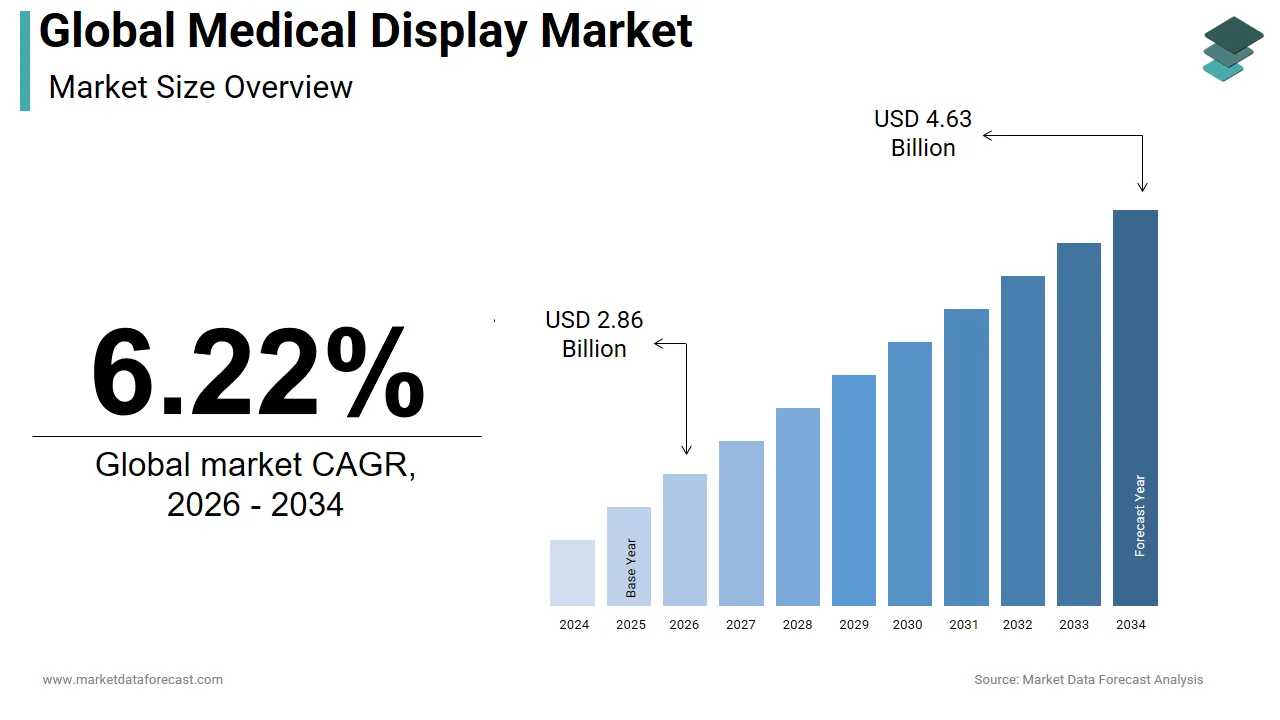
The global medical display market was valued at USD 2.69 billion in 2025, is estimated to reach USD 2.86 billion in 2026, and is projected to reach USD 4.63 billion by 2034, growing at a CAGR of 6.22% from 2026 to 2034.
Medical displays are one of the fastest-growing segments of the worldwide imaging market, thanks to technological advancements. The image display system's appropriate and repeatable performance is a critical component of data technology platforms in a modernized radiology department. In addition, medical imaging equipment has gained importance due to advances in imaging technology, an aging population, changing epidemiological patterns, and changing patient care practices. The clinical area relies heavily on imaging technologies for improved diagnostic and therapeutic procedure performance. In medical imaging, medical displays are critical because they allow doctors, surgeons, and patients to see a real-time image of an organ or a specific location. Medical displays differ from standard displays because they have higher contrast ratios, better brightness, and better grayscale output. This high-resolution display is useful during surgeries because it aids in the differentiation of vascular structures in the organ and the evaluation of pathological areas. It's no wonder, then, that medical-grade screens are employed in dental, diagnostic, surgical, and radiological settings.
MARKET DRIVERS
The growing prevalence of chronic diseases, increased use of hybrid operating room (OR) technologies, growing desire for minimally invasive treatments and the shorter replacement cycle of medical display technologies majorly boost the growth rate of the medical display market.
One of the primary factors driving the growth of the medical display market is the growing demand for minimally invasive treatments due to benefits such as faster recovery and reduced discomfort. In addition, the surge in the number of diagnostic imaging centers due to the rising diseases, such as COVID-19 among the population, accelerate the market. In addition, the increased adoption of hybrid operating room (OR) technology is likely to fuel growth in the forecast term. Hybrid operating rooms are used for endovascular and vascular surgeries, spinal and neurological surgeries, orthopedic trauma procedures, and cardiac surgeries. This capability allows hospitals to perform advanced surgical operations, increasing the demand for medical displays.
Rapid technological improvements in the imaging sector are one of the other major drivers of the global medical-grade display market. In addition, the increased desire for patient safety and the tiny incision has increased the amount of minimally invasive operations performed, driving the medical-grade display market worldwide. There's also an increasing demand for shorter hospital stays, which is driving up the popularity of minimally invasive procedures like arthroscopy and endoscopy, driving the need for medical-grade displays.
Diagnostic imaging procedures such as X-ray, computed tomography, ultrasound, and medical resonance imaging are increasingly demanded. Furthermore, a considerable increase in healthcare spending from both the private and public sectors would result in increased investment in the construction of healthcare infrastructure, particularly in developing countries, which will boost the medical display market.
MARKET RESTRAINTS
During the forecast period, increased adoption of reconditioned medical displays and market saturation in developed nations impede market growth. The high cost of medical displays compared to ordinary displays is one of the most significant difficulties affecting the market. Before starting their product on the market, medical diagnostic OEMs must price their equipment. Despite making sustainable progress in the global market, Downward pricing pressure owing to its commodity nature, medical displays experience budget constraints which can cause a hindrance in their overall growth rate.
REPORT COVERAGE
| REPORT METRIC | DETAILS |
| Market Size Available | 2025 to 2034 |
| Base Year | 2025 |
| Forecast Period | 2026 to 2034 |
| Segments Covered | By Technology, Panel Size, Resolution, Display Colour, Application, Device & Region. |
| Various Analyses Covered | Global, Regional and Country-Level Analysis, Segment-Level Analysis, Drivers, Restraints, Opportunities, Challenges; PESTLE Analysis; Porter’s Five Forces Analysis, Competitive Landscape, Analyst Overview of Investment Opportunities |
| Regions Covered | North America, Europe, Asia Pacific, Latin America, Middle East & Africa |
| Market Leaders Profiled | Philips Healthcare, Beijing Leadman Biochemistry Ltd., Shanghai United Imaging Healthcare Co Ltd., Hitachi Medical Corporation, Barco, Hologic, Inc., Esaote SpA, EZISURG MEDICAL, Toshiba Medical Systems Corporation, and Carestream Health |
SEGMENTAL ANALYSIS
By Technology Insights
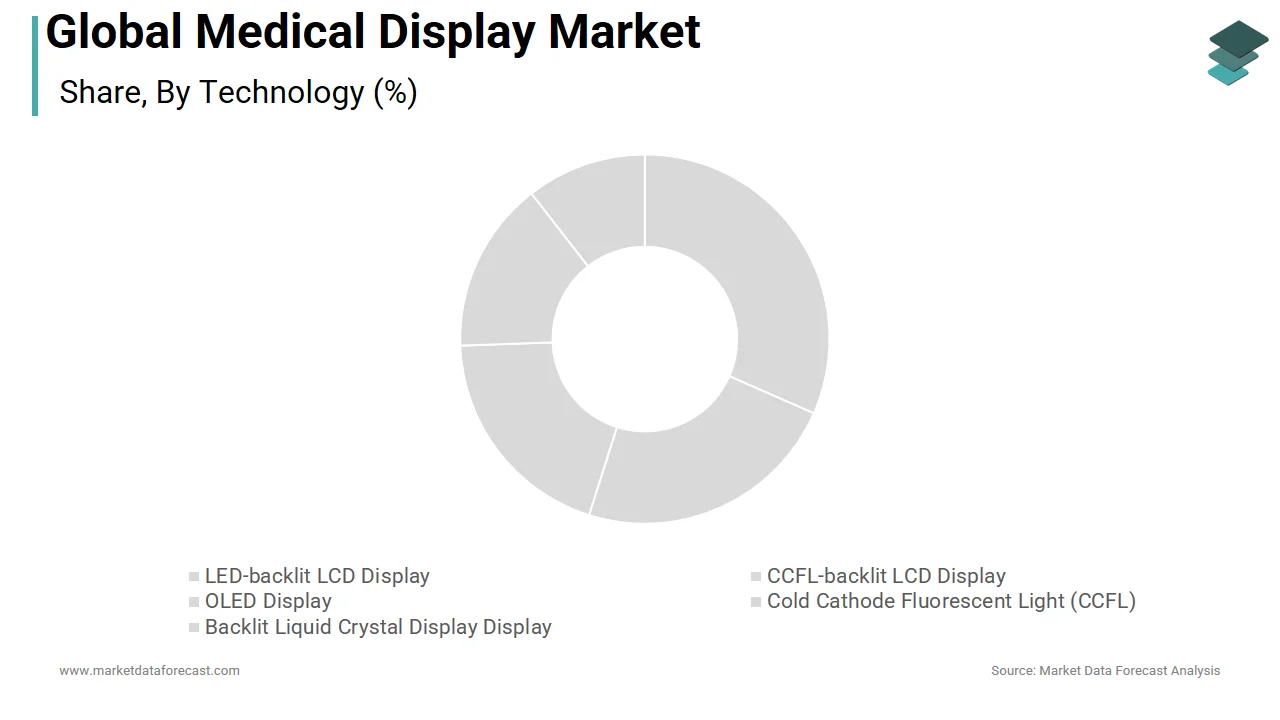
Based on technology, the LED-Backlit LCD segment accounted for the largest share of the global medical display market in 2022 and is projected to grow at a CAGR of 3.9% during the forecast period. A LED-backlit LCD monitor uses UV LEDs to produce white light that is diffused before being filtered into small blue, green, and red light segments. In addition, with the evolution of technology, several current LED backlight monitors now use zone backlighting to increase the energy efficiency of the LED-backlit LCD.
By Panel Size Insights
The market will likely be led by the 27.0–41.9-inch panel segment, which is extensively used in radiology, computed tomography (CT), magnetic resonance imaging (MRI), and ultrasound. Over the forecast period, the Under-22.9-Inch Panel medical display market is expected to develop at a CAGR of 4.5%. With technological developments, screens smaller than 22.9 inches are becoming more prevalent. These displays are less expensive and more effective in use for a variety of purposes when compared to the other sizes for medical displays.
By Display Colour Insights
The Colour display segment accounted for the largest market share and is projected to grow at the highest CAGR during the forecast period. However, color displays in the medical-grade display field can be a polarizing situation. The incorporation of color can be effective, or at the same time, it can result in a situation where there is a large variability of color appearance. This variability makes obtaining a consistent image difficult. This is why the medical community introduced standardization. This standardization ensures that the color medical images that are displayed conform to rules and regulations that allow for the proper and most efficient visualization of the image.
By Application Insights
The diagnostic applications segment accounted for the largest market share and is projected to grow at a CAGR of 5.1% during the forecast period. Due to rising acceptance rates of display systems in various imaging modalities, the market for medical display systems in terms of diagnostic applications is developing. Furthermore, multiple modalities enable healthcare facilities to use medical displays for different departments according to their demands; therefore, the multi-modality application segment is expected to keep second place in terms of value during the evaluation period.
By Device Insights
The desktop sector is predicted to have the most significant share in this category. Some vital procedures, such as surgery, diagnostics, and medical imaging, are better visualized on desktop medical screens. Due to the high image quality and ease of image analysis, this sector holds most of the market share. Another aspect supporting the segmental market value is that the desktop display allows easy connection with endoscopic cameras, imaging, and radiology equipment to visualize medical procedures. Because of its rising uses in medical software imaging and electronic medical records, the all-in-one sector will overtake the desktop segment in terms of value during the research period (EMR).
REGIONAL ANALYSIS
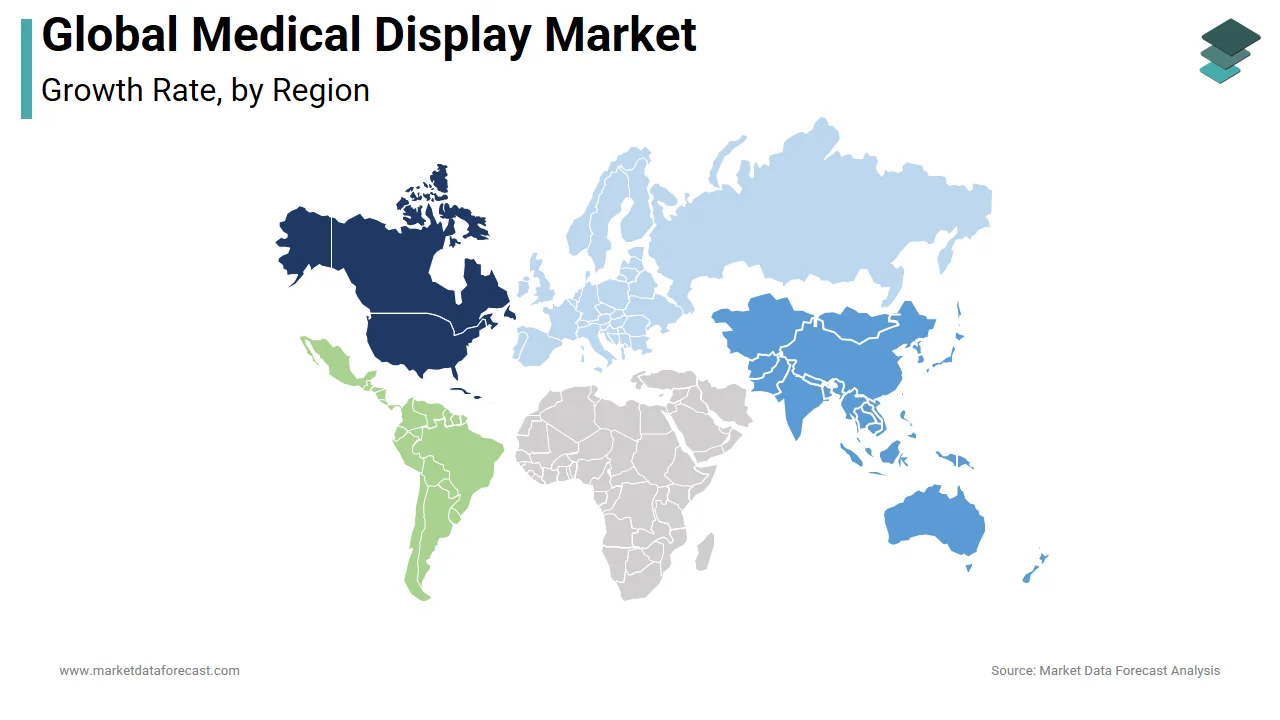
Owing to its early and widespread embrace of new technologies, North America is experiencing the fastest growth in the industry. In addition, increased healthcare spending in both the private and public sectors will aid the development of the medical display market in North America. Because of its well-established healthcare infrastructure, Europe will be an essential market in the coming years. In the coming years, the Asia Pacific market for medical-grade displays will expand, owing to a growth in the number of private and public health healthcare settings in countries like China and India. On the other hand, because of their high cost in developing nations such as the Middle East, Africa, and Latin America, it is projected that medical-grade displays will be widely used.
KEY MARKET PARTICIPANTS
Some of the companies that are playing a dominating role in the global medical display market include
- Philips Healthcare
- Beijing Leadman Biochemistry Ltd.
- Shanghai United Imaging Healthcare Co. Ltd.
- Hitachi Medical Corporation
- Barco
- Hologic, Inc.
- Esaote SpA
- EZISURG MEDICAL
- Toshiba Medical Systems Corporation
- Carestream Health
GLOBAL MEDICAL DISPLAY MARKET NEWS
- Axiomtek Joins Forces with Hailo, a Leading AI Chipmaker, to Launch a Palm-Sized AI Computer – Aristotle (RSC101).
- EIZO Unveils New 19" Medical Monitor with High Brightness for Surgical and Interventional Radiology.
MARKET SEGMENTATION
This research report has segmented and sub-segmented the global medical display market based on the technology, panel size, resolution, display color, application, device & region.
By Technology
- LED-backlit LCD Display
- CCFL-backlit LCD Display
- OLED Display
- Cold Cathode Fluorescent Light (CCFL)
- Backlit Liquid Crystal Display Display
- Others
By Panel Size
- Under 22.9 Inch Panels
- 23.0-26.9 Inch Panels
- 27.0-41.9 Inch Panels
- Above 42 Inch Panels
By Resolution
- Up to 2MP
- 2.1–4MP
- 4.1–8MP
- Above 8MP
By Display Colour
- Color Display
- Monochrome Display
By Application
- Diagnostic
- General Radiology
- Mammography
- Digital Pathology
- Multi-modality
- Surgical/ Interventional
- Dentistry
- Others
By Device
- Desktop
- Mobile
- All-in-one
By Region
- North America
- Europe
- Asia Pacific
- Latin America
- The Middle East and Africa