- Product Description Description
- Table of Contents TOC
- List of Table & Figure LOT
- Get Free Sample PDF Sample PDF
Market Size, 2025
$7.34 BnMarket Estimate, 2026
$7.87 BnMarket Forecast, 2034
$13.72 BnCAGR, 2026–2034
7.2%Global Ultrasound Market Size
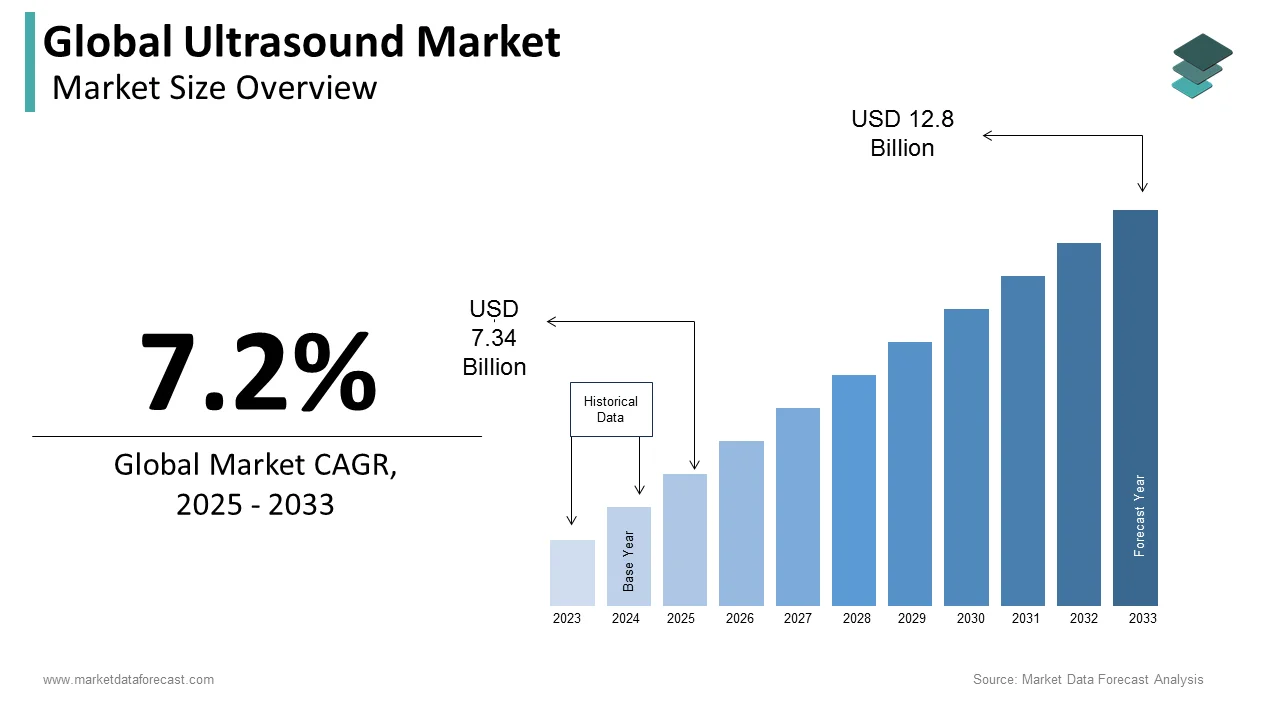
The global ultrasound market was worth US$ 7.34 billion in 2025 and is anticipated to reach a valuation of US$ 13.72 billion by 2034 from US$ 7.87 billion in 2026, and it is predicted to register a CAGR of 7.2% during the forecast period 2026 to 2034.
An ultrasound (also called sonography or ultrasonography) is a safe, noninvasive imaging test that uses high-frequency sound waves to capture real-time pictures or videos of the inside of your body. This technology serves as an essential component of noninvasive medical diagnostics across obstetrics, cardiology, oncology, and emergency medicine. According to the World Health Organization, the global population aged sixty years and older is projected to rise from 1.1 billion in 2023 to 1.4 billion by 2030, creating substantial demand for accessible imaging solutions. In Europe, the proportion of citizens aged 65 and over reached 22.0% and is anticipated to grow to approximately 30% by 2050 as per Eurostat demographic data and projections. Current healthcare expenditure across the European Union totaled 1720 billion euros in 2023, representing 10.0 percent of gross domestic product, according to official European statistical data. Over 600 million to 1 billion ultrasound examinations are conducted globally each year, reflecting entrenched adoption across diverse hospital, clinical, and point-of-care environments. The European Federation for Ultrasound in Medicine and Biology emphasizes standardized competency frameworks to ensure safe practice across member states. These demographic and infrastructural dynamics establish a foundational context for ultrasound technology deployment independent of direct market valuation metrics.
MARKET DRIVERS
Rising Geriatric Population Driving Diagnostic Imaging Demand
The expanding elderly demographic is a key growth enabler for the global ultrasound market. This is due to age-associated health complications requiring frequent monitoring. Individuals aged sixty-five and older exhibit significantly higher prevalence of cardiovascular conditions, malignancies, and musculoskeletal disorders necessitating regular imaging surveillance. According to the World Health Organization, one in six people globally will be aged sixty years or over by 2030 intensifying pressure on diagnostic infrastructure. In Europe, the proportion of citizens aged sixty-five and above reached 22.0%, with projections indicating growth to approximately 30% by 2050 as per Eurostat demographic data. This demographic shift correlates with increased utilization of ultrasound for cardiac assessment, abdominal screening, and vascular evaluation. Data from the Organisation for Economic Co-operation and Development indicates that healthcare spending on diagnostic services rises proportionally with population aging across member states. Ultrasound offers distinct advantages for elderly patients, including portability, absence of ionizing radiation, and real-time imaging capabilities. As chronic disease management becomes central to geriatric care, the demand for accessible, repeatable, and safe imaging modalities escalates. Healthcare systems across Germany, France, and Italy report growing appointment volumes for ultrasound-based diagnostics in primary and secondary care settings. This sustained clinical need, driven by demographic transformation, ensures consistent equipment procurement and service utilization independent of economic fluctuations.
Expanding Applications in Chronic Disease Management and Early Detection
The growing burden of chronic illnesses worldwide amplifies the clinical utility of ultrasound as a first-line diagnostic and monitoring tool, which accelerates the expansion of the ultrasound market. Conditions such as liver disease, diabetes related complications, and cardiovascular disorders benefit from ultrasound-based assessment due to its noninvasive nature and cost-effectiveness. According to peer-reviewed clinical literature, ultrasound remains the most frequently used imaging modality in the practical management of patients with chronic liver diseases. In Germany, 53.7 percent of adults reported living with a chronic disease or long-term health condition in 2024, creating substantial demand for ongoing diagnostic surveillance as per national health survey data. Ultrasound enables early detection of pathological changes, facilitating timely intervention and improved patient outcomes. The technology supports point-of-care applications in emergency departments where rapid assessment of abdominal pain, trauma, or cardiac function influences critical treatment decisions. As per multicenter studies covering fifty emergency departments, point-of-care ultrasound utilization demonstrates growing integration into acute care pathways despite current adoption rates remaining around 4 percent of patient encounters. Advances in image resolution and artificial intelligence integration further enhance diagnostic confidence for complex chronic conditions. Healthcare providers increasingly recognize ultrasound as an essential component of value-based care models emphasizing prevention and early intervention. This clinical imperative drives equipment upgrades, training initiatives, and protocol standardization across diverse care environments.
MARKET RESTRAINTS
Stringent Regulatory Compliance Requirements Under the European Medical Device Regulation
The implementation of the European Union Medical Device Regulation 2017/745 introduces rigorous conformity assessment procedures that elevate development timelines and operational expenditures for ultrasound manufacturers, and that hamper the overall growth of the ultrasound market. According to MedTech Europe, manufacturers must navigate comprehensive clinical evaluation documentation, post-market surveillance obligations, and notified body reviews before achieving CE marking. Compliance costs for small and medium enterprises can represent between 5 percent and 15 percent of annual turnover, creating financial barriers to market entry and innovation, as per industry economic analysis. The regulation mandates enhanced traceability through the European database on medical devices, requiring detailed technical documentation and risk management files for each ultrasound system variant. As per regulatory affairs publications, evolving standards and lengthy approval processes increase compliance costs and delay product launches, impacting competitive positioning. Manufacturers must invest in specialized regulatory affairs personnel, external consultants, and quality management system upgrades to maintain certification. These resource demands disproportionately affect emerging technology developers and limit the pace of iterative product improvements. Furthermore, the transition from previous directives to the current regulation has created backlog pressures at notified bodies, extending certification timelines by twelve to eighteen months. These measures enhance patient safety and device performance. However, they simultaneously constrain market dynamism and increase the unit cost of ultrasound equipment for healthcare purchasers.
Workforce Shortages and Training Limitations in Sonography Practice
Insufficient numbers of trained sonographers and inconsistent educational frameworks across the regional healthcare systems are a critical constraint on ultrasound market expansion. According to the Society of Radiographers, workforce census data reveals persistent vacancy rates and uneven distribution of qualified personnel across urban and rural settings. Imaging volumes are projected to rise by 3 to 4 percent annually, while workforce growth remains limited due to retirements and training bottlenecks, as per healthcare workforce intelligence reports. Sonography training programs vary significantly among European Federation of Radiographer Societies member countries, ranging from short focused courses to postgraduate awards, creating competency disparities. The British Medical Ultrasound Society emphasizes the need for standardized education pathways to ensure consistent practice standards and patient safety. Limited training capacity at academic institutions restricts the pipeline of new practitioners, exacerbating service delivery challenges. In emergency and primary care settings, where point-of-care ultrasound adoption is expanding, the lack of credentialed operators impedes optimal technology utilization. As per survey data covering emergency medicine residency programs, the mean number of point-of-care ultrasound examinations per resident remains variable, reflecting inconsistent curriculum integration. These human resource constraints limit equipment utilization rates and delay return on investment for healthcare facilities. Addressing this gap requires coordinated investment in education infrastructure, standardized certification frameworks, and attractive career pathways to recruit and retain sonography professionals.
MARKET OPPORTUNITIES
Artificial Intelligence Integration Enhancing Diagnostic Precision and Workflow Efficiency
The convergence of artificial intelligence with ultrasound technology opens the door for improving diagnostic accuracy, operational efficiency, and clinical accessibility, which is likely to boost the growth of the ultrasound market. According to recent multicenter research, artificial intelligence-enhanced strategies applied to liver ultrasound images demonstrated significant improvements in diagnostic performance while reducing radiologist workload. AI-powered systems continuously refine imaging protocols through machine learning algorithms that adapt to anatomical variations and pathological patterns as per computational imaging literature. This capability supports less experienced operators in acquiring diagnostic-quality images and interpreting complex findings, thereby expanding ultrasound access in resource-constrained settings. As per industry analysis, artificial intelligence is reshaping ultrasound imaging by enhancing diagnostic accuracy, improving workflow efficiency, and enabling automated measurement tools. The technology facilitates real-time guidance during interventional procedures, reducing complication rates and improving patient outcomes. Healthcare systems adopting AI-integrated ultrasound platforms report reduced examination times and increased throughput without compromising diagnostic confidence. Furthermore, cloud-based AI models enable continuous algorithm updates and knowledge sharing across institutions, accelerating collective learning. The European Federation for Ultrasound in Medicine and Biology supports responsible innovation frameworks that validate AI tools against clinical endpoints. As artificial intelligence capabilities mature, the potential for predictive analytics and personalized imaging protocols will further elevate the clinical value of ultrasound diagnostics. This technological evolution positions ultrasound as a cornerstone of precision medicine initiatives across European healthcare networks.
Expansion of Portable and Point-of-Care Ultrasound in Underserved Settings
The proliferation of compact, handheld ultrasound devices creates significant opportunities to extend diagnostic imaging access to rural communities, emergency response scenarios, and primary care clinics, which is expected to boost the expansion of the ultrasound market. According to market analysis, portable and handheld devices dominate the low-frequency ultrasound segment with a 62.1 percent share in 2024, reflecting strong adoption trends. These systems enable clinicians to perform immediate assessments at the patient's bedside, reducing delays in diagnosis and treatment initiation. As per systematic reviews exploring point-of-care ultrasound in under-resourced settings, the technology demonstrates feasibility and clinical utility in rural and remote locations across developed nations. Portable ultrasound supports antenatal care screening, trauma evaluation, and chronic disease monitoring in settings lacking fixed imaging infrastructure. The European Commission emphasizes digital health innovation as a priority for reducing healthcare disparities across member states. Handheld devices with wireless connectivity facilitate teleultrasound consultations, enabling remote expert guidance for frontline providers. As per adoption studies in emergency departments point-of-care ultrasound utilization correlates with improved patient flow and reduced length of stay when integrated into clinical pathways. The decreasing cost of portable systems combined with intuitive user interfaces lowers barriers to adoption among non-radiologist clinicians. This democratization of imaging capability aligns with value-based care models, emphasizing early intervention and decentralized service delivery. Continued innovation in battery life, image processing, and cloud integration will further expand the clinical scope and geographical reach of portable ultrasound solutions.
MARKET CHALLENGES
Cybersecurity Vulnerabilities in Connected Ultrasound Systems
The increasing connectivity of ultrasound devices to hospital networks and cloud platforms introduces significant cybersecurity risks that threaten patient data integrity and system reliability, and thereby impede the growth of the ultrasound market. According to GE Healthcare, some ultrasound devices contain vulnerabilities that malicious actors with physical access could exploit to compromise device functionality or access protected health information. In one documented case, an ultrasound machine connected to a hospital network was compromised via default manufacturer credentials, highlighting the importance of robust security protocols. As per cybersecurity research, medical imaging devices represent an expanding attack surface due to legacy software components, inadequate patch management, and limited security by design principles. Connected ultrasound systems transmit sensitive patient data across networks, requiring encryption, authentication and access controls to prevent unauthorized disclosure. Healthcare organizations must implement comprehensive cyber hygiene practices including regular vulnerability assessments network segmentation and staff training, to mitigate these risks. The European Union Agency for Cybersecurity emphasizes that medical device security forms an integral component of overall healthcare infrastructure resilience. Failure to address cybersecurity concerns may result in regulatory penalties service disruptions and erosion of patient trust. Manufacturers face the dual challenge of maintaining device performance while implementing stringent security measures that do not impede clinical workflows. Ultrasound technology is evolving toward greater interoperability and artificial intelligence integration. Consequently, a proactive security architecture is essential to safeguard diagnostic services.
Fragmented Reimbursement Policies Limiting Technology Adoption Across European Markets
Divergent reimbursement frameworks across the nations in the region create uncertainty for healthcare providers considering investment in advanced ultrasound technologies, which further limits the expansion of the ultrasound market. According to Eclevar MedTech France Germany the United Kingdom and Italy each operate independent national reimbursement systems with distinct timelines bodies and clinical evidence requirements. This fragmentation complicates market access strategies for manufacturers and delays the adoption of innovative ultrasound applications. As per analysis of focused ultrasound reimbursement landscapes coverage decisions vary significantly between countries with some procedures lacking dedicated payment codes or facing restrictive eligibility criteria. Healthcare facilities must navigate complex documentation requirements and demonstrate cost effectiveness to secure reimbursement for new ultrasound based services. In certain markets the absence of specific reimbursement pathways for point of care ultrasound or artificial intelligence enhanced diagnostics discourages clinical implementation despite proven clinical utility. According to European Society of Radiology consensus documents best practice recommendations for ultrasound utilization require alignment with national payment policies to ensure sustainable service delivery. The lack of harmonized reimbursement criteria across the European Union impedes economies of scale and slows the diffusion of technological advancements. Providers in resource constrained settings may prioritize lower cost imaging alternatives when reimbursement uncertainty threatens financial viability. Addressing this challenge requires coordinated policy dialogue among regulators payers and clinical societies to establish evidence based coverage frameworks that support innovation while ensuring fiscal responsibility.
REPORT COVERAGE
| REPORT METRIC | DETAILS |
| Market Size Available | 2025 to 2034 |
| Base Year | 2025 |
| Forecast Period | 2026 to 2034 |
| Segments Covered | By Product Type, Device Display, Portability of Device, Application, End-User, and Region. |
| Various Analyses Covered | Global, Regional and Country-Level Analysis, Segment-Level Analysis, Drivers, Restraints, Opportunities, Challenges; PESTLE Analysis; Porter’s Five Forces Analysis, Competitive Landscape, Analyst Overview of Investment Opportunities |
| Regions Covered | North America, Europe, Asia Pacific, Latin America, the Middle East, and Africa |
| Market Leaders Profiled | GE Healthcare, Koninklijke Philips N.V., Canon Medical Systems Corporation, Hitachi, Ltd., Siemens Healthineers Ag, Hologic, Inc., Fujifilm Holdings Corporation, Samsung Electronics Co., Ltd., Mindray Medical International Limited, Analogic Corporation, Esaote Spa, Shimadzu Corporation, Carestream Health, Cura Healthcare, and Chison Medical Technologies Co., Ltd., and Others. |
SEGMENTAL ANALYSIS
By Type of Product Insights
The 2D imaging segment led the ultrasound market and captured a share of 44.8% in 2025 because of its foundational role in routine clinical diagnostics. This dominance is also driven by the technology's cost effectiveness and widespread integration across primary care facilities emergency departments and resource constrained settings globally. According to sources, 2D ultrasound systems remain the most accessible imaging modality for basic anatomical assessment due to lower acquisition costs and minimal training requirements for operators. Healthcare institutions in emerging economies prioritize 2D systems as initial capital investments given their proven reliability for obstetric screening abdominal evaluation and vascular assessment. The technology's compatibility with existing hospital infrastructure and electronic health record systems further reinforces its entrenched position. As per clinical utilization data, the vast majority of the 600 million to 1 billion ultrasound examinations conducted annually worldwide utilize 2D imaging as the foundational primary diagnostic approach. The segment benefits from continuous incremental innovations in transducer design image processing and portability that extend its clinical utility without requiring complete system replacement. These factors collectively ensure sustained procurement volumes and service contract renewals that maintain the segment's market leadership despite the emergence of advanced imaging alternatives.
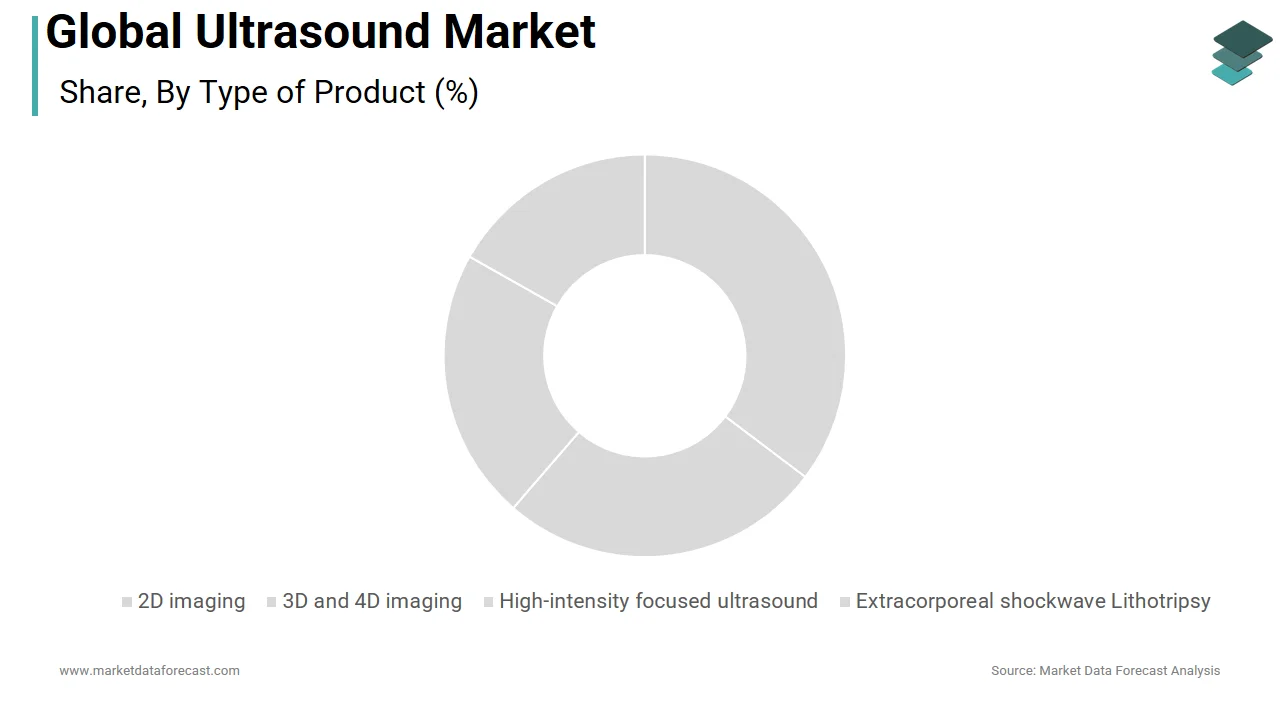
However, the 3D and 4D imaging segment is on the rise and is expected to be the fastest growing segment in the market by witnessing a CAGR of 7.4% during the forecast period due to increasing clinical adoption for complex diagnostic applications requiring volumetric data and real time visualization. According to sources, 3D and 4D systems captured 42.05 percent of the United States ultrasound devices market share in 2025 indicating strong penetration in high income healthcare systems. The technology's ability to generate multiplanar reconstructions and dynamic fetal imaging drives demand in obstetrics gynecology and cardiac assessment where spatial relationships influence clinical decision making. As per research publications the integration of artificial intelligence with 3D ultrasound enhances measurement accuracy and reduces operator dependency thereby expanding accessibility to non specialist clinicians. Healthcare providers increasingly recognize the value of volumetric imaging for surgical planning interventional guidance and patient communication which justifies premium pricing and repeat procurement. The segment benefits from manufacturer investments in intuitive user interfaces automated workflow tools and cloud based data management that address historical adoption barriers. These technological and clinical advancements position 3D and 4D imaging for sustained double digit growth across diverse geographical markets.
By Device Display Insights
The color imaging systems segment dominated the global market and accounted for a 60.1% share in 2025. This leading position of the segment was attributed to its superior diagnostic capability for vascular flow assessment and tissue characterization. Moreover, this leadership position shows the clinical imperative for Doppler functionality in cardiology oncology and emergency medicine where blood flow dynamics directly influence treatment pathways. According to studies, color Doppler integration has become a standard expectation in modern ultrasound procurement specifications across hospital networks and diagnostic centers. The technology enables real time visualization of hemodynamic patterns which supports early detection of thrombosis stenosis and tumor vascularization that grayscale imaging alone cannot reliably identify. As per clinical guidelines from European cardiovascular societies color flow imaging represents an essential component of comprehensive echocardiographic evaluation. Healthcare facilities prioritize color capable systems despite higher unit costs because they reduce the need for supplementary imaging modalities and improve diagnostic confidence in complex cases. The segment benefits from continuous advancements in color sensitivity noise reduction and artifact suppression that enhance image quality across diverse patient anatomies. These clinical and technological factors ensure color imaging remains the preferred display standard for new equipment acquisitions globally.
But the black and white imaging systems segment is expected to exhibit a noteworthy CAGR of 14.9% from 2026 to 2034 owing to cost sensitive market expansion and point of care applications. This unexpected acceleration exhibits strategic deployment in resource limited settings where basic anatomical assessment represents the primary clinical need. According to sources black and white systems maintain relevance in rural clinics mobile health units and emerging economies where budget constraints prioritize essential functionality over advanced features. The technology's lower power consumption simplified maintenance requirements and extended operational lifespan align with infrastructure limitations in underserved regions. As per global health initiatives portable monochrome ultrasound devices support maternal health screening infectious disease assessment and trauma evaluation in locations lacking fixed imaging infrastructure. Manufacturers are responding to this demand by developing ruggedized affordable systems with intuitive interfaces that require minimal technical support. The segment benefits from task shifting policies that authorize non physician clinicians to perform basic ultrasound examinations thereby expanding the addressable user base. These contextual and operational advantages position black and white imaging for sustained growth despite the broader industry trend toward color and 3D capabilities.
By Portability of Device Insights
In 2025, the cart based devices segment held the majority share of 62.7% of the global market. This supremacy of the segment was credited to its comprehensive functionality and integration capabilities within hospital workflows. In addition, the clinical requirement for high-performance imaging with advanced transducer options, extensive measurement tools, and robust data management that portable systems cannot fully replicate also fuels the growth of this segment. According to research, cart based platforms remain the preferred choice for radiology departments cardiac labs and surgical suites where image quality and diagnostic confidence are paramount. The technology supports multiple simultaneous examinations through interchangeable transducers and benefits from stable power supply and network connectivity that enable seamless integration with picture archiving and communication systems. As per hospital procurement data capital equipment budgets prioritize cart based systems for core imaging services because they deliver superior throughput and diagnostic versatility across diverse clinical applications. The segment benefits from continuous innovation in beamforming algorithms transducer technology and artificial intelligence integration that maintain performance leadership. These clinical operational and technological factors ensure cart based devices retain market leadership despite the growing appeal of handheld alternatives for point of care use.
But the hand holdable devices segment is predicted to witness the highest CAGR of 12.2% between 2026 and 2034. This quick surge is propelled by point of care adoption and decentralized care models. The accelerated expansion of this segment shows the clinical imperative for immediate imaging at the patient bedside emergency scene or remote location where traditional cart based systems are impractical. The technology's smartphone connectivity intuitive interfaces and decreasing cost lower barriers to adoption among emergency physicians primary care providers and community health workers. As per adoption studies handheld ultrasound utilization correlates with improved diagnostic accuracy reduced time to treatment and enhanced patient satisfaction in acute care settings. Manufacturers are responding to this demand by developing devices with extended battery life cloud based AI assistance and regulatory approvals for expanded clinical indications. The segment benefits from telehealth integration that enables remote expert guidance and quality assurance thereby extending diagnostic capabilities to underserved populations. These clinical operational and technological advantages position handheld devices for sustained double digit growth across diverse geographical markets.
By End Users Insights
The hospitals segment was the largest by occupying a 51.3% share of the ultrasound market in 2025 due to its comprehensive service offerings high patient volumes and capital investment capacity. Centralized facilities remain dominant because they uniquely support the diverse ultrasound needs of emergency medicine, critical care, surgical planning, and inpatient care. According to sources, hospitals account for the majority of high end ultrasound procurement because they require systems with advanced transducer options extensive measurement tools and robust data management capabilities. The technology's integration with electronic health records picture archiving systems and multidisciplinary care pathways reinforces its entrenched position within hospital workflows. As per healthcare expenditure data hospital based imaging services represent the largest component of diagnostic ultrasound utilization globally due to the concentration of complex cases and specialist expertise. The segment benefits from continuous infrastructure investments regulatory accreditation requirements and quality improvement initiatives that drive equipment refresh cycles. These operational clinical and financial factors ensure hospitals retain market leadership despite the growing role of alternative care settings in ultrasound service delivery.
However, the ambulatory services segment is estimated to register the fastest CAGR of 8.8% during the forecast period owing to healthcare decentralization and value based care models. This rapid growth of the segment is also driven by the strategic shift toward outpatient diagnostics same day procedures and community based care that reduce hospital burden and improve patient convenience. According to studies ambulatory surgery centers urgent care clinics and mobile health units increasingly incorporate ultrasound for immediate assessment procedural guidance and chronic disease monitoring. The technology's portability cost effectiveness and rapid turnaround align with the operational requirements of high throughput outpatient settings. As per healthcare policy analysis reimbursement reforms favoring site neutral payments and bundled care episodes incentivize providers to deliver diagnostic services in lower cost ambulatory environments. Manufacturers are responding to this demand by developing systems with simplified workflows automated measurements and cloud based reporting that support non radiologist clinicians. The segment benefits from expanding scope of practice regulations that authorize nurse practitioners physician assistants and paramedics to perform point of care ultrasound examinations. These policy operational and technological advantages position ambulatory services for sustained growth as healthcare systems prioritize accessible efficient and patient centered diagnostic pathways.
By Application Insights
The radiology segment was the top performer in the ultrasound market and accounted for a 43.4% share in 2025 because of its foundational role in comprehensive anatomical assessment and disease detection across diverse clinical scenarios. This position of the segment exhibits the specialty's requirement for high resolution imaging advanced Doppler capabilities and volumetric analysis that support differential diagnosis treatment planning and interventional guidance. According to sources, radiology departments account for the majority of premium ultrasound procurement because they require systems with extensive transducer options sophisticated measurement tools and robust data management capabilities. The technology's integration with picture archiving and communication systems artificial intelligence platforms and multidisciplinary tumor boards reinforces its entrenched position within diagnostic workflows. As per clinical utilization data radiology based ultrasound examinations represent the largest component of global imaging volume due to the specialty's broad scope encompassing abdominal musculoskeletal vascular and small parts assessment. The segment benefits from continuous innovation in beamforming algorithms contrast enhanced imaging and elastography that expand diagnostic confidence and clinical utility. These technological operational and clinical factors ensure radiology retains market leadership despite the growing role of point of care applications in other specialties.
On the other hand, the gynecology segment is anticipated to witness the fastest CAGR of 9.9% over the forecast period, driven by expanding women's health services and advanced reproductive technologies. This swift expansion shows increasing demand for high-resolution pelvic imaging, follicular monitoring, and early pregnancy assessment, that directly influence fertility treatment outcomes and maternal health. The technology's ability to generate three dimensional reconstructions of uterine anatomy ovarian structures and fetal development supports complex diagnostic decisions and patient counseling. As per clinical guidelines from international societies transvaginal ultrasound with Doppler capability represents an essential component of comprehensive gynecological evaluation for abnormal bleeding pelvic pain and infertility assessment. Manufacturers are responding to this demand by developing specialized transducers automated follicle counting algorithms and cloud based teleconsultation platforms that enhance diagnostic accuracy and accessibility. The segment benefits from expanding insurance coverage for fertility services and preventive women's health screenings that increase procedural volumes. These clinical technological and policy advantages position gynecology for sustained growth as healthcare systems prioritize reproductive health and early disease detection.
REGIONAL ANALYSIS
North America Ultrasound Market Analysis
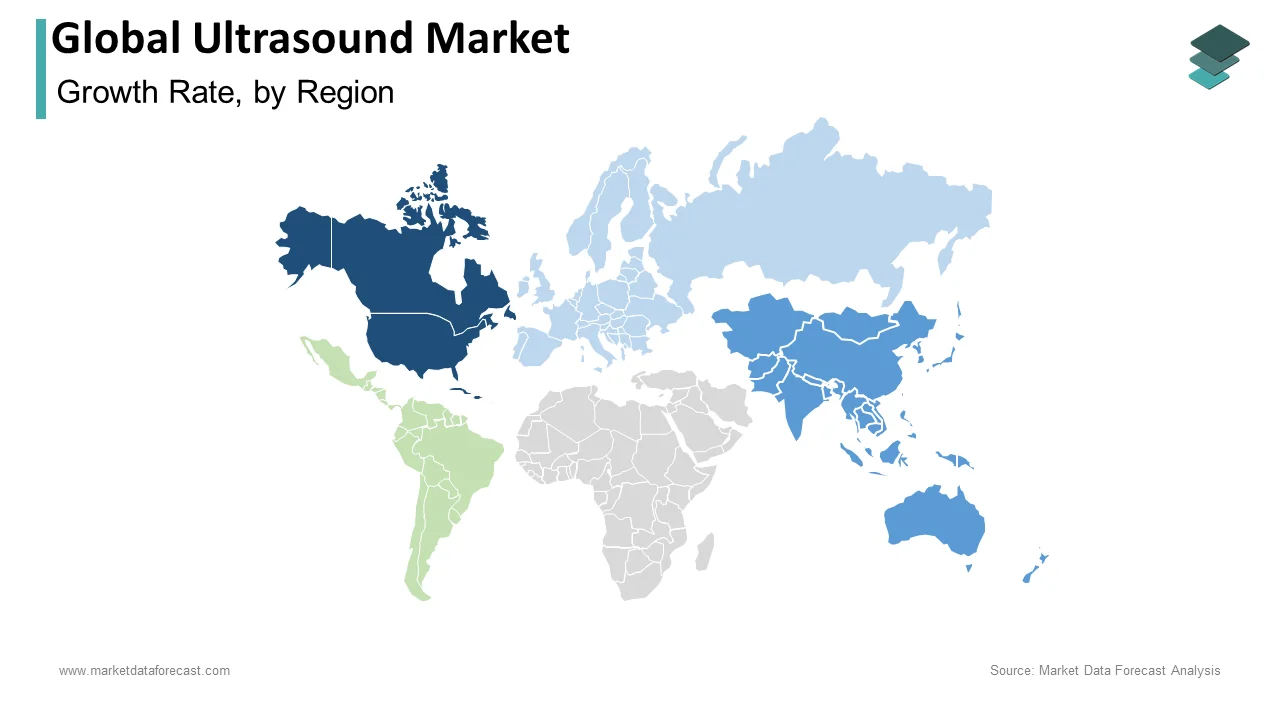
North America dominated the global ultrasound market and captured a share of 39.3% in 2025. The demand for these devices was driven by advanced healthcare infrastructure and high technology adoption. The region benefits from substantial healthcare expenditure robust reimbursement frameworks and concentrated presence of major manufacturers that drive innovation and market expansion. According to industry analysis the United States ultrasound device market was valued at 2.49 billion dollars in 2023 indicating strong commercial activity and procurement cycles. The technology's integration with artificial intelligence platforms electronic health records and value based care models reinforces its entrenched position within clinical workflows. As per regulatory developments the Food and Drug Administration's streamlined approval pathways for innovative ultrasound applications accelerate market entry and clinical adoption. Healthcare providers increasingly recognize ultrasound as an essential component of point of care diagnostics emergency assessment and chronic disease management which justifies continued capital investment. The segment benefits from expanding telehealth integration that enables remote expert guidance and quality assurance thereby extending diagnostic capabilities to rural and underserved populations. These operational clinical and policy factors position North America for sustained market leadership despite increasing competition from emerging geographical regions.
Europe Ultrasound Market Analysis
Europe followed closely behind in the global market and accounted for a 28.9% share in 2025 because of universal healthcare coverage standardized clinical guidelines and strong research infrastructure. The European Union Medical Device Regulation establishes coordinated frameworks that significantly enhance product quality and patient safety. Consequently, the region benefits from these robust standards, which also facilitate cross-border market access. The technology's integration with national health service protocols quality improvement initiatives and multidisciplinary care pathways reinforces its entrenched position within clinical workflows. Healthcare providers increasingly recognize ultrasound as an essential component of value based care models emphasizing prevention early intervention and decentralized service delivery. The segment benefits from expanding point of care adoption in emergency departments primary care clinics and community health settings that improve access and reduce hospital burden. These demographic operational and policy factors position Europe for steady market growth despite fiscal constraints and regulatory complexity.
Asia Pacific Ultrasound Market Analysis
Asia Pacific is the fastest growing regional market due to healthcare infrastructure expansion and rising medical tourism. Increasing healthcare spending, a growing middle class, and government-led initiatives to expand diagnostic services in rural areas are key drivers for the region. According to industry analysis the mobile ultrasound systems segment dominated the Asia Pacific Portable Ultrasound Market and accounted for a 65.9 percent share in 2025 reflecting strong adoption of decentralized imaging solutions. The technology's portability cost effectiveness and simplified operation align with the operational requirements of resource constrained settings and high patient volume environments. Healthcare providers increasingly recognize ultrasound as an essential component of primary care expansion and preventive health screening which justifies continued capital investment. The segment benefits from expanding telehealth integration and public private partnerships that enable remote expert guidance and quality assurance thereby extending diagnostic capabilities to remote locations. These demographic operational and policy factors position Asia Pacific for accelerated market growth as healthcare systems prioritize accessible efficient and patient centered diagnostic pathways.
Latin America Ultrasound Market Analysis
Latin America is an emerging regional market owing to healthcare system modernization and increasing private insurance penetration. Medical tourism growth, coupled with expanding hospital networks and government initiatives, is actively transforming the region by broadening diagnostic access for both city and rural populations. According to industry analysis portable and handheld ultrasound systems are gaining traction in Latin America due to their affordability and suitability for resource constrained settings. The technology's ability to support maternal health screening infectious disease assessment and trauma evaluation aligns with public health priorities across the region. As per economic trends rising healthcare expenditure and increasing foreign direct investment in medical infrastructure create favorable conditions for market expansion. Healthcare providers increasingly recognize ultrasound as an essential component of primary care expansion and emergency response which justifies continued capital investment despite fiscal constraints. The segment benefits from expanding telehealth integration and public private partnerships that enable remote expert guidance and quality assurance thereby extending diagnostic capabilities to underserved populations. These operational clinical and policy factors position Latin America for steady market growth as healthcare systems prioritize accessible efficient and patient centered diagnostic pathways.
Middle East and Africa Ultrasound Market Analysis
Middle East and Africa region is anticipated to expand significantly in the global market during the forecast period due to healthcare infrastructure investments and expanding private hospital networks. The region benefits from government initiatives to improve diagnostic access growing medical tourism and increasing adoption of advanced imaging technologies in urban centers. According to industry analysis portable ultrasound systems are gaining traction in Middle East and Africa due to their suitability for mobile health units and resource constrained settings. The technology's ability to support antenatal care screening infectious disease assessment and trauma evaluation aligns with public health priorities across the region. As per economic trends rising healthcare expenditure and increasing foreign direct investment in medical infrastructure create favorable conditions for market expansion. Healthcare providers increasingly recognize ultrasound as an essential component of primary care expansion and emergency response which justifies continued capital investment despite fiscal constraints. The segment benefits from expanding telehealth integration and public private partnerships that enable remote expert guidance and quality assurance thereby extending diagnostic capabilities to remote locations. These operational clinical and policy factors position Middle East and Africa for steady market growth as healthcare systems prioritize accessible efficient and patient centered diagnostic pathways.
COMPETITIVE LANDSCAPE
The ultrasound market features intense competition among established medical device manufacturers and emerging technology firms driving continuous innovation and strategic differentiation. Market leaders leverage extensive research and development capabilities global distribution networks and comprehensive service offerings to maintain competitive advantage. New entrants focus on niche applications portable system design and artificial intelligence integration to capture market share in high growth segments. Competitive dynamics reflect the balance between technological advancement clinical validation and cost effectiveness that influence procurement decisions across diverse healthcare settings. Companies differentiate through image quality workflow efficiency user experience and total cost of ownership rather than price alone. Strategic acquisitions partnerships and collaborations enable rapid capability expansion and market access while reducing development risks. Regulatory compliance quality management and clinical evidence generation represent critical success factors that influence market positioning and customer trust. The competitive landscape continues to evolve as artificial intelligence cloud connectivity and point of care adoption reshape clinical workflows and value propositions across the ultrasound ecosystem.
KEY MARKET PARTICIPANTS
A few of the major companies operating in the global ultrasound market profiled in this report are
- GE Healthcare
- Koninklijke Philips N.V.
- Canon Medical Systems Corporation
- Hitachi, Ltd.
- Siemens Healthineers AG
- Hologic, Inc.
- Fujifilm Holdings Corporation
- Samsung Electronics Co., Ltd.
- Mindray Medical International Limited
- Analogic Corporation
- Esaote SpA
- Shimadzu Corporation
- Carestream Health
- Cura Healthcare
- Chison Medical Technologies Co., Ltd.
TOP PLAYERS IN THE MARKET
- GE Healthcare maintains a prominent position in the global ultrasound market through continuous innovation in artificial intelligence integration portable system design and clinical workflow optimization. The company's recent strategic initiatives include launching AI powered ultrasound platforms that enhance diagnostic accuracy and reduce operator dependency across diverse clinical applications. The company collaborates with healthcare systems to implement value based care solutions that improve patient outcomes while reducing total cost of ownership. GE Healthcare's commitment to sustainability includes developing energy efficient systems and circular economy programs for equipment refurbishment and recycling. These technological operational and strategic initiatives strengthen the company's market position and support long term growth across diverse geographical regions.
- Siemens Healthineers contributes significantly to the global ultrasound market through advanced imaging technologies integrated diagnostic solutions and comprehensive service offerings. The company's recent strategic initiatives include expanding its AI enabled ultrasound platforms with automated workflow tools and cloud based data management that enhance clinical efficiency. The company collaborates with academic institutions to advance ultrasound research and develop evidence based clinical guidelines that improve diagnostic standards. Siemens Healthineers' commitment to digital health includes integrating ultrasound systems with enterprise imaging platforms and artificial intelligence algorithms that support precision medicine initiatives. These technological operational and strategic initiatives strengthen the company's market position and support long term growth across diverse clinical applications.
- Philips Healthcare maintains a strong presence in the global ultrasound market through innovative imaging technologies patient centered design and comprehensive clinical solutions. The company's recent strategic initiatives include launching AI powered ultrasound platforms with automated measurement tools and cloud based reporting that enhance diagnostic confidence and workflow efficiency. The company collaborates with healthcare providers to implement value based care solutions that improve patient outcomes while reducing total cost of ownership. Philips Healthcare's commitment to sustainability includes developing energy efficient systems and circular economy programs for equipment refurbishment and recycling. These technological operational and strategic initiatives strengthen the company's market position and support long term growth across diverse geographical regions.
TOP STRATEGIES USED BY KEY MARKET PARTICIPANTS
Key market participants employ strategic acquisitions to expand technological capabilities and geographical reach while enhancing product portfolios. Companies invest heavily in research and development to advance artificial intelligence integration portable system design and clinical workflow optimization. Strategic partnerships with healthcare systems academic institutions and technology firms enable collaborative innovation and evidence based product development. Market leaders focus on expanding point of care ultrasound offerings to capture growth in decentralized care settings and emerging economies. Companies prioritize regulatory compliance and quality management to ensure product safety and facilitate global market access. Digital health integration including cloud connectivity telehealth platforms and data analytics represents a core strategic priority for enhancing clinical value. Sustainability initiatives including energy efficient design circular economy programs and responsible sourcing strengthen brand reputation and align with environmental social and governance expectations. These strategic approaches enable market participants to maintain competitive advantage and support long term growth across diverse clinical applications and geographical regions.
MARKET SEGMENTATION
This market research report on the global ultrasound market has been segmented and sub-segmented based on the product type, device display, device portability, application, end-user, and region.
By Type of Product
- 2D imaging
- 3D and 4D imaging
- High-intensity focused ultrasound
- Extracorporeal shockwave Lithotripsy
By Device Display
- Color Imaging
- Black and White Imaging
By Portability of Device
- Hand Holdable Device
- Cart Based Device
By End-Users
- Hospitals
- Diagnostic Centers
- Ambulatory Services
- Maternity Centers
By Application
- Radiology
- Cardiology
- Urology
- Gynecology
- General imaging
- Others
By Region
- North America
- Europe
- Asia-Pacific
- Latin America
- Middle East and Africa