- Product Description Description
- Table of Contents TOC
- List of Table & Figure LOT
- Get Free Sample PDF Sample PDF
Market Size, 2025
$6.81 BnMarket Estimate, 2026
$8.05 BnMarket Forecast, 2034
$30.72 BnCAGR, 2026–2034
18.22%Executive Summary: Medical Second Opinion Market
- Market Scope: Comprehensive global market analysis covering diseases, supply providers, regional leadership frameworks, and patient uptake metrics for medical second opinions.
- Market Valuation: Valued at USD 6.81 billion (2025), estimated at USD 8.05 billion (2026), and projected to reach USD 30.72 billion by 2034, registering a robust CAGR of 18.22% (2026–2034).
- Primary Growth Drivers: Escalating medical diagnosis complexity (especially in oncology and rare genetic disorders) and rising patient empowerment/health literacy, with over 55% of rare disease patients seeking second opinions due to initial delays. Market challenges include fragmented healthcare systems and inconsistent reimbursement landscapes, while opportunities lie in digital health integration, AI-enabled diagnostics, and insurance network partnerships.
Key Market Segment Metrics (2026–2034)
| Category | Leading Segment (2025 Position) | Fastest-Growing Segment |
|---|---|---|
| By Disease | Cancer (dominated with a 58.3% share in 2025 due to high oncological diagnostic stakes) | Cardiac disorders (projected to grow at a CAGR of 16.4%, driven by rising cardiovascular incidence) |
| By Supply Provider | Hospitals (held the largest share at 52.3% in 2025 due to multidisciplinary expertise) | Online and offline providers (expected to grow at the fastest CAGR of 18.9%, fueled by digital platforms) |
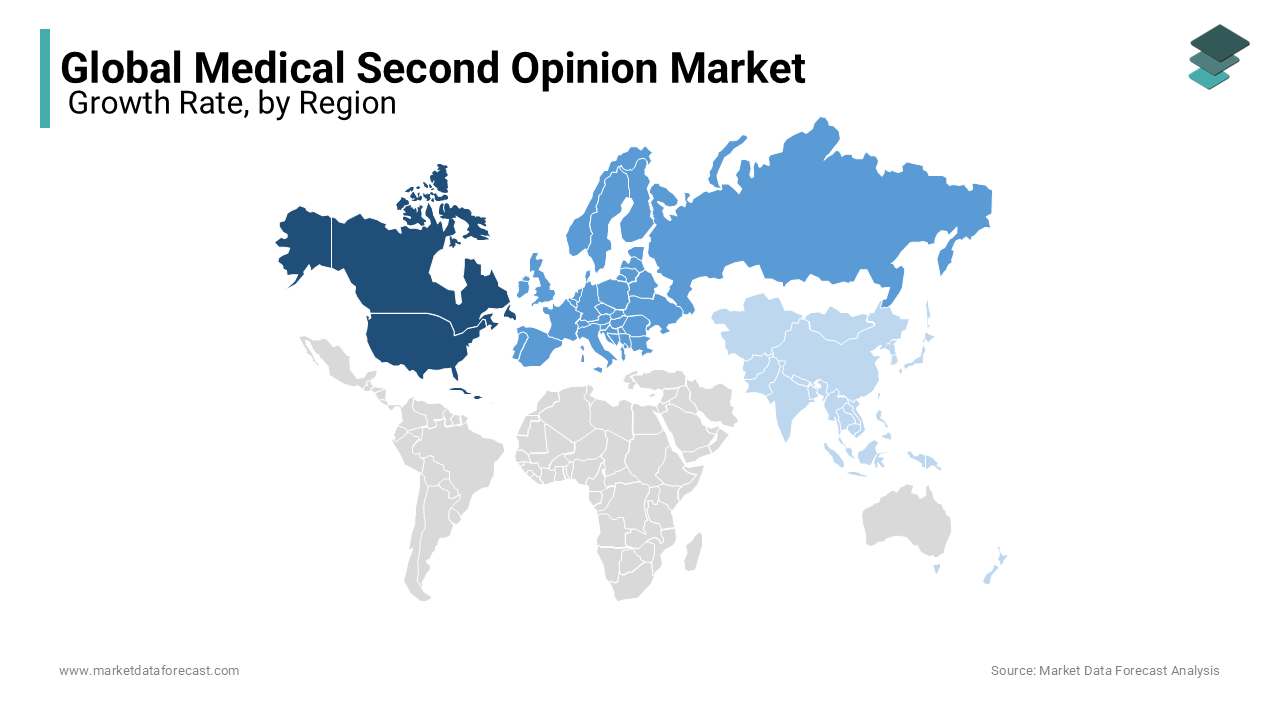
| By Region | North America (dominated with a 44.3% share in 2025, supported by employer-sponsored health plans) | Asia Pacific (emerging as a fast-growing region due to rapid digitization and public-private partnerships) |
Major Market Players & Market Structure
Market Structure: Highly competitive global healthcare landscape centering on digital health integration, strategic healthcare alliances, AI-enabled diagnostics for faster case processing, cross-border regulatory compliance, and insurance network partnerships.
Key Companies: Mayo Clinic, Cleveland Clinic, Johns Hopkins USA, MediGence, Amradnet, London Pain Clinic, Cynergy Care, Bright Grey Royal London Group, Helsana Group, Mendocino County Mental Health, Hyjiya Digital Wellness FZCO, and Penn Medicine.
Global Medical Second Opinion Market Size
The global medical second opinion market size was valued at USD 6.81 billion in 2025. The global market is predicted to be valued at USD 8.05 billion in 2026. This figure is forecasted to grow at a CAGR of 18.22% to reach USD 30.72 billion by 2034.
The Medical Second Opinion is the ecosystem of clinical evaluations wherein patients seek independent diagnostic or therapeutic assessments from qualified physicians following an initial medical determination, particularly in complex or high-stakes conditions such as oncology, neurology, and cardiovascular disorders. As per the National Cancer Institute, approximately 18% of cancer patients in the United States undergo a second opinion, with 37% of those resulting in significant alterations to the original diagnosis or treatment plan. Further, a 2022 study by the Mayo Clinic Proceedings revealed that among 1,192 patients referred for second opinions, 21% received a completely different primary diagnosis, with the clinical relevance of cross-verification.
MARKET DRIVERS
Escalating Complexity of Medical Diagnoses and Therapeutic Options
The growing intricacy of modern medical diagnostics in specialties such as oncology and rare genetic disorders is a primary driver of the medical second opinion market growth. According to the American Society of Clinical Oncology, over 70% of cancer treatment decisions now involve biomarker testing, requiring interpretation by subspecialists. Misdiagnosis in such contexts can lead to inappropriate therapies; a 2023 analysis by Johns Hopkins Medicine indicated that diagnostic errors contribute to approximately 7.4% of malpractice claims, with cancer being the most frequent category. Patients and insurers alike are increasingly recognizing the value of confirmatory assessments.
Rising Patient Empowerment and Health Literacy
A shift in patient behavior with the increased access to medical information and digital health tools has significantly elevated demand for second medical opinions is driving the growth of the Medical Second Opinion Market. According to the Patient Advocate Foundation, over 55% of patients with rare diseases seek a second opinion due to initial diagnostic delays. In Sweden, the National Board of Health and Welfare has integrated second opinion counseling into its patient rights framework, emphasizing informed consent. This cultural shift toward participatory medicine is institutionalizing second opinions as a standard component of ethical, patient-centered care in high-income healthcare systems.
MARKET RESTRAINTS
Fragmented Healthcare Systems and Lack of Standardized Protocols
The absence of uniform guidelines governing when and how second opinions should be obtained, particularly across disparate healthcare systems, is hindering the growth of the Medical Second Opinion Market. In low- and middle-income countries, structural fragmentation limits access to qualified specialists capable of delivering independent assessments. Even in advanced economies, referral pathways are inconsistent. As per the Commonwealth Fund, only 39% of primary care physicians in the United States routinely discuss second opinions with patients facing major surgery. Additionally, disparities in electronic health record (EHR) interoperability hinder seamless data transfer; a 2023 report by the Office of the National Coordinator for Health Information Technology revealed that 42% of U.S. hospitals still face significant barriers in sharing imaging and pathology reports across institutions. This operational disarray delays second opinion procurement and diminishes its clinical utility, discouraging both patient pursuit and provider endorsement.
Reimbursement Limitations and Insurance Coverage Gaps
The inconsistent reimbursement landscape across public and private payers is also hindering the growth of the Medical Second Opinion Market. According to the Kaiser Family Foundation, only 14 out of 50 U.S. states mandate insurance coverage for second surgical opinions, which is leaving a majority of patients to bear out-of-pocket costs that can exceed $1,200 for specialized oncology consultations. In France, despite the Haute Autorité de Santé recommending second opinions for certain neurosurgical interventions, national reimbursement remains partial by creating access inequities. Emerging markets face even greater hurdles; in India, private health insurance plans rarely include second opinion benefits, as noted by the Insurance Regulatory and Development Authority.
MARKET OPPORTUNITIES
Integration of Artificial Intelligence in Diagnostic Validation
The application of artificial intelligence (AI) to augment and streamline second opinion processes in radiology and pathology, which is leveraging the growth of the Medical Second Opinion Market. AI-powered platforms can rapidly analyze imaging and genomic data, flagging discrepancies and supporting expert review. As per a 2023 study published in Nature Medicine, an AI model developed by researchers at Massachusetts General Hospital achieved 94.7% concordance with expert radiologists in detecting breast cancer on mammograms by reducing diagnostic variability. Companies like PathAI and Aidoc are collaborating with academic hospitals to deploy AI-assisted second opinion modules that improve turnaround time and accuracy.
Expansion of Global Telemedicine Networks and Cross-Border Consultations
The proliferation of secure, multilingual telemedicine platforms has unlocked unprecedented access to international medical expertise, which is transforming second opinions into a globally accessible service. Patients in regions with limited subspecialty care can now consult leading institutions abroad without physical travel. According to the World Health Organization, over 60 countries have established national telemedicine frameworks as of 2023 by enabling cross-border data exchange under regulated conditions. Cleveland Clinic’s Global Second Opinion Program reported a 47% increase in international consultations between 2021 and 2023, with high demand from the Middle East and Southeast Asia. Similarly, Germany’s Charité Hospital has partnered with telehealth providers in Egypt and Jordan to deliver remote neurology reviews. These transnational networks not only enhance diagnostic accuracy but also foster medical diplomacy and knowledge transfer, positioning second opinions as a cornerstone of equitable, borderless healthcare.
MARKET CHALLENGES
Regulatory and Data Privacy Complexities in Cross-Institutional Sharing
The legal and ethical complexities surrounding patient data mobility across healthcare entities and jurisdictions are ascribed to inhibiting the growth of the Medical Second Opinion Market. Differing data protection laws, such as the EU’s GDPR, the U.S. HIPAA, and India’s Digital Personal Data Protection Act to create compliance hurdles for digital second opinion platforms. According to the European Data Protection Board, 32% of cross-border health data requests in the EU were delayed or denied in 2022 due to conflicting national interpretations of GDPR. Furthermore, patient consent mechanisms are often fragmented; a study by the University of Toronto found that only 51% of Canadian hospitals have standardized digital consent protocols for external specialist reviews. These regulatory misalignments increase administrative burden, delay consultations, and expose providers to legal risk, which is impeding the scalability of second opinion services in both domestic and international markets.
Physician Resistance and Professional Skepticism
The reluctance among some physicians to encourage or accept second opinions, often rooted in concerns about professional autonomy, reputational risk, or perceived patient distrust, is additionally challenging the growth of the Medical Second Opinion Market. A 2022 survey by the New England Journal of Medicine Catalyst Insights revealed that 28% of U.S. physicians felt uncomfortable when patients sought second opinions, which is fearing it would undermine their clinical authority. In Italy, the National Federation of Physicians reported that over 40% of specialists do not proactively inform patients of their right to a second opinion, contrary to patient rights legislation. This cultural resistance disrupts care continuity and discourages transparent dialogue.
REPORT COVERAGE
| REPORT METRIC | DETAILS |
| Market Size Available | 2025 to 2034 |
| Base Year | 2025 |
| Forecast Period | 2025 to 2034 |
| Segments Covered | By Disease, Supply Provider, and Region. |
| Various Analyses Covered | Global, Regional and Country-Level Analysis, Segment-Level Analysis, Drivers, Restraints, Opportunities, Challenges; PESTLE Analysis; Porter’s Five Forces Analysis, Competitive Landscape, Analyst Overview of Investment Opportunities |
| Regions Covered | North America, Europe, Asia Pacific, Latin America, Middle East & Africa |
| Market Leaders Profiled | Amradnet, London Pain Clinic, Johns Hopkins USA, Cynergy Care, Bright Grey Royal London Group, Helsana Group, Mendocino County Mental Health, Hyjiya Digital Wellness FZCO, and Penn Medicine. |
SEGMENTAL ANALYSIS
By Disease Insights
The cancer segment dominated the Medical Second Opinion Market by capturing 58.3% of the share in 2025, owing to the high stakes associated with oncological diagnoses, where treatment decisions often involve invasive procedures, targeted therapies, and long-term prognostic implications. Diagnostic uncertainty in cancer is well-documented, with a 2023 multi-institutional study conducted by the American College of Surgeons found that 23% of soft tissue sarcoma cases were misclassified in initial pathology reports, leading to suboptimal treatment planning. Furthermore, the advent of personalized medicine has intensified the need for expert molecular review. According to the Personalized Medicine Coalition, over 60% of stage III and IV cancer patients in the U.S. now undergo genomic testing, requiring interpretation by specialized oncologists. Leading cancer centers such as MD Anderson and Memorial Sloan Kettering have institutionalized second opinion programs, which reinforce their role in care standardization.
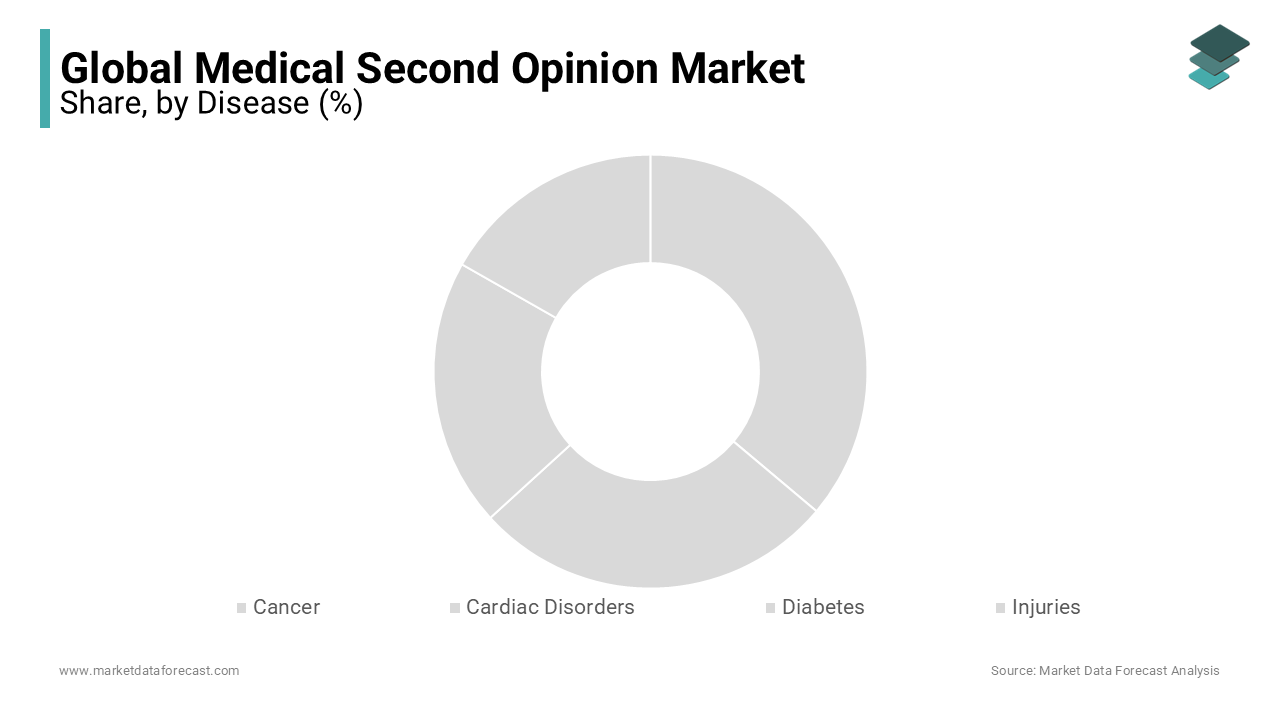
The cardiac disorders segment is lucratively to grow with a CAGR of 16.4% during the forecast period, owing to the rising global incidence of cardiovascular diseases and the increasing complexity of interventional cardiology. As per the Global Burden of Disease Study 2023, cardiovascular conditions affect over 520 million people worldwide, with diagnostic errors contributing to 12% of adverse events in catheterization labs, as per the European Society of Cardiology. Structural heart disease, arrhythmias, and valve disorders often require multidisciplinary evaluation, prompting patients to seek confirmatory assessments. Additionally, wearable ECG devices like the Apple Watch have increased early detection, which is generating a surge in specialist consultations for validation.
By Supply Provider Insights
The hospitals segment was the largest by capturing 52.3% of the share in 2025 due to their access to multidisciplinary expertise, advanced diagnostic infrastructure, and established referral networks. Academic medical centers such as Charité in Berlin and Toronto General Hospital have integrated second opinion units within their outpatient departments by offering seamless coordination across specialties. A 2022 survey by the Commonwealth Fund revealed that 76% of patients prefer second opinions from university-affiliated hospitals due to perceived academic rigor. Additionally, hospitals are increasingly adopting digital triage systems as Johns Hopkins Medicine reported a 40% increase in virtual second opinion volume between 2020 and 2023.
The online and offline segment is projected to grow at a CAGR of 18.9% from 2025 to 2033, with the scalability and accessibility of digital platforms that connect patients directly with global specialists. Companies like Best Doctors (now part of Teladoc Health) and MediGence have developed secure portals enabling rapid upload of medical records, imaging, and pathology reports for remote review. In India, the Ministry of Health and Family Welfare recorded over 1.2 million tele-consultations for second opinions in 2023, a 67% increase from 2021, driven by the Ayushman Bharat Digital Mission.
REGIONAL ANALYSIS
North America Medical Second Opinion Market Analysis
North America was the top performer in the global Medical Second Opinion Market by accounting for 44.3% of the market share in 2025. In the United States, major employers such as General Motors and Boeing offer second-opinion benefits through their health plans, covering over 2.3 million employees, as reported by the National Business Group on Health. The integration of telemedicine has further accelerated adoption; the American Telemedicine Association notes that virtual second opinion consultations grew by 53% between 2021 and 2023, particularly in rural states like Montana and West Virginia.
Europe Medical Second Opinion Market Analysis
Europe was positioned second with 29.3% of the Medical Second Opinion Market share in 2025. Countries like Germany, France, and the Netherlands have embedded second opinions into clinical governance protocols for high-risk interventions. The European Commission’s Directive on Patients’ Rights in Cross-Border Healthcare facilitated over 85,000 cross-border second opinion requests between 2020 and 2023, according to Eurostat. Additionally, the European Reference Networks (ERNs) link 900 healthcare units across 28 countries by enabling rare disease patients to access pan-European specialist panels.
Asia Pacific Medical Second Opinion Market Analysis
Asia Pacific medical second opinion market growth is expected to grow with significant growth opportunities during the forecast period. As per Japan’s National Cancer Center, over 40% of patients with stage III cancer seek a second opinion, supported by national insurance coverage and digital platforms like Ask2Me. In contrast, India’s second opinion penetration remains below 8%, as per the Indian Council of Medical Research, due to fragmented healthcare and low insurance penetration. However, rapid digitization is transforming the landscape; the Ministry of Electronics and Information Technology recorded 38 million telemedicine consultations in 2023, many involving diagnostic validation. Public-private partnerships, such as Apollo Hospitals’ collaboration with Google Cloud for AI-driven imaging analysis, are accelerating scalability by signaling a shift toward inclusive diagnostic assurance.
Latin America Medical Second Opinion Market Analysis
Latin America medical second opinion market is growing lucratively throughout the period. Brazil leads the subcontinent, with private healthcare providers like Grupo Fleury and Albert Einstein Israelita offering structured second opinion services to affluent urban patients.
Middle East & Africa Medical Second Opinion Market Analysis
Middle East & Africa medical second opinion market is likely to grow in the coming years. Gulf Cooperation Council (GCC) nations, particularly the UAE and Saudi Arabia, are investing heavily in second opinion infrastructure as part of healthcare modernization. Saudi Arabia’s Vision 2030 includes digital health transformation, with the Ministry of Health launching a national e-consultation platform that processed 45,000 second opinion requests in its first year.
COMPETITIVE LANDSCAPE
The competition in the Medical Second Opinion Market is evolving into a convergence of clinical excellence, technological agility, and patient-centric accessibility. While academic medical centers retain authority through reputation and subspecialty depth, digital-native platforms are disrupting traditional models with faster, lower-cost alternatives. Differentiation increasingly hinges on turnaround time, data security, multilingual support, and integration with local healthcare systems. In the Asia Pacific, competition is intensifying as regional providers partner with global institutions to offer hybrid models that combine local context with international expertise. Regulatory variance and fragmented reimbursement remain challenges, but organizations that align clinical rigor with digital scalability are capturing strategic advantage.
KEY MARKET PLAYERS
The list of key market participants leading the global medical second opinion market profiled in this report includes
- Amradnet
- London Pain Clinic
- Johns Hopkins USA
- Cynergy Care
- Bright Grey Royal London Group
- Helsana Group
- Mendocino County Mental Health
- Hyjiya Digital Wellness FZCO
- Penn Medicine
TOP LEADING PLAYERS IN THE MARKET
- Mayo Clinic has established a pioneering presence in the Medical Second Opinion Market through its global digital health initiative by enabling patients across the Asia Pacific to access expert consultations without physical travel. The institution collaborates with hospitals in Japan, Australia, and Singapore to provide remote reviews in oncology, neurology, and rare diseases. In 2023, Mayo launched a multilingual tele-triage portal tailored for Asian markets, supporting Japanese, Mandarin, and Korean interfaces to enhance accessibility. It also integrated AI-powered medical record summarization tools to accelerate case processing, reducing turnaround time to under 72 hours.
- Cleveland Clinic has significantly expanded its footprint in the Asia Pacific by institutionalizing its Global Second Opinion Program with localized outreach and digital infrastructure. The clinic has formed strategic alliances with MedPartner in Taiwan and HealthCube in India to facilitate secure medical data transmission and patient onboarding. In 2022, it introduced a dedicated cardiac second opinion pathway in collaboration with Bangkok Hospital Group, targeting patients with complex structural heart disease.
- MediGence, an India-based digital health platform, has emerged as a key regional enabler of medical second opinions by bridging diagnostic gaps between patients and global specialists. The company connects individuals across India, Indonesia, and the UAE with physicians from top-tier institutions in the U.S., U.K., and Germany. In 2023, MediGence integrated AI-driven triage algorithms to categorize cases by urgency and specialty, improving consultation efficiency by 35%, as validated by its internal performance audit. It also partnered with Apollo Hospitals to offer hybrid second opinions combining local clinical data with international expert input.
TOP STRATEGIES USED BY KEY MARKET PARTICIPANTS
Key players in the Medical Second Opinion Market are leveraging digital health integration, strategic healthcare alliances, AI-enabled diagnostics, cross-border regulatory compliance, and insurance network partnerships to their competitive edge. Organizations are investing in secure telemedicine platforms to enable seamless international consultations. Collaborations with academic hospitals and regional clinics enhance credibility and data access. AI tools are being deployed to streamline medical record analysis and reduce turnaround time. Compliance with GDPR, HIPAA, and local data laws ensures patient trust. Additionally, integration with private insurers and employer health plans facilitates reimbursement, increasing patient uptake and institutional adoption across diverse healthcare ecosystems.
GLOBAL MEDICAL SECOND OPINION MARKET NEWS
- In March 2022, Mayo Clinic launched a multilingual tele-triage portal supporting Japanese, Mandarin, and Korean to expand its second opinion services across the Asia Pacific by enabling faster patient onboarding and improving regional accessibility.
- In August 2022, the Cleveland Clinic partnered with Bangkok Hospital Group in Thailand to introduce a specialized cardiac second opinion pathway, which is enhancing diagnostic accuracy for patients with complex valvular and arrhythmic conditions.
- In January 2023, MediGence integrated an AI-powered triage system that reduced case processing time by 35% by allowing faster routing of oncology and neurology cases to international specialists.
- In May 2023, Mayo Clinic collaborated with Tokio Marine to include second opinion benefits in expatriate health insurance plans, which is increasing service uptake among high-income patients in Southeast Asia.
- In November 2023, the Cleveland Clinic implemented a blockchain-based medical record verification system to ensure secure and tamper-proof data exchange for cross-border second opinion requests by enhancing trust and compliance.
MARKET SEGMENTATION
This market research report on the global medical second opinion market has been segmented and sub-segmented based on disease, supply provider, and region.
By Disease
- Cancer
- Cardiac Disorders
- Diabetes
- Injuries
By Supply Provider
- Hospitals
- Health Insurance Players
- Online and Offline Medical Second Opinion Providers
- Private clinics
By Region
- North America
- Europe
- Asia Pacific
- Latin America
- Middle East and Africa