- Product Description Description
- Table of Contents TOC
- List of Table & Figure LOT
- Get Free Sample PDF Sample PDF
Market Size, 2025
$1.93 BnMarket Estimate, 2026
$2.11 BnMarket Forecast, 2034
$4.34 BnCAGR, 2026–2034
9.42%Middle East and Africa Infectious Disease Diagnostics Market Size, Growth, Trends & Forecast (2026–2034)
The Middle East and Africa infectious disease diagnostics market size was valued at USD 1.93 billion in 2025, is estimated at USD 2.11 billion in 2026, and is projected to reach USD 4.34 billion by 2034, registering a compound annual growth rate (CAGR) of 9.42% during the forecast period from 2026 to 2034. Driven by a persistently high prevalence of endemic infectious diseases, rising government healthcare investments, and expanded international funding, the regional market continues to post robust growth.
Key Executive Metrics (At-a-Glance)
- 2025 Base Valuation: USD 1.93 Billion
- 2026 Current Valuation: USD 2.11 Billion
- 2034 Forecast Valuation: USD 4.34 Billion
- Compound Annual Growth Rate (CAGR): 9.42% (2026–2034)
- Dominant Product Segment: Reagents (driven by recurring consumable needs and massive programmatic allocations for HIV/malaria)
- Dominant Application Segment: Tuberculosis (TB) Diagnostics (backed by high disease incidence and global elimination targets)
- Regional Growth Leaders: GCC nations (modernizing via national healthcare transformation plans) and South Africa/Egypt (scaling molecular and screening initiatives).
Core Market Drivers
- Endemic Disease Burden: High regional burdens of communicable diseases including HIV, malaria (accounting for ~95% of global cases in sub-Saharan Africa), tuberculosis, and hepatitis.
- Government & International Support: Funding programs from organizations like the Global Fund, the Bill & Melinda Gates Foundation, and GCC national healthcare modernization plans.
- Decentralized Point-of-Care Testing: Growing deployment of portable, rapid, and molecular near-patient diagnostics to reach remote and underserved communities.
Primary Market Restraints & Challenges
- Rural Infrastructure Deficits: Lack of reliable electricity, cold chain storage, and basic healthcare access across remote regions.
- Supply Chain & Regulatory Hurdles: Heavy reliance on imported reagents, custom delays, and a fragmented regulatory landscape across individual nation states.
Middle East and Africa Infectious Disease Diagnostics Market Segmentation Breakdown
| Segment Category | Largest Segment | Fastest Growing Segment |
|---|---|---|
| By Product Type | Reagents | Services (8.5% CAGR) |
| By Application | Tuberculosis (TB) | Hepatitis C (9.2% CAGR) |
| By End User | Laboratories | Point-of-Care / Clinics |
Major Industry Players Profiled
Key companies dominating the Middle East and Africa infectious disease diagnostics market include Abbott Laboratories, bioMérieux SA, Hologic, Inc., Danaher Corporation, Becton, Dickinson and Company, Cepheid, Inc., Thermo Fisher Scientific Inc., Roche Diagnostics, Alere Inc., DiaSorin S.p.A., Quidel Corporation, and Bio-Rad Laboratories, Inc.
Middle East and Africa Infectious Disease Diagnostics Market Size
The Middle East and Africa infectious disease diagnostics market was valued at USD 1.93 billion in 2025, is estimated to reach USD 2.11 billion in 2026, and is projected to reach USD 4.34 billion by 2034, growing at a CAGR of 9.42% from 2026 to 2034.
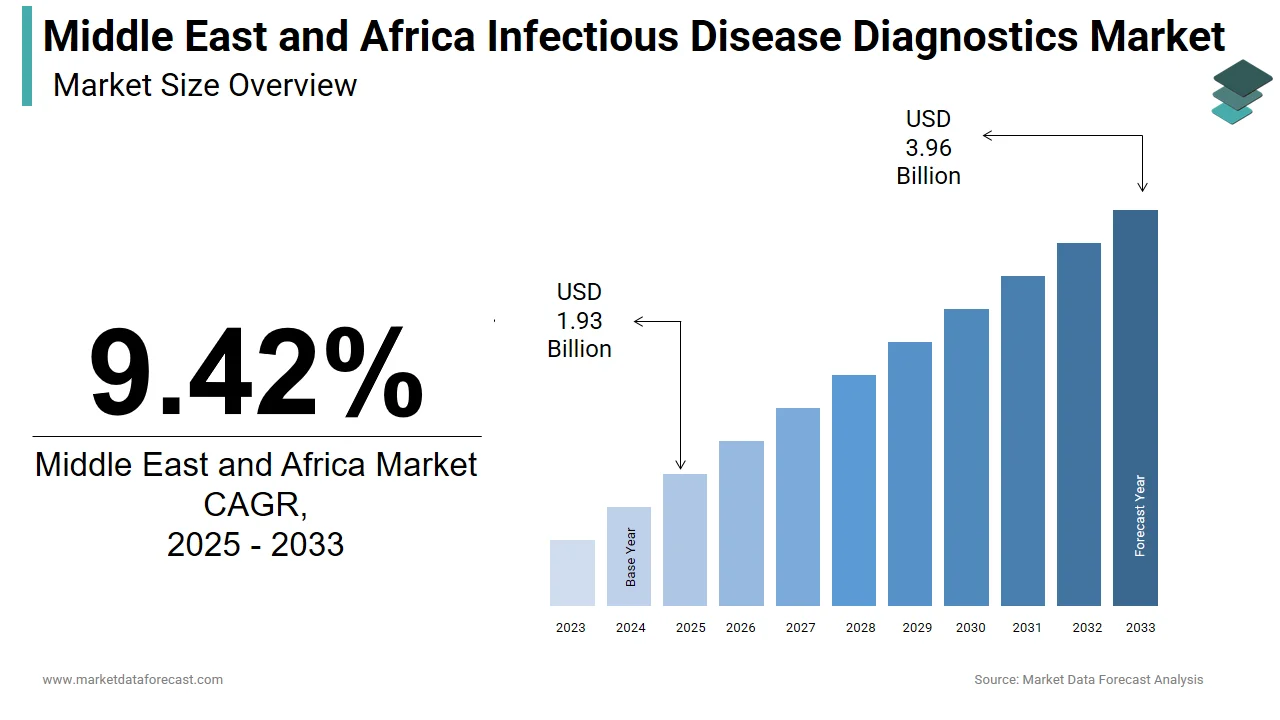
Infectious disease diagnostics refers to the methods and laboratory tests used to identify the specific germs, such as bacteria, viruses, fungi, or parasites, causing an illness. This market is critical for public health management given the high burden of communicable diseases such as tuberculosis, malaria, HIV, and hepatitis. The market includes molecular diagnostics, immunodiagnostics, and microbiology testing platforms deployed in hospitals, reference laboratories, and point-of-care settings. According to the World Health Organisation, the WHO African Region accounts for roughly 95% of global malaria cases, driving a significant increase in the procurement and clinical rollout of rapid diagnostic tests across endemic sub-Saharan nations. Governments in nations like South Africa, Nigeria, and Saudi Arabia are increasingly investing in healthcare infrastructure to enhance disease surveillance and control capabilities. Regulatory frameworks are evolving, with bodies such as the Saudi Food and Drug Authority implementing stricter quality standards for in vitro diagnostic devices. The region faces unique challenges, including diverse geographic landscapes and varying levels of economic development, which influence accessibility and adoption rates. Technological advancements in rapid testing and portable molecular systems are bridging gaps in remote areas. Supply chain dynamics are shifting towards local manufacturing and regional distribution hubs to mitigate import dependencies. The integration of digital health records facilitates better data tracking and epidemiological analysis. This ecosystem supports a growing demand for reliable diagnostics that enable timely intervention and reduce transmission rates in vulnerable populations.
MARKET DRIVERS
High Prevalence of Endemic Infectious Diseases Drives Diagnostic Demand
The persistently high prevalence of endemic infectious diseases is propelling the Middle East and Africa infectious disease diagnostics market. This growth necessitates robust screening and monitoring capabilities. According to the Centres for Disease Control and Prevention, sub-Saharan Africa registers the highest regional density of global HIV infections, driving sustained commercial demand for automated viral load assays and point-of-care clinical diagnostics. Similarly, tuberculosis remains a leading cause of death in many countries, driving the need for rapid molecular tests that can detect drug-resistant strains efficiently. Malaria continues to pose a significant public health threat, particularly in tropical regions where seasonal outbreaks strain healthcare resources. National control programs rely heavily on diagnostic tools to map infection hotspots and allocate treatment resources effectively. The rise of emerging infectious diseases such as Ebola and Lassa fever further amplifies the demand for rapid response diagnostic kits. Public health initiatives funded by international organisations like the Global Fund prioritise the procurement of diagnostic assays to meet elimination targets. Healthcare providers in urban and rural settings require accessible and affordable tests to manage patient loads. This sustained disease burden ensures consistent demand for diagnostic products ranging from simple rapid tests to complex laboratory-based systems. The critical role of diagnostics in breaking chains of transmission solidifies their importance in regional health strategies.
Government Initiatives and International Funding Support Infrastructure Development
Substantial government initiatives and international funding mechanisms are significantly driving the growth of the Middle East and Africa Infectious Disease Diagnostics Market. This enhances healthcare infrastructure and accessibility. As per the World Bank, general government spending allocated to healthcare systems across sub-Saharan Africa averages a modest 7.2%, creating acute dependency on private out-of-pocket spending and third-party development grants to equip localised clinical labs. According to the U.S. Department of State, the recent implementation of foreign aid freezes and programmatic transition schedules for PEPFAR has forced national ministries to re-evaluate their long-term procurement models for diagnostic lab reagents. Governments in the Gulf Cooperation Council states are implementing national transformation plans that include modernising diagnostic laboratories with advanced automation and digital integration. These investments facilitate the deployment of high-throughput systems capable of handling large sample volumes during outbreaks. International partnerships with organisations like the Bill and Melinda Gates Foundation focus on introducing innovative diagnostic technologies tailored to low-resource settings. Training programs for laboratory technicians ensure proper usage and maintenance of sophisticated equipment, reducing error rates. Regulatory reforms streamline the approval process for new diagnostic devices, encouraging faster market entry. Public-private partnerships enable the sharing of resources and expertise, improving service delivery in remote areas. This financial and structural support creates a conducive environment for market expansion, ensuring that diagnostic capabilities keep pace with growing healthcare needs.
MARKET RESTRAINTS
Limited Healthcare Infrastructure in Rural Areas Restricts Access
The inadequacy of healthcare infrastructure in rural and remote areas is a significant restraint to the Middle East and Africa Infectious Disease Diagnostics Market. This limits the reach of advanced diagnostic technologies. According to UNICEF, acute shortages of diagnostic devices and primary healthcare technology across low-income territories directly compound treatment delays for treatable childhood illnesses. Many primary health centres lack reliable electricity, clean water and cold chain storage, which are essential for maintaining the integrity of reagents and samples. This infrastructural deficit forces patients to travel long distances to urban centres for testing, leading to delayed diagnosis and treatment. The shortage of skilled laboratory personnel further exacerbates the issue, as complex instruments require trained operators to function correctly. Maintenance and repair services are often unavailable in remote locations, causing prolonged downtime for essential equipment. Supply chain disruptions due to poor road networks and logistical challenges result in stockouts of critical diagnostic kits. Governments struggle to allocate sufficient resources to upgrade rural facilities amidst competing priorities. This disparity in access creates a two-tier system where urban populations benefit from modern diagnostics while rural communities rely on outdated or insufficient methods. Infrastructure gaps must be addressed first. Otherwise, the diagnostics market cannot reach its full potential in vast segments of the region.
Regulatory Fragmentation and Complex Approval Processes
The fragmented regulatory landscape and complex approval processes across different countries in the region are substantial barriers to the Middle East and Africa infectious disease diagnostics market. This hinders market entry and expansion for diagnostic manufacturers. Each nation maintains distinct regulatory requirements for in vitro diagnostics with varying timelines, documentation standards, and clinical validation criteria. As per the World Health Organisation, the active implementation of a newly signed joint framework with the African Medicines Agency scales up unified continental standards to optimise regulatory approval timelines for critical medical technologies. In some markets, the lack of clear guidelines for novel diagnostic technologies creates uncertainty and delays product launches. Manufacturers must navigate bureaucratic hurdles that often lack transparency and predictability, increasing compliance costs and time to market. Post-market surveillance requirements vary significantly, making it difficult to maintain consistent quality standards across borders. Import regulations and customs procedures can be cumbersome, causing delays in the delivery of time-sensitive diagnostic supplies. Small and medium-sized enterprises often lack the resources to manage these regulatory complexities effectively, limiting competition and innovation. The absence of mutual recognition agreements means that approvals in one country do not facilitate entry into neighbouring markets. This regulatory fragmentation stifles market dynamism and restricts the availability of advanced diagnostic solutions to patients who need them most.
MARKET OPPORTUNITIES
Expansion of Point of Care Testing in Remote Settings
The expansion of point-of-care testing in remote and underserved settings unlocks potential for the Middle East and Africa Infectious Disease Diagnostics Market. This shift decentralises diagnostic services. According to the World Health Organisation, official public guidelines urge member countries to expand the implementation of affordable, portable near-point-of-care diagnostics within localised community clinics to facilitate immediate treatment tracking. Portable and battery-operated diagnostic devices that require minimal training are ideal for these environments where infrastructure is limited. Rapid diagnostic tests for malaria, HIV, and syphilis enable immediate decision-making, allowing healthcare workers to initiate treatment during the same visit. This approach reduces patient dropout rates and improves overall health outcomes. Mobile health clinics equipped with point-of-care diagnostics can reach nomadic and isolated populations, enhancing equity in healthcare access. Governments and non-governmental organisations are increasingly procuring these user-friendly tests for mass screening campaigns. The integration of point-of-care devices with mobile phones for data transmission facilitates real-time surveillance and resource allocation. Manufacturers are developing robust and cost-effective solutions tailored to the harsh environmental conditions of the region. This shift towards decentralised testing opens new revenue streams and expands market reach beyond traditional urban laboratories.
Adoption of Molecular Diagnostics for Drug Resistance Detection
The increasing adoption of molecular diagnostics for detecting drug-resistant pathogens offers a lucrative opportunity for the Middle East and Africa Infectious Disease Diagnostics Market. As per the Stop TB Partnership, the global deployment of next-generation low-cost molecular assays accelerates the targeted identification of specific multidrug-resistant strains across endemic regional clinic networks. Traditional culture methods are slow and less sensitive, whereas molecular tests provide rapid and accurate results, enabling timely intervention. Hospitals and reference laboratories in countries like South Africa and Egypt are upgrading their facilities with polymerase chain reaction and gene sequencing technologies. The ability to detect resistance markers for HIV and hepatitis viruses is also becoming standard practice in managing chronic infections. Government programs are prioritising the rollout of these advanced tests to combat the spread of resistant strains. Private laboratories are expanding their molecular testing portfolios to cater to affluent patients seeking comprehensive diagnostic services. Collaborations with global technology providers facilitate knowledge transfer and capacity building. The declining cost of molecular reagents and instrumentation makes these tests more accessible to middle-income markets. This technological transition enhances clinical precision and supports antimicrobial stewardship efforts, driving demand for sophisticated diagnostic platforms.
MARKET CHALLENGES
Supply Chain Vulnerabilities and Import Dependence
Supply chain vulnerabilities and logistical disruptions slow down the growth of the Middle East and Africa Infectious Disease Diagnostics Market. This happens due to a heavy reliance on imported diagnostic reagents and equipment. According to the World Trade Organisation, international supply chain concentrations expose lower-income economies to severe global supply shocks for medical imports, driving regional efforts to scale up localised manufacturing of crucial clinical inputs. Geopolitical tensions, trade restrictions and pandemics can abruptly halt shipments, affecting the availability of critical testing supplies. Local manufacturing capabilities for complex diagnostic devices are limited, requiring substantial investment in technology and skilled labour. Currency fluctuations in importing countries increase costs and create budgetary uncertainties for healthcare providers. Port congestion and customs delays further exacerbate supply bottlenecks, leading to stockouts and service interruptions. Manufacturers must maintain high inventory levels to mitigate risks, which ties up capital and increases storage costs. The lack of regional production hubs limits bargaining power and flexibility in sourcing. Climate-related events can disrupt transportation routes, affecting timely delivery to remote areas. Building resilient supply chains requires collaborative efforts between governments and industry stakeholders, but progress remains slow. Local production capacities must be strengthened first. Until then, the market will remain exposed to external disruptions.
Shortage of Skilled Laboratory Personnel and Technical Expertise
A critical shortage of skilled laboratory personnel and technical expertise holds back the expansion of the Middle East and Africa infectious disease diagnostics market. This hampers the effective utilisation of advanced diagnostic technologies in the region. As per the World Health Organisation, targeted international medical migration patterns deplete local healthcare workforce capacities, intensifying severe public sector human resource shortages across emerging regional hospital networks. This workforce gap limits the capacity of laboratories to operate sophisticated molecular and automated systems efficiently. Training programs are often insufficient to meet the growing demand for skilled technicians capable of performing complex assays and troubleshooting equipment. The lack of continuous professional development opportunities results in skill obsolescence and higher error rates. Rural facilities are disproportionately affected as qualified staff prefer urban postings with better amenities and career prospects. Outsourcing maintenance and technical support is expensive and often delayed due to logistical challenges. The absence of standardised certification programs across the region complicates recruitment and quality assurance. Educational institutions struggle to update curricula to keep pace with rapid technological advancements in diagnostics. Addressing this human resource crisis requires sustained investment in education retention strategies and regional collaboration. Without a competent workforce, the potential of advanced diagnostic tools cannot be fully realised, impacting patient care quality.
REPORT COVERAGE
| REPORT METRIC | DETAILS |
| Market Size Available | 2025 to 2034 |
| Base Year | 2025 |
| Forecast Period | 2026 to 2034 |
| Segments Covered | By Product Type, Application, Technology, End User, and Region. |
| Various Analyses Covered | Global, Regional and Country-Level Analysis, Segment-Level Analysis, Drivers, Restraints, Opportunities, Challenges; PESTLE Analysis; Porter’s Five Forces Analysis, Competitive Landscape, Analyst Overview of Investment Opportunities |
| Countries Covered | KSA, UAE, Israel, rest of GCC countries, South Africa, Ethiopia, Kenya, Egypt, Sudan, rest of Middle East and Africa |
| Market Leaders Profiled | Abbott Laboratories, bioMérieux SA, Hologic, Inc., Danaher Corporation, Becton, Dickinson and Company, Cepheid, Inc., bioMérieux, Thermo Fisher Scientific Inc., Roche Diagnostics, Alere Inc., DiaSorin S.p.A., Quidel Corporation, and Bio-Rad Laboratories, Inc. |
SEGMENTAL ANALYSIS
By Product Insights
In 2025, the reagents segment held the majority share in the Middle East and Africa Infectious Disease Diagnostics Market because of its essential role as consumables required for every diagnostic test performed. Unlike instruments, which are one-time capital expenditures, reagents represent a recurring revenue stream driven by the high prevalence of infectious diseases in the region. The sustained disease burden ensures continuous demand for rapid diagnostic test kits, enzyme-linked immunosorbent assay reagents, and molecular assay cartridges. According to the Global Fund, multi-billion-dollar international programmatic allocations for HIV and malaria control drive the bulk procurement of diagnostic test kits, stabilising commercial supply chain volume for localised reagent manufacturers. The shift toward test-and-treat strategies further amplifies consumption as confirmed cases immediately initiate treatment, requiring follow-up monitoring tests. Additionally, the expansion of point-of-care testing in remote areas increases the volume of single-use test kits distributed across the continent. Manufacturers benefit from locked-in customer bases where proprietary reagents are required for specific instrument platforms, ensuring long-term loyalty. The cost-effectiveness of reagents compared to complex laboratory infrastructure makes them accessible for resource-limited settings. This combination of epidemiological necessity and operational dependency solidifies the dominance of the reagents segment through consistent high-volume utilisation.
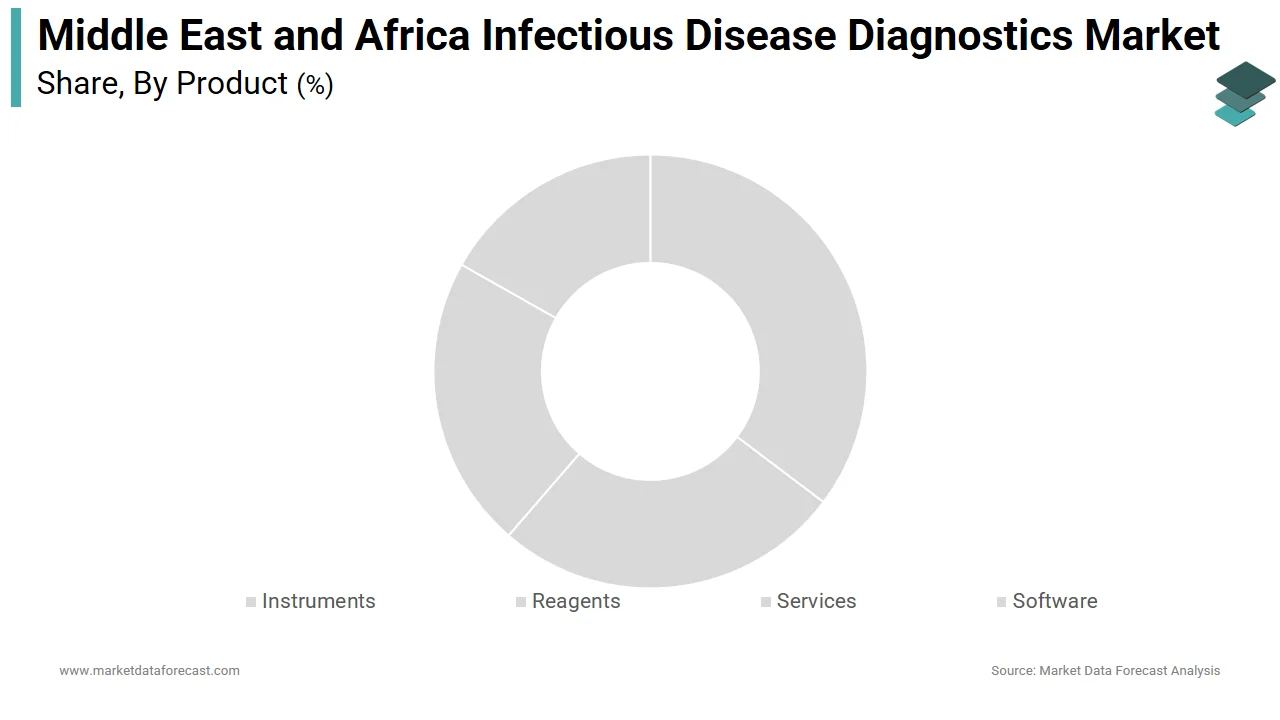
The integration of diagnostic reagents into national screening and surveillance programs significantly supports their market leadership in the Middle East and Africa. Governments across the region have implemented mandatory screening protocols for tuberculosis, hepatitis and HIV in antenatal care, blood banks and pre-employment checks. As per UNICEF, strategic programmatic frameworks prioritise scaling up early infant diagnostic interventions and childhood health screenings, expanding the long-term institutional consumption of specialised viral assay reagents. These institutional buyers operate on annual budgets that guarantee steady orders regardless of short-term economic fluctuations. The standardisation of testing algorithms by ministries of health creates uniform demand for specific types of reagents such as rapid antibody tests or nucleic acid amplification kits. Furthermore, the rise of non-communicable diseases has led to integrated screening models where infectious disease tests are bundled with other health checks, increasing overall test volumes. Private laboratories also contribute to this demand by offering comprehensive health packages that include infectious disease markers. The reliability of supply chains for reagents is critical for maintaining public trust in healthcare systems, prompting governments to stockpile essential kits. This structural integration into healthcare delivery systems ensures that reagents remain the primary revenue driver for diagnostic companies operating in the region.
The services segment is anticipated to witness the fastest CAGR of 8.5% from 2026 to 2034 due to the increasing outsourcing of laboratory operations and maintenance. As healthcare facilities expand their diagnostic capabilities, many lack the in-house technical expertise to manage sophisticated molecular and automated instruments. According to the African Society for Laboratory Medicine, integrated continental laboratory system initiatives focus on optimising workforce training frameworks to modernise domestic equipment servicing, calibration, and quality control systems. The trend is particularly pronounced in the private sector, where uptime and accuracy are critical for competitive advantage. Reference laboratories are also expanding their service offerings to include sample collection logistics and data management for smaller clinics that cannot afford full laboratory setups. The complexity of modern diagnostic platforms requires specialised knowledge for troubleshooting and regulatory compliance, which external service firms provide efficiently. Additionally, the rise of telemedicine and digital health platforms has created new service categories such as remote result interpretation and digital pathology consultations. These value-added services enhance the utility of diagnostic tests and improve patient outcomes. The shift from product ownership to service-based models allows healthcare providers to reduce capital expenditure while accessing advanced diagnostic capabilities. This operational evolution positions services as a high-growth avenue for market participants.
The adoption of managed laboratory services and quality assurance programs significantly accelerates the growth of the services segment in the regional diagnostics market. As per the Saudi Food and Drug Authority, the nationwide enforcement of mandatory ISO quality management certifications for medical device stakeholders accelerates commercial regional demand for specialised technical auditing and regulatory compliance services. Many laboratories seek external support to achieve ISO 15189 certification, which is increasingly mandated by insurers and government regulators. Managed service providers offer end-to-end solutions including staff training, inventory management and proficiency testing, ensuring consistent quality and compliance. This model is particularly attractive to public health systems aiming to improve efficiency without heavy investment in human resources. Furthermore, the integration of laboratory information systems with hospital electronic records requires ongoing IT support and cybersecurity services, which are bundled into service contracts. The rise of public-private partnerships in healthcare delivery has also led to the outsourcing of entire laboratory departments to specialised operators who bring economies of scale and expertise. These partnerships often include performance-based contracts that incentivise high-quality service delivery. The focus on data integrity and operational excellence drives healthcare institutions to rely on professional service providers. This strategic shift towards outsourcing non-core functions ensures sustained growth for the services segment as laboratories prioritise efficiency and compliance.
By Application Insights
The tuberculosis segment was the largest in the Middle East and Africa Infectious Disease Diagnostics Market and occupied a commanding share in 2025. This prominence of the segment was credited to the region’s disproportionately high disease burden and aggressive government elimination targets. According to the World Health Organisation, the WHO African Region routinely represents approximately 25% of the total global tuberculosis incidence burden, anchoring multi-country clinical infrastructure procurement frameworks. This high incidence drives substantial demand for diagnostic tools ranging from smear microscopy to advanced molecular tests like GeneXpert. National TB control programs in countries such as South Africa, Nigeria, and India prioritise early detection to interrupt transmission chains, creating a guaranteed market for diagnostic assays. The introduction of universal drug susceptibility testing mandates has further increased the volume of molecular diagnostics required to identify multidrug-resistant strains. International funding from organisations like the Global Fund supports the procurement of these diagnostics, ensuring financial sustainability for public health programs. Additionally, the integration of TB screening into primary healthcare and HIV clinics amplifies testing volumes through systematic case finding. The chronic nature of TB treatment requires multiple tests for monitoring therapy response and detecting relapse, contributing to recurring demand. The severity of the epidemic and the political commitment to ending TB by 2030 ensure that this application segment remains the largest contributor to market revenue through sustained high-volume testing.
The strong link between tuberculosis and HIV co-infection significantly reinforces the dominance of the TB diagnostics segment in the Middle East and Africa. As per UNAIDS, tuberculosis acts as the single primary cause of mortality among individuals living with HIV, driving public health initiatives to fully integrate diagnostic screening services into antiretroviral treatment hubs. This epidemiological overlap necessitates routine TB screening for all HIV positive patients and vice versa, creating a dual demand driver. Integrated service delivery models in antiretroviral therapy clinics include mandatory TB diagnostic tests at every visit, generating consistent and high-frequency testing volumes. Donor funding for HIV programs often includes provisions for TB diagnostics, recognising the critical importance of managing co-infections. The development of combined rapid tests that detect both HIV and TB markers further streamlines this process, enhancing efficiency in resource-limited settings. Public health guidelines recommend intensified case finding in high-risk populations such as prisoners and miners who have high rates of both infections. This synergistic relationship between the two epidemics ensures that TB diagnostics benefit from the robust infrastructure and funding established for HIV care. The clinical imperative to prevent TB mortality in HIV patients makes diagnostic testing a non-discretionary component of care. This structural integration secures the leading position of TB applications in the diagnostics market through interconnected health priorities.
The hepatitis C segment is on the rise and is expected to be the fastest-growing segment in the market, witnessing a CAGR of 9.2% during the forecast period, owing to ambitious national elimination campaigns. According to the World Health Organisation, Egypt achieved historic global "gold tier" verification status on its strategic roadmap toward total hepatitis C eradication through comprehensive public health interventions. Countries like Pakistan, Morocco, and Saudi Arabia have launched similar mass screening initiatives aiming to eliminate the virus by 2030. These programs require massive quantities of serological screening tests and confirmatory nucleic acid tests, driving exponential growth in diagnostic demand. The availability of highly effective direct-acting antivirals has transformed hepatitis C from a chronic, incurable condition to a curable one, incentivising governments to invest heavily in diagnostics as the gateway to treatment. Micro-elimination strategies targeting high-risk groups such as dialysis patients, healthcare workers and blood donors create focused demand surges. International partnerships provide technical and financial support for scaling up testing infrastructure in underserved areas. The urgency of meeting WHO elimination targets creates time-bound pressure that accelerates market growth beyond organic trends. This policy-driven expansion positions hepatitis C diagnostics as the most dynamic growth segment in the infectious disease landscape.
Innovations in point-of-care testing technology significantly accelerate the growth of hepatitis C diagnostics by overcoming traditional barriers to access and complexity. As per FIND, the commercial introduction of robust, sample-to-result molecular point-of-care platforms expands decentralised primary diagnostic test availability down to peripheral community clinics. These devices reduce turnaround times from weeks to hours, facilitating same-day diagnosis and treatment initiation, which improves linkage to care rates. Simplified sample collection methods such as dried blood spots eliminate the need for venipuncture, making testing feasible in community settings and outreach campaigns. Multiplex assays that simultaneously detect hepatitis B and C improve cost efficiency and screening coverage in antenatal and blood safety contexts. Digital connectivity features allow real-time data transmission to central registries supporting surveillance and program management. Regulatory approvals for decentralised testing expand the pool of authorised testing sites beyond traditional laboratories. User-friendly designs minimise training requirements, enabling task shifting to lower cadre health workers. These technological breakthroughs democratize access to hepatitis C diagnostics, unlocking demand in previously unreachable populations and driving rapid market expansion through usability and convenience improvements.
By End User Insights
The laboratories segment led the Middle East and Africa Infectious Disease Diagnostics Market and captured a significant share in 2025. This leading position of the segment was attributed to the centralisation of complex testing and reference services. According to the Africa Centres for Disease Control and Prevention, specialised regional integrated laboratory networks actively coordinate pathogen resistance surveillance and confirmatory genomic testing to optimise outbreak response workflows. Accreditation requirements mandate that certain high-complexity tests be performed only in certified facilities, concentrating demand in this segment. Private commercial laboratories are expanding rapidly to meet overflow demand from public facilities and serve insured populations seeking faster results. The concentration of expensive molecular platforms and automated systems in laboratory settings creates natural monopolies for advanced diagnostics. Sample referral systems channel specimens from peripheral clinics to central labs, ensuring optimal utilisation of capital-intensive infrastructure. Regulatory frameworks increasingly restrict point-of-care testing for certain pathogens, maintaining laboratory primacy. This structural centralisation ensures that laboratories remain the primary consumers of diagnostic products through their indispensable role in the testing ecosystem. The need for quality assurance and external proficiency testing further reinforces the dominance of established laboratory networks.
The critical surveillance and research functions performed by laboratories sustain their supremacy as end users in the regional infectious disease diagnostics market. As per the World Health Organisation, updated regional integrated disease surveillance and response frameworks prioritise immediate electronic transmission of diagnostic lab data to maximise national outbreak detection sensitivity. National reference laboratories conduct pathogen genotyping and antimicrobial resistance profiling to inform public health policy and treatment guidelines. Academic and research institutions drive demand for specialised reagents and novel assays through clinical trials and epidemiological studies. Biosafety level 3 and 4 laboratories handle dangerous pathogens requiring specialised containment and diagnostic capabilities unavailable elsewhere. Proficiency testing programs generate recurring demand for control materials and validation samples. Laboratory networks collaborate internationally on global health security initiatives, attracting funding and technical assistance. The generation of evidence-based data positions laboratories as knowledge centres that justify continued investment and resource allocation. This multifunctional role beyond routine patient testing creates diverse and resilient demand streams that insulate laboratories from fluctuations in clinical service volumes.
The hospitals segment is likely to experience the fastest CAGR of 7.8% between 2026 and 2034. This quick surge of the segment is propelled by decentralisation of care and emergency response needs. According to the World Health Organisation, targeted hospital investments and specialised clinical training programs have nearly tripled intensive care bed capacities within low-resource regional medical facilities. Emergency departments increasingly deploy rapid diagnostic tests to triage febrile patients and initiate isolation protocols, promptly reducing nosocomial transmission risks. Surgical and obstetric units require preoperative screening for HIV, hepatitis, and syphilis, generating routine testing volumes. The integration of diagnostic services within hospital premises reduces referral delays and improves patient satisfaction. Private hospital chains are investing in in-house molecular laboratories to offer comprehensive care packages and compete on service quality. Pandemic preparedness plans mandate hospitals to maintain surge testing capacity for respiratory pathogens. Decentralised testing aligns with patient-centred care models that prioritise convenience and speed. This shift toward hospital-based diagnostics reflects evolving clinical workflows and infrastructure investments that accelerate segment growth.
The expansion of private healthcare provision and insurance coverage significantly drives the growth of hospital-based diagnostics in the region. As per the World Bank, stagnant domestic public health financing benchmarks across low- and lower-middle-income countries are fueling heavy out-of-pocket spending and commercial insurance reliance to access vital healthcare services. Private hospitals differentiate themselves through advanced diagnostic capabilities and shorter wait times, attracting fee-paying patients and insured members. Health insurance schemes increasingly cover diagnostic tests as part of benefit packages, stimulating utilisation and reimbursement flows. Corporate wellness programs partner with private hospitals for employee health screenings, generating bulk testing contracts. Medical tourism in countries like South Africa and the UAE attracts international patients seeking high-quality diagnostic services. Investment in hospital infrastructure by private equity firms accelerates the deployment of modern diagnostic equipment. Accreditation and quality certifications enhance trust in private hospital laboratories, encouraging referrals from external providers. The commercialisation of healthcare creates market incentives for hospitals to expand diagnostic offerings as revenue centres. This financial and structural evolution positions hospitals as dynamic growth engines in the diagnostics market through market-driven demand expansion.
COUNTRY LEVEL ANALYSIS
Saudi Arabia Infectious Disease Diagnostics Market Analysis
Saudi Arabia dominated the Middle East and Africa infectious disease diagnostics market and accounted for a 22.5% share in 2025. This dominance of the country’s market was driven by substantial government healthcare spending and Vision 2030 transformation initiatives. According to the Saudi Ministry of Health, the Kingdom has registered a steady increase in its Universal Health Coverage (UHC) global index ranking, driving increased domestic procurement of decentralised medical diagnostic kits across regional health clusters. The Hajj and Umrah pilgrimage seasons create unique seasonal demand for infectious disease screening and surveillance to prevent mass gathering-related outbreaks. National transformation programs prioritise localisation of diagnostic manufacturing, reducing import dependency and fostering domestic industry growth. Strict regulatory oversight by the Saudi Food and Drug Authority ensures high-quality standards and patient safety. The prevalence of genetic disorders and consanguinity-related conditions drives demand for specialised molecular diagnostics alongside infectious disease testing. Digital health initiatives integrate laboratory information systems with electronic medical records, enhancing data utilisation and care coordination. Public-private partnerships are accelerating the privatisation of laboratory services, improving efficiency and innovation. The Kingdom's strategic focus on healthcare excellence and self-sufficiency ensures its continued leadership in the regional diagnostics landscape through sustained investment and systemic reform.
United Arab Emirates Infectious Disease Diagnostics Market Analysis
The United Arab Emirates was the next prominent country in the Middle East and Africa Infectious Disease Diagnostics Market and secured a share of 15.5% in 2025. This growth of the UAE's market was fuelled by advanced healthcare infrastructure and its status as a medical tourism hub. As per the Dubai Health Authority, municipal medical networks have established dedicated infectious disease isolation facilities and integrated rapid-response containment diagnostics to manage localised epidemiological transmission risks. According to the Dubai Health Authority, the enforcement of mandatory health insurance enrollment across municipal employer frameworks expands patient volume and boosts the commercial consumption of clinical lab assays. The country serves as a regional distribution and logistics hub facilitating efficient supply chain operations for multinational diagnostic companies. Stringent infection control regulations in healthcare facilities drive adoption of rapid testing and environmental monitoring solutions. The diverse expatriate population creates demand for travel medicine and tropical disease diagnostics not commonly seen in indigenous populations. Government initiatives to develop local biotechnology and pharmaceutical industries include incentives for diagnostic manufacturing. The UAE's commitment to innovation and international standards positions it as a premium market segment driving adoption of cutting-edge diagnostic technologies.
Israel Infectious Disease Diagnostics Market Analysis
Israel contributes significantly to the Middle East and Africa Infectious Disease Diagnostics Market because of its robust biotechnology sector and advanced research capabilities. According to the Israel Innovation Authority, national R&D co-investment funding in the advanced life-sciences division accelerates commercialisation timelines for medical hardware developers and local microfluidic component producers. Universal health coverage ensures equitable access to diagnostic services through four competing health maintenance organisations. Strong academic hospital linkages facilitate rapid translation of research discoveries into clinical applications. The defence sector drives development of portable and field-deployable diagnostic systems for biothreat detection, which have civilian applications in outbreak response. High vaccination coverage and surveillance systems maintain low endemic disease rates but create readiness demand for emerging pathogen detection. Export-oriented diagnostic companies leverage international partnerships to scale innovations globally. Government grants and venture capital funding sustain R D pipelines for next-generation diagnostics. The culture of innovation and entrepreneurial ecosystem ensures Israel remains a technology leader influencing regional diagnostic advancement through knowledge spillovers and product exports despite geopolitical complexities.
South Africa Infectious Disease Diagnostics Market Analysis
South Africa holds a noteworthy position in the Middle East and Africa Infectious Disease Diagnostics Market due to its dual burden of HIV/TB and advanced private healthcare sector. As per the National Institute for Communicable Diseases, specialised virology surveillance units actively analyse viral resistance data to guide national therapeutic procurement and lab testing algorithms. Sophisticated private hospital networks offer tertiary-level diagnostic services comparable to developed nations, attracting medical tourists from neighbouring countries. Strong research institutions and clinical trial capabilities drive demand for specialised assays and biomarker discovery. Currency volatility and economic constraints challenge public sector procurement but also stimulate local manufacturing and generic reagent production. Regulatory alignment with international standards facilitates market access for global manufacturers while protecting domestic industry. Labour unions and civil society advocacy influence pricing and access policies, ensuring affordability concerns shape market dynamics. The interplay between world-class capabilities and resource constraints creates a unique market environment where innovation must balance excellence with equity.
Ethiopia Infectious Disease Diagnostics Market Analysis
Ethiopia sees emerging growth in the Middle East and Africa Infectious Disease Diagnostics market owing to health extension programs and donor-supported disease control. According to the Ethiopian Public Health Institute, the execution of the national laboratory optimisation masterplan has successfully scaled diagnostic referral pathways from basic primary health posts up to centralised reference laboratories. Massive scale-up of HIV, TB and malaria testing has been achieved through Global Fund and PEPFAR support, creating high-volume demand for affordable diagnostics. Government commitment to universal health coverage is expanding insurance schemes and financing for diagnostic services. Local assembly and manufacturing initiatives aim to reduce import dependency and create jobs in the health sector. Conflict and instability periodically disrupt supply chains and service delivery, creating volatility in market performance. Agricultural economy dependence makes health budgets sensitive to climate shocks and commodity prices. Despite challenges, the trajectory toward expanded access and system strengthening positions Ethiopia as a high-potential growth market where incremental improvements translate to significant population health impact.
COMPETITIVE LANDSCAPE
The Middle East and Africa Infectious Disease Diagnostics Market features intense competition characterized by a mix of global multinational corporations and emerging regional players. Established giants leverage economies of scale, extensive research and development capabilities, and strong brand recognition to dominate the premium segment. These players continuously invest in product innovation and digital integration to maintain relevance amid changing healthcare needs. Smaller local producers compete by offering cost-effective solutions tailored to specific regional diseases and public health programs. The market sees frequent collaborations between diagnostic companies and technology firms to develop connected testing devices. Regulatory compliance regarding quality and safety creates barriers to entry while ensuring standardization. Price sensitivity in emerging markets drives demand for affordable yet reliable testing options. The competitive landscape demands constant adaptation to technological advancements and regulatory changes. Companies must balance innovation with affordability to succeed in this dynamic environment where speed and accuracy are paramount. Strategic alliances and local manufacturing remain critical for sustaining growth and market relevance.
KEY MARKET PLAYERS
The leading companies operating in the Middle East and Africa infectious disease diagnostics market include:
- Abbott Laboratories
- bioMérieux SA
- Hologic, Inc.
- Danaher Corporation
- Becton, Dickinson and Company
- Cepheid, Inc.
- Thermo Fisher Scientific Inc.
- Roche Diagnostics
- Alere Inc.
- DiaSorin S.p.A.
- Quidel Corporation
- Bio-Rad Laboratories, Inc.
TOP PLAYERS IN THE MARKET
- Abbott Laboratories maintains a robust presence in the Middle East and Africa Infectious Disease Diagnostics Market through its comprehensive portfolio of rapid diagnostic tests and molecular platforms. The company focuses on addressing high-burden diseases such as HIV, tuberculosis, and malaria with innovative solutions tailored to resource-limited settings. Recent strategic initiatives include expanding local manufacturing capabilities in South Africa to enhance supply chain resilience and reduce costs. Abbott actively collaborates with governments and international health organizations to support national elimination programs for infectious diseases. The company invests heavily in training programs for healthcare workers, ensuring proper utilization of diagnostic tools. Digital health integration efforts enable seamless data transfer from point-of-care devices to central surveillance systems. These actions reinforce Abbott's commitment to improving access to quality diagnostics while strengthening its leadership position in the region through sustained innovation and partnership.
- Roche Diagnostics plays a pivotal role in the Middle East and Africa Infectious Disease Diagnostics Market by providing advanced molecular and immunodiagnostic solutions. The Swiss multinational leverages its expertise in polymerase chain reaction technology to offer high-sensitivity tests for viral load monitoring and pathogen detection. Recent actions involve launching compact molecular systems designed for decentralized laboratories in remote areas, enhancing accessibility. Roche partners with reference laboratories across the region to establish centers of excellence that drive standardization and quality assurance. The company emphasizes sustainable practices by optimizing logistics and reducing environmental impact in its operations. Strategic collaborations with local distributors ensure wide market reach and timely product availability. These measures demonstrate Roche's dedication to scientific excellence and equitable healthcare access, solidifying its competitive advantage in the diverse MEA diagnostic landscape.
- bioMérieux contributes significantly to the Middle East and Africa Infectious Disease Diagnostics Market through its specialized microbiology and molecular diagnostic technologies. The French company focuses on rapid identification of bacterial and viral pathogens crucial for antimicrobial stewardship and infection control. Recent strategies include introducing automated culture systems that reduce turnaround time and improve accuracy in hospital laboratories. bioMérieux engages in public-private partnerships to strengthen laboratory networks and enhance disease surveillance capabilities. The company provides extensive technical support and education to laboratory professionals, fostering long-term relationships. Investment in research and development targets emerging infectious threats relevant to the region. These initiatives underscore bioMérieux's commitment to protecting public health and supporting healthcare infrastructure development, ensuring a strong and resilient market presence in the Middle East and Africa.
TOP STRATEGIES USED BY KEY MARKET PARTICIPANTS
Key players in the Middle East and Africa Infectious Disease Diagnostics Market employ several strategic approaches to maintain competitiveness and drive growth. Product localization and adaptation to tropical conditions ensure reliability in harsh environments. Expansion of distribution networks through partnerships with local agents enhances market penetration in remote areas. Investment in training and capacity building programs strengthens customer loyalty and ensures proper product usage. Collaborations with governments and international donors align offerings with public health priorities and funding streams. Development of cost-effective and portable diagnostic solutions addresses affordability and infrastructure constraints. Digital integration enables real-time data sharing and surveillance, improving public health response. Regulatory compliance and quality assurance build trust and facilitate market entry. These multifaceted strategies enable companies to navigate complex market dynamics and deliver impactful diagnostic solutions.
MARKET SEGMENTATION
This research report on the MEA infectious disease diagnostics market has been segmented and sub-segmented into the following categories:
By Product
- Instruments
- Reagents
- Services
- Software
By Application:
- Hepatitis C
- AIDS
- Tuberculosis
By Technology:
- PCR
- INAAT
- DNA Sequencing
- Hybridization
By End User:
- Hospital
- Laboratories
By Country:
- KSA
- UAE
- Israel
- Rest of GCC countries
- South Africa
- Ethiopia
- Kenya
- Egypt
- Sudan
- Rest of MEA