- Product Description Description
- Table of Contents TOC
- List of Table & Figure LOT
- Get Free Sample PDF Sample PDF
Market Size, 2025
$413.31 BnMarket Estimate, 2026
$442.45 BnMarket Forecast, 2034
$712.80 BnCAGR, 2026–2034
7.05%Middle East Construction Market Report Summary
The Middle East construction market was valued at USD 413.31 billion in 2025, is estimated to reach USD 442.45 billion in 2026, and is projected to reach USD 712.80 billion by 2034, expanding at a CAGR of 7.05% during the forecast period from 2026 to 2034. The Middle East construction market is witnessing sustained growth, driven by ambitious government infrastructure programs, rapid urban development, and economic diversification initiatives across the region. Countries are investing heavily in smart cities, transportation networks, renewable energy facilities, tourism infrastructure, industrial zones, and residential developments to reduce dependence on hydrocarbon revenues and strengthen long-term economic resilience. Large-scale national transformation strategies, increasing foreign direct investment, and public-private partnership (PPP) projects are accelerating construction activity throughout the Middle East. Furthermore, rising adoption of digital construction technologies, sustainable building standards, and advanced project management practices is improving execution efficiency while supporting the development of resilient and environmentally responsible infrastructure.
Key Market Trends
- Government-led megaprojects and national development programs are driving substantial investments in transportation, commercial, residential, and mixed-use infrastructure.
- Smart city initiatives are accelerating the adoption of digital construction technologies, Building Information Modeling (BIM), and intelligent infrastructure solutions.
- Sustainability is becoming a central priority, with developers increasingly incorporating green building materials, energy-efficient designs, and low-carbon construction practices.
- Public-private partnerships and international investments are expanding funding opportunities for large-scale infrastructure and urban development projects.
- Modular construction, automation, and advanced project management technologies are improving construction productivity, reducing project timelines, and optimizing resource utilization.
Segmental Insights
Based on sector, the infrastructure segment accounted for the largest share of the Middle East construction market in 2025. Strong investments in highways, airports, rail networks, ports, utilities, and energy infrastructure continue to support the segment's leadership as governments prioritize long-term economic diversification and regional connectivity.
Based on construction type, the new construction segment held the major share of the Middle East construction market in 2025. Ongoing urban expansion, new industrial developments, tourism projects, and large-scale residential communities are generating substantial demand for new construction activities across the region.
Based on construction method, the conventional on-site construction segment dominated the regional market in 2025. Its leadership is attributed to its flexibility in executing complex infrastructure and high-value commercial projects while accommodating diverse engineering and architectural requirements.
Regional Insights
Saudi Arabia led the Middle East construction market by accounting for 34.5% of the regional market share in 2025. The country's leadership is supported by Vision 2030 initiatives, large-scale infrastructure investments, smart city developments such as NEOM, and continued expansion of transportation, tourism, and industrial projects. The United Arab Emirates remains a major regional construction hub, driven by sustained investments in urban renewal, sustainable real estate, world-class tourism infrastructure, and advanced commercial developments. Strong government support for innovation, green buildings, and digital construction technologies continues to reinforce the country's long-term market growth. Across the broader Middle East, increasing investment in logistics corridors, renewable energy facilities, healthcare infrastructure, and mixed-use developments is creating significant opportunities for construction companies and engineering firms.
Competitive Landscape
The Middle East construction market is highly competitive, with global engineering firms, regional contractors, and infrastructure specialists competing for large-scale public and private sector projects. Leading companies are strengthening their market presence through strategic partnerships, joint ventures, mergers, and investments in advanced construction technologies that improve project efficiency and sustainability. Market participants are increasingly adopting digital engineering tools, Building Information Modeling (BIM), automation, and prefabrication techniques to optimize project delivery while meeting evolving environmental standards. Companies are also expanding their capabilities across transportation, energy, commercial, residential, and industrial infrastructure projects to capitalize on the region's long-term development plans. As governments continue to prioritize economic diversification and infrastructure modernization, innovation, execution excellence, and sustainable construction practices will remain key competitive advantages within the Middle East construction market.
Prominent players in the Middle East construction market include China Communications Construction Group Ltd., China Railway Construction Corp. Ltd., Vinci SA, Dangote Group, Bouygues SA, Aveng Ltd., WBHO (Wilson Bayly Holmes-Ovcon), Orascom Construction, Bam International, Shapoorji Pallonji Group, Julius Berger Nigeria PLC, Sonatrach (Infrastructure Arm), Consolidated Contractors Company (CCC), China National Machinery Industry Corp. (Sinomach), Power Construction Corp. of China (PowerChina), Shapoorji Pallonji Africa, Group Five Construction, Arab Contractors, Dumez Nigeria PLC, and General Nile Company for Roads & Bridges.
Middle East Construction Market Size
The Middle East construction market size will reach USD 413.31 billion in 2025 and is anticipated to reach USD 442.45 billion in 2026 to reach USD 712.80 billion by 2034, growing at a CAGR of 7.05% during the forecast period from 2026 to 2034.

The Middle East construction market represents a dynamic and rapidly evolving sector characterized by ambitious infrastructure development, urban regeneration, and mega projects driven by national economic diversification strategies. This region encompasses key economies such as Saudi Arabia, the United Arab Emirates, Qatar, and Kuwait, where construction activities are pivotal to transitioning away from oil dependency toward knowledge based and tourism oriented economies. As per the World Bank, the construction sector contributes approximately 6% to the gross domestic product of Gulf Cooperation Council countries, reflecting its critical role in regional economic stability. The market is defined by high profile initiatives including smart cities, renewable energy facilities, and advanced transportation networks that aim to enhance quality of life and global competitiveness. According to the United Nations Department of Economic and Social Affairs, the urban population in the Middle East is projected to reach 70% by 2050 and this requires substantial investment in housing and public utilities. Regulatory frameworks are increasingly emphasizing sustainability and local content requirements, influencing procurement and operational practices. The industry faces unique geographical challenges such as extreme temperatures and water scarcity, which drive innovation in building materials and techniques. International partnerships and foreign direct investment play a crucial role in financing and executing large scale projects. This market continues to adapt to geopolitical dynamics and fluctuating energy prices while maintaining a strong focus on long term strategic vision and infrastructural resilience.
MARKET DRIVERS
National Economic Diversification and Visionary Strategic Plans
Government led economic diversification initiatives is fuelling the construction activity across the Middle East, particularly in Gulf Cooperation Council nations seeking to reduce reliance on hydrocarbon revenues, which is key market driver. Strategies such as Saudi Vision 2030 and the UAE Centennial 2071 Plan mandate massive investments in non-oil sectors including tourism, entertainment, logistics, and technology, all of which require extensive physical infrastructure. According to the Saudi Ministry of Investment, the Kingdom aims to attract 100 billion US dollars in foreign direct investment by 2030, much of which is directed toward giga projects like NEOM and the Red Sea Project. These initiatives involve the construction of entirely new cities, airports, and industrial zones, creating sustained demand for engineering and construction services. Similarly, the United Arab Emirates has allocated significant budgetary resources to expand its tourism and trade capabilities, with projects such as the expansion of Dubai International Airport and the development of Expo City driving sector growth. As per the International Monetary Fund, public investment in infrastructure remains robust in the region, often accounting for a significant portion of capital expenditure in several countries. This state sponsored momentum ensures a steady pipeline of projects, providing stability and confidence to international contractors and suppliers. The alignment of construction activities with broader national goals ensures that the sector remains a priority for policy makers and financial institutions, securing long term funding and regulatory support.
Preparation for Major Global Events and Tourism Expansion
The hosting of major international events and the strategic expansion of the tourism sector is further boosting the expansion of the Middle East construction market, which is accelerating project timelines and increasing investment volumes. Countries in the region are leveraging global platforms such as sports tournaments, world expos, and cultural festivals to showcase their development achievements and attract international visitors. For instance, Qatar’s successful hosting of the 2022 FIFA World Cup required the construction of eight new stadiums, extensive metro systems, and hospitality infrastructure, setting a precedent for future event driven development. According to the World Tourism Organization, the Middle East saw a 45% increase in international tourist arrivals in 2023 compared to the previous year, prompting governments to invest heavily in hotels, resorts, and entertainment venues. Saudi Arabia aims to attract 150 million visitors annually by 2030, necessitating the development of thousands of hotel rooms and related facilities. As per reports from industry consultancy groups, the hospitality construction pipeline in the Gulf region remains vast, reflecting aggressive expansion plans. These projects not only boost immediate construction activity but also create long term assets that support the service economy. The need to meet strict international standards for safety, accessibility, and sustainability drives the adoption of advanced construction technologies and high quality materials. This focus on global competitiveness ensures that construction remains a central pillar of regional development strategies.
MARKET RESTRAINTS
Volatility in Raw Material Prices and Supply Chain Disruptions
Fluctuations in the costs of essential construction materials such as steel, cement, and aluminum pose a significant restraint on the Middle East construction market, which is impacting project budgets and timelines. The region relies heavily on imports for certain specialized materials and equipment, making it vulnerable to global supply chain disruptions and geopolitical tensions. According to data from the World Steel Association, global steel prices have experienced significant volatility in recent years due to energy cost fluctuations and trade restrictions, directly affecting construction costs in the Middle East. Additionally, logistical challenges such as port congestion and shipping delays have increased lead times for imported goods, causing project postponements. As per industry reports, a significant percentage of construction firms in the region have reported delays attributed to material shortages or price hikes. The dependence on specific sourcing regions exacerbates these risks, as any disruption in those areas can ripple through the local supply chain. Furthermore, the high energy intensity of cement production means that global energy price spikes translate into higher local material costs. These uncertainties make it difficult for contractors to provide fixed price bids, leading to more conservative contracting models and potential disputes. The lack of localized manufacturing capacity for certain high tech components further limits the ability to mitigate these external shocks, which is constraining market efficiency and profitability.
Stringent Environmental Regulations and Sustainability Compliance Costs
Increasingly stringent environmental regulations and the push for sustainability compliance are further hampering the expansion of the Middle East construction market. Governments are implementing stricter standards for energy efficiency, waste management, and carbon emissions to align with global climate goals and national net zero targets. According to the United Nations Environment Programme, the building sector accounts for nearly 40% of global energy related carbon emissions, prompting regional authorities to enforce green building codes such as the Estidama Pearl Rating System in Abu Dhabi and the Mostadam framework in Saudi Arabia. Compliance with these standards requires the use of specialized materials, advanced insulation technologies, and renewable energy integration, which often carry higher upfront costs. As per the Green Building Council of the UAE, achieving higher certification levels can increase construction costs by 5% to 10%, posing a challenge for developers operating on tight margins. Additionally, the transition to sustainable practices requires skilled labor and technical expertise that may be scarce in the local market, necessitating expensive training or recruitment of international specialists. The administrative burden of obtaining certifications and conducting environmental impact assessments also slows down project approval processes. While these regulations are essential for long term environmental health, they create short term financial and operational barriers for construction firms, particularly smaller enterprises that lack the resources to adapt quickly to changing regulatory landscapes.
MARKET OPPORTUNITIES
Adoption of Smart City Technologies and Digital Construction Methods
The integration of smart city technologies and digital construction methods presents a promising opportunity for the Middle East construction market to enhance efficiency, sustainability, and livability. Governments are actively promoting the use of Internet of Things sensors, artificial intelligence, and building information modeling to optimize urban planning and infrastructure management. For instance, spending on smart city initiatives in the Middle East is expected to reach 10 billion US dollars by 2025, which is driving demand for technologically advanced construction solutions. Projects like NEOM in Saudi Arabia and Masdar City in the UAE serve as testbeds for innovative building techniques such as modular construction, 3D printing, and automated robotics. These methods reduce waste, shorten construction timelines, and improve precision, offering significant cost savings over traditional approaches. As per industry analysis, digital twins and predictive analytics can reduce project delays by up to 20%, enhancing overall productivity. The adoption of these technologies also aligns with the region’s goal of becoming a global hub for innovation and technology. Contractors and suppliers who invest in digital capabilities and smart infrastructure solutions can gain a competitive edge by offering value added services that go beyond basic construction. This shift toward digitization opens new revenue streams and fosters collaboration between construction firms, technology providers, and urban planners.
Expansion of Renewable Energy Infrastructure and Green Buildings
The rapid expansion of renewable energy infrastructure and the development of green buildings offer substantial opportunities for the Middle East construction market to capitalize on the global energy transition. The region possesses abundant solar and wind resources, prompting governments to invest heavily in renewable energy projects to diversify their energy mix and reduce carbon footprints. According to the International Renewable Energy Agency, the Middle East aims for a significant share of its electricity to be generated from renewable sources by 2050, requiring the construction of vast solar parks, wind farms, and associated transmission networks. Projects such as the Noor Abu Dhabi solar plant and the Sakaka Solar Park in Saudi Arabia demonstrate the scale of this opportunity. Additionally, the demand for green certified buildings is rising among corporate tenants and residents who prioritize sustainability and lower operating costs. As per the World Green Building Council, the number of green building projects in the Middle East has grown significantly in the last five years, which is creating a robust market for eco-friendly construction materials and energy efficient systems. Contractors specializing in renewable energy installation and sustainable building practices are well positioned to secure lucrative contracts. This trend is further supported by government incentives and financing mechanisms that encourage private sector participation in green infrastructure development, ensuring long term growth potential.
MARKET CHALLENGES
Extreme Climatic Conditions and Operational Constraints
Extreme climatic conditions, including high temperatures, humidity, and sandstorms present a persistent challenge to the Middle East construction market by limiting working hours and increasing health and safety risks. During summer months, temperatures often exceed 45 degrees Celsius, forcing contractors to adhere to strict midday break regulations that reduce productivity and extend project timelines. According to the International Labour Organization, heat stress is a significant occupational hazard in the region, requiring comprehensive mitigation measures such as shaded rest areas, hydration stations, and adjusted work schedules. These adaptations increase operational costs and complicate logistics, particularly for labor intensive tasks. For instance, productivity in the construction sector can drop by up to 30% during peak summer months due to these constraints. Additionally, sandstorms can damage equipment, delay deliveries, and halt outdoor activities, causing unpredictable disruptions. The harsh environment also accelerates the degradation of building materials, necessitating the use of specialized coatings and durable constructs that are more expensive than standard options. Water scarcity further complicates construction processes that require significant amounts of water for mixing concrete and dust suppression. Managing these environmental challenges requires careful planning, investment in protective infrastructure, and adherence to rigorous safety protocols, all of which add complexity and cost to construction projects in the region.
Skilled Labor Shortages and Workforce Retention Issues
A shortage of skilled labor and difficulties in workforce retention constitute a major challenge for the Middle East construction market, impacting project quality and delivery schedules. The sector relies heavily on expatriate workers, but attracting and retaining qualified professionals such as engineers, project managers, and specialized technicians has become increasingly difficult due to competition from other regions and industries. According to the Chartered Institute of Building, a significant percentage of construction firms in the Middle East report difficulties in finding skilled staff, leading to project delays and increased recruitment costs. The transient nature of the expatriate workforce results in high turnover rates, which disrupts team cohesion and knowledge transfer. Additionally, the implementation of nationalization policies such as Saudization in Saudi Arabia and Emiratization in the UAE requires companies to hire and train local talent, a process that takes time and resources. As per the World Bank, there is a skills gap in the local labor market that needs to be addressed through education and vocational training programs. The reliance on low skilled labor for manual tasks also raises concerns about productivity and quality control. Addressing these human capital challenges requires significant investment in training, improved working conditions, and career development opportunities to build a stable and competent workforce capable of meeting the demands of complex modern construction projects.
REPORT COVERAGE
| REPORT METRIC | DETAILS |
| Market Size Available | 2025 to 2034 |
| Base Year | 2025 |
| Forecast Period | 2026 to 2034 |
| CAGR | 7.05% |
| Segments Covered | By End-User Sector, Construction Type, Contractor Type, Investment Source, Region |
| Various Analyses Covered | Global, Regional, and Country-Level Analysis; Segment-Level Analysis; DROC; PESTLE Analysis; Porter’s Five Forces Analysis; Competitive Landscape; Analyst Overview of Investment Opportunities |
| Regions Covered | KSA, UAE, Israel, the rest of GCC countries, South Africa, Ethiopia, Kenya, Egypt, Sudan, the rest of MEA |
| Market Leaders Profiled | China Communications Construction Group Ltd, China Railway Construction Corp. Ltd, Vinci SA, Dangote Group, Bouygues SA, Aveng Ltd, WBHO (Wilson Bayly Holmes-Ovcon), Orascom Construction, Bam International, Shapoorji Pallonji Group, Julius Berger Nigeria PLC, Sonatrach (Infrastructure arm), Consolidated Contractors Company (CCC), China National Machinery Industry Corp. (Sinomach), Power Construction Corp. of China (PowerChina), Shapoorji Pallonji Africa, Group Five Construction, Arab Contractors, Dumez Nigeria PLC, General Nile Company for Roads & Bridges |
SEGMENTAL ANALYSIS
By Sector Insights
The infrastructure segment accounted for the largest share of the Middle East construction market in 2025 due to massive government investments aimed at modernizing national frameworks and supporting economic diversification. This segment encompasses transportation networks, energy utilities, water management systems, and digital infrastructure that form the backbone of regional development. According to the World Bank, infrastructure investment in the Gulf Cooperation Council countries is projected to remain substantial over the next decade to support urbanization and industrial growth. A primary driver is the strategic focus on enhancing connectivity through mega projects such as high speed rail networks, airport expansions, and smart city utilities. Data from the International Energy Agency indicates that the region is investing heavily in renewable energy infrastructure, with solar and wind projects accounting for a significant portion of new capacity additions. The second driving factor is the need to upgrade aging utility networks to meet the demands of growing populations and extreme climatic conditions. Governments are prioritizing water desalination plants and wastewater treatment facilities to ensure resource security. As per the Arab Fund for Economic and Social Development, public spending on infrastructure remains robust, driven by sovereign wealth funds and state backed financing mechanisms. This sustained commitment ensures that infrastructure remains the largest contributor to construction activity, providing stability and long term contracts for industry participants while enabling broader economic transformation across the region.
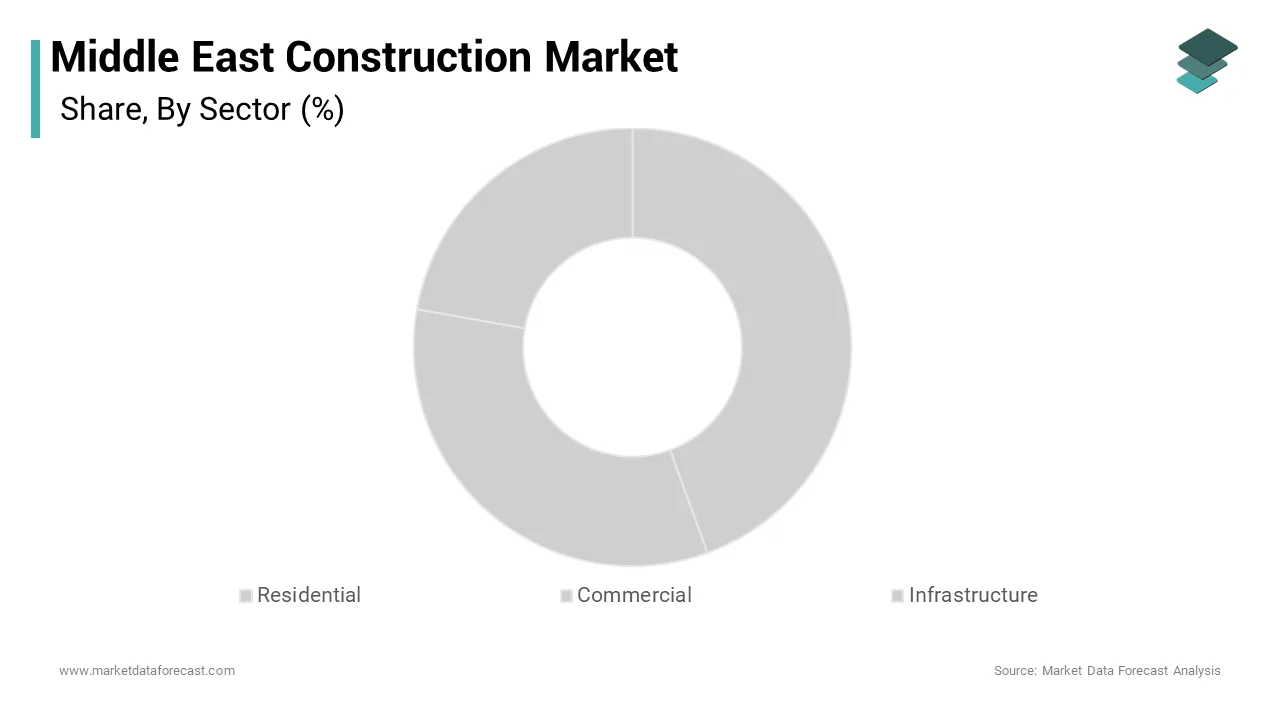
On the other hand, the residential segment is predicted to record a promising CAGR of 8.5% over the forecast period in the regional market owing to the rapid population expansion, urbanization, and government initiatives to increase housing affordability and availability. According to the United Nations Department of Economic and Social Affairs, the urban population in the Middle East is expected to grow by millions of people by 2030, creating substantial demand for new housing units. A key driver is the implementation of national housing programs such as Saudi Arabia’s Sakani program and the UAE’s affordable housing initiatives, which aim to increase home ownership rates among citizens. These programs provide subsidies, financing options, and land allocations that stimulate private sector development. The second factor is the rising disposable income and changing lifestyle preferences among younger demographics who seek modern apartments and gated communities. As per industry data, residential transaction volumes in major cities like Dubai and Riyadh have shown strong year-on-year growth, reflecting buyer confidence. The introduction of flexible visa regimes and remote work policies has also attracted expatriates and investors, further boosting demand for rental and purchase properties. Developers are responding with diverse offerings ranging from luxury villas to compact studios, catering to varied income levels. This combination of demographic pressure, policy support and economic vitality positions residential construction as the most dynamic growth engine in the sector.
By Construction Insights
The new construction segment held the major share of the Middle East construction market in 2025 due to the prevalence of greenfield projects and the development of entirely new cities and economic zones. The region’s ambitious vision plans require the creation of infrastructure and buildings from scratch rather than retrofitting existing structures. According to the Saudi Ministry of Municipal and Rural Affairs, thousands of new residential and commercial projects are initiated annually under the Vision 2030 framework, driving substantial volume in new builds. A primary driver is the availability of undeveloped land and government allocation of plots for mega projects such as NEOM, Qiddiya, and the Red Sea Project. These initiatives involve constructing complete ecosystems including housing, tourism facilities, and industrial parks, necessitating extensive new construction activities. Data from market researchers indicates that the pipeline of new developments in the Gulf region is valued at over 1 trillion US dollars, reflecting the scale of ongoing and planned projects. The second driving factor is the desire to incorporate modern technologies and sustainable design principles that are difficult to achieve through renovation. New constructions allow for the integration of smart building systems, energy efficient materials, and advanced architectural concepts from the outset. As per industry reports, contractors in the region indicate that a significant majority of their current contracts are for new builds, highlighting the sector’s preference for ground up development. This trend is supported by robust financing from sovereign wealth funds and international investors who favor large scale transformative projects.
On the other end, the renovation activity segment is anticipated to grow steadily in the coming years and showcase a CAGR of 5.5% over the forecast period as older building stocks are updated to meet modern energy and sustainability standards. This surge is also driven by the need to upgrade aging infrastructure, improve energy efficiency, and adapt existing buildings to modern standards. According to regional engineering research centers, a significant portion of the building stock in older cities such as Cairo, Beirut, and parts of Dubai was constructed before the implementation of current sustainability codes, necessitating retrofits. A key driver is the increasing emphasis on environmental sustainability and carbon reduction, prompting building owners to invest in insulation upgrades, window replacements, and HVAC system modernizations. Several regional energy services companies have retrofitted thousands of buildings, demonstrating the viability and savings potential of such projects. The second factor is the tourism and hospitality sector’s need to refresh properties to maintain competitiveness and attract discerning travelers. Hotels and retail centers undergo regular refurbishments to update aesthetics and amenities. As per market analysis, renovation and fit out projects account for a growing share of construction spend in mature markets like Bahrain and Kuwait. Government incentives for energy efficient renovations further accelerate this trend. The lower capital intensity and shorter timelines of renovation projects compared to new builds make them attractive for private investors and property managers seeking quick returns and improved asset value.
By Construction Method Insights
The conventional on-site construction segment dominated the market with the leading share of the regional market in 2025 due to its established presence, flexibility, and suitability for complex and customized projects. This method involves traditional building techniques where materials are brought to the site and assembled by laborers, allowing for adjustments during the construction process. For instance, the vast majority of construction projects in the region still utilize conventional methods, particularly for high rise buildings and intricate architectural designs. A primary driver is the availability of low cost labor from South Asia and other regions, which makes labor intensive on site construction economically viable. The flexibility of this method allows architects and engineers to address unique site conditions and design requirements that may be challenging for standardized modular approaches. For instance, conventional methods are preferred for projects requiring high levels of customization and artistic detail, which are common in luxury residential and hospitality sectors. The second driving factor is the established supply chain and regulatory framework that supports traditional construction practices. Contractors, suppliers, and inspectors are well versed in on site procedures, reducing administrative hurdles and ensuring compliance with local codes. As per professional architecture publications, the familiarity and reliability of conventional methods continue to make them the default choice for most developers despite the emergence of alternative techniques.
On the other side, the modern methods of construction segment is predicted to grow 10.4% over the forecast period in the regional market owing to the urgent need to accelerate project delivery, reduce waste, and improve quality control in line with national efficiency goals. According to regional standards organizations, the use of off-site manufacturing can reduce construction time by up to 50%, making it ideal for meeting aggressive deadlines associated with mega projects. A key driver is the government’s push for industrialization of the construction sector, encouraging the establishment of local factories for precast concrete and modular units. Projects like NEOM are actively adopting modular construction for residential and hospitality components to ensure speed and consistency. The second factor is the improvement in technology and logistics that enable the transport and assembly of large modules with precision. As per global management consultants, modular construction can reduce material waste by 20% and enhance safety by shifting hazardous tasks to controlled factory environments. The alignment with sustainability targets and the ability to mitigate labor shortages through automation further propel the adoption of modern methods. This shift represents a structural change in how buildings are created in the region, offering significant advantages in speed and efficiency.
COUNTRY LEVEL ANALYSIS
Saudi Arabia Construction Market Analysis
Saudi Arabia accounted for 34.5% of the regional market share in 2025 and is poised to remain the primary engine of regional construction growth as it moves through the middle stages of its large-scale national development plans for the next few years. The Kingdom’s Vision 2030 initiative drives unprecedented investment in new cities, tourism destinations, and industrial hubs. According to the Saudi Ministry of Investment, the country aims to attract 100 billion US dollars in foreign direct investment, much of which is directed toward construction and infrastructure. A major driving factor is the development of NEOM, a 500 billion US dollar smart city project that requires extensive construction of residential, commercial, and transport infrastructure. The second factor is the housing program aimed at increasing home ownership to 70%, stimulating residential construction across the Kingdom. The Public Investment Fund provides substantial financing for these initiatives, ensuring a steady pipeline of projects. Regulatory reforms have also eased business operations for international contractors. The sheer scale of ambition and financial backing positions Saudi Arabia as the primary engine of growth in the regional construction sector.
United Arab Emirates Construction Market Analysis
The United Arab Emirates is expected to sustain its high-value construction output by focusing on urban renewal, sustainable technology, and tourism infrastructure in the coming years. The UAE is known for its iconic skyscrapers, luxury tourism infrastructure, and advanced urban planning. According to the UAE Ministry of Economy and Tourism, real estate and construction contribute significantly to GDP, driven by continuous innovation and global events. A key driver is the preparation for future expos and tourism targets, which necessitate the development of hotels, entertainment venues, and transport links. The second factor is the strong regulatory framework that promotes sustainability and smart city technologies, attracting high quality international developers. Abu Dhabi’s focus on industrial diversification also spurs construction of logistics and manufacturing facilities. The UAE’s status as a global hub ensures consistent demand for premium construction services. Despite market maturity, ongoing regeneration projects and population growth sustain active construction levels.
COMPETITIVE LANDSCAPE
Competition in the Middle East construction market is intense and stratified characterized by a mix of powerful local conglomerates and specialized international contractors vying for lucrative mega project contracts. Large domestic firms leverage deep government relationships local knowledge and established supply networks to secure anchor roles in national vision initiatives. International players compete on technical expertise innovation and financial capacity often forming joint ventures to meet local content mandates and share risk. Price competition remains fierce particularly in conventional building segments though value based bidding is gaining traction for complex infrastructure projects. Differentiation increasingly hinges on sustainability credentials digital capabilities and ability to deliver under extreme climatic conditions. Supply chain reliability has become a critical competitive factor as material shortages and logistics disruptions test operational resilience. Talent acquisition wars intensify as firms scramble for skilled engineers and project managers amid regional labor shortages. Regulatory compliance especially regarding environmental standards and nationalization quotas creates additional barriers to entry favoring established players. Overall success requires balancing scale agility technological adoption and strategic alliances to thrive in this high stakes environment where project delays or failures carry significant reputational and financial consequences.
KEY MARKET PLAYERS
These Are the market players that are dominating the Middle East construction market?
- China Communications Construction Group Ltd
- China Railway Construction Corp. Ltd
- Vinci SA
- Saudi Binladin Group
- Dangote Group
- Bouygues SA
- Aveng Ltd
- WBHO (Wilson Bayly Holmes-Ovcon)
- Orascom Construction
- Bam International
- Shapoorji Pallonji Group
- Julius Berger Nigeria PLC
- Sonatrach (Infrastructure arm)
- Consolidated Contractors Company (CCC)
- China National Machinery Industry Corp. (Sinomach)
- Power Construction Corp. of China (PowerChina)
- Shapoorji Pallonji Africa
- Group Five Construction
- Arab Contractors
- Dumez Nigeria PLC
- General Nile Company for Roads & Bridges
Top Players In The Market
- Saudi Binladin Group stands as a cornerstone of the Middle East construction landscape with extensive involvement in mega projects across Saudi Arabia and the wider region. The company specializes in complex infrastructure, religious sites, and high rise developments that define modern urban skylines. Recent actions include expanding its capabilities in sustainable construction methods to align with Vision 2030 sustainability goals. The firm has also invested heavily in digital project management tools to enhance operational efficiency and safety standards on large scale sites. By prioritizing local talent development through specialized training programs, the group strengthens its workforce resilience. Strategic partnerships with international technology providers enable the integration of smart building solutions into traditional construction practices. These initiatives reinforce the company’s reputation for delivering iconic structures while adapting to evolving regulatory and environmental demands in the dynamic Middle East market.
- Arabtec Construction has established itself as a leading contractor in the United Arab Emirates and broader Gulf region through the delivery of landmark commercial and residential towers. The company is renowned for executing technically challenging high rise projects that require precision engineering and advanced logistics. Recent actions involve diversifying its portfolio into industrial and logistics facilities to capitalize on regional economic diversification trends. Arabtec has also strengthened its supply chain resilience by establishing long term agreements with key material suppliers to mitigate volatility risks. The firm actively adopts modular construction techniques to accelerate project timelines and reduce on site waste. Collaborations with architectural firms on design build contracts further enhance value proposition for clients. These strategic moves position Arabtec to capture emerging opportunities beyond traditional real estate while maintaining its core competency in vertical construction excellence.
- Orascom Construction plays a pivotal role across North Africa and the Middle East by delivering critical infrastructure including transportation networks, water treatment plants, and energy facilities. The company leverages deep regional expertise to navigate complex regulatory environments and execute projects in diverse geographies from Egypt to Saudi Arabia. Recent actions include expanding its renewable energy construction division to support regional decarbonization targets and green hydrogen initiatives. Orascom has also enhanced its digital twin capabilities to optimize asset lifecycle management for infrastructure clients. Strategic joint ventures with European and Asian firms facilitate technology transfer and access to specialized engineering skills. The company’s focus on integrated EPC solutions allows it to offer end to end project delivery. These efforts strengthen its competitive edge in securing large scale public sector contracts essential for national development agendas across the MEA region.
Top Strategies Used By Key Market Participants
Key players in the Middle East construction market prioritize vertical integration to control supply chains and reduce dependency on volatile external vendors. They invest significantly in digital transformation including building information modeling and artificial intelligence to enhance design accuracy and project scheduling. Sustainability adoption is central as firms pursue green certifications and low carbon materials to meet stringent government regulations and client expectations. Strategic partnerships with international specialists enable access to cutting edge technologies and global best practices without heavy internal R&D costs. Workforce nationalization programs are implemented to comply with local content requirements while building long term human capital. Diversification into adjacent sectors such as renewable energy and industrial logistics reduces exposure to cyclical real estate markets. Financial hedging strategies protect margins against currency fluctuations and commodity price shocks common in the region. Client centric approaches including design build and integrated project delivery models foster deeper relationships and repeat business. These multifaceted strategies collectively enable participants to navigate geopolitical complexities regulatory shifts and intense competition while capturing growth opportunities in this rapidly evolving landscape.
MARKET SEGMENTATION
This research report on the Middle East construction market is segmented and sub-segmented into the following categories.
By Sector
- Residential
- Apartments/Condominiums
- Villas/Landed Houses
- Commercial
- Office
- Retail
- Industrial and Logistics
- Others
- Infrastructure
- Transportation Infrastructure (Roadways, Railways, Airways, others)
- Energy & Utilities
- Others
By Construction Type
- New Construction
- Renovation
By Construction Method
- Conventional On-Site
- Modern Methods of Construction (Prefabricated, Modular, etc.c)
By Investment Source
- Public
- Private
By Country
- KSA
- UAE
- Israel
- The rest of the GCC countries
- South Africa
- Ethiopia
- Kenya
- Egypt
- Sudan
- Rest of MEA