- Product Description Description
- Table of Contents TOC
- List of Table & Figure LOT
- Get Free Sample PDF Sample PDF
Market Size, 2025
$8.32 BnMarket Estimate, 2026
$10.26 BnMarket Forecast, 2034
$54.88 BnCAGR, 2026–2034
23.32%Executive Summary: North America Antibody Drug Conjugates Market
- Market Scope: Comprehensive North America antibody-drug conjugates (ADCs) market analysis covering pipeline phases, technology platforms, end-user settings, country frameworks, and targeted oncology adoption metrics.
- Market Valuation: Valued at USD 8.32 billion (2025), estimated at USD 10.26 billion in 2026, and projected to reach USD 54.88 billion by 2034, registering an impressive CAGR of 23.32% (2026–2034).
- Primary Growth Drivers: Rising cancer incidence, growing aging/geriatric population, heavy R&D investments by pharmaceutical companies in pipeline analysis, and technological advancements overcoming linker stability and target-finding challenges. Key restraints include high production and treatment costs, strict regulatory approval processes, and low reimbursement policies.
Key Market Segment Metrics (2026–2034)
| Category | Leading Segment (2025 Position) | Fastest-Growing Segment |
|---|---|---|
| By Pipeline | Clinical-stage pipelines and HER2-targeted/IgG1 antibody configurations | Advanced site-specific and next-generation linker technologies |
| By Technology | Proprietary Seattle Genetics, Immunogen, and Immunomedics platforms | Customized modular payload conjugation systems |
| By End User | Hospitals and specialized cancer centers (dominated clinical administration volume) | Advanced research institutes and clinical trial facilities |
| By Country | United States (accounted for the dominant regional share driven by major biopharma headquarters and funding) | Canada and Mexico (expanding via healthcare infrastructure investments) |
Major Market Players & Market Structure
Market Structure: Highly competitive North American oncology landscape featuring leading biopharmaceutical pioneers competing intensely on clinical trial execution, high-affinity antibody engineering, and robust revenue-generating pipelines.
Key Companies: Seattle Genetics, Genentech, Takeda Pharmaceuticals, F. Hoffmann-La Roche, Bayer Healthcare, Agensys, Inc., Immunogen, Novartis, Oxford Biotherapeutics, and Synthon Biopharmaceuticals.
North America antibody-drug Conjugates Market Size
The North America antibody-drug conjugates market was valued at USD 8.32 billion in 2025. The market is estimated at USD 10.26 billion in 2026 and is projected to reach USD 54.88 billion by 2034, growing at a CAGR of 23.32% from 2026 to 2034.

Antibody-drug conjugates are an oncology therapeutics industry focused on targeted delivery systems that link monoclonal antibodies to potent cytotoxic payloads. This precise mechanism minimizes systemic toxicity while maximizing tumor cell destruction, addressing critical limitations of conventional chemotherapy. According to the American Cancer Society, approximately 2 million new cancer cases are projected to be diagnosed in the United States in 2024, with the urgent need for advanced therapeutic interventions. According to the National Cancer Institute, cancer remains the second leading cause of death in the United States, accounting for nearly 610000 deaths annually, which drives continuous innovation in treatment modalities. As per regulatory frameworks established by the Food and Drug Administration, antibody-drug conjugates offer accelerated approval pathways for breakthrough therapies targeting refractory malignancies. The market serves specialized oncology centers, hospitals, and research institutions across the United States, Canada, and Mexico. Manufacturers leverage proprietary linker technologies and novel payloads to enhance stability and efficacy.
MARKET DRIVERS
Rising Prevalence of Targetable Cancers and Aging Population
The escalating incidence of targetable cancers such as breast, lung, and hematologic malignancies, coupled with a rapidly aging demographic, is propelling the growth of the North America antibody-drug conjugates market. As per the American Cancer Society, breast cancer alone will account for over 310000 new invasive cases in women in the United States in 2024, creating a substantial patient pool eligible for HER2-targeted therapies. Additionally, the Centers for Disease Control and Prevention projects that the population aged 65 and older will reach 95 million by 2060, significantly increasing susceptibility to age-related cancers requiring precise treatment options. Older patients often present with comorbidities that limit tolerance to traditional chemotherapy, making antibody-drug conjugates an attractive alternative due to their targeted mechanism. Healthcare providers increasingly rely on these therapies for second-line and third-line treatments where resistance to standard care has developed. The high burden of disease necessitates interventions that improve survival rates and quality of life. Insurance coverage expansions for targeted biologics facilitate broader access to these premium therapies. Clinical guidelines from major oncology associations recommend antibody-drug conjugates for specific molecular subtypes, driving standardized adoption. This demographic and epidemiological trend ensures sustained growth in consumption as the healthcare system adapts to the needs of an aging society facing complex oncological challenges.
Regulatory Support and Accelerated Approval Pathways
The proactive regulatory reforms and expedited approval mechanisms by the Food and Drug Administration that is levelling up the growth of the North America antibody-drug conjugates market. The FDA granted breakthrough therapy designation to multiple antibody-drug conjugate candidates in recent years, reducing development timelines and facilitating faster patient access to innovative treatments. The Prescription Drug User Fee Act reauthorization includes provisions for enhancing regulatory efficiency for complex biologics, encouraging pharmaceutical investment in this sector. These policy frameworks create a favorable environment for commercialization, allowing companies to recoup research and development costs more quickly. Regulatory clarity on manufacturing standards for conjugation processes ensures product quality and safety, boosting clinician confidence. The agency's willingness to accept surrogate endpoints in clinical trials for rare cancers further speeds up approvals. Reimbursement policies from Medicare and private insurers increasingly cover these high-cost therapies, recognizing their clinical value. Professional medical societies update treatment guidelines rapidly following regulatory approvals, driving immediate uptake in clinical practice. Collaborative reviews with international regulators harmonize standards, reducing redundant testing.
MARKET RESTRAINTS
High Treatment Costs and Reimbursement Complexities
The exorbitant treatment costs and intricate reimbursement procedures are hindering the growth of the North America antibody-drug conjugates market. Private insurance plans often impose strict prior authorization requirements and step therapy protocols, delaying or denying coverage for newer conjugates. Medicare Part B coverage varies by setting, creating administrative hurdles for providers and patients. High deductibles force patients to pay thousands of dollars before insurance benefits activate, leading to treatment abandonment. Healthcare providers face delays in reimbursement, affecting cash flow and willingness to prescribe expensive agents. Price transparency issues complicate budget planning for hospital pharmacies. The lack of uniform pricing strategies across payers creates disparities in access based on insurance type. Financial toxicity leads to poor adherence and worse clinical outcomes. These economic barriers limit market penetration to well-insured segments, leaving underinsured populations underserved despite clinical eligibility for these life-extending therapies.
Complex Manufacturing and Supply Chain Vulnerabilities
The intricate manufacturing requirements and fragile supply chains is also hampering the growth of the North America antibody-drug conjugates market. Producing antibody-drug conjugates requires highly specialized facilities capable of handling potent cytotoxic payloads safely, which limits the number of qualified manufacturers globally. The International Society for Pharmaceutics notes that only a handful of contract development and manufacturing organizations possess the expertise to scale up ADC production while maintaining stringent quality control standards. Supply chain disruptions for key raw materials such as specific linkers and monoclonal antibodies can delay production and impact drug availability. Cold chain requirements for storage and transportation add complexity and cost to distribution networks, particularly for temperature-sensitive biologics. Regulatory inspections for manufacturing sites are rigorous and time-consuming, delaying market entry for new players. Any deviation in production parameters can lead to batch failures and recalls, disrupting supply continuity. Dependence on single-source suppliers for critical components increases vulnerability to geopolitical or logistical shocks. Inventory management challenges arise due to short shelf lives of some conjugates.
MARKET OPPORTUNITIES
Expansion into Novel Targets and Bispecific Formats
The development of antibody-drug conjugates targeting novel antigens and the emergence of bispecific formats is likely to create new opportunities for the growth of the North America antibody-drug conjugates market. Researchers are identifying new tumor-specific markers beyond HER2 and TROP2, allowing for treatment of diverse cancer types, including pancreatic and ovarian malignancies. This innovation opens therapeutic avenues for patients who have exhausted standard options. Pharmaceutical companies are investing heavily in next-generation ADC pipelines focusing on unique biological insights from genomic profiling. Clinical trials exploring combination therapies with immune checkpoint inhibitors show promising results in improving response rates. Regulatory agencies offer orphan drug designations for rare indications, accelerating development timelines. Partnerships between academic institutions and biotech firms foster innovation in linker technology and payload optimization. The ability to tailor treatments to specific genetic profiles aligns with the growing emphasis on precision medicine. This scientific advancement drives market expansion by addressing unmet needs in difficult-to-treat cancers and extending the lifecycle of ADC technologies through enhanced efficacy and reduced toxicity profiles.
Integration with Diagnostic Biomarkers and Personalized Medicine
The integration of antibody-drug conjugates with advanced diagnostic biomarkers is also to bolster the growth of the North America antibody-drug conjugates market. Companion diagnostics enable precise identification of patients likely to respond to specific conjugates, minimizing unnecessary exposure and optimizing resource allocation. This synergy between diagnostics and therapeutics supports value-based care models by improving clinical outcomes and reducing waste. Hospitals and laboratories are investing in next-generation sequencing platforms to detect low-abundance targets. Digital pathology tools assist in quantifying protein expression levels, ensuring accurate dosing. Insurance providers increasingly reimburse for predictive testing, recognizing its role in cost-effective care. Pharmaceutical companies collaborate with diagnostic firms to develop co-approved tests facilitating seamless adoption. Real-world evidence generated from biomarker-selected populations strengthens regulatory submissions and guideline recommendations. This approach enhances physician confidence in prescribing conjugates.
MARKET CHALLENGES
Emergence of Drug Resistance Mechanisms
The development of acquired resistance by limiting long term efficacy and sustainability is a major factor limiting the growth of the North America antibody-drug conjugates market. Tumor cells employ various mechanisms such as antigen downregulation, efflux pump overexpression, and linker instability to evade the cytotoxic effects of conjugates. Clinicians face difficulties in managing patients who progress after initial response, requiring a switch to alternative therapies with limited data. Lack of predictive biomarkers for resistance complicates treatment planning. Research into combination therapies to prevent resistance is ongoing but adds complexity to clinical trials. Regulatory approvals for second-line conjugates are slower due to smaller patient populations. The cycle of resistance reduces the duration of treatment and overall revenue potential per patient.
Safety Concerns and Off-Target Toxicity
The persistent safety concerns related to off-target toxicity and adverse events are attributed to limiting the growth of the North America antibody-drug conjugates market. Despite targeted delivery, cytotoxic payloads can leak prematurely, causing damage to healthy tissues, leading to conditions such as interstitial lung disease, neuropathy, and ocular toxicity. The Food and Drug Administration has issued black box warnings for several approved conjugates due to severe pulmonary risks requiring careful patient monitoring. Healthcare providers must balance efficacy with safety, often reducing doses or discontinuing treatment prematurely. Management of adverse events requires specialized expertise and resources, increasing healthcare costs. Patient fear of side effects influences acceptance and adherence to therapy. Post-marketing surveillance reveals rare but serious complications not detected in clinical trials. Lack of standardized protocols for managing specific toxicities creates variability in care. Regulatory scrutiny on safety profiles delays approvals for new candidates with similar payloads. Pharmaceutical companies invest heavily in developing safer linkers and less toxic payloads, but trade-offs in potency remain.
REPORT COVERAGE
| REPORT METRIC | DETAILS |
| Market Size Available | 2025 to 2034 |
| Base Year | 2025 |
| Forecast Period | 2026 to 2034 |
| Segments Covered | By Pipeline, Technology, End User, and Region. |
| Various Analyses Covered | Global, Regional, and Country-Level Analysis, Segment-Level Analysis, Drivers, Restraints, Opportunities, Challenges; PESTLE Analysis; Porter’s Five Forces Analysis, Competitive Landscape, Analyst Overview of Investment Opportunities |
| Countries Covered | United States, Canada, Mexico, Rest of North America |
| Market Leaders Profiled | Seattle Genetics, Genentech, Takeda Pharmaceuticals, F. Hoffmann-La Roche, Bayer Healthcare, Daiichi Sankyo, Agensys, Inc., Seagen Inc., ImmunoGen Inc., Novartis, Oxford Biotherapeutics, and Synthon Biopharmaceuticals. |
SEGMENTAL ANALYSIS
By Pipeline Insights
The HER2 antibodies segment was the largest, holding 33.4% of the North America Antibody-drug conjugates market share in 2025, with the high prevalence of HER2-positive breast and gastric cancers and the established clinical efficacy of targeted therapies. As per the American Cancer Society, approximately 310700 new cases of invasive breast cancer will be diagnosed in women in the United States in 2024, with a significant portion expressing HER2 receptors. This substantial disease burden creates a consistent and large patient pool eligible for HER2-directed antibody-drug conjugates such as trastuzumab deruxtecan and trastuzumab emtansine. Clinical guidelines from the National Comprehensive Cancer Network recommend HER2 testing for all invasive breast cancers, ensuring accurate identification of candidates for these targeted treatments. The proven ability of HER2 conjugates to extend overall survival in metastatic settings reinforces their status as standard of care. Pharmaceutical companies prioritize this target due to well-established biological pathways and successful clinical trial histories. Regulatory approvals for multiple HER2-based conjugates have expanded treatment options for resistant cases. Reimbursement policies in the United States and Canada increasingly cover these high-cost therapies, improving patient access. The maturity of diagnostic infrastructure for HER2 status further supports market dominance. Continuous research into next-generation HER2 conjugates with improved payloads sustains clinical interest.
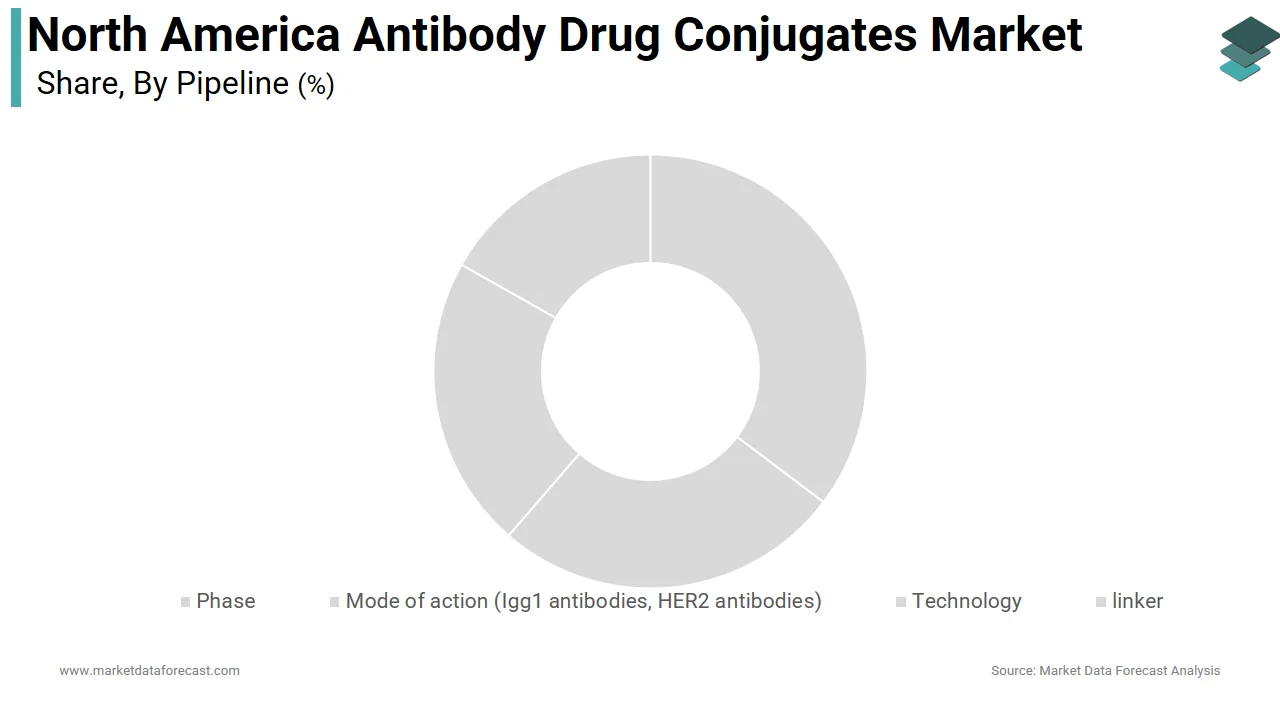
The linker technology segment is lucratively growing at the fastest CAGR of 9.2% from 2026 to 2034, with the enhance stability and reduce off target toxicity. Advanced linkers such as cleavable and non-cleavable variants allow for precise control over drug release mechanisms, improving the therapeutic index. As per the Journal of Medicinal Chemistry, novel linker designs have reduced premature payload release by up to 40% in preclinical models, enhancing safety profiles for patients. This technological advancement enables the use of more potent cytotoxic agents that were previously too toxic for systemic administration. Researchers in North America are actively developing proprietary linker platforms to differentiate their pipeline candidates from global competitors. The ability to tailor linker chemistry to specific tumor microenvironments offers personalized treatment advantages. Regulatory agencies favor innovations that demonstrate superior safety data, accelerating approval timelines for next-generation conjugates. Manufacturing processes for complex linkers are becoming more scalable, reducing production costs. Partnerships between biotech firms and chemical suppliers facilitate rapid integration of new linker technologies.
By Technology Insights
The Seattle Genetics technology segment was the largest, holding 39.1% of the North America antibody-drug conjugates market share in 2025 due to its widespread adoption of the mcMMAE linker payload platform. This technology utilizes a maleimidocaproyl linker attached to monomethyl auristatin E, which has demonstrated robust efficacy in multiple approved drugs, including brentuximab vedotin and polatuzumab vedotin. The American Society of Hematology notes that brentuximab vedotin has become a cornerstone therapy for Hodgkin lymphoma and peripheral T-cell lymphoma, driving high utilization rates across North American healthcare facilities [4]. The reliability of this platform in maintaining stability in circulation while releasing payload intracellularly builds trust among clinicians. Many pharmaceutical companies in the region license this technology for their own pipeline development, reducing research risks. Established manufacturing protocols ensure consistent quality and supply chain reliability. Regulatory precedents set by earlier approvals facilitate faster acceptance of new drugs using similar technology. Clinical experience with this platform provides extensive real-world data supporting its continued use. Insurance coverage for approved drugs using this technology is well established in major markets.
The immunomedics technology segment is likely to witness the fastest CAGR of 14.3% during the forecast period with the success of sacituzumab govitecan and its innovative SN-38 payload mechanism. This technology employs a hydrolyzable linker that releases the active metabolite of irinotecan, offering a unique mechanism of action distinct from microtubule inhibitors. The New England Journal of Medicine published results showing significant improvement in progression-free survival for triple-negative breast cancer patients treated with sacituzumab govitecan compared to standard chemotherapy. This clinical breakthrough has spurred rapid adoption in oncology centers across the United States and Canada. The versatility of the SN-38 payload allows for application in various solid tumors beyond breast cancer, including urothelial and lung cancers. Regulatory approvals in key North American markets have been expedited due to urgent unmet needs in triple-negative breast cancer. Local manufacturers are exploring licensing opportunities to produce biosimilars or next-generation variants. The ability to overcome resistance to other therapies makes this technology highly attractive for second-line treatments. Clinical trials are expanding into combination regimens with immunotherapies, further boosting potential.
By End User Insights
The hospitals segment held a dominant share of the North America antibody-drug conjugates market in 2025 due to their capacity to administer complex intravenous therapies and manage potential adverse events. These specialized biologics require infusion centers equipped with trained oncology nurses and immediate access to emergency care for reactions such as anaphylaxis or infusion-related symptoms. Hospitals possess the necessary cold chain storage infrastructure to maintain the stability of antibody-drug conjugates, which are sensitive to temperature fluctuations. Multidisciplinary tumor boards in major hospitals guide treatment decisions, ensuring appropriate patient selection for targeted therapies. Accreditation standards require strict protocols for handling cytotoxic drugs, which hospitals are better equipped to implement than smaller clinics. Insurance reimbursement processes are often streamlined through hospital billing systems, facilitating patient access. Clinical trials for new conjugates are predominantly conducted in hospital settings, driving early adoption. The concentration of specialist oncologists in hospitals ensures expert management of treatment courses.
The clinics segment is expected to register the fastest CAGR of 9.2% from 2026 to 2034 with the decentralization of cancer care and rise of specialized outpatient infusion centers. Patients increasingly prefer receiving treatments in community-based clinics to avoid the long wait times and high costs associated with large hospital visits. The Oncology Nursing Society reports that outpatient care models are gaining traction as they improve quality of life and reduce healthcare system burden while maintaining safety standards. Specialized oncology clinics are investing in infrastructure to safely administer antibody-drug conjugates, including dedicated infusion chairs and monitoring equipment. Telemedicine integration allows remote consultation with specialists while receiving local administration. Insurance providers are incentivizing outpatient care through lower co-payments, encouraging patient migration from hospitals. The expansion of private healthcare networks in urban areas facilitates easier access to these services. Clinics offer personalized attention and shorter appointment durations, enhancing patient satisfaction. Regulatory frameworks are evolving to support safe administration of biologics in non-hospital settings. This segment grows rapidly as healthcare systems shift towards value-based care models that prioritize convenience and cost efficiency without compromising the quality of specialized oncology treatment.
COUNTRY LEVEL ANALYSIS
U.S. antibody-drug Conjugates Market Analysis
The United States was the top performer in the North America antibody-drug conjugates market, accounting for 90.2% of the share in 2025, with advanced healthcare infrastructure and a high prevalence of cancer. The American Cancer Society reports that approximately 2 million new cancer cases are projected to be diagnosed in the United States in 2024, creating a vast patient base requiring advanced therapies. High healthcare expenditure enables adoption of premium dosage forms like antibody-drug conjugates that offer improved efficacy and targeted delivery. The Food and Drug Administration actively supports innovation in drug delivery systems through expedited review pathways for breakthrough therapies. Major pharmaceutical companies headquartered in the US lead global development of antibody-drug conjugate technologies for breast, lung, and hematologic cancers. Insurance coverage for branded conjugates is more prevalent in the US compared to other regions, facilitating market penetration. Patient advocacy groups promote awareness of targeted therapies for specific molecular subtypes. Digital health integration with electronic health records further boosts accessibility and monitoring.
Canada antibody-drug Conjugates Market Analysis
Canada antibody-drug conjugates market was ranked second by capturing a 9.1% share in 2025, with universal healthcare coverage and growing acceptance of innovative drug delivery systems. Health Canada regulates antibody-drug conjugates under strict safety and efficacy guidelines, ensuring high quality standards for imported and domestically produced products. The Canadian Institute for Health Information notes that prescription drug spending continues to rise, reflecting increased utilization of specialized medications, including conjugates for chronic conditions. Provincial health plans increasingly cover cost-effective formulations that reduce hospitalizations due to disease progression. The aging population in Canada drives demand for targeted medications, particularly in oncology care. Canadian pharmacies are integrating digital tools to support patient education on new dosage forms. Collaborations between Canadian research institutions and pharmaceutical firms foster innovation in linker technologies. The market benefits from close trade ties with the United States, facilitating timely access to new product launches. Public health initiatives focus on improving medication management for seniors and complex cases. Growing awareness of precision medicine increases demand for adherent formulations like targeted conjugates.
COMPETITIVE LANDSCAPE
The competitive landscape of the North America antibody-drug conjugates market features a mix of established biotechnology pioneers and large multinational pharmaceutical corporations vying for dominance. Leading companies leverage proprietary linker technologies and extensive clinical data to maintain strong positions in key therapeutic areas such as breast cancer and lymphoma. These players emphasize innovation in payload potency and antibody specificity to differentiate their offerings from emerging competitors. New entrants focus on niche indications and novel targets to capture unmet medical needs where standard care has failed. Strategic alliances between small biotechs and large pharma entities are common to combine innovation with commercial scale. Price competition intensifies as payers demand evidence of cost-effectiveness alongside clinical benefit.
KEY MARKET PLAYERS
The leading companies operating in the North America antibody-drug conjugates market include:
- Seattle Genetics
- Genentech
- Takeda Pharmaceuticals
- Hoffmann-La Roche
- Bayer Healthcare
- Daiichi Sankyo
- Agensys, Inc.
- Seagen Inc.
- ImmunoGen Inc.
- Novartis
- Oxford Biotherapeutics
- Synthon Biopharmaceuticals
TOP PLAYERS IN THE MARKET
- Seagen Inc is a global leader in the North America antibody-drug conjugates market, specializing in proprietary linker and payload technologies. The company has successfully commercialized multiple approved therapies, including brentuximab vedotin and polatuzumab vedotin for hematologic malignancies. Recent actions include expanding its manufacturing capabilities to meet growing demand and initiating late-stage clinical trials for novel targets. Seagen actively collaborates with major pharmaceutical partners to accelerate development pipelines and market access. The company invests heavily in research to optimize antibody conjugation processes, ensuring stability and efficacy. Strategic partnerships with academic institutions foster innovation in next-generation ADC platforms. These efforts reinforce its position as a pioneer in targeted oncology therapies, providing critical treatment options for patients with limited alternatives across the region.
- Daiichi Sankyo Company Limited holds a prominent position in the North America antibody-drug conjugates market driven by its innovative DXd linker technology. The company achieved significant success with trastuzumab deruxtecan, which is widely used for HER2-positive breast and gastric cancers. Recent initiatives involve securing regulatory approvals for new indications and expanding supply chain infrastructure in North America. Daiichi Sankyo collaborates closely with AstraZeneca to leverage global commercial networks and enhance market penetration. The company focuses on developing bispecific antibody-drug conjugates to address resistance mechanisms in refractory cancers. Investments in clinical education programs help oncologists understand the benefits of their proprietary platform.
- ImmunoGen Inc contributes significantly to the North American antibody-drug conjugates market through its focus on cancer-specific antibodies and potent payloads. The company developed mirvetuximab soravtansine, targeting folate receptor alpha-positive ovarian cancer, demonstrating clinical utility in difficult-to-treat populations. Recent actions include advancing pipeline candidates into pivotal trials and strengthening manufacturing partnerships for commercial-scale production. ImmunoGen engages in strategic licensing agreements to expand its therapeutic reach beyond ovarian cancer. The company emphasizes precision medicine by integrating biomarker testing into its development strategy. Collaborations with diagnostic firms ensure accurate patient selection for targeted therapies. These contributions enhance its reputation for scientific excellence and provide hope for patients with few remaining treatment options in the region.
TOP STRATEGIES USED BY THE KEY MARKET PARTICIPANTS
Key players in the North America antibody-drug conjugates market employ strategic collaborations and licensing agreements to expand their therapeutic pipelines and geographic reach. These partnerships enable companies to share development risks and access novel technologies while accelerating time to market. Firms invest heavily in clinical trials focused on diverse patient populations to generate robust data for regulatory approvals. Manufacturing scalability is addressed through facility expansions and contract manufacturing partnerships to ensure consistent supply. Regulatory engagement involves proactive dialogue with health authorities to navigate complex approval pathways efficiently. Marketing efforts focus on educating oncologists about the clinical benefits and safety profiles of ADCs. Pricing strategies balance affordability with value proposition to secure inclusion in insurance formularies.
MARKET SEGMENTATION
This research report on the North America antibody-drug conjugates market is segmented and sub-segmented into the following categories.
By Pipeline
- Phase
- Mode of action (Igg1 antibodies, HER2 antibodies)
- Technology
- linker.
By Technology
- Seattle Genetics
- Immunogen
- Immunomedics.
By End User
- Research institutes
- Hospitals
- Clinics.
By Country
- United States
- Canada
- Mexico
- Rest of North America