- Product Description Description
- Table of Contents TOC
- List of Table & Figure LOT
- Get Free Sample PDF Sample PDF
Market Size, 2025
$9.37 BnMarket Estimate, 2026
$9.82 BnMarket Forecast, 2034
$14.34 BnCAGR, 2026–2034
8.75%Executive Summary: North American Biopharmaceuticals Market Analysis & Growth Forecast (2026-2034)
- Market Scope: Comprehensive industry analysis covering product types, therapeutic segments, regional dynamics across the United States and Canada, and primary growth catalysts.
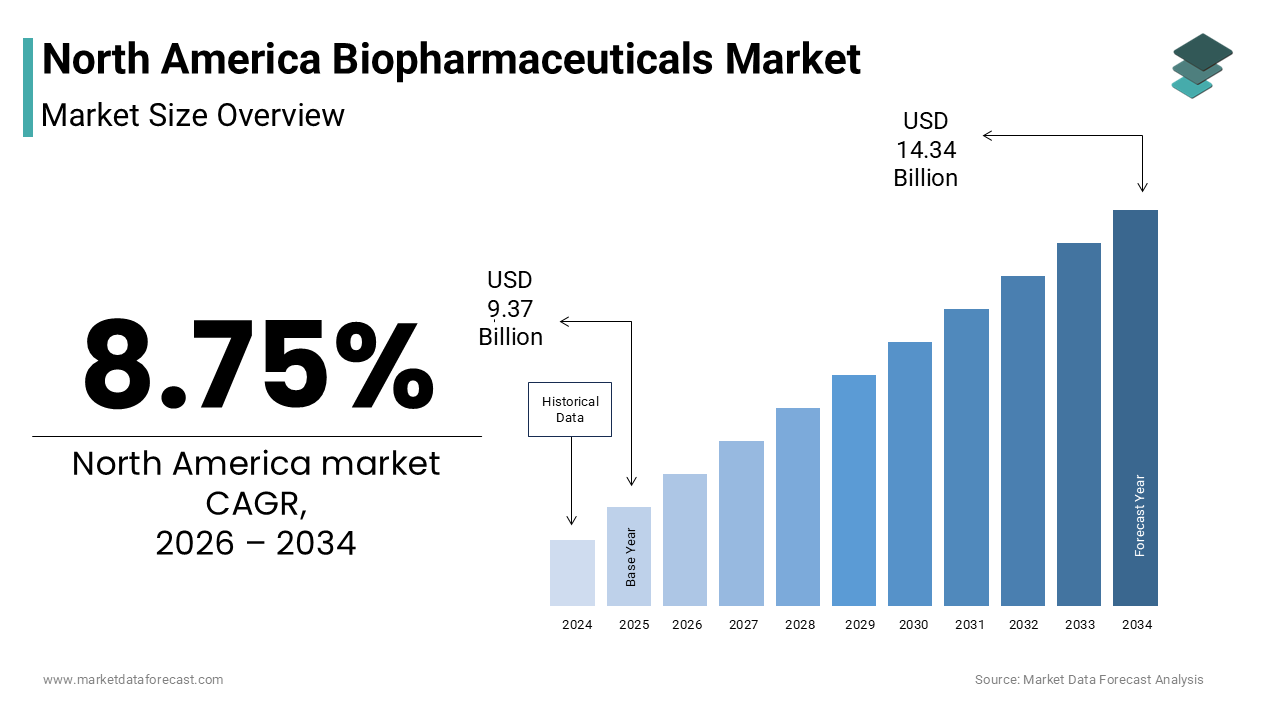
- Market Valuation: Valued at USD 9.37 billion in 2025, estimated at USD 9.82 billion in 2026, and projected to reach USD 14.34 billion by 2034, registering a compound annual growth rate (CAGR) of 8.75% from 2026 to 2034.
- Primary Growth Drivers: Escalating chronic disease prevalence, expanding aging demographics, robust research and development infrastructures backed by federal funding, and rapid advancements in personalized medicine and gene editing technologies.
Key North American Biopharmaceuticals Market Segment Metrics (2026-2034)
| Category | Leading Segment (Position) | Fastest-Growing / High-Impact Segment |
|---|---|---|
| By Product Type | Monoclonal Antibodies (commanded the leading market share in 2025 due to high efficacy in treating complex chronic conditions and cancers) | Biotech Vaccines (projected to showcase a prominent 9.2% CAGR driven by mRNA platform success and preventive healthcare mandates) |
| By Therapeutic Type | Oncology (accounted for the highest share of the regional market in 2025 due to widespread cancer prevalence and targeted immunotherapies) | Neurology (experiencing the fastest growth fueled by novel disease-modifying biologics for Alzheimer's and neurodegenerative disorders) |
| By Country | United States (dominates the regional market via massive national healthcare expenditures, major biotech clusters, and FDA innovation pathways) | Canada (stable, publicly supported growth expanding through domestic biomanufacturing and personalized medicine investments) |
Major North American Biopharmaceuticals Market Players & Industry Structure
Market Structure: Intense competitive ecosystem characterized by rivalry between established pharmaceutical giants and agile biotechnology startups competing through clinical efficacy, patent strategies, and value-based pricing initiatives.
Key Companies: Pfizer Inc., Johnson & Johnson, Amgen Inc., Merck & Co., Inc., F. Hoffmann-La Roche AG, Eli Lilly and Company, Sanofi, AbbVie Inc., Biogen Idec, Bayer AG, and Novartis AG.
North American Biopharmaceuticals Market Size
The North America biopharmaceuticals market size was valued at USD 9.37 billion in 2025 and is estimated to reach USD 14.34 billion by 2034 from USD 9.82 billion in 2026, registering a CAGR of 8.75% from 2026 to 2034.
North America serves as a global hub for innovation, driven by robust research infrastructure, substantial venture capital investment, and a favorable regulatory environment facilitated by the United States Food and Drug Administration. According to the Centers for Disease Control and Prevention, chronic diseases such as heart disease and cancer account for 60% of all deaths in the United States, creating a persistent clinical demand for targeted biologic interventions. As per Statistics Canada, the proportion of the population aged 65 and older is projected to reach 25% by 2030, intensifying the need for treatments that manage age-related conditions with precision. The integration of artificial intelligence in drug discovery has accelerated the identification of novel biological targets, reducing development timelines. Furthermore, the prevalence of personalized medicine approaches allows for therapies tailored to individual genetic profiles, enhancing efficacy and minimizing adverse effects. This market is defined not only by its technological sophistication, but also by its ability to translate scientific breakthroughs into commercially viable treatments that improve patient outcomes across the continent.
MARKET DRIVERS
Surge in Chronic Disease Prevalence Driving Demand for Targeted Biologics
The escalating burden of chronic diseases is primarily driving the North American biopharmaceuticals market expansion. Conditions such as cancer, autoimmune disorders, and cardiovascular diseases require long-term management and often respond better to biologic agents than conventional small molecule drugs. According to the American Cancer Society, approximately 1.9 million new cancer cases are diagnosed annually in the United States, necessitating advanced therapeutic options that offer higher survival rates. As per the Arthritis Foundation, more than 54 million adults in the United States suffer from arthritis, with many requiring biologic disease-modifying antirheumatic drugs to prevent joint damage and maintain mobility. The aging demographic further amplifies this demand, as older individuals are more susceptible to multiple comorbidities that benefit from precise biological targeting. Biopharmaceuticals, including checkpoint inhibitors and interleukin blockers, provide mechanisms that specifically modulate immune responses, offering superior efficacy compared to broad-spectrum treatments. Healthcare providers are increasingly adopting these therapies due to robust clinical evidence demonstrating their ability to alter disease progression. The economic impact of chronic illnesses, which strains healthcare systems through hospitalizations and long-term care, drives payers to invest in preventive and curative biologics that reduce overall costs. Patient advocacy groups also play a crucial role in pushing for broader insurance coverage, ensuring that innovative treatments remain accessible. This driver is reinforced by continuous improvements in diagnostic technologies that enable earlier detection and timely intervention with biologic therapies.
Robust Research and Development Infrastructure Accelerating Innovation
The presence of a world-class research and development ecosystem further aids the North American biopharmaceuticals market expansion, which is fostering an environment conducive to rapid innovation and commercialization. The region boasts a high concentration of leading academic institutions, research hospitals, and biotechnology clusters that facilitate collaboration between scientists, clinicians, and industry partners. According to the National Institutes of Health, federal funding for biomedical research exceeded 47 billion dollars in recent fiscal years, providing critical support for early-stage discoveries and clinical trials. As per the Biotechnology Innovation Organization, the United States is home to over 2,000 biotech companies, many of which are focused on developing novel biologics and gene therapies. This dense network of expertise enables the efficient translation of laboratory findings into viable therapeutic products. The availability of skilled personnel, including molecular biologists and clinical researchers, ensures that complex manufacturing processes are executed with precision. Furthermore, the regulatory framework provided by the United States Food and Drug Administration offers clear pathways for approval, including expedited reviews for breakthrough therapies. Venture capital investment in the sector remains strong, with billions of dollars allocated annually to support startups and scale-ups. This financial backing allows companies to take risks on innovative platforms such as messenger RNA technology and CRISPR gene editing. The synergy between public funding, private investment, and academic excellence creates a sustainable pipeline of new biopharmaceutical products that maintain the region’s global leadership.
MARKET RESTRAINTS
Stringent Pricing Regulations and Reimbursement Pressures
The implementation of stringent pricing regulations and increasing pressure from payers to control healthcare costs are major restraints on the North America biopharmaceuticals market. Biologic drugs are significantly more expensive to develop and manufacture than traditional pharmaceuticals, leading to high list prices that attract scrutiny from government bodies and insurance providers. According to the Congressional Budget Office, spending on prescription drugs in the United States is projected to grow by 5% annually, prompting legislative efforts to cap out-of-pocket costs for patients. As per the Kaiser Family Foundation, nearly 30% of Americans report difficulty affording their prescribed medications, leading to non-adherence and poor health outcomes. The Inflation Reduction Act in the United States introduces measures that allow Medicare to negotiate prices for certain high-cost drugs, directly impacting revenue projections for manufacturers. Private insurers are also adopting stricter prior authorization requirements and step therapy protocols to limit the use of expensive biologics when cheaper alternatives exist. These reimbursement hurdles delay patient access and increase administrative burdens for healthcare providers. Manufacturers face the challenge of demonstrating value-based outcomes to justify premium pricing, which requires extensive real-world evidence generation. The uncertainty surrounding future pricing policies creates a cautious investment environment, potentially slowing down the development of new biologics. Companies must navigate this complex landscape by optimizing their pricing strategies and engaging in proactive dialogue with stakeholders to ensure sustainable market access.
Complex Manufacturing Processes and Supply Chain Vulnerabilities
The intricate nature of biopharmaceutical manufacturing and associated supply chain vulnerabilities present significant restraints to market growth in North America. Unlike small molecule drugs, biologics are produced using living cells, requiring highly controlled environments and sophisticated purification processes that are prone to variability and contamination. According to the Food and Drug Administration, manufacturing deviations account for a substantial portion of product recalls and delays in market availability. As per the Association for Accessible Medicines, the reliance on single-source suppliers for critical raw materials and specialized equipment increases the risk of disruptions during global crises. The cold chain requirements for storing and transporting temperature-sensitive biologics add another layer of complexity, particularly for last-mile delivery to remote areas. Any breach in temperature control can render products ineffective, leading to waste and financial losses. The shortage of skilled technicians who can operate advanced bioreactors and monitoring systems further constrains production capacity. Scaling up manufacturing from pilot to commercial levels often encounters technical challenges that delay launch timelines. Additionally, geopolitical tensions and trade restrictions can impact the flow of essential components, affecting production continuity. These operational complexities result in higher costs and longer lead times, limiting the ability of manufacturers to respond quickly to surges in demand. Until automation and standardization improve, these manufacturing bottlenecks will continue to hinder the efficient supply of biopharmaceuticals.
MARKET OPPORTUNITIES
Advancements in Gene and Cell Therapies Opening New Frontiers
The rapid advancements in gene and cell therapies present a prominent opportunity for the North America biopharmaceuticals market, which is offering potential cures for previously untreatable genetic and rare diseases. Technologies such as CRISPR-Cas9 and chimeric antigen receptor T-cell therapy enable precise modification of patient DNA and immune cells, addressing the root cause of diseases rather than just managing symptoms. According to the Alliance for Regenerative Medicine, over 1,000 clinical trials involving gene and cell therapies are currently active in the United States, reflecting intense interest and investment in this field. As per the Food and Drug Administration, several gene therapies have received accelerated approval in recent years, setting precedents for faster regulatory pathways for similar products. The success of these treatments in conditions like sickle cell disease and certain types of leukemia demonstrates their clinical value and justifies high initial costs. Pharmaceutical companies are expanding their pipelines to include more personalized medicine offerings, leveraging genomic data to identify suitable candidates. Collaborations between biotech firms and academic centers accelerate the development of novel vectors and delivery systems. The potential for one-time curative treatments appeals to payers who seek to reduce long-term healthcare expenditures associated with chronic management. Manufacturing innovations, such as closed system processing, are improving scalability and reducing costs. This opportunity positions North America at the forefront of medical innovation, attracting global talent and capital to drive the next wave of therapeutic breakthroughs.
Expansion of Biosimilars Market Enhancing Accessibility and Competition
The growing acceptance and regulatory support for biosimilars offer a significant opportunity to expand access to biopharmaceuticals in North America while controlling healthcare costs. Biosimilars are highly similar versions of originator biologic drugs that undergo rigorous testing to demonstrate comparable safety and efficacy. According to the Generic Pharmaceutical Association, the introduction of biosimilars has saved the US healthcare system billions of dollars since their inception, with savings expected to increase as more patents expire. As per the Food and Drug Administration, over 40 biosimilars have been approved to date, covering key therapeutic areas such as oncology, diabetes, and immunology. Payers are increasingly favoring biosimilars in formulary decisions due to their lower price points, encouraging physicians to prescribe them. State-level initiatives in the United States promote interchangeability, allowing pharmacists to substitute biosimilars without physician intervention in certain cases. This regulatory clarity boosts confidence among healthcare providers and patients. Manufacturers are investing in large-scale production facilities to meet rising demand, creating economies of scale that further reduce prices. The competitive landscape encourages originator companies to innovate continuously while providing affordable alternatives for cost-conscious stakeholders. The expansion of the biosimilars market also supports sustainability by reducing the environmental footprint associated with drug production. This trend aligns with broader healthcare goals of improving equity and efficiency, making it a vital growth avenue for the regional market.
MARKET CHALLENGES
Intellectual Property Disputes Creating Legal Uncertainty
Navigating complex intellectual property landscapes and frequent legal disputes poses a significant challenge to the North America biopharmaceuticals market. Originator companies often employ patent thickets and evergreening strategies to extend exclusivity periods, delaying the entry of biosimilars and generic competitors. According to the Federal Trade Commission, patent litigation in the pharmaceutical sector has increased by 20% in recent years, resulting in prolonged legal battles that consume resources and delay market entry. As per the Supreme Court rulings on patent eligibility, uncertainties regarding what constitutes patentable subject matter for biological processes create ambiguity for developers. These legal complexities increase the cost of doing business and deter smaller innovators from entering the market. The lack of uniformity in patent laws across different jurisdictions within North America further complicates protection strategies. Companies must invest heavily in legal counsel and lobbying efforts to safeguard their intellectual property rights. Conversely, biosimilar manufacturers face the risk of costly infringement lawsuits that can stall product launches. This adversarial environment slows down the pace of competition and limits patient access to affordable alternatives. The resolution of these disputes often takes years, during which time patients remain dependent on high-priced originator drugs. Until clearer guidelines and streamlined dispute resolution mechanisms are established, intellectual property conflicts will remain a persistent hurdle for market participants.
Workforce Shortages in Specialized Biomanufacturing Roles
The shortage of skilled professionals specializing in biomanufacturing and quality assurance represents a key challenge for the North America biopharmaceuticals market. The production of biologics requires highly trained personnel who understand complex cellular processes, regulatory compliance, and advanced instrumentation. According to the BioProcess Technology Center, the industry faces a deficit of thousands of qualified workers, with demand outpacing the supply of graduates from relevant academic programs. As per the National Science Foundation, enrolment in biotechnology-related degree programs has not kept pace with industry growth, leading to a talent gap that hinders expansion. Existing employees often require extensive training to operate new technologies, reducing productivity during transition periods. The competition for talent among pharmaceutical companies, contract manufacturing organizations, and academic institutions drives up labor costs and increases turnover rates. Rural locations where many manufacturing plants are situated struggle to attract skilled workers due to limited local amenities and housing options. The aging workforce in the sector exacerbates the issue, as experienced professionals retire without adequate replacements. This skills shortage impacts the ability of companies to scale up production efficiently and maintain consistent quality standards. Addressing this challenge requires collaborative efforts between industry leaders and educational institutions to develop targeted training programs and apprenticeships. Without a robust pipeline of skilled workers, the industry’s growth potential will be constrained by operational limitations.
REPORT COVERAGE
| REPORT METRIC | DETAILS |
| Market Size Available | 2025 to 2034 |
| Base Year | 2025 |
| Forecast Period | 2026 to 2034 |
| CAGR | 8.75% |
| Segments Covered | By Product Type, Therapeutic Type and Region. |
| Various Analyses Covered | Global, Regional & Country Level Analysis, Segment-Level Analysis, DROC, PESTLE Analysis, Porter’s Five Forces Analysis, Competitive Landscape, Analyst Overview of Investment Opportunities |
| Regions Covered | The United States, Canada, Rest of North America |
| Market Leaders Profiled | Merck & Co., Inc., F. Hoffmann-La Roche AG, Eli Lilly and Company, Inc., Sanofi, Amgen Inc., AbbVie Inc., Biogen Idec, Bayer AG, Johnson & Johnson Services, Pfizer, Inc., and Novartis AG. |
SEGMENTAL ANALYSIS
By Product Type Insights
The monoclonal antibodies segment led the market by accounting for the leading share of the regional market in 2025 due to their unparalleled efficacy in treating complex chronic conditions such as cancer, autoimmune disorders, and inflammatory diseases. The versatility of these molecules allows for precise targeting of specific antigens, resulting in superior clinical outcomes compared to traditional therapies. According to the American Cancer Society, approximately 1.9 million new cancer cases are diagnosed annually in the United States, creating a substantial demand for targeted biologic treatments like checkpoint inhibitors and monoclonal antibodies. As per the Arthritis Foundation, more than 54 million adults in the United States suffer from arthritis, with a significant portion requiring biologic disease-modifying antirheumatic drugs to manage symptoms and prevent joint damage. The extensive pipeline of monoclonal antibody candidates across various therapeutic areas ensures continuous innovation and market expansion. Regulatory agencies such as the Food and Drug Administration have established streamlined approval pathways for breakthrough biologics, accelerating their entry into the market. The high reimbursement rates for these premium therapies further encourage their adoption by healthcare providers and patients. Pharmaceutical companies invest heavily in research and development to optimize antibody structures for improved stability and half-life. The integration of biosimilar monoclonal antibodies also contributes to market dominance by offering cost-effective alternatives that broaden patient access. This segment’s leadership is reinforced by strong clinical evidence supporting its use in first-line treatments for major diseases. The ability to engineer antibodies for specific indications ensures that they remain at the forefront of personalized medicine initiatives in North America.
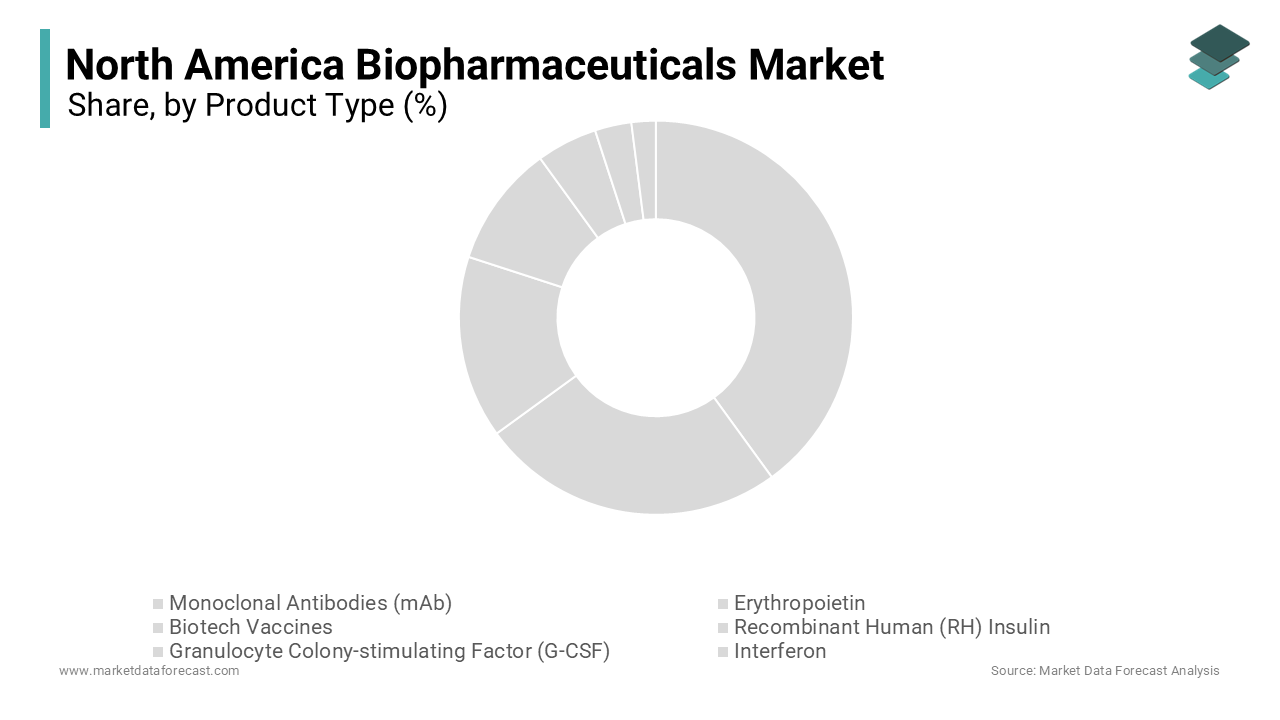
On the other side, the biotech vaccines segment is expected to showcase a prominent CAGR of 9.2% over the forecast period owing to the growing awareness of preventive healthcare, government immunization mandates, and the successful deployment of novel vaccine platforms such as messenger RNA technology. According to the Centers for Disease Control and Prevention, vaccination coverage for influenza and other preventable diseases has seen a steady increase, with millions of doses administered annually across the United States and Canada. As per the National Institutes of Health, federal funding for vaccine research has increased significantly, supporting the development of next-generation vaccines for infectious diseases and cancer. The recent global health crises have underscored the importance of robust vaccine infrastructure, prompting governments and private entities to invest in domestic manufacturing capabilities. The introduction of vaccines for human papillomavirus, respiratory syncytial virus, and shingles has expanded the target population beyond children to include older adults. Public health campaigns promote the benefits of vaccination, leading to higher uptake rates among diverse demographic groups. Private insurance plans typically cover recommended vaccines, reducing financial barriers for patients. The adaptability of biotech vaccine platforms allows for rapid response to emerging pathogens, ensuring long-term relevance. Collaborations between academic institutions and pharmaceutical companies accelerate clinical trials and regulatory approvals. This dynamic environment positions biotech vaccines as a high-growth area with significant potential for future innovation and market expansion.
By Therapeutic Type Insights
The oncology segment accounted for the highest share of the global market in 2025 due to the high prevalence of cancer and the continuous introduction of innovative biologic treatments that improve survival rates. The region accounts for a significant proportion of global cancer cases, necessitating advanced therapeutic interventions. According to the American Cancer Society, cancer remains the second leading cause of death in the United States, with over 600,000 deaths expected annually. As per the National Cancer Institute, federal spending on cancer research exceeds 7 billion dollars per year, fostering an ecosystem of innovation that supports the development of novel biologics. The adoption of immunotherapies, including monoclonal antibodies and checkpoint inhibitors, has transformed the treatment landscape for various cancers such as melanoma, lung cancer, and breast cancer. These therapies offer targeted mechanisms that enhance the body’s immune response against tumor cells, providing better outcomes than conventional chemotherapy. Private and public payers increasingly recognize the value of these treatments, leading to broader coverage and reimbursement. Patient advocacy groups play a crucial role in raising awareness and pushing for access to latest therapies. The presence of world-class cancer centers and specialized oncologists facilitates the administration of complex biologic regimens. Clinical trials conducted in North America often lead to early access to new drugs, attracting patients from around the world. The continuous pipeline of oncology biologics ensures sustained market leadership, with companies focusing on personalized medicine approaches to maximize efficacy. This segment’s dominance is further supported by robust diagnostic technologies that enable precise patient selection for targeted therapies.
However, the neurology segment is experiencing the fastest growth in the North America biopharmaceuticals market over the forecast period owing to the rising prevalence of neurodegenerative diseases and the recent approval of groundbreaking biologic treatments for conditions such as Alzheimer’s disease. According to the Alzheimer’s Association, more than 6 million Americans are living with Alzheimer’s dementia, a number projected to rise to nearly 13 million by 2050. As per the National Institute of Neurological Disorders and Stroke, neurological disorders account for a significant burden of disability-adjusted life years, highlighting the urgent need for effective therapies. The recent approval of monoclonal antibodies targeting amyloid-beta plaques has sparked renewed interest and investment in neurology biopharmaceuticals. These treatments offer the potential to slow disease progression, addressing a critical unmet medical need. Aging populations in the United States and Canada contribute to the increasing incidence of Parkinson’s disease, multiple sclerosis, and other neurological conditions. Government initiatives support research into brain health and neuroprotection, facilitating the development of new biologics. Private insurers are beginning to cover these high-cost therapies, recognizing their long-term benefit in reducing care costs. The complexity of the blood-brain barrier has historically hindered drug delivery, but advances in biotechnology are overcoming these challenges. Clinical trials are expanding to include diverse patient populations, generating robust data on efficacy and safety. This momentum positions neurology as a high-growth segment with significant potential for future breakthroughs and market expansion.
COUNTRY ANALYSIS
U.S. Biopharmaceuticals Market Analysis
The U.S. dominated the market by holding the highest share of the North American market in 2025 and is projected to maintain its position as a global biopharmaceutical powerhouse through continuous investment in advanced clinical pipelines and robust federal research funding over the next few years. The country serves as a global hub for biopharmaceutical innovation, hosting numerous leading pharmaceutical companies and biotechnology startups. According to the Centers for Medicare and Medicaid Services, national health expenditure in the United States reached 4.3 trillion dollars in recent years, with a significant portion allocated to prescription drugs and biologic therapies. As per the Food and Drug Administration, the agency approved a record number of novel biologics in recent years, reflecting a robust pipeline and efficient regulatory process. The presence of world-class research institutions and hospitals facilitates clinical trials and early adoption of new treatments. High prevalence of chronic diseases such as cancer and diabetes drives consistent demand for advanced biopharmaceuticals. Private insurance coverage, although complex, provides access to premium therapies for a large segment of the population. Government programs like Medicare and Medicaid also cover essential biologics, ensuring accessibility for vulnerable groups. The competitive landscape encourages continuous innovation and investment in research and development. Strategic partnerships between academia and industry accelerate the translation of scientific discoveries into commercial products. The United States’ dominant position is reinforced by its ability to attract global talent and capital, maintaining its leadership in the biopharmaceutical sector.
Canada Biopharmaceuticals Market Analysis
Canada is expected to experience steady, publicly supported market growth driven by expanding domestic biomanufacturing capabilities and increasing strategic investments in personalized medicine over the next few years. Canada represents a significant and stable market for biopharmaceuticals in North America, characterized by a publicly funded healthcare system that prioritizes equitable access to essential medicines. According to Statistics Canada, health expenditure per capita has increased steadily, allowing for greater investment in high-cost biologic treatments. As per Health Canada, the regulatory framework for biologics is aligned with international standards, ensuring timely approval of safe and effective products. The Pan-Canadian Oncology Drug Review facilitates coordinated assessment and reimbursement recommendations for cancer drugs, streamlining access across provinces. The aging population increases the demand for treatments related to chronic conditions, driving market growth. Local manufacturing capabilities are expanding, with several companies investing in production facilities for vaccines and biosimilars. Research collaborations between universities and pharmaceutical companies foster innovation in areas such as gene therapy and personalized medicine. Provincial formularies determine coverage for specific biologics, influencing prescribing patterns and market dynamics. The government’s commitment to reducing wait times and improving patient outcomes supports the adoption of advanced therapies. Canada’s stable political environment and strong intellectual property protections make it an attractive destination for biopharmaceutical investments. These factors collectively position Canada as a key contributor to the regional market, balancing cost containment with access to innovation.
COMPETITIVE LANDSCAPE
The competition in the North America Biopharmaceuticals Market is characterized by intense rivalry among established pharmaceutical giants and agile biotechnology startups striving for leadership in innovation and market access. Major players compete on the basis of scientific breakthroughs, patent protection, and clinical efficacy data. The market sees frequent consolidation through mergers and acquisitions as companies seek to diversify their pipelines and acquire specialized technologies. Biosimilar manufacturers exert pressure on originator companies by offering lower cost alternatives, forcing price adjustments and value based contracting. Regulatory scrutiny regarding pricing and safety adds complexity to competitive dynamics. Companies differentiate themselves through superior manufacturing capabilities, supply chain reliability, and patient centric services. Intellectual property disputes are common as firms protect their innovations from generic entry. Collaboration with payers and healthcare providers becomes essential to demonstrate economic value and secure formulary placement. The rapid pace of technological advancement in gene editing and artificial intelligence further intensifies competition. Success depends on the ability to balance innovation with affordability while navigating a complex regulatory and reimbursement environment. This dynamic landscape drives continuous improvement in therapeutic options and operational efficiency across the sector.
KEY MARKET PLAYERS
A few of the significant players operating in the North America Biopharmaceuticals market include
- Merck & Co., Inc.
- F. Hoffmann-La Roche AG
- Eli Lilly and Company, Inc.
- Sanofi
- Amgen Inc.
- AbbVie Inc.
- Biogen Idec
- Bayer AG
- Johnson & Johnson Services
- Pfizer, Inc.
- Novartis AG
Top Players in the Market
Pfizer Inc
Pfizer Inc maintains a dominant position in the North America Biopharmaceuticals Market through its extensive portfolio of oncology, immunology, and rare disease treatments. The company leverages its robust research and development capabilities to introduce innovative biologics that address unmet medical needs. Recent actions include expanding manufacturing capacities for mRNA vaccines and monoclonal antibodies in the United States to ensure supply chain resilience. Pfizer actively collaborates with academic institutions and biotechnology firms to accelerate drug discovery and clinical trials. The company also engages in strategic partnerships to enhance its digital health offerings and patient support programs. By focusing on precision medicine and personalized therapies, Pfizer strengthens its competitive edge. Its commitment to regulatory compliance and quality assurance ensures timely approvals from the Food and Drug Administration. These efforts enable Pfizer to maintain a strong presence in key therapeutic areas while driving sustainable growth in the North American region.
Johnson & Johnson
Johnson & Johnson contributes significantly to the North America Biopharmaceuticals Market through its Janssen Pharmaceutical Companies division, which focuses on immunology, oncology, and neuroscience. The company integrates advanced biological research with clinical expertise to develop high impact therapies. Recent actions involve launching new monoclonal antibody treatments for autoimmune diseases and investing in gene therapy platforms. Johnson & Johnson strengthens its market position by acquiring innovative biotech startups and forming alliances with research organizations. The company prioritizes patient centric solutions and works closely with healthcare providers to improve treatment outcomes. Its global manufacturing network ensures consistent product availability across North America. Johnson & Johnson also invests in real world evidence generation to demonstrate the value of its biologics to payers and regulators. These strategic initiatives reinforce its leadership in delivering transformative healthcare solutions and addressing complex medical challenges in the region.
Amgen Inc
Amgen Inc is a pioneer in the North America Biopharmaceuticals Market, specializing in human therapeutics based on advances in cellular and molecular biology. The company offers a wide range of biologic medicines for cancer, kidney disease, and bone health. Recent actions include expanding its biosimilar portfolio to provide cost effective alternatives to originator biologics. Amgen invests heavily in next generation science such as antibody drug conjugates and targeted protein degradation. The company strengthens its position through strategic collaborations with technology firms to enhance drug discovery processes. Amgen also focuses on sustainable manufacturing practices and supply chain optimization to reduce environmental impact. Its strong relationships with healthcare professionals and patient advocacy groups facilitate broader access to therapies. By continuously innovating and adapting to market dynamics, Amgen maintains its reputation as a leader in biotechnology and delivers significant value to patients and stakeholders in North America.
Top Strategies Used by Key Market Participants
Key players in the North America Biopharmaceuticals Market primarily employ strategies centered on aggressive research and development investment, strategic mergers and acquisitions, and expansion of biosimilar portfolios. Companies allocate substantial resources to innovate novel biologics and gene therapies, ensuring a robust pipeline of future products. Mergers and acquisitions allow firms to acquire complementary technologies and expand their therapeutic reach efficiently. Developing biosimilars is a critical strategy to capture market share from expiring patents and offer affordable options to payers. Partnerships with academic institutions and technology firms accelerate drug discovery and enhance computational capabilities. Regulatory engagement is prioritized to navigate complex approval pathways and secure favorable reimbursement policies. Companies also focus on patient support programs and digital health integration to improve adherence and outcomes. These multifaceted approaches enable participants to maintain competitiveness, drive innovation, and address evolving healthcare demands in the North American landscape effectively.
MARKET SEGMENTATION
This research report on the North American Biopharmaceuticals Market has been segmented and sub-segmented into the following categories.
By Product Type
- Monoclonal Antibodies (mAb)
- Erythropoietin
- Biotech Vaccines
- Recombinant Human (RH) Insulin
- Granulocyte Colony-stimulating Factor (G-CSF)
- Interferon
- Human Growth Hormones (HGH)
By Therapeutic Type
- Neurology
- Infectious Diseases
- Diabetes
- Oncology
- Cardiovascular
- Other Therapeutic Areas
By Country
- The United States
- Canada
- Mexico
- Rest of North America