- Product Description Description
- Table of Contents TOC
- List of Table & Figure LOT
- Get Free Sample PDF Sample PDF
Market Size, 2025
$177.24 MnMarket Estimate, 2026
$1,890.98 MnMarket Forecast, 2034
$3,176.90 MnCAGR, 2026–2034
6.7%Executive Summary: North America Blood Pressure Monitoring Devices Market
- Market Scope: North American market analysis covering device types, regional leadership, country landscapes, and technological categories.
- Market Valuation: Valued at USD 177.24 million (2025), estimated at USD 1,890.98 million (2026), and projected to reach USD 3,176.90 million by 2034, growing at a CAGR of 6.70% (2026–2034).
- Primary Growth Drivers: High prevalence of hypertension, rising chronic disease incidence, expanding geriatric demographics, increasing healthcare expenditures, and rapid technological innovations such as mobile-connected BP systems and digital sphygmomanometers.
Key Market Segment Metrics (2026–2034)
| Category | Leading / Key Segments | Fastest-Growing Segment |
|---|---|---|
| By Type | Automated BP Monitors, Ambulatory BP Monitors, Sphygmomanometers (Mercury, Aneroid, Digital), BP Transducers, and Accessories | — |
| By Region / Country | United States (dominant market; Canada accounts for a moderate share) | — |
Major Market Players & Market Structure
Market Structure: Highly competitive landscape driven by ongoing advancements in automated, wearable, portable, mobile-connected, and home blood pressure monitoring systems, with a strong focus on wireless patient-data transfer capabilities.
Key Companies: GE Healthcare, Welch Allyn, A&D Medical Inc., SunTech Medical, Rossmax International Ltd., Spacelabs Healthcare Inc., Panasonic Corporation, Philips Healthcare, Contec Medical Systems Co. Ltd., Omron Healthcare, and Microlife AG.
North America Blood Pressure Monitoring Devices Market Size
The North America Blood Pressure Monitoring Devices Market is projected to grow from USD 177.24 million in 2025 to USD 1,890.98 million in 2026 and reach USD 3,176.90 million by 2034, registering a CAGR of 6.70% from 2026 to 2034.

The North America blood pressure monitoring devices market is critical for the early detection and management of hypertension, a leading risk factor for cardiovascular diseases. The region demonstrates high adoption rates due to robust healthcare infrastructure and increasing patient awareness. According to the Centers for Disease Control and Prevention, nearly half of adults in the United States have hypertension, with only about 24% having their condition under control. This significant gap in management drives the demand for reliable home monitoring solutions. As per data from the American Heart Association, regular self-monitoring can improve blood pressure control by up to 10 mmHg compared to standard care alone. The integration of digital health technologies, such as Bluetooth connectivity and mobile applications, further enhances user engagement and data accuracy. Regulatory bodies like the Food and Drug Administration enforce strict validation standards to ensure device reliability. The aging population and rising prevalence of chronic conditions, such as diabetes and obesity, sustain the need for continuous monitoring. Consequently, the market is evolving towards smart devices that offer seamless integration with electronic health records and telemedicine platforms.
MARKET DRIVERS
Rising Prevalence of Hypertension and Cardiovascular Diseases
The escalating prevalence of hypertension and associated cardiovascular diseases is a primary driver for the North America blood pressure monitoring devices market. High blood pressure is often asymptomatic, necessitating regular monitoring to prevent severe complications such as stroke and heart attack. According to the Centers for Disease Control and Prevention, approximately 116 million adults in the United States have hypertension, representing a substantial portion of the adult population. This widespread condition creates a consistent and large-scale demand for accurate monitoring devices. As per the American Heart Association, uncontrolled hypertension contributes to over 500,000 deaths annually in the region, highlighting the critical need for effective management tools. Healthcare providers increasingly recommend home blood pressure monitoring to complement clinical visits, enabling more frequent data collection. This shift in care protocols drives consumers to purchase personal devices for daily use. The aging demographic in North America further exacerbates the incidence of hypertension, as risk increases with age. Patients with comorbidities such as diabetes are also advised to monitor their blood pressure regularly. This medical necessity ensures sustained market growth as individuals seek reliable and easy-to-use devices. The direct correlation between disease prevalence and device utilization underscores the importance of accessible monitoring solutions in public health strategies.
Shift towards Home Healthcare and Remote Patient Monitoring
The significant shift towards home healthcare and remote patient monitoring drives the demand for blood pressure monitoring devices in North America. Patients and providers prefer the convenience and comfort of managing chronic conditions at home rather than frequent hospital visits. According to the National Institute on Aging, the number of adults aged 65 and older in the United States is projected to double by 2060, increasing the need for home-based care solutions. This demographic trend accelerates the adoption of user-friendly monitoring devices. As per studies published in the Journal of Medical Internet Research, remote monitoring programs can reduce hospital readmissions by up to 38% for patients with cardiovascular conditions. This statistical evidence encourages insurance providers and healthcare systems to support home monitoring initiatives. Telemedicine platforms integrate with smart blood pressure monitors to transmit real-time data to physicians, facilitating timely interventions. The COVID-19 pandemic further accelerated this trend by limiting in-person consultations and promoting digital health tools. Consumers value the ability to track their health metrics independently and share them with care teams. This empowerment leads to better adherence to treatment plans. Manufacturers respond by developing connected devices with intuitive interfaces and mobile app compatibility. The alignment of technological capabilities with healthcare delivery models sustains robust market demand.
MARKET RESTRAINTS
High Cost of Advanced Smart Monitoring Devices
The elevated cost of advanced smart blood pressure monitoring devices is a significant restraint on market penetration, particularly among price-sensitive populations. These devices often incorporate Bluetooth technology, mobile app integration, and cloud storage features, which increase manufacturing expenses. According to the Kaiser Family Foundation, out-of-pocket healthcare spending remains a burden for many Americans, with high deductibles limiting discretionary purchases. This financial constraint prompts consumers to opt for basic manual or digital monitors instead of premium smart devices. As per market analysis, smart blood pressure monitors can cost two to three times more than standard digital models. This price disparity restricts access for low-income households and uninsured individuals. Medicare and private insurance plans often do not fully cover the cost of home monitoring devices, leaving patients to bear the expense. Small clinics and rural healthcare facilities may also struggle to invest in expensive remote monitoring infrastructure. The lack of reimbursement policies for consumer-grade devices further discourages adoption. Manufacturers face pressure to justify the premium pricing through demonstrable clinical benefits, which can be challenging for general consumers. Consequently, cost sensitivity remains a critical barrier to the widespread adoption of advanced monitoring technologies in certain segments.
Accuracy Concerns and Lack of Standardization
Concerns regarding the accuracy of consumer-grade blood pressure monitors and the lack of standardized validation protocols present a major restraint on market confidence. Many devices available in retail settings have not undergone rigorous clinical testing, leading to potential misdiagnosis or improper management of hypertension. According to the American Medical Association, studies have shown that up to 30% of home blood pressure monitors may provide inaccurate readings if not properly validated. This discrepancy undermines trust in home monitoring results and may lead to inappropriate medical decisions. As per guidelines from the Association for the Advancement of Medical Instrumentation, only devices that meet specific accuracy standards should be recommended for clinical use. However, consumers often struggle to identify validated products amidst a crowded marketplace. The variability in cuff sizes and placement techniques further affects measurement accuracy. Incorrect usage by patients without proper training can result in erroneous data. Healthcare providers may hesitate to rely on home monitoring data if they doubt its reliability. This uncertainty limits the integration of home data into clinical decision-making. Manufacturers must invest in rigorous testing and clear labeling to address these concerns. Until standardization improves and consumer education expands, accuracy issues will continue to hinder market growth.
MARKET OPPORTUNITIES
Integration with Artificial Intelligence and Predictive Analytics
The integration of artificial intelligence and predictive analytics into blood pressure monitoring devices presents a significant opportunity for market innovation and growth. AI algorithms can analyze long-term blood pressure trends to predict potential hypertensive crises or cardiovascular events before they occur. According to research from the National Institutes of Health, machine learning models can improve the accuracy of blood pressure predictions by 20% compared to traditional statistical methods. This enhanced predictive capability allows for proactive healthcare interventions and personalized treatment plans. As per industry trends, smart devices equipped with AI can provide real-time feedback and lifestyle recommendations to users. This interactive feature increases patient engagement and adherence to monitoring routines. Healthcare providers can utilize these insights to adjust medications and therapies more effectively. The ability to detect patterns such as white-coat hypertension or masked hypertension adds clinical value to home monitoring. Manufacturers can differentiate their products by offering advanced analytical features that go beyond simple measurement. Partnerships with tech companies facilitate the development of sophisticated algorithms. The focus on preventive care and precision medicine supports the adoption of AI-enabled devices. This technological advancement opens new revenue streams and strengthens the role of monitoring devices in comprehensive health management.
Expansion into Wearable and Continuous Monitoring Technologies
The expansion into wearable and continuous blood pressure monitoring technologies offers a lucrative opportunity for market players to capture new customer segments. Traditional cuff-based devices provide intermittent measurements, whereas wearables offer continuous data tracking throughout the day. According to market reports, the global wearable medical device market is expected to grow significantly, driven by consumer demand for seamless health tracking. This trend creates demand for non-invasive sensors that can monitor blood pressure without disrupting daily activities. As per clinical studies, continuous monitoring provides a more comprehensive picture of blood pressure variability and circadian rhythms. This detailed data helps physicians diagnose complex conditions such as nocturnal hypertension. Tech giants and startups are investing in optical and piezoelectric sensors to enable cuffless monitoring. These innovations appeal to fitness enthusiasts and tech-savvy consumers who prioritize convenience. The integration of blood pressure monitoring into smartwatches and fitness bands expands the addressable market. Insurance companies may incentivize the use of wearables through wellness programs. The shift towards passive monitoring reduces user burden and improves compliance. This technological evolution positions blood pressure monitoring as an integral part of holistic health tracking ecosystems.
MARKET CHALLENGES
Regulatory Hurdles and Compliance Complexity
Navigating the complex regulatory landscape and compliance requirements is a major challenge to the North American blood pressure monitoring devices market. Manufacturers must obtain clearance from the Food and Drug Administration, which involves rigorous testing and documentation to prove safety and efficacy. According to the Food and Drug Administration, the review process for Class II medical devices can take several months to over a year, delaying product launches. This prolonged timeline increases development costs and reduces the window for maximizing product lifecycle revenues. As per industry reports, the cost of regulatory compliance can account for a significant portion of the total development budget for new devices. Changes in regulatory guidelines or standards require manufacturers to update their processes and revalidate products. The lack of harmonized regulations across different states or regions adds to the administrative burden. Small and medium-sized enterprises may struggle to navigate these complexities due to limited resources. Any non-compliance issues can result in recalls or legal penalties, damaging brand reputation. Manufacturers must invest heavily in quality assurance and regulatory affairs teams. This environment favors large established players with extensive experience, potentially stifling innovation from smaller competitors. Addressing these regulatory challenges requires strategic planning and significant financial investment.
Data Privacy and Security Concerns
Data privacy and security concerns associated with connected blood pressure monitoring devices present a significant challenge to market adoption. These devices collect sensitive personal health information that is transmitted to mobile apps and cloud servers, raising risks of data breaches. According to the Office for Civil Rights, healthcare data breaches have increased significantly in recent years, affecting millions of patients. This trend makes consumers cautious about sharing their health data with third-party platforms. As per surveys by the Pew Research Center, over 60% of Americans are concerned about the privacy of their health information when using digital health tools. Fear of unauthorized access or misuse of data can deter individuals from purchasing smart monitoring devices. Manufacturers must implement robust encryption and security protocols to protect user data, which increases development costs. Compliance with regulations such as the Health Insurance Portability and Accountability Act adds another layer of complexity. Any security incident can lead to loss of consumer trust and legal liabilities. Healthcare providers are also hesitant to integrate insecure devices into their systems. Addressing these privacy concerns requires transparent data policies and continuous security updates. Until consumers feel confident in the security of their data, adoption of connected devices may remain limited.
REPORT COVERAGE
| REPORT METRIC | DETAILS |
| Market Size Available | 2025 to 2034 |
| Base Year | 2025 |
| Forecast Period | 2026 to 2034 |
| Segments Covered | By Type and Region. |
| Various Analyses Covered | Global, Regional, and Country-Level Analysis, Segment-Level Analysis, Drivers, Restraints, Opportunities, Challenges; PESTLE Analysis; Porter’s Five Forces Analysis, Competitive Landscape, Analyst Overview of Investment Opportunities |
| Countries Covered | The United States, Canada, Rest of North America |
| Market Leaders Profiled | GE HealthCare, Welch Allyn |
SEGMENTAL ANALYSIS
By Type Insights
The automated BP monitors segment accounted for the leading share of the North America blood pressure monitoring devices market in 2025. The growth of the automated BP monitors segment in the regional market is attributed to their ease of use, accuracy, and integration with digital health ecosystems. The primary driver for the dominance of automated BP monitors is their user-friendly design, which significantly enhances patient compliance with regular monitoring routines. Unlike manual sphygmomanometers, automated devices require minimal training and eliminate the need for auscultation skills, making them ideal for home use. According to the American Heart Association, proper technique is critical for accurate readings, and automated devices reduce user error by up to 50% compared to manual methods. This reduction in error builds trust in home monitoring data among both patients and physicians. As per surveys conducted by the National Council on Aging, over 75% of older adults prefer automated monitors due to their simplicity and clear digital displays. This preference drives widespread adoption in the growing senior demographic. The ability to store multiple readings and calculate averages further supports effective disease management. Healthcare providers recommend these devices to ensure consistent data collection outside clinical settings. The convenience of one-touch operation encourages daily usage, which is essential for controlling hypertension. Manufacturers continue to improve ergonomics and cuff designs to enhance comfort. This focus on user experience sustains the market leadership of automated monitors. The alignment with patient-centric care models ensures continued demand for these intuitive devices.
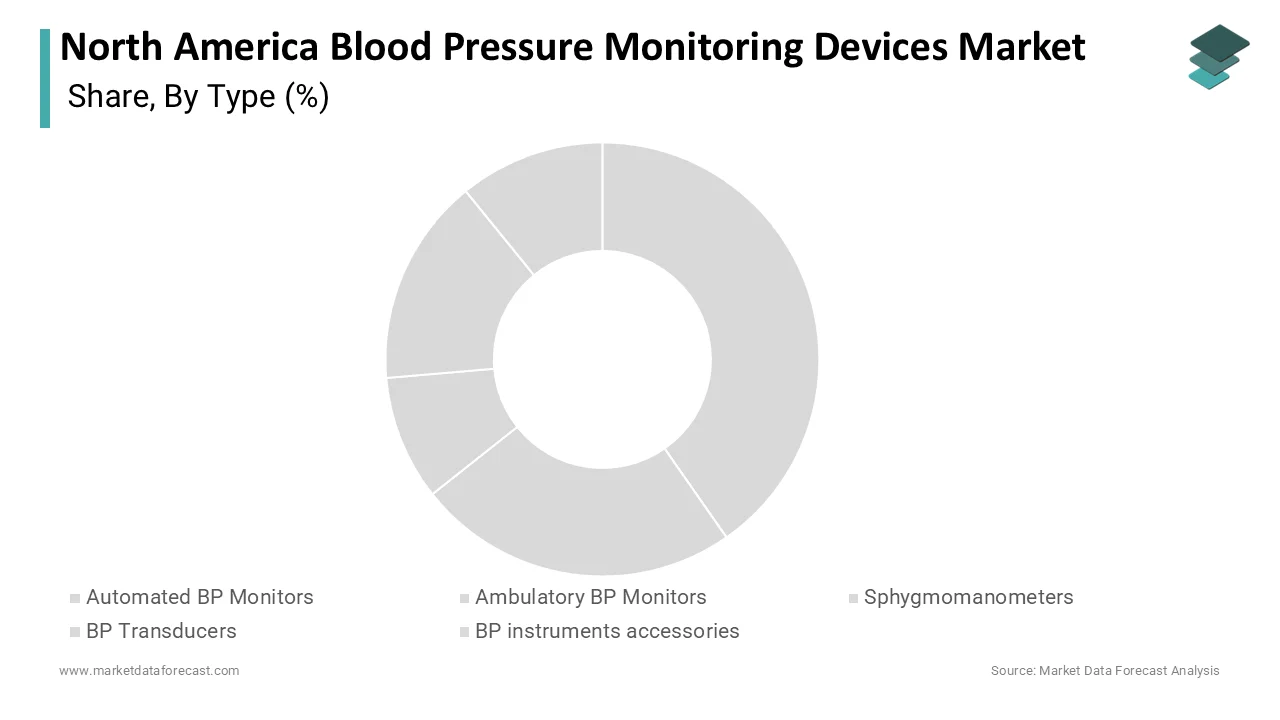
On the other hand, the ambulatory BP monitors segment is expected to exhibit a promising CAGR of 9.4% over the forecast period in the North American market owing to the increasing recognition of white-coat hypertension, the need for comprehensive diagnostic data, and the clinical necessity to diagnose white-coat and masked hypertension, conditions that cannot be accurately identified through single office measurements. White-coat hypertension occurs when blood pressure is elevated in clinical settings but normal at home, while masked hypertension is the opposite. According to the American College of Cardiology, approximately 15% to 30% of patients diagnosed with hypertension in offices actually have white-coat hypertension. This misdiagnosis can lead to unnecessary medication and side effects. As per guidelines from the United States Preventive Services Task Force, ambulatory blood pressure monitoring is recommended as the reference standard for confirming hypertension diagnoses before starting treatment. This recommendation drives hospitals and clinics to invest in ambulatory devices. The ability to measure blood pressure over 24 hours provides a complete picture of circadian rhythms and variability. Physicians rely on this data to make informed treatment decisions. The increasing awareness of these conditions among healthcare providers boosts demand. Reimbursement policies for ambulatory monitoring are improving, making it more accessible. This clinical validation ensures sustained growth for the segment.
COUNTRY LEVEL ANALYSIS
U.S. Blood Pressure Monitoring Devices Market Analysis
The U.S. led the market with the largest share of the North America blood pressure monitoring devices market in 2025 and is likely to experience robust, steady expansion in its blood pressure monitoring devices sector over the next few years, fueled by ongoing digital health innovations and expanded telemedicine adoption. The country is a global leader in the adoption of digital health technologies and home monitoring solutions. According to the Centers for Disease Control and Prevention, nearly half of all adults in the United States have hypertension, creating a massive addressable market for monitoring devices. This high prevalence drives consistent demand across retail and clinical channels. As per data from the American Heart Association, the economic burden of cardiovascular disease exceeds 200 billion USD annually, prompting insurers and employers to invest in preventive tools. This financial incentive supports the adoption of remote monitoring programs. The presence of major medical device manufacturers facilitates rapid innovation and product availability. Regulatory support from the Food and Drug Administration ensures high standards for device accuracy. The aging population and rising obesity rates further sustain market growth. Telemedicine expansion has accelerated the integration of connected monitors into care pathways. Consumers are increasingly health-conscious and willing to invest in personal health devices. The robust infrastructure and high disposable income ensure strong market performance. The United States serves as the primary driver of regional trends and technological adoption.
Canada Blood Pressure Monitoring Devices Market Analysis
Canada represents a significant and steady market for blood pressure monitoring devices, driven by its universal healthcare system and emphasis on chronic disease management. The country focuses on cost-effective solutions that reduce hospital burden and improve patient outcomes. According to Statistics Canada, hypertension affects approximately 25% of the adult population, necessitating regular monitoring and management. This substantial patient base supports stable demand for both clinical and home-use devices. As per data from the Canadian Institute for Health Information, remote patient monitoring initiatives are being expanded to manage chronic conditions in rural and remote areas. This strategic focus drives the adoption of connected blood pressure monitors. Government funding for digital health projects facilitates the integration of monitoring data into electronic health records. The public healthcare system prioritizes evidence-based practices, leading to widespread recommendation of home monitoring. Consumers benefit from high health literacy and access to reliable information. Retail pharmacies play a key role in distributing affordable monitoring devices. The emphasis on preventive care aligns with national health goals. Canada’s market is characterized by steady growth and strong regulatory oversight. The collaboration between public health agencies and private manufacturers ensures quality and accessibility.
COMPETITIVE LANDSCAPE
The competition in the North America Blood Pressure Monitoring Devices Market is characterized by intense rivalry among established medical device manufacturers and emerging digital health startups. Large corporations leverage their brand reputation and clinical validation to dominate the professional and home care segments. They focus on continuous innovation to differentiate their products through advanced features such as cloud connectivity and predictive analytics. Smaller firms compete by offering niche solutions with superior design and user experience. The market sees frequent product launches as companies strive to meet evolving consumer expectations and regulatory standards. Strategic mergers and acquisitions are common as larger entities seek to expand their digital health capabilities. Partnerships with technology firms drive integration with mobile apps and electronic health records. Price competition remains significant in the retail sector where consumers compare features and costs. However, differentiation through clinical accuracy and ease of use often outweighs price considerations. Regulatory compliance and data security are critical barriers to entry that favor incumbent players. The focus on value-based care encourages manufacturers to demonstrate cost-effectiveness and improved health outcomes. Overall, the competitive landscape drives continuous improvement in device technology and patient engagement.
KEY MARKET PLAYERS
Some of the companies that are playing a dominating role in the North America Blood Pressure Monitoring Devices Market include:
- GE HealthCare
- Welch Allyn
- A&D Medical Inc.
- SunTech Medical
- Rossmax International Ltd.
- Spacelabs Healthcare Inc.
- Panasonic Corporation
- Philips Healthcare
- Contec Medical Systems Co., Ltd.
- OMRON Healthcare
- Microlife AG
TOP LEADING PLAYERS IN THE MARKET
- Omron Healthcare Inc remains a pivotal force in the North America Blood Pressure Monitoring Devices Market through its extensive portfolio of clinically validated home and professional devices. The corporation consistently invests in research to enhance accuracy and user comfort in automated monitors. Recently, the company launched advanced upper arm models with Bluetooth connectivity that sync seamlessly with mobile health applications. This strategic product introduction aligns with the growing demand for remote patient monitoring solutions. Omron also collaborates with healthcare providers to offer educational resources on proper measurement techniques. These initiatives build trust and reinforce brand loyalty among consumers and medical professionals. The company’s robust distribution network ensures widespread availability across retail and clinical channels. By focusing on innovation and reliability,y Omron maintains its position as a trusted leader in cardiovascular health management.
- Welch Allyn Inc contributes significantly to the North America Blood Pressure Monitoring Devices Market by providing high-quality diagnostic tools for clinical settings. The company specializes in durable and accurate sphygmomanometers and ambulatory monitoring systems used in hospitals and clinics. Recently, Welch Allyn integrated its devices with digital health platforms to facilitate seamless data transfer to electronic health records. This enhancement improves workflow efficiency for healthcare providers and supports value-based care initiatives. The corporation actively engages in training programs for medical staff to ensure proper device usage and maintenance. These educational efforts enhance clinical outcomes and strengthen professional relationships. Welch Allyn focuses on ergonomic design to reduce practitioner fatigue during high-volume procedures. Its commitment to quality and precision positions it as a preferred partner for healthcare institutions seeking reliable diagnostic equipment.
- Withings leverages its expertise in connected health technology to maintain a competitive edge in the North America Blood Pressure Monitoring Devices Market. The company offers sleek and user-friendly smart blood pressure monitors that appeal to tech-savvy consumers. Withings recently expanded its ecosystem by integrating blood pressure data with other health metrics such as weight and activity levels. This holistic approach provides users with comprehensive insights into their cardiovascular health. The corporation partners with insurance companies to promote preventive care through incentivized monitoring programs. These collaborations increase accessibility and encourage regular usage among policyholders. Withings focuses on aesthetic design and ease of use to differentiate its products in the consumer market. The emphasis on data privacy and security builds confidence among users sharing sensitive health information. This customer-centric strategy strengthens its presence in the growing digital health sector.
TOP STRATEGIES USED BY KEY MARKET PARTICIPANTS
Key players in the North America Blood Pressure Monitoring Devices Market primarily employ product innovation and strategic partnerships to sustain growth. Companies invest heavily in research and development to create advanced devices with Bluetooth connectivity and artificial intelligence capabilities. These innovations address the increasing demand for remote patient monitoring and personalized health insights. Manufacturers also form alliances with telemedicine providers and insurance companies to integrate their devices into broader healthcare ecosystems. Such collaborations facilitate reimbursement opportunities and expand market reach. Another major strategy involves focusing on clinical validation to build trust among healthcare professionals and consumers. Firms also prioritize user experience by designing ergonomic and intuitive devices that encourage regular use. Additionally, companies are expanding their distribution channels through e-commerce platforms to reach direct consumers. Competitive pricing models and bundle offers are utilized to capture price-sensitive segments. These multifaceted strategies enable participants to navigate regulatory complexities and meet diverse consumer needs effectively.
MARKET SEGMENTATION
This research report segmented and sub-segmented the North America Blood Pressure Monitoring Devices market into the following categories.
By Type
-
Automated BP Monitors
-
Ambulatory BP Monitors
- Sphygmomanometers
- Mercury
- Aneroid
- Digital
- BP Transducers
- BP instruments accessories
By Country
- The United States
- Canada
- Rest of North America