- Product Description Description
- Table of Contents TOC
- List of Table & Figure LOT
- Get Free Sample PDF Sample PDF
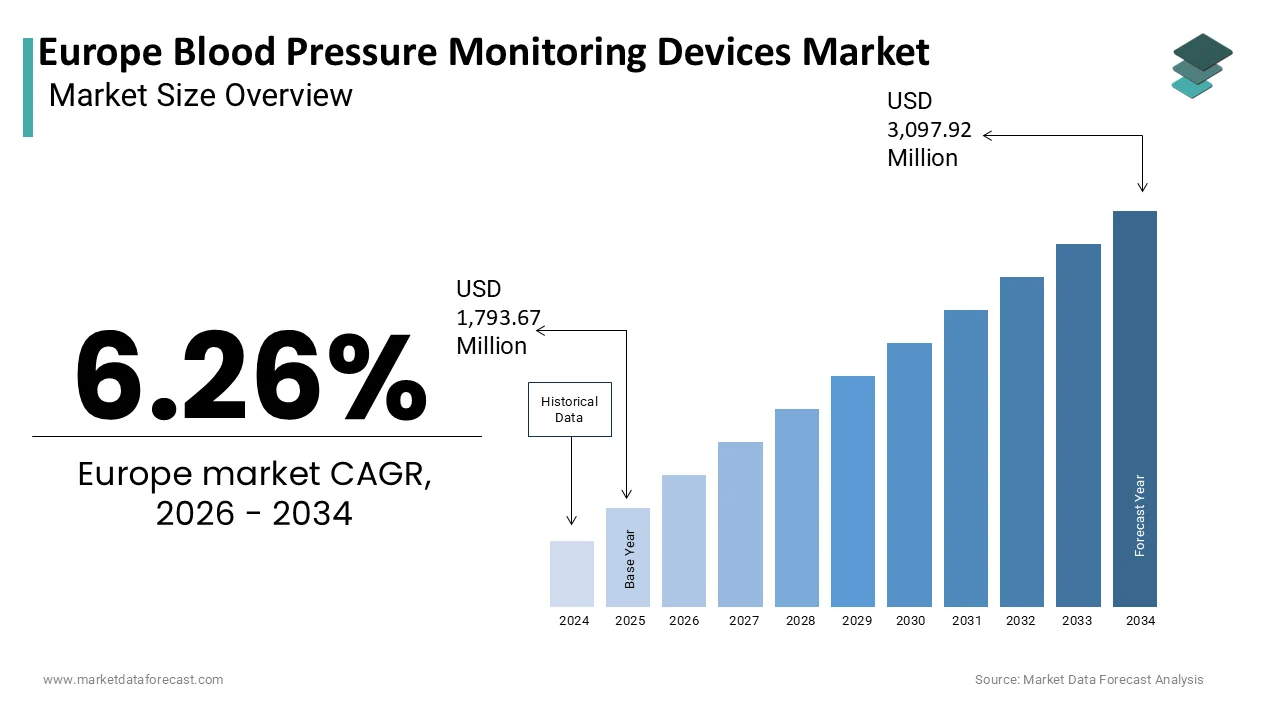
Market Size, 2025
$1,793.67 MnMarket Estimate, 2026
$1,905.95 MnMarket Forecast, 2034
$3,097.92 MnCAGR, 2026–2034
6.26%Executive Summary: Europe Blood Pressure Monitoring Devices Market
- Market Scope: Comprehensive European blood pressure monitoring devices market analysis covering device types, country-level adoption, regulatory frameworks, growth drivers, and healthcare challenges.
- Market Valuation: Valued at USD 1,793.67 million (2025), estimated at USD 1,905.95 million (2026), and projected to reach USD 3,097.92 million by 2034, registering a robust CAGR of 6.26% (2026–2034).
- Primary Growth Drivers: Rising prevalence of hypertension and cardiovascular diseases, rapidly aging European geriatric population, increasing adoption of portable/wireless equipment, and government initiatives (such as the UK Blood Pressure Action Plan) to decrease hypertension-related mortality. Key constraints include strict regulatory approval rules, high device costs, and shortages of qualified technical personnel.
Key Market Segment Metrics (2026–2034)
| Category | Leading Segment (2025 Position) | Fastest-Growing Segment |
|---|---|---|
| By Type Insights | Automated & Digital BP Monitors (dominant due to high convenience, accuracy, and ease of home-use monitoring) | Ambulatory BP Monitors & Wireless Transmission Devices (driven by IoT integration and telehealth expansion) |
| By Country Analysis | United Kingdom & Denmark (leading through advanced telehealth services, aging demographics, and targeted action plans) | Germany and broader Western European markets (expanding via high healthcare expenditure and standardization) |
Major Market Players & Market Structure
Market Structure: Highly competitive medical technology sector featuring global healthcare giants competing on device accuracy, IoT connectivity, regulatory compliance, and distribution across ambulatory and hospital settings.
Key Companies: GE Healthcare, Welch Allyn, A&D Medical Inc., SunTech Medical, Rossmax International Ltd, Spacelabs Healthcare Inc., Panasonic Corporation, Philips Healthcare, Contec Medical Systems Co. Ltd, Omron Healthcare, and Microlife AG.
Europe Blood Pressure Monitoring Devices Market Size
The Europe Blood Pressure Monitoring Devices Market is projected to grow from USD 1,793.67 million in 2025 to USD 1,905.95 million in 2026 and reach USD 3,097.92 million by 2034, registering a CAGR of 6.26% from 2026 to 2034.
Blood pressure monitoring devices are medical tools used to measure the force of blood pushing against your artery walls. This sector is intrinsically linked to cardiovascular disease management protocols rather than functioning as a standalone consumer electronics category. According to the World Health Organisation, cardiovascular diseases remain the leading cause of death in the European region, accounting for over 45% of all annual fatalities and driving persistent requirements for accurate hemodynamic surveillance technologies. As per the World Health Organisation Regional Office for Europe, high blood pressure remains a silent threat that causes over 5,000 deaths daily across the region, motivating healthcare facilities to scale up clinical access to blood pressure monitoring. According to Eurostat, more than one-fifth (22.0%) of the estimated European Union population was aged 65 years and over as of January 2025, intensifying demographic requirements for decentralised geriatric care monitoring solutions. Furthermore, as per the OECD, regional health spending constraints and evolving care demands affect healthcare service utilisation across member states, forcing health systems to re-evaluate diagnostic infrastructure frameworks. Consequently, this market operates at the intersection of regulatory compliance, clinical guideline evolution, and public health intervention strategies aimed at reducing stroke and myocardial infarction burden through precise measurement standardisation and early detection frameworks integrated into national chronic disease programs.
MARKET DRIVERS
Escalating Geriatric Population and Multimorbidity Complexity Necessitating Frequent Surveillance
Demographic ageing is a key factor in blood pressure monitoring demand across the regional healthcare systems, which propels the Europe blood pressure monitoring devices market. According to the Organisation for Security and Co-operation in Europe Parliamentary Assembly, demographic projections indicate the number of people aged 80 years or older in the European region is projected to increase by 57% by 2050, accelerating the systemic requirement for continuous hemodynamic monitoring tools to address advanced multimorbidity. As per the OECD, more than 40% of European Union citizens aged 65 and above are living with at least two chronic conditions, validating a distinct market shift away from single-point clinical measurements toward home blood pressure monitoring systems. According to the World Health Organisation, cardiovascular and circulatory diseases remain the primary driver of mortality in southern European countries, forcing health networks to scale up decentralised home blood pressure monitoring instruments for vulnerable patient subsets. The demographic reality transforms blood pressure monitoring from an episodic diagnostic tool into a continuous therapeutic companion embedded in daily care routines. Healthcare systems increasingly prescribe validated devices as part of integrated care pathways for elderly patients to prevent hospitalisations from hypertensive crises or orthostatic hypotension. The sheer volume of ageing patients with unstable hemodynamics ensures sustained replacement demand and technology upgrades independent of economic cycles,s as clinical necessity overrides discretionary spending considerations in geriatric medicine.
Guideline Mandates for Out-of-Office Measurement Transforming Diagnostic Standards
Clinical practice guideline revisions across the region have made ambulatory and home blood pressure monitoring mandatory, which fuels the expansion of the European blood pressure monitoring devices market. These monitoring methods are now required components of hypertension diagnosis and management. As per the European Society of Hypertension, strict, unified practice frameworks for blood pressure control dictate extensive out-of-office diagnostics to accurately determine cardiovascular risk and track therapeutic goals among the adult population. According to the National Health Service England, national Quality and Outcomes Framework parameters require integrated verification and standardised metrics for chronic disease indicators to dictate ambulatory care delivery pathways across primary health networks. As per the OECD, systemic clinical integration of standardised screening protocols for cardiovascular disease reduces long-term care complications and provides a clear financial incentive for multi-country hardware deployment. The evidence-based mandates create non-discretionary demand as clinicians face professional liability risks when deviating from standardised diagnostic algorithms. Public health agencies in France and Spain have incorporated home monitoring targets into national cardiovascular prevention plans, linking reimbursement to protocol adherence. This regulatory and professional consensus transforms blood pressure devices from optional accessories into essential diagnostic infrastructure, ensuring consistent utilisation regardless of individual physician preference or patient motivation levels.
MARKET RESTRAINTS
Reimbursement Heterogeneity and Patient Cost Burden Limiting Universal Access
Reimbursement policies across nations in the region are fragmented, which constrains the growth of the Europe blood pressure monitoring devices market. This fragmentation significantly constrains equitable access to validated blood pressure monitoring devices despite universal healthcare coverage principles. According to the European Observatory on Health Systems and Policies, healthcare systems utilise distinct strategic public procurement mechanisms across more than thirty European countries to manage expenditures and regulate standard medical hardware access. As per the World Health Organisation, regional cross-country data tracking focuses on scaling primary healthcare delivery packages to treat cardiovascular diseases, minimising secondary complications through integrated diagnostic workflows rather than uniform regional out-of-pocket quotas. Private insurance coverage remains inconsistent, with many plans excluding preventive devices classified as wellness products rather than medical necessities. This financial barrier prevents guideline-recommended monitoring from reaching vulnerable populations who would benefit most, including elderly pensioners and socioeconomically disadvantaged groups. Manufacturers face unpredictable demand patterns tied to national budget cycles rather than clinical need, complicating supply planning and limiting investment in market development outside well-reimbursed Western European territories.
Measurement Accuracy Concerns and Validation Protocol Gaps Undermining Clinical Trust
Persistent concerns about device accuracy and inadequate validation standards erode clinician confidence and restrict appropriate utilisation across the region's healthcare settings, which limits the expansion of the European blood pressure monitoring devices market. As per the European Society of Hypertension, independent testing protocols govern validation clearances for specific oscillometric and upper-arm blood pressure hardware models to establish baseline reliability for standard clinical and home deployments. According to the American Heart Association, clinical standards emphasise that upper-arm monitors with properly sized arm cuffs achieve higher testing accuracy than wrist-based monitors, shifting patient acquisition preferences toward verified arm-cuff form factors. Clinicians frequently encounter discrepancies between home and office measurements, leading to therapeutic inertia or inappropriate medication adjustments that compromise patient outcomes. Regulatory harmonisation under the Medical Device Regulation has improved oversight, but legacy devices remain in circulation, and post-market surveillance varies significantly between member states. This trust deficit makes physicians hesitant to base treatment decisions solely on patient-generated data, perpetuating reliance on less informative clinical measurements and slowing adoption of guideline-recommended monitoring protocols despite proven clinical benefits.
MARKET OPPORTUNITIES
Integration with Digital Health Ecosystems Enabling Remote Patient Management
Digital health platform integration creates substantial growth potential for the Europe blood pressure monitoring devices market. This integration transforms standalone devices into connected nodes within comprehensive chronic disease management ecosystems. According to Eurostat, the rapid expansion of digital household ecosystems across the continent is highlighted by the fact that 95% of households in European Union cities maintained active internet access, bridging critical structural gaps for patient-facing remote health technologies. As per the European Heart Journal, current medical consensus underlines that clinical and economic evaluations of digital health technologies dictate actual coverage, compelling health systems to require real-world evidence for home-based device deployments. According to the OECD, the clinical integration of home diagnostic hardware across the European Union relies heavily on compliance frameworks and strict regulatory deadlines that force regional networks to upgrade fragmented legacy record infrastructure. The technological convergence shifts the value proposition from hardware sales to service-enabled outcomes supporting subscription models and recurring revenue streams. Manufacturers developing open API architectures and achieving CE marking under Software as Medical Device classification gain preferential access to publicly funded digital health programs, accelerating market penetration beyond traditional retail channels.
Workplace Wellness and Occupational Health Programs Expanding B2B Distribution Channels
Corporate wellness initiatives provide an underpenetrated distribution channel with significant growth potential, driven by employer recognition of cardiovascular risk as a productivity determinant. This is likely to contribute to the expansion of the European blood pressure monitoring devices market. According to the World Health Organisation, non-communicable diseases dominate workplace health risk metrics across the continent, compelling regional organisations to prioritise integrated health surveillance frameworks to curb chronic illness trends. As per the Confederation of British Industry, commercial businesses prioritise localised occupational health updates to protect workforce productivity, which steers corporate acquisition trends toward preventative medical screenings within corporate environments. According to EuroHealthNet, structural updates to regional occupational health systems favour joint health and wellness promotion platforms that integrate diverse clinical indicators to capture workplace chronic health metrics. The B2B channel bypasses traditional healthcare procurement bottlenecks and reaches working-age populations often missed by clinical screening programs. Employers increasingly view monitoring devices as human capital investment rather than medical expense, supporting bulk purchasing decisions decoupled from individual patient affordability constraints. Manufacturers offering enterprise-grade fleet management calibration services and aggregated anonymised reporting gain competitive advantage in this emerging segment aligned with corporate ESG and employee wellbeing commitments.
MARKET CHALLENGES
Regulatory Compliance Costs Under Medical Device Regulation Straining Innovation Cycles
Stringent regulatory requirements under the European Union Medical Device Regulation impose substantial compliance burdens that slow down the growth of the Europe blood pressure monitoring devices market. These requirements delay product launches and strain resources, particularly for small and medium enterprises. According to the European Commission, the systemic deployment of updated regulatory frameworks across member states prompted legislative transition extensions to counteract administrative bottlenecks and elevate the operational capacity of designated European notified bodies. As per the Medical Device Coordination Group, strict compliance policies compel active hardware developers to update product portfolios and complete extensive conformity assessments to retain lawful market authorisation within European health networks. Post-market surveillance requirements mandate continuous clinical performance evaluation, generating ongoing expenses that disproportionately affect lower-margin devices common in this category. Small innovators struggle to maintain market access while larger players consolidate portfolios, focusing only on high-volume products, reducing diversity and competition. Regulatory divergence persists despite harmonisation efforts, as national competent authorities interpret technical documentation requirements differently, creating additional localisation costs. This regulatory friction slows the introduction of novel technologies, including cuffless optical sensors and AI-enhanced analysis tools, keeping the European market behind Asia Pacific in innovation adoption. Companies must balance compliance investment against commercial viability in price-sensitive segments where margins cannot absorb escalating regulatory overhead without compromising affordability or exiting markets entirely.
Cuff Size Mismatch and Anthropometric Diversity Compromising Measurement Validity
Anthropometric variation across the region’s populations creates persistent technical challenges for achieving accurate blood pressure measurement with standardised cuff designs, which holds back the expansion of the European blood pressure monitoring devices market. According to the World Health Organisation, evolving structural risk indices across continental demographics force primary care clinics to adapt diagnostic frameworks to isolate baseline cardiovascular variables across varied body types. As per the World Obesity Federation, shifting adult physiological metrics and non-communicable disease risks influence multi-country healthcare demands, compelling diagnostic manufacturers to modify design sizing parameters for vascular screening hardware. Pediatric and bariatric populations face particular challenges as specialised cuffs remain scarce in primary care settings and home use scenarios. Manufacturers struggle to optimise bladder dimensions for diverse morphologies while maintaining cost efficiency and user simplicity. Clinical guidelines emphasise proper sizing, but real-world compliance remains poor due to lack of training and limited cuff availability. This fundamental metrological challenge undermines confidence in home monitoring data and perpetuates reliance on clinic measurements despite the superior prognostic value of ambulatory assessment when performed correctly with appropriately sized equipment.
REPORT COVERAGE
| REPORT METRIC | DETAILS |
| Market Size Available | 2025 to 2034 |
| Base Year | 2025 |
| Forecast Period | 2026 to 2034 |
| Segments Covered | By Type and Region. |
| Various Analyses Covered | Global, Regional, and Country-Level Analysis, Segment-Level Analysis, Drivers, Restraints, Opportunities, Challenges; PESTLE Analysis; Porter’s Five Forces Analysis, Competitive Landscape, Analyst Overview of Investment Opportunities |
| Countries Covered | UKFranceSpainGermany |
| Market Leaders Profiled |
|
SEGMENTAL ANALYSIS
By Type Insights
In 2025, the automated blood pressure monitors segment held the majority share in the European market because clinical guidelines have formally established validated oscillometric devices as the reference standard for out-of-office measurement. According to the European Society of Cardiology, European clinical guidelines published in August 2024 mandate strict blood pressure targets based on patient age groups, forcing local national health networks to adapt out-of-office diagnostic protocols. As per the National Institute for Health and Care Excellence, healthcare evaluation frameworks implement standardised technology assessment workflows to regulate the strategic integration and funding of digital diagnostics within primary care systems. Public health agencies in a few countries have incorporated automated device specifications into national cardiovascular prevention programs, linking funding to protocol compliance. This regulatory and professional consensus transforms automated monitors from optional technology into mandatory diagnostic infrastructure, ensuring consistent utilisation regardless of individual clinician preference or traditional training in manual techniques. The institutionalisation of automated measurement creates non-discretionary demand that sustains market leadership independent of consumer choice dynamics.
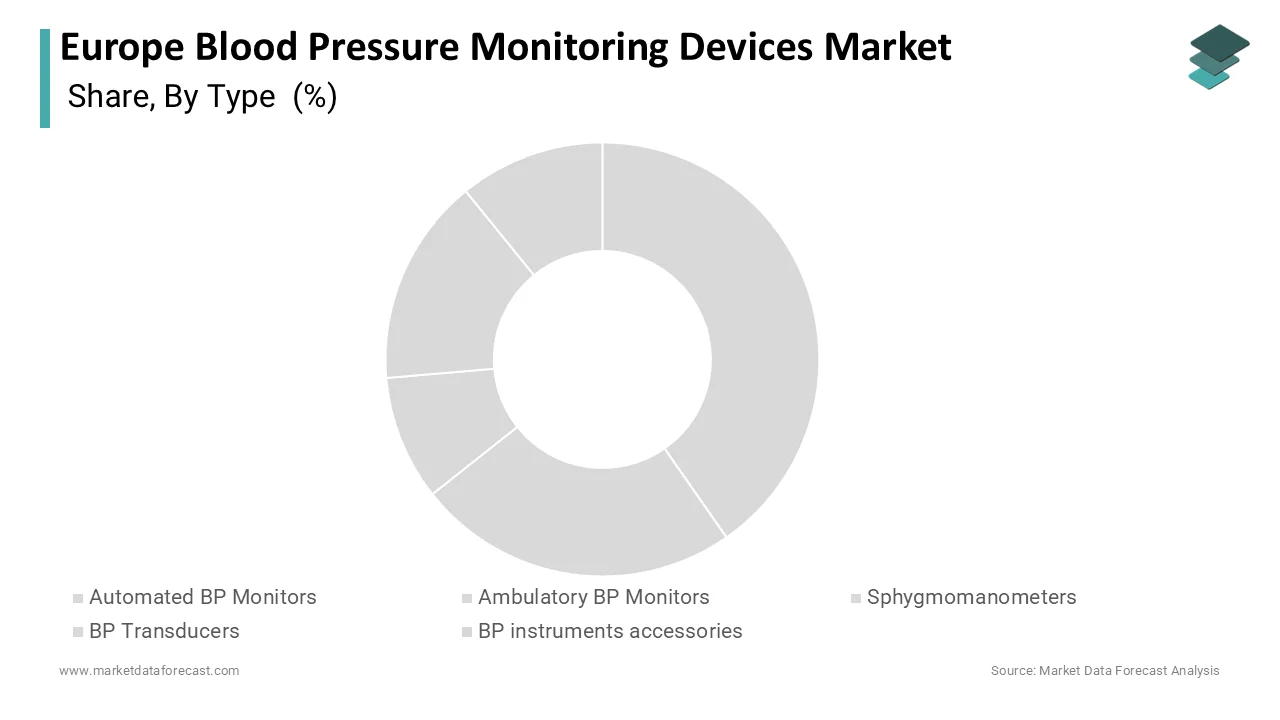
The leading position of this segment is bolstered by decades of technological refinement that have made accurate self-measurement accessible to elderly and cognitively impaired patients who constitute the majority of hypertensive populations. According to Eurostat, demographic shifts reveal that over 21% of the European population is navigating advanced age categories, intensifying the structural demand for decentralised, patient-friendly medical diagnostic devices. As per the European Commission, digital health governance blueprints advocate for automated workflows and simplified data-tracking tools to support complex geriatric tracking and alleviate pressure on medical staff. Manufacturing scale achieved through decades of production has reduced unit costs for clinically validated models, making them affordable for most households even without full reimbursement. The combination of ergonomic design, affordability, and proven usability ensures high adherence rates among target populations. Manufacturers continue investing in user experience optimisation, recognising that ease of use directly correlates with measurement frequency and clinical outcomes, thereby reinforcing automated monitors as the default choice for both clinicians prescribing and patients purchasing.
The ambulatory blood pressure monitors segment is anticipated to witness the fastest CAGR of 8.2% between 2026 and 2034 due to accumulating evidence demonstrating superior predictive value for cardiovascular outcomes compared to all other measurement modalities. According to the International Database on Ambulatory Blood Pressure Monitoring in Relation to Cardiovascular Outcomes, individual-person meta-analyses demonstrate that ambulatory and nighttime blood pressure levels serve as the strongest predictors of adverse cardiovascular events. As per the European Society of Cardiology, specialised clinical diagnostic criteria require targeted cardiovascular tracking thresholds to confirm masked or isolated hypertension variations across high-risk patient segments. The evidence-driven paradigm shift transforms ambulatory monitoring from a niche research tool into mainstream diagnostic necessity. As training programs incorporate ambulatory interpretation into core curricula and electronic health records integrate 24-hour profile visualisation, adoption barriers diminish, accelerating growth beyond mature automated monitor segments tied to replacement cycles rather than new diagnostic indications.
Growing recognition of nocturnal hypertension as an independent cardiovascular risk factor specifically addressable only through ambulatory monitoring propels segment growth beyond traditional diagnostic applications. According to the International Database on Ambulatory Blood Pressure Monitoring in Relation to Cardiovascular Outcomes Investigators, long-term cohort evaluations confirm that non-dipping nocturnal blood pressure profiles correlate with heightened stroke risks, driving clinical demand for continuous 24-hour diagnostic solutions. As per the European Renal Association, clinical practice frameworks mandate targeted screening and risk assessments to manage the high prevalence of concurrent cardiovascular conditions within chronic kidney disease patient groups. Sleep medicine societies across Europe increasingly collaborate with hypertension specialists, recognising that a portion of obstructive sleep apnea patients exhibit nocturnal hypertension requiring ambulatory confirmation before initiating targeted therapy. Pharmaceutical companies developing chronotherapeutic antihypertensives require ambulatory endpoints for regulatory approval, stimulating device demand in clinical trials and subsequent routine practice. Patient advocacy groups have successfully lobbied for nocturnal monitoring coverage in Italy and Belgium, expanding access beyond academic centres. This expansion into sleep cardiology, nephrology and pharmacology creates multiple growth vectors distinct from general hypertension diagnosis. As circadian medicine gains prominence, ambulatory monitoring becomes an indispensable tool for the personalised timing of interventions.
COMPETITIVE LANDSCAPE
Competition in the Europe blood pressure monitoring devices market is characterized by intense rivalry among established multinational corporations, specialized European manufacturers,s and emerging Asian entrants vying for position across fragmented healthcare systems. Established players leverage clinical validation heritage and physician relationships while adapting portfolios to meet stringent Medical Device Regulation requirements. Specialized European companies compete through technological differentiation, including atrial fibrillation detection and nocturnal monitoring capabilities,s addressing unmet clinical needs. Asian manufacturers challenge on price but face validation and trust barriers limiting penetration in clinically sophisticated markets. Competition increasingly centers on digital ecosystem integration and service models rather than device specifications alone, as payers demand outcome-linked value. Public sector tenders drive price competition, particularly in Southern and Eastern Europe,e where budget constraints dominate procurement decisions. Private sector competition emphasizes premium positioning, clinical evidence, and user experience. Geographic fragmentation creates varied competitive dynamics, with mature Western markets featuring sophisticated differentiation while emerging Eastern markets prioritize affordability and basic access. Consolidation trends accelerate as companies seek scale advantages and portfolio breadth to navigate regulatory complexity. Innovation cycles shorten with rapid adoption of connected technologies and AI-enhanced analysis. This multifaceted landscape rewards companies balancing clinical credibility, regulatory compliance,e and local execution capabilities across diverse national contexts, defining European success factors distinct from other global regions.
KEY MARKET PLAYERS
Some of the companies that are playing a dominating role in the Europe Blood Pressure Monitoring Devices Market include:
- GE HealthCare
- Welch Allyn
- A&D Medical Inc.
- SunTech Medical, Inc.
- Rossmax International Ltd.
- Spacelabs Healthcare Inc.
- Panasonic Corporation
- Philips Healthcare
- Contec Medical Systems Co., Ltd.
- OMRON Healthcare, Inc.
- Microlife AG
TOP LEADING PLAYERS IN THE MARKET
- Omron Healthcare Europe maintains extensive operations across the continent through localized validation studies ensuring device accuracy meets European Society of Hypertension protocols for diverse populations. The company recently launched connected upper arm monitors integrated with major European electronic health record systems,s enabling seamless data transfer for remote patient management programs. Omron partnered with national hypertension societies in Germany and France to develop clinician education materials promoting guideline-compliant home monitoring practices. These initiatives demonstrate commitment to embedding devices within clinical workflows rather than selling standalone hardware. Manufacturing facilities in the Netherlands ensure supply chain resilience against global disruptions while supporting rapid regulatory compliance under Medical Device Regulation. Continuous investment in cuff technology addresses anthropometric diversity, ty improving measurement validity for obese and elderly patients who constitute the majority of hypertensive populations across European healthcare systems.
- Beurer GmbH operates as a leading European manufacturer specializing in affordable validated blood pressure monitors designed specifically for home use and pharmacy distribution channels across member states. The company recently expanded its digital health ecosystem,m integrating blood pressure data with wellness apps compliant with European data protection regulations, enhancing user engagement and adherence. Beurer collaborated with German statutory health insurers to secure reimbursement listings for connected devices, recognizing preventive value in chronic disease management programs. Local production in Ulm ensures quality control and rapid response to regional demand fluctuations, unlike import-dependent competitors. Product development focuses on ergonomic design for elderly users addressing demographic realities of aging European populations. Strategic partnerships with pharmacy chains enable widespread retail access bypassing complex hospital procurement processes. These actions strengthen its position through accessibility, affordability,y and alignment with decentralized care models increasingly favored by European health systems seeking to reduce hospital burden through empowered self-management.
- Microlife AG distinguishes itself through technological innovation focusing on advanced detection algorithms, including atrial fibrillation screening and nocturnal hypertension assessment capabilities valued in European clinical practice. The company recently achieved CE marking under the new Medical Device Regulation for next-generation ambulatory monitors featuring improved comfort and battery life, addressing historical usability barriers limiting adoption. Microlife partnered with Swiss and Austrian hypertension specialists to generate real-world evidence validating device performance in multimorbid elderly patients, strengthening clinical credibility. Headquartered in Widn, Switzerland,n d the company leverages Alpine precision engineering reputation to differentiate from Asian manufacturers in premium segments. Continuous post-market surveillance exceeds regulatory minimums, building trust among clinicians concerned about measurement accuracy. Educational collaborations with European medical schools integrate Microlife technologies into training curricula ensuring future physician familiarity. These strategies position the company at the intersection of innovation and reliability, capturing demand from clinically sophisticated markets prioritizing diagnostic precision over cost alone in cardiovascular risk assessment.
TOP STRATEGIES USED BY KEY MARKET PARTICIPANTS
Key players prioritize clinical validation studies aligned with European Society of Hypertension protocols to build physician trust and secure guideline recommendations essential for market access. Companies invest heavily in digital health integration, connecting devices to electronic health records and telemonitoring platforms, creating service-enabled value propositions beyond hardware sales. Strategic partnerships with national hypertension societies and payer organizations facilitate reimbursement approvals and protocol adoption, accelerating uptake in publicly funded healthcare systems. Localization of manufacturing and supply chains mitigates regulatory and logistical risks under Medical Device Regulation,n ensuring consistent product availability. Portfolio diversification addresses anthropometric diversity and comorbidity complexity through specialized cuffs and detection algorithms, ms improving measurement validity for vulnerable populations. Educational initiatives targeting clinicians and patients address literacy gaps undermining appropriate utilization and clinical outcomes. Regulatory engagement accelerates certification timelines and influences standard setting, maintaining competitive advantage during transition periods. These interconnected strategies address structural European market characteristics,s including fragmentation, aging demographics, and an evidence-based medicine culture, positioning companies for sustainable growth aligned with continental healthcare priorities rather than generic global approaches disconnected from regional realities.
MARKET SEGMENTATION
This research report has segmented and sub-segmented the European blood pressure monitoring devices market into the following categories.
By Type
-
Automated BP Monitors
-
Ambulatory BP Monitors
- Sphygmomanometers
- Mercury
- Aneroid
- Digital
- BP Transducers
- BP instruments accessories
By Country
- UK
- France
- Spain
- Germany
- Italy
- Russia
- Sweden
- Denmark
- Switzerland
- Netherlands
- Turkey
- Czech Republic
- Rest of Europe