- Product Description Description
- Table of Contents TOC
- List of Table & Figure LOT
- Get Free Sample PDF Sample PDF
Market Size, 2025
$0.88 BnMarket Estimate, 2026
$0.99 BnMarket Forecast, 2034
$2.62 BnCAGR, 2026–2034
12.88%Executive Summary: North America CAR T-Cell Therapy Market
- Market Scope: Comprehensive market analysis of the North American chimeric antigen receptor (CAR) T-cell therapy sector covering target antigens (CD19, BCMA, CD20, HER2, etc.), application indications (multiple myeloma, leukemias, lymphomas), product types (autologous and allogeneic), approved commercial therapies (Yescarta, Kymriah), end-user settings, and country-level dynamics across the United States, Canada, and Mexico.
- Market Valuation: Valued at USD 0.88 billion in 2025, estimated at USD 0.99 billion in 2026, and projected to reach USD 2.62 billion by 2034, registering a robust CAGR of 12.88% (2026–2034).
- Primary Growth Drivers: Escalating incidence of aggressive and refractory cancers (lymphomas and leukemias) creating an urgent need for advanced immunotherapies; continuous FDA approvals expanding clinical indications; and improving manufacturing processes and reimbursement policies enhancing accessibility.
Key Market Segment Metrics (2026–2034)
| Category | Leading Segment / Position | Growth Dynamics |
|---|---|---|
| By Product | Autologous (leads current commercial treatments due to established personalized cell processing and approved therapies) | Allogeneic (expanding rapidly as an "off-the-shelf" alternative to reduce manufacturing times) |
| By Target Antigen | CD19 & BCMA (primary targets for hematological malignancies and multiple myeloma) | Active pipeline development targeting solid tumors (EGFRvIII, HER2, MESO) |
| By End User | Hospitals & Cancer Research Centers (primary clinical trial and administration hubs) | Strong collaboration with pharmaceutical and biotechnology innovators |
| By Country | United States (dominates regional market share backed by a robust research ecosystem, abundant clinical trials, and frequent FDA approvals) | Canada follows with strong universal healthcare coverage ensuring structured patient accessibility, alongside emerging growth in Mexico. |
Major Market Players & Market Structure
Market Structure: Highly specialized and competitive biotechnology and pharmaceutical landscape driven by heavy R&D investments, clinical trial expansions, and strategic corporate alliances.
Key Companies: Mustang Bio, Inc., Celgene Corporation, Bluebird Bio, Inc., CARsgen Therapeutics, Ltd., Novartis International AG, Legend Biotech, Sorrento Therapeutics Inc., Kite Pharma, Inc., Immune Therapeutics, Bellicum Pharmaceuticals, Inc., and Pfizer, Inc.
North America CAR T Cell Therapy Market Size
The size of the North American CAR T cell therapy market was worth USD 0.88 billion in 2025. The North American market is anticipated to grow at a CAGR of 12.88% from 2026 to 2034 and be worth USD 2.62 billion by 2034, up from USD 0.99 billion in 2026.

CAR T-cell therapy represents a specialized segment of adoptive cell transfer where patient-derived T lymphocytes are genetically engineered to express chimeric antigen receptors targeting specific malignancies. This therapeutic modality has fundamentally altered treatment paradigms for relapsed or refractory hematologic cancers across the United States and Canada. According to the American Cancer Society, approximately 2,001,140 new cancer cases will be diagnosed in the United States, creating a substantial pool of potential candidates for advanced immunotherapies. As per the National Cancer Institute, over 1,300 active clinical trials involving CAR T-cell therapies are currently registered in North America, demonstrating robust research momentum and pipeline depth. These statistics illustrate the critical intersection between high disease burden and intensive scientific validation driving market evolution. Regulatory bodies like the Food and Drug Administration have approved multiple products, establishing commercial precedents for personalized living medicines. The market is defined by complex logistics requiring vein-to-vein coordination between academic medical centers and manufacturing facilities. Continued innovation focuses on expanding indications beyond blood cancers to solid tumors while improving safety profiles.
MARKET DRIVERS
Expanding Clinical Indications beyond Hematologic Malignancies
Broadening approved indications is majorly propelling the North American CAR T cell therapy market expansion by increasing the eligible patient population beyond niche hematologic cancers. The Food and Drug Administration approved tecabtagene autoleucel in March 2024 for follicular lymphoma, marking the first CAR T therapy authorized for indolent non-Hodgkin lymphoma and potentially treating thousands of additional patients annually. According to the Leukemia and Lymphoma Society, approximately 772,976 Americans live with non-Hodgkin lymphoma, representing a patient cohort vastly larger than previously approved aggressive lymphoma populations. This regulatory milestone validates the technology platform for slower-growing diseases, encouraging payers to consider coverage for broader oncology applications. Manufacturers now pursue approvals in multiple myeloma and chronic lymphocytic leukemia, further diversifying revenue streams and reducing dependence on single indications. Clinical data supporting efficacy in these expanded populations strengthens physician confidence in prescribing CAR T as earlier-line therapy rather than a last resort. The cumulative effect of sequential label expansions creates a compounding growth trajectory as each new indication unlocks distinct referral networks and treatment centers. Payer policies increasingly align with clinical evidence, reducing access barriers for newly approved patient subgroups. This systematic broadening of therapeutic scope transforms CAR T from an orphan drug category into a mainstream oncology modality.
Favorable Reimbursement Frameworks Enhance Patient Access
Established reimbursement pathways fuel the North American CAR T cell therapy market expansion by mitigating financial toxicity for hospitals and patients receiving expensive cellular therapies. The Centers for Medicare and Medicaid Services implemented New Technology Add-On Payments, providing supplemental funding of up to 50% above standard diagnosis-related group rates for qualifying CAR T treatments during fiscal year 2024. As per the American Hospital Association, this payment mechanism helps offset acquisition costs exceeding 400,000 dollars per dose, ensuring academic medical centers can sustainably offer these life-saving interventions without operating at a loss. Private insurers, including UnitedHealthcare and Aetna, have developed specific medical policies covering FDA-approved CAR T products when administered at designated centers of excellence. These coverage determinations reduce prior authorization delays and administrative burdens, accelerating time to treatment initiation. Bundled payment models emerging in value-based care arrangements further align incentives between manufacturers, providers, and payers. Financial assistance programs offered by manufacturers bridge gaps for underinsured patients, preventing cost from becoming an absolute contraindication. The maturation of reimbursement infrastructure signals long-term viability, encouraging hospital systems to invest in necessary infrastructure and staffing. Stable payment environments enable accurate forecasting and capacity planning essential for managing autologous supply chains.
MARKET RESTRAINTS
Severe Toxicity Management Requirements Limit Treatment Sites
Safety concerns regarding cytokine release syndrome and neurotoxicity hamper the regional market expansion by restricting administration to highly specialized academic centers. The American Society of Clinical Oncology guidelines mandate that grade 3 or higher cytokine release syndrome occurs in approximately 30% of patients receiving second-generation CAR T products, requiring intensive care unit capabilities for management. According to the National Comprehensive Cancer Network, fewer than 200 certified treatment centers exist across North America capable of meeting Risk Evaluation and Mitigation Strategy requirements for tocilizumab availability and neurological monitoring. This geographic concentration forces rural patients to travel hundreds of miles, creating significant logistical and financial burdens that delay or prevent treatment. Community hospitals lacking dedicated cellular therapy units cannot participate despite serving large cancer populations. Managing immune effector cell-associated neurotoxicity syndrome demands specialized nursing expertise available only at tier-one transplant centers. Adverse event reporting requirements increase administrative overhead, discouraging smaller institutions from pursuing certification. Safety signals in real-world registries sometimes exceed clinical trial rates, prompting cautious adoption among community oncologists. Until next-generation products demonstrate improved safety profiles enabling decentralized delivery, treatment site limitations will constrain patient throughput and market penetration significantly.
Complex Manufacturing Logistics Cause Treatment Delays
Autologous manufacturing complexities unfavorably affect market dynamics by introducing variable vein-to-vein times that compromise clinical outcomes. The Foundation for the Accreditation of Cellular Therapy reports that manufacturing failure rates range from 5% to 10% due to insufficient T-cell collection or contamination events, necessitating costly reprocessing or alternative therapies. As per the Journal of Clinical Oncology, median vein-to-vein turnaround times average 3 to 4 weeks, during which 10% to 20% of rapidly progressing patients become ineligible or die before infusion. This attrition directly reduces addressable market volume and frustrates referring physicians who lose confidence in reliable delivery. Supply chain vulnerabilities include limited viral vector production capacity and specialized cryopreservation shipping containers, creating bottlenecks during peak demand periods. Each product requires dedicated manufacturing slots, preventing flexible capacity sharing between competing therapies. Quality control testing adds mandatory hold points extending timelines regardless of clinical urgency. Patients experiencing disease progression during the manufacturing window may require bridging chemotherapy, adding toxicity and cost. These inherent process inefficiencies create friction in adoption curves and incentivize the development of allogeneic alternatives despite their own developmental hurdles.
MARKET OPPORTUNITIES
Allogeneic Off-the-Shelf Platforms Address Manufacturing Bottlenecks
Allogeneic universal donor CAR T-cell platforms offer promising opportunities for the North American CAR T-cell therapy market by eliminating patient-specific manufacturing constraints and reducing costs. The Blood and Marrow Transplant Clinical Trials Network indicates that allogeneic products could theoretically reduce vein-to-vein time to less than 7 days compared to current autologous standards of 3 to 4 weeks. According to Nature Medicine, early-phase trials demonstrate comparable response rates in B-cell malignancies using gene-edited donor cells with reduced graft-versus-host disease risk through T-cell receptor knockout. This technological shift enables centralized mass production, achieving economies of scale impossible with bespoke autologous processes. Off-the-shelf availability allows immediate treatment initiation, preventing patient deterioration during manufacturing windows. Standardized dosing facilitates multicenter clinical trials, accelerating regulatory approval timelines across diverse indications. Lower production costs potentially support price points accessible to broader payer networks and international markets. Inventory management becomes predictable, enabling just-in-time distribution models similar to conventional pharmaceuticals. Multiple companies advancing allogeneic candidates create competitive pressure, driving innovation in persistence and potency. Successful commercialization would democratize access beyond elite academic centers, transforming CAR T from a luxury good to a standard of care.
Solid Tumor Expansion Unlocks Massive Patient Populations
Targeting solid tumors represents the largest untapped opportunity given that epithelial cancers constitute over 90% of all malignancies. The American Association for Cancer Research states that successful adaptation of CAR T to solid tumors could expand the addressable patient population by 10-fold compared to current hematologic indications. As per Cell, novel approaches including armored CARs secreting cytokines and dual-targeting constructs show promising preclinical activity against glioblastoma and pancreatic cancer, overcoming immunosuppressive tumor microenvironments. Regional delivery methods such as intrathecal or intraperitoneal administration bypass systemic toxicity barriers limiting intravenous approaches. Biomarker-driven patient selection identifies subsets most likely to respond, improving clinical trial success rates. Partnership opportunities exist between CAR T developers and diagnostic companies developing companion assays for target antigen expression. Solid tumor indications command premium pricing due to unmet need and lack of effective alternatives. Manufacturing processes optimized for high-volume solid tumor targets differ from hematologic platforms, creating differentiation advantages. Regulatory agencies offer expedited pathways for breakthrough designations in lethal solid tumors, accelerating development timelines. Capturing even small fractions of solid tumor markets would generate revenues dwarfing current hematologic benchmarks.
MARKET CHALLENGES
Antigen Escape Mechanisms Drive Relapse Rates
Tumor antigen loss or modulation challenges market sustainability by causing relapses in initially responding patients, which is a major challenge for the North American CAR T cell therapy market. The New England Journal of Medicine documents that CD19-negative relapse occurs in 30% to 50% of acute lymphoblastic leukemia patients within 12 months post-infusion due to selective pressure eliminating target-expressing clones. According to Cancer Discovery, heterogeneous antigen expression in solid tumors creates sanctuary sites where CAR T-cells cannot engage effectively, leading to incomplete responses and rapid progression. This biological limitation necessitates combination strategies or multi-target approaches, increasing development complexity and regulatory burden. Physicians face difficult counseling conversations about durability uncertainty, affecting informed consent and treatment decisions. Payers increasingly demand outcome-based contracts linking reimbursement to sustained remission rather than initial response, transferring financial risk to manufacturers. Developing next-generation constructs targeting multiple antigens simultaneously requires extensive preclinical validation, delaying commercial timelines. Companion diagnostics monitoring minimal residual disease add cost and operational complexity to follow-up protocols. Relapse management algorithms remain undefined, creating variability in post-progression care standards. Overcoming escape mechanisms is fundamental to achieving curative intent rather than temporary disease control.
Workforce Shortages Constrain Treatment Capacity
Specialized personnel shortages challenge market scalability by limiting the number of patients that certified centers can safely manage concurrently. The Association of American Medical Colleges projects a deficit of 86,000 physicians by 2036, with hematology and oncology subspecialties facing acute recruitment difficulties exacerbated by burnout. According to the Oncology Nursing Society, 70% of cancer nurses report considering leaving the profession due to workload intensity and emotional exhaustion, directly impacting cellular therapy program capacity. CAR T administration requires dedicated nurse coordinators managing apheresis, bridging therapy, lymphodepletion, and post-infusion monitoring for extended periods. Training new staff takes 6 to 12 months, creating a lag between hiring and productive contribution. High turnover disrupts continuity of care and institutional knowledge retention, compromising quality metrics. Academic centers compete fiercely for limited talent pools, driving wage inflation and operational costs. Rural and community settings struggle disproportionately to attract specialists, perpetuating geographic access disparities. Staffing constraints force appointment caps, extending waitlists and delaying treatment initiation. Without sustainable workforce solutions including mid-level provider integration and telehealth support, physical infrastructure investments alone cannot resolve capacity bottlenecks limiting market realization.
REPORT COVERAGE
| REPORT METRIC | DETAILS |
| Market Size Available | 2025 to 2034 |
| Base Year | 2025 |
| Forecast Period | 2026 to 2034 |
| Segments Covered | By Target Antigen, Products, Application, and Country. |
| Various Analyses Covered | Global, Regional, and Country-Level Analysis, Segment-Level Analysis, Drivers, Restraints, Opportunities, Challenges; PESTLE Analysis; Porter’s Five Forces Analysis, Competitive Landscape, Analyst Overview of Investment Opportunities |
| Countries Covered |
|
| Market Leaders Profiled | Mustang Bio, Inc., Celgene Corporation, Bluebird Bio, Inc., CARsgen Therapeutics, Ltd., Novartis International AG, Gilead Sciences, Legend Biotech, Sorrento Therapeutics Inc., Kite Pharma, Inc., Novartis AG, Immune Therapeutics, Bristol Myers Squibb, Bellicum Pharmaceuticals, Inc. and Pfizer, Inc. |
SEGMENTAL ANALYSIS
By Target Antigen Insights
The CD19 segment had the major share of the North American CAR T cell therapy market in 2025 and is expected to remain the dominant target antigen over the forecast period due to its high expression on B-cell malignancies and proven track record in achieving durable remissions. The Food and Drug Administration has approved four distinct CAR T therapies targeting CD19, including tisagenlecleucel and axicabtagene ciloleucel, establishing it as the most validated antigen in oncology. According to the American Society of Hematology, over 70% of all commercial CAR T administrations in North America target CD19, reflecting physician preference for established safety profiles. The National Comprehensive Cancer Network guidelines recommend CD19-directed therapy as a standard of care for relapsed/refractory diffuse large B-cell lymphoma, ensuring consistent prescription volume. Extensive real-world evidence from the Center for International Blood and Marrow Transplant Research demonstrates overall response rates exceeding 80% in pediatric acute lymphoblastic leukemia, reinforcing clinical confidence. Manufacturing processes for CD19 constructs are highly optimized, reducing failure rates compared to novel targets. Payer coverage policies are well-defined for CD19 indications, minimizing administrative delays and improving patient access speed. The breadth of approved indications across age groups and disease stages creates a stable revenue base for manufacturers. Continued investment in next-generation CD19 products with improved persistence further cements its market leadership position against emerging alternatives.
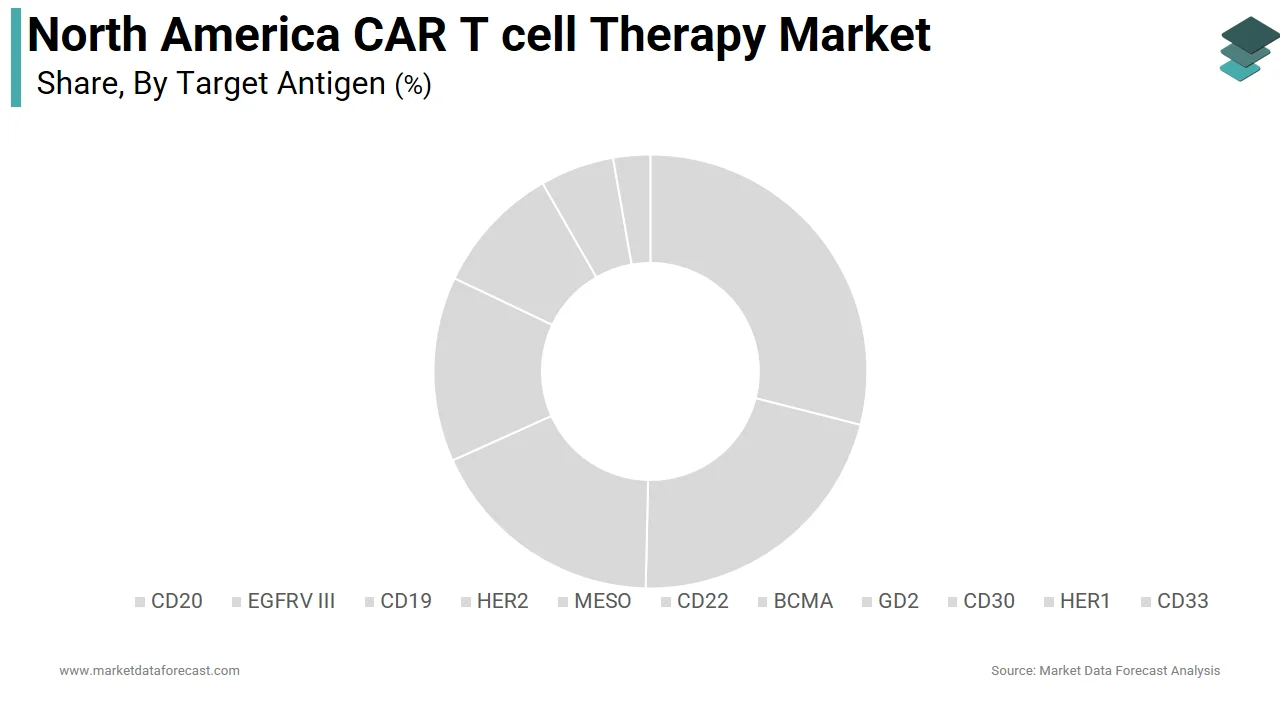
On the other hand, the B-cell maturation antigen segment is estimated to register a CAGR of 25.5% over the forecast period in this regional market owing to the recent regulatory approvals for multiple myeloma treatments. The Food and Drug Administration approved idecabtagene vicleucel and ciltacabtagene autoleucel, expanding treatment options for patients who have exhausted prior therapies, including immunomodulatory drugs and proteasome inhibitors. According to the Multiple Myeloma Research Foundation, approximately 35,000 new cases of multiple myeloma are diagnosed annually in the United States, creating a substantial patient pool eligible for BCMA-targeted interventions. Clinical trials published in the New England Journal of Medicine demonstrate deep and durable responses with minimal residual disease negativity rates exceeding 60%, validating therapeutic potential. Physicians increasingly prescribe BCMA CAR T earlier in the treatment algorithm following positive outcomes in frontline studies. The lack of effective curative options for relapsed myeloma drives urgent adoption of this novel modality. Insurance coverage expansions for BCMA therapies reduce financial barriers, enabling broader patient access across diverse socioeconomic groups. Manufacturer investments in dedicated BCMA production lines increase availability, reducing wait times for critically ill patients. The momentum from successful late-stage trials encourages rapid integration into national treatment guidelines.
By Application Insights
The diffuse large B-cell lymphoma segment accounted for the leading share of the North American market in 2025 and is estimated to maintain its position as the leading application segment throughout the forecast period due to early regulatory approvals and widespread clinical adoption. The Food and Drug Administration approved axicabtagene ciloleucel specifically for adult patients with relapsed or refractory large B-cell lymphoma, establishing a clear treatment pathway. According to the Leukemia and Lymphoma Society, diffuse large B-cell lymphoma accounts for approximately 30% of all non-Hodgkin lymphoma diagnoses, representing the largest single subtype eligible for CAR T therapy. The ZUMA-1 trial data published in the Journal of Clinical Oncology demonstrated an overall response rate of 83%, reinforcing its status as preferred second-line therapy. National Comprehensive Cancer Network guidelines explicitly recommend CAR T-cell therapy for eligible patients failing two or more lines of systemic therapy, ensuring consistent referral patterns. Academic medical centers have developed specialized multidisciplinary teams focused on DLBCL management, optimizing patient selection and outcome tracking. Payer policies clearly define coverage criteria for DLBCL, reducing prior authorization denials and accelerating treatment initiation. The large incidence rate ensures steady patient flow, sustaining manufacturing utilization rates for CD19-targeted products. Continuous updates to clinical guidelines incorporate real-world evidence, maintaining relevance in evolving treatment landscapes.
On the other hand, the multiple myeloma segment is predicted to showcase a CAGR of 22.4% over the forecast period owing to the aggressive pipeline development and label expansions. The Food and Drug Administration granted breakthrough therapy designation to several BCMA-targeted CAR T candidates, accelerating their review and approval timelines. According to the International Myeloma Working Group, over 100 active clinical trials are investigating CAR T therapies in various lines of treatment for myeloma, indicating robust scientific interest. Early-phase results presented at the American Society of Clinical Oncology annual meeting show promising efficacy in patients with high-risk cytogenetic features who historically had poor prognoses. Manufacturers are pursuing approvals for earlier-line usage, potentially expanding the eligible population from late-stage relapse to first recurrence. The competitive landscape encourages innovation in dosing strategies and combination regimens, enhancing therapeutic value. Patient advocacy organizations collaborate with researchers to design trials addressing specific unmet needs such as renal impairment compatibility. Regulatory agencies provide flexible pathways for rare subtypes, facilitating faster market entry for niche indications. The convergence of scientific validation and regulatory support creates favorable conditions for exponential growth in this segment.
REGIONAL ANALYSIS
U.S. CAR T Cell Therapy Market Analysis
The U.S. held the major share of the North American market in 2025 and is likely to maintain robust expansion supported by high incidence rates of hematologic malignancies and advanced healthcare reimbursement frameworks over the next few years. The United States holds the dominant position in the North American CAR T-cell therapy market, driven by advanced healthcare infrastructure and a favorable regulatory environment. The Food and Drug Administration has approved six distinct CAR T products, creating a robust commercial framework for patient access and reimbursement. According to the American Cancer Society, the high incidence of hematologic malignancies, including over 80,000 new lymphoma cases annually, provides a substantial patient base for therapy adoption. The Centers for Medicare and Medicaid Services implemented additive payment policies, reducing financial burden on hospitals and encouraging wider service availability. Private insurance coverage is comprehensive for FDA-approved indications, ensuring affordability for the majority of insured patients. Leading academic medical centers in states like Pennsylvania, Texas, and California serve as hubs for clinical innovation and trial participation. Venture capital funding for biotech startups remains highest globally, fostering continuous pipeline development. Physician education programs are widespread, promoting early referral and appropriate patient selection. The mature ecosystem supports rapid integration of new technologies and indications, sustaining market leadership.
Canada CAR T Cell Therapy Market Analysis
Canada is expected to experience steady market growth driven by coordinated public healthcare reimbursement policies and expanding centralized treatment networks in the coming years. Canada maintains a structured and growing presence in the CAR T market characterized by public healthcare coordination and centralized approval processes. Health Canada approved tisagenlecleucel and axicabtagene ciloleucel, enabling access through provincial drug plans and hospital budgets. According to the Canadian Cancer Society, approximately 25,000 new cases of blood cancers are diagnosed yearly, creating steady demand for advanced therapies. The Pan-Canadian Oncology Drug Review evaluates clinical and cost-effectiveness, guiding provincial reimbursement decisions and ensuring equitable access across regions. A limited number of certified treatment centers concentrates expertise in major urban hubs like Toronto, Vancouver, and Montreal, facilitating high-quality care delivery. Government funding supports clinical trials, integrating Canadian patients into global research networks. Patient assistance programs bridge gaps for uninsured services, reducing out-of-pocket expenses. Collaboration with United States manufacturers ensures supply chain stability despite smaller domestic market size. Regulatory alignment with international standards accelerates approval timelines for new indications. Public awareness campaigns educate patients about eligibility criteria, improving referral rates from community oncologists.
COMPETITIVE LANDSCAPE
The competition within the North America CAR T cell therapy market is characterized by intense rivalry among established pharmaceutical giants and agile biotechnology firms striving for technological supremacy. Key participants compete primarily on clinical efficacy, manufacturing speed, and safety profiles rather than price due to limited therapeutic alternatives. Major players invest billions in research and development to create next-generation allogeneic products that overcome current autologous limitations. Strategic collaborations with academic medical centers are essential for conducting pivotal trials and validating real-world outcomes. Companies strive to secure exclusive licensing agreements for novel antigen targets such as BCMA and GD2 to differentiate their pipelines. The high barrier to entry involving complex regulatory requirements and specialized manufacturing infrastructure limits new competitor emergence. Intellectual property disputes frequently arise as firms protect proprietary gene editing techniques and vector designs. Geographic expansion into underserved regions provides growth opportunities for leaders seeking to maximize return on investment. The competitive dynamics are further influenced by payer negotiations, where outcomes-based contracts mitigate financial risk for healthcare systems. Maintaining rigorous quality control while scaling production remains a critical differentiator in this highly regulated sector. Companies that successfully balance innovation with operational efficiency gain significant advantages in capturing market share.
KEY MARKET PLAYERS
The leading companies operating in the North America CAR T Cell therapy market include:
- Mustang Bio, Inc.
- Celgene Corporation
- Bluebird Bio, Inc.
- CARsgen Therapeutics, Ltd.
- Novartis International AG
- Gilead Sciences
- Legend Biotech
- Sorrento Therapeutics Inc.
- Kite Pharma, Inc.
- Novartis AG
- Immune Therapeutics
- Bristol Myers Squibb
- Bellicum Pharmaceuticals, Inc.
- Pfizer, Inc.
TOP PLAYERS IN THE MARKET
- Bristol Myers Squibb maintains a leading position through its portfolio of approved CAR T therapies, including idecabtagene vicleucel and lisocabtagene maraleucel. The company focuses on expanding indications for multiple myeloma and lymphoma to reach broader patient populations. Recent initiatives include investing in next-generation allogeneic platforms to reduce manufacturing complexity and cost. Bristol Myers Squibb collaborates with academic centers to generate real-world evidence supporting clinical efficacy and safety. The firm actively engages with payers to secure favorable reimbursement terms, ensuring patient access. Its commitment to innovation drives continuous improvement in vector design and cell persistence. Strategic partnerships enhance supply chain resilience, guaranteeing consistent product availability. Educational programs for healthcare providers promote appropriate patient selection and toxicity management. These efforts solidify its reputation as a trusted partner in advanced cellular therapy.
- Gilead Sciences leverages its acquisition of Kite Pharma to dominate the CAR T landscape with products like axicabtagene ciloleucel and brexucabtagene autoleucel. The company emphasizes streamlined manufacturing processes to shorten vein-to-vein times for critically ill patients. Gilead invests heavily in clinical trials exploring earlier line therapy applications for diffuse large B-cell lymphoma. It partners with community oncology networks to decentralize care delivery and improve geographic access. The firm utilizes data analytics to optimize patient outcomes and reduce adverse event rates. Gilead supports physician education initiatives enhancing confidence in prescribing complex cellular therapies. Its robust financial resources enable aggressive pipeline development and global expansion strategies. Quality control measures ensure high purity and potency standards for every batch produced. These actions reinforce its leadership in delivering life-saving immunotherapies to diverse patient groups.
- Novartis AG pioneered the commercialization of CAR T therapy with tisagenlecleucel, establishing a strong foundation in pediatric and adult leukemia treatments. The company continues to refine its manufacturing capabilities to increase production capacity and reduce costs. Novartis collaborates with regulatory bodies to facilitate approvals for new indications, including autoimmune diseases. It invests in digital health tools to monitor patient progress and manage long-term follow-up data. The firm engages in strategic alliances with biotechnology startups to access novel targeting technologies. Novartis prioritizes patient support services, helping families navigate logistical and financial challenges. Its global research network accelerates discovery of next-generation constructs with improved safety profiles. Compliance with international quality standards ensures reliable supply across North American markets. These contributions sustain its influence in shaping the future of personalized cancer medicine.
TOP STRATEGIES USED BY KEY MARKET PARTICIPANTS
Key participants in the North America CAR T cell therapy market employ several strategic approaches to maintain their competitive edge and drive sustainable growth. Innovation in allogeneic platform development remains a primary focus as companies seek to create off-the-shelf products, reducing manufacturing time and cost. Strategic mergers and acquisitions allow firms to acquire complementary technologies and expand their therapeutic pipelines rapidly. Partnerships with contract manufacturing organizations help scale production capacity without heavy capital expenditure on new facilities. Companies prioritize regulatory engagement to accelerate approval timelines for breakthrough therapies and orphan indications. Investment in digital health integration enables remote patient monitoring and data collection, improving clinical outcomes. Diversification into solid tumor indications opens new revenue streams beyond saturated hematologic markets. Focus on health economics and outcomes research supports favorable reimbursement decisions from public and private payers. These strategies collectively enable market leaders to adapt to evolving scientific landscapes and meet increasing patient demand effectively.
MARKET SEGMENTATION
This research report on the North America CAR T cell therapy market is segmented and sub-segmented into the following categories.
By Target Antigen
- CD20
- EGFRV III
- CD19
- HER2
- MESO
- CD22
- BCMA
- GD2
- CD30
- HER1
- CD33
By Application
- Multiple Myeloma
- Chronic Lymphocytic Leukemia
- Mantle Cell Lymphoma
- Follicular Lymphoma
- Diffuse large B-cell lymphoma
- Acute Lymphoblastic Leukemia
By Product
- Allogeneic
- Autologous
By Therapies
- Axicabtagene ciloleucel (Yescarta)
- Tisagenlecleucel (Kymriah)
By End User
- Cancer Research Centers
- Hospitals
- Academic and Research Institutes
- Pharmaceutical Companies
- Biotechnology Companies
- Contract Research Organizations
By Country
- United States
- Canada
- Mexico
- Rest of North America