- Product Description Description
- Table of Contents TOC
- List of Table & Figure LOT
- Get Free Sample PDF Sample PDF
Market Size, 2025
$1.61 BnMarket Estimate, 2026
$1.68 BnMarket Forecast, 2034
$2.41 BnCAGR, 2026–2034
4.60%North America Cashew Nuts Market Report Summary
The North America cashew nuts market was valued at USD 1.61 billion in 2025, is estimated to reach USD 1.68 billion in 2026, and is projected to reach USD 2.41 billion by 2034, growing at a CAGR of 4.60% during the forecast period. Market growth is driven by increasing demand for healthy snacks, rising consumer preference for plant based protein sources, and growing awareness of the nutritional benefits of nuts. Cashew nuts are widely consumed due to their rich content of healthy fats, vitamins, and minerals. The expansion of health conscious lifestyles, along with increasing use in processed foods and culinary applications, is further supporting steady market growth across North America.
Key Market Trends
- Rising demand for healthy and nutritious snack options is driving market growth.
- Increasing consumer preference for plant based protein sources is boosting demand.
- Growing use of cashew nuts in food processing and culinary applications is supporting market expansion.
- Expansion of retail and e commerce channels is improving product availability.
- Rising awareness of nutritional benefits is enhancing consumer interest.
Segmental Insights
- Based on form, the whole cashew nut segment was the largest and held 51.5% of the North America cashew nuts market share in 2025. This dominance is attributed to strong consumer preference for whole nuts due to their taste, texture, and versatility.
- Based on usage, the snacks segment accounted for 41.9% of the North America cashew nuts market share in 2025. The segment’s growth is driven by increasing consumption of ready to eat and on the go snack products.
Regional Insights
- The North America cashew nuts market is experiencing steady growth across the region, supported by rising health awareness and consumption trends.
- The United States was the largest contributor, accounting for 84.4% of the North America cashew nuts market share in 2025, driven by high consumer demand, strong retail infrastructure, and growing preference for healthy snacking options.
Competitive Landscape
The North America cashew nuts market is moderately competitive, with key players focusing on product quality, organic offerings, and expansion of distribution networks to strengthen their market position. Companies are investing in premium packaging, branding, and sustainable sourcing practices. Prominent players in the North America cashew nuts market include Ajanta Industries, Achal Cashew nuts, Agrocel Industries, ALIEN GREEN, BATA FOOD, Cascade Agroindustrial S A, CBL Natural Foods PVT LTD, DIVINE FOODS, Delphi Organic, Aryan International, and Tierra Farm.
North America Cashew Nuts Market Size
The North American cashew nuts market size was valued at USD 1.61 billion in 2025, and the market size is expected to be valued at USD 1.68 billion in 2026 and reach USD 2.41 billion by 2034. The market's promising CAGR for the predicted period is 4.60%.
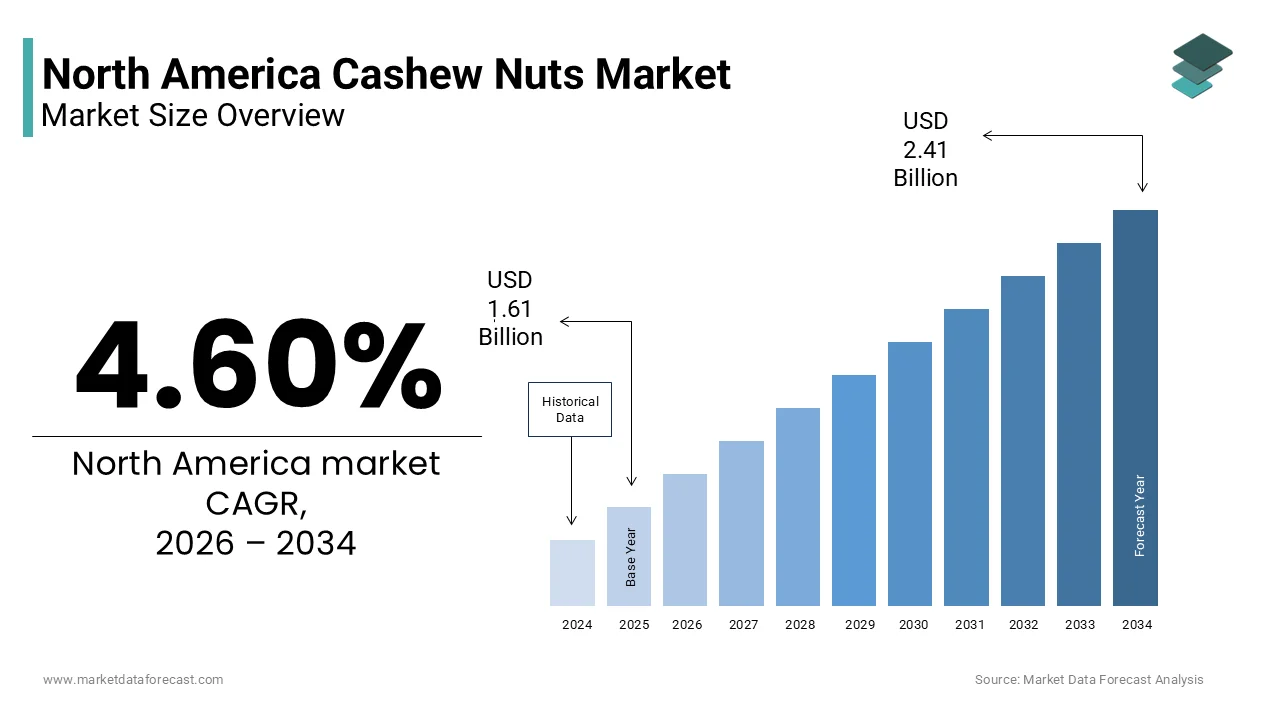
According to the United States Department of Agriculture Economic Research Service, the per capita consumption of tree nuts in the United States has risen steadily, reaching approximately 2.3 pounds per person annually with cashews constituting a significant portion of this intake. The region relies heavily on imports from producing nations such as Vietnam, India, and Brazil, as domestic cultivation remains limited due to climatic constraints. As per the Food and Agriculture Organization of the United Nations, global production of cashew nuts reached approximately 4.1 million tons in recent years, highlighting the scale of international supply chains that feed North American demand. The market is increasingly influenced by consumer preferences for clean label snacks and organic certifications. Retailers are expanding their offerings to include value-added products such as roasted, salted, and flavored varieties. The integration of cashews into mainstream food manufacturing further solidifies their position as a staple ingredient. This dynamic landscape reflects a shift toward health-conscious consumption and sustainable sourcing practices across the continent.
MARKET DRIVERS
Surging Demand for Plant Based Dairy Alternatives
The exponential growth of the plant-based food sector is majorly driving the expansion of the North American cashew nuts market. Cashews are uniquely suited for creating dairy-free alternatives due to their high fat content and ability to blend into smooth, creamy textures without overpowering flavors. As per the Plant Based Foods Association, retail sales of plant-based foods in the United States grew by 6.2% in recent years, which is reaching a total market value of over 8 billion USD. Within this category, plant-based milk and cheese alternatives have shown remarkable resilience and growth. Cashew milk is particularly favored for its rich mouthfeel and nutritional profile, which often includes added vitamins and minerals. Major food manufacturers are increasingly incorporating cashew paste into vegan cheese, yogurts, and ice creams to mimic the sensory experience of dairy. The rise in lactose intolerance and ethical concerns regarding animal agriculture further propels this trend. According to the National Institutes of Health, approximately 68% of the world population has some degree of lactose malabsorption, which is driving consumers to seek viable alternatives. Cashew-based products offer a premium option that appeal to health-conscious individuals seeking whole-food ingredients. The versatility of cashews allows for innovation in product development, leading to a wider array of consumer choices. This sustained demand from the plant-based sector ensures a steady and growing market for cashew processors and distributors in North America.
Increasing Consumer Preference for Heart Healthy Snacking Options
The growing awareness of cardiovascular health and the benefits of nutrient-dense snacking is fuelling the regional market growth. Cashews are rich in monounsaturated fats, magnesium, and antioxidants, which are associated with improved heart health and reduced risk of chronic diseases. As per the American Heart Association, regular consumption of nuts, including cashews, can lower levels of low-density lipoprotein cholesterol and reduce inflammation. Consumers are increasingly replacing processed snacks with whole-food options that provide sustained energy and essential nutrients. The convenience of ready-to-eat cashew packs has made them a popular choice for busy professionals and students. According to the Centers for Disease Control and Prevention, heart disease remains the leading cause of death in the United States, affecting approximately 1 in every 5 deaths, which prompts individuals to adopt preventive dietary measures. Cashews fit seamlessly into various dietary patterns, including Mediterranean and DASH diets, which emphasize whole grains, fruits, vegetables, and healthy fats. The marketing efforts of industry stakeholders often highlight these health benefits, reinforcing consumer perception of cashews as a functional food. Retailers are responding by placing cashew products in prominent positions within health food aisles. This alignment with public health goals and lifestyle trends sustains the upward trajectory of cashew demand in the region.
MARKET RESTRAINTS
Volatility in Global Supply Chains and Import Dependency
The heavy reliance on imports and vulnerability to global supply chain disruptions is one of the major impediments to the North American cashew nuts market growth. The region produces negligible quantities of cashews domestically, importing the vast majority of its supply from West Africa, Asia, and South America. As per the United States International Trade Commission, fluctuations in export policies from key producing countries such as Vietnam and India can lead to sudden price spikes and availability issues. Geopolitical tensions, trade disputes, and logistical bottlenecks further exacerbate these challenges. For instance, port congestion and shipping delays during peak seasons can disrupt the timely delivery of raw materials to processing facilities. The complexity of the supply chain involves multiple intermediaries, each adding layers of cost and potential risk. According to the World Bank, the Global Supply Chain Volatility Index has shown significant fluctuations in recent years, affecting the flow of agricultural commodities. These disruptions force manufacturers to hold higher inventory levels, increasing storage costs and tying up capital. Additionally, currency fluctuations between the US dollar and currencies of producing nations impact procurement costs. The lack of domestic production limits the ability to buffer against external shocks. This dependency creates an unstable operating environment for distributors and retailers who must navigate unpredictable market conditions. Mitigating these risks requires diversified sourcing strategies and robust contingency planning, which can be resource-intensive for smaller players.
Stringent Food Safety Regulations and Quality Standards
Strict regulatory requirements regarding food safety and quality are hampering the regional market growth. Imported cashews must comply with rigorous standards set by the Food and Drug Administration and the Canadian Food Inspection Agency to ensure they are free from contaminants such as aflatoxins, salmonella, and pesticide residues. As per the Food and Drug Administration, imported food facilities are subject to inspection and must adhere to the Foreign Supplier Verification Programs. Non-compliance can result in product recalls, import alerts, and significant financial penalties. The detection of allergens or microbial contamination in cashew shipments can lead to widespread consumer distrust and brand damage. According to the Centers for Disease Control and Prevention, foodborne illnesses affect approximately 48 million Americans annually, highlighting the importance of strict oversight. The cost of maintaining compliance, including testing, certification, and documentation, adds to the operational expenses for importers and processors. Small and medium-sized enterprises may struggle to meet these stringent requirements due to limited resources and technical expertise. Furthermore, changing regulations regarding labeling and nutritional claims require continuous monitoring and adaptation. The need for traceability throughout the supply chain adds another layer of complexity. These regulatory burdens can slow down market entry for new suppliers and limit the variety of products available. Ensuring consistent adherence to safety standards is critical but challenging in a globally sourced market.
MARKET OPPORTUNITIES
Expansion into Value Added and Flavored Cashew Products
The development of value-added cashew products is a significant opportunity for growth in the North America cashew nuts market. Consumers are increasingly seeking convenient and flavorful snack options that cater to diverse taste preferences. Manufacturers are innovating by introducing cashews coated with spices, herbs, sweeteners, and superfoods to create unique flavor profiles. As per the Specialty Food Association, sales of specialty snacks have seen a significant increase, with seasoned and roasted nuts contributing to a category that represents nearly 20% of all specialty food sales. Flavored cashews such as sriracha lime, honey roasted, and sea salt varieties appeal to adventurous palates and differentiate products in a crowded market. These value-added items command higher profit margins compared to raw or plain roasted cashews. The trend toward gourmet snacking encourages brands to experiment with exotic ingredients and artisanal processing methods. Packaging innovations such as resealable bags and single-serve portions enhance convenience and portability, appealing to on-the-go consumers. Retailers are dedicating more shelf space to premium nut mixes and flavored varieties, recognizing their popularity. Collaborations with chefs and food influencers help promote new flavors and drive trial. The ability to customize products for specific dietary needs, such as keto, paleo, or vegan, further expands the customer base. This focus on innovation and differentiation allows companies to capture greater market share and build brand loyalty in a competitive landscape.
Integration of Cashews into Functional Food and Beverage Applications
The incorporation of cashews into functional foods and beverages offers a lucrative opportunity for market expansion. Beyond traditional snacking, cashews are being utilized as key ingredients in protein bars, energy bites, and nutritional supplements due to their dense nutrient profile. As per the Council for Responsible Nutrition, approximately 74% of U.S. adults take dietary supplements, with consumers increasingly seeking natural sources of vitamins and minerals. Cashew butter and powder are increasingly used in fortification efforts to enhance the protein and healthy fat content of various food products. The beverage industry is also exploring cashew-based ingredients for smoothies and functional drinks aimed at health-conscious consumers. The neutral flavor of cashews allows them to blend seamlessly with other ingredients without altering the overall taste profile. Manufacturers are leveraging the clean label appeal of cashews to attract consumers avoiding artificial additives and preservatives. The rise of personalized nutrition drives demand for versatile ingredients that can be tailored to individual health goals. Research into the bioactive compounds in cashews, such as anacardic acids, further supports their inclusion in functional formulations. Partnerships between cashew suppliers and food technologists facilitate the development of novel applications. This diversification into functional categories reduces dependence on traditional snack markets and opens new revenue streams. The alignment with wellness trends positions cashews as a valuable component in the evolving functional food landscape.
MARKET CHALLENGES
Susceptibility to Climate Change and Agricultural Variability
The susceptibility of cashew crops to climate change and environmental variability in producing regions is one of the major challenges to the North American cashew nuts market growth. Cashew trees are sensitive to changes in temperature, rainfall patterns, and extreme weather events, which can significantly impact yield and quality. As per the Intergovernmental Panel on Climate Change, global temperatures are projected to reach or exceed 1.5°C of warming, which is expected to affect agricultural productivity in tropical regions where cashews are predominantly grown. Droughts and floods can lead to crop failures, reducing the overall supply available for export. This volatility creates uncertainty for importers and manufacturers who rely on consistent raw material availability. The concentration of production in specific geographic areas increases the risk of supply shocks. According to the World Meteorological Organization, the number of weather-related disasters has increased fivefold over the past 50 years, posing threats to global food security. Farmers in producing countries may lack the resources to implement adaptive measures such as irrigation systems or drought-resistant varieties. The resulting fluctuations in supply can lead to price instability, affecting profitability throughout the value chain. Long-term climate projections suggest that suitable growing areas for cashews may shift, requiring significant adjustments in agricultural practices. Addressing this challenge requires investment in sustainable farming techniques and climate-resilient infrastructure. However, these initiatives take time and capital to implement effectively, leaving the market vulnerable in the interim.
Labor Intensive Processing and Ethical Sourcing Concerns
The labor-intensive nature of cashew processing and associated ethical sourcing concerns offers a persistent challenge to the North America cashew nuts market. Raw cashew shells contain urushiol, a toxic substance that can cause severe skin irritation, requiring careful handling during shelling. As per the International Labour Organization, approximately 160 million children are still in child labor globally, and agricultural sectors in producing countries often face scrutiny for poor working conditions and inadequate protective equipment. This raises significant ethical concerns for North American consumers and retailers who prioritize social responsibility and fair trade practices. Brands face pressure to ensure their supply chains are free from labor exploitation and unsafe working environments. Achieving transparency in complex global supply chains is difficult and costly. According to the Fair Labor Association, agricultural supply chains often require rigorous auditing to ensure compliance with international labor standards. Failure to address these issues can result in reputational damage and loss of consumer trust. Certification programs such as Fair Trade and Rainforest Alliance help mitigate these risks but require rigorous compliance and monitoring. The cost of ethical sourcing can be higher than conventional methods, potentially impacting competitiveness. Consumers are increasingly willing to pay a premium for ethically sourced products, but educating them about the complexities of cashew production remains a challenge. Companies must balance cost efficiency with ethical obligations, navigating a delicate landscape of social responsibility. This ongoing scrutiny necessitates continuous improvement in labor practices and supply chain transparency.
REPORT COVERAGE
| REPORT METRIC | DETAILS |
| Market Size Available | 2025 to 2034 |
| Base Year | 2025 |
| Forecast Period | 2026 to 2034 |
| CAGR | 4.60% |
| Segments Covered | By Form, Usage, Distribution Channel, and Region |
| Various Analyses Covered | Global, Regional, & Country Level Analysis; Segment-Level Analysis; DROC, PESTLE Analysis; Porter’s Five Forces Analysis; Competitive Landscape; Analyst Overview of Investment Opportunities |
| Regions Covered | United States, Canada and Rest of North America |
| Market Leaders Profiled | Ajanta Industries, Achal Cashew nuts, Agrocel Industries, ALIEN GREEN, BATA FOOD, Cascade Agroindustrial S.A., CBL Natural Foods (PVT) LTD., DIVINE FOODS, Delphi Organic, Aryan International and Tierra Farm |
SEGMENTAL ANALYSIS
By Form Insights
The whole cashew nut segment dominated the market by capturing 51.5% of the regional market share in 2025. The growth of the whole cashew nuts segment in the regional market is primarily driven by the versatility of whole kernels, which are consumed directly as snacks and used extensively in culinary preparations. Consumers prefer whole cashews for their aesthetic appeal and texture, making them a popular choice for gift baskets and premium snack mixes. As per the United States Department of Agriculture Economic Research Service, tree nuts are among the fastest-growing snack categories in American households, with whole forms preferred for their convenience and perceived freshness. The culinary sector also relies heavily on whole cashews for stir-fries, salads, and garnishes, where visual presentation is crucial. Restaurants and catering services utilize whole kernels to enhance the visual and textural quality of dishes. Additionally, the rise of home cooking trends has increased demand for whole ingredients that offer flexibility in recipe preparation. Retailers stock a wide variety of whole cashew options, including raw, roasted, and salted varieties, to cater to diverse consumer preferences. The perception of whole nuts as a healthier option compared to processed forms further supports their leading position. Marketing campaigns often highlight the natural state of whole cashews, appealing to health-conscious buyers. This combination of culinary utility, snacking convenience, and health perception ensures that whole cashew nuts remain the cornerstone of the market.
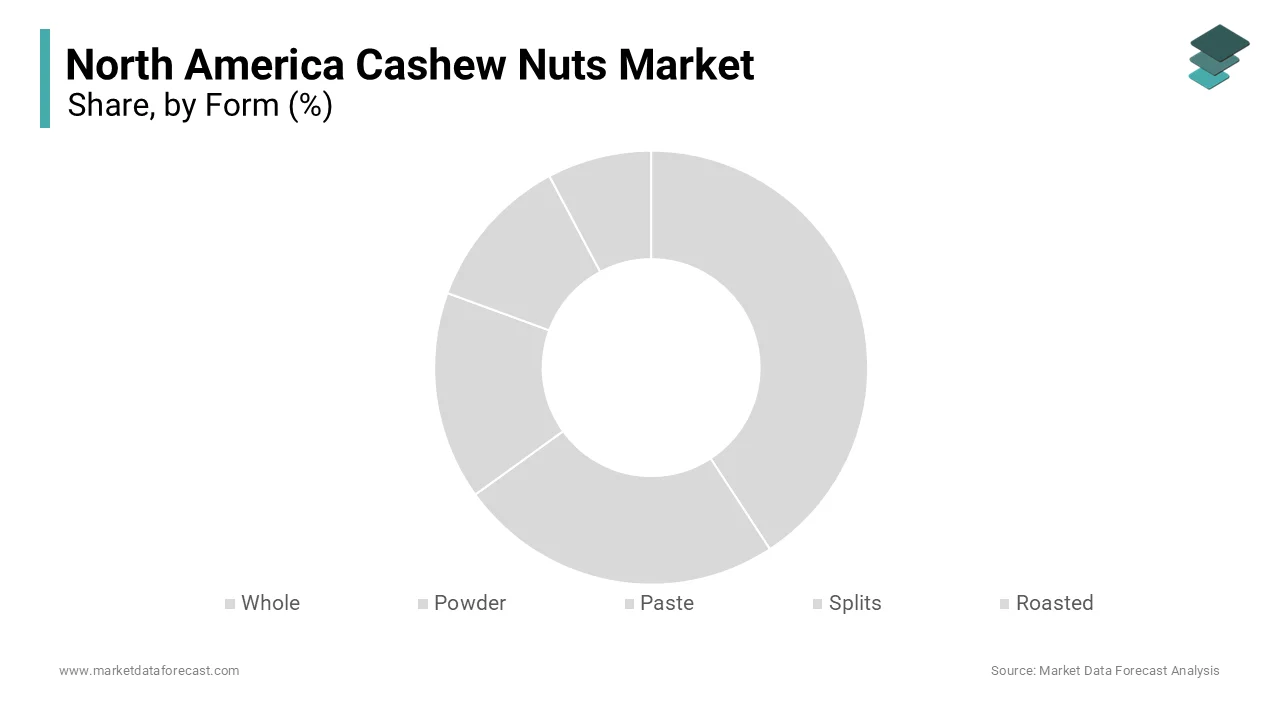
However, the cashew paste segment is growing exponentially and is estimated to grow at a CAGR of 10.4% over the forecast period owing to the surging demand for plant-based dairy alternatives, where cashew paste serves as a primary ingredient due to its creamy texture and neutral flavor. Food manufacturers are increasingly utilizing cashew paste to produce vegan cheeses, yogurts, and creamers that mimic the sensory properties of dairy products. As per the Plant Based Foods Association, the plant-based cheese category has shown significant growth potential, with innovation in texture and meltability being key drivers where cashew paste plays a critical role. The ability of cashew paste to blend smoothly without graininess makes it superior to other nut bases for high-quality dairy substitutes. Furthermore, the rise of artisanal food production has led to an increase in small-batch vegan cheese makers who rely on cashew paste for its consistency and flavor profile. Consumer preference for clean label ingredients encourages the use of simple nut pastes over highly processed stabilizers. The versatility of cashew paste extends to savory applications such as sauces and soups, further expanding its usage scope. Retailers are responding by offering larger bulk sizes of cashew paste to accommodate both industrial and home users. This alignment with the booming plant-based sector and culinary innovation positions cashew paste as the fastest-growing form in the market.
By Usage Insights
The snacks segment led the market by commanding for 41.9% of the regional market share in 2025. The growth of snacks segment in the North American market is attributed to the widespread adoption of nuts as healthy snack alternatives to processed foods. Consumers are increasingly seeking nutrient-dense options that provide sustained energy and essential fats. As per the International Nut and Dried Fruit Council, consumption of nuts as snacks is a major trend in North America, with nuts being a preferred choice due to their satiety and nutritional benefits. Cashews are particularly favored for their mild flavor and crunchy texture, which appeal to a broad demographic, including children and adults. The convenience of ready-to-eat packaged cashews fits seamlessly into busy lifestyles, promoting frequent consumption. Retailers have expanded their snack aisles to include a wide variety of cashew-based products, such as roasted, salted, and flavored packs. Marketing efforts emphasize the heart-healthy benefits of cashews, reinforcing their position as a guilt-free indulgence. The rise of workplace wellness programs and school nutrition initiatives also promotes the inclusion of nuts in daily diets. Additionally, the popularity of trail mixes and energy blends featuring cashews contributes to segment growth. This strong cultural acceptance of nuts as a staple snack item ensures that the snacks segment remains the dominant application area.
On the other side, the dairy products segment is estimated to record a CAGR of 11.4% over the forecast period in the North American market owing to the rapid expansion of the vegan dairy sector, where cashews are utilized to create premium plant-based milk, cheese, and yogurt. Cashew milk is valued for its creamy consistency and lack of strong aftertaste, making it a preferred base for barista-style beverages and culinary applications. As per the Good Food Institute, plant-based milk has reached a household penetration of over 40% in the United States, with cashew-based options gaining significant market share due to their superior texture. In the cheese category, cashew-based artisanal cheeses are gaining popularity among gourmet consumers seeking sophisticated non-dairy options. The ability of cashews to ferment and develop complex flavors similar to traditional dairy cheese enhances their appeal. Food service establishments are increasingly incorporating cashew-based dairy alternatives into menus to cater to vegan and lactose-intolerant customers. Innovation in processing technologies has improved the shelf stability and meltability of cashew cheeses, further driving adoption. Retailers are dedicating more refrigerated space to plant-based dairy products, reflecting growing consumer demand. The alignment with sustainability goals and ethical consumption trends further boosts the segment. This convergence of culinary innovation, health awareness, and ethical considerations positions dairy products as the fastest-growing usage segment.
REGIONAL ANALYSIS
United States Cashew Nuts Market Analysis
The United States dominated the cashew nuts market in North America in 2025 with 84.4% of the regional market share. The country’s large population and high disposable income drive significant consumption of premium nuts. The US is a major importer of cashews, sourcing from Vietnam, India, and Brazil to meet domestic demand. According to the United States Department of Agriculture, the US imports over 150,000 metric tons of cashew kernels annually, reflecting robust consumer interest. The prevalence of health-conscious lifestyles and the popularity of plant-based diets fuel demand for cashew-based products. Major urban centers such as New York, Los Angeles, and Chicago are hubs for gourmet food trends, influencing national consumption patterns. The presence of leading snack manufacturers and plant-based food companies in the US further stimulates market growth. Regulatory frameworks ensuring food safety and quality standards enhance consumer confidence in imported cashew products. The retail landscape is characterized by a wide availability of cashew variants in supermarkets, specialty stores, and online platforms. E-commerce growth has facilitated easier access to diverse cashew products for consumers across the country. Additionally, the integration of cashews into mainstream food manufacturing for snacks and dairy alternatives sustains high demand. This combination of economic strength, dietary trends, and established supply chains ensures that the United States remains the dominant force in the North American cashew market.
Canada Cashew Nuts Market Analysis
Canada is expected to account for a notable share of the North American cashew nuts market during the forecast period. The Canadian market is driven by a strong emphasis on health and wellness alongside a growing vegan population. Provinces such as Ontario and British Columbia are key consumption centers due to their diverse populations and vibrant food cultures. As per Statistics Canada, the total import value of nuts, seeds, and fruits has reached billions of dollars annually, indicating increasing consumer preference. Canadian consumers are increasingly aware of the nutritional benefits of cashews, leading to higher incorporation in daily diets. The retail sector offers a wide range of organic and fair-trade cashew products, catering to ethically conscious buyers. Government initiatives promoting healthy eating habits support the consumption of nuts as part of balanced diets. The food service industry in major cities like Toronto and Vancouver incorporates cashews into innovative vegan dishes, boosting demand. Additionally, the cold climate drives demand for energy-dense snacks, making cashews a popular choice. Distribution networks are well developed, ensuring efficient delivery to remote areas. The influence of American food trends also impacts Canadian consumption patterns. While smaller than the US market, Canada’s focus on quality and sustainability positions it as a significant and growing segment within the regional landscape.
COMPETITIVE LANDSCAPE
The competition in the North America Cashew Nuts Market is characterized by the presence of established multinational corporations and specialized niche players. Large companies leverage their extensive distribution networks and brand recognition to maintain market leadership. They compete on product quality innovation and pricing strategies. Smaller players focus on organic and fair trade certifications to differentiate their offerings. The market sees intense rivalry in the snack segment where flavor variety and packaging play crucial roles. Private label brands from major retailers also pose a threat by offering lower priced alternatives. Companies invest in marketing and promotional activities to enhance brand visibility. Supply chain efficiency is a key competitive factor due to import dependency. Innovation in plant based dairy applications creates new competitive dynamics. Overall the market remains dynamic with continuous entry of new products and brands striving to meet evolving consumer demands and preferences.
KEY MARKET PLAYERS
Some of the major players in the North America cashew nuts market are
- Ajanta Industries
- Achal Cashew nuts
- Agrocel Industries
- ALIEN GREEN
- BATA FOOD
- Cascade Agroindustrial S.A.
- CBL Natural Foods (PVT) LTD.
- DIVINE FOODS
- Delphi Organic
- Aryan International
- Tierra Farm
Top Players in the Market
- Blue Diamond Growers is a prominent agricultural cooperative based in California that plays a significant role in the global tree nut industry. Although primarily known for almonds, the company has expanded its portfolio to include cashew products under various brand names. They leverage their extensive distribution network to supply high quality cashews to retail and food service sectors across North America. Recent initiatives include the launch of innovative flavored cashew snacks that cater to evolving consumer tastes. The company invests heavily in marketing campaigns that highlight the health benefits of nuts. Their robust supply chain management ensures consistent product availability and quality. By utilizing their established infrastructure, Blue Diamond effectively competes in the cashew segment. Their focus on sustainability and ethical sourcing resonates with modern consumers. This strategic diversification strengthens their market position and enhances their contribution to the global nut market.
- Diamond Foods Inc is a leading processor and marketer of premium snack foods and ingredients including cashews. The company owns well recognized brands such as Emerald and Kettle Brand which feature diverse cashew offerings. Diamond Foods focuses on delivering high quality products through rigorous quality control measures. They have recently introduced new packaging solutions that enhance freshness and convenience for consumers. The company actively engages in partnerships with retailers to expand shelf presence. Their commitment to innovation drives the development of unique flavor profiles and healthy snacking options. Diamond Foods also emphasizes sustainable sourcing practices to ensure long term supply stability. Their strong brand recognition and loyal customer base contribute significantly to their market standing. By continuously adapting to consumer preferences, they maintain a competitive edge in the North American market.
- John B Sanfilippo and Son Inc operates under the Fisher Nuts and Squirrel Brand names offering a wide range of nut products including cashews. The company is known for its commitment to quality and customer satisfaction. They have recently expanded their production capabilities to meet growing demand for healthy snacks. Sanfilippo focuses on product innovation by introducing organic and non GMO cashew options. Their strategic acquisitions have strengthened their supply chain and market reach. The company actively promotes its products through digital marketing and social media engagement. They prioritize transparency in sourcing and manufacturing processes. This approach builds trust with health conscious consumers. Their diverse product portfolio allows them to cater to various market segments. By maintaining high standards and adapting to trends, they solidify their position as a key player in the industry.
Top Strategies Used by the Key Market Participants
Key players in the North America Cashew Nuts Market primarily employ strategies centered on product innovation and brand differentiation to capture consumer interest. Companies are increasingly launching flavored and value added cashew products to appeal to diverse taste preferences. Strategic partnerships with retailers and e commerce platforms enhance distribution reach and visibility. Sustainability initiatives such as ethical sourcing and eco friendly packaging are used to build brand loyalty among environmentally conscious consumers. Investment in supply chain resilience helps mitigate risks associated with import dependency. Marketing campaigns emphasize health benefits and versatility to drive consumption. These strategies collectively strengthen market position and foster long term growth.
MARKET SEGMENTATION
This research report on the North American cashew nuts market has been segmented and sub-segmented into the following categories.
By Form
- Whole
- Powder
- Paste
- Splits
- Roasted
By Usage
- Dairy Products
- Confectionaries
- Bakery Products
- Snacks
- Bars
- Cereals
- Desserts And Beverages
By Distribution Channels
- Hypermarkets
- Supermarkets
- Specialist Stores
- Convenience Stores and Retailers
By Country
- The United States
- Canada
- Mexico
- Rest of North America