- Product Description Description
- Table of Contents TOC
- List of Table & Figure LOT
- Get Free Sample PDF Sample PDF
Market Size, 2025
$1.13 BnMarket Estimate, 2026
$1.20 BnMarket Forecast, 2034
$1.91 BnCAGR, 2026–2034
6.01%Executive Summary: North America Compounding Pharmacies Market
- Market Scope: Comprehensive regional analysis of the North American compounding pharmacies sector, covering therapeutic areas, age cohorts, compounding types, sterility, and country-level breakdowns.
- Market Valuation: Valued at USD 1.13 billion in 2025, increasing to USD 1.20 billion in 2026, and projected to reach USD 1.91 billion by 2034, growing at a steady CAGR of 6.01% from 2026 to 2034.
- Primary Growth Drivers: Escalating prevalence of chronic diseases, aging demographics requiring customized care, surging demand for bioidentical hormone replacement therapy (BHRT), and the integration of telemedicine platforms.
Key Market Segment Metrics
| Category | Leading Segment (Base Position) | Fastest-Growing / High-Growth Segment |
|---|---|---|
| By Therapeutic Area | Specialty Drugs (held 59.1% share in 2024, driven by chronic disease management and BHRT demands) | Dermatology (projected at a robust 9.6% CAGR, fueled by aesthetic medicine, custom topical formulations, and telehealth integration) |
| By Age Cohort | Adult Age Cohort (held dominant share in 2025, anchored by middle-aged and elderly individuals relying on BHRT and personalized chronic care) | Pediatric Age Cohort (projected at an 8.9% CAGR, driven by precision medicine and specialized dosing for conditions like ADHD and juvenile diabetes) |
| By Compounding Type | Pharmaceutical Ingredient Alteration / Pharmacy-Initiated (PIA) (held prominent share in 2024, supported by expanded pharmacist collaborative practice agreements) | Physician-Directed Compounding (PDA) (anticipated to grow at a 10.1% CAGR, driven by precision medicine, genetic testing, and diagnostic-led tailoring) |
| By Country | United States (regional leader capturing 82.3% share in 2024, backed by an aging population and widespread BHRT adoption) | Canada (stable growth hub holding 12.3% share in 2024, propelled by provincial pharmacist-led initiatives and community compounding expansions) |
Major Market Players & Industry Landscape
Market Structure: Fragmented and competitive market featuring major pharmaceutical suppliers, specialized regional distributors, and agile independent pharmacies emphasizing compliance, personalized medicine, and telehealth connectivity.
Key Companies: Fagron, Perrigo Company plc, McKesson Corporation, Walgreens Co, Albertsons Companies, The London Specialist Pharmacy Ltd., Galenic Laboratories Ltd. (Roseway Labs), Aurora Compounding, MEDS Pharmacy, and Fusion Apothecary.
North America Compounding Pharmacies Market Size
The size of the North America compounding pharmacies market was valued at USD 1.13 billion in 2025. This market is expected to grow at a CAGR of 6.01% from 2026 to 2034 and be worth USD 1.91 billion by 2034 from USD 1.20 billion in 2026.

Compounding pharmacies play a pivotal role in tailoring medications to meet individual patient needs, especially when commercially manufactured drugs are unsuitable or unavailable. In North America, these specialized pharmacies have evolved into a critical component of the healthcare ecosystem, particularly for patients requiring customized dosage forms, allergen-free formulations, or alternative delivery methods such as transdermal gels or sublingual drops. The compounding process involves combining, mixing, or altering ingredients to create personalized medication solutions under strict adherence to sterility and safety standards. In recent years, the market has been influenced by rising chronic disease prevalence, an aging population, and growing awareness around personalized medicine. According to data from the American Society of Health-System Pharmacists (ASHP), over 56,000 licensed pharmacists in the U.S. engage in some form of compounding activity annually.
MARKET DRIVERS
Rising Prevalence of Chronic Diseases Across North America
One of the most significant drivers of the North America compounding pharmacies market is the escalating prevalence of chronic diseases such as diabetes, cardiovascular disorders, autoimmune conditions, and cancer. These ailments often require long-term, tailored treatment regimens that commercial pharmaceutical products may not fully address. According to the Centers for Disease Control and Prevention (CDC), more than 60% of adults in the United States suffer from at least one chronic condition, with nearly 40% managing two or more. This growing health burden necessitates highly individualized therapies, which compounding pharmacies are uniquely positioned to deliver. For instance, diabetic patients who develop complications like neuropathy or foot ulcers may benefit from compounded topical analgesics or wound-healing agents that are not available in mass-produced formats. Similarly, oncology patients undergoing chemotherapy often experience adverse reactions to standard drug formulations, prompting the need for customized dosages or alternative delivery methods such as troches or lollipops. As per the American Cancer Society, approximately 1.9 million new cancer cases were diagnosed in the U.S. in 2023, further intensifying the demand for personalized therapeutic approaches. Moreover, the aging demographic in both the U.S. and Canada exacerbates the situation. The U.S. Census Bureau estimates that by 2030, over 20% of the American population will be aged 65 or older, significantly increasing the number of individuals requiring complex, long-term medication management. Compounding pharmacies offer a viable solution by enabling dose adjustments, flavor modifications, and allergen exclusions, thereby enhancing patient compliance and treatment efficacy.
Growing Demand for Personalized Medicine and Bioidentical Hormone Replacement Therapy (BHRT)
Another key driver fueling the growth of the compounding pharmacy market in North America is the rising interest in personalized medicine and bioidentical hormone replacement therapy (BHRT). Patients and healthcare providers alike are increasingly seeking alternatives to standardized hormone treatments, particularly for menopausal symptoms, thyroid dysfunction, and hormonal imbalances. According to the Endocrine Society, approximately 1.4 million women in the U.S. use some form of hormone therapy for menopausal symptoms, with a notable shift toward compounded BHRT options. The North American Menopause Society found that over 30% of surveyed physicians prescribe compounded bioidentical hormones, citing better patient outcomes and fewer side effects compared to synthetic alternatives.
MARKET RESTRAINTS
Stringent Regulatory Environment and Compliance Burdens
A significant restraint affecting the North America compounding pharmacies market is the stringent regulatory environment imposed by federal and state agencies. Compounding pharmacies must comply with evolving regulations from the U.S. Food and Drug Administration (FDA), Drug Enforcement Administration (DEA), and state boards of pharmacy. These rules are designed to ensure product safety, sterility, and traceability, but often result in increased operational complexity and costs. The FDA's oversight intensified after the 2012 fungal meningitis outbreak linked to contaminated compounded drugs, which led to the passage of the Drug Quality and Security Act (DQSA) in 2013. Under this law, compounding pharmacies registered as Outsourcing Facilities must adhere to Current Good Manufacturing Practice (CGMP) standards similar to those required of traditional drug manufacturers. Additionally, state-level variability in compounding regulations complicates nationwide operations. For example, California mandates stricter labeling requirements and imposes more frequent inspections than many other states. According to the National Association of Boards of Pharmacy (NABP), nearly 40% of compounding pharmacies face challenges related to inconsistent state-by-state regulatory expectations.
Reimbursement Challenges and Limited Insurance Coverage
Another critical constraint on the North America compounding pharmacies market is the lack of consistent reimbursement policies and limited insurance coverage for compounded medications. Unlike commercially manufactured drugs, compounded formulations are typically not included in standard formularies, making it difficult for patients to obtain coverage through private insurers or government programs such as Medicare and Medicaid.
According to the Pharmacy Compounding Advisory Committee (PCAC), less than 20% of compounded prescriptions are reimbursed at the same rate as FDA-approved medications. This discrepancy places a financial burden on patients, many of whom already face high out-of-pocket expenses for chronic care. Moreover, the Centers for Medicare & Medicaid Services (CMS) has historically excluded compounded drugs from Part D coverage unless they meet specific criteria, which is rare. This issue disproportionately affects low-income populations and elderly patients reliant on fixed incomes. Furthermore, payers often require extensive documentation and prior authorization for compounded medications, delaying treatment access and discouraging prescribers from recommending these options.
MARKET OPPORTUNITIES
Expansion of Telemedicine and Remote Prescription Integration
A major opportunity emerging in the North America compounding pharmacies market is the rapid expansion of telemedicine and its integration with remote prescription services. According to the American Telemedicine Association, over 200 million Americans had access to telehealth services in 2023, with telemedicine visits increasing by more than 38% compared to pre-pandemic levels. This shift has enabled patients in rural or underserved areas to receive specialist consultations without geographic limitations. For instance, tele-endocrinology platforms are increasingly partnering with compounding pharmacies to provide customized hormone therapies based on individual lab results and genetic profiles. Similarly, online dermatology services are leveraging compounded topical treatments for acne, eczema, and skin pigmentation issues that cannot be effectively addressed by mass-market products. Furthermore, electronic prescribing systems are becoming more interoperable with compounding pharmacy software, allowing seamless transmission of customized prescriptions. According to a report by the Healthcare Information and Management Systems Society (HIMSS), nearly 60% of EHR vendors have incorporated compounding-ready templates into their platforms, facilitating accurate dispensing and billing.
Increasing Use of Compounded Medications in Veterinary and Animal Health Sectors
An emerging and lucrative opportunity for the North America compounding pharmacies market lies in the veterinary and animal health sectors. Veterinarians frequently rely on compounded medications to treat animals of varying species, sizes, and medical conditions where commercially available drugs are either inappropriate or unavailable. According to the American Veterinary Medical Association (AVMA), over 60% of companion animal veterinarians in the U.S. utilize compounded medications regularly, particularly for exotic pets, horses, and zoo animals. This is largely driven by the absence of FDA-approved drugs for many non-traditional species and the necessity for palatable dosage forms that encourage animal compliance. Moreover, the U.S. Department of Agriculture (USDA) reports that the livestock industry is increasingly adopting compounded medications for disease prevention and treatment in food-producing animals, although strict guidelines apply to avoid residue contamination in meat and dairy products.
MARKET CHALLENGES
Supply Chain Disruptions and Ingredient Shortages
One of the foremost challenges confronting the North America compounding pharmacies market is the persistent disruption in the supply chain for active pharmaceutical ingredients (APIs) and excipients. Compounding pharmacies depend heavily on a stable supply of raw materials to formulate customized medications, yet global sourcing complexities, geopolitical tensions, and manufacturing bottlenecks have made ingredient availability increasingly unpredictable. According to the U.S. Food and Drug Administration (FDA), over 300 drug shortages were reported in 2023 alone, many of which affected APIs used in compounded preparations. A significant portion of these ingredients originates from countries such as India and China, where production delays, export restrictions, and quality control issues can lead to extended shortages. For example, disruptions caused by the pandemic severely impacted the availability of albuterol base, a key component in asthma medications, forcing many compounding pharmacies to modify formulations or ration supplies. Moreover, compounding pharmacies often do not have the purchasing power of large pharmaceutical manufacturers, making them more vulnerable to price volatility and supplier prioritization.
Lack of Standardization and Consistency in Compounded Formulations
A critical challenge impacting the North America compounding pharmacies market is the lack of standardization and consistency in compounded formulations. Unlike FDA-approved drugs, which undergo rigorous testing for efficacy, safety, and bioavailability, compounded medications are exempt from such mandatory evaluations. This absence of uniformity raises concerns among healthcare providers and regulatory bodies regarding the reliability and reproducibility of compounded products. According to a study published in the Journal of the American Pharmacists Association, variability in potency levels of compounded creams used for pain management ranged from 70% to 130% of labeled content, depending on the pharmacy and preparation method. Additionally, differences in compounding techniques, equipment calibration, and personnel expertise contribute to formulation discrepancies between pharmacies.
REPORT COVERAGE
| REPORT METRIC | DETAILS |
| Market Size Available | 2025 to 2034 |
| Base Year | 2025 |
| Forecast Period | 2026 to 2034 |
| Segments Covered | By Therapeutic Area, Age Cohort, Compounding Type, Sterility, and Region. |
| Various Analyses Covered | Global, Regional and Country-Level Analysis, Segment-Level Analysis, Drivers, Restraints, Opportunities, Challenges; PESTLE Analysis; Porter’s Five Forces Analysis, Competitive Landscape, Analyst Overview of Investment Opportunities |
| Countries Covered | United States, Canada, Mexico, Rest of North America |
| Market Leaders Profiled | Walgreens Co, JL Diekman and AQ Touchard (Fresh Therapeutics Compounding Pharmacy), Fagron, Albertsons Companies, The London Specialist Pharmacy Ltd. (Specialist Pharmacy), Galenic Laboratories Ltd. (Roseway Labs), Aurora Compounding, MEDS Pharmacy, Apollo Clinical Pharmacy, Formul8, and Fusion Apothecary. |
SEGMENTAL ANALYSIS
By Therapeutic Area Insights
The specialty drugs segment was accounted in holding 59.1% of the North America compounding pharmacies market share in 2024. One key factor contributing to this growth is the increasing prevalence of chronic diseases requiring long-term management. According to the Centers for Disease Control and Prevention (CDC), over 117 million Americans suffer from at least one chronic condition, many of which necessitate customized therapeutic interventions that standard pharmaceuticals cannot accommodate. Additionally, the growing acceptance of bioidentical hormone replacement therapy (BHRT) has further fueled the expansion of the specialty drugs segment. As per data from the Endocrine Society, over 1.4 million U.S. women utilize some form of hormone therapy, with a rising preference for compounded BHRT due to perceived safety and efficacy advantages over synthetic alternatives.
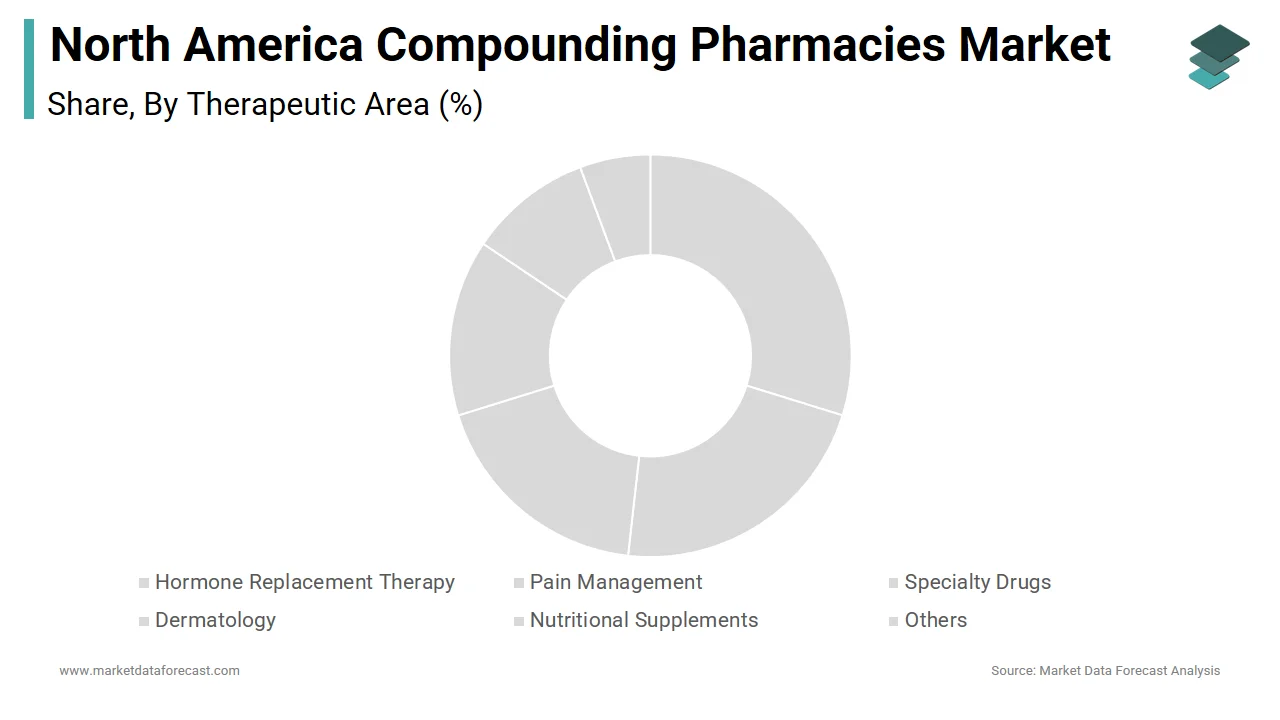
The dermatology segment is projected to grow with a CAGR of 9.6% during the forecast period. A major driver behind this trend is the rise in aesthetic medicine and the integration of compounded topical therapies into dermatological treatments. Unlike mass-produced skincare products, compounded formulations can be customized to exclude irritants, adjust active ingredient concentrations, and incorporate patient-specific preferences such as fragrance or base type. Moreover, advancements in compounding technology have enabled the development of innovative dosage forms like liposomal creams and microemulsions that enhance drug penetration and efficacy. Additionally, the increasing collaboration between telehealth platforms and compounding pharmacies has made it easier for patients to access dermatological prescriptions remotely, which is further accelerating adoption.
By Age Cohort Insights
The adult age cohort was the largest segment by accounting for a significant growth of the North America compounding pharmacies market share in 2025. One of the primary drivers is the aging population across the United States and Canada. Another significant factor is the increased use of bioidentical hormone replacement therapy (BHRT) among middle-aged and elderly individuals. Data from the North American Menopause Society indicates that over 1.2 million postmenopausal women receive BHRT prescriptions annually, most of which are compounded to suit individual hormonal profiles.
The pediatric age cohort segment is likely to grow with CAGR of 8.9% during the forecast period. One key driver is the increasing diagnosis of pediatric conditions such as attention deficit hyperactivity disorder (ADHD), autism spectrum disorders, and juvenile diabetes. Standard medications may not be suitable for children due to size, taste, or formulation constraints. Additionally, there is a growing emphasis on precision medicine in pediatrics, where genetic testing and metabolic profiling guide the development of individualized treatment plans.
By Compounding Type Insights
The pharmacy-initiated compounding (PIA) segment was the largest and held a prominent share of the North America compounding pharmacies market in 2024. A major contributing factor is the increasing autonomy granted to pharmacists under certain state regulations, allowing them to compound medications based on clinical knowledge and patient history. For instance, the National Association of Boards of Pharmacy (NABP) states that over 25 U.S. states have implemented policies enabling pharmacists to engage in collaborative practice agreements, enhancing their ability to initiate compounded treatments independently. Additionally, the growing reliance on compounding for off-label uses and unmet therapeutic needs supports the expansion of the PIA segment. According to the International Academy of Compounding Pharmacists (IACP), more than 40% of all compounded prescriptions in the U.S. are initiated directly by pharmacists, reflecting a shift toward decentralized decision-making in medication customization.
The physician-directed compounding (PDA) segment is anticipated to register a CAGR of 10.1% in the next coming years. One of the key growth catalysts is the rising adoption of precision medicine, where physicians tailor treatment plans based on individual patient biomarkers and genomic data. According to the Personalized Medicine Coalition, over 4,000 FDA-regulated laboratories offer diagnostic tests that influence prescribing decisions, many of which lead to compounded medication orders. This synergy between diagnostics and compounding enhances the accuracy and effectiveness of treatment protocols. Furthermore, the expansion of telemedicine platforms has facilitated greater physician-pharmacist collaboration by enabling remote prescription of compounded medications. The American Medical Association notes that telehealth consultations increased by more than 35% in 2023, many of which included referrals to compounding pharmacies for customized treatment options.
COUNTRY-LEVEL ANALYSIS
United States Compounding Pharmacies Market Insights
The United States was the top performer in the North America compounding pharmacies market by accounting for 82.3% of the share in 2024. One of the key drivers is the country's aging population, with the U.S. Census Bureau estimating that over 58 million Americans were aged 65 or older in 2023, creating a substantial demand for personalized medications. Additionally, the widespread use of bioidentical hormone replacement therapy (BHRT) has contributed significantly to market growth. According to the Endocrine Society, more than 1.4 million U.S. women utilize some form of hormone therapy annually, with a growing proportion opting for compounded formulations.
Canada Compounding Pharmacies Market Insights
Canada was ranked second by holding 12.3% of the North America compounding pharmacies market share in 2024. Health Canada oversees compounding activities under the Food and Drug Regulations, particularly Part C, Division 2, which provides a framework for non-sterile and sterile compounding. Unlike the U.S., Canada does not have a federal outsourcing facility model, but provincial pharmacy associations such as the Ontario College of Pharmacists and the Alberta College of Pharmacists actively encourage pharmacist-led compounding initiatives. Additionally, the expansion of community-based compounding services and growing collaborations between pharmacies and telehealth providers are fostering accessibility and awareness.
COMPETITIVE LANDSCAPE
The competitive landscape of the North America compounding pharmacies market is characterized by a mix of large pharmaceutical suppliers, regional distribution companies, and independent compounding pharmacies striving to meet the rising demand for personalized medicine. While established players dominate ingredient sourcing and technological support, smaller, specialized pharmacies are leveraging their agility and direct patient engagement to carve out unique niches. The market remains highly fragmented, with numerous local operators focusing on specific therapeutic areas such as pain management, hormone therapy, and dermatology. Regulatory compliance and quality assurance are key differentiators, prompting many companies to invest in certifications, standardized practices, and facility upgrades. Collaboration between compounding pharmacies, healthcare practitioners, and telemedicine platforms has further intensified competition, driving innovation in formulation techniques and patient accessibility.
KEY MARKET PLAYERS
Noteworthy Companies dominating the North America compounding pharmacies market profiled in the report are
- Walgreens Co
- JL Diekman and AQ Touchard
- Fagron
- Albertsons Companies
- The London Specialist Pharmacy Ltd.
- Galenic Laboratories Ltd.
- Aurora Compounding
- MEDS Pharmacy
- Apollo Clinical Pharmacy
- Formul8
- Fusion Apothecary
TOP LEADING PLAYERS IN THE MARKET
One of the leading players in the North America compounding pharmacies market is Fagron Group, a global leader in pharmaceutical compounding solutions. Fagron plays a pivotal role by supplying high-quality active pharmaceutical ingredients, customized formulations, and advanced compounding technologies to pharmacies across the U.S. and Canada. The company supports pharmacists with training, formulation software, and compliance tools by enabling them to deliver precise and personalized medications tailored to patient-specific needs.
Another major player is Perrigo Company plc, known for its extensive presence in over-the-counter (OTC) and specialty pharmaceuticals. Perrigo contributes significantly to the compounding sector through its development of base ingredients, dermatological formulations, and private-label products used in compounded prescriptions. The company's commitment to innovation and accessibility enhances compounding pharmacies' ability to meet growing consumer demand for individualized treatment options across various therapeutic areas.
McKesson Corporation is also a dominant force in the compounding pharmacy landscape. McKesson provides compounding pharmacies with access to essential raw materials, sterile compounding supplies, and logistics support. Its robust supply chain infrastructure ensures consistent availability of critical components, which is empowering independent and institutional compounding pharmacies to maintain operational efficiency and service quality.
TOP STRATEGIES USED BY KEY MARKET PARTICIPANTS
One major strategy employed by key players in the North America compounding pharmacies market is expanding product portfolios and custom formulation offerings. Companies are investing in research and development to introduce innovative dosage forms, allergen-free alternatives, and targeted delivery systems that cater to niche medical conditions and enhance patient adherence.
Another crucial approach is strengthening supply chain resilience and sourcing partnerships. Leading firms are forging strategic alliances with API suppliers, logistics providers, and technology developers to ensure uninterrupted availability of high-quality raw materials and reduce dependency on single-source vendors, especially amid global supply chain disruptions.
Enhancing digital integration and pharmacist education programs is gaining prominence. Major players are developing cloud-based compounding software, offering certification courses, and integrating telehealth compatibility to support pharmacists in delivering precise, compliant, and patient-centric compounded medications more efficiently.
RECENT MARKET DEVELOPMENTS
- In February 2024, Fagron announced the launch of its new digital compounding platform designed to streamline prescription processing, formulation accuracy, and inventory management for pharmacists. This move aimed at enhancing workflow efficiency and reducing errors in compounded medication preparation.
- In June 2023, Perrigo expanded its dermatology-focused compounding ingredient portfolio by introducing a line of hypoallergenic bases specifically formulated for sensitive skin applications, which addresses a growing need in the skincare-oriented compounding segment.
- In September 2023, McKesson partnered with a leading telehealth provider to integrate compounding pharmacy services into virtual care pathways by enabling physicians to prescribe customized medications directly through digital platforms for improved patient access.
- In November 2024, Fagron acquired a small biotech firm specializing in peptide synthesis to broaden its range of customizable compounds for hormone replacement and metabolic therapies, which is reinforcing its dominance in personalized medicine.
- In March 2024, Perrigo launched an educational initiative targeting pharmacists, offering certification programs on advanced compounding techniques, compliance standards, and emerging therapeutic applications to elevate service quality across independent pharmacies.
MARKET SEGMENTATION
This North America compounding pharmacies market research report is segmented and sub-segmented into the following categories.
By Therapeutic Area
- Hormone Replacement Therapy
- Pain Management
- Specialty Drugs
- Dermatology
- Nutritional Supplements
- Others
By Age Cohort
- Pediatric
- Adult
- Geriatric
By Compounding Type
- Pharmaceutical Ingredient Alteration (PIA)
- Currently Unavailable Pharmaceutical Manufacturing (CUPM)
- Pharmaceutical Dosage Alteration (PDA)
- Others
By Sterility
- Sterile
- Non-sterile
By Country
- United States
- Canada
- Mexico
- Rest of North America