- Product Description Description
- Table of Contents TOC
- List of Table & Figure LOT
- Get Free Sample PDF Sample PDF
Market Size, 2025
$1.08 BnMarket Estimate, 2026
$1.13 BnMarket Forecast, 2034
$1.66 BnCAGR, 2026–2034
4.9%North America Compression Garments and Stockings Market Report Summary
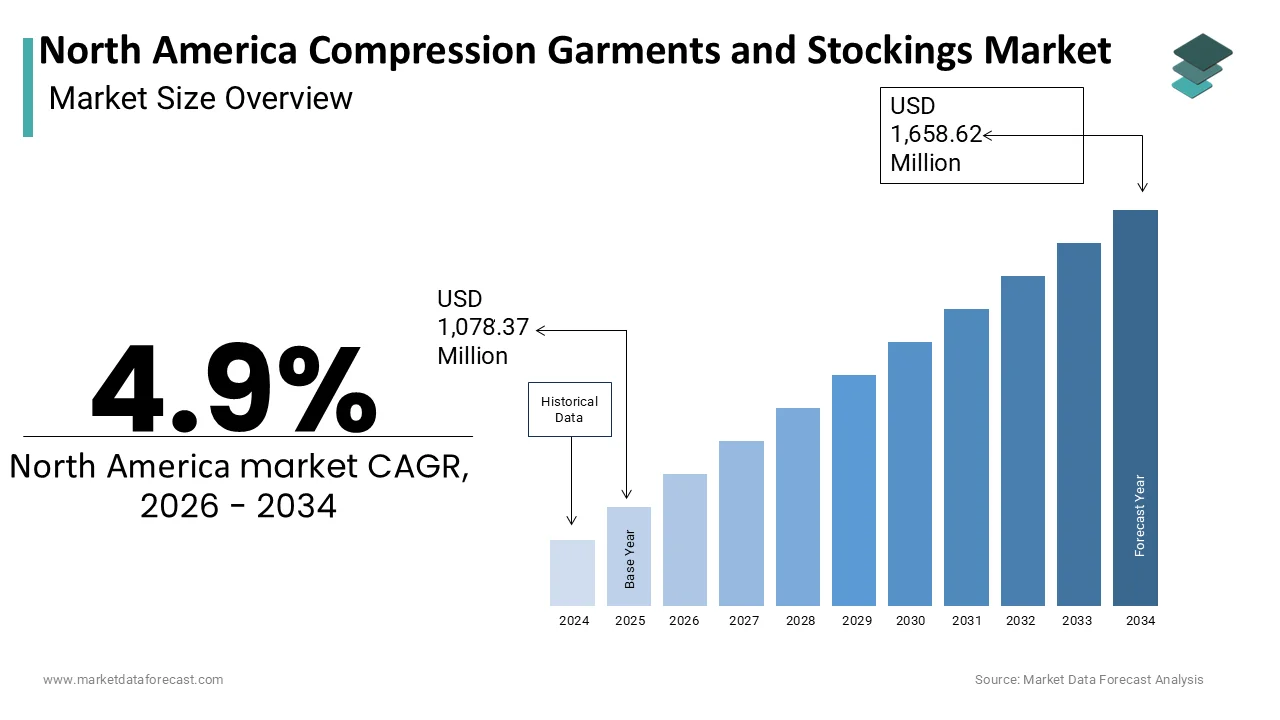
The North America Compression Garments and Stockings Market was valued at USD 1,078.37 million in 2025 and is projected to reach USD 1,658.62 million by 2034, growing from USD 1,131.21 million in 2026 at a CAGR of 4.9% during the forecast period. Growth is driven by rising chronic venous disorder and obesity prevalence, growing adoption of post-surgical care protocols, and expansion into sports and wellness segments. High costs and patient non-compliance due to discomfort are shaping market dynamics.
Key Market Trends
- Rising integration of smart textiles and sensor-embedded compression wearables
- Growing adoption of compression garments in sports recovery and wellness segments
- Increasing demand for compression sleeves following mastectomies and cosmetic surgeries
- Rising incidence of diabetic foot ulcers driving wound care compression demand
- Growing preference for online and direct-to-consumer compression garment sales
Segmental Insights
- Based on product, compression stockings held the largest share in 2025, driven by widespread prescription for chronic venous insufficiency and DVT prevention.
- Based on application, varicose veins dominated the market in 2025, driven by its high prevalence among adults and older populations.
- Based on end user, hospitals led the market in 2025, driven by high-volume pre- and post-operative compression product consumption.
Regional Insights
- United States dominated the market in 2025, supported by advanced healthcare infrastructure and high chronic disease prevalence.
- Canada holds a significant share, driven by universal healthcare coverage and growing emphasis on preventive vascular care.
- Online sales is the fastest-growing end-user segment, projected at a CAGR of 8.2%, driven by consumer preference for convenience and discretion.
Competitive Landscape
The market is highly competitive, with manufacturers focusing on product comfort, digital integration, and reimbursement partnerships. Companies are investing in smart wearable technologies and e-commerce expansion to improve patient adherence and accessibility.
Prominent players in the market include Leonisa Inc., Medical Z, 2XU Pty. Ltd., 3M Company, BSN Medical GmbH (Essity AB), medi GmbH & Co. KG, Nouvelle Inc., and Santemol Group Medikal.
North America Compression Garments and Stockings Market Size
The North America Compression Garments and Stockings Market is projected to grow from USD 1,078.37 million in 2025 to USD 1,131.21 million in 2026 and reach USD 1,658.62 million by 2034, registering a CAGR of 4.9% from 2026 to 2034.
Compression garments and stockings are specialized, elastic wearables designed to apply controlled pressure to different parts of the body. These products are essential for managing chronic venous insufficiency, lymphedema, and deep vein thrombosis, while also serving post-surgical recovery needs. The region exhibits a high prevalence of vascular disorders due to an aging demographic and sedentary lifestyles. The American Vein and Lymphatic Society (AVLS) reveals that varicose veins affect roughly 55% of women and 45% of men across the United States. Clinical practice guidelines from the Society for Vascular Surgery (SVS) note that venous leg ulcers affect roughly 500,000 to 600,000 people in the United States each year. Furthermore, according to data compiled by the National Center for Health Statistics (NCHS), the prevalence of obesity among adults in the United States stands at 40.3%. Advances in textile technology have led to the development of breathable, moisture-wicking fabrics that improve patient compliance. Regulatory bodies such as the Food and Drug Administration enforce strict standards for medical-grade compression devices, ensuring safety and efficacy. The integration of these garments into standard care protocols for cardiovascular and orthopedic conditions underscores their critical role in modern healthcare management across the continent.
MARKET DRIVERS
Rising Prevalence of Chronic Venous Disorders and Obesity
The escalating prevalence of chronic venous disorders and obesity is a primary driver for the North American compression garments and stockings market. Sedentary work environments and poor dietary habits have contributed to a significant increase in vascular health issues among the adult population. According to the American Heart Association, cardiovascular diseases remain the leading cause of death in the United States, with venous insufficiency being a common comorbidity. Obesity places excessive pressure on the veins in the legs, impairing blood flow and increasing the risk of varicose veins and edema. Data from the National Health and Nutrition Examination Survey reveals that the obesity rate in North America has reached historic highs, directly correlating with the increased demand for compression therapy. Medical professionals routinely prescribe graduated compression stockings to mitigate these risks and manage symptoms such as swelling and pain. The American Venous Forum emphasizes that early intervention with compression garments can prevent the progression of venous disease to more severe stages like ulcers. As the population ages, the cumulative effect of years of sedentary behavior and weight gain amplifies the need for effective conservative treatments. This demographic shift ensures a steady and growing patient pool, compelling healthcare providers to prioritize compression therapy as a first line of defense against progressive vascular conditions.
Growing Awareness and Adoption ofPost-Surgicall Care Protocols
The growing awareness and adoption of standardized post-surgical care protocols further accelerate the growth of the North American compression garments and stockings market. Healthcare providers increasingly recognize the importance of compression therapy in preventing complications such as deep vein thrombosis and reducing recovery time after orthopedic and cosmetic surgeries. The rise in cosmetic procedures, including liposuction and body contouring, has further expanded the consumer base for compression wear. The American Society of Plastic Surgeons reports a consistent annual increase in these procedures, driving demand for specialized garments that aid in healing and reduce swelling. Hospitals and surgical centers are implementing enhanced recovery after surgery programs that mandate the use of compression devices to improve patient outcomes. Insurance coverage for medically necessary compression garments has also improved, making them more accessible to patients. This institutional endorsement and clinical validation reinforce the necessity of compression therapy, encouraging widespread adoption among patients undergoing various surgical interventions across the region.
MARKET RESTRAINTS
High Cost and Limited Insurance Coverage for Premium Products
The high cost and limited insurance coverage for premium compression products hinder the penetration of the North American compression garments and stockings market. While basic compression stockings may be covered by some insurance plans, advanced garments with specialized features such as moisture management, antimicrobial properties, or custom fittings often requireout-of-pockett payment. According to the Kaiser Family Foundation, high-deductible health plans have become increasingly common, forcing patients to bear a larger share of medical expenses. This financial burden discourages many individuals from purchasing high-quality compression wear, leading them to opt for cheaper, less effective alternatives or forego treatment entirely. The American Lymphedema Framework Project highlights that many patients struggle to afford the multiple pairs of garments needed for regular rotation and hygiene. Additionally, the complexity of insurance claims processes and varying coverage criteria across different providers create administrative hurdles for both patients and healthcare providers. As per sources, denial rates for compression garment claims remain high due to stringent documentation requirements. This economic barrier limits access to optimal therapeutic solutions, particularly for low-income populations who are disproportionately affected by vascular diseases, thereby restraining overall market growth.
Patient Non-Compliance Due to Discomfort and Difficulty in Use
Patient non-compliance due to discomfort and difficulty in applying compression garments is a major restraint to the North American market. Many patients find traditional compression stockings difficult to don and doff, especially those with limited mobility or arthritis, which is prevalent in the target demographic. According to studies published in the Journal of Vascular Nursing, up to 50 percent of patients discontinue using compression therapy within the first year due to physical discomfort and inconvenience. The tight fit required for therapeutic efficacy can cause skin irritation, itching, and heat retention, leading to poor adherence. Older adults, who constitute a significant portion of the user base, often lack the dexterity needed to apply standard stockings without assistance. As per research, the need for caregiver assistance increases the overall cost and logistical burden of treatment. Furthermore, the aesthetic appeal of traditional medical-grade compression wear is often lacking, causing social embarrassment and reluctance to wear it in public. This psychological and physical barrier results in inconsistent usage, undermining the therapeutic benefits and leading to disease progression. Manufacturers face the challenge of balancing medical efficacy with user friendliness, as failure to address these usability issues continues to hinder widespread and consistent adoption of compression therapy.
MARKET OPPORTUNITIES
Integration of Smart Textiles and Wearable Technology
The integration of smart textiles and wearable technology offers a strong opening for the growth of the North American compression garments and stockings market. Innovations in sensor-embedded fabrics allow for real-time monitoring of pressure levels, temperature, and circulation, enabling personalized therapy and remote patient monitoring. According to the Consumer Technology Association, the wearable health tech market is expanding rapidly, with consumers increasingly seeking connected health solutions. Smart compression garments can provide feedback to patients and healthcare providers, ensuring that the correct pressure is maintained throughout the day. This data-driven approach enhances treatment efficacy and improves patient compliance by gamifying the therapy experience. As per research, prototypes of smart socks that detect early signs of diabetic foot ulcers are showing promising results in clinical trials. The aging population’s desire for independent living supports the adoption of such technologies that facilitate home-based care. Companies investing in research and development of these intelligent garments can differentiate themselves in a crowded market. Partnerships with telehealth providers and insurance companies to reimburse for smart devices could further accelerate adoption. This technological convergence transforms compression wear from a passive medical device into an active health management tool, opening new revenue streams and improving patient outcomes.
Expansion into Sports and Wellness Segments
The expansion into sports and wellness segments offers a lucrative opportunity for the North American compression garments and stockings market. Athletes and fitness enthusiasts are increasingly adopting compression wear for performance enhancement, muscle recovery, and injury prevention. According to the Sports and Fitness Industry Association, participation in fitness activities remains high in North America, driving demand for specialized athletic apparel. Compression garments are believed to improve blood flow, reduce muscle oscillation, and accelerate lactate removal, although scientific consensus varies. Major sports brands and medical device companies are collaborating to create hybrid products that offer both medical-grade compression and athletic aesthetics. As per sources, the athletic compression wear segment is growing at a faster rate than the traditional medical segment. The trend toward preventive health and wellness among younger demographics supports this expansion. Social media influence and endorsements by professional athletes have normalized the use of compression gear in everyday fitness routines. Manufacturers can leverage this trend by marketing products that bridge the gap between medical necessity and lifestyle choice. Companies can achieve higher volume sales and brand visibility in the competitive activewear landscape. To do this, they should appeal to a broader consumer base beyond patients with chronic conditions.
MARKET CHALLENGES
Regulatory Hurdles and Standardization Issues
Regulatory hurdles and standardization issues slow down the expansion of the North American compression garments and stockings market. The classification of compression garments varies between medical devices and general wellness products, leading to inconsistent regulatory oversight. Under U.S. Food and Drug Administration (FDA) guidelines, standard medical support compression stockings are classified as Class I medical devices that are explicitly exempt from 510(k) premarket notification requirements. The lack of uniform standards for measuring compression levels across different brands creates confusion for healthcare providers and patients. Additionally, state-level regulations regarding insurance coverage and reimbursement differ widely, complicating market access for national distributors. The introduction of new materials and smart technologies often outpaces existing regulatory frameworks, creating uncertainty for innovators. Compliance with international standards for export also adds layers of complexity for companies operating globally. These regulatory ambiguities increase the risk of product recalls and legal liabilities, deterring smaller players from entering the market. Harmonizing standards and clarifying regulatory pathways are essential for fostering innovation and ensuring patient safety in this evolving sector.
Supply Chain Disruptions and Raw Material Volatility
Supply chain disruptions and raw material volatility are formidable challenges to the North American compression garments and stockings market. The production of high-quality compression textiles relies on specialized fibers such as nylon, spandex, and medical-grade elastomers, which are subject to global price fluctuations. According to the Bureau of Labor Statistics, input costs for textile manufacturing have risen significantly due to inflation and supply chain bottlenecks. Dependence on imported raw materials from Asia and Europe exposes manufacturers to geopolitical tensions and trade policy changes. The pandemic highlighted the fragility of global supply chains, leading to delays in production and delivery of critical medical supplies. As per a study, lead times for specialized fabrics have extended, impacting inventory management and order fulfillment. Labor shortages in the manufacturing sector further exacerbate production constraints, increasing operational costs. Companies must navigate these uncertainties by diversifying suppliers and investing in local production capabilities, which requires significant capital investment. The inability to maintain consistent supply and pricing can erode customer trust and market share. Addressing these supply chain vulnerabilities is crucial for ensuring the availability and affordability of compression garments for patients who rely on them for daily health management.
REPORT COVERAGE
| REPORT METRIC | DETAILS |
| Market Size Available | 2025 to 2034 |
| Base Year | 2025 |
| Forecast Period | 2026 to 2034 |
| Segments Covered | By Product, Application, End-User, and Region |
| Various Analyses Covered | Global, Regional and Country-Level Analysis, Segment-Level Analysis, Drivers, Restraints, Opportunities, Challenges; PESTLE Analysis; Porter’s Five Forces Analysis, Competitive Landscape, Analyst Overview of Investment Opportunities |
| Countries Covered | US, Canada, Rest of North America |
| Market Leaders Profiled |
|
SEGMENTAL ANALYSIS
By Product Insights
The compression stockings segment was the largest in the North America compression garments and stockings market and occupied a commanding share in 2025. This supremacy of the segment was credited to its widespread prescription for managing chronic venous insufficiency and preventing deep vein thrombosis. These products are considered the first line of defense for vascular health issues, particularly among the aging population. According to the Society for Vascular Surgery, millions of individuals in the United States suffer from varicose veins, a condition that primarily requires the use of graduated compression stockings to alleviate symptoms and prevent progression. The ease of application compared to full-body garments makes stockings more acceptable for daily wear. Hospitals and clinics routinely prescribe these stockings for post-surgical care and long-term management of edema. The availability of various compression levels and styles, including knee-high and thigh-high options, allows for personalized treatment plans. Insurance coverage for medically necessary stockings also supports their high adoption rate. This combination of clinical necessity, patient preference for convenience, and broad insurance reimbursement solidifies the dominance of compression stockings in the regional market.
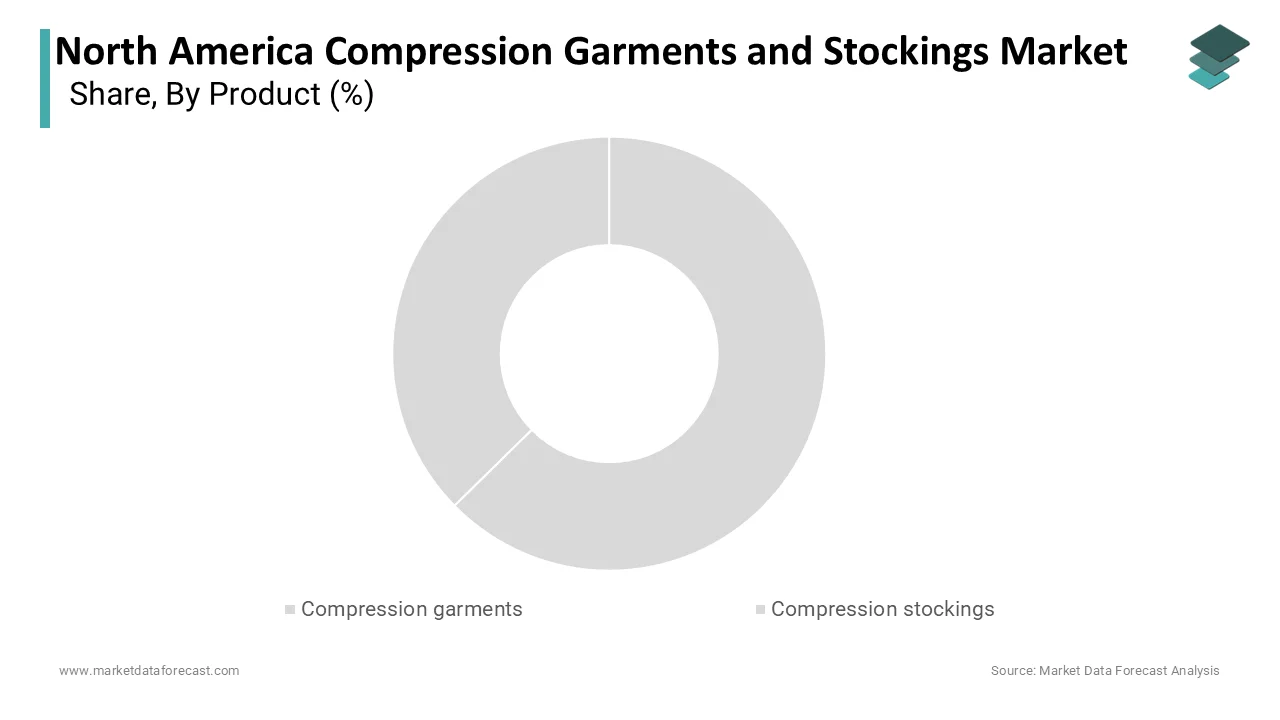
But the compression garments segment is anticipated to witness the fastest CAGR of 6.5% from 2026 to 2034. This quick surge of the segment is propelled by the increasing incidence of lymphedema and the rising number of mastectomies and cosmetic surgeries requiring full limb or torso compression. According to the American Cancer Society, breast cancer remains one of the most common cancers among women, with hundreds of thousands of new cases diagnosed annually, many of whom require compression sleeves to manage secondary lymphedema. Additionally, the surge in body contouring procedures such as liposuction has created a robust demand for postoperative compression garments that aid in healing and shape retention. As per data from the American Society of Plastic Surgeons, the number of cosmetic procedures has increased significantly, with patients seeking specialized garments for optimal recovery. Advances in fabric technology have made these garments more comfortable and aesthetically pleasing, encouraging higher compliance. The expansion of indications beyond traditional vascular issues to include sports recovery and burn care further accelerates growth. Manufacturers are introducing innovative designs with zippers and adjustable straps to improve usability, addressing previous barriers to adoption and fueling the accelerated expansion of this segment.
By Application Insights
In 2025, the varicose veins segment held the majority share of the North American compression garments and stockings market because of the high prevalence of this condition among the adult population. Varicose veins affect a significant portion of the demographic, particularly women and older adults, necessitating long-term management through compression therapy. According to the National Institutes of Health, approximately 25 percent of adults in the United States have varicose veins, creating a large and steady patient base. Compression stockings are the standard conservative treatment recommended by vascular specialists to reduce pain, swelling, and the risk of complications such as ulcers. The aging population in North America exacerbates this trend, as vein elasticity decreases with age. As per data from the American Venous Forum, the economic burden of chronic venous disease is substantial, driving healthcare systems to prioritize cost-effective treatments like compression therapy. Public awareness campaigns and routine screening by primary care physicians have improved diagnosis rates, leading to earlier intervention. The chronic nature of the condition ensures recurring demand for replacement garments. Furthermore, the availability of stylish and comfortable options has improved patient adherence. This widespread prevalence and the established clinical protocol for management secure the leading position of the varicose veins application segment.
However, the wound care segment is likely to experience the fastest CAGR of 7.1% during the forecast period. This acceleration of the segment is fueled by the rising incidence of diabetic foot ulcers and venous leg ulcers, which require specialized compression to promote healing and prevent recurrence. According to the Centers for Disease Control and Prevention, diabetes affects over 37 million Americans, with a significant proportion developing foot complications that necessitate advanced wound care solutions. Compression therapy is critical in managing venous hypertension, a key factor in ulcer formation. As per data from the Wound Healing Society, the prevalence of chronic wounds is increasing due to the aging population and higher rates of obesity and diabetes. Innovations in multi-layer compression systems and easy-to-apply wraps have improved outcomes and patient compliance. Healthcare providers are increasingly integrating compression into comprehensive wound care protocols to reduce hospital readmissions and healthcare costs. Government initiatives aimed at improving diabetic care and wound management standards further support this growth. The focus on preventive care and the development of specialized products for complex wounds drive the rapid expansion of this application segment.
By End User Insights
The hospitals segment led the North America compression garments and stockings market and captured a major share in 2025. This leading position of the segment was attributed to its role as a primary center for acute care and surgical interventions. A significant volume of compression products is consumed in hospital settings for pre and post-operative care, particularly for orthopedic and cardiovascular surgeries. Hospitals procure bulk quantities of compression stockings and garments to ensure immediate availability for patients undergoing procedures such as joint replacements and abdominal surgeries. The centralized procurement processes in large hospital networks allow for standardized product selection and volume discounts. Additionally, teaching hospitals and research centers drive the adoption of advanced compression technologies through clinical trials and evidence-based practice guidelines. The critical nature of hospital care and the regulatory requirements for patient safety ensure that hospitals remain the dominant end-user segment for medical-grade compression products.
On the other hand, the online sales segment is on the rise and is expected to be the fastest-growing segment in the market, with a CAGR of 8.2% between 2026 and 2034, due to the increasing consumer preference for convenience, privacy, and a wider selection of products. According to the U.S. Census Bureau, e-commerce sales in the health and personal care sector have surged, reflecting a broader shift toward digital shopping. Patients with chronic conditions often require regular replacement of compression garments, making online subscription models and direct-to-consumer platforms highly attractive. As per sources, the availability of detailed sizing guides, virtual fitting tools, and customer reviews has reduced the barriers to purchasing medical devices online. The stigma associated with wearing medical garments is mitigated by the discretion of home delivery. Furthermore, the expansion of telehealth services has facilitated remote prescriptions and recommendations, seamlessly connecting patients with online retailers. Major manufacturers and distributors have invested heavily in their digital presence, offering competitive pricing and fast shipping. This digital transformation empowers patients to take control of their health management while enjoying the convenience of home delivery, driving the rapid growth of the online sales channel.
COUNTRY LEVEL ANALYSIS
United States Compression Garments And Stockings Market Analysis
The United States dominated the North American compression garments and stockings market and accounted for a substantial share in 2025. This supremacy of the US market was driven by its advanced healthcare infrastructure and high prevalence of chronic diseases. The country has a well-established reimbursement framework for medical devices, although coverage varies by insurer, which supports the adoption of prescribed compression therapy. According to the Centers for Medicare and Medicaid Services, healthcare expenditure in the United States continues to rise, with a significant portion allocated to managing chronic conditions such as diabetes and cardiovascular diseases. The aging baby boomer population contributes to the increasing demand for vascular care products. In addition, the American Vein and Lymphatic Society (AVLS) highlights that the broad clinical burden of venous disease drives the widespread utilization of medical compression garments. The presence of major global manufacturers and a robust distribution network ensures wide product availability. Innovation hubs in the United States drive the development of smart textiles and advanced materials, keeping the market at the forefront of technological advancements. The high level of health awareness and access to specialized vascular care further sustains market growth. Regulatory oversight by the Food and Drug Administration ensures product safety and efficacy, maintaining consumer trust. These factors collectively establish the United States as the dominant force in the regional market.
Canada Compression Garments And Stockings Market Analysis
Canada occupies a significant position in the North American compression garments and stockings market, owing to its universal healthcare system and growing emphasis on preventive care. The public healthcare system covers certain medical devices, including compression stockings, when prescribed by a physician, facilitating access for patients with chronic venous insufficiency. According to Statistics Canada, the population is aging rapidly, with seniors comprising an increasing percentage of the total demographic, which correlates with higher rates of vascular disorders. The Canadian Institute for Health Information highlights that chronic diseases are a major driver of healthcare utilization, supporting the demand for conservative treatments like compression therapy. Provincial health plans vary in their coverage details, but the overall framework encourages early intervention. As per data from the Canadian Diabetes Association, the rising prevalence of diabetes increases the risk of foot ulcers, driving demand for specialized compression products. The market is supported by strong regulatory standards set by Health Canada, ensuring high-quality products. Local distributors and international brands compete effectively, offering a range of options from basic to premium garments. The focus on home care and community-based services further promotes the use of compression devices for managing chronic conditions outside hospital settings.
COMPETITIVE LANDSCAPE
The competition in the North American compression garments and stockings market is characterized by a mix of global medical device giants and specialized textile manufacturers vying for dominance through innovation and service quality. Established players leverage their strong brand recognition and extensive distribution networks to maintain market leadership. These companies often compete on product efficacy, comfort, and aesthetic appeal to improve patient adherence. New entrants focus on niche segments such as sports recovery and smart wearable technology to differentiate their offerings. The market sees intense rivalry in pricing and reimbursement support as companies strive to make products accessible to a broader patient base. Regulatory compliance and clinical validation serve as significant barriers to entry, favoring incumbents with robust research capabilities. Competitive dynamics are further influenced by the rising demand for personalized and sustainable solutions, prompting firms to invest in advanced manufacturing techniques. Strategic collaborations with telehealth providers and home care agencies are common as companies seek to integrate their products into comprehensive care models. This multifaceted competition drives continuous improvement in product quality and patient experience across the region.
KEY MARKET PLAYERS
Some of the companies that are playing a dominant role in the North American Compression Garments and Stockings Market include
- Leonisa, Inc.
- Medical Z
- 2XU Pty. Ltd.
- 3M Company
- BSN Medical GmbH (Essity AB)
- medi GmbH & Co. KG
- Nouvelle, Inc.
- Santemol Group Medikal
TOP LEADING PLAYERS IN THE MARKET
- Medtronic plc maintains a strong presence in the North American compression garments and stockings market through its comprehensive vascular health portfolio. The company focuses on providing advanced therapeutic solutions for chronic venous insufficiency and lymphedema management. Medtronic recently expanded its digital health initiatives to support remote patient monitoring and improve adherence to compression therapy protocols. They have introduced innovative garment designs that enhance comfort and ease of use for patients with limited mobility. By collaborating with healthcare providers and insurance payers, Medtronic ensures broader access tits high-qualityty products. The company invests heavily in clinical research to validate the efficacy of its compression devices. This commitment to evidence-based medicine and patient-centric innovation strengthens their position as a trusted leader in the regional vascular care market.
- Essity AB contributes significantly to the North American compression garments and stockings market with itwell-recognizeded Jobst brand. The company leverages its extensive expertise in medical textiles to offer a wide range of compression levels and styles tailored to individual patient needs. Essity recently launched new eco-friendly product lines that appeal to environmentally conscious consumers and healthcare facilities. They have strengthened their distribution networks across the United States and Canada to ensure timely availability of products. The company actively engages in educational programs for healthcare professionals to promote best practices in compression therapy. By focusing on sustainability and product innovation, Essity enhances its brand reputation and customer loyalty. These strategic efforts demonstrate their dedication to improving patient outcomes and maintaining a competitive edge in the dynamic North American market.
- Sigvaris Group plays a pivotal role in the North American compression garments and stockings market by offering premium medical-grade compression solutions. The company is known for its high-quality materials and precise manufacturing standards that ensure consistent therapeutic pressure. Sigvaris recently introduced smart compression technologies that integrate sensors to monitor wear time and pressure levels. They have expanded their direct-to-consumer channels to provide personalized fitting services and improved customer support. The company collaborates with leading vascular specialists to develop customized treatment plans for complex cases. By prioritizing technological advancement and patient comfort, Sigvaris differentiates itself in a competitive landscape. Their focus on premium positioning and clinical excellence solidifies their reputation as a key provider of specialized compression therapy products in the region.
TOP STRATEGIES USED BY KEY MARKET PARTICIPANTS
Key players in the North American compression garments and stockings market primarily employ product innovation and digital integration to maintaina competitive advantage. Companies invest heavily in developing smart textiles and wearable technologies that enhance patient compliance and monitoring capabilities. This includes creating garments with embedded sensors for real-time data collection and feedback. Strategic partnerships with healthcare providers and insurance companies facilitate better reimbursement pathways and wider product adoption. Manufacturers also focus on expanding their e-commerce platforms to offer convenient direct-to-consumer sales models. Educational initiatives targeting both patients and clinicians help raise awareness about the benefits of compression therapy. Additionally, firms pursue sustainability goals by using eco-friendly materials and reducing waste in production processes. These strategies collectively drive growth and strengthen market positions in the evolving healthcare landscape.
MARKET SEGMENTATION
This research report on the North America Compression Garments and Stockings Market has been segmented and sub-segmented into the following categories.
By Product
- Compression garments
- Compression stockings
By Application
- Varicose veins
- Wound care
- Burns
- Oncology
By End User
- Hospitals
- ASC’s
- Clinics
- Online sales
- Healthcare
By Country
- The U.S.
- Canada
- Rest of North America