North America COVID-19 Detection Kits Market Size, Share, Trends & Growth Forecast Report By Product, Sample Type, Mode, and By Country (United States and Canada) – Industry Analysis and Forecast, 2025 to 2033
North America COVID-19 Detection Kits Market Summary
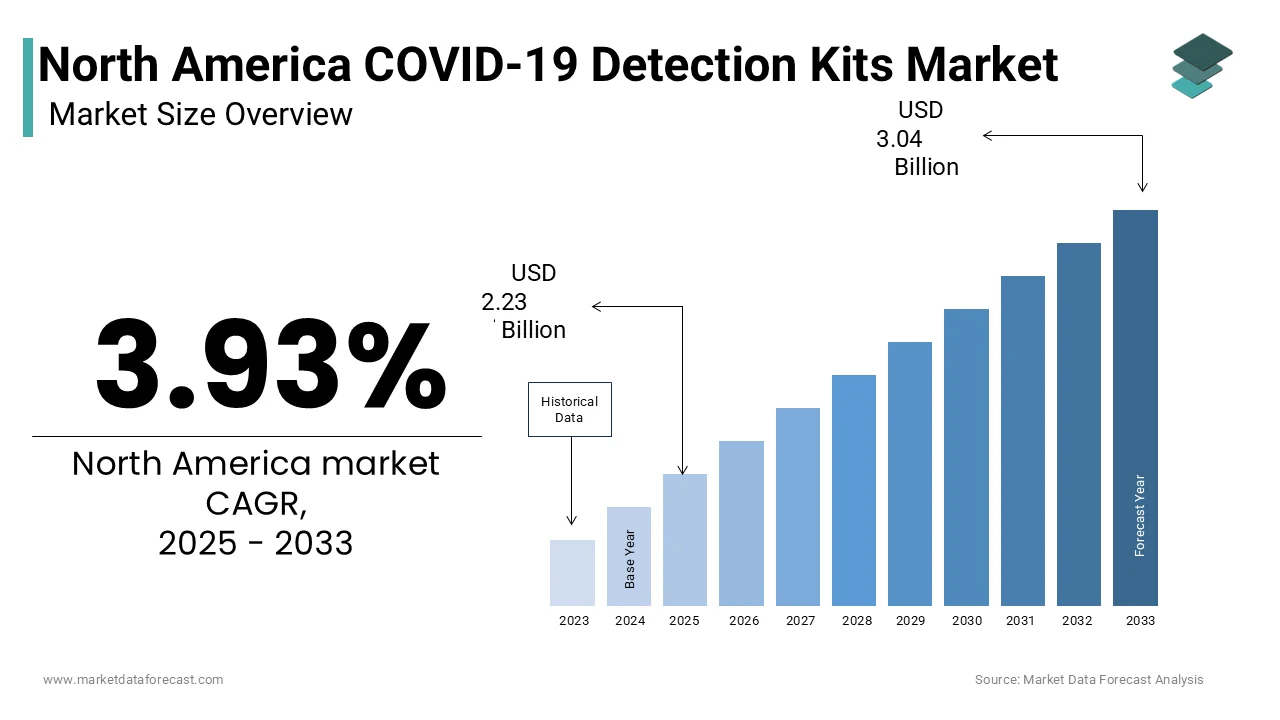
The North America COVID-19 detection kits market was valued at USD 2.15 billion in 2024, is estimated to reach USD 2.23 billion in 2025, and is projected to grow to USD 3.04 billion by 2033, registering a CAGR of 3.93% from 2025 to 2033, supported by persistent surveillance testing demand, technological improvements in rapid diagnostics, and expansion into multi-pathogen respiratory testing platforms.
Key Market Insights
- 2024 value: USD 2.15 billion
- 2025 (est): USD 2.23 billion
- 2033 (forecast): USD 3.04 billion
- CAGR (2025–2033): 3.93%
Quick Growth Drivers
- Ongoing surveillance testing in hospitals, long-term care, and educational institutions
- Routine workforce screening in healthcare, aviation, and essential services
- Technological improvements improving speed, accuracy, and usability of tests
- Adoption of multiplex respiratory testing (COVID-19 + flu + RSV)
- Integration of digital health tools for reporting, tracing, and telemedicine
Principal Restraints
- Increasing regulatory complexity and post-EUA compliance requirements
- FDA and Health Canada validation and documentation burdens
- Supply chain vulnerabilities for enzymes, membranes, and consumables
- Rising manufacturing and logistics costs
- Market maturity limiting high-growth expansion
High-Value Opportunities
- Digital health integration with at-home and point-of-care testing platforms
- Expansion into multi-pathogen respiratory diagnostic panels
- Telemedicine-linked testing and remote result interpretation
- Smart testing kits with app-based reporting and analytics
- Long-term institutional testing contracts beyond pandemic peaks
Key Market Challenges
- Public testing fatigue and declining voluntary testing participation
- Reduced urgency perception as COVID-19 becomes endemic
- Competitive pressure from low-cost and private-label test kits
- Margin compression due to commoditization of basic tests
- Reduced differentiation in standard antigen and PCR products
Fastest-Growing Segments
- Antigen detection kits: 12.4% CAGR
Rapid results, point-of-care use, and mass screening suitability - Saliva-based sample kits: 15.7% CAGR
Non-invasive, self-collection, and high patient acceptance - Point-of-care testing: 18.3% CAGR
Immediate results in schools, workplaces, travel hubs, and clinics
Regional Leadership & Dynamics
- United States (92.6%) — advanced testing infrastructure, large-scale surveillance, strong FDA framework
- Canada — premium diagnostics adoption, strong regulatory confidence, sustainable healthcare focus
- Rest of North America — growing emergency preparedness and decentralized testing models
What Wins Commercially (Competitive Edge)
- High-sensitivity RT-PCR platforms for institutional testing
- Rapid antigen tests optimized for decentralized use
- Multiplex respiratory panels replacing single-pathogen kits
- Strong regulatory expertise and compliance infrastructure
- Reliable supply chains and scalable manufacturing capacity
Top Strategic Ask for Executives
- Shift portfolios toward multi-pathogen respiratory diagnostics
- Strengthen digital integration with telehealth and EHR platforms
- Expand point-of-care and home-testing ecosystems
- Optimize supply chain resilience for critical components
- Balance cost leadership with accuracy and regulatory trust
Leading Players
Some of the companies that are playing a dominating role in the North America COVID-19 detection kits market include:
- Abbott Laboratories
- Thermo Fisher Scientific Inc.
- Danaher Corporation (Cepheid)
- Roche Diagnostics
- BD (Becton, Dickinson and Company)
- Siemens Healthineers
- Quidel Corporation
- Hologic, Inc.
- bioMérieux SA
North America COVID-19 Detection Kits Market Size
The North America COVID-19 detection kits market was valued at USD 2.15 billion in 2024, is expected to reach USD 2.23 billion in 2025, and is growing at a CAGR of 3.93% from 2025 to 2033, and is projected to reach USD 3.04 billion by 2033.
COVID-19 detection kits are diagnostic technologies designed to identify SARS-CoV-2 infections through various testing methodologies, including molecular, antigen, and serological approaches. These detection kits represent critical public health infrastructure components that have evolved significantly since the pandemic's onset in early 2020. The market includes rapid point-of-care tests, laboratory-based PCR diagnostics, and home testing solutions that collectively form the backbone of regional pandemic response strategies. The regulatory framework governing these kits involves Emergency Use Authorizations from the FDA, which have facilitated the rapid deployment of innovative testing technologies while maintaining safety standards. There has been a consistent pattern of integrating automated testing platforms into clinical laboratories across the region for detecting the specific virus. The capacity for processing samples within the public health laboratory networks has seen a substantial and sustained expansion. An extensive network of authorized testing locations has been established throughout the healthcare systems across the continent. The integration of digital health technologies with detection kits has enabled real-time result reporting and contact tracing capabilities that enhance public health response effectiveness. Population density considerations have influenced testing kit distribution strategies, with urban centers requiring higher throughput solutions compared to rural areas where portability and ease of use take precedence.
MAKKET DRIVER
Persistent Demand for Surveillance Testing in Healthcare and Educational Settings
The sustained requirement for COVID-19 surveillance testing in healthcare facilities and educational institutions continues to accelerate the growth of the COVID-19 detection kits market. This is the case even as acute pandemic conditions have diminished. Healthcare systems maintain regular testing protocols for vulnerable populations, immunocompromised patients, and healthcare workers to prevent nosocomial transmission and ensure operational continuity. Hospitals across North America continue to implement routine screening protocols for high-risk patient admissions. Long-term care facilities maintain ongoing testing programs, and educational institutions have integrated testing requirements into their operations. This consistent use of screening and testing protocols in these sectors generates a steady demand for rapid antigen and molecular detection kits. The workforce testing segment has evolved into routine employee health screening, particularly in sectors such as aviation, hospitality, and healthcare,e where exposure risks remain elevated. Corporate wellness programs have integrated regular testing schedules, with companies like Delta Airlines and major hospital systems maintaining on-site testing laboratories. The emergence of new variants, including EG.5 and BA.2.86 lineages, has prompted health authorities to recommend continued surveillance testing in congregate settings. The institutionalized testing requirements create predictable demand patterns that support market stability and encourage long-term product development investments by manufacturers seeking to capture recurring revenue streams from established testing protocols.
Technological Advancement Toward Enhanced Test Accuracy and Speed
Technological innovations in these detection kits have significantly improved test performance characteristics, which further fuels the expansion of the North America COVID-19 detection kits market. These advancements are driving market adoption through enhanced accuracy, reduced processing times, and expanded accessibility. A notable trend involves a substantial increase in the sensitivity of next-generation molecular diagnostics, allowing for the detection of significantly lower concentrations of target material compared to previous platforms. A clear shift in diagnostic methodology includes the introduction of novel technologies that condense processing times to under half an hour while still maintaining high accuracy. Recent improvements in rapid detection methods demonstrate enhanced effectiveness for individuals both with and without symptoms, indicating an overall progression in testing capabilities since early development. Multiplex testing platforms now enable simultaneous detection of SARS-CoV-2, influenza, and respiratory syncytial virus, addressing healthcare providers' need for comprehensive respiratory pathogen identification. The miniaturization of testing equipment has enabled point-of-care deployment in non-traditional settings such as pharmacies, workplaces, and schools. Home testing solutions have evolved to include smartphone-integrated result reading capabilities that provide quantitative measurements and digital health record integration. Machine learning algorithms now assist in result interpretation and quality control, reducing human error and improving consistency across testing platforms. The integration of blockchain technology for result verification and supply chain tracking has enhanced trust in testing outcomes and prevented counterfeit product distribution.
MARKET RESTRAINTS
Regulatory Complexity and Compliance Requirements
Complex approval processes and ongoing compliance requirements create barriers to market entry and product innovation, whiclimitts the growth of the North America COVID-19 detection kits market. The FDA's Emergency Use Authorization framework, while expedited during the pandemic's peak, has evolved into more stringent post-authorization requirements that demand extensive validation data and quality assurance documentation. Manufacturers must navigate multiple regulatory pathways, each with distinct evidence requirements and review timelines. The regulatory burden extends beyond initial approval to include post-market surveillance, adverse event reporting, and periodic safety updates that require dedicated compliance resources and expertise. International harmonization challenges further complicate market access, as products approved in the United States may require additional validation for Canadian regulatory approval through Health Canada's Medical Devices Bureau. The requirement for clinical performance studies in North American populations adds complexity, as manufacturers must demonstrate efficacy across diverse demographic groups,s including varying age ranges, ethnic backgrounds, and comorbidity profiles. Labeling requirements have become increasingly detailed, mandating specific language regarding test limitations, proper usage conditions, and result interpretation guidance. The FDA's increased scrutiny of manufacturing facilities through unannounced inspections and quality system regulation compliance has extendethe d time-to-market for new products. These regulatory complexities particularly impact smaller manufacturers and startups that lack dedicated regulatory affairs departments, limiting market competition and innovation potential.
Supply Chain Vulnerabilities and Raw Material Shortages
Persistent supply chain disruptions and critical raw material shortages constrain production capacity and increase operational costs, which restrain the expansion of the North America COVID-19 detection kits market. The pandemic exposed vulnerabilities in global supply networks, particularly for specialized components such as lateral flow membranes, enzymes, and plastic consumables that are essential for test kit manufacturing. Critical raw materials, including recombinant proteins, conjugated antibodies, and specialized buffers,s are sourced from limited global suppliers, creating single points of failure that can halt production lines. The concentration of raw material production in the Asia-Pacific regions creates geographic dependencies that were severely impacted by regional lockdowns and transportation restrictions. Enzyme suppliers, crucial for PCR and isothermal amplification tests, faced production capacity constraints due to facility shutdowns and workforce limitations during recurring pandemic waves. Plastic injection molding capacity for test kit components became a bottleneck. Transportation logistics disruptions, including port congestion and driver shortages, have increased distribution costs and delayed product delivery to end-users. The semiconductor shortage has affected electronic components used in automated testing equipment, limiting laboratory throughput capacity expansion. These supply chain challenges have forced manufacturers to maintain higher inventory levels and diversify supplier networks, increasing operational complexity and capital requirements.
MARKET OPPORTUNITIES
Integration with Digital Health Platforms and Telemedicine Services
The convergence of these detection kits with digital health technologies creates growth opportunities for the North America COVID-19 detection kits market. This is achieved through enhanced connectivity, data analytics, and remote healthcare delivery capabilities. Smart testing platforms now incorporate Bluetooth connectivity and mobile application integration that enable real-time result transmission to healthcare providers, public health authorities, and personal health records. The development of interoperable testing solutions that seamlessly integrate with electronic health records and telemedicine platforms has created new value propositions for healthcare systems seeking to optimize patient care workflows. Artificial intelligence algorithms now assist in result interpretation and trend analysis, providing predictive insights for public health officials managing community transmission patterns. The expansion of at-home testing capabilities has been accelerated by digital health integration, with platforms enabling remote consultation and medical advice based on test results without requiring in-person healthcare visits. Insurance reimbursement policies have evolved to support digitally integrated testing services, with the Centers for Medicare & Medicaid Services expanding coverage for telehealth-connected diagnostic services. Wearable device integration has introduced continuous monitoring capabilities that complement discrete testing events, providing comprehensive health status information. The development of blockchain-based result verification systems has enhanced trust in testing outcomes while enabling secure data sharing between authorized parties. These technological convergences are transforming COVID-19 detection from discrete testing events into comprehensive health monitoring ecosystems that provide ongoing value beyond pandemic response requirements.
Expansion into Multi-Pathogen Respiratory Testing Platforms
The evolution of these detection kits toward multi-pathogen respiratory testing platforms gives a fresh prospect for the North America COVID-19 detection kits market. This is because healthcare systems are seeking comprehensive solutions for managing seasonal respiratory disease burdens. The co-circulation of SARS-CoV-2 with influenza, respiratory syncytial virus, and other respiratory pathogens has created demand for testing solutions that can simultaneously identify multiple infectious agents in single patient samples. Multiplex testing platforms offer substantial efficiency advantages by reducing patient discomfort, laboratory processing time, and healthcare system resource utilization compared to sequential single-pathogen tests. The economic benefits of multi-pathogen testing have been recognized by healthcare payers, with insurance coverage expanding to include comprehensive respiratory panels that incorporate SARS-CoV-2 detection alongside other common pathogens. Emergency departments have particularly embraced multiplex testing solutions, as rapid identification of specific pathogens enables appropriate isolation protocols and targeted therapeutic interventions. The development of point-of-care multiplex platforms has expanded testing accessibility beyond traditional laboratory settings, enabling deployment in urgent care centers, physician offices, and ambulatory surgery centers. Seasonal demand patterns for respiratory pathogen testing create predictable market opportunities that support consistent revenue generation throughout the year rather than pandemic-driven peaks. These platforms represent natural evolution paths for existing COVID-19 detection kit manufacturers seeking to expand their market reach and provide ongoing value in post-pandemic healthcare environments.
MARKET CHALLENGES
Public Skepticism and Testing Fatigue
Public skepticism toward testing efficacy and growing testing fatigue among populations that have experienced prolonged pandemic-related restrictions and health measures are among the major challenges to the North America COVID-19 detection kits market. Consumer confidence in testing accuracy has been undermined by early pandemic experiences with inconsistent test performance, conflicting public health messaging, and media coverage of testing failures and shortages. The phenomenon of testing fatigue has led to decreased voluntary testing participation, particularly among asymptomatic individuals who previously complied with routine screening recommendations. Misinformation regarding testing accuracy and purpose has proliferated through social media platforms, creating barriers to testing adoption among vaccine-hesitant and pandemic-fatigued populations. Healthcare worker burnout has also affected testing program implementation, as clinical staff express frustration with repetitive testing protocols and resource allocation challenges. The normalization of COVID-19 as an endemic disease has reduced public perception of testing urgency, leading to decreased demand for voluntary testing services. Educational campaigns addressing testing benefits and accuracy improvements have had limited success in overcoming established skepticism patterns. This public sentiment directly impacts market demand and creates challenges for maintaining testing infrastructure and workforce capacity necessary for effective public health surveillance.
Competitive Pressure from Generic and Low-Cost Alternatives
Intense competitive pressure from generic and low-cost testing alternatives challenges premium product positioning and compresses profit margins for established manufacturers, which inhibits the expansion of the North America COVID-19 detection kits market. The expiration of key patents and regulatory exclusivity periods has enabled generic manufacturers to introduce lower-cost versions of previously proprietary testing technologies, creating price competition that affects market dynamics. Private label testing solutions offered by large retailers and pharmacy chains have entered the market with significantly reduced pricing compared to branded alternatives, capturing substantial market share in consumer-directed testing segments. The commoditization of basic testing technologies has reduced differentiation opportunities for premium product manufacturers, forcing price concessions and margin compression across market segments. International manufacturers, particularly from Asian markets, have introduced low-cost testing solutions that meet minimum regulatory requirements while undercutting North American pricing structures. The availability of over-the-counter testing options at significantly reduced prices has shifted consumer purchasing behavior away from healthcare provider-administered tests toward self-testing alternatives. The competitive pressure particularly affects small and medium-sized diagnostic companies that lack economies of scale and brand recognition advantages necessary to compete on price while maintaining profitability. The challenge is compounded by reduced research and development investment capacity among smaller players facing margin pressures, potentially limiting future innovation and market responsiveness to emerging pathogen threats.
REPORT COVERAGE
| REPORT METRIC | DETAILS |
| Market Size Available | 2024 to 2033 |
| Base Year | 2024 |
| Forecast Period | 2025 to 2033 |
| Segments Covered | By Product, Sample Type, Mode, and Region. |
| Various Analyses Covered | Global, Regional, and Country-Level Analysis, Segment-Level Analysis, Drivers, Restraints, Opportunities, Challenges; PESTLE Analysis; Porter’s Five Forces Analysis, Competitive Landscape, Analyst Overview of Investment Opportunities |
| Countries Covered | United States |
| Market Leaders Profiled | Abbott Laboratories, Thermo Fisher Scientific Inc., Danaher Corporation (including Cepheid), Roche Diagnostics (F. Hoffmann-La Roche Ltd.), BD (Becton, Dickinson and Company), Quidel Corporation, Siemens Healthineers, bioMérieux SA, Hologic, Inc., PerkinElmer, Inc., BD Veritor Systems, Mesa Biotech Inc., LumiraDx UK Ltd., GenMark Diagnostics (now part of Roche), Fujirebio Diagnostics, Inc., Sekisui Diagnostics, LLC, Lucira Health, Inc., Cue Health Inc., QuantuMDx Group Ltd. |
SEGMENTAL ANALYSIS
By Product Insights
The RT-PCR assay kits segment dominated the North America COVID-19 detection kits market by accounting for a 42.5% share in 2024. The supremacy of the RT-PCR assay kits segment is attributed to the superior analytical sensitivity and specificity that RT-PCR technology provides, making it the gold standard for SARS-CoV-2 detection in clinical and public health laboratory settings. Moreover, the dominance of RT-PCR assays reflects their established role in diagnostic testing protocols and their continued preference by healthcare providers requiring definitive diagnostic confirmation for patient management and public health reporting purposes. RT-PCR assay kits maintain their market dominance through unmatched diagnostic accuracy and extensive clinical validation that establishes them as the reference standard for SARS-CoV-2 detection. The technology's ability to amplify viral genetic material enables the detection of extremely low viral loads that other testing methods may miss, particularly during early infection stages or asymptomatic periods. Clinical laboratories across North America rely on RT-PCR results for critical healthcare decisions, including patient isolation protocols, treatment selection, and contact tracing activities. Healthcare insurance providers have established coverage policies that specifically require RT-PCR confirmation for certain treatment authorizations and workplace return-to-work clearances. The technology's quantitative capabilities enable viral load monitoring that informs clinical management decisions, particularly for immunocompromised patients and those with prolonged infection periods. This regulatory recognition and clinical trust create sustained demand that supports the segment's market leadership position despite higher costs and longer processing times compared to alternative testing methods. Institutional healthcare requirements and regulatory mandates have institutionalized RT-PCR assay usage across North American healthcare systems, creating consistent demand that drives market dominance. Hospitals, long-term care facilities, and healthcare systems maintain RT-PCR testing capabilities as mandatory components of their infection control protocols and emergency preparedness plans. Public health authorities mandate RT-PCR confirmation for outbreak investigations and cluster analysis, with the Public Health Agency of Canada requiring laboratory-confirmed RT-PCR results for official case reporting and epidemiological tracking. Educational institutions receiving federal funding must comply with testing guidelines that specify RT-PCR confirmation for symptomatic individuals and close contacts. Occupational health programs in high-risk sectors, including healthcare, aviation, and critical infrastructure,e require RT-PCR testing for employee health monitoring and return-to-work decisions. International travel requirements continue to specify RT-PCR testing for entry documentation, maintaining demand for high-accuracy testing solutions. As per the World Health Organization's international health regulations, RT-PCR remains the only accepted methodology for cross-border health documentation and quarantine exemption determinations. These institutional and regulatory requirements create guaranteed demand streams that support continued market leadership for RT-PCR assay kits despite technological advances in alternative testing platforms.
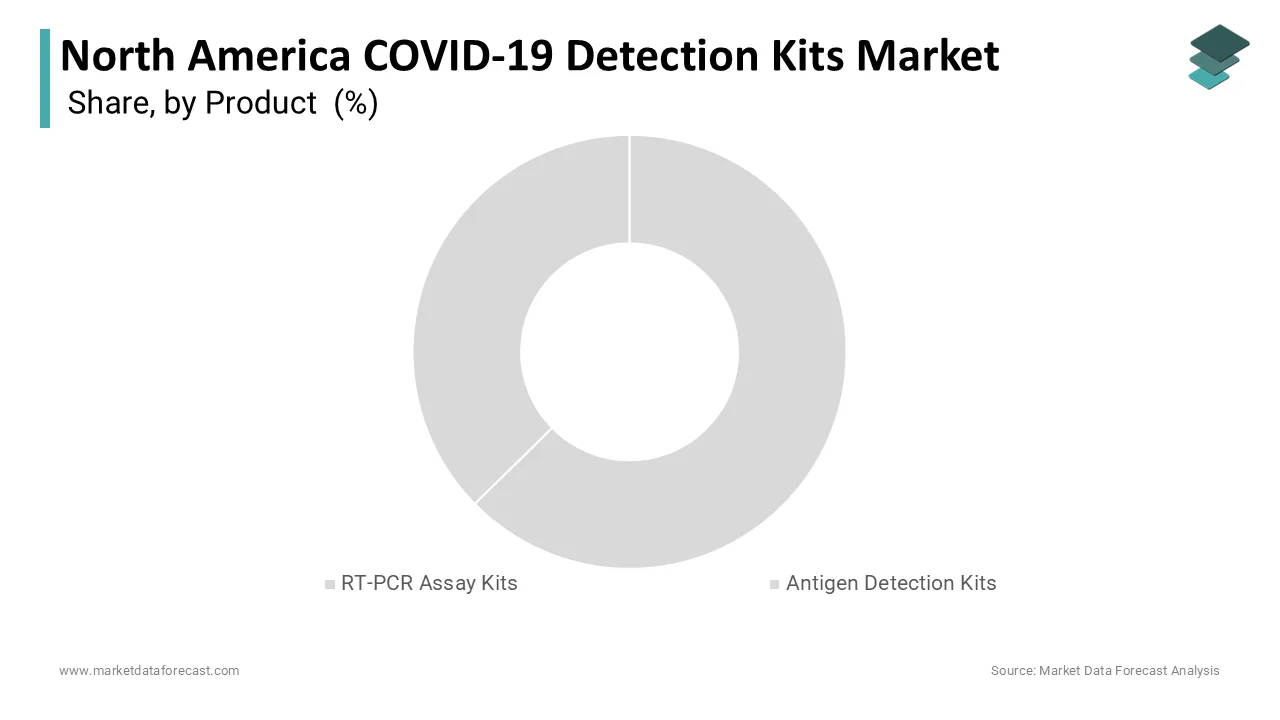
The antigen detection kits segment is anticipated to witness the fastest CAGR of 12.4% from 2025 to 2033. The rapid growth of the antigen detection kits segment is propelled by technological improvements that have enhanced test performance while maintaining the convenience factors that initially drove adoption. This expansion reflects the segment's advantages in terms of rapid results, ease of use, and cost-effectiveness that make it particularly suitable for point-of-care applications and mass screening scenarios. Antigen detection kits have experienced accelerated growth due to their exceptional suitability for point-of-care deployment and immediate result delivery capabilities that address critical time-sensitive testing requirements. The technology's ability to provide results within a few minutes without requiring specialized laboratory equipment has revolutionized testing accessibility in non-traditional healthcare settings, including schools, workplaces, and community centers. The elimination of sample transportation requirements and laboratory processing delays enables immediate decision-making for isolation protocols, contact tracing, and return-to-activity determinations. Emergency departments have increasingly adopted rapid antigen testing for initial patient screening. Workplace testing programs favor antigen detection due to rapid turnaround times that minimize employee disruption and enable same-day testing and work clearance decisions. As per sources, companies implementing point-of-care antigen testing report faster return-to-work times for exposed employees compared to laboratory-based testing protocols. The technology's portability enables deployment in mobile testing units and temporary facilities, expanding testing reach during emergency response situations and community outbreak management. Educational institutions have embraced antigen testing for routine surveillance programs. These accessibility advantages have transformed antigen detection from emergency pandemic response tools into routine healthcare infrastructure components. The antigen detection kits segment's rapid growth is accelerated by exceptional cost-effectiveness and scalability characteristics that make mass screening programs economically viable for large population groups. The significantly lower per-test costs compared to RT-PCR assays enable frequent testing protocols that provide enhanced surveillance capabilities without overwhelming healthcare system resources. The technology's minimal infrastructure requirements eliminate the need for expensive laboratory equipment, specialized personnel, and complex quality control systems that drive up testing program costs. Public health authorities have leveraged antigen testing cost advantages to implement comprehensive community surveillance programs. Employer-sponsored testing programs favor antigen solutions due to lower administrative costs and reduced liability concerns compared to more complex testing methodologies. The scalability of antigen testing enables rapid deployment for special events, travel hubs, and congregate living facilities where large-scale testing is required on short notice. International border control agencies have adopted antigen testing for screening protocols. These economic and scalability advantages have positioned antigen detection kits as essential tools for sustainable long-term pandemic management and future public health emergency preparedness.
By sample Type Insights
The nasopharyngeal sample type segment held the largest share of the North America COVID-19 detection kits market by capturing a 38.5% share in 2024. The dominance of the nasopharyngeal sample type segment is credited to the superior viral load concentrations and diagnostic sensitivity achievable through nasopharyngeal sampling compared to alternative collection methods. In addition, the segment's growth is also supported by extensive clinical validation demonstrating optimal test performance and regulatory acceptance for definitive diagnostic confirmation across healthcare and public health applications. Nasopharyngeal sampling maintains market dominance through superior viral load concentrations and enhanced diagnostic sensitivity that provide more reliable test results compared to alternative sample collection methods. The nasopharyngeal region serves as the primary site of SARS-CoV-2 replication during early infection stages, resulting in higher viral concentrations that improve detection probability across all testing methodologies. Samples collected from the nasopharyngeal area consistently show a more concentrated presence of the target analyte during the initial phase of infection compared to those from the anterior nasal area. This higher concentration directly relates to improved detection in diagnostic tests using nasopharyngeal samples compared to anterior nasal samples in symptomatic individuals. Healthcare providers prefer nasopharyngeal sampling for diagnostic confirmation due to reduced false-negative rates that minimize the risk of missed infections and subsequent transmission events. The Centers for Disease Control and Prevention's testing guidelines specifically recommend nasopharyngeal sampling for confirmatory testing scenarios where high diagnostic accuracy is critical for patient management decisions. Public health laboratories conducting surveillance testing favor nasopharyngeal samples for population-level monitoring due to consistent performance characteristics and reduced variability between specimen collectors. The technology's quantitative capabilities enable accurate viral load monitoring that informs clinical treatment decisions and isolation duration recommendations. These performance advantages have established nasopharyngeal sampling as the gold standard for definitive diagnostic testing, supporting continued market leadership despite procedural complexity compared to less invasive collection methods. Regulatory authorities and clinical organizations have standardized nasopharyngeal sampling as the preferred specimen type for definitive COVID-19 diagnosis, creating institutionalized demand that drives market dominance. The FDA's Emergency Use Authorization guidelines specifically reference nasopharyngeal sampling as the validated specimen type for most high-complexity molecular diagnostic tests, ensuring regulatory compliance for healthcare facilities seeking official case confirmation. Clinical practice guidelines from the Infectious Diseases Society of America recommend nasopharyngeal sampling for initial diagnostic testing in symptomatic patients and high-risk exposure scenarios due to established sensitivity and specificity profiles. Hospital accreditation standards require adherence to evidence-based sampling protocols. Insurance reimbursement policies often specify nasopharyngeal sampling for coverage eligibility, particularly for diagnostic testing that influences treatment decisions and hospital admission protocols. The World Health Organization's international testing guidelines reference nasopharyngeal sampling as the preferred specimen type for cross-border health documentation and quarantine exemption determinations. Public health surveillance programs rely on nasopharyngeal samples for accurate case reporting and epidemiological analysis. These regulatory and clinical standardizations create guaranteed demand streams that support continued market leadership for nasopharyngeal sampling despite procedural complexity and patient discomfort compared to alternative collection methods.
The saliva sample type segment is likely to experience the fastest CAGR of 15.7% during the forecast period, due to the segment's advantages in terms of non-invasive collection, patient acceptance, and ease of self-collection that address critical barriers to testing accessibility and compliance. Furthermore, a further growth factor is technological advances that have improved test performance while maintaining the convenience factors that initially drove adoption. Saliva sampling has witnessed accelerated growth due to exceptional patient acceptance rates and self-collection capabilities that eliminate barriers to testing accessibility and improve compliance with recommended testing protocols. The non-invasive nature of saliva collection eliminates the discomfort and procedural complexity associated with nasopharyngeal swabbing, making testing more acceptable to pediatric populations, elderly individuals, and those with previous negative testing experiences. The self-collection capability enables at-home testing scenarios that reduce healthcare system burden while maintaining diagnostic accuracy, particularly valuable for routine surveillance and asymptomatic screening programs. Educational institutions have embraced saliva testing for student health monitoring. The technology's ease of use enables deployment in non-clinical settings, gs including workplaces, community centers, and temporary testing facilities without requiring trained healthcare personnel. Elderly care facilities favor saliva testing due to reduced patient distress and improved cooperation rates among residents with cognitive impairments or previous negative testing experiences. International travel requirements have begun accepting saliva-based testing. These acceptance advantages have positioned saliva sampling as an essential tool for sustainable long-term pandemic management and future public health emergency preparedness. The saliva sample type segment's rapid growth is accelerated by significant advantages in reducing healthcare worker exposure risks and improving operational efficiency compared to traditional sampling methods that require close patient contact. The self-collection nature of saliva sampling eliminates the need for healthcare personnel to perform direct patient contact procedures, reducing occupational exposure risks and personal protective equipment consumption during testing operations. The elimination of specialized collection training requirements enables broader workforce participation in testing programs, including non-clinical personnel who can assist with sample processing and logistics coordination. Emergency response scenarios particularly benefit from saliva sampling capabilities, as rapid deployment testing programs can be implemented without requiring extensive healthcare infrastructure or trained personnel. The technology's reduced biohazard potential enables safer sample handling and transportation, minimizing contamination risks and enabling expanded testing capacity in temporary facilities. The self-collection capability reduces patient flow bottlenecks and waiting times, enabling higher throughput testing operations that improve program efficiency and participant satisfaction. These operational advantages have positioned saliva sampling as an essential infrastructure component for sustainable pandemic response and future public health emergency preparedness initiatives.
By Mode Insights
The centralized testing segment led the North America COVID-19 detection kits market by holding a 56.3% share in 2024. The prominence of centralized testing is because of its capacity for high-volume processing, comprehensive quality control measures, and integration with official reporting systems that make it indispensable for institutional healthcare operations. This market share shows the segment's role as the primary infrastructure for definitive diagnostic testing, public health surveillance, and regulatory compliance across healthcare systems and government agencies. Centralized testing maintains market dominance through exceptionally high-volume processing capabilities and seamless integration with established laboratory infrastructure that enables efficient handling of large-scale testing demands. Clinical laboratories equipped with automated processing systems can process thousands of samples daily while maintaining consistent quality standards and regulatory compliance requirements. The technology's compatibility with laboratory information systems enables automated result reporting, quality control monitoring, and regulatory compliance documentation that streamline operational workflows and reduce administrative burden. Healthcare systems rely on centralized testing for routine diagnostic services. Public health surveillance programs depend on centralized testing for accurate case reporting and epidemiological analysis. The technology's quantitative capabilities enable accurate viral load monitoring that informs clinical treatment decisions and public health intervention strategies. International health regulations recognize centralized testing results for official documentation purposes, with the World Health Organization requiring laboratory-confirmed results for cross-border health clearance determinations. These capacity and integration advantages have established centralized testing as the backbone of institutional healthcare testing infrastructure. Centralized testing sustains market leadership through comprehensive quality control measures and robust regulatory compliance frameworks that ensure result accuracy and institutional acceptance for critical healthcare decisions. Clinical laboratories operating centralized testing platforms maintain extensive quality assurance protocols, including proficiency testing, equipment calibration, and personnel certification that exceed requirements for alternative testing methods. Healthcare insurance providers require testing performed in certified laboratory settings for reimbursement eligibility, particularly for diagnostic testing that influences treatment decisions and hospital admission protocols. Public health authorities mandate centralized testing for official case reporting and outbreak investigation activities, with the Public Health Agency of Canada requiring laboratory-confirmed results for epidemiological tracking and contact tracing programs. The technology's comprehensive documentation capabilities enable complete audit trails and regulatory reporting that satisfy compliance requirements for healthcare systems and government agencies. International health regulations recognize centralized testing results for official documentation purposes. These quality and compliance advantages create guaranteed demand streams that support continued market leadership for centralized testing despite longer turnaround times compared to alternative testing methods.
The point-of-care testing segment is on the rise and is expected to bethe fastest-growingg segment in the market by witnessing a CAGR of 18.3% from 2025 to 2033. The swift growth of this segment is fuelled by technological advances that have improved test performance while maintaining the convenience factors that initially drove adoption. This rapid expansion exhibits the segment's advantages in terms of immediate results delivery, accessibility in non-traditional settings, and operational flexibility that address critical barriers to testing deployment and emergency response capabilities. Point-of-care testing has seen growth owing to its exceptional capability for immediate results delivery and real-time decision-making that addresses critical time-sensitive requirements in healthcare and emergency response scenarios. The technology's ability to provide results within minutes without requiring sample transportation or laboratory processing enables immediate implementation of isolation protocols, treatment decisions, and contact tracing activities that minimize disease transmission risks. Emergency departments have increasingly adopted point-of-care testing for initial patient screening. The technology's immediate results capability enables same-day testing and clearance decisions that improve operational efficiency in workplace health programs, educational institutions, and travel screening applications. International border control agencies have adopted point-of-care testing for screening protocols. The technology's portability enables deployment in mobile testing units and temporary facilities, expanding testing reach during emergency response situations and community outbreak management. Healthcare facilities utilize point-of-care testing for rapid patient flow management and infection control decisions. These immediate results advantages have positioned point-of-care testing a n essential infrastructure component for sustainable pandemic response and future public health emergency preparedness. The point-of-care testing segment's rapid growth is accelerated by exceptional accessibility in non-traditional healthcare settings that expand testing reach beyond conventional medical facilities and adaddressritical gaps in healthcare access. The technology's minimal infrastructure requirements enable deployment in schools, workplaces, community centers, and temporary facilities without requiring specialized laboratory equipment or extensively trained personnel. Educational institutions have embraced point-of-care testing for student health monitoring. Workplace testing programs favor point-of-care solutions due to immediate results that minimize employee disruption and enable same-day work clearance decisions without requiring follow-up appointments. The technology's portability enables mobile testing deployments that reach remote and underserved populations. International travel requirements have begun accepting point-of-care testing for documentation. Community health centers utilize point-of-care testing to provide immediate diagnostic services in areas with limited laboratory access. The technology's ease of use enables broader workforce participation in testing programs, including non-clinical personnel who can assist with sample collection and result documentation. These accessibility advantages have positioned point-of-care testing as an essential tool for equitable healthcare delivery and comprehensive pandemic management strategies.
COUNTRY LEVEL ANALYSIS
United States COVID-19 Detection Kits Market Analysis
The United States was the top performer in the North America COVID-19 detection kits market by accounting for a 92.6% share in 2024 because of the country's position as the epicenter of early pandemic response efforts and its subsequent development of sophisticated testing infrastructure that serves as the foundation for ongoing surveillance and emergency preparedness activities. The sophistication of the U.S. healthcare system, characterized by large-scale commercial operations and advanced technological capabilities, drives consistent demand for premium testing solutions that optimize diagnostic accuracy and operational efficiency. The U.S. market's maturity is evidenced by its well-established regulatory framework, comprehensive distribution networks, and high adoption rates of advanced testing technologies. The Food and Drug Administration's Emergency Use Authorization processes have facilitated rapid deployment of innovative testing solutions while maintaining safety and efficacy standards that support market confidence. The concentration of healthcare operations in specific regions, including major metropolitan areas and academic medical centers, creates geographic clusters of testing demand that support efficient supply chain operations. Major testing kit manufacturers have established regional production facilities and technical support centers to serve these healthcare zones effectively. The economic scale of U.S. healthcare operations, with individual hospital systems often managing hundreds of thousands of tests annually, generates substantial volume requirements that justify investments in specialized testing formulations and application technologies. The presence of leading research institutions and medical schools provides continuous technical support and product development validation that enhances market sophistication. The integration of testing kits with electronic health record systems and telemedicine platforms represents the cutting edge of U.S. diagnostic practices. Major healthcare systems and retail chains have established sourcing standards that mandate specific testing protocols, creating institutional demand that supports market stability and growth. The regulatory environment, while stringent, provides clear pathways for product approval and market entry that encourage innovation while ensuring safety and efficacy standards. These factors collectively position the United States as the uncontested leader in North America's COVID-19 detection kits market, with market dynamics that influence regional trends and global developments.
Canada COVID-19 Detection Kits Market Analysis
Canada was the second-largest player in the North AAmericanCOVID-19 detection kits market due to its significant healthcare infrastructure and reputation for high-quality diagnostic services that demand premium testing inputs. The country's healthcare system is characterized by efficient, technologically advanced operations that prioritize patient safety and public health outcomes, creating demand for sophisticated testing solutions. The Canadian market's growth trajectory is supported by strong regulatory frameworks that ensure product safety while facilitating innovation and market access. Health Canada's rigorous approval processes create consumer confidence in testing kit safety and efficacy, supporting premium pricing for specialty products. Canada's healthcare system has embraced precision diagnostic technologies. The country's position as a major healthcare services provider to international markets drives demand for testing kits that support high-quality diagnostic outcomes and enhanced patient safety characteristics. Canadian healthcare providers have been early adopters of alternative testing technologies. The integration of testing kits with environmental management strategies, including waste reduction and sustainable packaging solutions, represents an emerging growth driver that differentiates Canadian market demand. Research institutions such as the University of Toronto and Health Canada's laboratory services provide technical validation and innovation support that enhances market sophistication. The concentration of healthcare operations in provinces like Ontario, Quebec, and British Columbia creates regional demand clusters that support efficient distribution and technical service delivery. Canadian healthcare providers' emphasis on patient safety and diagnostic accuracy has accelerated the adoption of molecular testing platforms and quality assurance technologies that support natural health management approaches. The country's commitment to sustainable healthcare practices has created opportunities for testing kits that reduce environmental impact while maintaining diagnostic efficiency. Government support programs for healthcare innovation and emergency preparedness provide additional incentives for specialty testing kit adoption, positioning Canada as a progressive market that influences regional trends and standards development.
COMPETITIVE LANDSCAPE
The North America COVID-19 detection kits market is characterized by intense competition among established diagnostic companies, specialized biotechnology firms, and emerging innovators vying for market share through technological advancement and market differentiation. The competitive landscape is shaped by the presence of large multinational corporations like Abbott, Roche, and Thermo Fisher, who leverage their extensive research capabilities, global supply chains, and comprehensive product portfolios to maintain dominant positions. These industry leaders compete primarily on technical expertise, product performance, and customer service while investing heavily in research and development to stay ahead of emerging variants and testing requirements. Regional specialty manufacturers focus on niche market segments and customized solutions, often providing more personalized service and faster response times than larger competitors. The market also sees increasing participation from technology companies and startups developing novel testing platforms based on advanced molecular technologies, artificial intelligence integration, and portable diagnostic solutions. Competition is further intensified by the growing demand for rapid, accurate, and accessible testing solutions that can be deployed in diverse healthcare settings and non-traditional environments. Price competition remains significant, particularly for commodity-type testing kits, while premium products command higher margins based on proven performance and technical support. The regulatory environment creates additional competitive dynamics, as companies with strong regulatory expertise and compliance capabilities gain advantages in market access and product approval timelines. Customer relationships and technical support services have become critical differentiators, with successful companies investing in field technical teams and customized solution services. The market's evolution toward integrated digital health solutions and multi-pathogen testing platforms is creating new competitive battlegrounds where technology integration and innovation capabilities increasingly determine success.
KEY MARKET PLAYERS
Some of the companies that are playing a dominating role in the North America COVID-199 detection kits market include
- Abbott Laboratories
- Thermo Fisher Scientific Inc.
- Danaher Corporation (including Cepheid)
- Roche Diagnostics (F. Hoffmann-La Roche Ltd.)
- BD (Becton, Dickinson and Company)
- Quidel Corporation
- Siemens Healthineers
- bioMérieux SA
- Hologic, Inc.
- PerkinElmer, Inc.
- BD Veritor Systems
- Mesa Biotech Inc.
- LumiraDx UK Ltd.
- GenMark Diagnostics (now part of Roche)
- Fujirebio Diagnostics, Inc.
- Sekisui Diagnostics, LLC
- Lucira Health, Inc.
- Cue Health Inc.
- QuantuMDx Group Ltd.
TOP LEADING PLAYERS IN THE MARKET
- Abbott Laboratories has established itself as a leading force in the North American COVID-19 detection kits market through its comprehensive portfolio of rapid diagnostic solutions and extensive global manufacturing capabilities. The company's contribution to the market stems from its innovative BinaxNOW rapid antigen test and ID NOW molecular testing platforms that have become integral components of the North American testing infrastructure. Abbott's strength lies in its ability to deliver high-quality diagnostic solutions at scale while maintaining rigorous quality standards and regulatory compliance. Their point-of-care testing solutions have been particularly valuable for healthcare systems requiring immediate results and decentralized testing capabilities. The company's extensive distribution network and established relationships with healthcare providers have facilitated rapid market penetration and sustained demand. Abbott's commitment to research and development has enabled continuous product improvement and adaptation to emerging viral variants. Their manufacturing facilities across North America ensure reliable supply chain operations and quick response to market demand fluctuations. The company's focus on user-friendly design and minimal training requirements has made its testing solutions accessible to diverse healthcare settings. Abbott's integration of digital health technologies with their testing platforms has enhanced result reporting and data management capabilities. Their collaborative approach with public health authorities and healthcare systems has positioned them as trusted partners in pandemic response efforts.
- Roche Diagnostics maintains a prominent position in the North America COVID-19 detection kits market through its sophisticated molecular diagnostic technologies and comprehensive laboratory testing solutions. The company's market contribution centers on its cobas SARS-CoV-2 testing platforms that deliver high-throughput, accurate results for clinical laboratory applications. Roche's strength lies in its ability to integrate seamlessly with existing laboratory infrastructure while providing exceptional analytical performance and reliability. Their automated testing systems have become essential components of hospital laboratory operations and reference laboratory networks across North America. The company's commitment to quality assurance and regulatory compliance has established strong trust among healthcare providers and regulatory authorities. Roche's global supply chain infrastructure ensures consistent product availability and quality standards that support its leadership position. Their extensive technical support services and training programs enable healthcare facilities to optimize testing operations and maintain high performance standards. The company's research collaborations with academic institutions and healthcare organizations facilitate continuous innovation and market responsiveness. Roche's focus on comprehensive testing solutions that address evolving healthcare needs has strengthened its competitive position. Their ability to adapt quickly to regulatory requirements and emerging variants has demonstrated market leadership and reliability. The company's integrated approach, combining diagnostic expertise with digital health solutions,s positions them as comprehensive partners for healthcare systems seeking advanced testing capabilities.
- Thermo Fisher Scientific has carved out a significant position in the North America COVID-19 detection kits market through its extensive portfolio of molecular diagnostic solutions and comprehensive laboratory instrumentation. The company's market contribution centers on its Applied Biosystems anInvitrogen-brandeded testing platforms that provide high-sensitivity detection capabilities for clinical and research applications. Thermo Fisher's strength lies in its ability to deliver integrated solutions that combine reagents, instruments, and software for complete testing workflows. Their TaqPath COVID-19 Combo kits have become widely adopted across North American laboratories for their reliability and performance characteristics. The company's global manufacturing network and supply chain expertise ensure consistent product availability and quality standards that support market leadership. Thermo Fisher's commitment to innovation and technological advancement has enabled the rapid development of new testing solutions and adaptations to emerging viral variants. Their extensive technical support infrastructure and training programs enable healthcare facilities to implement and maintain optimal testing operations. The company's collaborative relationships with research institutions and healthcare systems facilitate continuous product development and market responsiveness. Thermo Fisher's focus on comprehensive laboratory solutions that address diverse testing needs has strengthened its competitive position. Their ability to provide end-to-end testing solutions from sample preparation to result reporting has established them as trusted partners for healthcare systems seeking integrated diagnostic capabilities.
TOP STRATEGIES USED BY KEY MARKET PARTICIPANTS
- Strategic Partnerships and Collaborative Development Initiatives Leading players in the North America COVID-19 detection kits market actively pursue strategic partnerships with healthcare systems, academic institutions, and government agencies to accelerate product development and expand market reach. These collaborations enable companies to access specialized expertise, clinical validation resources, and regulatory guidance that facilitate rapid product commercialization and market adoption. By partnering with major hospital networks and public health organizations, market participants can conduct extensive field testing and performance validation that builds confidence among end-users and regulatory authorities. These strategic alliances also facilitate knowledge transfer and technical expertise sharing that enhances product development capabilities and market responsiveness. Collaborative development initiatives often focus on addressing specific healthcare challenges, such as testing accessibility, result accuracy, and operational efficiency in diverse healthcare settings. The partnerships enable companies to share development costs and risks while accelerating time-to-market for innovative solutions. Additionally, these strategic relationships help companies establish thought leadership positions and strengthen their technical support capabilities, creating competitive advantages in an evolving market environment. Government collaboration programs provide access to funding opportunities and regulatory guidance that support product development and market expansion initiatives.
- Product Portfolio Diversification and Technological Integration.n Key market participants focus heavily on diversifying their product portfolios to address the varied needs of different healthcare settings, testing requirements, and market segments within the North America COVID-19 detection kits market. This strategy involves developing specialized testing solutions tailored to specific applications such as point-of-care diagnostics, laboratory-based testing, and home testing scenarios. Companies invest significantly in research and development to create innovative product combinations that deliver enhanced performance and convenience for end-users. The diversification approach includes expanding into emerging categories such as multi-pathogen testing platforms, rapid molecular diagnostics, and integrated digital health solutions that address contemporary market demands. Market leaders also focus on developing customized solutions for specific customer requirements, including regional healthcare challenges and unique testing environments. This strategy enables companies to capture value across multiple market segments while reducing dependency on any single product category. The development of comprehensive solution packages combining multiple testing technologies creates additional value propositions and strengthens customer relationships. Product diversification also helps companies mitigate market risks and capitalize on emerging opportunities in rapidly evolving market segments while maintaining competitive pricing structures.
- Supply Chain Optimization and Manufacturing Scalability Major players in the North America COVID-19 detection kits market increasingly pursue supply chain optimization and manufacturing scalability strategies to ensure consistent product availability and quality while maintaining competitive pricing. This approach enables companies to respond quickly to market demand fluctuations, maintain product consistency, and provide reliable service to customers across diverse geographic regions. Supply chain optimization involves establishing multiple sourcing relationships, regional manufacturing facilities, and strategic inventory management systems that enhance operational efficiency and reduce delivery times. Companies invest in advanced manufacturing technologies and quality control systems that ensure consistent product quality and regulatory compliance across all production facilities. The strategy includes developing flexible manufacturing capabilities that can rapidly scale production volumes to meet emergency response requirements and seasonal demand variations. Supply chain resilience initiatives focus on implementing risk management protocols, alternative sourcing strategies, and contingency planning that protect against disruptions and ensure continuous product availability. This approach enables companies to maintain a competitive advantage through reliable supply chain operations and responsive customer service capabilities. Manufacturing scalability also provides strategic flexibility and reduces dependency on single production facilities for critical product components while supporting global market expansion initiatives.
MARKET SEGMENTATION
This research report on the north america COVID-19 detection kits market is segmented and sub-segmented into the following categories.
By Product
- RT-PCR Assay Kits
- Antigen Detection Kits
By Sample Type
- Nasopharyngeal Samples
- Saliva Samples
By Mode
- Centralized Testing
- Point-of-Care Testing
By Country
- United States
- Canada
- Rest Of North America
Frequently Asked Questions
1. What are the main types of COVID-19 detection kits available in the North America market?
The North America COVID-19 Detection Kits Market primarily offers three types of diagnostic tests: RT-PCR (reverse transcription polymerase chain reaction) molecular tests that detect viral genetic material, rapid antigen tests that identify viral proteins on SARS-CoV-2's surface, and antibody (serology) tests that detect immune system response to the virus. RT-PCR tests remain the gold standard for COVID-19 detection in the North America COVID-19 Detection Kits Market due to their high sensitivity and accuracy in diagnosing infections
2. Who are the key players dominating the North America COVID-19 Detection Kits Market?
The North America COVID-19 Detection Kits Market is dominated by major diagnostic manufacturers including Abbott Laboratories (20-25% market share), F. Hoffmann-La Roche Ltd. (12-16%), Thermo Fisher Scientific Inc. (10-14%), Becton Dickinson and Company (8-12%), and Quidel Corporation (5-9%). These companies provide comprehensive testing solutions ranging from point-of-care rapid tests to high-throughput laboratory diagnostic systems across the North America COVID-19 Detection Kits Market.
3. What is driving growth in the North America COVID-19 Detection Kits Market?
Growth in the North America COVID-19 Detection Kits Market is primarily driven by the continuous need for COVID-19 surveillance, development of new viral variants requiring updated detection capabilities, and government-funded testing programs. The market also benefits from advanced healthcare infrastructure, strong regulatory frameworks through the FDA's Emergency Use Authorization process, and widespread adoption of at-home and point-of-care testing solutions throughout the North America COVID-19 Detection Kits Market.
4. How has FDA regulation impacted the North America COVID-19 Detection Kits Market?
FDA Emergency Use Authorization (EUA) has significantly accelerated the North America COVID-19 Detection Kits Market by expediting approvals for COVID-19 diagnostic tests, allowing rapid market introduction of innovative detection technologies. The FDA has approved over 20 versions of at-home COVID test kits and numerous laboratory-based diagnostic systems, enabling the North America COVID-19 Detection Kits Market to respond quickly to public health emergencies and expand testing accessibility.
5. What is the market share of the United States within the North America COVID-19 Detection Kits Market?
The United States dominates the North America COVID-19 Detection Kits Market, holding approximately 89% of the regional market share due to its robust healthcare infrastructure, extensive testing capabilities, and strong presence of key diagnostic manufacturers. The U.S. portion of the North America COVID-19 Detection Kits Market benefits from continuous technological advancements, widespread testing facility availability, and supportive government policies promoting rapid diagnostic testing implementation nationwide.
6. What are point-of-care COVID-19 detection kits in the North America market?
Point-of-care COVID-19 detection kits in the North America COVID-19 Detection Kits Market are rapid diagnostic tests performed in physician offices, urgent care facilities, pharmacies, school health clinics, and long-term care facilities rather than centralized laboratories. These tests within the North America COVID-19 Detection Kits Market can be either NAAT (nucleic acid amplification test) or antigen-based, providing results in 15-30 minutes to enable quick quarantine measures and treatment decisions.
7. How do rapid antigen tests compare to RT-PCR in the North America COVID-19 Detection Kits Market?
In the North America COVID-19 Detection Kits Market, RT-PCR tests detect viral genetic material with higher sensitivity and accuracy, serving as the gold standard for COVID-19 diagnosis, while rapid antigen tests identify viral surface proteins and deliver results within 15-20 minutes. Rapid antigen tests in the North America COVID-19 Detection Kits Market are most effective for detecting infections during peak viral load periods and are suitable for spot testing, mass screening, and at-home use scenarios.
8. What role do at-home COVID test kits play in the North America COVID-19 Detection Kits Market?
At-home COVID test kits have become a significant segment of the North America COVID-19 Detection Kits Market, with approximately one-third of American families using free COVID-19 at-home testing sites developed by government programs. The North America COVID-19 Detection Kits Market has seen over 20 FDA-approved at-home test kit versions, providing convenient self-testing options with digital result reporting and contributing to widespread testing accessibility and pandemic surveillance efforts.
9. What is the expected future outlook for the North America COVID-19 Detection Kits Market?
The North America COVID-19 Detection Kits Market is expected to experience declining growth rates with projected CAGR of -17.8% to -4.6% through 2028-2030 as COVID-19 cases stabilize and pandemic response transitions to endemic management. However, the North America COVID-19 Detection Kits Market will maintain steady demand driven by ongoing surveillance requirements, variant monitoring needs, and integration of COVID-19 testing into routine respiratory pathogen diagnostic panels.
10. What sample collection methods are used in the North America COVID-19 Detection Kits Market?
The North America COVID-19 Detection Kits Market primarily utilizes nasopharyngeal swabs and anterior nasal swabs for specimen collection, with emerging adoption of saliva-based detection methods for non-invasive testing. Sample collection methods in the North America COVID-19 Detection Kits Market are designed for both professional healthcare settings and self-collection scenarios, enabling flexible testing approaches across various point-of-care locations and home-based testing environments throughout the region.
Related Reports
Access the study in MULTIPLE FORMATS
Purchase options starting from
$ 2000
Didn’t find what you’re looking for?
TALK TO OUR ANALYST TEAM
Need something within your budget?
NO WORRIES! WE GOT YOU COVERED!
Call us on: +1 888 702 9696 (U.S Toll Free)
Write to us: sales@marketdataforecast.com