- Product Description Description
- Table of Contents TOC
- List of Table & Figure LOT
- Get Free Sample PDF Sample PDF
Market Size, 2025
$0.73 BnMarket Estimate, 2026
$0.83 BnMarket Forecast, 2034
$2.33 BnCAGR, 2026–2034
13.77%North America Mental Health Software Market Size, Share & Growth Analysis (2026–2034)
- Market Scope: Comprehensive regional market analysis covering software components, delivery models, functionalities, end-user categories, country-level frameworks in North America, growth drivers, restraints, and competitive landscapes.
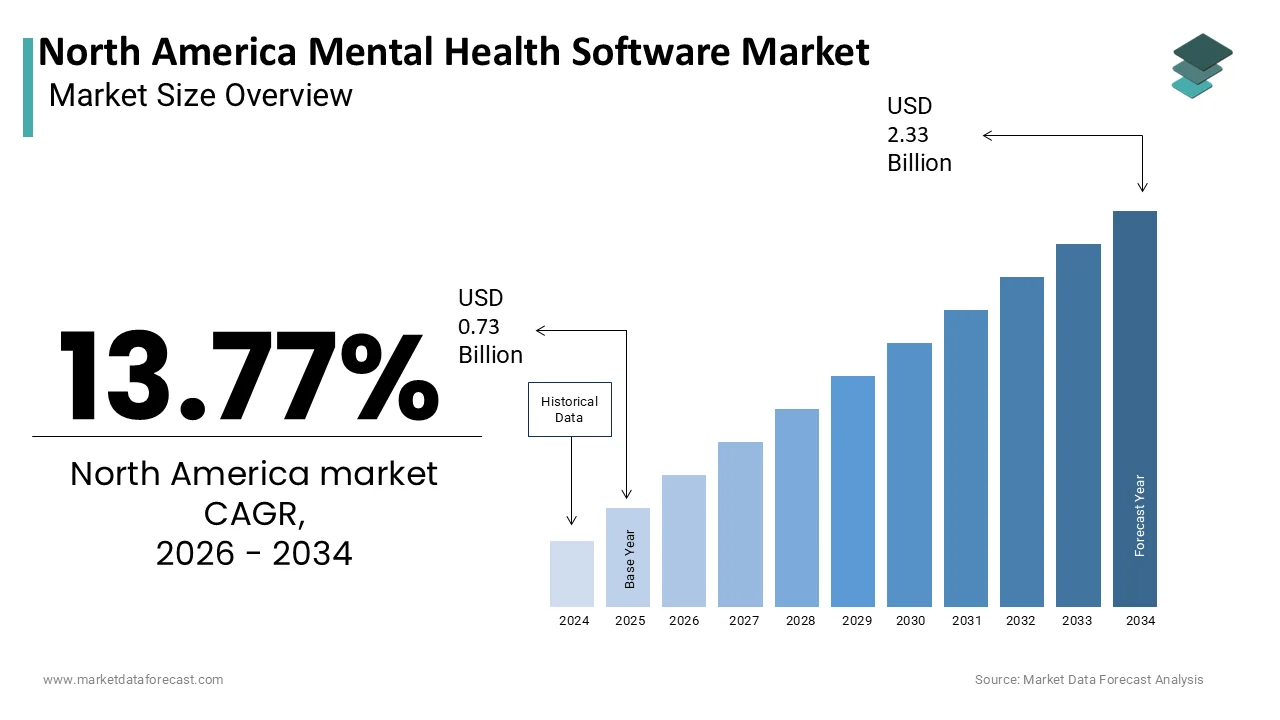
- Market Valuation: Valued at USD 0.73 billion (2025), estimated at USD 0.83 billion (2026), and projected to reach USD 2.33 billion by 2034, registering a robust CAGR of 13.77% over the forecast period (2026–2034).
- Primary Growth Drivers: Rising population suffering from mental health issues, growing adoption of software in clinical treatment, technological advancements, and the integration of artificial intelligence (AI) to improve patient care. Key restraints include high implementation/maintenance costs, lack of skilled professionals, and stringent data security and privacy concerns.
Key Market Segment Metrics (2026–2034)
| Category | Leading Segment (2025 Position) | Fastest-Growing Segment |
|---|---|---|
| By Component | Integrated Mental Health Software (accounted for the largest share due to comprehensive administrative and clinical capabilities) | Standalone Behavioral Health Software (growing rapidly among specialized clinics and private practices) |
| By Delivery Model | Subscription Models (led market adoption due to lower upfront costs and regular cloud updates) | Cloud-based Subscription Models (expanding fast driven by remote telehealth and scalability demands) |
| By Functionality | Clinical Functionality (dominated market demand for patient tracking, notes, and treatment planning) | Administrative & Financial Functionality (accelerating alongside billing automation and insurance reimbursement needs) |
| By End-User | Hospitals & Community Clinics (held primary market share supported by institutional healthcare budgets) | Private Practices (growing rapidly with the surge in independent behavioral health counselors and therapists) |
| By Country | The United States (dominated North American revenue backed by supportive government initiatives and Medicare policies) | Canada (projected to grow rapidly driven by increased healthcare expenditure and digital health tracking initiatives) |
Major Market Players & Competitive Landscape
Market Structure: Highly competitive health-tech ecosystem featuring leading domestic software developers and enterprise electronic health record (EHR) providers competing on AI integration, data security compliance, workflow automation, and user-friendly clinical interfaces.
Key Companies: Cerner Corporation, Core Solutions, Credible Behavioral Health, MindLinc, Epic Systems Corporation, Netsmart Technologies, NextGen Healthcare Information Systems LLC, Qualifacts, The Echo Group, Valant Medical Solutions Inc., and Welligent.
North America Mental Health Software Market Size
The size of the North American mental health software market was worth USD 0.73 billion in 2025, is estimated to be growing at a CAGR of 13.77% from 2026 to 2034, and will be worth USD 2.33 billion by 2034 from USD 0.83 billion in 2026.
North America has witnessed a paradigm shift toward integrated behavioural health care driven by the urgent need to address rising prevalence rates of anxiety, depression, and substance use disorders. According to Centers for Disease Control and Prevention data from 2025, approximately 21% of adults in the United States experienced a mental illness in the past year, totalling over 57 million individuals. According to the National Institute of Mental Health, only 46% of these individuals received treatment, highlighting a significant care gap that digital solutions aim to bridge. According to the American Psychological Association report in 2025, wait times for initial psychiatric appointments averaged 48 days in major metropolitan areas, necessitating immediate access alternatives. Regulatory frameworks such as the 21st Century Cures Act promote interoperability and patient access to health information, accelerating the adoption of digital mental health tools. Insurance providers, including Medicare and Medicaid, have expanded reimbursement codes for telepsychiatry services, creating financial viability for software-enabled care models. The integration of artificial intelligence for early detection and personalized treatment plans further enhances the clinical utility of these platforms. This technological evolution supports the industry goal of democratizing access to mental health care while reducing the stigma associated with seeking help.
MARKET DRIVERS
Escalating Prevalence of Mental Health Disorders among Youth and Workforce
The alarming rise in mental health conditions among adolescents and working-age populations is a major factor driving the North American mental health software market expansion. According to the Substance Abuse and Mental Health Services Administration, over 17% of youth aged 12 to 17 experienced a major depressive episode in 2025, which is reflecting a steady increase from previous years. This demographic is digitally native and prefers accessing care through mobile applications and online portals rather than traditional face-to-face settings. According to the World Health Organization, workplace stress and burnout cost the North American economy approximately 200 billion dollars annually in lost productivity and are driving employers to invest in digital wellness platforms. Companies are increasingly integrating employee assistance programs with mental health software to provide confidential and immediate support to staff. According to the American Psychiatric Association, suicide rates among teenagers increased by 30% over the last decade, creating an urgent need for scalable intervention tools. Digital platforms offer crisis intervention features, mood tracking, and cognitive behavioural therapy modules that can reach users instantly. Schools and universities are adopting these software solutions to screen students and provide early support before conditions worsen. The sheer volume of individuals seeking care overwhelms traditional clinical infrastructure, makingsoftware-basedd triage and self-management essential. This demographic pressure ensures sustained demand for user-friendly and clinically validated digital mental health interventions.
Expansion of Telehealth Reimbursement Policies and Parity Laws
The permanent expansion of telehealth reimbursement policies and the enforcement of mental health parity laws have significantly accelerated the adoption of mental health software in North America, which is further contributing to the regional market growth. The Centers for Medicare and Medicaid Services made several telehealth flexibilities permanent in 2025, allowing providers to bill for virtual mental health visits at rates comparable to in-person consultations. According to the Kaiser Family Foundation, 95% of private insurers now cover telepsychiatry services, removing financial barriers for patients and providers. The Mental Health Parity and Addiction Equity Act requires insurers to provide coverage for mental health conditions that is no more restrictive than coverage for medical and surgical conditions. This regulatory environment encourages healthcare systems to invest in software platforms that facilitate compliant and billable remote care. According to the American Medical Association, over 70% of psychiatrists now use dedicated telehealth platforms for patient consultations, up from 30% in 2019. State-level legislation in California, New York, and Texas has further mandated coverage for digital therapeutics and app-based interventions. These policy changes create a sustainable revenue model for software vendors, encouraging innovation and market entry. Providers are motivated to adopt integrated software solutions that streamline billing, documentation, and compliance reporting. The regulatory clarity reduces uncertainty and fosters long-term investment in digital mental health infrastructure across the continent.
MARKET RESTRAINTS
Stringent Data Privacy Regulations and Cybersecurity Risks
The handling of sensitive personal health information by mental health software providers is subject to rigorous regulatory scrutiny under the Health Insurance Portability and Accountability Act and state-specific privacy laws, which is impeding the mental health software market growth in North America. According to the Office for Civil Rights, healthcare entities faced over 700 data breach investigations in 2025, with mental health apps being increasingly targeted due to perceived security vulnerabilities. The Federal Trade Commission issued new guidelines in 2024 requiring mental health apps to obtain explicit consent before sharing user data with third parties, limiting monetization strategies. Many direct-to-consumer mental health applications operate outside the traditional healthcare ecosystem and may not be fully HIPAA-compliant, creating legal liabilities for users and providers. According to the Ponemon Institute, the average cost of a healthcare data breach reached 10.9 million dollars in 2025, discouraging smaller software developers from entering the market. Patients remain hesitant to share intimate psychological details on digital platforms due to fears of data misuse or unauthorized access. High-profile incidents involving the sale of anonymized user data to advertisers have eroded public trust in certain mental health software brands. Compliance with varying state laws such as the California Consumer Privacy Act adds complexity and cost to software development and maintenance. These regulatory and security concerns slow down adoption rates among risk-averse healthcare institutions and cautious consumers. The need for robust encryption and regular security audits increases operational costs for software vendors.
Limited Clinical Validation and Evidence-Based Standards
The lack of standardized clinical validation for many mental health software applications creates uncertainty among healthcare providers and payers regarding their efficacy and safety, which is further hindering the regional market expansion. According to the American Journal of Psychiatry, less than 10% of available mental health apps have undergone rigorous randomized controlled trials to prove their clinical effectiveness. This evidence gap makes it difficult for physicians to recommend specific software solutions to patients with confidence. The Food and Drug Administration has cleared only a limited number of digital therapeutics for prescription use, leaving the majority of the market unregulated. According to the National Quality Forum in 2025, there is no unified framework for evaluating the quality and safety of mental health software, leading to fragmentation. Healthcare systems are reluctant to integrate unproven tools into their clinical workflows due to potential liability risks. Payers often deny reimbursement for digital interventions that lack strong peer-reviewed evidence supporting their therapeutic value. The rapid pace of software development outstrips the slower process of clinical research, creating a disconnect between available products and proven treatments. Providers struggle to distinguish between marketing claims and scientifically backed outcomes when selecting tools for patient care. This uncertainty limits the widespread integration of mental health software into standard care protocols. The industry faces pressure to establish consistent evaluation criteria to build trust and ensure patient safety.
MARKET OPPORTUNITIES
Integration of Artificial Intelligence for Personalized Care and Early Detection
The integration of artificial intelligence and machine learning into mental health software presents substantial opportunities for the North American mental health software market. According to the Stanford Center for Health Policy, AI algorithms can analyze speech patterns, text inputs, and behavioural data to detect early signs of depression and anxiety with up to 85% accuracy. These predictive capabilities allow for timely interventions before conditions escalate into crises, reducing hospitalizations and emergency room visits. The National Science Foundation funded several projects in 2025 focused on developing AI-driven chatbots that provide cognitive behavioural therapy techniques tailored to individual user needs. Software platforms leveraging natural language processing can offer real-time feedback and coping strategies, improving patient engagement and adherence to treatment. According to the American Psychological Association, AI-enabled tools can reduce therapist workload by automating routine monitoring tasks, allowing clinicians to focus on complex cases. Personalized recommendations based on user data improve treatment outcomes and patient satisfaction. The ability to scale personalized care through software addresses the shortage of mental health professionals in rural and underserved areas. Investors are increasingly funding AI mental health startups, recognizing the potential for high impact and scalable solutions. This technological advancement transforms mental health software from passive recording tools into active therapeutic agents. The continuous learning capability of AI systems ensures that treatments evolve with emerging clinical insights.
Expansion into Corporate Wellness and Employee Assistance Programs
The growing emphasis on corporate wellness and mental health support in the workplace offers significant growth opportunities for mental health software providers targeting enterprise clients. According to the Society for Human Resource Management, 80% of large companies in North America now offer digital mental health benefits as part of their employee assistance programs. The global pandemic heightened awareness of workplace stress, leading organizations to prioritize mental well-being as a key component of talent retention and productivity. According to the World Economic Forum, companies investing in mental health software saw a return on investment of 4 dollars for every 1 dollar spent due to reduced absenteeism and turnover. Software vendors are developing specialized enterprise platforms that integrate with existing human resources systems to provide seamless access to therapy, coaching, and self-care resources. According to the National Business Group on Health, demand for anonymous and confidential digital mental health services among employees increased by 40% in 2025. Employers prefer scalable software solutions that can support thousands of employees simultaneously without the logistical challenges of traditional in-person counselling. Partnerships between software providers and insurance carriers enable bundled offerings that reduce costs for employers. This B2B segment provides stable recurring revenue streams for software companies. The focus on preventive care and early intervention aligns with corporate goals of maintaining a healthy and resilient workforce.
MARKET CHALLENGES
Fragmentation of Care and Lack of Interoperability
The fragmentation of mental health software solutions and the lack of interoperability with existing electronic health record systems pose significant challenges to seamless care delivery. According to the Office of the National Coordinator for Health Information Technology, only 30% of mental health software platforms can seamlessly exchange data with major electronic health record vendors. This disconnect creates silos of information where critical patient data remains trapped in standalone applications, inaccessible to primary care providers and specialists. According to the American Medical Informatics Association in 2025, clinicians spend an average of 2 hours per day manually transferring data between disparate systems, leading to inefficiencies and potential errors. The lack of standardized application programming interfaces hinders the integration of mental health metrics into holistic patient views. Healthcare systems struggle to coordinate care when mental health software operates independently of the broader medical infrastructure. Patients often have to repeat their history to multiple providers, causing frustration and disengagement. The absence of universal data standards complicates efforts to track population health outcomes and measure the effectiveness of digital interventions. Vendors face technical and commercial barriers to achieving interoperability due to proprietary systems and competitive interests. This fragmentation undermines the potential of mental health software to improve overall healthcare quality and continuity. Regulators are pushing for greater interoperability, but progress remains slow due to technical complexities.
Provider Burnout and Digital Fatigue
The increasing reliance on digital tools for mental health care contributes to provider burnout and digital fatigue among clinicians who must manage multiple platforms and administrative tasks, which further challenges regional market expansion. According to the Medscape Physician Compensation Report 2025, over 50% of psychiatrists and psychologists reported symptoms of burnout exacerbated by the need to document interactions in various software systems. The constant connectivity required by telehealth platforms blurs the boundaries between work and personal life, leading to emotional exhaustion. According to the American Psychiatric Association, the administrative burden of using non-integrated mental health software increases cognitive load and reduces time available for direct patient care. Clinicians often struggle with alert fatigue from automated notifications and reminders generated by software algorithms. The lack of intuitive user interfaces in some mental health applications requires extensive training and adaptation, slowing down workflow efficiency. Providers feel pressured to respond to patient messages outside of regular hours due to the always-on nature of digital platforms. This digital strain impacts the quality of care and increases turnover rates among mental health professionals. Software vendors face criticism for designing tools that prioritize data collection over clinician usability. Addressing this challenge requires a human-centred design approach that simplifies workflows and reduces administrative overhead. Without alleviating provider burden, the full potential of mental health software cannot be realized.
REPORT COVERAGE
| REPORT METRIC | DETAILS |
| Market Size Available | 2025 to 2034 |
| Base Year | 2025 |
| Forecast Period | 2026 to 2034 |
| Segments Covered | By Component, Delivery Model,Functionality, and Region. |
| Various Analyses Covered | Global, Regional, and Country-Level Analysis, Segment-Level Analysis, Drivers, Restraints, Opportunities, Challenges; PESTLE Analysis; Porter’s Five Forces Analysis, Competitive Landscape, Analyst Overview of Investment Opportunities |
| Countries Covered | The United States, Canada, Rest of North America |
| Market Leaders Profiled | Cerner Corporation, Core Solutions, Inc., Credible Behavioral Health, Inc., MindLinc, Epic Systems Corporation, Netsmart Technologies, Inc., NextGen Healthcare Information Systems, LLC, Qualifacts Systems, LLC, The Echo Group, Valant Medical Solutions, Inc., Welligent, Inc. |
SEGMENTAL ANALYSIS
By Component Insights
The integrated segment led the market with the highest share of the regional market in 2025 and is expected to maintain its position as the leading segment in the North America market during the forecast period due to its ability to seamlessly connect behavioral health data with general medical records within large healthcare systems. This integration is critical for addressing the high prevalence of comorbidities where patients suffer from both physical and mental health conditions simultaneously. According to the Office of the National Coordinator for Health Information Technology, over 60% of hospitals in the United States have adopted certified electronic health record technology that supports integrated behavioral health modules. According to the American Medical Association, integrated systems reduce administrative burden by 35% by eliminating duplicate data entry and streamlining billing processes for co-occurring disorders. Healthcare providers prioritize these solutions because they facilitate a holistic view of patient health, enabling primary care physicians to coordinate effectively with psychiatrists and therapists. The Centers for Medicare and Medicaid Services incentivize interoperability through value-based care programs that reward coordinated treatment outcomes. Integrated software allows for real-time sharing of medication lists, allergy information, and treatment plans, reducing the risk of adverse drug interactions. Large hospital networks prefer integrated platforms because they align with existing IT infrastructure and security protocols, minimizing implementation complexity. The demand for population health management tools further drives adoption as payers require comprehensive data to manage risk across entire patient cohorts. This segment leadership is reinforced by the regulatory push for data exchange standards such as Fast Healthcare Interoperability Resources, which favor integrated architectures over siloed applications.
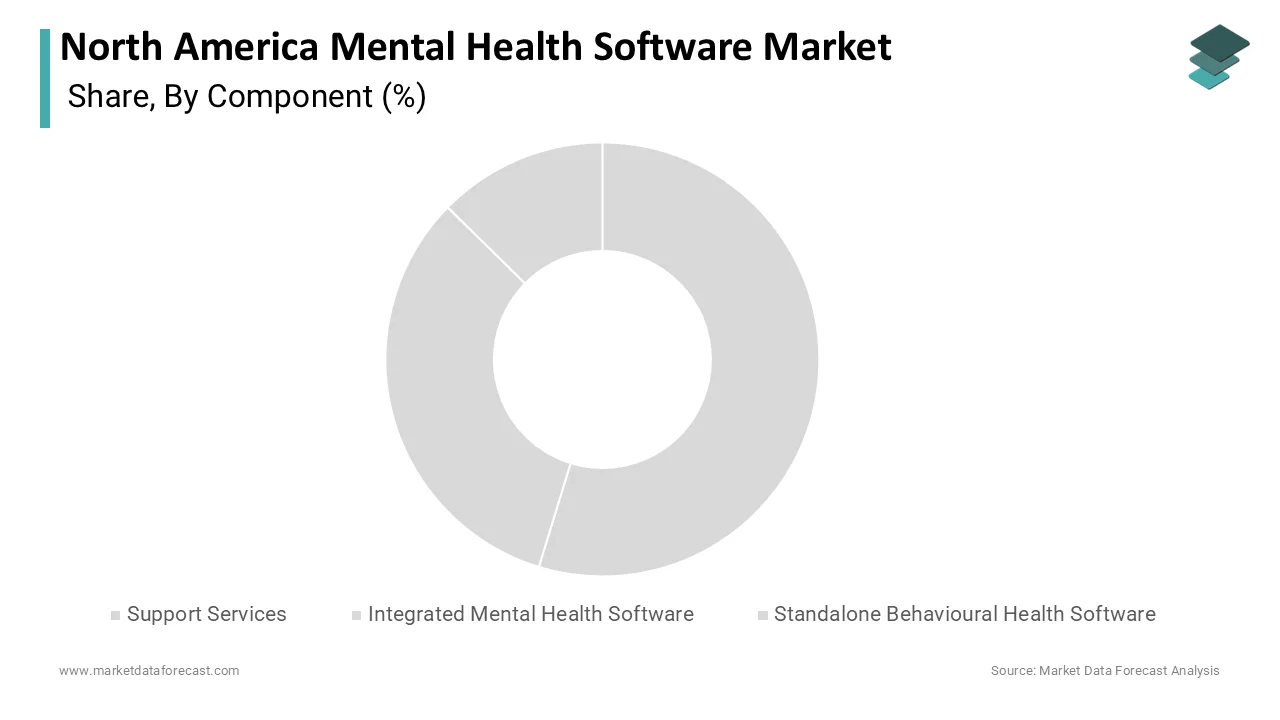
On the other end, the standalone segment is estimated to record a prominent CAGR of 13.5% over the forecast period owing to the rising need for specialized clinical tools that general electronic health records often lack. These dedicated platforms offer advanced features such as detailed psychotherapy notes, outcome measurement tracking, and specific therapeutic module libraries that are essential for mental health professionals. According to the American Psychological Association, private practice therapists increasingly prefer standalone software because it is designed specifically for the nuances of behavioral health documentation and treatment planning. According to the National Alliance on Mental Illness, standalone applications provide superior user experiences for patients, including mood tracking journals and secure messaging features that enhance engagement. Small andmedium-sizedd mental health clinics find standalone solutions more cost-effective and easier to implement than complex integrated systems. The rise of telehealth has accelerated the adoption of standalone platforms that offer built-in video conferencing and remote patient monitoring capabilities tailored for psychiatric care. According to the Substance Abuse and Mental Health Services Administration, specialized software improves adherence to evidence-based practices by providing structured templates for cognitive behavioral therapy and dialectical behavior therapy. Vendors in this segment are rapidly innovating with artificial intelligence-driven insights and personalized intervention tools that generalist platforms cannot match. The flexibility and specialization of standalone software make it the preferred choice for independent practitioners and niche behavioral health organizations seeking to optimize clinical workflows.
By Delivery Model Insights
The subscription models segment led the market by capturing the largest share of the regional market in 2025. The growth of the subscription model segment in the North American market is driven by the rising preference for predictable operational expenditures and continuous access to software updates. Healthcare providers and organizations favor subscription-based pricing because it eliminates the high upfront capital costs associated with purchasing perpetual licenses and maintaining on-premises servers. According to the Software and Information Industry Association, over 75% of healthcare software deployments in North America now utilize subscription models due to their financial flexibility and scalability. According to the American Hospital Association, subscription services allow facilities to scale their usage up or down based on patient volume without significant infrastructure investments. This model ensures that users always have access to the latest features, security patches, and regulatory compliance updates, which is critical in the rapidly evolving mental health landscape. Cloud-based subscription services also facilitate remote access, enabling therapists to work from multiple locations and support telehealth initiatives effectively. The lower barrier to entry encourages smaller private practices to adopt sophisticated software tools that were previously affordable only to large institutions. Subscription models align with the shift toward value-based care, where ongoing service quality and support are prioritized over one-time product ownership. Vendors benefit from recurring revenue streams that support continuous innovation and customer success initiatives. The ease of implementation and reduced IT maintenance requirements further reinforce the dominance of subscription models in the market.
On the other hand, the ownership models segment is expected to exhibit a CAGR of 9.05% during the forecast period owing to the increased concerns regarding data sovereignty, security, and long-term cost control among large healthcare systems. Some major hospital networks and government agencies prefer to own their software infrastructure outright to maintain complete control over sensitive patient data and avoid dependency on third-party cloud providers. According to the Healthcare Information and Management Systems Society, concerns about data breaches and regulatory compliance have led 20% of large academic medical centers to invest in on-premises owned solutions. According to the Department of Health and Human Services, data residency and control are emphasized in recent cybersecurity guidelines, prompting some entities to choose ownership models. Owning the software allows organizations to customize the code extensively to meet unique workflow requirements and integrate with legacy systems that may not be compatible with standard cloud platforms. While the initial investment is higher, the total cost of ownership over ten years can be lower for large institutions with stable patient volumes. The desire to avoid recurring subscription fees and potential price increases from vendors motivates some buyers to choose perpetual licenses. Advances in virtualization technology have made on-premises deployment more manageable and secure, appealing to risk-averse organizations. This segment growth reflects a strategic choice by certain large players to prioritize control and security over convenience.
By End User Insights
The hospitals segment held the dominant share of the regional market in 2025. The growth of the hospitals segment in the regional market is attributed to their large patient volumes, complex care coordination needs, and regulatory mandates for comprehensive documentation. According to the American Hospital Association, hospitals account for over 40% of mental health software procurement in North America as they seek to integrate behavioral health services into emergency departments and inpatient units. The Joint Commission requires hospitals to screen all patients for suicide risk and substance use disorders, driving the adoption of standardized digital screening tools and electronic health record modules. Hospitals face significant pressure to reduce readmission rates for psychiatric patients, which necessitates robust discharge planning and follow-up software solutions. The Centers for Medicare and Medicaid Services penalizes hospitals with high readmission rates, creating a financial incentive to invest in software that improves care continuity. Large hospital systems require enterprise-grade software that can handle thousands of concurrent users and integrate with existing laboratory and pharmacy systems. The complexity of hospital billing and coding for mental health services drives demand for specialized revenue cycle management features within the software. Hospitals are also leading the adoption of telepsychiatry platforms to provide 24/7 coverage for emergency psychiatric evaluations. The scale of hospital operations ensures substantial contract values for software vendors. The trend toward building dedicated behavioral health units within general hospitals further accelerates software adoption.
However, the private practices segment is the fastest-growing end-user segment and is predicted to expand at a CAGR of 16.1% during the forecast period owing to the rapid digital transformation of independent mental health providers and the expansion of solo practitioner networks. According to the American Psychological Association, the number of private practice psychologists and counselors utilizing digital practice management software increased by 45% in 2025 as they seek to streamline administrative tasks. Independent practitioners are increasingly adopting all-in-one software solutions that handle scheduling, billing, telehealth, and clinical notes to reduce overhead and improve efficiency. The rise of direct-to-consumer mental health platforms has encouraged private practitioners to adopt professional-grade software to compete on service quality and accessibility. According to the National Board for Certified Counselors, private practices are prioritizing software with strong patient engagement features such as automated reminders and secure portals to improve retention. The flexibility of cloud-based software allows private practitioners to operate from multiple locations or offer hybrid care models. The affordability of subscription-based models makes advanced technology accessible to small practices that previously relied on paper records. The growing demand for mental health services has led to an increase in the number of new private practices opening, which drives initial software purchases. Private practitioners are also early adopters of niche therapeutic tools and outcome tracking software to differentiate their services. This segment growth is fueled by the entrepreneurial spirit of modern mental health professionals.
COUNTRY LEVEL ANALYSIS
U.S.Mental Health Software Market Analysis
The U.S. had the largest share of the regional market in 2025 and is projected to experience robust market expansion driven by sustained venture funding and widespread artificial intelligence adoption over the next few years. The United States maintains its position as the largest national market for mental health software in North America, driven by its massive healthcare expenditure, high prevalence of mental health disorders, and complex regulatory environment. According to the Centers for Disease Control and Prevention, over 57 million adults in the United States experienced mental illness in 2025, creating immense demand for scalable digital solutions. The country spends more than 400 billion dollars annually on mental health services, providing ample resources for software adoption. The implementation of the 21st Century Cures Act and strict HIPAA regulations drive healthcare providers to invest in compliant and interoperable software systems. The United States has a highly fragmented healthcare system with thousands of independent providers and large hospital networks, all requiring specialized software solutions. The presence of major technology hubs in Silicon Valley and Boston fosters innovation in mental health software development. Venture capital funding for digital health startups in the United States reached record levels in 2025, supporting the launch of new platforms. The widespread adoption of telehealth following the pandemic has become permanent, with insurers covering virtual mental health visits. The diverse population and varying state laws create a complex but lucrative market for vendors who can navigate the regulatory landscape. The United States leads in the adoption of artificial intelligence and machine learning in mental health care.
Canada Mental Health Software Market Analysis
Canada is likely to witness accelerated federal and provincial investments in digital health infrastructure to bridge care gaps in remote regions over the next few years. According to Statistics Canada, approximately 1 in 5 Canadians experiences a mental health problem each year, driving government initiatives to expand digital mental health services. According to the Canadian Institute for Health Information, provincial health authorities are increasingly investing in integrated electronic health records that include behavioral health modules to improve care coordination. The vast geography of Canada makes telehealth and remote monitoring software essential for reaching rural and indigenous communities where specialist access is limited. The federal government has allocated significant funding for digital health infrastructure under the Pan-Canadian Health Data Strategy. Provincial programs in Ontario, British Columbia, and Quebec are piloting digital therapeutics and app-based interventions for anxiety and depression. The single-payer system simplifies procurement processes for large-scale software deployments compared to the fragmented United States market. Canadian privacy laws such as PIPEDA impose strict requirements on data handling, influencing software design and vendor selection. The country has a strong tradition of public health research, supporting evidence-based adoption of mental health technologies. Collaboration between academia and industry drives innovation in culturally appropriate digital mental health solutions. The focus on equity and access ensures that software solutions are designed to serve diverse populations.
KEY MARKET PLAYERS
Some of the companies that are playing a dominant role in the North America Mental Health Software Market include:
- Cerner Corporation
- Core Solutions, Inc.
- Credible Behavioral Health, Inc.
- MindLinc
- Epic Systems Corporation
- Netsmart Technologies, Inc.
- NextGen Healthcare Information Systems, LLC
- Qualifacts Systems, LLC
- The Echo Group
- Valant Medical Solutions, Inc.
- Welligent, Inc.
TOP LEADING PLAYERS IN THE MARKET
- Epic Systems Corporation maintains a dominant position in the North American Mental Health Software Market through its comprehensive electronic health record platform that seamlessly integrates behavioral health modules. The company enables large hospital systems to manage psychiatric care within the same workflow as medical treatment,nt ensuring data continuity and improved patient safety. Epic recently enhanced its telepsychiatry capabilities by integrating high-definition video conferencing tools directly into its patient portal, allowing for secure remote consultations. The company strengthened its market position by launching specialized templates for substance use disorder tracking and suicide risk assessment aligned with federal reporting requirements. Epic collaborates with major academic medical centers to refine its behavioral health algorithms,s ensuring clinical relevance and usability. Its focus on interoperability allows seamless data exchange with community providers, rs facilitating coordinated care models. The robust security infrastructure of Epic ensures compliance with strict privacy regulations,ons making it the preferred choice for large healthcare networks seeking integrated mental health solutions.
- Cerner Corporation serves as a key provider of mental health software solutions in North America,rica leveraging its extensive reach in hospital information systems and population health management. The company offers dedicated behavioral health workflows that support crisis intervention,ntion inpatient psychiatric care, and outpatient therapy management. Cerner recently expanded its analytics capabilities to identify high-risk patients using predictive modeling, which helps healthcare providers intervene earlier and reduce hospital readmissions. The company strengthened its market presence by partnering with digital therapeutics firms to embed evidence-based cognitive behavioral therapy programs into its electronic health record system. Cerner focuses on improving revenue cycle management for mental health services by automating coding and billing processes specific to psychiatric care. Its cloud-based infrastructure supports scalable deployments for large health systems across the United States and Canada. The company emphasizes user experience design to reduce clinician burnout and improve documentation efficiency. Cerner's commitment to open standards facilitates integration with third-party applications, enhancing the overall utility of its mental health software offerings.
- Netsmart Care Management contributes significantly to the North America Mental Health Software Market by providing specialized utilization management and case management platforms tailored for payers and behavioral health organizations. The company focuses on streamlining administrative processes such as prior authorization claims processing and provider credentialing,g which are critical for efficient mental health care delivery. Netsmart recently launched an artificial intelligence-driven engine that automates clinical review decisions, reducing turnaround times for insurance approvals. The company strengthened its market position by expanding its network of connected providers, enabling real-time data sharing between insurers and care teams. Netsmart emphasizes compliance with parity laws by offering transparent reporting tools that track access to care and treatment outcomes. Its platform supports complex care coordination for individuals with co-occurring mental health and substance use disorders. The company invests heavily in customer support and training to ensure smooth implementation for large insurance carriers. Netsmart's ability to handle high-volume transactions makes it an essential partner for payers seeking to optimize their behavioral health benefits management.
TOP STRATEGIES USED BY THE KEY MARKET PARTICIPANTS
Key players in the North America Mental Health Software Market employ strategic initiatives focused on integration, interoperability,y and user experience to maintain competitive advantage. Companies prioritize the development of seamless connections between behavioral health modules and general electronic health records to facilitate holistic patient care. Strategic partnerships with digital therapeutics providers allow vendors to offer comprehensive treatment solutions that combine software management with evidence-based interventions. Investment in artificial intelligence and machine learning enhances predictive analytics capabilities, enabling early identification ofat-riskk patients and personalized care plans. Manufacturers focus on simplifying user interfaces to reduce clinician burnout and improve adoption rates among mental health professionals. Compliance with evolving privacy regulations and parity laws drives continuous updates to security features and reporting tools. Service-oriented business models expand revenue streams through ongoing support, training,g and customization services. These strategies ensure resilience and growth in a rapidly evolving market characterized by increasing demand for accessible and effective mental health care solutions.
COMPETITIVE LANDSCAPE
The North America Mental Health Software Market features intense competition among established electronic health rrecord vendors rs specialized behavioral health software providers,s and emerging digital health startups. Leading companies differentiate themselves through deep clinical functionality,lity seamless interoperability, and robust security measures that comply with strict regulatory standards. The market is characterized by high barriers to entry due to the complexity of healthcare workflows,kflows stringent privacy laws, and the need for proven clinical efficacy. Price competition is moderate as buyers prioritize reliability,iability integration capabilities, and customer support over initial cost savings. Large health systems prefer integrated platforms from majo r vendors,, while private practices often choose specialized standalone solutions for their ease of use and affordability. Collaboration between software providers and insurance payers is increasing to streamline authorization processes and improve care coordination. The rise of value-based care models drives demand for analytics tools that demonstrate treatmencost-effectivenessss. Innovation in telehealth and remote monitoring technologies continues to reshape competitive dynamics as providers seek flexible and scalable solutions. Regulatory changes regarding data sharing and parity enforcement create both challenges and opportunities for market participants. Companies that can balance clinical depth with user-friendly design and strong technical support gain significant competitive advantage in this fragmented yet rapidly growing sector.
MARKET SEGMENTATION
This research report on the North America Mental Health Software Market has been segmented and sub-segmented into the following categories.
By Component
- Support Services
- Integrated Mental Health Software
- Standalone Behavioural Health Software
By Delivery Model
- Subscription Models
- Ownership Models
By Functionality
- Clinical Functionality
- Administrative Functionality
- Financial Functionality
By End User
- Hospitals
- Community Clinics
- Private Practices
- Residential
- Payers
By Country
- The United States
- Canada
- Rest of North America