- Product Description Description
- Table of Contents TOC
- List of Table & Figure LOT
- Get Free Sample PDF Sample PDF
Market Size, 2025
$6.83 BnMarket Estimate, 2026
$7.32 BnMarket Forecast, 2034
$12.68 BnCAGR, 2026–2034
7.12%Executive Summary: North America Soft Tissue Repair Market
- Market Scope: Comprehensive North America soft tissue repair market analysis covering product classifications, surgical applications, country frameworks, and orthopedic/hernia repair adoption metrics.
- Market Valuation: Valued at USD 6.83 billion in 2025, estimated at USD 7.32 billion in 2026, and projected to reach USD 12.68 billion by 2034, registering a compound annual growth rate (CAGR of 7.12%) from 2026 to 2034.
- Primary Growth Drivers: Rising rates of obesity and sports-related injuries (such as ACL tears), increasing incidence of hernia repairs and breast cancer, a growing aging/geriatric population, and a strong regional shift toward minimally invasive surgeries. Key market restraints include high procedural costs, unpromising reimbursement policies, a shortage of human tissue availability, and alternative treatment options.
Key Market Segment Metrics (2026–2034)
| Category | Leading Segment (2025 Position) | Fastest-Growing Segment |
|---|---|---|
| By Product | Mesh/tissue patches and allografts (dominated tissue reconstruction volumes) | Advanced suture anchors and interference screws |
| By Application | Hernia repair and orthopedic soft tissue applications (held the highest clinical share) | Breast augmentation, skin, and dural repair procedures |
| By Country | United States (dominated regional market share backed by baby boomer demographics, trauma cases, and key players) | Canada (expanding steadily via advanced technologies in orthopedic repair products) |
Major Market Players & Market Structure
Market Structure: Highly competitive North American medical device landscape featuring major global healthcare corporations and specialized tissue-engineering pioneers competing intensely on biomaterial innovation, fixation strength, and minimally invasive device design.
Key Companies: LifeCell Corporation, Organogenesis, C.R. Bard Inc., Johnson & Johnson, Covidien plc, Arthrex Inc., Smith & Nephew plc, Integra Lifesciences Corporation, Wright Medical Technology, and Stryker Corporation.
 Download Free Sample Report
North America Soft Tissue Repair Market Size
The North America soft tissue repair market was valued at USD 6.83 billion in 2025. The market is estimated at USD 7.32 billion in 2026 and is projected to reach USD 12.68 billion by 2034, growing at a CAGR of 7.12% from 2026 to 2034.

Soft tissue repair is the biological process or medical treatment used to heal damaged muscles, ligaments, tendons, skin, or fat. This sector includes synthetic meshes, biological grafts derived from human or animal tissue, and advanced regenerative medicine products such as platelet-rich plasma and stem cell therapies. The region experiences a high burden of musculoskeletal disorders. According to the Centers for Disease Control and Prevention (CDC) National Center for Health Statistics, approximately 21.2% of all adults in the United States have received a formal medical diagnosis of arthritis, representing a significant long-term driver of healthcare system use and joint health care needs. As per the American Academy of Orthopaedic Surgeons (AAOS), the escalating volume of recreational athletic injuries across diverse age demographics requires targeted sports medicine protocols and structured emergency action strategies to safely address ligament and tendon damage. The aging demographic further amplifies this need as individuals over 65 years old are more prone to degenerative tendon issues and rotator cuff tears. Regulatory oversight by the Food and Drug Administration ensures rigorous safety standards for both allografts and synthetic implants, influencing product development timelines. Healthcare providers increasingly prefer minimally invasive surgical techniques, which drive the adoption of specialized repair matrices that support rapid tissue integration. The market benefits from robust healthcare infrastructure and high reimbursement availability for reconstructive procedures in both the United States and Canada. Technological advancements in bioengineering allow for the creation of scaffolds that mimic native extracellular matrix properties, enhancing clinical outcomes. This dynamic landscape reflects a shift from passive repair materials to active biological solutions that promote genuine tissue regeneration rather than mere structural support.
Market Drivers
Rising Prevalence Of Sports Injuries And Active Lifestyles Fuels Demand For Advanced Repair Solutions
The escalating incidence of sports-related injuries fuels the growth of the North American soft tissue repair market. This is because active lifestyles are becoming increasingly popular across all age groups. According to the National Electronic Injury Surveillance System, emergency departments treat approximately 3 million sports-related injuries annually in the United States alone, with a significant portion involving soft tissue damage, such as anterior cruciate ligament tears and Achilles tendon ruptures. The rise in participation in high-impact activities like CrossFit, soccer, and basketball among adolescents and young adults contributes to this trend. Professional and amateur athletes seek rapid recovery times to return to play, driving demand for biologic augmentations and high-strength synthetic meshes that offer superior biomechanical properties. Schools and universities invest heavily in athletic programs, increasing the volume of competitive sports, which correlates with higher injury rates. The cultural emphasis on physical fitness encourages older adults to engage in exercise regimens that may exceed their physiological limits, leading to degenerative tears. Orthopedic surgeons increasingly utilize soft tissue repair devices during arthroscopic procedures to ensure durable fixation and minimize re-injury risks. Insurance coverage for these procedures remains robust due to the clear functional impairment caused by untreated soft tissue defects. Manufacturers respond by developing specialized products tailored to specific anatomical sites such as the shoulder, knee, and ankle. This sustained influx of trauma cases ensures a steady demand pipeline for innovative repair technologies that enhance healing speed and functional restoration.
Aging Population and Degenerative Musculoskeletal Conditions Drive Surgical Intervention Rates
The rapidly aging population in the region significantly propels the North America soft tissue repair market forward. This is due to the increased prevalence of degenerative musculoskeletal conditions that compromise tissue integrity. As per the United States Census Bureau Demographic Projections, the population of Americans aged 65 and older is projected to expand significantly to nearly 95 million individuals by 2060, representing close to one-quarter of the total domestic population. This demographic shift results in a higher incidence of chronic conditions such as rotator cuff tendinopathy, meniscal degeneration, and lumbar disc herniation, which often require surgical intervention when conservative treatments fail. Age-related decline in collagen synthesis and vascular supply impairs natural healing capabilities, making biological scaffolds essential for successful repair outcomes. According to Medicare Procedure Volume Tracking, the aging beneficiary base drives a consistent upward trajectory in the utilization of specialized orthopedic interventions and musculoskeletal services across public healthcare infrastructure. Older patients are more likely to undergo joint preservation surgeries rather than replacements to maintain mobility and independence. The preference for minimally invasive techniques among elderly patients who may have comorbidities further boosts the adoption of specialized repair matrices that facilitate quicker recovery. Healthcare systems prioritize these interventions to reduce long-term disability costs and improve quality of life metrics. Pharmaceutical and device companies focus on developing products that address the specific biological challenges of aged tissues such as reduced cellularity and slower metabolic rates. This demographic imperative ensures long-term market stability as the cohort of seniors continues to expand and seek effective therapeutic solutions for age-related tissue deterioration.
MARKET RESTRAINTS
High Cost Of Biologic Grafts And Limited Reimbursement Policies Restrict Accessibility
The substantial cost associated with biologic grafts and advanced soft tissue repair products inhibits the growth of the North American market. This is due to limited reimbursement coverage and financial barriers for patients. Biological matrices derived from human cadavers or porcine sources can cost several thousand dollars per unit compared to synthetic alternatives, which are significantly cheaper. As per research, the Centers for Medicare and Medicaid Services often categorizes certain high-end biologics as experimental or investigational, leading to denial of coverage for many procedures. Private insurers frequently impose strict prior authorization requirements, demanding extensive documentation of medical necessity, which delays treatment and increases administrative burdens for healthcare providers. Out-of-pocket expenses for uninsured or underinsured patients can be prohibitive, forcing them to opt for inferior synthetic repairs or delay surgery altogether. Hospital administrators face pressure to control supply chain costs, leading to formulary restrictions that limit the availability of premium biologic products. The lack of standardized coding for new regenerative technologies creates ambiguity in billing processes, resulting in claim rejections. Economic downturns exacerbate this issue as patients defer elective procedures due to financial uncertainty. Smaller clinics and rural hospitals struggle to stock expensive inventory due to cash flow constraints limiting patient access to advanced care. Manufacturers must navigate complex pricing strategies to balance profitability with affordability while advocating for broader insurance recognition. This financial friction slows the adoption rate of superior biological solutions despite their clinical advantages over traditional methods.
Stringent Regulatory Approval Processes Delay Product Launches And Innovation
Rigorous regulatory approval processes imposed by the Food and Drug Administration in the United States and Health Canada create significant delays in bringing new products to the North America soft tissue repair market. The classification of many biologic scaffolds as combination products requiring both device and drug approvals extends the review timeline considerably compared to standard medical devices. Clinical trials for these products must demonstrate not only structural integrity but also biological activity and safety, which requires large sample sizes and long follow-up periods. According to FDA Premarket Submission Regulatory Guidelines, the Premarket Approval (PMA) pathway represents the most stringent regulatory mechanism for high-risk medical technologies, requiring extensive laboratory and human clinical evidence that typically requires 1 to 3 years of structured regulatory evaluation. Regulatory uncertainties regarding the definition of minimal manipulation for human cellular and tissue-based products lead to inconsistent enforcement actions and compliance challenges. Changes in regulatory guidelines necessitate frequent protocol adjustments, disrupting development pipelines and increasing operational costs. Small and medium-sized enterprises often lack the resources to navigate these complex regulatory landscapes, forcing them to partner with larger corporations or abandon innovative projects. The fear of post-market surveillance penalties discourages risk-taking in product design, leading to incremental rather than transformative innovations. Delays in approval mean that patients wait longer for access to next-generation therapies that could offer better healing outcomes. This regulatory bottleneck stifles competition and limits the diversity of available treatment options in the clinical setting.
MARKET OPPORTUNITIES
Advancements In Regenerative Medicine And Stem Cell Therapies Open New Avenues For Growth
Emerging advancements in regenerative medicine, particularly stem cell therapy and platelet-rich plasma applications, offer substantial opportunities for the North America soft tissue repair market. These biological treatments harness the body's own healing mechanisms to promote true tissue regeneration rather than just scar formation. As per the American Academy of Orthopaedic Surgeons (AAOS), the clinical deployment of orthobiologic solutions is expanding rapidly as research clarifies their role in accelerating biological healing pathways for tendon and ligament repairs. Stem cells derived from adipose tissue or bone marrow can be integrated into scaffolds to enhance cell proliferation and differentiation at the injury site. Platelet-rich plasma injections are increasingly used as adjuncts to surgical repair to accelerate healing and reduce inflammation. Regulatory pathways for autologous cell therapies are becoming clearer, allowing manufacturers to develop standardized kits for point-of-care preparation. Hospitals and ambulatory surgical centers are establishing specialized regenerative medicine units to cater to demand from athletes and active individuals seeking non-surgical or minimally invasive options. Investment in biotechnology startups focusing on exosome therapy and gene editing further expands the potential toolkit for soft tissue repair. Payers are beginning to recognize the long-term cost savings of regenerative treatments that prevent recurrent injuries and subsequent surgeries. Collaborations between academic institutions and industry players accelerate the translation of laboratory findings into commercial products. This scientific evolution positions regenerative biologics as a high-growth segment within the broader soft tissue repair landscape.
Expansion Into Veterinary Applications Creates Diversified Revenue Streams
The expansion of soft tissue repair technologies into veterinary medicine paves the way for manufacturers to diversify their revenue streams beyond human healthcare, which is expected to boost the expansion of the North America soft tissue repair market. Pet ownership in North America has surged, with the American Pet Products Association reporting that 66 percent of US households own a pet, translating to approximately 85 million homes. Companion animals, particularly dogs, suffer from similar soft tissue injuries such as cranial cruciate ligament ruptures and hip dysplasia, which require surgical intervention. Veterinary specialists increasingly adopt human-grade biological grafts and synthetic meshes due to their proven efficacy and biocompatibility. As per sources, overall annual consumer allocations toward professional veterinary care and specialized clinical procedures have exceeded $38 billion in the United States, encouraging the adoption of advanced medical devices in veterinary clinics. Regulatory requirements for veterinary devices are less stringent than for human use, allowing for faster market entry and lower development costs. Manufacturers can leverage existing production facilities to create veterinary-specific product lines with minimal retooling. Partnerships with veterinary hospital chains and specialty clinics facilitate distribution and brand recognition in the animal health sector. The emotional bond between owners and pets drives demand for premium repair solutions that ensure optimal recovery and quality of life for animals. This cross-species application allows companies to maximize the utility of their technological platforms while tapping into a resilient and growing market segment that is less susceptible to healthcare policy changes.
MARKET CHALLENGES
Risk Of Disease Transmission And Immunogenic Reactions With Biological Grafts
The use of biological grafts in soft tissue repair carries inherent risks of disease transmission and immunogenic reactions, which impede the growth of the North American market. Consequently, these factors pose significant challenges to market acceptance and patient safety. Although rigorous screening and processing methods are employed, there remains a residual risk of transmitting viral or bacterial pathogens from donor tissues. According to research, the Food and Drug Administration mandates strict testing protocols, yet occasional recalls due to contamination concerns damage consumer trust and brand reputation. Immunogenic responses occur when the recipient body recognizes the graft as foreign, leading to inflammation, rejection, or failure of the repair. Allografts derived from human donors carry higher immunogenic potential compared to xenografts from animal sources, which may trigger allergic reactions in sensitive individuals. Processing techniques such as decellularization aim to reduce antigenicity but may compromise the mechanical strength of the scaffold. Clinicians must carefully evaluate patient history and immune status before selecting biological products, adding complexity to decision-making. Adverse events related to graft failure can result in costly revision surgeries and legal liabilities for healthcare providers. Public perception of using human or animal tissue varies culturally, influencing patient consent rates. Manufacturers invest heavily in sterilization technologies and traceability systems to mitigate these risks but cannot eliminate them. Balancing biological activity with safety remains a critical engineering challenge that requires continuous monitoring and improvement of processing standards to ensure patient confidence.
Supply Chain Vulnerabilities for Human- and Animal-Derived Raw Materials
Supply chain vulnerabilities for human- and animal-derived raw materials are a persistent obstacle for the North America soft tissue repair market. This is due to a dependency on consistent donor availability. The procurement of human allografts relies on organ and tissue donation networks, which fluctuate based on seasonal trends, accident rates, and public willingness to donate. As per the American Association of Tissue Banks (AATB), matching raw donor tissue procurement logistics with escalating clinical demands for specific soft-tissue grafts remains a key structural challenge for banking networks. Animal-sourced materials face disruptions from livestock disease outbreaks, trade restrictions, or changes in agricultural practices. Ethical concerns regarding animal welfare influence sourcing policies and may limit the availability of certain xenograft materials. Geopolitical tensions and logistical bottlenecks can delay the import of raw materials from international suppliers, affecting production schedules. Quality control variations among different tissue banks require manufacturers to perform extensive validation testing, increasing lead times and costs. The perishable nature of biological tissues necessitates cold chain logistics, which are expensive and prone to failure during transportation. Shortages of specific graft types force surgeons to substitute with less optimal alternatives, potentially compromising clinical outcomes. Manufacturers struggle to maintain adequate inventory levels without incurring excessive waste from expired products. Developing synthetic alternatives reduces dependency but does not fully replicate the biological benefits of natural tissues, leaving the market exposed to supply-side shocks.
REPORT COVERAGE
| REPORT METRIC | DETAILS |
| Market Size Available | 2025 to 2034 |
| Base Year | 2025 |
| Forecast Period | 2026 to 2034 |
| Segments Covered | By Product, Application, and Country. |
| Various Analyses Covered | Global, Regional, and Country-Level Analysis, Segment-Level Analysis, Drivers, Restraints, Opportunities, Challenges; PESTLE Analysis; Porter’s Five Forces Analysis, Competitive Landscape, Analyst Overview of Investment Opportunities |
| Countries Covered | United States, Canada, Mexico, Rest of North America |
| Market Leaders Profiled | LifeCell Corporation, Organogenesis, C.R. Bard Inc., Johnson & Johnson, Covidien plc, Arthrex Inc., Smith & Nephew plc, Integra Lifesciences Corporation, Acelity L.P. Inc, Ethicon Inc, Wright Medical Technology, Zimmer Biomet Holdings Inc, and Stryker Corporation. |
SEGMENTAL ANALYSIS
By Product Insights
The mesh and tissue patch products segment was the largest in the North America soft tissue repair market and occupied a 35.8% share in 2025. This prominence of the segment was driven by the high volume of hernia repair procedures, which remain one of the most common general surgeries performed in the region. According to the FDA, over one million hernia repair procedures are executed each year in the United States, with a substantial majority utilizing surgical mesh implants to repair tissue defects. Surgeons prefer mesh reinforcement due to significantly lower recurrence rates compared to primary suture repair. As per studies, the utilization of prosthetic mesh reinforcement provides essential mechanical stabilization that significantly reduces long-term structural recurrence rates compared to traditional suture-only closure methods. The versatility of these products allows for use in abdominal wall reconstruction, pelvic floor repair, and breast reconstruction, expanding their application scope beyond simple hernias. Technological advancements have led to the development of lightweight macroporous meshes that reduce foreign body sensation and chronic pain, improving patient satisfaction. Biological patches derived from porcine or bovine sources are increasingly used in contaminated fields where synthetic materials pose infection risks. The availability of absorbable and non-absorbable options provides surgeons with flexibility to tailor repairs to specific patient needs. Reimbursement policies generally cover mesh-based repairs, ensuring financial viability for healthcare providers. The established clinical evidence supporting mesh efficacy reinforces its status as the gold standard for soft tissue reinforcement, driving sustained market leadership.
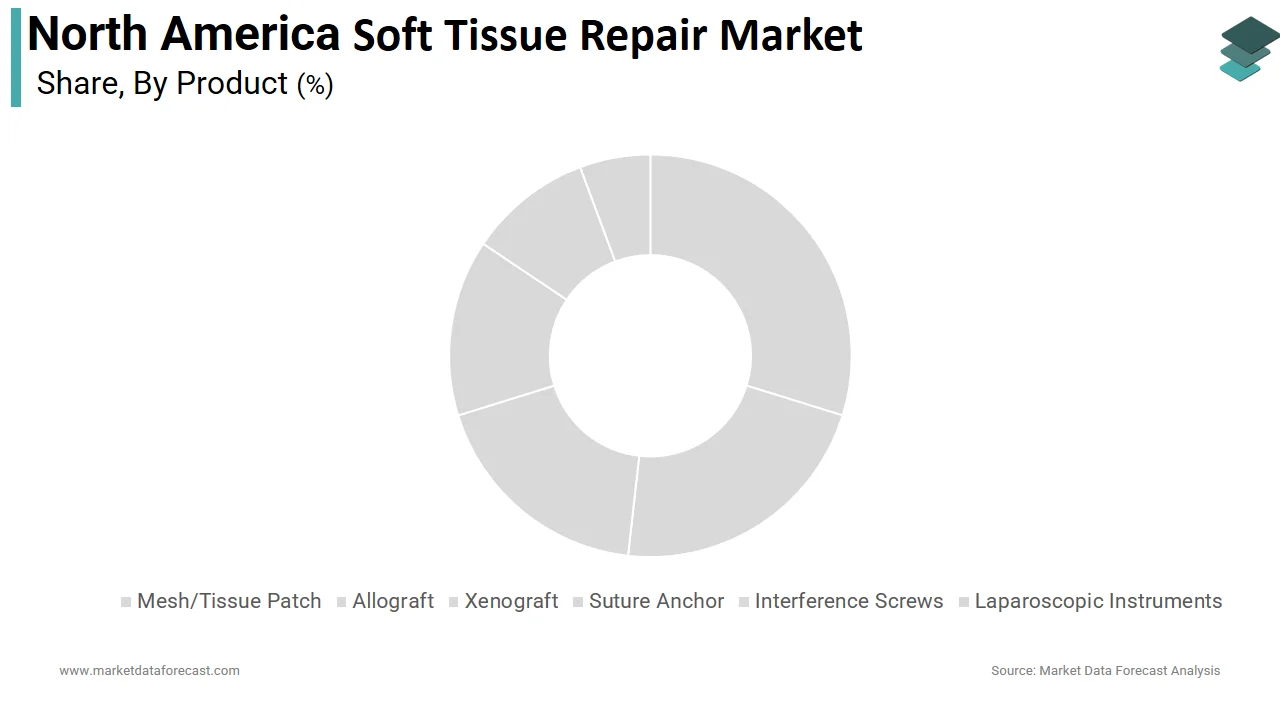
On the other hand, the allografts segment is expected to exhibit a noteworthy CAGR of 8.5% from 2026 to 2034 due to increasing preference for biologically active scaffolds that promote true tissue regeneration. This growth trajectory reflects a shift away from inert synthetic materials toward solutions that integrate with host tissue and reduce inflammatory responses. According to the American Association of Tissue Banks (AATB), the managed distribution of processed human musculoskeletal tissue grafts remains highly vital to fulfilling routine sports medicine, spinal reconstruction, and specialized trauma repair demands. Allografts are particularly favored in orthopedic applications such as rotator cuff repair and anterior cruciate ligament reconstruction, where biological integration is critical for long-term functional outcomes. The aging population seeks solutions that minimize complications associated with foreign body reactions, making human-derived tissues an attractive option. Advances in decellularization technologies have improved the safety profile of allografts by removing immunogenic cellular components while preserving the structural extracellular matrix. Regulatory clarity regarding tissue banking standards has enhanced surgeon confidence in product consistency and sterility. The rise of sports medicine specialists who prioritize return-to-play metrics drives demand for high-quality biological augmentations. Although costs are higher than synthetic alternatives, the reduced risk of chronic pain and infection justifies the expense for many patients and payers. Insurance coverage for allografts in specific indications continues to expand, facilitating broader access. The ability of allografts to serve as a scaffold for host cell infiltration supports natural healing processes aligning with the principles of regenerative medicine.
By Application Insights
In 2025, the orthopedic application segment held a 40.8% majority share of the North America soft tissue repair market because of the high prevalence of musculoskeletal injuries and degenerative conditions affecting tendons, ligaments, and cartilage. According to the National Safety Council (NSC), sports and recreational physical activities cause millions of musculoskeletal injuries annually in the United States, driving steady demand for orthopedic soft-tissue repair materials. As per epidemiological data compiled in orthopedic research profiles, rotator cuff tears represent a premier clinical challenge affecting approximately 2 million Americans each year, creating an active clinical arena for suture anchors, biological patches, and structural scaffolds. The aging demographic contributes significantly as degenerative tendonitis becomes more common among individuals over 50 years old. Minimally invasive arthroscopic techniques have become the standard of care, driving demand for specialized soft tissue repair devices compatible with small incisions. Professional and amateur athletes demand rapid recovery protocols favoring advanced biologics that accelerate healing. Reimbursement structures for orthopedic procedures are well established, ensuring consistent revenue streams for manufacturers. The expansion of ambulatory surgical centers facilitates higher procedure volumes by offering cost-effective outpatient options. Technological innovations such as knotless anchors and double-row fixation systems improve pullout strength and clinical outcomes, reinforcing the dominance of this segment. Collaboration between device manufacturers and orthopedic societies promotes education on best practices, further entrenching orthopedic applications as the primary driver of market growth.
However, the hernia repair applications segment is predicted to witness the highest CAGR of 7.2% during the forecast period owing to rising obesity rates and continuous surgical innovation. According to the Centers for Disease Control and Prevention (CDC) National Health and Nutrition Examination Survey (NHANES), adult obesity prevalence in the United States hovers at approximately 40.3%, representing a prominent systemic factor that raises physical intra-abdominal stress and elevates the baseline incidence of abdominal wall hernias. This epidemiological trend creates an expanding pool of patients requiring surgical intervention. Laparoscopic and robotic-assisted hernia repairs are gaining popularity due to reduced postoperative pain and faster return to normal activities, encouraging earlier surgical consultation. The development of composite meshes that combine synthetic strength with biological resorbability addresses previous concerns about adhesions and chronic pain. Surgeons are increasingly adopting preperitoneal placement techniques, which require specialized mesh products, driving product differentiation. Awareness campaigns by organizations like the American Hernia Society educate patients on the importance of timely repair, preventing complications such as strangulation. The shift towards outpatient surgery centers allows for higher throughput of hernia cases, reducing hospital stay costs. Insurance coverage for hernia repair is comprehensive, minimizing financial barriers for patients. Manufacturers focus on developing ergonomic delivery systems that simplify mesh placement during minimally invasive procedures. These factors collectively accelerate the adoption of advanced soft tissue repair solutions in hernia management, making it the most dynamic application segment.
COUNTRY LEVEL ANALYSIS
U.S. Soft Tissue Repair Market Analysis
The United States dominated the North America soft tissue repair market and accounted for an 85.2% share in 2025. This dominance of the US market was propelled by its advanced healthcare infrastructure and high volume of surgical procedures. The country benefits from a robust network of specialized orthopedic and general surgery centers that adopt cutting-edge repair technologies rapidly. According to the Agency for Healthcare Research and Quality (AHRQ) HCUP Database, musculoskeletal procedures and orthopedic conditions represent a dominant category of inpatient hospital stays and major operating room procedures in the United States, driving high utilization across the surgical supply chain. The presence of major medical device manufacturers fosters innovation and competitive pricing while ensuring widespread product availability. High healthcare expenditure per capita enables patients to access premium biologic grafts and advanced mesh systems often not covered in other regions. Regulatory pathways through the Food and Drug Administration provide clear guidelines for product approval. Although stringent, they ensure high safety standards that build clinician trust. The strong culture of sports participation across all age groups generates a steady stream of traumatic injuries requiring surgical repair. Medicare and private insurance schemes generally provide adequate reimbursement for reconstructive surgeries, supporting market stability. Academic medical centers conduct extensive clinical research validating new products and influencing treatment protocols globally. The concentration of key opinion leaders in the United States drives adoption trends that often ripple through the rest of the continent. This combination of financial resources, technological leadership, and clinical demand solidifies the United States' role as the primary engine of market growth.
Canada Soft Tissue Repair Market Analysis
Canada shows steady growth in the North American soft tissue repair market supported by its universal healthcare coverage system and rapidly aging demographics. As per the Canadian Institute for Health Information (CIHI) Surgical Diagnostics Review, healthcare monitoring indicates that a significant percentage of patients seeking non-emergency knee and hip joint replacements experience waits that extend past standard clinical target benchmarks, emphasizing the persistent structural pressure on provincial surgical capacities. An aging population leads to a higher incidence of degenerative soft tissue conditions such as rotator cuff tears and hernias requiring repair. Provincial health plans cover essential soft tissue repair procedures, ensuring equitable access for citizens, although coverage for premium biologics may vary by region. The Canadian healthcare system emphasizes cost-effectiveness, leading to gradual adoption of high-value products that demonstrate superior long-term outcomes. Government investments in digital health and surgical robotics facilitate minimally invasive repairs, which rely on specialized soft tissue devices. Local distributors partner with global manufacturers to ensure supply chain reliability across vast geographic areas. Clinical guidelines developed by the Canadian Orthopaedic Association promote standardized use of evidence-based repair techniques, influencing product selection. The rise in obesity rates mirrors trends in the United States, contributing to increased hernia repair cases. Public awareness campaigns encourage early intervention for musculoskeletal issues, preventing chronic disability. While market size is smaller than the United States, Canada offers stable growth potential driven by policy support and demographic shifts.
COMPETITIVE LANDSCAPE
The North America soft tissue repair market features intense competition characterized by a mix of multinational medical device corporations and specialized biotechnology firms. Large companies leverage their established distribution networks and broad product portfolios to dominate mainstream segments such as hernia mesh and orthopedic anchors. These entities benefit from significant research and development budgets, allowing them to introduce advanced biologics and synthetic composites regularly. Smaller niche players compete by focusing on specific indications like dural repair or regenerative dermatology, offering highly specialized solutions. Innovation in material science serves as a key differentiator, with companies striving to develop scaffolds that mimic native tissue properties more closely. Regulatory compliance with Food and Drug Administration standards creates high entry barriers favoring incumbents with robust quality systems. Price competition is moderate as clinical efficacy and surgeon preference often outweigh cost considerations in purchasing decisions. Collaborative relationships with key opinion leaders and academic institutions help brands gain credibility and influence treatment protocols. The market rewards companies that can demonstrate superior long-term outcomes and reduce complication rates. Continuous education and technical support are critical for maintaining loyalty among surgical professionals. Overall, the landscape remains dynamic with ongoing consolidation and technological advancement shaping competitive dynamics.
KEY MARKET PLAYERS
The leading companies operating in the North America soft tissue repair market include:
- LifeCell Corporation
- Organogenesis
- R. Bard Inc.
- Johnson & Johnson
- Covidien plc
- Arthrex Inc.
- Smith & Nephew plc
- Integra LifeSciences Corporation
- Acelity L.P. Inc.
- Ethicon Inc.
- Wright Medical Technology
- Zimmer Biomet Holdings Inc.
- Stryker Corporation
TOP PLAYERS IN THE MARKET
- Ethicon Inc maintains a strong presence in the North America soft tissue repair market through its comprehensive portfolio of surgical meshes and advanced wound care solutions. The company leverages its extensive distribution network to supply hospitals and ambulatory surgical centers with high-quality hernia repair products. Recent actions include the launch of next-generation biosynthetic absorbable meshes designed to reduce chronic pain and improve tissue integration. Ethicon strengthens its position by investing in surgeon education programs that promote best practices for minimally invasive repairs. The corporation focuses on clinical evidence generation to validate the long-term efficacy of its products. Strategic partnerships with healthcare providers facilitate the adoption of innovative techniques. Ethicon also emphasizes sustainability in manufacturing processes, aligning with corporate responsibility goals. These initiatives ensure continued relevance and trust among surgical professionals across the region.
- Acelity L.P. Inc contributes significantly to the North America soft tissue repair market through its specialized negative pressure wound therapy and biological matrix technologies. The company offers advanced dermal regeneration templates that support complex reconstructive surgeries and chronic wound management. Recent strategies involve expanding its product line with novel collagen-based scaffolds that enhance cellular migration and healing. Acelity strengthens its market position by acquiring complementary biotech firms to broaden its regenerative medicine capabilities. The firm collaborates with clinical researchers to demonstrate superior outcomes in difficult-to-heal wounds. Marketing efforts focus on cost-effectiveness and reduced hospital stay durations, appealing to payers and providers. Acelity also provides comprehensive training resources for healthcare teams, ensuring proper application of its technologies. This holistic approach supports improved patient recovery and solidifies its reputation as a leader in advanced wound care.
- Zimmer Biomet Holdings Inc plays a pivotal role in the North American soft tissue repair market by offering a wide range of orthopedic repair devices, including suture anchors and interference screws. The company integrates its soft tissue solutions with joint replacement systems, providing surgeons with complete procedural kits. Recent actions include the development of knotless anchor systems that simplify arthroscopic procedures and reduce operative time. Zimmer Biomet strengthens its position through digital health initiatives that connect surgeons with peer networks for knowledge sharing. The corporation invests in robotic-assisted surgery platforms that enhance precision in soft tissue balancing and fixation. Collaborations with sports medicine organizations help tailor products to the specific needs of athletic populations. Zimmer Biomet also focuses on supply chain resilience, ensuring consistent product availability. These efforts drive innovation and maintain its competitive edge in the dynamic orthopedic sector.
TOP STRATEGIES USED BY KEY MARKET PARTICIPANTS
Key players in the North America soft tissue repair market primarily focus on product innovation and strategic acquisitions to expand their portfolios. Companies invest heavily in research and development to create bioactive scaffolds that promote faster tissue regeneration and reduce rejection risks. Mergers and acquisitions allow larger corporations to integrate niche technologies and access new customer segments efficiently. Strategic partnerships with hospitals and surgical centers facilitate clinical trials and real-world evidence collection supporting regulatory approvals. Marketing efforts emphasize cost-effectiveness and improved patient outcomes to secure favorable reimbursement policies from insurance providers. Expansion into outpatient surgical centers addresses the shift towards minimally invasive procedures and same-day discharges. Digital health tools are integrated to provide surgeons with data-driven insights and training resources. Supply chain optimization ensures reliable delivery of temperature-sensitive biological products. These strategies collectively enhance market presence and drive sustainable growth in a competitive landscape.
MARKET SEGMENTATION
This research report on the North America soft tissue repair market is segmented and sub-segmented into the following categories.
By Product
- Mesh/Tissue Patch
- Allograft
- Xenograft
- Suture Anchor
- Interference Screws
- Laparoscopic Instruments
By Application
- Hernia
- Dural
- Orthopedic
- Skin
- Dental
- Vaginal
- Breast Augmentation
By Country
- United States
- Canada
- Mexico
- Rest of North America