- Product Description Description
- Table of Contents TOC
- List of Table & Figure LOT
- Get Free Sample PDF Sample PDF
Market Size, 2025
$32.15 BnMarket Estimate, 2026
$34.07 BnMarket Forecast, 2034
$54.18 BnCAGR, 2026–2034
5.97%Executive Summary: North America Specialty Food Ingredients Market
- Market Scope: Regional analysis of North America's specialty food ingredients sector, detailing functional ingredients, flavor enhancements, processing aids, regulatory compliance, and country-level profiles.
- Market Valuation: Valued at USD 32.15 billion in 2025, reaching USD 34.07 billion in 2026, and projected to expand to USD 54.18 billion by 2034, growing at a robust CAGR of 5.97% from 2026 to 2034.
- Primary Growth Drivers: Rising rates of diabetes and obesity prompting consumer focus on healthier lifestyles, demand for health and wellness ingredients, expanding brewery sector, and complex food processing procedures.
Key Market Segment Metrics
| Category | Leading Segment (Base Position) | Fastest-Growing / High-Growth Segment |
|---|---|---|
| By Ingredients | Functional Food Ingredients (dominated with the largest market share and demand driven by health and wellness preferences) | Nutraceuticals (escalating rapidly in the market with a high CAGR fueled by preventive healthcare and dietary supplement demand) |
| By Application | Bakery & Confectionery and Convenience Foods (held major market positions supported by widespread processed product manufacturing) | Functional Foods and Dietary Supplements (projected as high-growth application areas responding to consumer wellness needs) |
| By Region | United States (market leader in the region backed by high obesity and diabetic risk demographics and major food processing industries) | Canada (fast-growing market expanding due to clean-label initiatives and rising consumer preference for organic functional foods) |
Major Market Players & Industry Landscape
Market Structure: Advanced and consolidated market environment where major ingredient suppliers collaborate closely with food and beverage giants to innovate clean-label formulations under strict regulatory frameworks.
Key Companies: Archer Daniel Midland, Royal DSM N.V., Kerry Group, Cargill Inc., E.I. du Pont de Nemours and Company, Givaudan Flavors, Sensient Technologies, Chr. Hansen, Ingredion Incorporated, and Tate & Lyle PLC.
 Download Free Sample Report
North America Specialty Food Ingredients Market Size
The North American specialty food ingredients market size was expected to be worth USD 32.15 billion in 2025 and is anticipated to be worth USD 54.18 billion by 2034, up from USD 34.07 billion in 2026, growing at a CAGR of 5.97% during the forecast period.
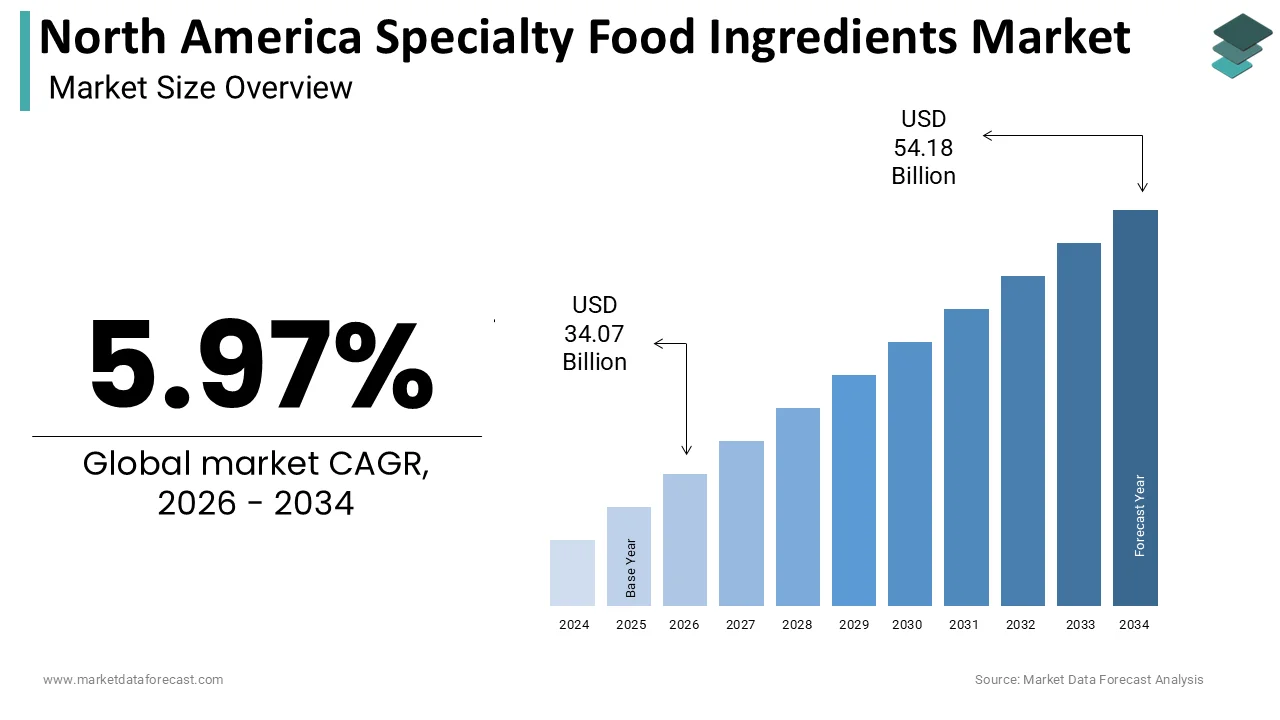
The specialty food ingredients are hydrocolloids, enzymes, and preservatives that enhance texture, flavor, and nutritional value in processed foods. According to the Centers for Disease Control and Prevention, approximately 60% of adults in the United States have at least one chronic disease often linked to poor dietary habits, which drives demand for healthier formulated products. The food and beverage processing industry is the largest manufacturing sector in the country by economic output. Specialty ingredients serve as essential tools for innovation, allowing brands to meet evolving consumer expectations for clean labels and functional benefits. Regulatory frameworks increasingly mandate transparency in labeling, influencing formulation strategies.
MARKET DRIVERS
Rising Consumer Demand for Clean Label and Natural Products
The rising consumer demand for clean label and natural products is amplifying the growth of the North America speciality food ingredients market. Many consumers actively look for simple and familiar ingredients on food labels, indicating a strong preference for transparency. This shift forces companies to invest in natural preservatives, plant-based texturizers, and organic flavor enhancers that meet these expectations. Consumers associate short ingredient lists with higher quality and safety, driving sales of products featuring specialty natural ingredients. Manufacturers must reformulate existing portfolios to remove artificial colors and flavors without compromising shelf life or taste. The clean label trend extends beyond health-conscious demographics to mainstream shoppers seeking authenticity. Retailers prioritize stocking brands that align with these values, creating pressure on suppliers to provide compliant solutions. Innovation in extraction technologies allows for the production of high-purity natural ingredients at scalable volumes. Regulatory support for natural definitions encourages further adoption across various food categories. This driver ensures sustained growth, as trust in processed foods remains fragile. Brands leverage clean label claims to command premium pricing and foster loyalty.
Expansion of Functional and Fortified Food Sectors
The expansion of functional and fortified food sectors increases the need for bioactive compounds and nutrient delivery systems, which is also bolstering the growth of the North America specialty food ingredients market. The nutritional supplements and functional foods continue to grow as consumers seek preventive health solutions through diet. This trend amplifies demand for specialty ingredients, such as probiotics, prebiotics, protein isolates, and vitamin premixes that offer specific health benefits. Aging populations and rising healthcare costs encourage individuals to adopt diets that support immune function and metabolic health. Food manufacturers collaborate with ingredient suppliers to develop products that address specific wellness goals like gut health or energy enhancement. The integration of functional ingredients into everyday foods like beverages and snacks makes health benefits more accessible. Scientific validation of ingredient efficacy becomes crucial for marketing claims and regulatory compliance. Innovation in encapsulation technologies protects sensitive nutrients during processing and digestion. This driver creates substantial opportunities for suppliers who can demonstrate clinical benefits and stability. The convergence of food and pharmaceutical industries accelerates the development of novel functional ingredients.
MARKET RESTRAINTS
High Costs of Premium and Sustainable Ingredients
The high costs of premium and sustainable ingredients limit adoption among price-sensitive manufacturers and consumers, which is impeding the growth of the North America specialty food ingredients market. The volatility in agricultural commodity prices directly impacts the cost of raw materials for natural and organic specialty ingredients,c ausing budget constraints. This financial pressure forces many companies to opt for cheaper conventional alternatives, despite consumer preference for sustainable options. Small and medium enterprises often lack the capital to invest in expensive certified organic or non-GMO ingredients. Supply chain complexities for sourcing rare botanicals or ethically produced compounds add to the overall expense. End users may perceive functional foods as luxury items, leading to reduced purchase frequency during economic downturns. Maintenance of certification standards requires rigorous documentation and auditing, which increases operational overhead. Budgetary limitations in public sector feeding programs can delay or cancel initiatives involving premium ingredients. The lack of standardized pricing models creates uncertainty for buyers comparing different sustainable sources.
Complex Regulatory Landscape and Approval Processes
The complex regulatory and approval processes that impose rigorous safety assessments and labeling requirements for novel compounds are also limiting the growth of the North America specialty food ingredients market. New food additives and generally recognized as safe substances require extensive toxicological data and clinical studies before entry, creating significant time delays. These regulations demand substantial investment in research and legal compliance, which increases time to market and development costs. Suppliers must navigate divergent standards between the United States and Canada, complicating cross-border distribution strategies. The prohibition of certain synthetic substances limits formulation flexibility and forces costly reformulations. Regulatory agencies continuously update permitted lists based on emerging scientific evidence, creating uncertainty for long-term planning. Compliance requires dedicated legal and scientific teams, straining resources for smaller enterprises. The complexity of documenting sourcing and processing methods adds administrative overhead. Any failure to meet standards can result in product recalls and reputational damage.
MARKET OPPORTUNITIES
Advancements inPlant-Basedd and Alternative Protein Technologies
The advancements in plant-based and alternative protein technologies that enable the creation of meat and dairy analogs are to amplify the growth of the North America specialty food ingredients market. The investment in alternative protein startups has surged as consumers seek sustainable and ethical food choices, driving demand for specialized texturizers and flavor maskers. This shift reduces reliance on animal agriculture and minimizes environmental impact, while meeting growing dietary preferences. Precision fermentation and extrusion technologies allow for the creation of realistic textures and flavors in plant-based products. Manufacturers can innovate faster by engineering ingredients that mimic the mouthfeel and juiciness of animal proteins. Consumers benefit from lower cholesterol and environmentally friendly options that do not compromise on taste. Regulatory acceptance of novel protein sources is growing as safety data accumulates. Partnerships between tech firms and traditional ingredient houses accelerate commercialization of next-generation products.
Growth in Personalized Nutrition and Digital Health Integration
The growth in personalized nutrition and digital health integration is tailoring dietary solutions to individual biological needs, which is expected to accelerate the growth of the North America specialty food ingredients market. The advancements in genetic testing and microbiome analysis enable the creation of customized food products that optimize health outcomes for specific individuals. Consumers seek multisensory experiences and targeted benefits in foods that align with their unique metabolic profiles. Ingredient manufacturers utilize data analytics to develop bespoke blends of vitamins, minerals, and bioactives for niche demographic groups. The rise of direct-to-consumer brands facilitates the distribution of personalized meal kits and supplements. Innovation in microencapsulation allows for controlled release of nutrients based on individual absorption rates. This application segment offers higher margin potential compared to commoditized bulk ingredients. Manufacturers can differentiate products through exclusive formulations that build brand loyalty. Cross-industry collaborations enable the transfer of expertise from healthcare to food production. The emotional connection consumers form with personalized health solutions enhances product stickiness.
MARKET CHALLENGES
Supply Chain Volatility and Raw Material Scarcity
Supply chain volatility and raw material scarcity disrupt production schedules and erode profit margins, which is a major challenge for the growth of the North America specialty food ingredients market. The global supply chain disruptions have led to significant delays and increased costs for imported specialty ingredients, such as exotic spices and hydrocolloids. This unpredictability exposes suppliers to risks from geopolitical tensions, trade disputes, and extreme weather events that devastate crop yields. Price fluctuations make it difficult for manufacturers to maintain stable costing models for downstream clients. The scarcity of specific botanicals leads to intense competition for limited resources among major players. Substitution with synthetic alternatives may compromise product quality and brand positioning in clean label segments. Logistics challenges add another layer of complexity to timely delivery of perishable ingredients. Inventory management becomes critical but costly as companies buffer against potential shortages. This challenge forces manufacturers to diversify sourcing geographies, which increases operational complexity. Long-term contracts offer some stability but limit flexibility to capitalize on spot market opportunities.
Consumer Awareness and Misinformation
Consumer awareness of processed foods and novel ingredients also impedes the growth of the North America specialty food ingredients market. A significant portion of the population expresses concern about the safety of food additives and genetically modified organisms, despite scientific consensus on their safety. This perception gap leads to rejection of beneficial specialty ingredients due to fear of unknown chemicals or processing methods. Social media amplifies misleading information about ingredient safety, causing panic and boycotts of certain products. Manufacturers face difficulties in communicating the benefits of functional ingredients amidst noise and confusion. Educational efforts often fail to overcome deep-seated biases against industrial food production. The clean label movement sometimes demonizes safe and effective additives, leading to unnecessary reformulation costs. Brands must invest heavily in transparent communication and third-party certifications to rebuild trust.
REPORT COVERAGE
| REPORT METRIC | DETAILS |
| Market Size Available | 2025 to 2034 |
| Base Year | 2025 |
| Forecast Period | 2026 to 2034 |
| CAGR | 5.97% |
| Segments Covered | By Ingredient, Application, and Region |
| Various Analyses Covered | Global, Regional & Country Level Analysis; Segment-Level Analysis; DROC, PESTLE Analysis; Porter’s Five Forces Analysis; Competitive Landscape; Analyst Overview of Investment Opportunities |
| Regions Covered | U.S., Canada, and Rest of North America |
| Market Leaders Profiled | Archer Daniel Midland, Royal DSM N. V, Kerr-Group, Cargill Inc., E. I. DuPont de Nemours and Company, Givaudan Flavors, Sensient Technologies, CHR. Hansen, Ingredion Incorporated, and Tate & Lyle PLC |
SEGMENTAL ANALYSIS
By Ingredient Insights
The functional food ingredients segment was the largest, accounting for 44.3% of the North America Specialty Food Ingredients Market share in 2025 due to its role in enhancing texture stability and nutritional value. The functional ingredients, such as hydrocolloids and fibers, are essential for maintaining product quality in reduced-fat and sugar formulations, which dominate current consumer preferences. This technical necessity drives their widespread adoption across bakery, dairy, and beverage sectors where structural integrity is paramount. Manufacturers rely on these components to replicate the mouthfeel and viscosity lost during health-focused reformulation processes. The versatility of functional ingredients allows them to serve multiple purposes, including emulsification, gelling, and thickening. Consumer demand for clean label products encourages the use of plant-based functional ingredients like pectin and guar gum. The segment benefits from established supply chains and consistent raw material availability. Innovation in extraction technologies improves the purity and performance of these natural compounds. Cost efficiency makes functional ingredients accessible to a broad range of food manufacturers. Brand owners prioritize consistency to maintain consumer trust across different batches.
The sugar substitutes segment is likely to grow at the fastest CAGR of 11.2% from 2026 to 2034 with rising health consciousness and regulatory pressure. Excessive added sugar consumption is linked to an increased risk of heart disease, prompting millions of consumers to seek low-calorie alternatives. This health imperative fuels rapid adoption of natural sweeteners like stevia, monk fruit, and allulose in beverages and snacks. The compound annual growth rate for this segment exceeds other categories due to innovation in taste masking technologies. Consumers increasingly reject artificial sweeteners in favor of plant-derived options that offer zero or low calories. Food manufacturers invest heavily in reformulating products to meet labeling requirements for reduced sugar content. Regulatory initiatives such as front-of-package warning labels accelerate the shift away from high-sugar formulations. The rise of diabetes and obesity rates creates a sustained demand for glycemic-friendly ingredients. Innovation in fermentation processes lowers the production costs of rare natural sweeteners. Partnerships between ingredient suppliers and beverage companies drive volume growth in ready-to-drink categories.
By Application Insights
The bakery and confectionery segment held a significant share of the North America Specialty Food Ingredients Market in 2025 due to high consumption volumes and frequent purchase cycles. The bakery industry remains one of the largest food manufacturing sectors in the United States, requiring substantial quantities of specialty enzymes and emulsifiers for production efficiency. This massive scale drives consistent demand for ingredients that improve dough strength, shelf life, and texture. Consumers view baked goods as staple items and occasional treats, ensuring steady market presence. Manufacturers utilize specialty starches and preservatives to maintain freshness in distributed products. The trend toward artisanal and whole grain breads increases the need for functional ingredients that support complex formulations. Confectionery producers rely on specialized flavors and texturizers to create innovative candy and chocolate products. Retail expansion and e-commerce growth enhance accessibility to diverse bakery items.
The dietary supplements segment is emerging at the fastest CAGR of 7.5% from 2026 to 2034, with the increasing demand for high-purity nutraceutical ingredients, such as vitamins, minerals, and botanical extracts. Consumers seek personalized nutrition solutions to support immune function, mental clarity, and physical performance. The rise of direct-to-consumer brands facilitates the distribution of specialized supplement formulations. Innovation in delivery systems like gummies and soft chews makes supplementation more appealing to younger demographics. Regulatory clarity regarding good manufacturing practices ensures product safety and quality consistency. The aging population increases focus on joint health and cognitive support ingredients. Social media influences trends in specific nutrients like collagen and probiotics. Manufacturers collaborate with healthcare providers to develop evidence-based formulations.
REGIONAL ANALYSIS
United States Specialty Food Ingredients Market Analysis
The United States was the largest contributor in the North America Specialty Food Ingredients Market, occupying 82.3% of the share in 2025, with mature consumption patterns and high innovation capacity. The food and beverage processing industry is the largest manufacturing sector in the country, driving immense demand for advanced ingredient solutions. This economic significance underscores the critical role of specialty ingredients in maintaining competitiveness and product quality. The presence of major global ingredient manufacturers facilitates rapid commercialization of new technologies. Consumer demand for clean label and functional foods drives reformulation activities across all categories. Regulatory frameworks from the Food and Drug Administration provide clear guidelines for ingredient safety and labeling. The diverse demographic profile supports niche markets for ethnic and specialized dietary products. Investment in research and development leads to breakthroughs in plant-based and alternative protein ingredients. Retailers prioritize sustainability and transparency, influencing sourcing decisions for specialty components.
Canada Specialty Food Ingredients Market Analysis
Canada specialty food ingredients market was ranked second with an 11.2% share in 2025 due to stringent health regulations and growing consumer awareness. The industrial base creates steady demand for specialty ingredients that enhance product value and safety. Canadian consumers are increasingly interested in natural and organic products, prompting manufacturers to source clean label ingredients. Government initiatives promote healthy eating through dietary guidelines that encourage reduced sodium and sugar intake. The presence of major agricultural producers supports the supply of raw materials for ingredient extraction. Trade agreements facilitate the import and export of specialty components with key global partners. Innovation hubs in major cities foster collaboration between academia and industry for new product development. The market emphasizes sustainability and ethical sourcing, aligning with corporate social responsibility goals. Retailers expand their offerings of health-focused products to meet evolving consumer preferences.
COMPETITIVE OVERVIEW
The competitive landscape of the North America Specialty Food Ingredients Market features a mix of multinational ingredient giants and specialized regional players, who vie for dominance through innovation and regulatory compliance. Major participants leverage extensive research and development resources to create proprietary technologies that differentiate their offerings in terms of functionality and sustainability.
KEY MARKET PLAYERS
Major Key Players in the North American specialty Food Ingredients Market include
- Archer Daniel Midland
- Royal DSM N.V
- Kerry Groups
- Cargill Inc
- E. I. DuPont de Nemours and Company
- Givaudan Flavors
- Sensient Technologies
- CHR. Hansen
- Ingredion Incorporated
- Tate & Lyle PLC
Top Strategies Used by key participants
Competition intensifies as companies strive to meet stringent government health targets while satisfying consumer demand for clean label products. Strategic collaborations between ingredient suppliers and food manufacturers foster co-creation of customized solutions for specific applications. Mergers and acquisitions remain common tactics to expand geographic presence and technical capabilities in emerging niche markets. Smaller firms compete by offering unique natural alternatives such as rare botanical extracts or fermented powders that appeal to premium trends. Price pressure from commoditized bulk ingredients forces larger players to emphasize value-added services such as technical support and regulatory guidance.
Leading Players in the Market
- Ingredion Incorporated operates as a global leader in the North America Specialty Food Ingredients Market by leveraging its extensive expertise in texturants and sweeteners. The company focuses on creating innovative solutions, such as plant-based proteins and clean-label starches that meet evolving consumer preferences. In recent years, Ingredion has strengthened its position by expanding its application centers in the United States to support local manufacturers with rapid prototyping. Their commitment to sustainability drives the development of eco-friendly ingredients that reduce environmental impact. The firm actively collaborates with food processors to provide customized reformulation services for diverse product categories. Ingredion also invests heavily in consumer research to understand regional taste preferences and dietary habits. This approach enhances product acceptance and accelerates market adoption across various segments.
- Cargill Incorporated contributes significantly to the North America Specialty Food Ingredients Market through its integrated supply chain and broad portfolio of cocoa oils and specialty starches. The company utilizes advanced blending technologies to create balanced solutions that maintain texture and shelf life. Recent actions include strengthening partnerships with local distributors to enhance market reach and customer support across the region. Cargill emphasizes science-based nutrition to help manufacturers meet stringent regulatory targets for health claims. They actively engage in educational initiatives to raise awareness about the benefits of sustainable sourcing among industry stakeholders. The firm supports innovation in plant-based proteins, which often require specific fat profiles for optimal flavor.
- Archer Daniels Midland Company plays a pivotal role in the North America Specialty Food Ingredients Market by providing a wide range of natural and functional ingredients, including enzymes and probiotics. The company excels in sustainable sourcing practices, which secure long-term supplies of key raw materials like corn and soy. Archer Daniels Midland has recently enhanced its market position by launching new clean label platforms tailored for North American culinary applications. Their proprietary technologies preserve the integrity of flavors while enhancing nutritional profiles significantly. The firm collaborates with chefs and food scientists to develop culturally relevant healthy recipes. Archer Daniels Midland invests in community health programs to promote balanced diets and reduce chronic disease risks. Their diverse portfolio includes both standard and specialized grades catering to varied industrial needs.
MARKET SEGMENTATION
This research report on the North America specialty food ingredients market has been segmented and sub-segmented based on ingredients, application, and region.
By Ingredients
- Functional Food Ingredients
- Sugar Substitutes
- Flavors
- Specialty Starches
- Acidulants
- Preservatives
- Emulsifiers and Colors
- Enzymes
- F&B Starter cultures
- Nutraceuticals
By Application
- Bakery & Confectionery
- Beverages
- Dairy & Frozen foods
- Convenience foods
- Meat Products & Functional Foods and Beverages
- Dietary Supplements
By Region
- US
- Canada
- Rest of North America