- Product Description Description
- Table of Contents TOC
- List of Table & Figure LOT
- Get Free Sample PDF Sample PDF
Market Size, 2025
$48.54 BnMarket Estimate, 2026
$50.12 BnMarket Forecast, 2034
$64.73 BnCAGR, 2026–2034
3.25%Global Orange Market Report Summary
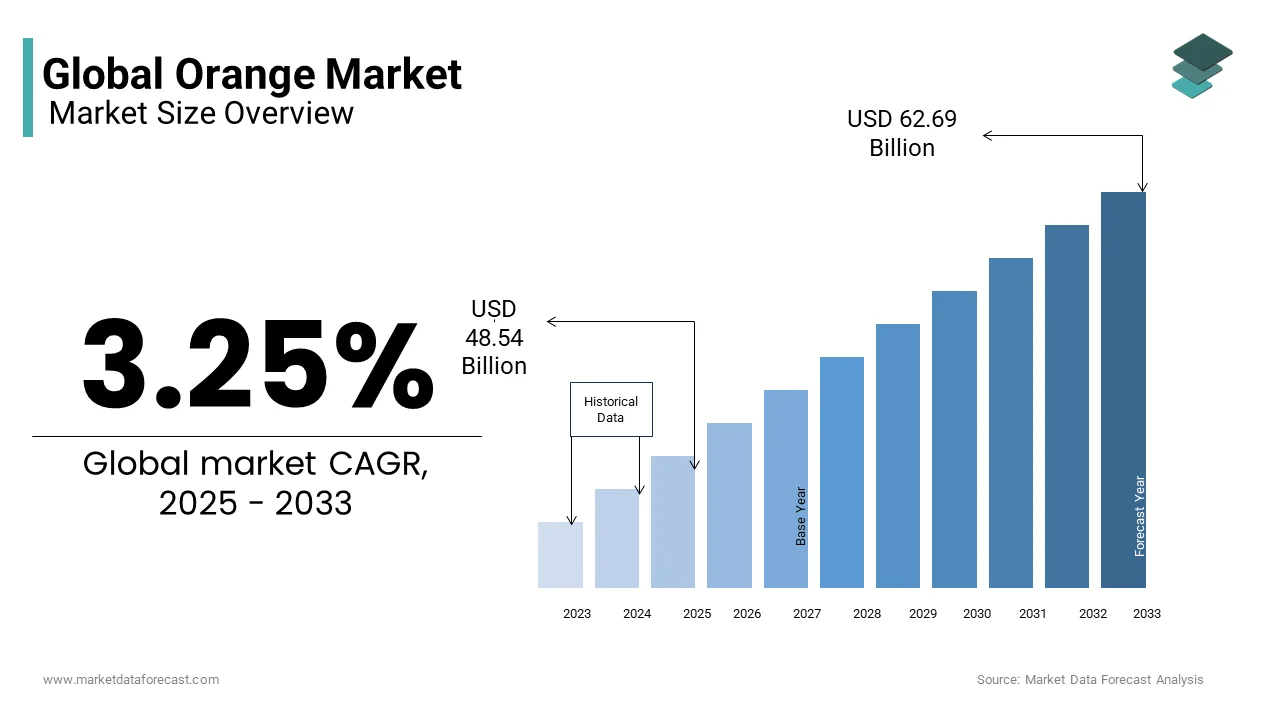
The global orange market was valued at USD 48.54 billion in 2025, is expected to reach USD 50.12 billion in 2026, and is projected to hit USD 64.73 billion by 2034, growing at a CAGR of 3.25% from 2026 to 2034. Market growth is fueled by rising health consciousness, expanding consumption of processed fruit products, and increasing demand for citrus-based ingredients in beverages, snacks, and nutritional products. Strong production bases in Latin America, expanding supply chains, and growing functional food preferences further support market expansion.
Key Market Trends
- Rising consumption of citrus juice and concentrates in the food and beverage industry.
- The growing demand for natural vitamin C sources is driven by consumer wellness trends.
- Increased adoption of processed orange products due to longer shelf life, convenience, and industrial usage.
- Expansion of export-oriented cultivation in developing countries, especially in South America and Africa.
- Strengthening the use of oranges in nutraceuticals, bakery items, and ready-to-drink beverages.
Segmental Insights
- Based on product type, processed oranges dominated the market with 55.7% volume share in 2024, supported by extensive demand for juices, concentrates, and flavor extracts.
- Based on application, the food and beverage sector remained the leading consumer segment due to strong integration of oranges in juices, packaged foods, flavoring systems, and wellness-based product formulations.
Regional Insights
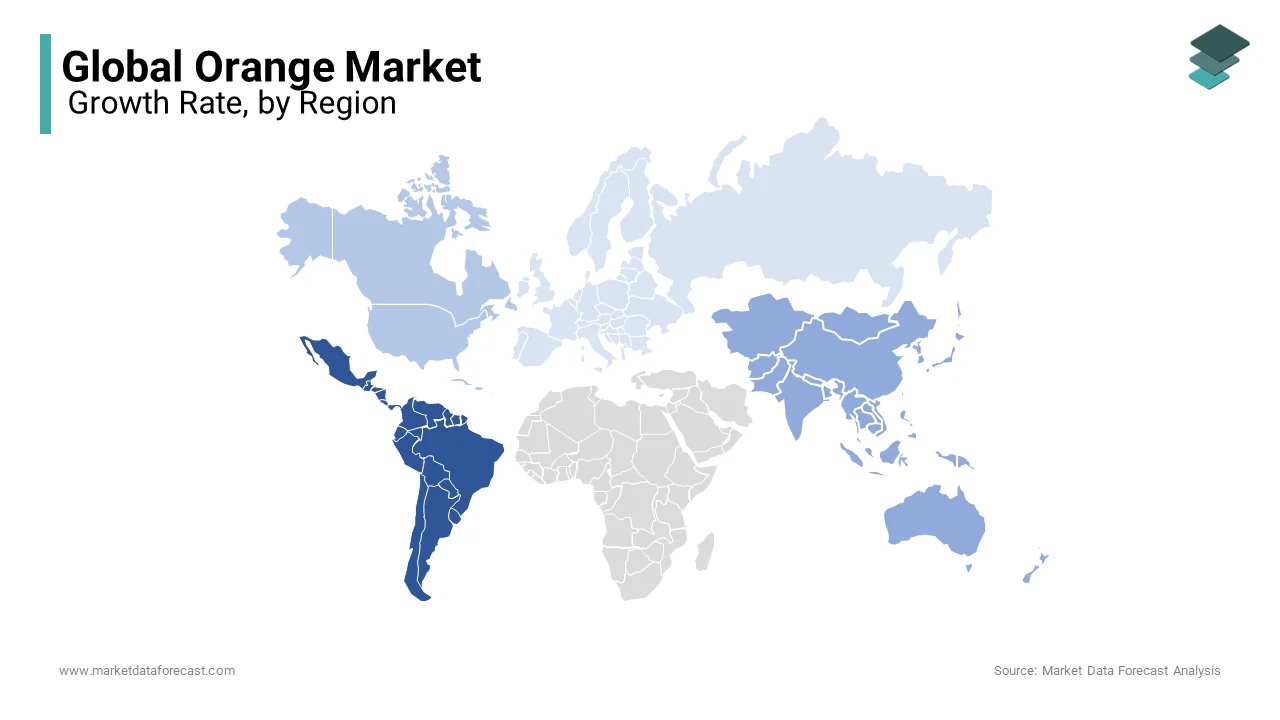
- Latin America led the global orange market in 2024 with a 39.3% share, driven by Brazil’s leadership in cultivation and exports.
- Asia Pacific is witnessing rapid demand acceleration, backed by rising incomes, urbanization, and health awareness, with China emerging as the largest consumer.
- North America shows stable demand with strong dependence on processed products, particularly juice consumption in the U.S.
- Europe serves as a major importer due to limited production capacity, importing over 1.2 million metric tons of fresh oranges in 2023.
- The Middle East & Africa region holds a notable share, supported by South Africa’s export strength and Egypt’s growing supply role to Arab nations.
Competitive Landscape
The global orange market is moderately fragmented, with producers, processors, and exporters focusing on supply chain efficiency, quality enhancement, and market penetration. Key players include Berje Inc., Citrosuco, Citrus World Inc., Hyatt Fruit Co., Indian River Fruit Co., LemonConcentrate SLU, Nielsen Citrus Products Co. Inc., Paradise Juice Pvt. Ltd., Perricone Farms, Schacht Groves, Sequoia Orange Co. Inc., Sunrise Fruits Company SL, The Fruit Co., and Trinity Fruit Co. Companies are emphasizing processing capacity expansion, export network strengthening, and innovation in citrus-based beverage and ingredient offerings to maintain competitive advantage.
 Download Free Sample Report
Global Orange Market Size
The global orange market size was valued at USD 48.54 billion in 2025 and is anticipated to reach USD 50.12 billion in 2026 to reah USD 64.73 billion by 2034, growing at a CAGR of 3.25% during the forecast period from 2026 to 2034.
The orange market encompasses the cultivation, processing, and global distribution of Citrus sinensis, a widely consumed fruit prized for its high vitamin C content, natural sweetness, and versatility in fresh and processed forms. According to the Food and Agriculture Organization of the United Nations, oranges are grown in over 140 countries. As per the International Citrus Association, approximately 45% of global orange production is processed into juice, while the remainder is sold fresh, reflecting dual demand streams. The crop thrives in subtropical climates, with Brazil, the United States, China, and India leading in output, each adapting cultivation to regional dietary and industrial needs.
MARKET DRIVERS
Rising Consumer Demand for Immunity-Boosting and Vitamin-Rich Foods
The growing emphasis on preventive health has elevated oranges as a key source of immune-supportive nutrients, particularly vitamin C and flavonoids. This health-driven demand is reinforcing orange consumption across age groups and geographies, particularly in fast-growing middle-class populations.
Expansion of the Global Orange Juice Industry and Cold Chain Infrastructure
The processed orange segment, particularly juice, remains a dominant force in market demand, supported by advancements in preservation and distribution. Innovations in aseptic packaging and cold chain logistics have extended shelf life and enabled long-distance transport without spoilage. These developments ensure consistent demand for industrial-grade oranges, sustaining large-scale cultivation in key producing regions.
MARKET RESTRAINTS
Vulnerability to Citrus Greening Disease (Huanglongbing)
Citrus greening, caused by the bacterium Candidatus Liberibacter asiaticus and spread by the Asian citrus psyllid, has devastated orange production in major growing regions. According to the U.S. Department of Agriculture, Florida’s orange output has declined by over 70% since 2003 due to the disease, with production falling from 242 million boxes to less than 20 million in 2023. The University of Florida’s Institute of Food and Agricultural Sciences estimates that the disease costs the U.S. citrus industry over $4 billion annually in lost revenue and control measures. Despite research into resistant rootstocks and biological controls, no complete cure exists, and the pathogen continues to spread, threatening the long-term viability of commercial orange farming in subtropical zones.
Water Scarcity and Irrigation Constraints in Key Growing Regions
Orange cultivation is highly dependent on a consistent water supply, making it increasingly vulnerable to drought and aquifer depletion. According to the World Resources Institute, California, which produces 70% of U.S. fresh oranges, faces "extremely high" baseline water stress, with groundwater levels in the Central Valley declining by 30 meters in some areas since 2000. The South African Department of Water and Sanitation reports that the Western Cape, a major citrus export zone, experienced a 40% reduction in dam levels during the 2018 drought, forcing growers to fallow orchards. The International Water Management Institute estimates that producing one kilogram of oranges requires 560 liters of water, a figure that becomes unsustainable under prolonged dry conditions. These hydrological pressures are compelling growers to adopt drip irrigation and drought-tolerant rootstocks, but such adaptations require capital investment beyond the reach of many smallholders.
MARKET OPPORTUNITY
Development of Value-Added Orange Byproducts and Circular Economy Models
The processing of oranges generates substantial co-products, peel, pulp, and seeds, that are increasingly being repurposed into high-value applications. According to the European Commission’s Bioeconomy Strategy, citrus waste contains up to 30% of the fruit’s bioactive compounds, including pectin, limonene, and polyphenols. In India, startups like Citrusol are commercializing essential oils and natural preservatives from waste biomass, reducing landfill use and generating additional revenue. These innovations are transforming waste streams into profitable segments, enhancing sustainability and profitability across the orange value chain.
Adoption of Precision Agriculture and Smart Farming Technologies
The integration of digital tools such as satellite imaging, soil sensors, and AI-driven analytics is revolutionizing orange cultivation efficiency. According to the Food and Agriculture Organization, precision irrigation systems have reduced water use in Spanish citrus orchards by 25% while maintaining yield. The University of California Cooperative Extension found that orchards using sensor-based nutrient management increased fruit quality and reduced fertilizer use by 18%. Additionally, blockchain-enabled traceability platforms are being adopted by exporters in South Africa to meet EU import requirements for pesticide residue reporting. As climate pressures mount, these technologies are enabling growers to optimize inputs, reduce losses, and meet the rising bar for sustainable certification in global markets.
MARKET CHALLENGES
Climate Variability and Unpredictable Flowering and Harvest Cycles
Orange production is highly sensitive to temperature fluctuations, with unseasonal rains, frost, and heatwaves disrupting flowering and fruit development. According to the Intergovernmental Panel on Climate Change, the Mediterranean basin has experienced a 1.2°C rise in average temperatures since 1980, leading to earlier blooming and increased fruit drop in Spain and Italy. In India, the Indian Meteorological Department notes that erratic monsoon patterns have delayed harvesting in Maharashtra, affecting export schedules. These climatic disruptions reduce yield predictability, complicate supply planning, and increase price volatility, challenging both small-scale farmers and large exporters reliant on consistent production cycles.
Trade Barriers and Phytosanitary Regulations in International Markets
Global orange trade is increasingly constrained by stringent phytosanitary standards designed to prevent the spread of pests and diseases. The European Food Safety Authority enforces maximum residue levels (MRLs) for over 500 pesticides, requiring rigorous testing for exporters. These regulatory hurdles necessitate costly certifications, cold treatments, and inspection protocols, particularly disadvantaging small producers lacking access to compliance infrastructure and delaying market entry for emerging exporters.
REPORT COVERAGE
| REPORT METRIC | DETAILS |
| Market Size Available | 2025 to 2034 |
| Base Year | 2025 |
| Forecast Period | 2026 to 2034 |
| CAGR | 3.25% |
| Segments Covered | By Product, Application, and Region |
| Various Analyses Covered | Global, Regional & Country Level Analysis, Segment-Level Analysis, DROC, PESTLE Analysis, Porter’s Five Forces Analysis, Competitive Landscape, Analyst Overview on Investment Opportunities |
| Regions Covered | North America, Europe, APAC, Latin America, Middle East & Africa |
| Market Leaders Profiled | Berje Inc., Citrosuco, Citrus World Inc., Hyatt Fruit Co., INDIAN RIVER FRUIT Co., LEMONCONCENTRATE SLU, Nielsen Citrus Products Co. Inc., Paradise Juice Pvt. Ltd, Perricone Farms, Schacht Groves, SEQUOIA ORANGE Co. Inc, SUNRISE FRUITS COMPANY SL, The Fruit Co., Trinity Fruit Co |
SEGMENTAL ANALYSIS
By Product Insights
The processed orange segment held a 55.7% share of the global orange market by volume in 2024. This dominance is primarily driven by the industrial-scale conversion of oranges into juice, concentrates, and flavoring agents for the global beverage industry.

The fresh orange segment is expanding at a CAGR of 6.3% from 2025 to 2033. It is due to rising consumer preference for whole fruits and clean-label eating. The U.S. Centers for Disease Control and Prevention emphasizes that whole fruit consumption provides higher fiber and lower glycemic impact than juice, influencing dietary guidelines. Additionally, the rise of fruit subscription boxes and e-commerce platforms like Alibaba and Amazon Fresh has improved access, particularly in Asia and Europe, where convenience and food safety are key purchasing drivers.
By Application Insights
The food and beverage sector accounted for a substantial share of global orange utilization in 2024. This lead share is sustained by the dual role of oranges as a fresh fruit and a critical ingredient in juices, jams, desserts, and flavor enhancers. Additionally, orange zest and essential oils are widely used in confectionery and bakery products.
The pharmaceutical application of oranges is growing at a CAGR of 8.7% from 2025 to 2033. It is driven by increasing use of citrus bioactives in nutraceuticals and drug formulations. Oranges are a rich source of vitamin C, hesperidin, and flavonoids, which are being incorporated into immune-boosting supplements and anti-inflammatory medications. As preventive healthcare gains traction, the demand for natural, plant-derived compounds is accelerating pharmaceutical innovation using orange derivatives.
REGIONAL ANALYSIS
Latin America Market Analysis
Latin America led the market and held a 39.3% share of the global orange market in 2024, anchored by Brazil’s dominance in both production and export. The state of São Paulo contributes 75% of Brazil’s harvest, primarily for industrial juice processing. The country’s tropical climate, vast arable land, and established FCOJ infrastructure make it the backbone of global orange supply. Despite challenges from citrus greening, Embrapa Citrus continues to develop resistant rootstocks, ensuring long-term competitiveness. The region’s integration into global beverage supply chains solidifies its strategic role in the international orange economy.
Asia Pacific Market Analysis
Asia Pacific is experiencing the most rapid demand expansion. It is driven by rising incomes and health awareness. China is the largest consumer in the region. The National Health Commission promotes citrus fruits as part of its national nutrition plan to combat vitamin deficiencies. In India, per capita orange consumption has increased since 2020, particularly in urban centers like Mumbai and Bangalore. With e-commerce and cold chain logistics improving, the region is transitioning from seasonal to year-round consumption, positioning it as the next frontier for premium orange exporters.
North America Market Analysis
North America is characterized by stable demand and a strong reliance on processed products. The United States is the largest consumer of orange juice. Florida and California produce over 90% of U.S. oranges, though Florida’s output has declined due to citrus greening, shifting supply dynamics. The American Heart Association recommends citrus intake for cardiovascular health, reinforcing consumption. While fresh orange demand is rising due to health trends, the legacy of breakfast juice culture ensures that North America remains a critical destination for global orange processors and exporters.
Europe Market Analysis
Europe is functioning as a major importer due to limited domestic production. The European Commission reports that the EU imported 1.2 million metric tons of fresh oranges in 2023, primarily from South Africa, Egypt, and Turkey. Spain is the largest European producer, contributing 800,000 tons annually, but it still relies on imports to meet seasonal demand. The European Food Safety Authority enforces strict regulations on pesticide residues, influencing sourcing decisions. Retailers like Tesco and Carrefour prioritize traceability and sustainability certifications, shaping supply chain standards. With high consumer awareness and premium pricing, Europe remains a high-value destination for quality-focused exporters.
Middle East & Africa Market Analysis
The Middle East & Africa hold a notable share of the global market, with South Africa emerging as a key exporter and Egypt as a growing supplier to Arab nations. The country’s counter-seasonal harvest allows it to supply Northern Hemisphere markets during winter. The African Development Bank supports citrus value addition projects in Morocco and Kenya to reduce post-harvest losses. While domestic consumption remains modest, improving logistics and phytosanitary compliance are enabling African producers to gain traction in global markets, particularly in Asia and Europe.
COMPETITIVE LANDSCAPE
The competitive landscape of the orange market is shaped by a dichotomy between industrial-scale juice processors and agile fresh fruit suppliers adapting to evolving consumer preferences. While traditional giants dominate in processing and global trade, regional producers are gaining ground through quality differentiation, digital distribution, and alignment with health and sustainability trends. In the Asia Pacific, competition is intensifying as local brands leverage proximity, freshness, and cultural relevance to challenge imported products. Exporters from South Africa, Egypt, and Spain are vying for shelf space in premium retail and e-commerce channels, emphasizing traceability and counter-seasonal availability. The absence of a single dominant player allows for niche specialization, but long-term success increasingly depends on technological adoption, regulatory compliance, and the ability to respond to climate and market volatility across the global citrus supply chain.
KEY MARKET PLAYERS
These are the market players that are dominating the global orange market.
- Berje Inc.
- Citrosuco
- Tropicana Products (a PepsiCo Subsidiary)
- Citrus World Inc.
- Nationwide Citrus (South Africa)
- Changsha Gaoxin Agricultural Development Co., Ltd. (China)
- Hyatt Fruit Co
- INDIAN RIVER FRUIT Co.
- LEMONCONCENTRATE SLU
- Nielsen Citrus Products Co., Inc.
- Paradise Juice Pvt. Ltd
- Perricone Farms
- Schacht Groves
- SEQUOIA ORANGE Co. Inc
- SUNRISE FRUITS COMPANY SL
- The Fruit Co., Trinity Fruit Co.
Top Players In the Market
- Tropicana has solidified its global influence in the orange market through its dominance in juice processing and branded beverage distribution. In the Asia Pacific region, the company has expanded its presence by introducing shelf-stable, single-serve orange juice packs tailored to urban consumers in India, Southeast Asia, and Australia. The company also partnered with e-commerce platforms like Lazada and Flipkart to enhance digital accessibility and launched sustainability-focused campaigns highlighting its recyclable packaging. By aligning with regional wellness trends and investing in cold-chain logistics for premium variants, Tropicana is reinforcing its brand equity and ensuring consistent product availability across diverse retail environments in one of the world’s fastest-growing beverage markets.
- Nationwide Citrus, a leading South African citrus exporter, has significantly strengthened its position in the Asia Pacific market by leveraging counter-seasonal supply advantages and quality-focused farming practices. The company exports over 30,000 metric tons of Navel and Valencia oranges annually to China, India, and Japan, capitalizing on the Southern Hemisphere harvest window from May to October. The company also invested in pre-cooling facilities and blockchain traceability to ensure freshness and transparency. By collaborating with local distributors and participating in trade fairs like Food & Hotel Asia, Nationwide Citrus is building brand recognition and securing long-term contracts in high-growth Asian economies.
- Changsha Gaoxin is a major domestic player in China’s fresh orange sector, specializing in high-quality Navel and blood oranges from Hunan and Jiangxi provinces. The company has expanded its regional influence by integrating smart farming technologies, including soil moisture sensors and AI-driven yield forecasting, to optimize harvest timing and fruit quality. The company also introduced vacuum-cooled packaging to extend shelf life for long-distance shipping. By partnering with hospitals and wellness centers to promote oranges as a natural immunity booster, Changsha Gaoxin is aligning with national health initiatives. Its focus on traceability, freshness, and digital engagement positions it as a key innovator in China’s evolving fresh produce ecosystem.
Top Strategies Used By Key Market Participants
Key players in the orange market are deploying integrated strategies that combine supply chain optimization, product innovation, and consumer engagement to strengthen their competitive edge. Companies are investing in vertically integrated operations—from orchard management to processing and packaging—to ensure quality control and reduce post-harvest losses. Strategic diversification into premium fresh segments, fortified juices, and functional beverages is enabling differentiation in saturated markets. Firms are enhancing digital presence through e-commerce platforms, subscription models, and social media marketing to target health-conscious urban consumers. Sustainability initiatives, including water-efficient irrigation, recyclable packaging, and carbon footprint labeling, are improving brand credibility. Additionally, exporters are prioritizing phytosanitary compliance and cold-chain infrastructure to meet stringent import regulations and expand into high-value markets across Asia and Europe.
RECENT MARKET NEWS
- In February 2024, Tropicana introduced a plant-based, recyclable carton for its orange juice line in Australia, reducing plastic use by 85% and aligning with the country’s National Packaging Targets, enhancing its sustainability profile in the Oceania market.
- In June 2023, Nationwide Citrus secured a five-year supply agreement with Japan’s Itochu Corporation to deliver 12,000 metric tons of premium Navel oranges annually, marking a strategic expansion into one of Asia’s most quality-sensitive fresh fruit markets.
- In January 2024, Changsha Gaoxin launched a blockchain-enabled traceability system for its blood oranges, allowing Chinese consumers to verify origin, harvest date, and pesticide testing via QR codes, boosting trust in domestic produce.
- In August 2023, Tropicana partnered with Swiggy Instamart in India to offer same-day delivery of chilled orange juice in Mumbai and Delhi, leveraging rapid commerce to increase penetration in high-income urban households.
- In April 2024, Nationwide Citrus inaugurated a new pre-cooling and packing facility in Citrusdal, South Africa, increasing export readiness capacity by 30% and reducing post-harvest temperature lag to under 90 minutes, ensuring superior freshness for Asian and European markets.
MARKET SEGMENTATION
This research report on the global orange market is segmented and sub-segmented into the following categories.
By Product
- Fresh Orange
- Processed Orange
By Application
- Food & Beverage
- Pharmaceuticals
- Personal Care & Cosmetics
- Others
By Country
- North America
- Europe
- Asia-Pacific
- Latin America
- Middle East and Africa