- Product Description Description
- Table of Contents TOC
- List of Table & Figure LOT
- Get Free Sample PDF Sample PDF
Market Size, 2025
$1.45 BnMarket Estimate, 2026
$1.52 BnMarket Forecast, 2034
$2.21 BnCAGR, 2026–2034
4.8%Global OTC Orthopedic Braces Market Size, Growth, Trends & Forecast (2026–2034)
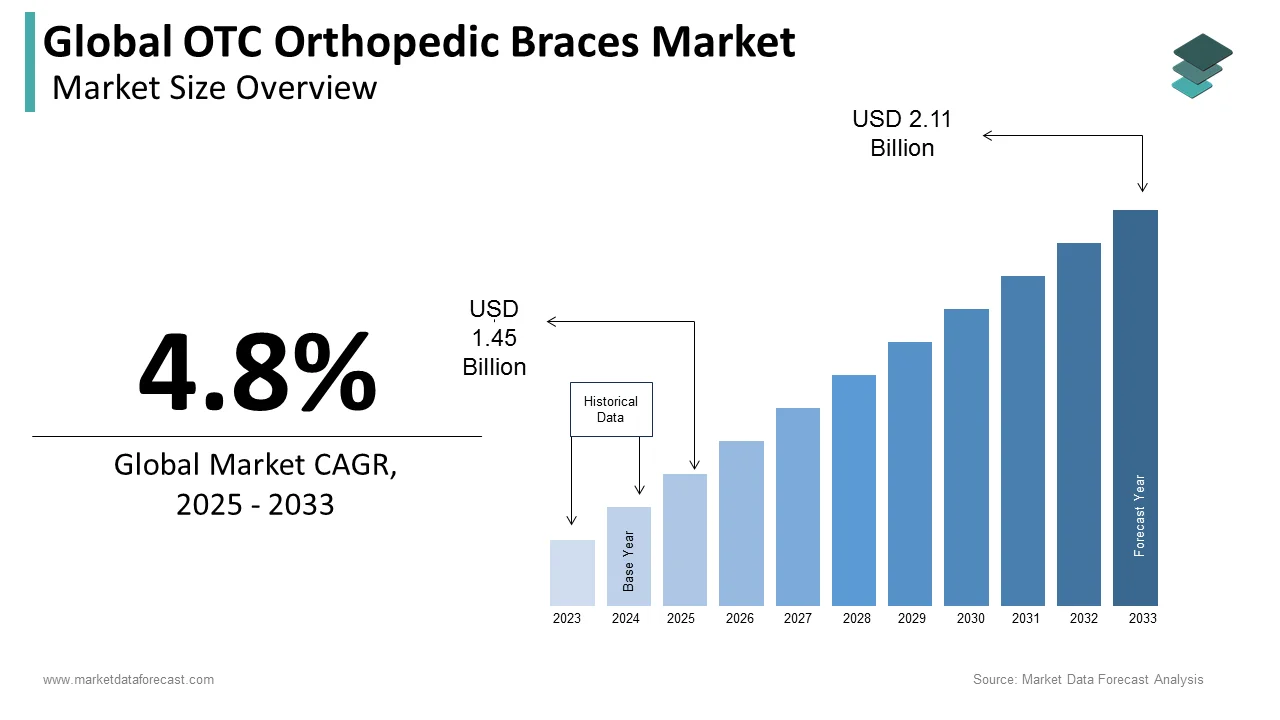
The global over-the-counter (OTC) orthopedic braces market size was valued at USD 1.45 billion in 2025, is estimated at USD 1.52 billion in 2026, and is anticipated to reach USD 2.21 billion by 2034, expanding at a compound annual growth rate (CAGR) of 4.8% during the forecast period from 2026 to 2034. Market expansion is primarily propelled by the escalating incidence of sports and recreational injuries, demographic aging and chronic joint degeneration, the integration of smart technologies and wearable sensors, and the rapid expansion of e-commerce channels.
Key Executive Metrics (At-a-Glance)
- 2025 Base Valuation: USD 1.45 Billion
- 2026 Current Valuation: USD 1.52 Billion
- 2034 Forecast Valuation: USD 2.21 Billion
- Compound Annual Growth Rate (CAGR): 4.8% (2026–2034)
- Key Geographic Footprint: North America, Europe, Asia Pacific, Latin America, and Middle East & Africa
Global OTC Orthopedic Braces Market Segmentation Breakdown
| Segment Category | Leading / Dominant Segment | Fastest-Growing Segment |
|---|---|---|
| By Product | Knee Braces (30.9% share in 2025) | Back and Hip Braces (CAGR of 8.2%) |
| By Indication | Osteoarthritis (39.1% share in 2025) | Prophylactic (CAGR of 9.4%) |
| By Region | North America (36.6% share in 2025) | Asia Pacific |
Major Industry Players Profiled
Key market participants shaping the global OTC orthopedic braces landscape include 3M Company (U.S.), Bauerfeind AG (Germany), DJO Finance LLC (U.S.), Breg, Inc. (U.S.), DeRoyal Industries Inc. (U.S.), BSN Medical, Otto Bock HealthCare (Germany), Medi GmbH & Co. KG (Germany), and Thuasne Group (France).
Global OTC Orthopedic Braces Market Size
The global OTC orthopedic braces market was valued at USD 1.45 billion in 2025. The global market size is further expected to be worth USD 2.21 billion by 2034 from USD 1.52 billion in 2026, growing at a CAGR of 4.8% during the forecast period.
The over-the-counter orthopedic braces encompass a wide array of non-prescription supportive devices engineered to stabilize joints, mitigate pain, and accelerate recovery from musculoskeletal trauma without the need for direct clinical fitting. These products range from simple elastic knee sleeves and wrist splints to rigid ankle supports and lumbar back braces, all available for direct purchase through retail pharmacies, sporting goods outlets, and digital commerce platforms. The market dynamics are heavily influenced by a global shift towards self-management of health conditions and an increasing preference for immediate accessibility over delayed clinical appointments. As per the World Health Organization, musculoskeletal conditions affect a vast global population, which is establishing a massive foundational demand for accessible therapeutic interventions. In the European region specifically, the burden is acute, with Eurostat noting that many citizens suffer from musculoskeletal disorders that limit daily functioning. The necessity for these devices is further compounded by significant demographic shifts and high injury rates across active populations. According to the International Osteoporosis Foundation, a considerable proportion of older adults are at risk of osteoporotic fractures, creating a sustained need for external skeletal support during rehabilitation. Furthermore, the European Commission highlights that a large share of the European population engages in regular physical activity, which correlates with a higher incidence of sports-related soft tissue injuries requiring immediate stabilization. The convergence of an aging society, where Eurostat reports that a notable percentage of Europeans are aged 65 or older, and a highly active younger demographic creates a unique dual demand structure. This environment fosters a critical reliance on over-the-counter solutions as a primary line of defense against joint instability and chronic pain, which is positioning the market as an essential component of modern preventative healthcare strategies.
MARKET DRIVERS
Escalating Incidence of Sports and Recreational Injuries
The surge in global participation in sports and high-intensity recreational activities is a key factor in the expansion of the global OTC orthopedic braces market. As societies increasingly prioritize fitness and physical well-being, the frequency of acute injuries such as ligament tears, sprains, and strains rises in direct proportion. According to the International Olympic Committee, sports-related injuries result in a large number of emergency department visits annually, with ankle sprains being among the most common athletic injuries. In Europe, as per the European Commission, a significant portion of the population participates in some form of sport, which is creating a vast consumer base prone to joint trauma. Young adults between the ages of 15 and 34 show the highest engagement in contact sports like football and basketball, which are historically linked to elevated rates of knee and ankle instability.
The economic implications of these injuries are substantial, which is prompting a behavioral shift toward immediate self-care solutions and further contributing to the growth of the OTC orthopedic braces market. As per the European Agency for Safety and Health at Work, musculoskeletal disorders stemming from physical exertion cost the European economy heavily in lost productivity and healthcare expenses. Consequently, consumers are increasingly opting for over-the-counter braces due to their immediate availability and cost-effectiveness compared to custom-fitted medical alternatives. This trend is reinforced by a growing awareness of injury prevention protocols among amateur athletes who utilize prophylactic bracing to maintain joint integrity during rigorous training. The ability to purchase these devices without a prescription allows for rapid intervention, enabling individuals to return to activity faster while minimizing the risk of re-injury. This demand is further amplified by the widespread availability of specialized braces for niche sports, ensuring that users can find targeted support for specific biomechanical needs without navigating complex healthcare systems.
Demographic Aging and Chronic Joint Degeneration
The global demographic transition toward an older population structure fundamentally drives the sustained demand for OTC orthopedic support solutions. Aging naturally accelerates the degeneration of cartilage and the weakening of ligaments, leading to chronic conditions such as osteoarthritis that require consistent mechanical support for pain management and mobility preservation. As per the United Nations Department of Economic and Social Affairs, the global population aged 60 years or older is projected to reach 2.1 billion by 2050, effectively doubling the number of seniors from 2019 levels. In Europe specifically, Eurostat data reveals that the median age of the population has risen significantly, marking it as one of the oldest continents globally. This aging cohort experiences a disproportionately high prevalence of degenerative joint diseases, with the Arthritis Foundation noting that osteoarthritis affects a considerable share of older adults.
The necessity for daily joint stabilization compels this demographic to seek accessible and affordable bracing options that do not require complex medical prescriptions or frequent clinic visits, which is favouring the global market growth. According to the studies published by the European Journal of Public Health, limited mobility due to joint pain significantly impacts the quality of life for seniors, making external support devices essential for maintaining independence and performing routine activities. The over-the-counter market addresses this need by providing user-friendly designs that seniors can apply themselves, reducing reliance on caregivers. Furthermore, the chronic nature of these conditions means that demand is recurrent rather than episodic, as users require replacement braces due to wear and tear or changing support needs. This demographic reality ensures a stable and growing customer base that prioritizes functionality and ease of use. As life expectancy continues to rise across developed nations, the volume of individuals requiring long-term management of joint degeneration will expand, solidifying the role of over-the-counter braces as a cornerstone of geriatric care and home-based rehabilitation strategies.
MARKET RESTRAINTS
Absence of Professional Fitting and Improper Usage
A significant restraint impeding the optimal growth and clinical efficacy of the OTC orthopedic braces market is the inherent lack of professional fitting guidance, which frequently leads to improper product selection and usage. Unlike custom-prescribed orthotics that are molded to the specific anatomical contours of a patient, over-the-counter braces are manufactured in standardized sizes that may not provide adequate compression or stability for every individual body type. According to the American Academy of Orthopaedic Surgeons, incorrect brace application can lead to reduced therapeutic benefits and potentially exacerbate existing injuries by negatively altering biomechanics. As per the National Institutes of Health, a notable portion of patients using off-the-shelf bracing devices experience discomfort, skin irritation, or ineffective support due to poor fit, which often discourages continued use.
In the European context, the absence of mandatory consultation requirements means consumers often rely on trial and error when selecting products from retail shelves or online catalogs, which leads to high rates of dissatisfaction. According to the European Consumer Organisation, misinformation regarding product specifications and sizing charts contributes to significant return rates and erodes consumer confidence in the medical device retail sector. Furthermore, improper tensioning of braces can restrict blood flow or cause nerve compression, posing serious health risks that deter potential users from adopting these solutions. This limitation undermines the perceived reliability of over-the-counter products compared to clinically fitted alternatives, thereby restricting market penetration among patients with complex orthopedic needs who require precise mechanical alignment for effective recovery. The inability to guarantee a perfect fit without professional intervention remains a persistent barrier that limits the market's ability to serve patients with severe or nuanced conditions effectively.
Regulatory Complexity and Reimbursement Barriers
Navigating complex regulatory frameworks and securing reimbursement coverage is hindering the expansion of the global OTC orthopedic braces market. While these devices are generally classified as lower-risk medical products, they must still adhere to rigorous safety and performance standards set by governing bodies such as the European Medicines Agency and the Food and Drug Administration. As per the European Union Medical Device Regulation, manufacturers face increased documentation requirements and post market surveillance obligations that elevate operational costs and delay product launches. These regulatory hurdles are particularly challenging for smaller manufacturers who lack the resources to maintain comprehensive compliance teams, thereby limiting market diversity and innovation.
The financial landscape for over-the-counter braces remains challenging because many national health insurance schemes and private payers classify these items as non-essential or lifestyle products rather than medically necessary treatments, which further impedes the OTC orthopedic braces market growth. According to the European Health Insurance Forum, reimbursement policies for non-prescription orthopedic devices vary significantly across member states, with many countries offering no coverage for over-the-counter options. As per the World Health Organization, high out-of-pocket expenditures often deter patients from purchasing recommended supportive devices, leading to untreated conditions and prolonged recovery times. Consequently, manufacturers struggle to scale distribution channels in regions where reimbursement is absent, limiting market accessibility and slowing the overall adoption rate of these therapeutic tools among the populations that need them most.
MARKET OPPORTUNITIES
Integration of Smart Technologies and Wearable Sensors
The incorporation of advanced smart technologies and wearable sensors into OTC orthopedic braces represents a promising opportunity that promises to redefine user engagement and therapeutic outcomes. Modern consumers increasingly seek connected health solutions that provide real-time feedback on movement, pressure distribution, and recovery progress, effectively bridging the gap between passive support and active rehabilitation. According to global wearable technology market analysis, shipments of smart health wearables are projected to grow substantially, indicating a strong consumer appetite for integrated digital health features. Manufacturers have begun embedding flexible strain gauges and Bluetooth-enabled modules into knee and ankle braces to monitor range of motion and alert users to potentially harmful movements before they cause injury.
As per the International Data Corporation, the healthcare sector accounts for a significant portion of wearable device shipments, driven by demand for remote patient monitoring and self-management tools. In Europe, the Digital Health Action Plan encourages the development of innovative medical devices that empower patients to take control of their health data, creating a favorable regulatory environment for smart brace adoption. Startups and established firms are leveraging this momentum to launch app-connected braces that sync with smartphones to track compliance and visualize recovery trajectories for both users and physicians. This technological evolution enhances the functional value of over-the-counter braces and creates new revenue streams through subscription-based software services and data analytics. By transforming a simple supportive garment into an intelligent health assistant, companies can differentiate their offerings and capture a tech-savvy demographic that prioritizes data-driven wellness strategies, opening a lucrative avenue for premium product segments within the broader market.
Expansion of E-Commerce and Direct-to-Consumer Channels
The rapid expansion of e-commerce platforms and direct-to-consumer sales models offers a substantial growth avenue for the OTC orthopedic braces market by enhancing product accessibility and consumer education. Digital retail environments allow manufacturers to bypass traditional intermediaries and engage directly with end users through targeted marketing campaigns and detailed product information portals. As per the European E commerce Report, online sales of health and personal care products in Europe have grown significantly, reflecting a decisive shift in consumer purchasing behavior toward digital channels. The convenience of home delivery and the ability to compare multiple brands and specifications instantly empower consumers to make informed decisions without the need to visit physical stores, which is particularly beneficial for individuals with limited mobility.
According to Statista, a large share of European internet users have purchased health-related products online, with orthopedic supports ranking among the top categories due to their non-invasive nature and ease of shipping. Furthermore, online platforms enable the collection of valuable consumer data that companies can utilize to refine product designs and personalize marketing messages for higher conversion rates. Virtual fitting tools and augmented reality applications are increasingly being deployed on retail websites to mitigate the risk of improper sizing, directly addressing one of the key concerns associated with over-the-counter purchases. This digital transformation reduces overhead costs for retailers and allows for competitive pricing strategies that attract price-sensitive customers. The seamless integration of telehealth consultations with online stores further strengthens this channel by providing professional advice remotely, thereby increasing consumer confidence and driving higher adoption rates among demographics that previously hesitated to buy medical devices without in-person assistance.
MARKET CHALLENGES
Intense Competition and Price Erosion
The global OTC orthopedic braces market faces intense competition characterized by a highly fragmented landscape of numerous players engaging in aggressive price wars that erode profit margins and potentially compromise product quality. The relatively low barrier to entry for manufacturing standard braces has led to market saturation, with countless brands vying for shelf space in pharmacies and visibility on digital marketplaces. According to the Federal Trade Commission, hyper-competitive markets often drive companies to cut costs on materials and quality control processes to maintain profitability while offering the lowest prices to consumers. This race to the bottom results in a proliferation of substandard products that fail to provide adequate support, ultimately damaging consumer trust in the entire category and making it difficult for reputable brands to distinguish themselves.
As per the European Association of Medical Device Manufacturers, small and medium enterprises struggle to compete with large conglomerates that leverage economies of scale to dominate pricing strategies that often squeeze out innovators. The presence of counterfeit or non-compliant products on unregulated online platforms further exacerbates the issue, creating confusion among buyers regarding authenticity and safety standards. According to the Organisation for Economic Co-operation and Development, trade in fake medical devices accounts for a significant portion of illicit trade globally, posing serious health risks to unsuspecting consumers who believe they are purchasing legitimate therapeutic aids. This chaotic, competitive environment makes it difficult for reputable brands to justify premium pricing for higher quality innovations, stifling investment in research and development. Consequently, the market risks stagnation as companies focus on short-term survival tactics rather than long-term value creation and technological advancement, hindering the overall evolution of the industry.
Variability in Product Quality and Performance Standards
Significant variability in product quality and performance standards across different manufacturers poses a critical challenge that hinders the consistent reliability and clinical effectiveness of OTC orthopedic braces. Unlike prescription devices that undergo rigorous custom fitting and validation, mass-produced over-the-counter braces often exhibit inconsistencies in material durability, elasticity, and structural support capabilities. As per the International Organization for Standardization, while general guidelines exist for medical device manufacturing, enforcement and adherence vary widely among producers, especially those operating in regions with lax regulatory oversight. Independent testing conducted by consumer protection agencies in Europe has frequently identified discrepancies between advertised specifications and actual performance metrics of commercially available braces, leading to consumer skepticism.
According to sources, a notable portion of tested orthopedic supports failed to maintain compression levels after repeated wash cycles or exhibited seam failures under moderate stress, rendering them ineffective for long term use. Such quality inconsistencies lead to unpredictable therapeutic outcomes, where some users experience relief while others suffer from continued pain or secondary injuries due to device failure. The lack of uniformity complicates the ability of healthcare professionals to recommend specific over-the-counter brands with confidence, forcing patients to rely on trial and error, which can be costly and frustrating. This uncertainty undermines the credibility of the over-the-counter segment and discourages adoption among individuals with severe orthopedic conditions who require dependable support. Addressing this challenge requires industry-wide collaboration to establish stricter voluntary standards and enhance transparency regarding material sourcing and testing protocols to restore trust and ensure patient safety.
REPORT COVERAGE
| REPORT METRIC | DETAILS |
| Market Size Available | 2025 to 2034 |
| Base Year | 2025 |
| Forecast Period | 2026 to 2034 |
| Segments Covered | By Product, Indication, and Region. |
| Various Analyses Covered | Global, Regional, and Country-Level Analysis, Segment-Level Analysis, Drivers, Restraints, Opportunities, Challenges; PESTLE Analysis; Porter’s Five Forces Analysis, Competitive Landscape, Analyst Overview of Investment Opportunities |
| Regions Covered | North America, Europe, Asia Pacific, Latin America, Middle East & Africa |
| Market Leaders Profiled | DJO Finance LLC., DeRoyal Industries Inc., Breg, Inc., Bauerfeind AG, BSN Medical, Otto Bock HealthCare, Medi GmbH & Co. KG, Thuasne Group, and 3M Company. |
SEGMENTAL ANALYSIS
By Product Insights
The knee braces segment dominated the market by holding 30.9% of the global market share in 2025. The dominance of the knee braces segment in the global market is attributed to the high prevalence of knee injuries and degenerative conditions affecting the largest joint in the human body. The knee is uniquely susceptible to trauma due to its complex biomechanics and role in weight bearing, which makes it the most frequent site for orthopedic intervention. The frequency of knee-related injuries among active populations and athletes globally is further boosting the expansion of the knee braces segment in the worldwide market. The knee joint absorbs significant force during movement, rendering it vulnerable to ligament tears, meniscus damage, and patellar instability. According to the American Academy of Orthopaedic Surgeons, knee injuries represent a large share of sports-related injuries, with anterior cruciate ligament tears affecting many individuals annually in the United States. In Europe, the European Society of Sports Traumatology notes that football and skiing contribute substantially to knee trauma cases requiring stabilization. The immediate need for support following such acute injuries drives consumers toward readily available OTC solutions rather than waiting for custom prescriptions. Furthermore, the rise in recreational running has exacerbated this trend, as the Centers for Disease Control and Prevention highlights that a significant portion of runners experience knee pain annually. This widespread susceptibility across diverse age groups ensures a constant and high volume demand for knee sleeves and hinged braces, solidifying the segment's market leadership through sheer volume of required interventions.
However, the back and hip braces segment is projected to register the highest CAGR of 8.2% over the forecast period in the global market, owing to the global epidemic of chronic lower back pain and the increasing recognition of hip stability needs among both elderly and working populations. The growth of the back braces segment is also likely to be driven by the rise in chronic lower back pain cases attributed to sedentary lifestyles and poor ergonomics. Modern work environments characterized by prolonged sitting and repetitive strain have turned back pain into a leading cause of disability worldwide. According to The Lancet Global Health, lower back pain is identified as the single leading cause of years lived with disability across many countries. The World Health Organization emphasizes that low back pain is a primary reason for job absenteeism in developed nations, costing economies heavily in lost productivity. In response, there is a surging consumer preference for non-invasive management tools like lumbar support belts and posture correctors available over the counter. As per the National Institute of Neurological Disorders and Stroke, most adults will experience back pain at some point in their lives, creating a vast addressable market. The shift towards remote work has further intensified spinal stress, prompting individuals to seek immediate relief through OTC bracing solutions. This universal prevalence across all age groups, combined with the chronic nature of the condition requiring long-term management, ensures that the back braces segment grows faster than any other product category.
By Indication Insights
The osteoarthritis indication segment led the market by capturing the highest share of 39.1% of the global market in 2025 due to the chronic and progressive nature of the disease, which requires long-term, daily use of supportive devices for pain management and mobility preservation. The global demographic shift toward an older population structure that directly correlates with higher incidence rates of degenerative joint diseases is further propelling the dominance of the osteoarthritis segment in the global market. As individuals age, the natural degradation of joint cartilage accelerates, making osteoarthritis a near ubiquitous condition among seniors. According to the United Nations Department of Economic and Social Affairs, the number of persons aged 65 years or older worldwide is projected to surpass 1.5 billion by 2050. This demographic expansion ensures a continuously growing customer base for osteoarthritis management products. As per the Global Burden of Disease Study, the prevalence of osteoarthritis has risen significantly since 1990, largely driven by population aging and obesity. In Europe, Eurostat notes that a considerable portion of the population is already over 60, a threshold where osteoarthritis prevalence spikes. The chronic nature of this condition means that, unlike acute injury patients who may stop using braces after healing, osteoarthritis patients require daily support indefinitely. This creates a stable, recurring revenue stream, as millions of seniors rely on OTC braces to perform basic tasks like walking and climbing stairs, cementing the segment's market supremacy.
On the other hand, the prophylactic indication segment is anticipated to witness the fastest growth and grow at a CAGR of 9.4% over the forecast period in the global market, owing to a paradigm shift in sports medicine and occupational health, where the focus has moved from treating injuries to preventing them before they occur. The adoption of preventative bracing protocols in competitive and recreational sports is further boosting the expansion of the prophylactic indication segment in the worldwide market. Athletes and coaches now recognize the value of external support in mitigating the risk of common injuries, which is leading to the routine use of braces even in the absence of prior trauma. According to the National Athletic Trainers' Association, the use of prophylactic knee braces has increased significantly in high school and college football programs to protect against ligament injuries. As per the International Olympic Committee, injury prevention strategies, including bracing, are now mandatory components of training regimens for elite athletes. Furthermore, the boom in marathon running and triathlon participation has amplified this demand, as surveys highlight that many regular runners now use prophylactic supports to safeguard their joints during long-distance events. This cultural shift towards proactive health management extends beyond professionals to amateur enthusiasts who invest in their longevity in sports. The normalization of wearing braces as protective gear rather than a sign of weakness has unlocked a massive new consumer base, driving the prophylactic segment to grow faster than reactive injury treatment categories.
REGIONAL ANALYSIS
North America OTC Orthopedic Braces Market Analysis
North America dominated the global OTC orthopedic braces market by commanding for 36.6% of the global market share in 2025 due to its advanced healthcare infrastructure, high health awareness, and robust reimbursement frameworks that facilitate easy access to medical devices. The United States serves as the primary engine, driven by a culture of high sports participation and an aging baby boomer generation. According to the Centers for Disease Control and Prevention, a large number of adults in the US suffer from arthritis, creating a massive baseline demand for supportive devices. As per the National Federation of State High School Associations, millions of students participate in high school sports annually, fostering a deep-rooted habit of using protective gear from a young age. The presence of major market players and a sophisticated retail network, including specialized medical supply stores and large pharmacy chains, ensures wide product availability. According to the Kaiser Family Foundation, despite insurance complexities, out-of-pocket spending on durable medical equipment remains high, reflecting consumers' willingness to pay for immediate relief. The region also benefits from the rapid adoption of innovative products like smart braces, supported by a tech-savvy population. This combination of demographic pressure, active lifestyle trends, and mature distribution channels solidifies North America's position as the largest and most lucrative market globally.

Europe OTC Orthopedic Braces Market Analysis
Europe accounted for the second biggest share of the global market in 2025 due to a strong emphasis on public health initiatives and an exceptionally aging demographic profile. The region's market status is defined by high penetration rates in Western European countries like Germany, France, and the United Kingdom, where musculoskeletal health is a priority. According to Eurostat, a significant portion of the European Union population is aged 65 or older, directly correlating with the high prevalence of osteoarthritis and chronic joint pain, driving brace usage. As per the European Society for Clinical and Economic Aspects of Osteoporosis, fragility fractures are common among older adults, necessitating robust support systems. Additionally, the region boasts a strong sports culture, with the European Commission noting that a large share of EU citizens engage in physical activity, which is fuelling demand for injury prevention and rehabilitation products. The implementation of the Medical Device Regulation has standardized quality, boosting consumer confidence in OTC products. According to the European Health Insurance Forum, varying but significant support for conservative treatments across member states encourages early adoption of bracing. The growing trend of home-based care and the expansion of online pharmacies further accelerate market growth, making Europe a critical hub for sustained demand.
Asia Pacific OTC Orthopedic Braces Market Analysis
The Asia Pacific region is anticipated to showcase a promising CAGR in the OTC orthopedic braces market during the forecast period owing to the transition from limited awareness to widespread adoption, driven by improving healthcare access, rising disposable incomes, and increasing urbanization. China and India are the key contributors, where a massive population base is beginning to embrace modern orthopedic solutions. According to the World Bank, the middle class in Asia Pacific is expected to grow substantially by 2030, empowering millions to afford OTC medical devices previously considered luxuries. As per the International Osteoporosis Foundation, the region is expected to account for the majority of global hip fractures by 2050. Furthermore, the growing popularity of fitness and sports in countries like Japan, South Korea, and Australia is shifting cultural perceptions towards preventative care. According to the Asian Development Bank, significant government investments in healthcare infrastructure are improving the distribution reach of medical products to rural areas. The proliferation of e-commerce platforms allows consumers to bypass traditional retail limitations, accessing a wider variety of brands. This confluence of economic growth, demographic shifts, and digital penetration positions the Asia Pacific as the next frontier for market expansion.
Latin America OTC Orthopedic Braces Market Analysis
Latin America represents a developing yet promising segment of the global market due to increasing health consciousness and gradual improvements in medical infrastructure. The market in this region is characterized by a dichotomy between urban centers with high adoption rates and rural areas with limited access, though the gap is narrowing. Brazil and Mexico are the dominant markets, fueled by a passionate sports culture, particularly football, which drives significant demand for injury-related braces. According to the Pan American Health Organization, musculoskeletal disorders are among the top causes of disability in the region, affecting a large number of people and creating a pressing need for affordable management solutions. As per the World Health Organization, rising obesity levels are exacerbating joint problems, further stimulating demand for weight offloading braces. Economic stabilization in key countries has increased disposable income, allowing more consumers to purchase OTC devices without insurance coverage. According to the Inter-American Development Bank, private healthcare spending has steadily increased, which is correlating with higher sales of non-prescription medical aids. Additionally, the expansion of international retail chains and local e-commerce players is improving product availability. While challenges remain regarding cost sensitivity, the region's youthful demographic and active lifestyle trends provide a solid foundation for steady market growth.
Middle East and Africa OTC Orthopedic Braces Market Analysis
The Middle East and Africa region represents a nascent but gradually evolving landscape with significant untapped potential. The market in the Middle East and African region is currently concentrated in Gulf Cooperation Council countries like Saudi Arabia and the UAE, where high healthcare expenditure and government initiatives support medical device adoption. According to the World Health Organization, the prevalence of diabetes and obesity in the Middle East is among the highest globally, leading to secondary musculoskeletal complications that drive demand for supportive braces. In Africa, while access remains limited in many areas, urbanization and the growth of private healthcare sectors in nations like South Africa and Nigeria are beginning to open new avenues for OTC products. As per the African Development Bank, investment in health infrastructure is increasing, gradually improving distribution networks for medical supplies. The rising interest in sports, exemplified by major events hosted in the region, is also fostering a culture of injury prevention among the youth. Furthermore, the expatriate population in the Gulf brings established habits of using orthopedic supports, influencing local consumption patterns. Although the overall share is currently small, the combination of lifestyle-related health issues and improving economic conditions suggests a trajectory of gradual but meaningful expansion in the coming years.
COMPETITIVE LANDSCAPE
The competition within the OTC orthopedic braces market is characterized by high intensity and fragmentation due to the presence of numerous global and regional players vying for consumer attention. Major corporations compete fiercely against smaller niche brands by leveraging their extensive distribution networks and strong brand recognition to dominate shelf space in retail outlets and online platforms. The barrier to entry remains relatively low for standard products, which leads to a saturated market where price wars frequently occur, eroding profit margins for many participants. Companies strive to distinguish themselves through continuous innovation in material technology and the integration of smart features that appeal to tech-savvy consumers. Brand loyalty plays a crucial role as patients often stick to familiar names that have proven effective for their specific conditions. Additionally, the rise of private label brands from large retailers adds another layer of competitive pressure, forcing established manufacturers to constantly evolve their value propositions. This dynamic environment necessitates agile strategic planning and significant investment in marketing to sustain market presence and achieve long term success.
KEY MARKET PLAYERS
A few of the notable companies operating in the global OTC orthopedic braces market profiled in this report are
- DJO Finance LLC
- DeRoyal Industries Inc.
- Breg, Inc.
- Bauerfeind AG
- Mueller Sports Medicine
- BSN Medical
- Otto Bock HealthCare
- Medi GmbH & Co. KG
- Thuasne Group
- 3M Company
TOP PLAYERS IN THE MARKET
- DJO Global Incorporated stands as a preeminent force in the orthopedic industry with a vast portfolio of over-the-counter braces, including the renowned DonJoy and Aircast brands. The company consistently drives global market growth by delivering innovative, supportive devices that cater to sports injuries and chronic conditions alike. Their recent strategic actions focus heavily on integrating digital health technologies into traditional bracing solutions to enhance patient monitoring and recovery outcomes. DJO Global has expanded its direct-to-consumer channels through robust e-commerce platforms, ensuring wider accessibility for users seeking immediate relief without clinical prescriptions. Furthermore, they have invested significantly in research and development to create lighter, more breathable materials that improve user compliance and comfort during extended wear. These initiatives solidify their reputation as a leader who prioritizes both clinical efficacy and consumer convenience in the competitive landscape.
- Breg Inc is a highly influential player known for its advanced engineering and commitment to producing high-quality OTC orthopedic supports that serve athletes and active individuals worldwide. The company contributes substantially to the global market by offering specialized braces designed for specific joint stabilizations, such as knees, ankles, and wrists. Recent efforts by Breg Inc include launching new product lines that utilize proprietary cooling technologies and ergonomic designs to maximize therapeutic benefits. They have strengthened their market position by forming strategic partnerships with major sports organizations and retail chains to increase brand visibility and product availability. Additionally, Breg Inc has focused on sustainability by adopting eco-friendly manufacturing processes and packaging materials, which resonates well with environmentally conscious consumers. Their continuous innovation in material science ensures their products remain at the forefront of performance and durability, setting high standards for the entire industry.
- Mueller Sports Medicine operates as a dominant entity in the over-the-counter sector with a strong emphasis on affordable and accessible bracing solutions for a broad demographic range. Their contribution to the global market is marked by extensive distribution networks that place their products in pharmacies, sporting goods stores, and online marketplaces across numerous countries. Recently, Mueller Sports Medicine has intensified its marketing campaigns targeting amateur athletes and fitness enthusiasts to promote the importance of injury prevention through prophylactic bracing. The company has also introduced smart brace prototypes that connect to mobile applications for tracking movement and providing real-time feedback to users. By leveraging data analytics, they refine product designs to better meet consumer needs and preferences. Their proactive approach to education and community engagement fosters brand loyalty and establishes them as a trusted partner in maintaining musculoskeletal health for millions of users globally.
TOP STRATEGIES USED BY KEY MARKET PARTICIPANTS
Key players in the OTC orthopedic braces market primarily employ product innovation and technological integration as core strategies to differentiate their offerings and capture consumer interest. Companies frequently invest in research and development to create advanced materials that offer superior comfort, breathability, and durability while reducing bulk. Another prevalent strategy involves expanding direct-to-consumer sales channels through robust e-commerce platforms and social media marketing to reach wider audiences directly. Strategic acquisitions and partnerships with sports teams or healthcare providers are also common tactics used to enhance brand credibility and market penetration. Furthermore, manufacturers focus on educational campaigns to raise awareness about injury prevention and the benefits of early bracing intervention. Pricing strategies often include tiered product ranges to cater to both budget-conscious buyers and those seeking premium features. These combined approaches enable firms to maintain competitive advantages and drive sustained growth in a dynamic marketplace.
MARKET SEGMENTATION
This research report on the global OTC orthopedic braces market is segmented and sub-segmented based on the product, indication, and region.
By Product
- Lower Extremity Braces
- Knee Braces
- Foot & Ankle Braces
- Upper Extremity Braces
- Shoulder Braces
- Elbow Braces
- Wrist Braces
- Back & Hip Braces
- Other Braces
By Indication
- Prophylactic
- Injury
- Osteoarthritis (OA)
- Others
By Region
- North America
- Europe
- Asia-Pacific
- Latin America
- The Middle East and Africa