- Product Description Description
- Table of Contents TOC
- List of Table & Figure LOT
- Get Free Sample PDF Sample PDF
Market Size, 2025
$6.91 BnMarket Estimate, 2026
$7.36 BnMarket Forecast, 2034
$12.23 BnCAGR, 2026–2034
6.55%Executive Summary: Global Peanut Butter Market
- Market Scope: Comprehensive global peanut butter market analysis covering product textures, flavor variants, brand positioning, distribution channels, plant-based nutrition trends, and clinical nutrition applications.
- Market Valuation: Valued at USD 6.91 billion (2025), estimated at USD 7.36 billion (2026), and projected to reach USD 12.23 billion by 2034, registering a robust CAGR of 6.55% (2026–2034).
- Primary Growth Drivers: Rising demand for plant-based protein sources, integration into clinical nutrition and malnutrition programs, clean-label product preferences, functional and protein-enhanced formulations, and e-commerce expansion.
Key Market Segment Metrics (2026–2034)
| Category | Leading Segment (2025 Position) | Fastest-Growing Segment |
|---|---|---|
| By Product / Texture Type | Creamy peanut butter segment (held the largest share with 62.4% of total volume consumption) | Flavored and specialty variants (projected to expand at a CAGR of 10.4% from 2026 to 2034) |
| By Brand Type | Branded products (dominated with 54.2% of retail value in 2025) | Artisanal manufacturers (growing at an 11.2% CAGR leveraging transparency and digital engagement) |
| By Distribution Channel | Supermarkets and hypermarkets (accounted for 54.6% of sales in 2025) | Online stores (the fastest-growing distribution channel at 12.8% CAGR) |
| By Region | North America (led the global market with 46.4% share in 2025, driven heavily by the United States) | Asia-Pacific (emerging as a high-potential region due to rapid urbanization and Western dietary influence) |
Major Market Players & Market Structure
Market Structure: Highly competitive global spread and spreads manufacturing landscape featuring legacy consumer goods conglomerates maintaining market dominance through scale, alongside agile artisanal producers capitalizing on digital channels and clean-label trends.
Key Companies: Britannia Dairy Private Limited, Procter & Gamble, Dr. Oetker India Pvt. Ltd, Conagra Brands, Algood Food Co., Kraft Foods, Boulder Brands, Hormel Foods Corporation, The J.M. Smucker Company, and Unilever.
Global Peanut Butter Market Size
The global peanut butter market size was valued at USD 6.91 billion in 2025. The global market is estimated to be worth USD 12.23 billion by 2034 from USD 7.36 billion in 2026, growing at a CAGR of 6.55% from 2026 to 2034.
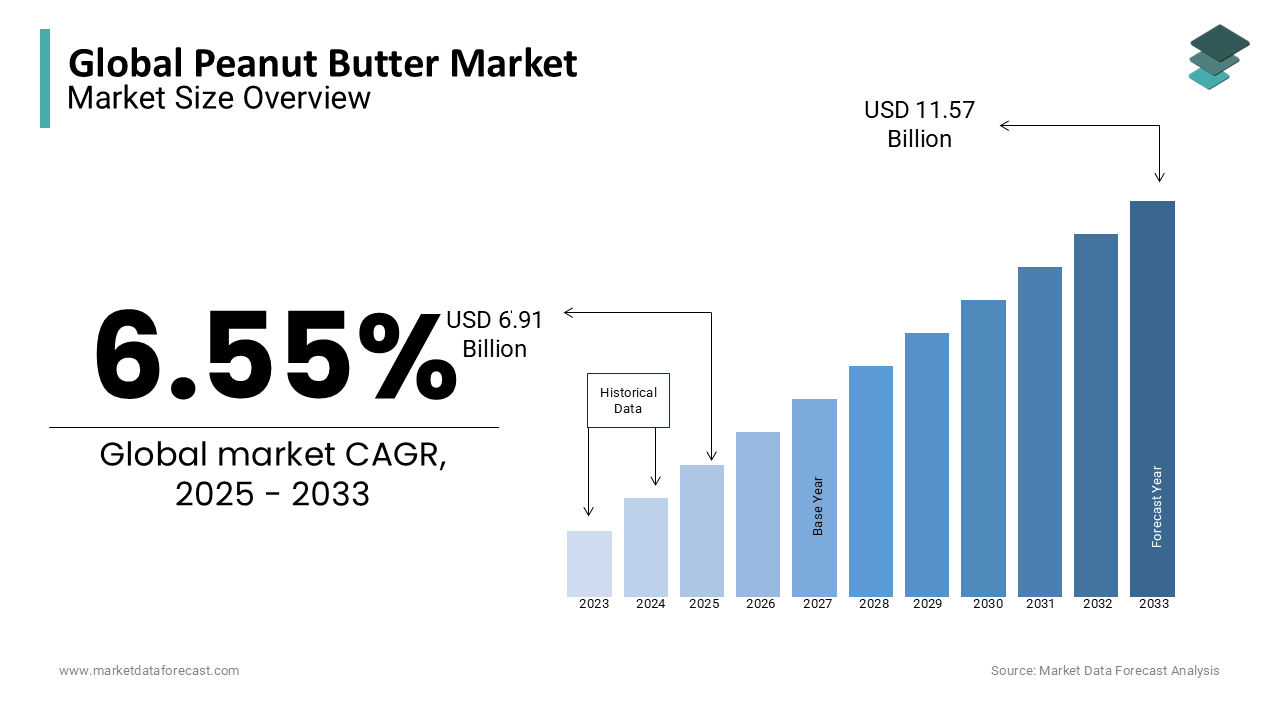
Peanut Butter refers to the spreads derived from ground roasted peanuts, ranging from conventional creamy and crunchy variants to natural, organic, low-sugar, and protein-enhanced formulations. As a nutrient-dense food, peanut butter is valued for its high protein, healthy monounsaturated fat, and essential vitamin and mineral content, including niacin, magnesium, and vitamin E. It plays a significant role in both household diets and public health nutrition programs due to its affordability, long shelf life, and caloric density.
Peanuts are among the most protein-efficient crops. The World Health Organization recognizes peanut-based therapeutic foods, such as Ready-to-Use Therapeutic Food (RUTF), as life-saving interventions for severe acute malnutrition in children, with a substantial number of children treated annually in sub-Saharan Africa and South Asia. Additionally, the Food and Agriculture Organization pointing out that peanut cultivation supports the livelihoods of millions of smallholder farmers globally, particularly in Senegal, Nigeria, India, and China. The versatility of peanut butter extends beyond sandwiches, finding use in sauces, baking, energy bars, and plant-based alternatives, reinforcing its position as a functional staple in both developed and emerging food systems.
MARKET DRIVERS
Rising Demand for Plant-Based Protein Sources in Western Diets
The shift toward plant-based eating patterns in North America, Europe, and Oceania has significantly amplified the demand for peanut butter as a high-protein, affordable, and sustainable alternative to animal-derived products. A 2023 study by the University of Oxford found that plant-based diets generate up to 75% less greenhouse gas emissions than meat-heavy diets, prompting consumers to adopt protein sources like legumes and nuts. Peanut butter, with its 7–8 grams of protein per serving and minimal processing, aligns seamlessly with this movement. Retailers such as Whole Foods and Tesco have expanded their natural peanut butter offerings, emphasizing non-GMO, organic, and palm oil-free labels. Additionally, fitness-oriented consumers are incorporating peanut butter into post-workout meals due to its balanced macronutrient profile. In school lunch programs across Canada and the UK, peanut butter is promoted as a cost-effective protein source, particularly in vegetarian meal plans. This convergence of sustainability, nutrition, and accessibility has solidified peanut butter’s role as a cornerstone of the plant-based food transition.
Integration of Peanut Butter in Clinical and Emergency Nutrition Programs
Peanut butter’s high caloric density, nutrient richness, and stability without refrigeration have made it a critical component in global malnutrition interventions. Each packet delivers 500 kcal of energy, essential vitamins, and 6–8 grams of protein, enabling rapid weight gain and recovery. In sub-Saharan Africa, where over 30 million children suffer from stunting, peanut-based supplements are integrated into national nutrition strategies in countries like Niger and Malawi. Additionally, school feeding programs in Guatemala and Haiti use fortified peanut butter to combat childhood hunger. This dual role, as both a household staple and a medical-grade food, elevates peanut butter beyond a consumer product to a vital public health tool, driving sustained institutional demand.
MARKET RESTRAINTS
High Prevalence of Peanut Allergies in Developed Markets
The widespread incidence of peanut allergies, particularly in North America and Western Europe, remains a significant barrier to broader market penetration. The condition can trigger severe anaphylactic reactions, leading to strict avoidance behaviors and regulatory mandates in schools, airlines, and public institutions. It has led to the proliferation of “nut-free” zones and labeling requirements under the EU’s Food Information for Consumers Regulation, increasing operational complexity for food manufacturers and retailers. The psychological impact on families also limits household adoption, even among non-allergic members. While oral immunotherapy treatments are emerging, their limited availability and long duration restrict widespread use. Additionally, fear of cross-contamination discourages restaurants and bakeries from using peanut butter in formulations, reducing its presence in prepared foods. These factors collectively constrain consumption growth in high-income markets, where awareness and diagnosis rates are highest, despite the product’s nutritional benefits.
Fluctuating Peanut Crop Yields Due to Climate Variability
Peanut production is highly sensitive to climatic conditions, with drought, excessive rainfall, and rising temperatures directly impacting yield and quality. Peanuts require precise moisture levels during pod development; deviations can result in aflatoxin contamination, a carcinogenic mold that renders crops unsuitable for human consumption. The European Food Safety Authority has strict limits on aflatoxin levels, leading to frequent rejections of shipments from India and Senegal. Additionally, the International Crops Research Institute for the Semi-Arid Tropics warns that rising temperatures could reduce viable peanut-growing areas by up to 30% by 2050. Smallholder farmers, who produce over 80% of the world’s peanuts, lack access to irrigation, drought-resistant seeds, and climate insurance, making them particularly vulnerable. These production risks threaten supply chain continuity and increase input costs for processors, undermining market stability.
MARKET OPPORTUNITIES
Expansion of Natural and Clean-Label Peanut Butter Variants
The growing consumer preference for minimally processed, transparently sourced foods has created a robust opportunity for natural and organic peanut butter products. This shift is particularly strong among millennials and Gen Z, who prioritize ingredient integrity and ethical sourcing. Retailers such as Trader Joe’s and Aldi have introduced private-label natural lines, making premium variants accessible to mass-market consumers. Additionally, cold-grind and stone-mill processing techniques are being adopted to preserve nutrient content and enhance flavor, differentiating premium offerings. With digital platforms enabling direct consumer feedback, brands can rapidly iterate formulations, fostering loyalty and trust in an increasingly discerning marketplace.
Product Innovation in Functional and Protein-Enhanced Peanut Butters
Manufacturers are capitalizing on the convergence of fitness nutrition and convenience by developing fortified peanut butter variants enriched with protein, fiber, omega-3s, and adaptogens. Companies are introducing blends with added whey, pea protein, or collagen to increase protein content from 8 to 15 grams per serving, positioning the product as a post-workout recovery food. Besides, keto and low-carb diets have spurred demand for low-sugar, high-fat versions sweetened with erythritol or monk fruit. In Japan, peanut butter infused with matcha and ashwagandha is marketed for cognitive and stress-reducing benefits, reflecting the global trend toward functional foods. Startups are also launching peanut butter in single-serve squeeze packs and shelf-stable pouches for on-the-go consumption, aligning with urban lifestyles. These innovations are transforming peanut butter from a traditional spread into a dynamic, health-forward food category.
MARKET CHALLENGES
Price Volatility Due to Geopolitical and Trade Disruptions
The peanut butter market faces persistent price instability due to geopolitical tensions, export restrictions, and fluctuating trade policies affecting key producing and processing nations. In 2022, the Russia-Ukraine conflict disrupted shipping routes and increased freight costs, raising input expenses for European and Asian processors reliant on imported peanuts. The U.S. International Trade Commission notes that tariffs on peanut products between the U.S. and China have led to re-routing of supply chains, increasing logistics complexity. Additionally, currency fluctuations in major producer countries such as Senegal and Myanmar affect purchasing power and export competitiveness. These macroeconomic pressures are compounded by speculative trading in commodity markets, where peanut futures are increasingly influenced by climate forecasts and dietary trends. For manufacturers, this volatility makes long-term pricing and procurement planning difficult, often forcing cost-pass-throughs to consumers, which can dampen demand. Without stable trade frameworks and diversified sourcing strategies, the sector remains vulnerable to external shocks.
Competition from Alternative Nut and Seed Butters
Peanut butter faces intensifying competition from almond, cashew, sunflower, and tahini-based spreads, which are perceived as premium, hypoallergenic, or nutritionally superior. Also, global almond butter sales grew annually between 2020 and 2023, driven by higher-income consumers seeking variety and allergen-free options. Sunflower seed butter, in particular, has gained traction in schools and childcare facilities due to its nut-free status. The perception that tree nuts offer higher levels of vitamin E and heart-healthy fats has influenced consumer preferences, despite their significantly higher price points. Additionally, plant-based innovation has introduced butters made from pumpkin seeds, pistachios, and even water lentils, appealing to gourmet and wellness segments. Retail shelf space is becoming increasingly contested, with premium brands allocating more space to exotic varieties. While peanut butter maintains a cost advantage, its association with mass-market, conventional products limits its appeal in high-end retail environments. To remain competitive, peanut butter brands must reposition through premiumization, functional enhancement, and lifestyle branding to counter the allure of novelty and exclusivity offered by alternatives.
REPORT COVERAGE
| REPORT METRIC | DETAILS |
| Market Size Available | 2025 to 2034 |
| Base Year | 2025 |
| Forecast Period | 2026 to 2034 |
| CAGR | 6.65% |
| Segments Covered | By Product, Brand Type, Distribution Channel, and Region |
| Various Analyses Covered | Global, Regional & Country Level Analysis, Segment-Level Analysis, DROC, PESTLE Analysis, Porter’s Five Forces Analysis, Competitive Landscape, Analyst Overview of Investment Opportunities |
| Regions Covered | North America, Europe, APAC, Latin America, Middle East & Africa |
| Market Leaders Profiled | Britannia Dairy Private Limited, Procter & Gamble, Dr. Oetker India Pvt. Ltd, Conagra Brands, Algood Food Co., Kraft Foods, Boulder Brands, Hormel Foods Corporation, The J.M. Smucker Company and Unilever |
SEGMENTAL ANALYSIS
By Product Type Insights
The creamy peanut butter segment held the largest share of the global peanut butter market with 62.4% of total volume consumption in 2025. This dominance is primarily attributed to its smooth texture and broad consumer appeal across age groups, particularly among children and elderly populations who favor easy-to-spread and digestible formats. Creamy peanut butter is deeply embedded in culinary traditions, especially in North America, where it is a staple in sandwiches, baking, and sauces. The product’s versatility extends to commercial foodservice, where it is used in salad dressings, marinades, and dessert fillings due to its homogenous consistency. Additionally, the sensory preference for smoothness is further validated by sensory studies conducted, which found that creamy formulations score higher in palatability tests among first-time users and younger demographics. With major brands like Jif and Skippy prioritizing creamy variants in their core portfolios, and private-label retailers aligning shelf space accordingly, the segment maintains a structural advantage in both retail visibility and habitual consumption.
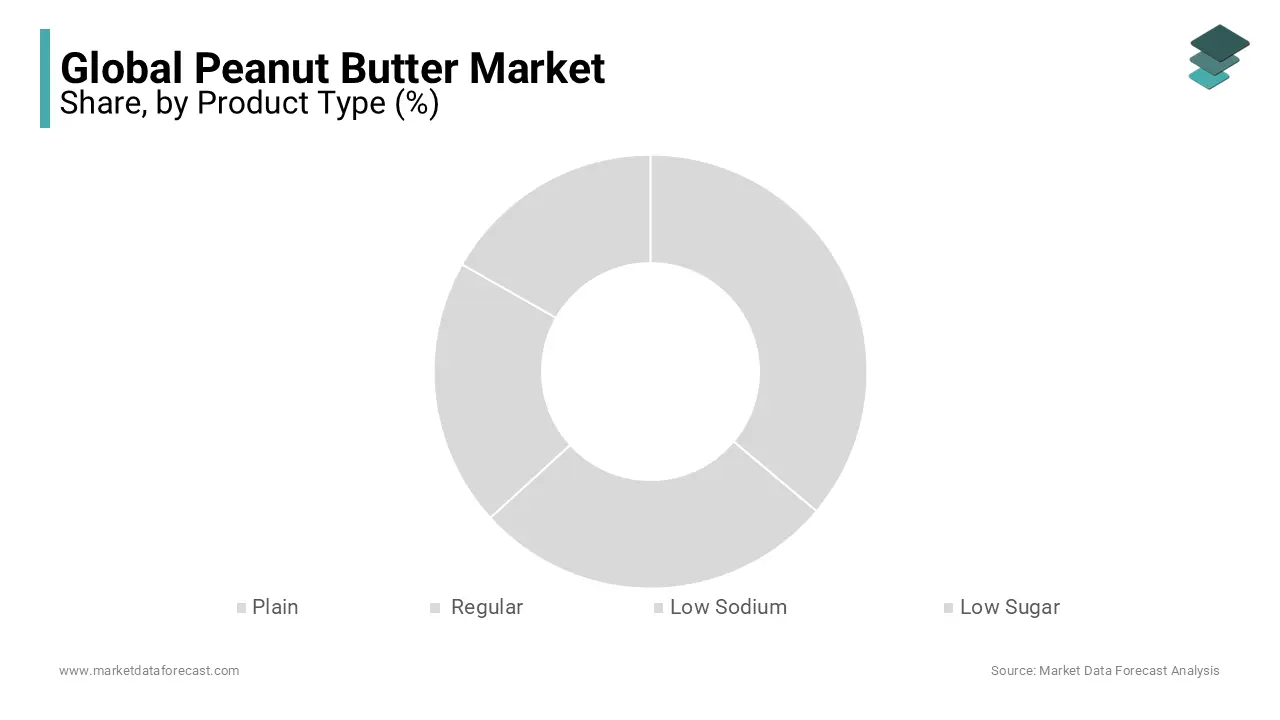
The others (flavored and specialty) segment is the fastest-growing in the peanut butter market and is projected to expand at a CAGR of 10.4% from 2026 to 2034. This rapid growth is driven by rising consumer demand for innovative, functional, and experiential food products. Flavored variants, such as honey-infused, cinnamon, chocolate-swirl, and spicy chili, are gaining traction among younger demographics seeking novelty and indulgence without abandoning nutritional value. Besides, specialty formulations enriched with protein, collagen, MCT oil, or adaptogens are being marketed as functional foods for energy, immunity, and cognitive support. Startups such as PB2 and Justin’s are leading innovation with single-serve squeeze packs and keto-certified options, catering to on-the-go lifestyles. Social media influence, particularly on TikTok and Instagram, has amplified demand, with viral recipes featuring flavored peanut butter generating millions of views in 2023. This convergence of flavor experimentation, health positioning, and digital engagement is propelling the specialty segment into a high-growth trajectory.
By Brand Type Insights
The branded segment dominated the global peanut butter market with an estimated 54.2% share of total retail value in 2025. This lead position is sustained by strong consumer trust, extensive distribution networks, and consistent product quality associated with established names such as Jif, Skippy, and Peter Pan. These brands benefit from decades of marketing investment, household recognition, and strategic placement in high-traffic retail environments. Branded manufacturers also invest heavily in R&D to reformulate products in response to health trends, such as reducing added sugars and eliminating hydrogenated oils, thereby maintaining relevance. Besides, these companies leverage large-scale production efficiencies and long-term contracts with peanut farmers, ensuring supply stability and cost control. Their partnerships with foodservice chains, school nutrition programs, and global retailers further solidify market penetration. In emerging markets like India and South Africa, multinational brands are expanding through localized packaging and flavor adaptations, enhancing accessibility. The combination of brand equity, regulatory compliance, and innovation capacity enables branded players to maintain a commanding presence despite rising competition from private-label and artisanal alternatives.
The artisanal and specialty manufacturers segment is the fastest-growing brand type and is projected to grow at a CAGR of 11.2% through 2034. This surge is fueled by the increasing consumer preference for small-batch, transparently sourced, and ethically produced food products. Artisanal brands emphasize clean labels, organic certification, and regional identity, appealing to health-conscious and environmentally aware demographics. These manufacturers often source peanuts from regenerative farms, use stone-grinding techniques, and avoid preservatives, differentiating themselves through craftsmanship and authenticity. Farmers’ markets, boutique grocery stores, and direct-to-consumer e-commerce platforms have enabled these producers to scale without relying on traditional distribution. Besides, social media allows artisanal brands to build communities, share sourcing stories, and respond rapidly to consumer feedback. In Europe, the Slow Food Foundation has recognized several small-batch peanut butter makers for preserving traditional methods and supporting fair-trade practices. This alignment with values such as sustainability, transparency, and community empowerment positions artisanal manufacturers as a disruptive force in a category long dominated by industrial players.
By Distribution Channel Insights
The supermarkets and hypermarkets segment led the peanut butter market by accounting for 54.6% of total sales in 2025. This dominance is rooted in the channel’s ability to offer consumers one-stop shopping, wide product variety, and promotional visibility. Supermarkets remain the primary destination for household staples, and peanut butter benefits from strategic shelf placement in the spreads or baking aisles, often adjacent to complementary items like bread, jelly, and crackers. As per the Food Marketing Institute, over 70% of U.S. grocery shoppers visit supermarkets at least once a week, with a notable share purchasing peanut butter during routine trips. These stores also host in-store sampling events, loyalty programs, and price bundling, tactics that drive trial and repeat purchases. Private-label expansion by chains like Kroger, Tesco, and Carrefour has intensified competition but also increased overall category visibility. In emerging markets such as Brazil and Indonesia, hypermarkets are expanding rapidly in urban centers, replacing traditional wet markets and increasing access to packaged peanut butter. Besides, supermarkets enforce strict quality controls and certification requirements, enhancing consumer confidence in product safety. With refrigerated and ambient sections dedicated to nut butters, and trained staff available for recommendations, supermarkets remain the most influential retail touchpoint for peanut butter distribution.
The online stores segment is the fastest-growing distribution channel and is projected to grow at a CAGR of 12.8% from 2026 to 2034. This acceleration is driven by the increasing adoption of digital grocery shopping, particularly among urban, time-constrained, and health-focused consumers. Online platforms like Amazon, Thrive Market, and iHerb enable consumers to access niche, organic, and international peanut butter variants that are unavailable in local stores. Subscription models offering monthly deliveries of single-serve or flavored packs have gained popularity, with a higher retention rate for subscription-based food buyers. Social commerce is also playing a pivotal role, with TikTok and Instagram influencers promoting unique peanut butter brands through recipe videos and unboxing content, directly linking to purchase pages. In India and Southeast Asia, platforms like BigBasket and Lazada have introduced same-day delivery for packaged foods, reducing barriers to trial. With mobile payments, personalized recommendations, and customer reviews shaping purchase decisions, online retail is transforming peanut butter from a commodity into a curated, experience-driven product.
REGIONAL ANALYSIS
North America Peanut Butter Market Analysis
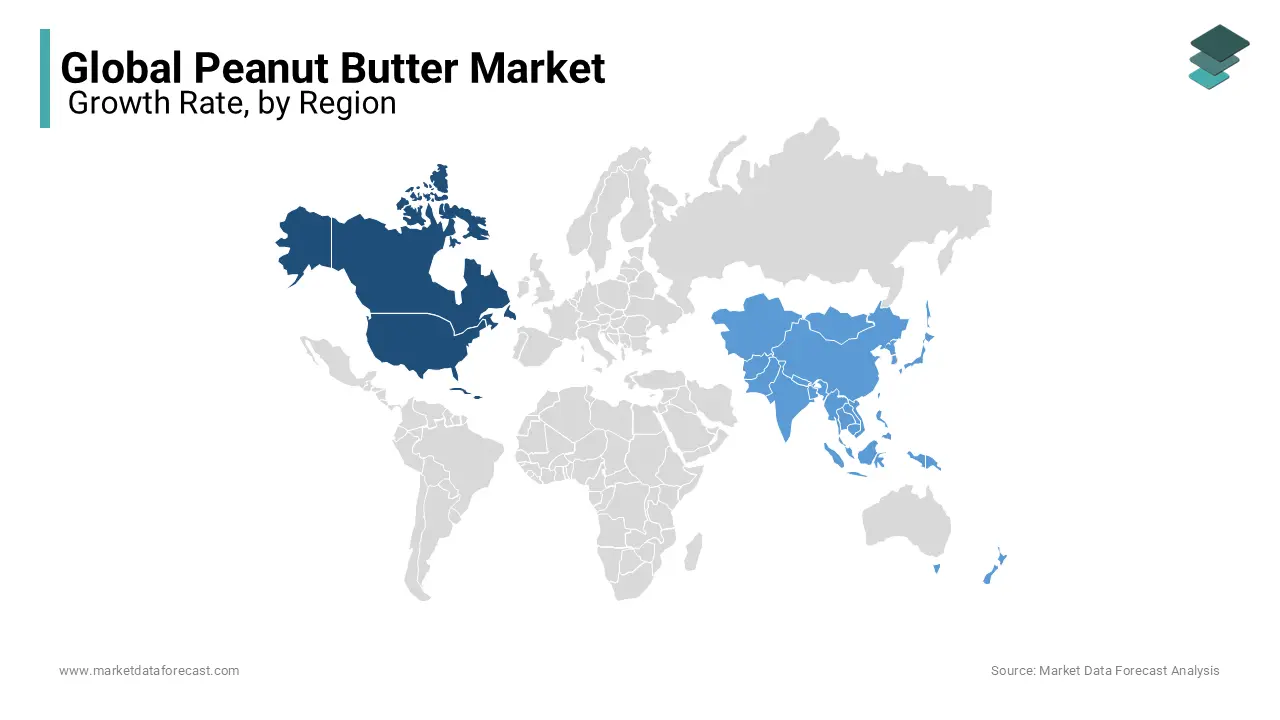
North America led the global peanut butter market at 46.4% in 2025. The United States is the primary driver. Peanut butter is deeply integrated into American food culture, appearing in school lunches, sports nutrition, and emergency food supplies. The Food and Drug Administration’s standardized definition of peanut butter ensures product consistency, while the Federal Trade Commission monitors labeling claims to prevent consumer deception. With major producers like The J.M. Smucker Company and Hormel Foods headquartered in the region, North America leads in innovation, marketing, and export capacity. The rise of natural and organic variants, coupled with strong e-commerce infrastructure, continues to expand consumer choice and brand differentiation, reinforcing regional dominance.
Europe Peanut Butter Market Market Analysis
Europe exhibits a growing but selective appetite for peanut butter, concentrated in Western and Northern countries. The UK, Germany, and the Netherlands are the largest consumers, where peanut butter is increasingly adopted as a breakfast spread and fitness food. The European Food Safety Authority regulates peanut allergen labeling under the EU’s Food Information for Consumers Regulation, ensuring consumer safety and transparency. In Scandinavia, where a share of consumers follow flexitarian diets, peanut butter is promoted as a sustainable protein alternative. The Common Agricultural Policy supports research into legume cultivation, potentially reducing import dependency. However, cultural unfamiliarity in Southern and Eastern Europe limits penetration. Retailers like Tesco and Albert Heijn have expanded organic and no-added-sugar lines, while e-commerce platforms facilitate access to U.S. and Canadian brands. With rising health awareness and culinary experimentation, Europe is evolving from a niche to a mature market.
Asia Pacific Peanut Butter Market Market Analysis
Asia Pacific is emerging as a high-potential region due to urbanization, rising disposable incomes, and Western dietary influence. China and India are key growth markets, with urban middle-class consumers adopting peanut butter as a modern, nutritious spread. In India, peanut butter is increasingly used in fitness diets and children’s nutrition, with brands like Happie Nuts and The Whole Truth gaining traction. Japan has a long-standing tradition of peanut-based sauces in confectionery and savory dishes, facilitating acceptance. E-commerce platforms like Alibaba and Flipkart have expanded access, while social media influencers promote peanut butter in smoothies and energy balls. Despite lower per capita consumption, the region’s population size and dietary transition signal strong long-term growth potential.
Latin America Peanut Butter Market Market Analysis
Latin America holds a significant share of the global market, as reported by Statista, with Brazil and Mexico leading in both domestic consumption and local production. The Pan American Health Organization notes that protein deficiency remains a public health concern, prompting interest in affordable plant-based sources like peanut butter. In Brazil, the Ministry of Health includes peanut-based spreads in school feeding programs due to their high nutrient density. Traditional dishes such as mojo in Cuba and tacu-tacu in Peru are being adapted to include peanut butter for added flavor and protein. Chile and Argentina are developing domestic processing capabilities to reduce reliance on imports. However, economic volatility and competition from local spreads like dulce de leche limit market expansion. With increasing urbanization and supermarket penetration, the region is gradually shifting toward branded, packaged peanut butter, creating opportunities for both local and international players.
Middle East and Africa Peanut Butter Market Market Analysis
Middle East and Africa collectively represent a notable share of the global market, as per Euromonitor International, with South Africa and the Gulf Cooperation Council (GCC) countries leading adoption. In South Africa, peanut butter is a common household item, with local brands like Sasko and Ruprecht dominating retail shelves. In the UAE and Saudi Arabia, expatriate communities and Western-style supermarkets drive demand for imported brands. The Dubai Health Authority promotes plant-based proteins as part of its National Nutrition Strategy. However, cultural unfamiliarity and high import costs constrain broader acceptance. With increasing investment in food processing and urban retail, the region is poised for gradual but steady growth in peanut butter consumption.
COMPETITIVE LANDSCAPE
The competitive dynamics of the peanut butter market reflect a complex interplay between legacy brands, private-label retailers, and agile specialty producers. Established players dominate through brand recognition, extensive distribution, and economies of scale, maintaining strong shelf presence in supermarkets and hypermarkets. However, they face mounting pressure from private-label expansions by major grocery chains, which offer cost-effective alternatives without compromising on perceived quality. At the same time, artisanal and organic brands are gaining ground by appealing to consumers seeking transparency, clean ingredients, and ethical sourcing, often leveraging digital platforms and social media to build loyal followings. The rise of flavored, protein-enhanced, and allergen-free variants has intensified product differentiation, pushing incumbents to innovate beyond traditional creamy and crunchy formats. E-commerce is reshaping access, enabling niche brands to reach global audiences without relying on conventional retail gatekeepers. Additionally, growing health awareness and peanut allergy concerns have created space for alternative nut and seed butters, further fragmenting the category. Competition is no longer solely about price or taste but increasingly revolves around values—sustainability, wellness, and authenticity—forcing all players to adapt their messaging, sourcing, and product development to stay relevant in a rapidly evolving landscape.
KEY MARKET PARTICIPANTS
Some of the notable key players in the global peanut butter market.
-
Britannia Dairy Private Limited
-
Procter & Gamble
-
Dr. Oetker India Pvt. Ltd
-
Conagra Brands
-
Algood Food Co.
-
Kraft Foods
-
Boulder Brands
-
Hormel Foods Corporation
-
The J.M. Smucker Company
-
Unilever
TOP PLAYERS IN THE MARKET
- The J.M. Smucker Company stands as a dominant force in the global peanut butter landscape, primarily through its ownership of the iconic Jif brand, one of the most recognized names in the category. The company has shaped consumer expectations by consistently delivering high-quality, smooth, and crunchy formulations while adapting to evolving dietary preferences with natural and reduced-sugar variants. Smucker’s strategic integration of R&D, large-scale production, and nationwide distribution has solidified its presence in both retail and foodservice channels. Its commitment to brand integrity, food safety, and sustainability has set industry benchmarks, influencing product standards across the sector. Beyond commercial success, the company actively supports agricultural innovation and farmer partnerships, ensuring long-term supply chain resilience. Its marketing prowess and deep-rooted connection with American households have made Jif synonymous with peanut butter for generations, reinforcing its leadership in a highly competitive market.
- Hormel Foods has established a significant footprint in the peanut butter market through its flagship brand Skippy, which enjoys widespread international recognition and consumer loyalty. The company has successfully positioned Skippy as a versatile, family-friendly product, available in creamy, crunchy, and natural formats that cater to diverse palates. Hormel’s global supply chain and strategic market entries have enabled Skippy to gain strong traction in Asia, Europe, and Latin America, where Western food habits are on the rise. The company emphasizes consistent quality, modern packaging, and consumer engagement through digital and social platforms. By investing in clean-label innovation and allergen-safe manufacturing, Hormel has strengthened trust among health-conscious buyers. Its ability to balance mass-market appeal with responsiveness to nutritional trends has allowed Skippy to remain competitive amid growing demand for transparency and functionality. Hormel’s operational excellence and brand stewardship continue to drive Skippy’s relevance in both traditional and emerging markets.
- Kraft Heinz contributes to the peanut butter market through its ownership of the Peter Pan brand, a long-standing name with deep heritage in American pantries. The company has maintained Peter Pan’s identity as a dependable, affordable, and widely accessible option for families, with a focus on consistent taste and texture. Kraft Heinz leverages its extensive distribution network and retail relationships to ensure broad shelf presence across supermarkets and mass merchandisers. While operating in a competitive segment, the company has differentiated Peter Pan through innovations in formulation, including preservative-free and honey-infused variants, aligning with clean-label trends. Its integration within a larger food portfolio allows for cross-category marketing and cost efficiencies in production and logistics. Kraft Heinz also emphasizes food safety and regulatory compliance, reinforcing consumer confidence. By balancing tradition with incremental innovation, the company sustains Peter Pan’s relevance in a market increasingly driven by health, convenience, and brand authenticity.
TOP STRATEGIES USED BY KEY MARKET PLAYERS
One major strategy employed by leading peanut butter manufacturers is brand extension into natural, organic, and functional formulations. Companies are reformulating core products to exclude hydrogenated oils, added sugars, and preservatives, while introducing variants enriched with protein, fiber, or adaptogens to appeal to health-focused consumers. This shift allows legacy brands to remain competitive against premium and artisanal entrants.
Another key approach is global market expansion, particularly in emerging economies where Western dietary habits are gaining traction. Companies are tailoring packaging, flavor profiles, and portion sizes to local preferences while leveraging e-commerce and modern retail partnerships to enhance accessibility and visibility in urban centers.
A third pivotal strategy is vertical integration and sustainable sourcing. Firms are strengthening relationships with peanut farmers, investing in agricultural research, and adopting regenerative farming practices to ensure supply stability, improve crop resilience, and meet consumer demand for ethical and environmentally responsible production.
RECENT HAPPENINGS IN THE MARKET
- In February 2023, The J.M. Smucker Company launched a new line of Jif Organic Creamy and Crunchy peanut butter in recyclable jars, reinforcing its commitment to sustainable packaging and eco-conscious consumers.
- In June 2023, Hormel Foods introduced Skippy Plant Power, a protein-enhanced peanut butter blend with added pea protein, targeting fitness-oriented and plant-based diet consumers.
- In October 2023, Kraft Heinz expanded Peter Pan’s distribution in Southeast Asia through a partnership with a regional grocery chain, increasing its footprint in emerging markets.
- In January 2025, The J.M. Smucker Company invested in a new peanut roasting and grinding facility in Georgia to enhance supply chain efficiency and support natural product lines.
- In April 2025, Hormel Foods launched a limited-edition honey-cinnamon flavored Skippy variant in collaboration with a wellness influencer, leveraging social media to drive engagement and trial among younger demographics.
MARKET SEGMENTATION
This research report on the global peanut butter market has been segmented and sub-segmented based on product type, brand type, distribution channel, and region.
By Product Type
- Crunchy
- Creamy
- Others (Flavored/Specialty)
By Brand Type
- Branded
- Private-Label
- Others (Artisanal and Specialty manufacturers)
By Distribution Channels
- Supermarkets & Hypermarkets
- Convenience Stores
- Online Stores
By Region
- North America
- Europe
- The Asia Pacific
- Latin America
- Middle East and Africa