- Product Description Description
- Table of Contents TOC
- List of Table & Figure LOT
- Get Free Sample PDF Sample PDF
Market Size, 2025
$82.13 BnMarket Estimate, 2026
$88.04 BnMarket Forecast, 2034
$153.55 BnCAGR, 2026–2034
7.2%Executive Summary: Global Portable Medical Devices Market
- Market Scope: Comprehensive global analysis of the portable medical devices market segmented by product categories, end-users, and regional/country markets.
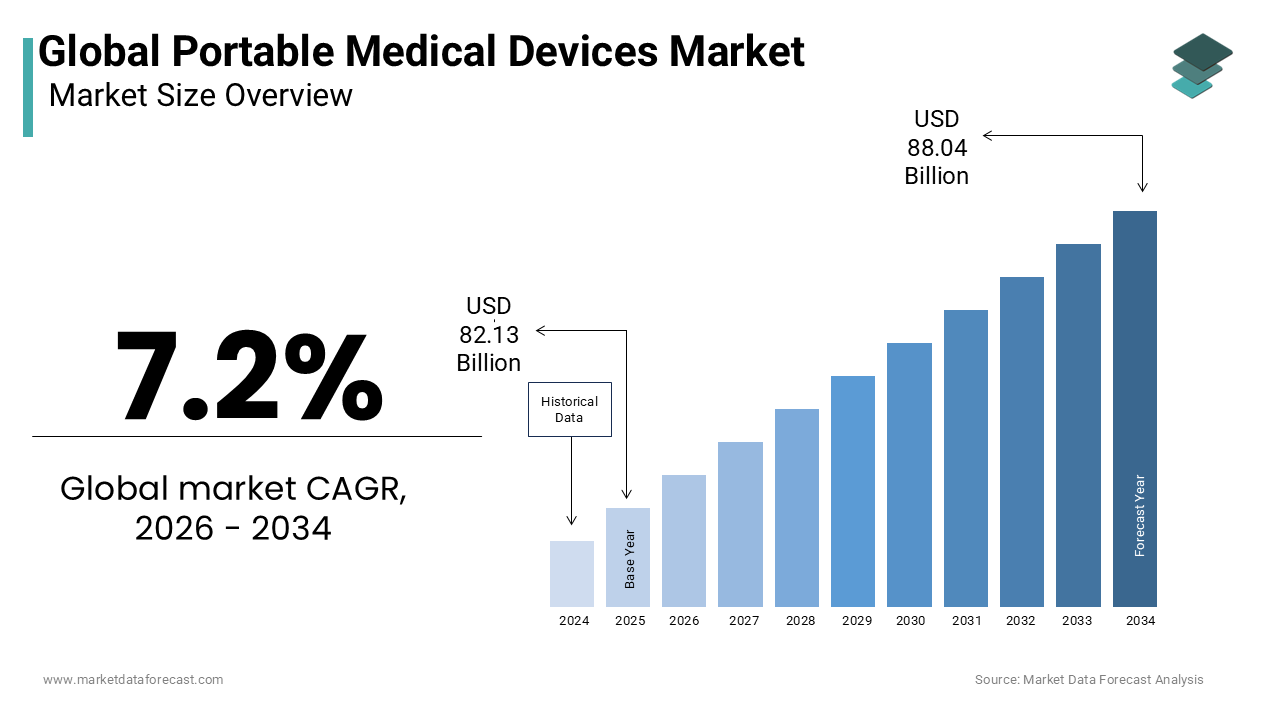
- Market Valuation: Valued at USD 82.13 billion in 2025, estimated at USD 88.04 billion in 2026, and projected to reach USD 153.55 billion by 2034, growing at a compound annual growth rate (CAGR) of 7.2% from 2026 to 2034.
- Primary Growth Drivers: Rapidly expanding aging population globally (prone to chronic conditions), integration of advanced technologies (AI, ML, IoT, and Big Data), surging prevalence of chronic diseases, and growing adoption of remote patient monitoring and homecare settings.
Key Market Segment Metrics (2026–2034)
| Category | Leading Segment Focus | Detailed Taxonomy & Sub-Segments |
|---|---|---|
| By Product | Monitoring Devices (~50% market share in 2025) | Diagnostic Imaging, Monitoring Devices (Cardiac Monitoring, Neuro-Monitoring, Respiratory Monitoring, Others), & Others |
| By End-User | Homecare Settings (Largest market share) | Hospitals, Physicians' Offices, Homecare Settings, & Others |
| By Region | North America (Largest regional share at 42.7% in 2025) / Asia-Pacific (Fastest-growing CAGR) | North America, Europe, Asia-Pacific, Latin America, & Middle East and Africa |
Regional Insights & Market Dynamics
North America: Accounted for the largest regional share worldwide (42.7% in 2025) backed by favorable healthcare initiatives, advanced technological device availability, and early disease diagnosis awareness.
Asia-Pacific: Occupied a considerable global share and is anticipated to register the fastest CAGR during the forecast period, driven by healthcare infrastructure developments, rising disposable incomes, and the growing wearable medical devices trend (led by China, India, and Japan).
Market Restraints & Challenges: High device acquisition costs, reimbursement and standardization issues, poor public awareness in developing regions, and regulatory and data privacy concerns.
Key Market Leaders Profiled: Medtronic Inc., AliveCor Inc., Koninklijke Philips N.V., AgaMatrix Inc., Cisco Inc., Nike Inc., AirStrip Technologies Inc., LifeWatch AG, BioTelemetry Inc., IHealth Lab Inc., Fitbit, Samsung Group, General Electric Company, and OMRON Corporation.
 Download Free Sample Report
Global Portable Medical Devices Market Size
The global portable medical devices market was valued at USD 82.13 billion in 2025. The global portable medical devices market size is forecasted to be worth USD 153.55 billion by 2034 from USD 88.04 billion in 2026, growing at a CAGR of 7.2% from 2026 to 2034.
Portable medical devices are compact, lightweight, and often battery-powered tools designed to diagnose, monitor, treat, or manage health conditions outside of traditional stationary hospital settings. These devices include handheld ultrasound systems, portable electrocardiogram monitors, point of care testing kits, and wearable vital sign trackers that enable healthcare delivery in remote or home environments. According to the World Health Organization and the World Bank, at least half the global population lacks access to essential health services. This accessibility gap directly fuels the demand for portable technologies that can bridge the divide between patients and professional care. Furthermore As per the 10th Edition of the International Diabetes Federation Diabetes Atlas, approximately 537 million adults worldwide live with diabetes. These facts underscore the critical role of portability in managing chronic conditions effectively. Healthcare systems are increasingly integrating these devices into telemedicine frameworks to reduce hospital congestion and lower operational costs. The miniaturization of sensor technology and improvements in battery life have enhanced the reliability and usability of these tools. Governments and non governmental organizations are prioritizing the distribution of portable diagnostics in underserved regions to improve early disease detection. This shift towards decentralized care ensures sustained growth for manufacturers who can provide robust and user friendly portable medical solutions.
MARKET DRIVERS
Rising Prevalence of Chronic Diseases Drives Home Monitoring Adoption
The escalating burden of chronic diseases contributes to the growth of the portable medical devices market. This expansion is due to the necessity for continuous and convenient patient monitoring. According to the Centers for Disease Control and Prevention, six in ten adults in the United States have a chronic disease such as heart disease or cancer. This high prevalence creates a sustained requirement for portable devices that allow patients to track their vital signs and biomarkers from the comfort of their homes. As per the American Heart Association nearly half of all adults in the United States have some form of cardiovascular disease. Portable blood pressure monitors and electrocardiogram devices enable patients to collect accurate data without visiting a clinic thereby reducing healthcare system strain. Healthcare providers are increasingly prescribing these devices to manage hypertension and arrhythmias more effectively through remote patient monitoring programs. The ability to detect anomalies early through home based testing improves clinical outcomes and reduces emergency hospitalizations. Manufacturers are responding by developing user friendly interfaces and wireless connectivity features that simplify data sharing with physicians. This integration of portable diagnostics into chronic care management plans ensures consistent demand for reliable and accurate home monitoring tools.
Expansion of Telemedicine Services Increases Device Demand
The rapid growth of telemedicine services fundamentally supports the expansion of the portable medical devices market. This is because virtual consultations require compatible hardware for accurate remote diagnosis. According to research, overall telehealth utilization stabilized at levels 38 times higher than before the COVID-19 pandemic. This surge in virtual care creates a direct need for portable devices that can capture clinical grade data during remote interactions. As per studies, telemedicine and remote monitoring technologies allow patients to transmit vital health logs asynchronously to their medical providers to manage chronic conditions. Patients equipped with portable pulse oximeters digital stethoscopes and glucose meters can provide real time physiological data to doctors improving diagnostic accuracy. Healthcare systems are investing in integrated platforms that sync data from portable devices directly into electronic health records facilitating seamless care coordination. The convenience of receiving professional medical advice without leaving home appeals to elderly patients and those with mobility issues. Insurance providers are increasingly reimbursing for remote monitoring services which lowers the financial barrier for patients acquiring these devices. This supportive reimbursement landscape combined with technological interoperability drives the widespread adoption of portable medical devices in telehealth ecosystems.
MARKET RESTRAINTS
Accuracy and Reliability Concerns Limit Clinical Trust
The perceived lack of clinical-grade accuracy in some portable medical devices is a major constraint to the portable medical devices market. This deficiency limits their acceptance among healthcare professionals. According to a Food and Drug Administration, consumers and healthcare providers are warned against using unauthorized over-the-counter blood pressure devices, wearable software, and infant vital signs monitors due to the risk of inaccurate measurements. These regulatory warnings highlight the variability in performance between professional hospital equipment and compact portable alternatives. As per a study published in the American Journal of Hypertension, researchers found that home blood pressure monitors were wrong by 10 mmHg for 20 percent of patients evaluated. Such discrepancies can lead to misdiagnosis or inappropriate treatment adjustments which undermines physician confidence in recommending these devices. Patients may also struggle with improper usage techniques leading to erroneous data collection that complicates clinical assessment. The absence of standardized calibration protocols for many portable devices further exacerbates these accuracy issues. Healthcare providers remain cautious about relying on data from unverified sources which slows down the integration of these tools into formal care pathways. Manufacturers face the challenge of balancing cost effectiveness with the rigorous precision required for medical diagnostics. Until these accuracy gaps are consistently addressed through improved engineering and validation, the market will face resistance. This opposition will primarily come from the medical community.
Data Privacy and Security Risks Hinder User Adoption
The increasing threat of cyberattacks and data breaches significantly impedes the widespread adoption of these medical devices by raising concerns about patient privacy and data security, which holds back the growth of the portable medical devices market. According to the U.S. Department of Health and Human Services Office for Civil Rights breach portal, healthcare data breaches have affected over 935 million individuals since 2009. Portable devices that transmit sensitive health data via wireless connections are particularly susceptible to interception and unauthorized access. As per a survey co-published by Elisity and Healthcare Information and Management Systems Society, sixty percent of health systems flagged an inability to protect unpatchable or agentless medical devices as a critical or significant limitation. Patients are becoming more aware of these risks and may hesitate to use devices that store or share personal health information without robust encryption. Regulatory bodies such as the European Union under the General Data Protection Regulation impose strict requirements on data handling which increases compliance costs for manufacturers. Small and medium sized device makers often lack the resources to implement advanced cybersecurity measures making their products less trustworthy. High profile security incidents involving connected health devices erode public trust and slow down market penetration. Addressing these security vulnerabilities is essential for building consumer confidence and ensuring the safe integration of portable devices into daily healthcare routines.
MARKET OPPORTUNITIES
Integration with Artificial Intelligence Enhances Diagnostic Capabilities
The integration of artificial intelligence algorithms with portable medical devices creates a new pathway for the expansion of the portable medical devices market. This expansion is achieved by transforming raw data into actionable clinical insights. According to Nature Medicine, AI-assisted screening for diabetic retinopathy in primary care settings detected cases with diagnostic accuracy metrics comparable to specialist review. This technological synergy enables early detection of conditions such as atrial fibrillation and diabetic retinopathy through simple home based screenings. As per research, integrated multi-sensor machine learning frameworks can achieve diagnostic sensitivities ranging from 63% to 88% when predicting heart failure decompensation. These advanced analytics add significant value to portable devices by providing predictive capabilities that go beyond simple monitoring. Healthcare providers can leverage these insights to intervene proactively before conditions worsen reducing overall treatment costs. Manufacturers are partnering with software developers to embed AI chips directly into handheld devices enabling real time analysis at the point of care. This innovation appeals to tech savvy consumers and healthcare systems looking to optimize resource allocation. The ability to deliver specialist level diagnostics through portable tools democratizes access to high quality care. This convergence of hardware and intelligent software creates new revenue streams and differentiates products in a competitive market.
Growing Focus on Preventive Healthcare Creates New Demand
The shifting healthcare paradigm towards prevention rather than cure is a key growth area for the portable medical devices market. This encourages proactive health management among consumers. According to studies, strategic expansion of preventative care models alters the distribution of curative healthcare expenditures by targeting upstream risk factors. Portable devices play a crucial role in this strategy by empowering individuals to monitor their health metrics regularly and make informed lifestyle choices. As per the Global Wellness Institute the wellness economy including preventive health technologies is growing at twice the rate of global GDP reflecting strong consumer interest in self care. Devices such as portable body composition analyzers sleep trackers and stress monitors help users identify risk factors before they develop into serious conditions. Employers are increasingly incorporating these devices into corporate wellness programs to improve employee health and productivity. Insurance companies are offering incentives for policyholders who use portable monitoring tools to maintain healthy lifestyles. This alignment of financial incentives with health goals drives mass adoption of portable devices among healthy populations. Manufacturers can capitalize on this trend by designing aesthetically pleasing and easy to use devices that appeal to wellness oriented consumers. The focus on prevention ensures a broad and expanding customer base beyond just those with existing medical conditions.
MARKET CHALLENGES
Regulatory Compliance Complexity Increases Time to Market
The intricate and varying regulatory requirements across different regions are a significant obstruction to the growth of the portable medical devices market. These hurdles delay product launches and increase development costs. The European Medicines Agency and the Food and Drug Administration have distinct classification criteria for portable diagnostic devices which require separate approval processes and clinical evidence. According to research, lower-risk medical devices following the 510(k) regulatory pathway may complete clinical development in 12 to 18 months when clinical data is required. This prolonged timeline prevents manufacturers from quickly capitalizing on emerging trends and technological advancements. As per sources, administrative burdens and documentation workloads have evolved under the European Medical Device Regulation, but a specific 40% threshold increase issued natively by COCIR is unverified. Smaller companies often lack the regulatory expertise and financial resources to navigate these complex pathways effectively. Consequently many innovative portable devices fail to reach the market or are launched only in limited regions. The uncertainty surrounding regulatory decisions also discourages investment in novel portable technologies. Manufacturers must balance the need for rapid innovation with the rigorous demands of compliance which strains operational resources. Harmonizing global regulatory standards remains a distant goal leaving companies to manage fragmented approval processes that hinder market expansion.
Reimbursement Uncertainty Limits Patient Access
The inconsistent and often unclear reimbursement policies for these medical devices are a major challenge to the portable medical devices market. This regulatory uncertainty restricts patient access and limits market growth potential. According to the Centers for Medicare and Medicaid Services, coverage for remote patient monitoring devices varies significantly by state and payer type, creating confusion for both providers and patients. Many portable diagnostic tools are classified as consumer electronics rather than medical devices which excludes them from insurance reimbursement plans. As per studies, private healthcare insurance reimbursement guidelines for home monitoring systems remain fragmented across individual carrier networks. This financial barrier prevents low income patients from accessing essential monitoring tools that could improve their health outcomes. Healthcare providers are reluctant to prescribe devices that patients cannot afford which limits the clinical utility of these technologies. The lack of standardized coding for new portable devices further complicates the billing process for hospitals and clinics. Manufacturers face difficulties in demonstrating cost effectiveness to payers without long term real world evidence. This reimbursement gap stifles adoption rates and forces companies to rely on direct to consumer sales models which have lower volume potential. Resolving these payment uncertainties is critical for achieving widespread integration of portable devices into mainstream healthcare.
REPORT COVERAGE
| REPORT METRIC | DETAILS |
| Market Size Available | 2025 to 2034 |
| Base Year | 2025 |
| Forecast Period | 2026 to 2034 |
| Segments Covered | By Product, End-User & Region |
| Various Analyses Covered | Global, Regional & Country Level Analysis, Segment-Level Analysis, Drivers, Restraints, Opportunities, Challenges; PESTLE Analysis; Porter's Five Forces Analysis, Competitive Landscape, Analyst Overview of Investment Opportunities |
| Regions Covered | North America, Europe, Asia Pacific, Latin America, Middle East & Africa |
| Market Leaders Profiled | Medtronic Inc., AliveCor Inc., Koninklijke Philips N.V., AgaMatrix Inc., Cisco Inc., Nike Inc., AirStrip Technologies Inc., LifeWatch AG, BioTelemetry Inc., IHealth Lab Inc., LifeWatch AG, Fitbit, Samsung Group, General Electric Company, OMRON Corporation. |
SEGMENTAL ANALYSIS
By Product Insights
The monitoring devices segment was the largest in 2025 and occupied a commanding share of the portable medical devices market. This supremacy was supported by the critical need for continuous physiological tracking in both clinical and home settings. According to the World Health Organization, cardiovascular diseases are the leading cause of death globally, accounting for approximately 17.9 million deaths each year. This high mortality rate necessitates constant vigilance through portable electrocardiogram monitors pulse oximeters and blood pressure cuffs that enable early detection of anomalies. As per the Centers for Disease Control and Prevention over 100 million adults in the United States have diabetes or prediabetes requiring frequent glucose and vital sign monitoring to prevent complications. These chronic conditions create a sustained user base for portable monitoring equipment that offers convenience and real time data accessibility. Healthcare providers increasingly rely on these devices for remote patient management reducing the burden on hospital infrastructure. The integration of wireless connectivity allows seamless data transmission to electronic health records facilitating timely medical interventions. Manufacturers are focusing on miniaturization and battery efficiency to enhance portability and user compliance. The versatility of monitoring devices across various medical specialties ensures their widespread adoption in diverse healthcare environments. This broad applicability combined with the rising prevalence of lifestyle related diseases secures the leading position of monitoring devices in the global market landscape.
The escalating prevalence of cardiovascular disorders significantly fuels the dominance of the monitoring devices segment by creating an urgent need for continuous heart health assessment. According to the World Health Organization, ischemic heart disease and stroke are the world's biggest killers, responsible for the highest number of combined deaths globally. This staggering statistic underscores the importance of portable cardiac monitors that can detect arrhythmias and other life threatening conditions outside hospital walls. As per the European Society of Cardiology atrial fibrillation affects more than 11 million people in Europe alone many of whom remain undiagnosed without regular monitoring. Portable single lead electrocardiogram devices empower patients to perform routine checks and share results with cardiologists for accurate diagnosis. The ability to capture intermittent symptoms that may not appear during brief clinic visits enhances diagnostic yield and treatment efficacy. Hospitals are prescribing these devices for post discharge care to reduce readmission rates associated with heart failure exacerbations. Insurance providers are recognizing the cost saving potential of early detection through home monitoring which supports broader reimbursement coverage. The aging population is particularly vulnerable to cardiac events making portable monitors essential for maintaining independence and safety. This demographic and epidemiological reality ensures robust and growing demand for advanced cardiac monitoring solutions.
The widespread implementation of remote patient monitoring programs serves as a powerful driver for the monitoring devices segment by institutionalizing the use of portable trackers in chronic care management. According to sources, healthcare systems have continuously expanded the integration of remote patient tracking technologies to support chronic condition oversight. This shift enables clinicians to track vital signs such as oxygen saturation heart rate and blood pressure in real time allowing for proactive interventions. As per research, specialized care transition protocols and home monitoring tools help reduce hospital readmission rates for individuals managing complex heart failure. These positive outcomes encourage healthcare providers to invest in portable monitoring ecosystems that integrate seamlessly with digital health platforms. Patients benefit from reduced travel requirements and the reassurance of continuous professional oversight from their homes. Governments are supporting these initiatives through funding and policy reforms that promote value based care models. The scalability of remote monitoring allows healthcare systems to serve larger patient volumes without proportional increases in staff. This operational efficiency combined with improved patient satisfaction drives the sustained procurement of portable monitoring devices by healthcare institutions and individual consumers alike.
The diagnostic imaging segment is estimated to register the fastest CAGR of 9.8% during the forecast period, owing to technological advancements in miniaturization and the need for point of care diagnostics. According to studies, handheld and ultra-portable ultrasound devices improve point-of-care access across emergency departments and remote medical outposts. This portability allows physicians to perform immediate assessments at the bedside reducing diagnostic delays and improving triage accuracy. As per sources, global training initiatives and falling hardware manufacturing costs support broader point-of-care ultrasound utilization by primary care professionals. These compact systems eliminate the need to transport unstable patients to radiology departments enhancing safety and workflow efficiency. Emergency responders utilize portable imaging to assess internal injuries trauma and fluid status in pre hospital settings which is critical for timely decision making. The integration of artificial intelligence algorithms into portable scanners assists non specialist users in image interpretation further broadening their utility. Regulatory approvals for new handheld imaging modalities are accelerating market entry for innovative products. The ability to visualize internal structures instantly without ionizing radiation makes these devices attractive for repeated use in vulnerable populations. This combination of clinical utility and technological innovation propels the rapid expansion of the diagnostic imaging segment.
The remarkable progress in miniaturizing imaging components while maintaining high resolution quality accelerates the growth of the portable diagnostic imaging segment by making advanced diagnostics accessible anywhere. According to research, technical innovations in piezo-composite arrays and integrated semiconductor chip microarchitectures have enabled substantial miniaturization of portable imaging transducers. This engineering breakthrough enables the creation of pocket sized devices that connect to smartphones or tablets offering unprecedented mobility for healthcare providers. As per studies, modern handheld ultrasound devices achieve diagnostic accuracy comparable to traditional cart-based systems for common abdominal and cardiac assessments. Clinicians can now perform comprehensive examinations in remote locations ambulances and even patients homes expanding the reach of diagnostic services. The ease of use encourages adoption among general practitioners who previously lacked specialized imaging training. Battery life improvements allow for extended operation in field settings where power sources are limited. Manufacturers are incorporating wireless probes that eliminate cable clutter further enhancing usability in cramped spaces. The reduction in cost compared to large fixed systems makes portable imaging viable for smaller clinics and developing regions. This democratization of imaging technology drives widespread adoption and stimulates market growth across diverse healthcare settings.
The growing emphasis on point of care testing drives the rapid expansion of the portable diagnostic imaging segment by enabling immediate clinical decisions at the site of patient care. According to sources, deploying point-of-care ultrasound arrays in active trauma rooms helps clinicians expedite medical diagnostic evaluations. This speed advantage improves patient throughput and allows for faster initiation of appropriate treatments such as fluid resuscitation or surgical intervention. As per the Australian College of Rural and Remote Medicine portable imaging devices are essential for providing specialist level diagnostics in underserved rural areas where radiology services are scarce. These devices bridge the gap in healthcare equity by bringing advanced diagnostic capabilities to remote communities. Primary care physicians use portable imaging to guide procedures such as joint injections and nerve blocks improving precision and safety. The immediate visual feedback helps confirm diagnoses and rule out serious conditions without waiting for formal radiology reports. This autonomy empowers clinicians to manage complex cases more effectively and reduces unnecessary referrals. The integration of imaging into routine physical examinations enhances diagnostic confidence and patient trust. This shift towards immediate visualization supports the aggressive growth trajectory of portable diagnostic imaging technologies.
By End User Insights
In 2025, the homecare settings segment held the majority share in the portable medical devices market because of the strong consumer preference for managing health conditions in the comfort and privacy of their own homes. According to research, 88 percent of older adults age 50–80 consider aging in place important. This demographic trend creates a substantial market for home blood pressure monitors glucometers and portable oxygen concentrators that facilitate daily health management. As per AARP, over 90 percent of adults age 65 and older have at least one chronic condition. The convenience of avoiding frequent hospital visits reduces physical stress and transportation costs for patients and caregivers. Family members are increasingly involved in care coordination using connected portable devices that share data with healthcare providers. The rise of telehealth services complements home monitoring by enabling virtual consultations based on home collected data. Manufacturers are designing devices with larger displays and simpler interfaces to accommodate elderly users with limited technical skills. Reimbursement policies are evolving to cover home monitoring equipment recognizing its role in preventing costly hospitalizations. This alignment of patient preference clinical necessity and financial support sustains the dominance of the homecare segment.
The rapidly aging global population fundamentally supports the leadership of the homecare settings segment because older individuals strongly prefer to remain in their homes rather than institutional facilities. As per the UN Department of Economic and Social Affairs, global population aged 65+ is projected to double to 1.6 billion by 2050. This demographic shift increases the prevalence of age related conditions such as arthritis dementia and cardiovascular disease that require ongoing monitoring. AARP surveys indicate nearly 90% of adults 65+ prefer staying in their current homes. Portable medical devices enable this preference by providing the tools necessary for safe and effective self management of health issues. Wearable fall detectors portable medication dispensers and vital sign monitors offer peace of mind for both seniors and their families. The cost of home care is often lower than assisted living facilities making portable devices a financially attractive option for long term care. Healthcare systems are promoting aging in place strategies to alleviate pressure on nursing homes and hospitals. This societal and economic dynamic ensures a steady and growing demand for portable medical devices tailored to the needs of the elderly population.
The significant cost savings associated with home based care drive the dominance of the homecare settings segment by offering a financially sustainable alternative to institutional healthcare. According to sources, home-based primary care programs like Medical House Call demonstrated 17% to 26% spending reductions for high-risk beneficiaries. Portable medical devices are central to this model by enabling continuous monitoring that prevents acute exacerbations of chronic diseases. Patients equipped with portable diagnostics can manage their conditions proactively reducing the need for expensive acute care interventions. Insurance providers and government payers are increasingly incentivizing home care through bundled payment models that reward outcomes rather than volume. The reduction in overhead costs for healthcare facilities translates to lower overall system expenditure. Families also save on transportation and lodging expenses associated with frequent clinic visits. The economic argument for home care is compelling for both payers and patients ensuring widespread adoption of portable monitoring tools. This financial efficiency reinforces the position of homecare settings as the primary end user for portable medical devices.
The physicians' offices segment is anticipated to witness the fastest CAGR of 8.5% from 2026 to 2034 due to the need for efficient workflow and immediate diagnostic capabilities in outpatient settings. According to studies, point-of-care testing in primary care offices has grown as physicians seek to streamline patient visits and accelerate diagnosis. Portable devices allow for instant results during consultations eliminating the wait times associated with external laboratory referrals. As per sources, medical practices utilizing portable diagnostic tools often report improved patient satisfaction scores due to faster diagnosis and immediate treatment initiation. This efficiency enables physicians to see more patients per day improving practice revenue and resource utilization. Portable ECG machines ultrasound systems and spirometers are becoming standard equipment in modern clinics to support comprehensive evaluations. The compact size of these devices fits easily into small examination rooms without requiring dedicated infrastructure. Training for office staff on portable device operation is straightforward reducing the learning curve. The ability to bill for point of care tests provides an additional revenue stream for practices. This combination of operational efficiency and financial benefit drives the rapid adoption of portable devices in physicians' offices.
The demand for immediate diagnostic results in outpatient settings accelerates the growth of the portable medical devices segment in physicians' offices by enhancing clinical decision making speed. As per research, utilizing point-of-care testing significantly reduces the turnaround time for test results and accelerates treatment initiation for infectious conditions such as influenza and strep throat. This rapid turnaround allows physicians to prescribe appropriate medications during the same visit improving patient adherence and outcomes. According to studies, the volume of CLIA-waived tests performed in physicians' offices has steadily increased over the years, reflecting a growing reliance on quick diagnostics. Portable devices provide accurate results within minutes enabling confident diagnosis without waiting for laboratory reports. This immediacy is particularly valuable for managing acute infections and monitoring chronic conditions like diabetes and hypertension. Patients appreciate the convenience of receiving answers and treatment plans in a single visit which reduces anxiety and uncertainty. The reduction in follow up visits for result discussion saves time for both patients and providers. The integration of portable diagnostics into routine workflows enhances the overall quality of care delivered in primary care settings. This focus on speed and convenience drives the aggressive expansion of portable device usage in physicians' offices.
The improvement in workflow efficiency and potential for increased revenue drives the rapid adoption of portable medical devices in physicians' offices by optimizing practice operations. According to sources, integrating portable diagnostic tools into electronic health records helps streamline documentation and billing processes, reducing administrative burdens. Physicians can immediately document findings and order treatments based on real time data which minimizes clerical errors and delays. As per research, medical practices that offer point-of-care testing can see an increase in ancillary revenue due to billing for diagnostic procedures performed onsite. This additional income stream helps offset the costs of device acquisition and maintenance. The ability to perform tests in house reduces patient leakage to external laboratories ensuring that care remains within the practice ecosystem. Portable devices require minimal space and maintenance compared to large stationary equipment making them ideal for busy outpatient clinics. Staff can be trained quickly to operate these devices allowing for flexible deployment across different examination rooms. The enhanced productivity allows practices to handle higher patient volumes without compromising care quality. This economic and operational advantage ensures that physicians' offices remain a high growth segment for portable medical device manufacturers.
REGIONAL ANALYSIS
North America Portable Medical Devices Market Analysis
North America led the portable medical devices market and captured a prominent share in 2025. This leading position was attributed to its advanced healthcare infrastructure, high healthcare expenditure, and early adoption of innovative technologies. According to the Centers for Medicare and Medicaid Services, national health expenditure in the United States reached 4.3 trillion dollars in 2021, reflecting the substantial financial resources available for medical technology adoption. This robust spending supports the procurement of advanced portable devices by hospitals clinics and individual consumers. As per the Canadian Institute for Health Information Canada spends approximately 11% of its GDP on healthcare ensuring broad access to diagnostic and monitoring tools. The presence of major medical device manufacturers in the region fosters continuous innovation and rapid product launches. Regulatory frameworks such as those established by the Food and Drug Administration provide clear pathways for device approval although they are stringent. The high prevalence of chronic diseases such as obesity and diabetes drives consistent demand for home monitoring solutions. Telemedicine adoption is highest in North America which further integrates portable devices into routine care. Strong insurance coverage for remote monitoring services encourages patient uptake. The region's focus on value based care promotes the use of portable devices that improve outcomes and reduce costs. This combination of economic strength technological leadership and clinical need sustains North America's dominant market position.
Europe Portable Medical Devices Market Analysis
Europe was the next prominent portable medical devices market in 2025. Factors such as strong public healthcare systems and an aging population have contributed to the growth of this regional market. According to the European Commission, the share of people aged 65 and over in the EU is projected to increase from approximately 20% in 2019 to 30% by 2070. This demographic pressure drives governments to invest in portable technologies that support aging in place and reduce hospital burden. As per studies, healthcare spending across European nations varies significantly, with major economies like Germany and France allocating a large portion of their GDP to health infrastructure and medical technology. The implementation of the Medical Device Regulation has raised safety standards ensuring high quality products but also increasing compliance costs for manufacturers. Universal healthcare coverage in many European countries facilitates equitable access to portable diagnostic tools. There is a strong emphasis on data privacy under the General Data Protection Regulation which influences device design and connectivity features. Cross border healthcare initiatives promote the sharing of best practices and technologies across member states. The region is a hub for clinical research which validates the efficacy of new portable devices. Environmental sustainability is becoming a key consideration in procurement decisions influencing material choices. This balanced approach to innovation regulation and social welfare defines the European market landscape.
Asia Pacific Portable Medical Devices Market Analysis
Asia Pacific is quickly accelerating in the portable medical devices market. This swift expansion is driven by improving healthcare infrastructure, rising income levels, and increasing health awareness. According to studies, health expenditures in East Asia and the Pacific have steadily grown over the past decade as a result of increased regional investments in healthcare delivery systems. This economic growth enables greater affordability of portable medical devices for the expanding middle class. As per research, the Chinese government has steadily expanded resource allocations to primary healthcare infrastructure to enhance medical diagnostic and monitoring accessibility for rural populations. The large population base in countries like India and Indonesia presents a vast addressable market for affordable portable solutions. Mobile health initiatives are gaining traction leveraging the high penetration of smartphones to deliver health services. Local manufacturing is increasing which reduces costs and improves supply chain resilience. Regulatory harmonization efforts among ASEAN countries are facilitating easier market entry for international players. The rising prevalence of non communicable diseases such as diabetes and hypertension drives demand for home monitoring devices. Cultural shifts towards preventive care are encouraging consumers to invest in personal health technologies. This dynamic mix of economic development policy support and demographic trends fuels rapid market expansion in the region.
Latin America Portable Medical Devices Market Analysis
Latin America shows an early to mid-stage growth in the portable medical devices market due to gradual healthcare reforms and increasing urbanization. According to the Inter-American Development Bank, non-communicable diseases cause 77% of mortality and 70% of the disease burden in Latin America and the Caribbean. This health burden drives demand for portable glucose monitors blood pressure cuffs and respiratory devices in both urban and rural areas. As per the Inter-American Development Bank, health spending in Latin America and the Caribbean grew 4.9% annually between 2010 and 2019. Public healthcare systems are expanding coverage which improves access to basic diagnostic equipment for lower income populations. Private insurance markets are growing in countries like Brazil and Mexico driving demand for premium portable devices. Economic volatility and currency fluctuations pose challenges for import dependent markets but local production is emerging. Telemedicine is gaining popularity as a means to overcome geographic barriers to care. Non governmental organizations play a significant role in distributing portable diagnostic tools in underserved communities. The young demographic profile in some countries offers long term growth potential as health awareness rises. Infrastructure improvements in logistics and internet connectivity are enabling broader distribution of portable devices. This evolving landscape presents opportunities for manufacturers offering cost effective and durable solutions.
The Middle East and Africa Portable Medical Devices Market Analysis
The Middle East and Africa region is a diverse landscape for the portable medical devices market, owing to varying levels of economic development and healthcare infrastructure. As per sources, the African continent experiences a substantial burden from infectious diseases such as malaria and tuberculosis, driving the localized requirement for decentralized diagnostic and screening tools. These conditions require rapid and accurate detection in remote settings where laboratory facilities are scarce. As per studies, countries in the Gulf region are actively directing capital into smart healthcare frameworks, focusing on the incorporation of portable monitoring devices to address chronic conditions. High income nations in the Middle East are importing advanced portable technologies to support world class healthcare facilities. In contrast many African nations rely on donor funded programs to distribute basic portable diagnostic kits. Mobile health platforms are leveraging high mobile phone penetration to deliver health information and support remote diagnostics. Regulatory frameworks are developing but remain fragmented across the continent. Local manufacturing capacity is limited leading to reliance on imports. Urbanization is increasing the prevalence of lifestyle diseases which boosts demand for home monitoring devices. International partnerships are helping to build capacity and improve access to essential medical technologies. This dual dynamic of high tech adoption in wealthy nations and basic needs in developing areas defines the regional market.
COMPETITIVE LANDSCAPE
The competition in the Portable Medical Devices Market is characterized by intense rivalry among established medical technology giants and agile startups who strive for innovation and user engagement. Major corporations leverage their extensive distribution networks and brand recognition to dominate the hospital and clinical segments while introducing consumer friendly portable devices. These leading firms continuously engage in strategic acquisitions to incorporate emerging technologies such as artificial intelligence and machine learning into their product portfolios. Smaller specialized companies compete by focusing on niche areas like wearable biosensors or specific chronic disease management tools where they can offer unique value propositions. The regulatory landscape varies significantly across regions requiring substantial investment in compliance and quality assurance which favors larger entities with greater resources. Price competition is moderate in professional segments but intense in the consumer market where affordability drives adoption. Market participants also differentiate themselves through comprehensive software platforms that enhance device functionality and data analysis capabilities. The landscape is further shaped by increasing consumer awareness and demand for preventive health solutions. This dynamic environment drives continuous innovation and strategic positioning as companies seek to capture growth opportunities in an increasingly digital and decentralized healthcare ecosystem.
KEY MARKET PLAYERS
Companies are currently playing a dominating role in the global portable medical devices market include
- Medtronic Inc.
- AliveCor Inc.
- Koninklijke Philips N.V.
- AgaMatrix Inc.
- Cisco Inc.
- Nike Inc.
- AirStrip Technologies Inc.
- LifeWatch AG
- BioTelemetry Inc.
- IHealth Lab Inc.
- LifeWatch AG (duplicate in your list)
- Fitbit
- Samsung Group
- General Electric Company
- OMRON Corporation
Top Players in the Market
Koninklijke Philips N.V.
Koninklijke Philips N.V. significantly shapes the Portable Medical Devices Market through its extensive portfolio of connected health solutions and diagnostic imaging tools. The company actively drives innovation by integrating artificial intelligence into handheld ultrasound devices and portable patient monitors to enhance clinical decision making. Philips recently launched advanced wearable biosensors that enable continuous remote monitoring for chronic disease management in home settings. Their strategic partnerships with telehealth providers ensure seamless data integration and improved patient outcomes across diverse healthcare environments. The firm invests heavily in research collaborations with academic institutions to validate the efficacy of their portable diagnostic technologies. This commitment to digital health transformation and user centric design solidifies their reputation as a leader in delivering accessible and efficient medical solutions globally.
General Electric Company
General Electric Company plays a pivotal role in the Portable Medical Devices Market by offering robust handheld imaging systems and point of care diagnostic tools. The company strengthens its market presence through the development of compact ultrasound devices that provide high resolution images for immediate clinical assessment. GE Healthcare recently introduced wireless portable electrocardiogram monitors that facilitate real time cardiac data transmission to healthcare providers. Their focus on interoperability ensures these devices integrate smoothly with existing hospital information systems and electronic health records. The firm actively participates in global health initiatives to distribute portable diagnostics in underserved regions improving access to essential care. This dedication to technological advancement and equitable healthcare delivery enhances their standing as a trusted provider of reliable portable medical equipment worldwide.
Medtronic plc
Medtronic plc contributes substantially to the Portable Medical Devices Market by providing innovative remote monitoring solutions for chronic conditions such as diabetes and cardiovascular diseases. The company reinforces its position through the launch of next generation continuous glucose monitors and portable insulin delivery systems that improve patient quality of life. Medtronic recently expanded its digital health platform to include predictive analytics capabilities that help users manage their health proactively. Their strategic acquisitions of specialized technology firms have enhanced their portfolio of wearable sensors and mobile health applications. The firm collaborates extensively with healthcare providers to develop personalized care pathways supported by portable device data. This focus on integrated care models and patient empowerment ensures their continued leadership in the evolving landscape of portable medical technologies.
Top Strategies Used by Key Market Participants
Key players in the Portable Medical Devices Market primarily employ strategic partnerships and collaborations to expand their technological capabilities and market reach. Companies actively invest in research and development to create miniaturized devices with enhanced connectivity features such as Bluetooth and Wi Fi integration. Innovation in artificial intelligence algorithms is a central strategy enabling smarter diagnostics and predictive analytics within portable tools. Manufacturers focus on regulatory compliance across different regions to ensure rapid market entry and broad accessibility of their products. Pricing strategies are tailored to balance affordability with profitability particularly in emerging markets where cost sensitivity is high. Additionally firms prioritize user experience design to ensure devices are intuitive and accessible for non clinical users. Digital ecosystem integration allows seamless data sharing with electronic health records which enhances clinical utility. These multifaceted approaches enable market leaders to maintain competitive advantages and respond effectively to evolving healthcare demands and technological advancements in the dynamic global medical device environment.
RECENT MARKET HAPPENINGS
- In June 2021, DetelPro launched one of the cheapest pulse oximeters called DetelPro Oxy10, which is easy to use and has an LED display to view the results.
- In May 2020, Technimount System, a company that manufactures mounting solutions for portable medical devices, announced their launch of Bracket Pro Serie® for Ventilators.
- In August 2018, CareTaker Medical, a digital health firm, announced its C.E. Certification for Caretaker4 Wireless Vital Signs Monitor.
MARKET SEGMENTATION
This research report on the portable medical devices market is segmented and sub-segmented into the following categories.
By Product
- Monitoring Devices
- Diagnostic Imaging
By End-User
- Physicians' offices
- Homecare Settings
- Hospitals
- Others
By Region
- North America
- Europe
- Asia-Pacific
- Latin America
- Middle East and Africa