- Product Description Description
- Table of Contents TOC
- List of Table & Figure LOT
- Get Free Sample PDF Sample PDF
Market Size, 2025
$11.32 BnMarket Estimate, 2026
$11.64 BnMarket Forecast, 2034
$14.56 BnCAGR, 2026–2034
2.84%Global Powdered Soft Drinks Market Report Summary
The global powdered soft drinks market was valued at USD 11.32 billion in 2025, is estimated to reach USD 11.64 billion in 2026, and is projected to reach USD 14.56 billion by 2034, growing at a CAGR of 2.84% during the forecast period. Market growth is driven by increasing demand for affordable beverage options, long shelf life products, and convenience in storage and transportation. Powdered soft drinks are widely consumed due to their cost effectiveness, ease of preparation, and variety of flavors. The expansion of retail distribution and demand in developing regions is further supporting steady global market growth.
Key Market Trends
- Rising demand for cost effective and convenient beverage options is driving market growth.
- Increasing preference for long shelf life products is boosting demand.
- Growing availability across retail and traditional stores is supporting market expansion.
- Expansion in developing regions is enhancing consumption.
- Innovation in flavors and formulations is influencing product development.
Segmental Insights
- Based on flavour, the orange segment dominated the global powdered soft drinks market in 2025. This dominance is attributed to its widespread consumer preference and refreshing taste profile.
- Based on packaging, the sachets segment was the largest in the global powdered soft drinks market in 2025, driven by convenience, portability, and affordability.
Regional Insights
- The global powdered soft drinks market is experiencing steady growth across regions, supported by affordability and consumption trends.
- North America was the largest contributor, accounting for 25.8% of the global powdered soft drinks market share in 2025, driven by established consumption patterns and strong retail presence.
Competitive Landscape
The global powdered soft drinks market is moderately competitive, with key players focusing on product innovation, flavor diversification, and expansion of distribution networks to strengthen their market position. Companies are investing in improved formulations, packaging solutions, and branding strategies. Prominent players in the global powdered soft drinks market include Cargill, Incorporated, Firmenich SA, Tate & Lyle, Bemis Company, Inc., Coperion GmbH, Kraft Foods, and Gatorade.
Global Powdered Soft Drinks Market Size
The global powdered soft drinks market size was valued at USD 11.32 billion in 2025, and the global market size is estimated to reach USD 11.64 billion in 2026 and is expected to expand at a CAGR of 2.84% to USD 14.56 billion by 2034.
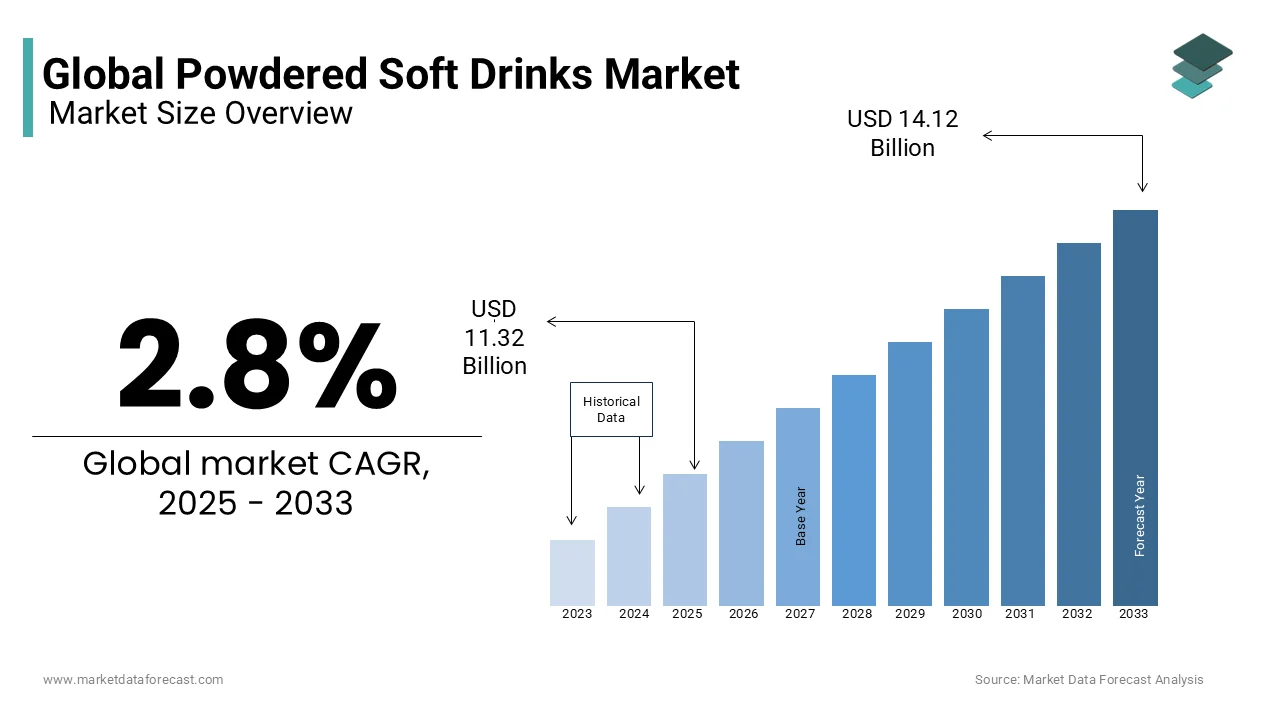
Powdered soft drinks (also known as drink mixes or instant beverages) are processed dry formulations designed to be mixed with a liquid, typically water, milk, or carbonated water, to create a beverage. These products typically include fruit flavored powders electrolyte mixes and instant tea or coffee blends catering to diverse consumer preferences for hydration and refreshment. The market dynamics are increasingly influenced by health consciousness and sustainability concerns as consumers seek options with reduced sugar content and minimal packaging waste. According to the World Health Organization global obesity rates have nearly tripled since 1975 with over 650 million adults classified as obese in 2016 prompting a shift toward healthier beverage choices. This public health context drives manufacturers to reformulate powdered drinks with natural sweeteners and functional ingredients. Furthermore data from the United Nations Environment Programme indicates that plastic waste generation has reached 353 million tonnes annually highlighting the environmental advantage of powdered formats which significantly reduce packaging material compared to bottled beverages. The European Commission has also emphasized the need for sustainable consumption patterns under the Circular Economy Action Plan encouraging innovations that minimize resource use. As per Eurostat, household expenditure on non-alcoholic beverages in the European Union accounted for approximately 1.2 percent of total household consumption expenditure in 2022, reflecting the economic sensitivity of this category. The convergence of health awareness environmental responsibility and economic prudence positions the powdered soft drinks sector as a vital component of the modern beverage landscape adapting to evolving societal values and regulatory frameworks.
MARKET DRIVERS
Economic Affordability And Cost Efficiency Drive Consumer Preference In Inflationary Periods
The persistent inflationary pressure and rising cost of living act as key factors for the increased adoption of powdered soft drinks, which in turn boosts the growth of the Powdered soft drinks market. Consumers seek more affordable hydration solutions as a result. Powdered formats offer significant cost savings compared to ready to drink beverages due to lower transportation and packaging expenses allowing manufacturers to pass these benefits to price sensitive shoppers. According to the European Central Bank the annual inflation rate in the euro area remained elevated at 2.4 percent in early 2024 affecting household purchasing power and prompting a shift toward budget friendly alternatives. The ability to prepare multiple servings from a single packet enhances the perceived value proposition appealing to large families and institutional buyers such as schools and offices. As per the Office for National Statistics (ONS) , food and non-alcoholic beverage prices increased by 4.0 percent year-on-year in March 2024, continuing a 12-month easing trend. Powdered drinks also reduce waste associated with unused portions of larger bottles further contributing to cost efficiency. Retailers support this trend by promoting private label powdered brands which offer competitive pricing without compromising quality. The economic advantage of powdered soft drinks ensures their relevance in times of financial uncertainty sustaining demand across various demographic segments.
Environmental Sustainability And Reduced Packaging Waste Enhance Market Appeal
Growing environmental consciousness and the urgent need to reduce plastic waste are fueling the demand for these drinks, and ultimately accelerate the expansion of the powdered soft drinks market. These products offer a sustainable alternative to single-use bottles. The lightweight nature of powder packets minimizes material usage and carbon footprint associated with logistics and disposal aligning with global sustainability goals. According to Eurostat, 41 percent of plastic packaging waste was recycled in the EU in 2022, with performance varying widely by member state. Powdered formats typically use less packaging material than equivalent volumes of bottled beverages as per sources. This substantial reduction appeals to eco conscious consumers who actively seek products with lower environmental impact. A study indicates that a notable share of European consumers consider sustainability when making purchasing decisions with packaging being a key factor. Governments are also implementing stricter regulations on single use plastics such as the EU Single Use Plastics Directive which bans certain plastic items and encourages reusable or reduced packaging solutions. As per the European Commission the Circular Economy Action Plan aims to make all packaging on the EU market reusable or recyclable by 2030 driving innovation in sustainable beverage formats. Manufacturers respond by introducing biodegradable or compostable sachets further enhancing the ecological credentials of powdered drinks. This alignment with regulatory and consumer expectations positions powdered soft drinks as a preferred choice for environmentally responsible consumption.
MARKET RESTRAINTS
Health Concerns Regarding Artificial Additives And High Sugar Content Restrict Growth
Increasing health concerns related to artificial additives, preservatives, and high sugar content commonly found in traditional formulations, are limiting the growth of the powdered soft drinks market. Consumers are becoming more discerning about ingredient lists seeking natural and clean label products while avoiding synthetic colors and flavors. According to the World Health Organization excessive sugar intake is a major contributor to obesity type 2 diabetes and dental caries affecting millions of individuals globally. Many powdered drinks historically relied on high fructose corn syrup or artificial sweeteners which are now viewed negatively by health conscious shoppers. As per the British Medical Journal studies have linked frequent consumption of artificially sweetened beverages to increased risks of cardiovascular diseases further dampening demand. The presence of artificial colors such as tartrazine and sunset yellow has also raised allergies and behavioral concerns among parents leading to decreased purchases for children. Regulatory bodies like the European Commission have implemented strict labeling requirements for additives requiring clear warnings that deter potential buyers. Manufacturers struggle to reformulate products without compromising taste and shelf life creating a barrier to meeting evolving health standards. This health driven skepticism limits market expansion and forces companies to invest heavily in research for cleaner alternatives.
Perceived Inferior Taste And Quality Compared To Ready To Drink Alternatives
Public perception is a major hurdle for the powdered soft drink market. Many consumers believe powdered beverages offer inferior taste and quality compared to ready-to-drink counterparts. Also, many consumers associate powdered mixes with artificial flavors inconsistent dissolution and a lack of freshness which detracts from the overall drinking experience. The challenge of achieving complete dissolution often results in gritty textures or uneven sweetness which negatively impacts consumer satisfaction. Additionally the convenience factor favors ready to drink options which require no preparation effort appealing to busy lifestyles. The stigma of powdered drinks being associated with low cost or lower quality segments hinders their acceptance in premium markets. Manufacturers face difficulties in changing these deep seated perceptions despite improvements in formulation and packaging. This qualitative barrier restricts the market's ability to attract higher income demographics and expand beyond budget conscious niches.
MARKET OPPORTUNITIES
Expansion Of Functional And Fortified Beverage Formulations Presents Growth Avenues
The integration of functional ingredients and nutritional fortification into these drinks paves the way for the expansion of the powdered soft drinks market. This addresses specific health and wellness needs. Consumers are increasingly seeking beverages that provide added benefits such as immunity support hydration enhancement or energy boosting properties beyond basic refreshment. According to the Global Wellness Institute (GWI), the wellness economy was valued at $6.3 trillion in 2023 (not $4.5 trillion) and is projected to reach $7.42 trillion by 2026. Powdered formats are ideal for delivering these active ingredients as they allow for precise dosing and stability during storage. Manufacturers are introducing electrolyte powders for athletes vitamin C enriched mixes for immune support and collagen infused drinks for skin health. The European Federation of Pharmaceutical Industries and Associations (EFPIA) represents the biopharmaceutical sector (vaccines, therapies) and focuses on medical innovation, not the functional food or beverage industry. The flexibility of powder technology enables the incorporation of sensitive ingredients that might degrade in liquid forms extending shelf life and efficacy. Retailers are dedicating more shelf space to health focused powdered options catering to fitness enthusiasts and health conscious individuals. This strategic shift toward functionality transforms powdered drinks from mere substitutes to value added wellness products opening new revenue streams and customer segments.
Innovation In Sustainable And Biodegradable Packaging Solutions Enhances Brand Equity
The development and adoption of innovative sustainable packaging solutions offer a lucrative opportunity for powdered soft drink manufacturers to differentiate their brands and appeal to eco-conscious consumers, a move that is likely to promote the expansion of the powdered soft drinks market. Traditional plastic sachets contribute to environmental pollution but advancements in biodegradable and compostable materials offer viable alternatives that align with sustainability goals. According to the European Bioplastics Association, production capacity for bioplastics in Europe is expected to grow by 28% over five years (roughly 5% annually), not 20% annually. Global capacity, however, is projected to grow significantly faster, nearly quadrupling by 2028. Companies are investing in paper based pouches and plant derived films that decompose naturally reducing landfill waste. As per the Ellen MacArthur Foundation circular design principles encourage the use of materials that can be safely returned to the biosphere or technical cycle. Brands that adopt such packaging can command premium pricing and build strong emotional connections with environmentally aware shoppers. Regulatory support such as the EU Packaging and Packaging Waste Regulation further incentivizes the use of recyclable and compostable materials. Collaborations with packaging innovators enable manufacturers to stay ahead of compliance requirements and consumer expectations. This focus on sustainable packaging not only mitigates environmental impact but also enhances brand reputation and loyalty in a competitive market landscape.
MARKET CHALLENGES
Supply Chain Volatility For Raw Materials Impacts Production Stability
Supply chain volatility for key raw materials such as sugar fruit concentrates and flavorings that are subject to price fluctuations and availability issues and negatively impacts the growth of the powdered soft drinks market. Climate change geopolitical tensions and logistical disruptions contribute to unstable supply conditions affecting production costs and timelines. According to the Food and Agriculture Organization of the United Nations, global food prices experienced significant volatility in recent years, with sugar prices rising by 26.7 percent in 2023 due to weather-related crop failures in major producing regions. Data from the European Commission indicates that drought conditions in Southern Europe have reduced fruit yields impacting the availability of natural flavor extracts. Manufacturers struggle to maintain consistent pricing and product quality amidst these fluctuations forcing them to engage in complex hedging strategies. As per the International Sugar Organization supply deficits in key markets have led to increased import dependencies exposing companies to currency exchange risks. The reliance on imported ingredients such as citrus from Brazil or vanilla from Madagascar further exacerbates vulnerability to global trade dynamics. Smaller manufacturers with limited procurement power are particularly affected facing higher costs and potential stockouts. These supply chain complexities require robust risk management and diversification strategies which demand significant investment and expertise. Consequently production stability and profit margins remain under constant pressure limiting the ability of companies to plan long term growth initiatives effectively.
Intense Competition From Ready To Drink And Alternative Beverage Segments
Intense competition from the well established ready to drink beverage sector and emerging alternative categories such as sparkling waters and functional teas is hampering the expansion of the powdered soft drinks market. Ready to drink options offer superior convenience and perceived quality capturing the majority of consumer preference and retail shelf space. A study shows that sales of sparkling water and flavored seltzers grew by 10 percent annually as consumers seek healthier and more refreshing alternatives. The dominance of major beverage corporations in the liquid segment creates high barriers to entry for powdered brands seeking visibility and distribution. As per the European Soft Drinks Association promotional activities and brand loyalty programs for ready to drink products further entrench consumer habits making it difficult for powdered formats to gain traction. Additionally the rise of home carbonation devices allows consumers to create customized fizzy drinks at home reducing the need for powdered mixes. Retailers prioritize high turnover liquid products limiting shelf availability for powdered variants. This competitive landscape forces powdered drink manufacturers to compete on price rather than value eroding margins and restricting market expansion. The inability to match the convenience and image of ready to drink rivals remains a persistent challenge for the sector.
REPORT COVERAGE
| REPORT METRIC | DETAILS |
| Market Size Available | 2025 to 2034 |
| Base Year | 2025 |
| Forecast Period | 2026 to 2034 |
| CAGR | 2.84% |
| Segments Covered | By Flavour, Packaging, and Region |
| Various Analyses Covered | Global, Regional and Country Level Analysis; Segment-Level Analysis; DROC; PESTLE Analysis; Porter’s Five Forces Analysis; Competitive Landscape; Analyst Overview of Investment Opportunities |
| Regions Covered | North America, Europe, APAC, Latin America, Middle East & Africa |
| Market Leaders Profiled | Cargill, Incorporated, Insta Foods, Firmenich SA, Tate & Lyle, SMC Enterprise Limited, Sugam Products, Bemis Company, Inc, Coperion GmbH, Kraft Foods, Gatorade |
SEGMENTATION ANALYSIS
By Flavour Insights
The orange flavour segment dominated the Powdered Soft Drinks Market in 2025. This dominance of the segment is driven by its universal appeal and widespread acceptance across diverse demographic groups and geographies. The citrus profile is inherently associated with freshness and vitality making it a staple choice for consumers seeking a refreshing beverage option. This abundance allows for consistent sourcing of natural extracts and flavorings which are critical for maintaining product quality. The versatility of orange flavor enables its integration into various product formats including standard soft drinks electrolyte mixes and vitamin fortified powders. Manufacturers leverage this familiarity to introduce new variants such as orange with added vitamins or reduced sugar options without risking consumer rejection. The strong association with breakfast and morning consumption occasions further cements its dominance. Additionally orange flavor masks the aftertaste of certain functional ingredients and sweeteners effectively making it an ideal base for health oriented formulations. This combination of sensory appeal and functional adaptability ensures that orange remains the cornerstone of the powdered soft drinks portfolio. The spearheading of the orange segment is significantly reinforced by its natural association with high vitamin C content which aligns perfectly with growing consumer demand for immune supporting beverages. Vitamin C is widely recognized for its role in enhancing immune function and overall wellness making orange flavored powders a preferred choice for health conscious individuals. Orange flavored powders are often fortified with additional ascorbic acid allowing manufacturers to meet daily recommended intake levels through a single serving. The perception of orange as a natural source of antioxidants further enhances its appeal among parents looking for healthier options for children. Retailers support this trend by placing orange flavored products in prominent positions within the health and wellness aisles. Furthermore the stability of vitamin C in powdered form ensures that the nutritional benefit remains intact until consumption unlike some liquid counterparts where degradation may occur. This synergy between taste and tangible health benefits solidifies the orange segment's leadership in the market.
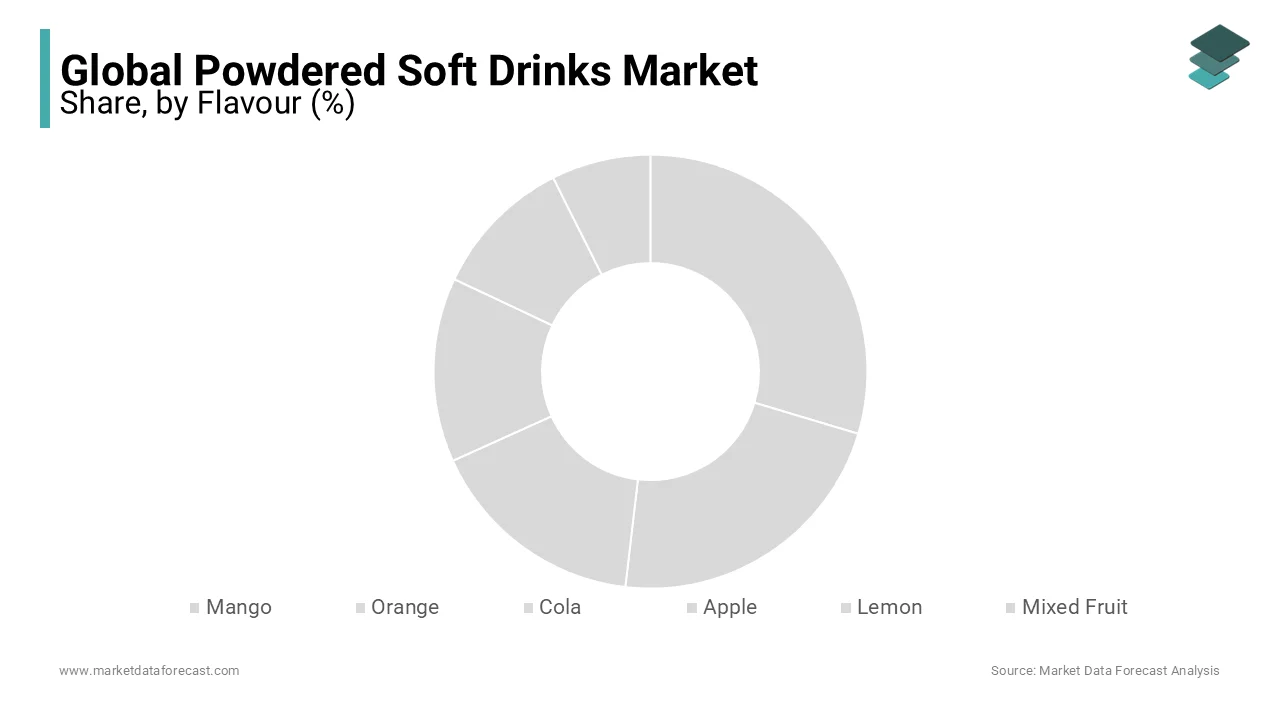
The mixed fruit segment is expected to exhibit a noteworthy CAGR of 7.8% between 2026 and 2034. This quick surge of the segment is propelled by increasing consumer curiosity and desire for novel and exotic flavor experiences that go beyond traditional single fruit options. Consumers particularly millennials and Generation Z are more adventurous in their food choices seeking unique taste combinations such as mango passionfruit or berry blends. The complexity of mixed fruit profiles allows for a more sophisticated sensory experience appealing to adults seeking premium indulgence. Manufacturers utilize advanced flavor technology to create balanced and authentic tasting blends that mimic fresh fruit juices. This innovation attracts consumers who are bored with conventional options and willing to pay a premium for variety. Social media trends also play a role with visually appealing and unique flavors gaining popularity online. Consequently the mixed fruit segment benefits from continuous innovation and shifting consumer palates ensuring sustained high growth rates. The rapid expansion of the mixed fruit segment is further fueled by the perception that blended fruit flavors offer a broader spectrum of nutrients and antioxidants compared to single fruit options. Consumers believe that combining multiple fruits provides a synergistic health benefit delivering a wider range of vitamins minerals and phytonutrients. Mixed fruit powders often include ingredients like berries known for their antioxidant properties and citrus fruits for vitamin C creating a holistic health proposition. Powdered mixes allow for the inclusion of less common but highly nutritious fruits such as acai or goji berry which are difficult to find fresh. This convenience appeals to busy individuals seeking efficient ways to enhance their dietary intake. Manufacturers highlight these benefits on packaging using claims like rich in antioxidants or superfruit blend to attract health focused shoppers. The ability to deliver varied nutritional benefits in a convenient format drives the popularity of mixed fruit powders. Thus the segment capitalizes on the convergence of taste exploration and nutritional optimization.
By Packaging Insights
The sachets segment remained the largest segment in the Powdered Soft Drinks Market in 2025. This prominence of the segment is supported by its exceptional cost efficiency portability and convenience for single serve consumption. This format minimizes material usage and reduces production costs allowing manufacturers to offer affordable price points that appeal to budget conscious consumers. The lightweight nature of sachets reduces logistics costs enabling wider distribution even in remote areas with limited infrastructure. Sachets also offer portion control helping consumers manage intake and reduce waste which aligns with growing sustainability concerns. Retailers favor sachets for their ease of display and high turnover rates particularly in convenience stores and vending machines. The ability to print vibrant graphics on sachets enhances shelf appeal and brand visibility despite the small size. Furthermore sachets are ideal for sampling and promotional activities allowing brands to introduce new flavors with minimal risk. This combination of economic logistical and consumer benefits ensures that sachets remain the dominant packaging format in the powdered soft drinks industry. The leadership of the sachet segment is further strengthened by its critical role in enhancing accessibility in emerging markets and rural areas where purchasing power is limited. Sachets allow low income consumers to access branded products through low unit pricing making them an inclusive packaging solution. This format enables manufacturers to reach vast consumer bases that would otherwise be excluded from the formal market. In Europe sachets are also popular in Eastern European countries where price sensitivity remains high. The compact size of sachets facilitates easy storage in households with limited space further enhancing their utility. Manufacturers invest in high speed packaging lines to produce sachets efficiently meeting the high volume demand. Additionally the rise of e commerce platforms has expanded the reach of sachet products allowing bulk purchases of single serve packs. This broad accessibility and adaptability to diverse economic contexts ensure that sachets maintain their dominant position in the market.
The pouches segment is predicted to witness the highest CAGR of 6.5% over the forecast period owing to the increasing consumer preference for resealable and sustainable packaging formats that offer convenience and environmental benefits. Stand up pouches with zippers provide superior usability compared to traditional sachets appealing to families and regular users. This shift aligns with the EU Packaging and Packaging Waste Regulation which mandates higher recyclability rates for all packaging types. Manufacturers are investing in advanced printing technologies to enhance the visual appeal of pouches making them stand out on shelves. The larger capacity of pouches compared to sachets offers better value for money attracting bulk buyers. Additionally the durability of pouches reduces product damage during transit improving supply chain efficiency. These advantages position pouches as the preferred choice for modern consumers seeking convenience and sustainability. The swift growth of the pouch segment is further accelerated by its role in premiumization and brand differentiation strategies within the powdered soft drinks market. Pouches offer a larger canvas for branding and storytelling allowing manufacturers to communicate quality and uniqueness effectively. The tactile experience of high barrier pouches conveys a sense of quality and freshness enhancing consumer perception. Manufacturers utilize pouches to introduce specialty flavors and organic variants targeting niche market segments. The ability to include clear windows or transparent sections allows consumers to view the product quality building trust. Additionally pouches are compatible with smart packaging technologies such as QR codes for traceability and engagement. This versatility enables brands to create distinct identities and foster loyalty among discerning customers. Consequently the pouch segment benefits from strategic positioning as a premium and innovative packaging solution driving its fast growth.
REGIONAL ANALYSIS
North America Powdered Soft Drinks Market Analysis
North America led the global Powdered Soft Drinks Market and occupied a 25.8% share in 2025. This supremacy of the North American market is propelled by a strong culture of convenience and a growing focus on health and wellness. The region is characterized by high consumption of functional beverages and sports drinks which are often available in powdered formats for ease of use. According to the Beverage Marketing Corporation the United States accounts for the largest volume of powdered beverage sales in the region supported by a robust retail infrastructure. Data from the Centers for Disease Control and Prevention indicates that over 40 percent of American adults are obese driving demand for low calorie and sugar free powdered options. The presence of major beverage companies such as Kraft Heinz and Nestlé ensures wide availability and innovation in product offerings. As per the National Association of Convenience Stores, packaged and cold dispensed beverages are the leading impulse purchase categories, though powdered options appeal to specific niches for their portability. The trend toward home fitness and outdoor activities has further boosted sales of electrolyte and energy powders. Additionally the rising cost of ready to drink beverages has prompted consumers to switch to powdered alternatives for cost savings. Regulatory support for clear labeling and ingredient transparency also influences consumer choices favoring brands with clean labels. The mature market dynamics and high disposable income sustain steady growth in this region.
Latin America Powdered Soft Drinks Market Analysis
Latin America was the next prominent country in the global Powdered Soft Drinks Market and captured a 20.7% share in 2025. This growth of the country’s market is fuelled by high price sensitivity and strong cultural acceptance of powdered beverages. Countries such as Brazil and Mexico are key contributors due to their large populations and established consumption habits. According to the Inter American Development Bank economic volatility in the region has increased demand for affordable food and beverage options benefiting the powdered segment. Data from Euromonitor International shows that powdered soft drinks account for a significant portion of non alcoholic beverage consumption in rural and semi urban areas. The prevalence of small retail outlets known as tienditas or mercearias facilitates the distribution of single serve sachets which are popular among low income households. As per the Brazilian Ministry of Health government initiatives to reduce sugar consumption have led to reformulation efforts by manufacturers introducing lower sugar variants. The warm climate in many parts of Latin America also drives demand for refreshing and hydrating beverages. Local brands compete effectively with multinational corporations by offering culturally relevant flavors and competitive pricing. Additionally the growth of the middle class in urban centers is creating opportunities for premium powdered products. Despite economic challenges the region remains a vital market due to its volume potential and entrenched consumption patterns.
Europe Powdered Soft Drinks Market Analysis
Europe maintains a significant presence in the global Powdered Soft Drinks Market due to stringent regulatory frameworks and evolving consumer preferences toward sustainability and health. The region is seeing a shift away from traditional sugary powders toward functional and organic alternatives. According to the European Commission the Farm to Fork Strategy aims to reduce sugar and salt content in processed foods driving innovation in healthier powdered options. Eurostat indicates that household expenditure on non-alcoholic beverages experienced a decline of 3.7% in 2023 due to inflation and price increases, though it remained one of the largest expenditure categories at approximately 13% of total household budgets. Countries like Germany and the United Kingdom are leading in the adoption of eco friendly packaging such as recyclable pouches and sachets. As per the European Soft Drinks Association the industry is actively working to reduce its environmental footprint through improved recycling rates and sustainable sourcing. The rise of veganism and plant based diets has also spurred demand for powdered drinks free from animal derived ingredients. Retailers are expanding their private label offerings to provide affordable and healthy choices. Additionally the aging population in Europe is driving demand for fortified beverages that support bone and joint health. Regulatory pressure on plastic waste is accelerating the transition to alternative packaging materials. These factors collectively shape a market that values sustainability and nutritional integrity.
Asia Pacific Powdered Soft Drinks Market Analysis
Asia Pacific is the fastest growing region in the Powdered Soft Drinks Market owing to rapid urbanization and rising disposable incomes. Countries such as China India and Indonesia are key growth engines due to their large populations and expanding middle classes. According to the Asian Development Bank economic growth in the region has lifted millions out of poverty increasing access to branded consumer goods. Data from Statista shows that the demand for convenient and affordable beverage solutions is surging in urban centers where busy lifestyles prevail. The prevalence of hot climates in many parts of Asia Pacific drives consistent demand for refreshing drinks. Local manufacturers are innovating with regional flavors such as lychee mango and tamarind to cater to local tastes. As per the Chinese Ministry of Commerce e commerce platforms have become a major distribution channel for powdered beverages reaching remote areas efficiently. The growing awareness of health and wellness is prompting consumers to seek fortified and low sugar options. Government initiatives to improve nutrition and hygiene are also supporting market growth. Additionally the expansion of modern retail formats such as supermarkets and convenience stores is enhancing product accessibility. The region's dynamic demographics and economic trajectory ensure sustained expansion.
Middle East and Africa Powdered Soft Drinks Market Analysis
The Middle East and Africa region is anticipated to expand notably in the global Powdered Soft Drinks Market from 2026 to 2034 due to diverse economic conditions and varying levels of infrastructure development. Gulf Cooperation Council countries such as Saudi Arabia and the United Arab Emirates drive demand through high disposable incomes and a preference for premium products. According to the World Bank investment in healthcare and wellness in the Gulf region is increasing supporting the adoption of functional powdered beverages. The hot and arid climate in many parts of the region creates a constant need for hydration solutions. Local manufacturers are focusing on cost effective production to serve price sensitive consumers. As per the Saudi Food and Drug Authority regulatory standards for food safety are becoming stricter encouraging quality improvements in the sector. The growth of modern retail chains in urban areas is improving product availability and visibility. Additionally religious considerations such as Halal certification influence product formulation and marketing strategies. International brands are entering the market through partnerships with local distributors to navigate regulatory and cultural nuances. Despite challenges the region offers significant potential for growth as infrastructure improves and consumer awareness rises.
COMPETITIVE LANDSCAPE
The competition in the powdered soft drinks market is characterized by intense rivalry among multinational corporations and regional players vying for consumer attention through innovation and pricing strategies. Established brands leverage strong brand equity and extensive distribution networks to maintain dominance while newer entrants focus on niche segments such as organic or functional powders. Price sensitivity remains a key factor particularly in emerging markets where affordability drives purchasing decisions. Companies differentiate themselves through unique flavor profiles packaging innovations and health claims. The shift toward sustainability has become a critical competitive arena with firms investing in eco friendly materials to appeal to environmentally conscious consumers. Regulatory pressures regarding sugar content and labeling require continuous adaptation and reformulation. Private label brands from major retailers pose a significant threat by offering lower priced alternatives. Marketing efforts increasingly focus on digital channels to engage younger audiences. Overall the market dynamics favor agile companies that can balance cost efficiency with product quality and sustainability to retain market share.
KEY MARKET PLAYERS
Some of the key market players in global powdered soft drinks market are
- Cargill, Incorporated
- Insta Foods
- Firmenich SA
- Tate & Lyle
- SMC Enterprise Limited
- Sugam Products
- Bemis Company, Inc
- Coperion GmbH
- Kraft Foods
- Gatorade
Top Players in the Market
- The Kraft Heinz Company maintains a formidable presence in the global powdered soft drinks market through its iconic Kool Aid brand which remains a household name for generations. The company leverages its extensive distribution network to ensure widespread availability across retail channels worldwide. Recent actions to strengthen its market position include reformulating products to reduce sugar content and introduce natural flavors aligning with evolving health trends. Kraft Heinz has also invested in sustainable packaging initiatives such as recyclable pouches to address environmental concerns. The company actively engages consumers through digital marketing campaigns that emphasize nostalgia and family bonding. By expanding its portfolio to include vitamin fortified options Kraft Heinz caters to health conscious parents seeking nutritious beverages for children. These strategic moves reinforce its leadership by balancing tradition with innovation ensuring continued relevance in a competitive beverage landscape while driving global brand loyalty and sales growth.
- Nestlé S.A. contributes significantly to the global powdered soft drinks market with its diverse portfolio including Nesquik and other instant beverage mixes. The company focuses on nutritional enhancement by fortifying products with essential vitamins and minerals to support healthy lifestyles. Recent actions to strengthen its market position include the launch of plant based and organic powder variants to meet rising demand for clean label products. Nestlé has expanded its manufacturing capabilities in emerging markets to improve supply chain efficiency and reduce costs. The company utilizes advanced data analytics to understand consumer preferences and tailor product offerings accordingly. Strategic partnerships with local distributors enhance market penetration in rural areas. Nestlé also prioritizes sustainability by sourcing cocoa and other ingredients responsibly. These efforts solidify its reputation as a trusted provider of quality beverage solutions driving global expansion and customer satisfaction through continuous innovation and operational excellence.
- Tata Consumer Products Limited plays a pivotal role in the global powdered soft drinks market particularly in Asia and emerging economies with brands like Tata Tea and instant mixers. The company leverages its strong domestic presence to expand internationally through strategic acquisitions and partnerships. Recent actions to strengthen its market position include the introduction of innovative flavor combinations and functional beverages targeting health conscious consumers. Tata Consumer has invested in modernizing production facilities to enhance product quality and consistency. The company emphasizes sustainable sourcing practices ensuring ethical procurement of raw materials. By focusing on affordable pricing strategies Tata Consumer appeals to price sensitive segments in developing regions. Digital transformation initiatives have improved customer engagement and e commerce sales. The company also collaborates with local retailers to increase shelf visibility. These strategic initiatives enable Tata Consumer to capture growing demand for convenient and affordable beverage options reinforcing its global footprint and competitive stance in the dynamic powdered drinks sector.
Top Strategies Used by Key Market Participants
Key players in the powdered soft drinks market primarily focus on product innovation and health oriented reformulation to meet changing consumer preferences. Companies are reducing sugar content and incorporating natural sweeteners to address health concerns. Sustainable packaging initiatives are crucial with firms adopting recyclable and biodegradable materials to minimize environmental impact. Expansion into emerging markets is a common strategy leveraging local distribution networks to increase accessibility. Brand diversification through the introduction of functional and fortified beverages helps capture niche segments. Digital marketing and e commerce platforms are utilized to enhance consumer engagement and reach younger demographics. Strategic partnerships with retailers ensure prominent shelf placement and promotional visibility. Cost optimization through efficient supply chain management allows competitive pricing. These combined strategies enable companies to maintain relevance and drive growth in a highly competitive global landscape.
MARKET SEGMENTATION
This research report on the global Powdered Soft Drinks Market has been segmented and sub-segmented based on Flavour, Packaging, & region.
By Flavour
- Mango
- Orange
- Cola
- Apple
- Lemon
- Mixed Fruit
- Others
By Packaging
- Cans
- Carton Boxes
- Pouches
- Sachets
By Region
- North America
- Norway
- Asia Pacific
- Latin America
- Middle East and Africa