- Product Description Description
- Table of Contents TOC
- List of Table & Figure LOT
- Get Free Sample PDF Sample PDF
Market Size, 2025
$52.96 BnMarket Estimate, 2026
$57.46 BnMarket Forecast, 2034
$110.36 BnCAGR, 2026–2034
8.50%Executive Summary: Recycled Plastics Market
- Market Scope: Comprehensive global recycled plastics market analysis covering material types, recycling processes, application verticals, regional leadership frameworks, and circular economy mandates.
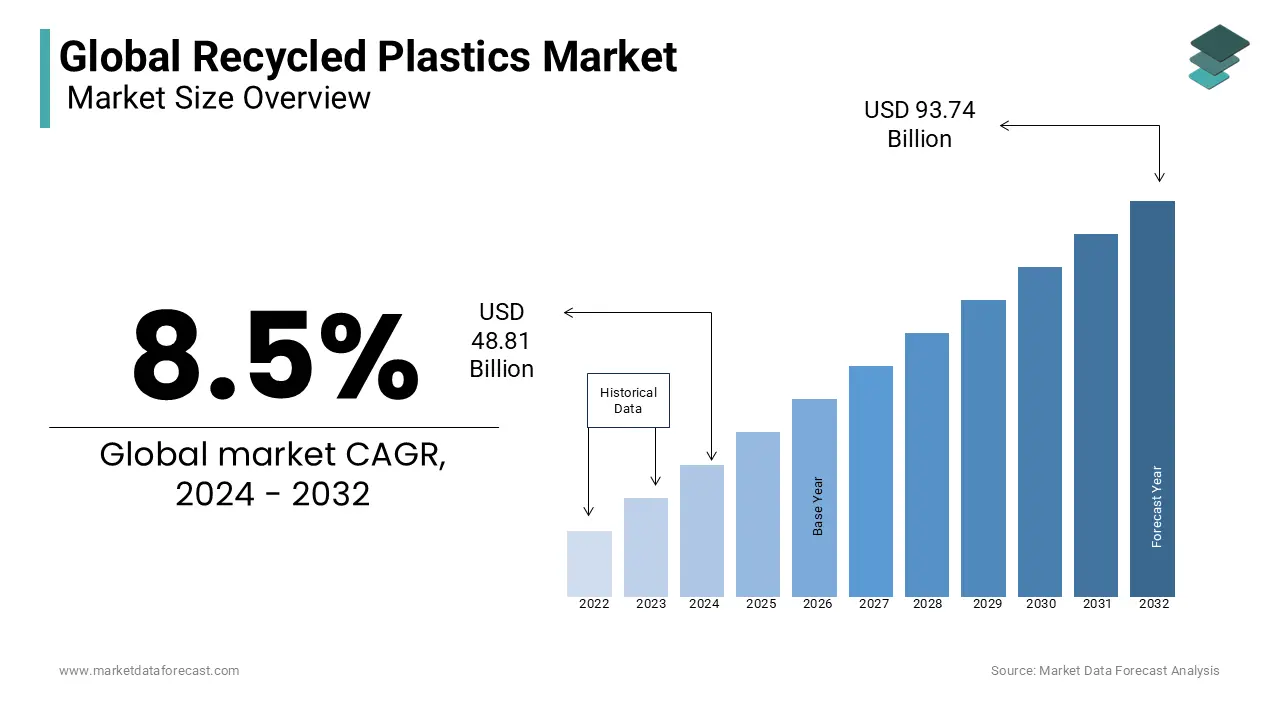
- Market Valuation: Valued at USD 52.96 billion (2025), estimated at USD 57.46 billion (2026), and projected to reach USD 110.36 billion by 2034, registering a robust CAGR of 8.50% (2026–2034).
- Primary Growth Drivers: Stringent government regulations mandating minimum recycled content (e.g., EU Single Use Plastics Directive requiring 25% in bottles) and growing corporate sustainability commitments. Key trends include mechanical recycling dominance, chemical recycling advancements, and automotive polypropylene integration.
Key Market Segment Metrics (2026–2034)
| Category | Leading Segment (2025 Position) | Fastest-Growing Segment |
|---|---|---|
| By Material Type | Polyethylene Terephthalate - PET (dominates with a 30.2% share in 2025) | Polypropylene - PP (anticipated to register a steady CAGR of 7.5%) |
| By Process | Mechanical Recycling (holds the dominant process share due to established infrastructure) | Chemical Recycling (expected to grow at a high CAGR of 12.5% for complex waste) |
| By Application Sector | Packaging Applications (leads by application holding a 45.6% share in 2025) | Automotive Sector (projected to witness the fastest application growth at an 8.2% CAGR) |
| By Region | Europe (leads regionally with a 35.4% market share in 2025) | Asia-Pacific (projected as the fastest-growing regional market) |
Major Market Players & Market Structure
Market Structure: Highly competitive global polymer recycling and waste management landscape featuring specialized recyclers and major chemical conglomerates investing heavily in pyrolysis, depolymerization facilities, and commercial-scale advanced recycling partnerships.
Key Companies: B & B Plastics Incorporation, B. Schoenberg & Corporation, PARC Corporation, Omni Resource Recovery, Custom Polymers Incorporation, United Plastic Recycling, Coll Materials/Nicos Polymers, Maine Plastics Incorporation, Norwich Plastics, APC Recycling, and NAM Polymers.
Global Recycled Plastics Market Size
The global recycled plastics market size was valued at USD 52.96 billion in 2025, and the global market size is expected to reach USD 110.36 billion by 2034 from USD 57.46 billion in 2026. The market is growing at a CAGR of 8.50% during the forecast period.
The recycled plastics processing involves sorting cleaning shredding and extruding various plastic types such as polyethylene terephthalate high density polyethylene and polypropylene. These recycled resins are then utilized in manufacturing packaging automotive components construction materials and textiles. In 2023, the European Environment Agency stated that only 32% of plastic packaging waste collected in the European Union was effectively recycled into new products. Furthermore, as per the United Nations Environment Programme approximately 400 million metric tons of plastic are produced globally each year with less than 10% being recycled. The disparity highlights the urgent need for enhanced infrastructure and policy support. Regulatory frameworks such as the European Green Deal mandate higher recycling targets to mitigate environmental pollution. Industries are increasingly integrating recycled content to meet sustainability goals and consumer expectations.
MARKET DRIVERS
Stringent Government Regulations Mandating Minimum Recycled Content
The governments worldwide are implementing rigorous laws that require manufacturers to incorporate recycled plastic in their products is driving the growth of recycled plastics market. These mandates directly stimulate demand for recycled resins by creating a guaranteed market outlet. For instance, the European Union Single Use Plastics Directive requires member states to ensure that plastic bottles contain at least 25% recycled content by 2025 and 30% by 2030. According to the European Commission, this legislation is expected to increase the demand for recycled polyethylene terephthalate significantly. Similarly, California in the United States enacted Senate Bill 54, which mandates that all plastic packaging be recyclable or compostable by 2032 with increasing recycled content requirements starting in 2028. Such regulatory pressures force multinational corporations to secure long term supply contracts with recycling facilities. The legal obligation reduces the risk associated with switching from virgin to recycled materials. Companies non-compliant with these regulations face substantial fines and reputational damage. Consequently, brands are proactively redesigning products to accommodate recycled inputs.
Growing Corporate Sustainability Commitments and Brand Reputation Management
Major corporations are increasingly prioritizing environmental social and governance criteria to enhance brand loyalty and meet investor expectations, which is additionally escalating the growth of recycled plastics market. Many multinational companies have publicly pledged to use 100% reusable recyclable or compostable packaging by specific target dates. According to the study, over 1000 organizations including Coca Cola, Unilever, and PepsiCo have committed to the New Plastics Economy Global Commitment. These signatories aim to eliminate problematic plastic items and increase the use of recycled content in their operations. This consumer sentiment drives brands to adopt recycled plastics to maintain market relevance. Companies view the use of recycled materials as a tangible demonstration of their environmental responsibility. The competitive advantage gained through sustainable practices encourages industry wide adoption. Furthermore, investors are increasingly scrutinizing environmental performance metrics influencing capital allocation. Firms with robust recycling strategies attract more favorable investment terms.
MARKET RESTRAINTS
Technical Limitations in Recycling Complex Multi Layer and Contaminated Plastics
The difficulty in processing complex plastic structures, such as multi-layer films and composites is limiting the growth of recycled plastics market. These materials are widely used in food packaging to provide barrier properties against moisture and oxygen but are challenging to separate and recycle using mechanical methods. According to the Organisation for Economic Co-operation and Development, less than 9% of plastic waste is successfully recycled globally due to technical complexities. Multi-layer plastics often end up in landfills or incinerators because current sorting technologies cannot efficiently isolate the different polymer layers. Contamination from food residues adhesives and labels further degrades the quality of recycled output. This results in downcycling where materials are converted into lower value products rather than closed loop applications. The lack of standardized design for recyclability exacerbates the issue as manufacturers prioritize functionality over end of life processing. Investment in advanced sorting infrastructure is capital intensive and slow to deploy.
Volatility in Virgin Plastic Prices Influenced by Crude Oil Fluctuations
The economic viability of recycled plastics is heavily dependent on the price differential between recycled and virgin materials is additionally degrading the growth of recycled plastics market. Virgin plastic production is closely linked to crude oil and natural gas prices which are subject to global geopolitical and market fluctuations. When oil prices drop the cost of producing virgin plastic decreases making it cheaper than recycled alternatives. According to the International Energy Agency, global oil demand dynamics significantly impact petrochemical feedstock costs. In periods of low oil prices recycled plastic producers struggle to compete without subsidies or mandatory content requirements. This volatility creates uncertainty for recyclers who operate on thin margins. Manufacturers may switch back to virgin materials if the cost benefit disappears disrupting long term supply agreements. The lack of price stability discourages investment in new recycling facilities. Additionally, the energy intensive nature of recycling processes means that high energy costs further erode profitability.
MARKET OPPORTUNITIES
Advancements in Chemical Recycling Technologies for Previously Unrecyclable Waste
The chemical recycling, also known as advanced recycling by breaking down plastic polymers into their molecular building blocks is setting up new opportunities for the growth of recycled plastics market. Unlike mechanical recycling which degrades material quality over time chemical recycling can produce virgin quality plastics from mixed and contaminated waste. According to the American Chemistry Council, chemical recycling technologies have the potential to recycle millions of additional tons of plastic waste annually that are currently destined for landfills. Major chemical companies such as Dow and BASF are investing heavily in pyrolysis and depolymerization facilities. This technology enables the recycling of multi layer films and colored plastics which are difficult to process mechanically. The resulting outputs can be used in high value applications including food grade packaging. Regulatory bodies in Europe and North America are beginning to recognize chemical recycling as a valid method for meeting recycled content targets. This recognition opens new revenue streams for recyclers. Partnerships between waste management firms and chemical producers are accelerating commercial scale deployments. The ability to close the loop for complex plastics enhances the overall efficiency of the circular economy.
Expansion of Extended Producer Responsibility Schemes for Infrastructure Funding
The extended producer responsibility EPR policies require manufacturers to bear the financial and physical responsibility for the disposal and recycling of their products is also gearing up the growth of recycled plastics market. These schemes generate dedicated funds that support the development and improvement of recycling infrastructure. According to the European Environmental Bureau, EPR fees collected in Europe exceeded 3 billion euros annually providing crucial financial support for waste management systems. These funds are used to upgrade sorting facilities improve collection networks and subsidize recycling operations. The financial incentive encourages producers to design products that are easier to recycle to reduce their fee obligations. This eco modulation of fees drives innovation in packaging design. EPR schemes also facilitate data collection on waste flows enabling better policy planning. As more jurisdictions adopt EPR legislation the availability of capital for recycling projects increases.
MARKET CHALLENGES
Inconsistent Quality and Contamination of Recycled Plastic Feedstock
The variability in quality of the input material is one of the challenges for the growth of recycled plastics market. Post consumer waste often contains contaminants such as food residue labels adhesives and non-recyclable materials, which compromise the integrity of the final product. This inconsistency makes it difficult for manufacturers to rely on recycled plastics for high precision applications such as medical devices or automotive parts. Data from the Association of Plastic Recyclers indicates that achieving food grade certification for recycled polyethylene terephthalate requires extensive and costly purification processes. Many recyclers lack the advanced technology needed to remove microscopic contaminants effectively. This limits the economic value captured from the recycling process. Brands seeking high quality recycled content often face supply shortages of premium grade material. The lack of standardized quality metrics across regions further complicates international trade in recycled resins. Establishing uniform quality standards and investing in advanced sorting technologies are essential to overcoming this challenge.
Complexity of Global Regulatory Frameworks and Lack of Harmonized Standards
The fragmented regulations, where definitions and standards for recycled content vary significantly across jurisdictions is additionally to impede the growth of recycled plastics market. This lack of harmonization creates trade barriers and increases compliance costs for multinational companies. According to the World Trade Organization, differing national regulations on what constitutes recycled plastic can hinder cross border transactions. For instance, the European Union has strict criteria for counting chemical recycling outputs toward recycled content targets while other regions may not recognize these methods. Companies must navigate a maze of local laws regarding labeling testing and certification. This complexity discourages smaller players from entering international markets. Additionally, the Basel Convention amendments restrict the transboundary movement of plastic waste requiring prior informed consent for shipments. While intended to prevent dumping these rules can disrupt legitimate recycling trade flows. The absence of a unified global standard for recycled plastic quality and verification impedes market integration. Harmonizing regulations would facilitate smoother trade and encourage investment in recycling infrastructure.
REPORT COVERAGE
| REPORT METRIC | DETAILS |
| Market Size Available | 2025 to 2034 |
| Base Year | 2025 |
| Forecast Period | 2026 to 2034 |
| CAGR | 8.50% |
| Segments Covered | By Material, Recycling Process, Application, and Region. |
| Various Analyses Covered | Global, Regional & Country Level Analysis, Segment-Level Analysis, DROC, PESTLE Analysis, Porter’s Five Forces Analysis, Competitive Landscape, Analyst Overview of Investment Opportunities |
| Regions Covered | North America, Europe, APAC, Latin America, Middle East & Africa |
| Market Leaders Profiled | B & B Plastics Incorporation, B. Schoenberg & Corporation, PARC Corporation, Omni Resource Recovery, Custom Polymers Incorporation, United Plastic Recycling, Coll Materials/Nicos Polymers, Maine Plastics Incorporation, Norwich Plastics, APC recycling, NAM polymers, and Others. |
SEGMENTAL ANALYSIS
By Material Insights
The polyethylene terephthalate segment was the largest by capturing 30.2% of the recycled plastics market share in 2025 due to the widespread use of PET in beverage bottles which are easily identifiable and collectible. According to the National Association for PET Container Resources, the recycling rate for PET bottles in the United States reached 29% in 2022 representing over 1.8 billion pounds of material recovered. The clear color and high purity of post-consumer PET make it ideal for closed loop recycling into new food grade containers. Major beverage companies have established robust take back schemes to secure supply. The economic value of recycled PET remains strong due to consistent demand from packaging manufacturers. The infrastructure for sorting and washing PET is more mature than for other polymers reducing processing costs. Technological advancements in super clean recycling processes allow for higher quality output that meets strict food safety standards. This reliability encourages long term contracts between recyclers and brand owners. The ease of identification using near infrared sorting technology also minimizes contamination levels.
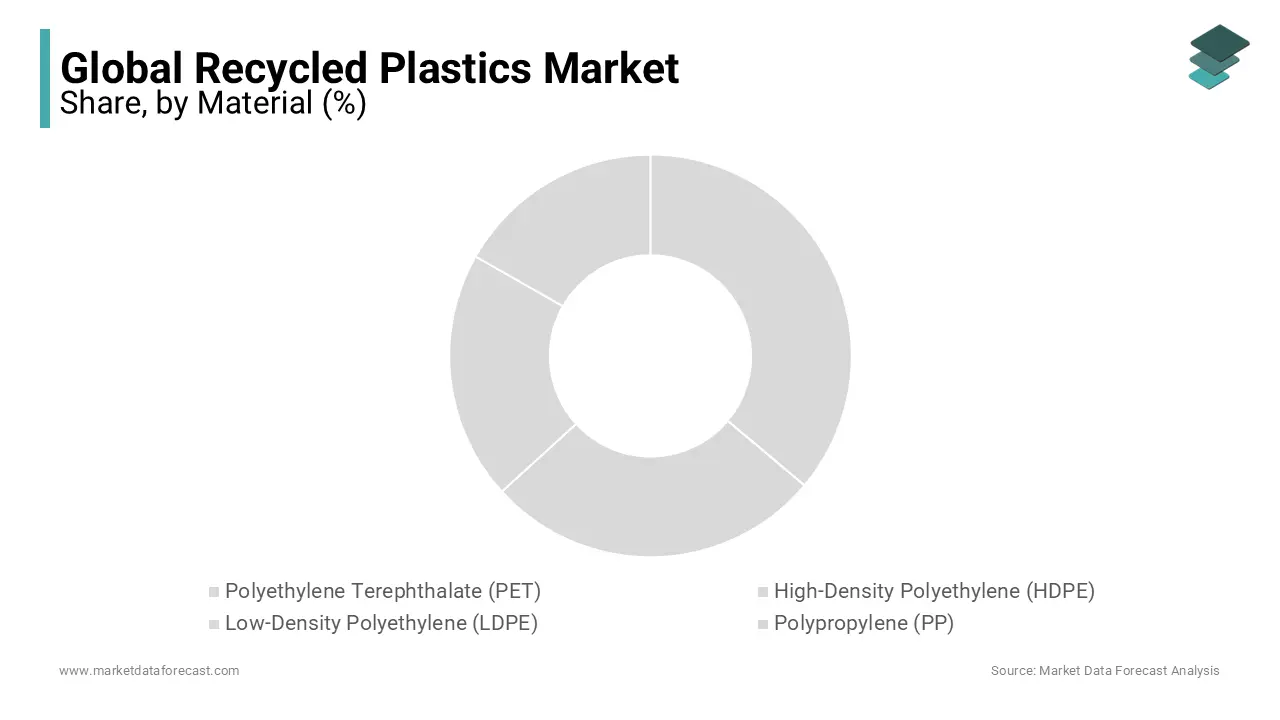
The polypropylene segment is expected to register a fastest CAGR of 7.5% during the forecast period. The growth of the segment is likely to grow with increasing demand in the automotive sector where PP is used for interior components bumpers and battery casings in electric vehicles. According to the International Organization of Motor Vehicle Manufacturers global vehicle production is recovering and shifting towards lightweight materials to improve fuel efficiency. Recycled PP offers a cost effective and sustainable alternative to virgin polymer without compromising performance. Data from the American Chemistry Council indicates that the automotive industry accounts for nearly 10% of total plastic consumption with PP being a major component. The rise of electric vehicles further boosts demand as manufacturers seek to offset battery weight. Recycled PP is also gaining traction in durable goods such as furniture and home appliances. The durability and chemical resistance of PP make it suitable for repeated recycling cycles. Advances in compatibilizer technologies allow for the blending of different PP grades improving the quality of recycled output. Retailers are increasingly using recycled PP for rigid packaging and crates due to its strength. The versatility of PP applications ensures diverse demand sources.
By Recycling Process Insights
The mechanical recycling segment held a dominant share of the recycled plastics market with its lower cost and established infrastructure compared to emerging technologies. The process involves shredding washing and melting plastic waste which is technically straightforward and energy efficient. According to the European Plastics Converters, mechanical recycling is the most economically viable method for processing single stream plastics, such as PET and HDPE. The widespread availability of sorting and processing facilities globally supports high volume operations. Most municipal recycling programs are designed around mechanical recovery methods. The technology is well understood and requires less capital investment than chemical recycling. Established markets for mechanically recycled resins in packaging and construction provide stable demand. Regulatory frameworks in many regions prioritize mechanical recycling as the first option in the waste hierarchy. The carbon footprint of mechanical recycling is significantly lower making it attractive for sustainability reporting. Continuous improvements in sorting technology such as artificial intelligence and optical sensors are enhancing the purity of mechanically recycled outputs. These advancements extend the applicability of mechanical recycling to more complex streams. The proven track record and economic advantages ensure that mechanical recycling remains the backbone of the industry.
The chemical recycling segment is likely to grow at an anticipated CAGR of 12.5% from 2026 to 2034 with its unique ability to process plastic waste that is unsuitable for mechanical recycling such as multi layer films and contaminated packaging. According to the American Chemistry Council, chemical recycling can potentially double the amount of plastic that is recycled globally. The technology breaks down polymers into monomers or feedstocks which can then be used to produce new plastics of virgin quality. Major oil and chemical companies are investing heavily in pyrolysis and depolymerization technologies. The output from chemical recycling can be used in food grade applications which is a significant advantage. Regulatory bodies are increasingly recognizing chemical recycling as a complementary solution to mechanical methods. The European Union is developing specific guidelines to account for recycled content from chemical processes. This regulatory clarity is unlocking investment and commercial projects. The demand for high quality recycled plastic from brands unable to source sufficient mechanically recycled material is driving adoption. Chemical recycling closes the loop for hard to recycle plastics reducing landfill dependence.
By Application Insights
The packaging segment was the largest by holding 45.6% of the recycled plastics market share in 2025 with the massive volume of plastic used in packaging and stringent regulations requiring recycled content. According to the Organisation for Economic Co operation and Development, packaging accounts for nearly 40% of total plastic production. The European Union Single Use Plastics Directive mandates specific recycled content targets for plastic bottles and packaging. Data from the European Commission states that these measures will create a demand for millions of tons of recycled plastic annually. Beverage bottles food containers and flexible packaging are the primary users of recycled PET and HDPE. Brands are responding by redesigning packaging to incorporate more recycled material. The visibility of packaging waste has made it a focal point for environmental campaigns. Consumers are increasingly demanding sustainable packaging options influencing retailer decisions. The infrastructure for collecting and recycling packaging waste is more developed than for other applications.
The automotive sector is projected to witness a fastest CAGR of 8.2% from 2026 to 2034 withs the rising production of electric vehicles and the industry's focus on lightweighting to improve energy efficiency. According to the International Energy Agency, electric car sales exceeded 10 million units globally in 2022, representing a 55% increase from the previous year. Recycled plastics are increasingly used in interior components under the hood parts and battery housings. Using recycled plastics reduces the overall weight of the vehicle extending the range of electric batteries. Automakers are setting ambitious targets for using recycled materials in new models. Ford BMW and Volvo have announced plans to incorporate significant amounts of recycled plastic in their vehicles. The durability and performance of recycled polypropylene and ABS make them suitable for automotive applications. Regulatory pressures to reduce the carbon footprint of manufacturing are also driving adoption. Life cycle assessments show that using recycled plastics lowers emissions compared to virgin materials.
REGIONAL ANALYSIS
Europe Recycled Plastics Market Analysis
Europe was the top performer of the global recycled plastics market by accounting for 35.4% of share in 2025 with the stringent environmental regulations and a strong commitment to the circular economy. According to the European Environment Agency, the EU recycles 32% of its plastic packaging waste which is among the highest rates globally. The European Green Deal and the Circular Economy Action Plan set ambitious targets for recycling and recycled content. Consumer awareness of environmental issues is high driving demand for sustainable products. The EU Taxonomy for Sustainable Activities directs investment towards recycling infrastructure. Cross border collaboration facilitates the trade of recycled materials within the single market. Strict landfill bans in many member states force higher recycling rates. Europe serves as a model for other regions in implementing effective plastic recycling strategies.
North America Recycled Plastics Market Analysis
North America recycled plastics market was second positioned by holding 28.4% of share in 2025. State level regulations, such as those in California and Washington are driving demand for recycled content. According to the Environmental Protection Agency, the US recycling rate for plastics is around 9% but is expected to rise due to new initiatives. Major brands are committing to using more recycled plastic in packaging. The presence of large petrochemical companies facilitates the integration of recycled feedstocks. Extended Producer Responsibility laws are being adopted in several states creating funding for recycling programs. Consumer demand for sustainable products is growing influencing retail offerings. The region benefits from advanced sorting technologies and automation in material recovery facilities. Corporate sustainability goals are driving private sector investment.
Asia Pacific Recycled Plastics Market Analysis
Asia Pacific recycled plastics market is likely to witness a fastest CAGR in coming years. Rapid industrialization and urbanization are driving increased plastic consumption and waste generation. According to the research, the region generates over 50% of the world's plastic waste. Countries like China India and Japan are implementing stricter waste management policies. China's ban on imported waste has spurred domestic recycling infrastructure development. India is launching initiatives to promote single use plastic alternatives and recycling. The rising middle class is increasing demand for packaged goods driving the need for recycled materials. Government investments in waste management infrastructure are improving collection rates. The region is becoming a hub for recycling technology adoption.
Latin America Recycled Plastics Market Analysis
Latin America recycled plastics market growth is likely to grow with the waste management infrastructure but is showing signs of progress. However, countries like Brazil and Chile are implementing extended producer responsibility laws. Data from the Brazilian Association of the Plastic Industry indicates that recycling rates for PET bottles in Brazil are among the highest in the world at over 50%. Informal waste pickers play a crucial role in collection systems. Governments are working to formalize these sectors and improve working conditions. The tourism industry drives demand for sustainable packaging in coastal areas. International brands are investing in local recycling projects to meet global sustainability goals. The region has significant potential for growth as infrastructure improves. Public awareness campaigns are increasing participation in recycling programs. Investment in modern sorting and processing facilities is increasing.
Middle East and Africa Recycled Plastics Market Analysis
The Middle East and Africa recycled plastics market growth is driven by the early stages of developing its recycling infrastructure. According to the World Bank, waste generation in Sub Saharan Africa is expected to double by 2050. Gulf Cooperation Council countries are investing in waste to energy and recycling facilities as part of diversification strategies. Data from the Saudi Arabian Ministry of Environment Water and Agriculture shows that the kingdom aims to recycle 50% of its waste by 2030. South Africa has a more established recycling sector driven by informal collectors. The lack of formal collection systems in many areas remains a barrier. International organizations are supporting capacity building and infrastructure development. The region has significant potential for growth as urbanization increases. Awareness of environmental issues is rising among younger populations. Government initiatives are beginning to address plastic pollution.
COMPETITIVE LANDSCAPE
The Recycled Plastics Market features a fragmented competitive landscape with a mix of large multinational corporations and specialized regional players. Major waste management companies compete with chemical producers and dedicated recycling firms to secure feedstock and customers. Competition is intensifying as regulatory pressures and corporate sustainability goals drive up demand for high quality recycled materials. Companies differentiate themselves through technological advancements in sorting and purification processes that enhance product quality. Price competitiveness remains a critical factor although premium grades command higher margins due to scarcity. Strategic collaborations are increasingly common as firms seek to share risks and investments in new infrastructure. The entry of oil and gas majors into chemical recycling adds further complexity to the competitive dynamics. Intellectual property related to advanced recycling technologies is becoming a key competitive asset. Market participants must navigate volatile raw material costs and evolving regulatory requirements. Those who can guarantee consistent supply and verified sustainability credentials gain a distinct advantage. The race to scale up operations and achieve cost parity with virgin plastics defines the current competitive environment.
KEY MARKET PLAYERS
Companies playing a key role in the global recycled plastics market include
- B and B Plastics Incorporation
- B. Schoenberg and Corporation
- PARC Corporation
- Omni Resource Recovery
- Custom Polymers Incorporation
- United Plastic Recycling
- Coll Materials or Nicos Polymers
- Maine Plastics Incorporation
- Norwich Plastics
- APC Recycling
- NAM Polymers
Top Players in the Market
- Veolia Environnement S.A. is a global leader in environmental services with a significant presence in the recycled plastics sector. The company operates extensive collection and sorting facilities worldwide ensuring a steady supply of high quality post consumer plastic waste. Veolia has recently invested heavily in advanced recycling technologies including chemical recycling plants to process complex plastic streams. Their strategic partnerships with major brand owners help secure long term demand for recycled resins. The company actively participates in industry coalitions to promote circular economy standards. These initiatives strengthen its position as a key enabler of sustainable plastic value chains globally.
- Indorama Ventures Public Company Limited is a major integrated petrochemical producer with a strong focus on recycled polyethylene terephthalate. The company has expanded its recycling capabilities through numerous acquisitions of recycling facilities across Europe and North America. Indorama Ventures commits to producing significant volumes of recycled PET annually to meet growing customer demand. They invest in state of the art purification technologies to produce food grade recycled resin. The company collaborates with brands to design recyclable packaging and improve collection systems.
- Waste Management Inc. is a leading provider of comprehensive waste management environmental services in North America. The company plays a crucial role in the recycled plastics market by operating large scale material recovery facilities. Waste Management Inc. continuously upgrades its sorting infrastructure with artificial intelligence and robotics to improve purity levels. They have established partnerships with downstream manufacturers to create stable markets for recycled commodities. The company focuses on educating communities to reduce contamination in recycling streams. Recent investments in advanced recycling technologies demonstrate their commitment to innovation.
Top Strategies Used by the Key Market Participants
Key players in the Recycled Plastics Market primarily focus on vertical integration to control the entire value chain from collection to production. Companies invest heavily in advanced sorting and chemical recycling technologies to improve the quality and volume of recycled output. Strategic partnerships with brand owners and retailers ensure long term off take agreements for recycled resins. Mergers and acquisitions are common strategies to expand geographic reach and acquire specialized technical capabilities. Participants also engage in policy advocacy to support favorable regulatory frameworks such as extended producer responsibility. Investment in digital tracking systems enhances transparency and verifies recycled content claims. These strategies collectively strengthen market positions and drive sustainable growth in the industry.
MARKET SEGMENTATION
This research report on the global recycled plastics market has been segmented and sub-segmented based on the material, recycling process, application, and region.
By Material
- Polyethylene Terephthalate (PET)
- High-Density Polyethylene (HDPE)
- Low-Density Polyethylene (LDPE)
- Polypropylene (PP)
- Others
By Recycling Process
- Mechanical
- Chemical
By Application
- Packaging
- Construction
- Textile
- Automotive
- Others
By Region
- North America
- Latin America
- Europe
- Asia Pacific
- Middle East & Africa