- Product Description Description
- Table of Contents TOC
- List of Table & Figure LOT
- Get Free Sample PDF Sample PDF
Market Size, 2025
$109.54 BnMarket Estimate, 2026
$115.28 BnMarket Forecast, 2034
$173.46 BnCAGR, 2026–2034
5.24%UK General Insurance Market Size, Growth, Trends & Forecast (2026–2034)
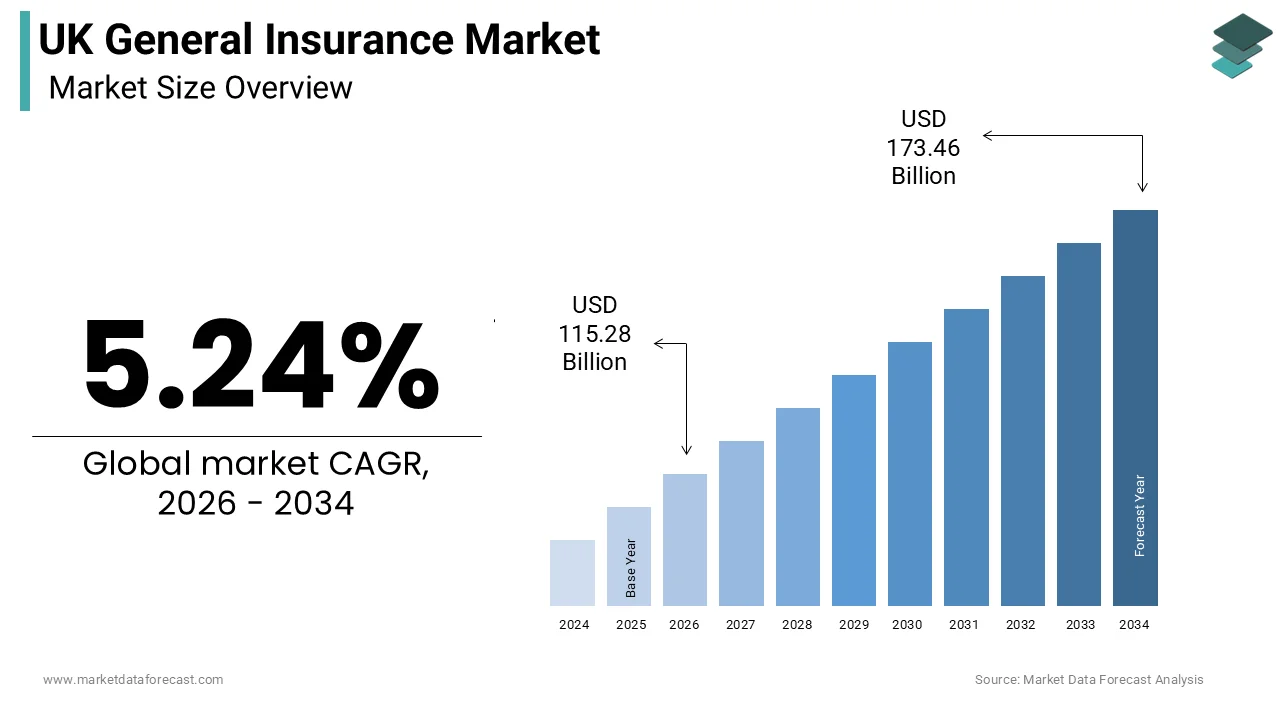
The UK general insurance market size was valued at USD 109.54 billion in 2025, reached USD 115.28 billion in 2026, and is projected to reach USD 173.46 billion by 2034, growing at a compound annual growth rate (CAGR) of 5.24% from 2026 to 2034. Fueled by mandatory legal compliance frameworks, rising climate-related risks, and digital platform innovations, the sector maintains robust and stable expansion.
Key Executive Metrics (At-a-Glance)
- 2025 Base Valuation: USD 109.54 Billion
- 2026 Current Valuation: USD 115.28 Billion
- 2034 Forecast Valuation: USD 173.46 Billion
- Compound Annual Growth Rate (CAGR): 5.24% (2026–2034)
- Largest Insurance Type Segment: Property Insurance (Held 35.4% market share in 2025 due to mandatory mortgage lending requirements and high asset protection needs)
- Fastest-Growing Insurance Type Segment: Liability Insurance (Projected at a CAGR of 6.8% driven by litigious environments and strict corporate regulations)
- Largest Distribution Channel Segment: Brokerage (Captured 45.3% share in 2025 due to complex commercial risks and expert advisory value)
- Fastest-Growing Distribution Channel Segment: Online Platforms (Projected at a CAGR of 9.2% fueled by consumer preference for digital speed and transparency)
- Largest Coverage Type Segment: Comprehensive Coverage (Held 60.2% market share in 2025 for extensive financial protection in motor policies)
- Fastest-Growing Coverage Type Segment: Third-Party Liability Coverage (Projected at a CAGR of 4.5% driven by cost-of-living pressures and older vehicle demographics)
Core Market Drivers & Growth Triggers
- Regulatory & Legal Mandates: Statutory requirements (e.g., Road Traffic Act 1988, Employers Liability Act 1969) enforcing mandatory motor and employer coverage across 40+ million registered vehicles.
- Climate Change & Extreme Weather: Escalating frequencies of storms, flooding, and subsidence increasing asset risk awareness and property coverage levels.
Primary Market Restraints & Challenges
- Cost of Living Pressures: Double-digit inflation squeezing household real disposable incomes, leading to reduced discretionary coverage and underinsurance risks.
- Supply Chain Volatility: Shortages of car spare parts and construction materials extending repair timelines and driving up claim payouts.
UK General Insurance Market Segmentation Breakdown
| Segment Category | Largest Segment Focus | Fastest-Growing Segment Focus |
|---|---|---|
| By Insurance Type | Property Insurance (35.4% share in 2025 via mortgage mandates and extreme weather protection) | Liability Insurance (CAGR of 6.8% driven by corporate regulations and litigious environments) |
| By Distribution Channel | Brokerage (45.3% share in 2025 anchored by complex commercial and SME advisory needs) | Online Platforms (CAGR of 9.2% driven by digital comparison tools and automated mobile purchasing) |
| By Coverage Type | Comprehensive Coverage (60.2% share in 2025 for maximum asset and accident protection) | Third-Party Liability Coverage (CAGR of 4.5% driven by aging vehicle fleets and cost-saving choices) |
Major Industry Players Profiled
Key corporations shaping the UK general insurance market include Aviva plc, AXA UK, Allianz UK, Direct Line Group, Zurich Insurance Group, RSA Insurance (Intact Financial Corporation), Admiral Group, Ageas UK, Hiscox, Chubb, AIG UK, QBE Insurance Group, NFU Mutual, Liverpool Victoria (LV=), Travelers Europe, Liberty Specialty Markets, Ecclesiastical Insurance, Covea Insurance, Markel UK, and Zurich Municipal.
UK General Insurance Market Size
The UK General Insurance market size was valued at USD 109.54 billion in 2025, and is projected to reach USD 173.46 billion by 2034 from USD 115.28 billion in 2026, growing at a CAGR of 5.24%.
The general insurance is a non-life insurance product, including motor home, commercial property liability, and travel coverage. The high competition, technological innovation, and stringent regulatory oversight from the Financial Conduct Authority. As per data from the Association of British Insurers, the general insurance industry paid out approximately 33 billion pounds in claims to UK policyholders in 2023, demonstrating its pivotal role in economic stability. The penetration of insurance is deep within the UK society, with motor insurance being a legal requirement for all vehicle owners. According to the Department for Transport, there are over 40 million licensed vehicles in the UK, ensuring a mandatory baseline demand for motor policies. The rise of digital platforms has transformed customer interactions with insurers, shifting from traditional broker-led models to direct online comparisons and purchases. Consumer expectations have evolved toward personalized policies and rapid claims processing driven by advancements in artificial intelligence and data analytics. The increasing pressure to address climate-related risk is altering underwriting criteria for property insurance.
MARKET DRIVERS
Regulatory Mandates and Legal Compliance Requirements
The statutory obligations and legal mandates to ensure consistent demand regardless of economic conditions are a primary factor bolstering the growth of the United Kingdom general insurance market. Motor third-party liability insurance is compulsory for all vehicle owners under the Road Traffic Act 1988, creating a captive market of millions of policyholders. According to the Driver and Vehicle Licensing Agency, there are approximately 40 million registered vehicles in the UK each requiring valid insurance coverage to operate legally. This legislative framework guarantees a steady volume of premiums for insurers and prevents market contraction due to discretionary spending cuts. Similarly, employers liability insurance is mandatory for most businesses employing staff under the Employers Liability Compulsory Insurance Act 1969. This requirement ensures that commercial entities maintain coverage for workplace injuries, driving demand in the corporate sector. These legal frameworks create a stable foundation for the industry, insulating it from some volatility associated with voluntary insurance products. Compliance monitoring by authorities such as the Motor Insurers Bureau further enforces adherence, reducing the number of uninsured drivers and maintaining market integrity. The certainty provided by these mandates allows insurers to plan long-term capital allocation and risk management strategies with greater confidence.
Increasing Frequency and Severity of Climate-Related Claims
The escalating frequency and severity of weather-related events driven by climate change are also propelling the growth of the United Kingdom general insurance market. Extreme weather phenomena, such as flooding storms and subsidence, have become more common, leading to heightened awareness of risk among homeowners and businesses. According to the Met Office, the UK has experienced seven of its ten wettest years on record since 200,0 increasing the likelihood of flood damage. The Association of British Insurers notes that weather-related claims have risen substantially, with flood damages alone costing the industry hundreds of millions of pounds annually. This trend compels property owners in high-risk areas to secure comprehensive coverage often mandated by mortgage lenders. The increasing cost of repairs due to inflation and supply chain issues further incentivizes consumers to opt for higher levels of coverage to avoid out-of-pocket expenses. Businesses are also recognizing the need for business interruption insurance to protect against revenue loss during climate-induced disruptions. The tangible impact of climate change on assets makes insurance a critical component of risk mitigation strategies.
MARKET RESTRAINTS
Economic Inflation and Cost of Living Pressures
The high inflation rates and the ongoing cost of living crisis exert significant pressure on household budgets, leading to reduced discretionary spending on insurance products, which is also inhibiting the growth of the United Kingdom's general insurance market. While motor and home insurance are often essential, consumers may seek to minimize costs by reducing coverage levels, switching to cheaper providers, or delaying renewals. The consumer price inflation reached double-digit figures in recent years, eroding real disposable income for many families. This financial strain forces households to prioritize immediate necessities over comprehensive insurance protection, potentially leading to underinsurance. The rise in interest rates also increases the cost of borrowing for insurers, affecting their investment returns and capital adequacy. The Competition and Markets Authority has noted that loyalty penalties and complex pricing structures can exacerbate the burden on consumers, who may not shop around effectively. Small businesses facing similar economic pressures may delay purchasing additional liability or property cover, exposing themselves to greater risk. The economic environment creates a challenging landscape where insurers must balance premium adequacy with affordability to retain customers.
Supply Chain Disruptions and Repair Cost Volatility
The persistent supply chain disruptions and volatile repair costs are hindering the growth of the United Kingdom general insurance market. The aftermath of global logistical challenges has led to shortages of spare parts for vehicles and construction materials for property repairs. The lead times for certain car parts have extended significantly, causing delays in claim settlements and increasing storage costs for insurers. The scarcity of skilled labor in the construction and automotive repair sectors further drives up the cost of repairs, inflating claim payouts. Insurers face difficulty in accurately pricing policies when the cost of settling claims is unpredictable and rising rapidly. This uncertainty complicates reserving processes and can lead to inadequate provision for future liabilities. The increased time required to complete repairs also extends the duration of rental car provisions for motor claims and alternative accommodation for property claims, adding to the overall cost. These operational inefficiencies strain insurer resources and can negatively impact customer satisfaction due to prolonged wait times. The inability to control external cost factors limits the effectiveness of traditional risk management techniques.
MARKET OPPORTUNITIES
Integration of Artificial Intelligence and Telematics
The integration of artificial intelligence and telematics technologies to enhance underwriting accuracy, personalize pricing, and improve customer engagement is setting up new opportunities for the growth of the United Kingdom general insurance market. Telematics devices and mobile apps allow insurers to monitor driving behavior in real time, enabling usage-based insurance models that reward safe drivers with lower premiums. The adoption of telematics policies has grown significantly as consumers recognize the potential for cost savings and personalized feedback. Artificial intelligence algorithms can analyze vast amounts of data to identify fraud patterns, streamline claims processing, and predict risk more accurately than traditional methods. This technological advancement reduces administrative costs and speeds up settlement times, improving customer satisfaction. Insurers can offer proactive risk management advice based on data insights, helping customers prevent accidents and damage before they occur. The use of chatbots and virtual assistants enhances customer service availability, providing instant support and policy management capabilities. Digital platforms facilitate a seamless onboarding and renewal process, thereby reducing friction and improving conversion rates. The ability to segment customers more precisely allows for targeted marketing and product development aligned with specific needs. Embracing these technologies positions insurers as innovative partners rather than just financial payers.
Expansion into Cyber Insurance and Emerging Risks
The growing prevalence of cyber threats and digital dependency to expand into cyber insurance and cover emerging risks is expected to create new opportunities for the growth of the United Kingdom general insurance market. As businesses increasingly rely on digital infrastructure, the risk of data breaches, ransomware attacks, and system failures has escalated dramatically. The cybercrime costs the UK economy billions of pounds annually, driving demand for specialized coverage. Many small and medium enterprises lack adequate protection, making them vulnerable to financial ruin following a cyber incident. Insurers can develop tailored cyber policies that include not only financial compensation but also access to expert incident response services and legal support. The regulations, including the General Data Protection Regulation, impose strict requirements on data handling, increasing the liability exposure for organizations. This regulatory pressure encourages businesses to invest in cyber insurance as part of their risk management strategy. Cyber insurance is still relatively immature compared to traditional lines, offering significant growth potential. Insurers can leverage partnerships with cybersecurity firms to offer holistic solutions that combine prevention and protection. Educating customers about cyber risks and mitigation strategies builds trust and drives policy adoption. This emerging segment allows insurers to diversify their portfolios and tap into a high-growth area aligned with modern business needs.
MARKET CHALLENGES
Talent Shortage and Skills Gap in the Industry
The attraction and retention of skilled professionals in areas such as actuarial science, data analytics, and underwriting is a significant challenge for the growth of the United Kingdom general insurance market. An aging workforce and a lack of young entrants into the industry have created a significant skills gap that threatens operational capability. Many firms report difficulties in filling specialized roles requiring advanced technical expertise. The competition for talent from the technology and finance sectors exacerbates the problem, as these industries often offer higher salaries and more flexible working arrangements. The shortage of skilled underwriters affects the ability of insurers to assess risks accurately and price policies competitively. Training new employees takes time and resources, which strains existing teams and impacts productivity. The lack of diversity in the workforce also limits the range of perspectives available for problem-solving and innovation. Retaining experienced staff is crucial for maintaining institutional knowledge and client relationships, but high turnover rates disrupt continuity. Insurers must invest in employer branding training programs and career development pathways to make the industry more attractive. Failure to address this talent crisis could lead to service degradation and increased operational errors.
Regulatory Complexity and Compliance Burdens
The evolving regulations in the UK impose a complex and burdensome compliance framework on general insurers, requiring significant resources and attention, which is also a barrier to the growth of the United Kingdom general insurance market. The Financial Conduct Authority continues to introduce new rules aimed at protecting consumers, ensuring fair treatment, and promoting market integrity. Compliance with regulations, such as the Senior Managers and Certification Regime, requires robust governance structures and accountability mechanisms. Compliance costs have risen substantially, as firms invest in legal counsel, monitoring systems, and reporting tools. The implementation of Solvency II requirements demands rigorous capital management and risk assessment processes, which can be resource-intensive for smaller insurers. Changes in consumer duty regulations require firms to demonstrate that their products deliver good outcomes for customers, adding another layer of scrutiny. Keeping pace with regulatory changes requires constant vigilance and adaptation, which can distract from core business activities. Non-compliance can result in severe penalties, reputational damage, and restrictions on business operations. The complexity of cross-border regulations for insurers operating internationally adds further layers of difficulty.
REPORT COVERAGE
| REPORT METRIC | DETAILS |
| Market Size Available | 2025 to 2034 |
| Base Year | 2025 |
| Forecast Period | 2026 to 2034 |
| CAGR | 5.24% |
| Segments Covered | By Insurance Type, Distribution Channel, Coverage Type, and Region. |
| Various Analyses Covered | Global, Regional and Country-Level Analysis, Segment-Level Analysis, Drivers, Restraints, Opportunities, Challenges; PESTLE Analysis; Porter’s Five Forces Analysis, Competitive Landscape, Analyst Overview of Investment Opportunities |
| Market Leaders Profiled | Aviva plc, AXA UK, Allianz UK, Direct Line Group, Zurich Insurance Group, RSA Insurance (Intact Financial Corporation), Admiral Group, Ageas UK, Hiscox, Chubb, AIG UK, QBE Insurance Group, NFU Mutual, LV= (Liverpool Victoria), Travelers Europe, Liberty Specialty Markets, Ecclesiastical Insurance, Covea Insurance, Markel UK, Zurich Municipal |
SEGMENTAL ANALYSIS
By Insurance Type Insights
The property insurance segment accounted in holding 35.4% of the United Kingdom general insurance market share in 2025, owing to the fundamental necessity of protecting high-value physical assets such as residential homes and commercial buildings against risks like fire, theft, and weather damage. Mortgage lenders universally require building insurance as a condition for lending, which mandates coverage for millions of homeowners. The increasing frequency of extreme weather events, including storms and flooding, has heightened awareness among property owners regarding the need for comprehensive protection. The UK has experienced a marked increase in heavy rainfall events, prompting more households to review and upgrade their policies. Commercial property insurance is also robust due to the extensive real estate holdings of businesses and the legal requirements for asset protection. The rise in construction costs and material prices following supply chain disruptions has led to a higher sum insured value,s further boosting premium volumes. Homeowners are increasingly adding accidental damage and personal possessions cover to their policies, enhancing the average policy value.
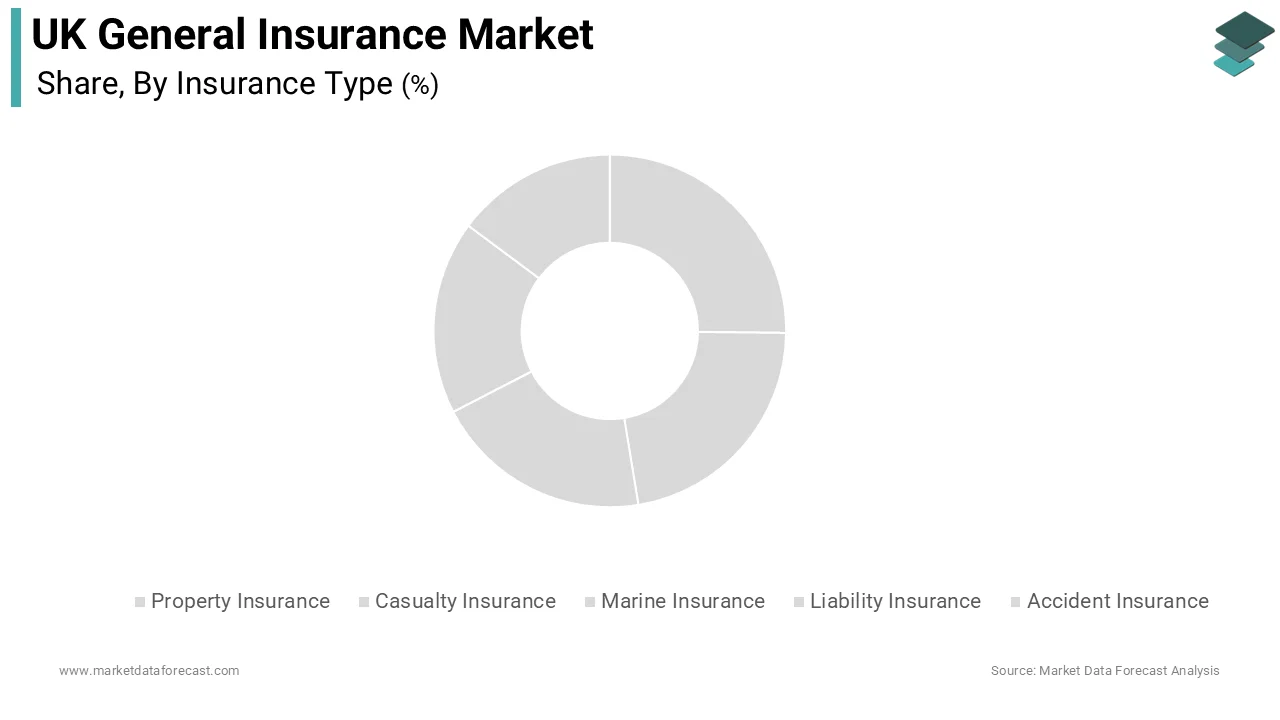
The liability insurance segment is expected to grow at an anticipated CAGR of 6.8% from 2026 to 2034, with an increasingly litigious environment and stringent regulatory requirements that compel businesses and professionals to secure robust protection against legal claims. The implementation of the Corporate Manslaughter and Corporate Homicide Act, along with stricter health and safety regulations, has increased the perceived risk of operational liabilities. There are thousands of workplace injuries reported annually, driving demand for employers' liability and public liability coverage. Professional indemnity insurance is seeing a surge in adoption among consultants, freelancers, and technology firms who face risks related to negligence or breach of contract. The rise of cyber liability as a distinct class within liability insurance is contributing significantly to growth as businesses seek protection against data breaches and regulatory fines under GDPR. The average cost of defending a liability claim has risen due to increasing legal fees and compensation awards, making insurance a critical risk transfer mechanism. Small and medium enterprises are increasingly recognizing that a single lawsuit can threaten business continuity, prompting higher uptake of combined liability packages. The expansion of the gig economy has also created new categories of workers requiring specific liability protections.
By Distribution Channel Insights
The brokerage channel was the largest, accounting for 45.3% of the United Kingdom general insurance market share in 2025. The complexity of commercial insurance needs and the value added by professional advice in navigating intricate policy terms and conditions is fuelling the growth of the segment. Businesses, particularly small and medium enterprises, rely on brokers to assess their unique risk profiles and negotiate tailored coverage that off-the-shelf products cannot provide. The brokers handle the majority of commercial lines insurance, ensuring that clients receive appropriate protection for their specific industries. Brokers provide essential services during the claims process, acting as advocates for policyholders and helping to resolve disputes with insurers efficiently. The expertise required for specialized sectors such as marine construction and professional indemnity makes broker intervention indispensable. Many corporate clients prefer the consolidated billing and risk management insights that brokers offer through long-term partnerships. The regulatory requirement for independent advice in certain financial contexts further supports the broker model. Brokers also facilitate access to niche markets and Lloyd’s of London syndicates, which are not available through direct channels. The trust established between brokers and clients leads to high retention rates and stable revenue streams.
The online platforms segment is growing at an anticipated CAGR of 9.2% during the forecast period, owing to the consumer preference for convenience, speed, and transparency in purchasing insurance products. Digital natives and younger demographics favor the ability to compare multiple quotes instantly and purchase policies without human interaction. The advancement of artificial intelligence and automated underwriting allows for instant policy issuance and real-time price adjustments based on user inputs. Mobile applications enable customers to manage their policies, file claims, and make payments seamlessly, enhancing the overall user experience. Online platforms reduce operational costs for insurers by eliminating manual processing, which allows them to offer competitive pricing to price-sensitive consumers. The integration of telematics and usage-based data into online platforms enables personalized pricing models that appeal to safe drivers and low-risk individuals. Social media marketing and targeted digital advertising drive traffic to these platforms, increasing conversion rates. The ability to access insurance services 24 hours a day, seven days a week, meets the expectations of modern consumers for immediate gratification.
By Coverage Type Insights
The comprehensive coverage segment was the largest by holding 60.2% of the United Kingdom general insurance market share in 2025, within the motor insurance segment, accounting for over 60% of private car policies according to industry penetration data. The desire for complete financial protection against a wide range of risks, including accident damage, theft, fire, and third-party liabilities. Vehicle owners recognize that third-party only policies leave them exposed to significant out-of-pocket expenses for repairing their own, which can be costly given the high price of modern cars. According to the Society of Motor Manufacturers and Traders, the average new car price exceeds 35000 pounds, making comprehensive coverage a prudent investment for asset protection. The inclusion of additional benefits such as breakdown cover, courtesy cars, and windscreen repair enhances the value proposition of comprehensive policies. Consumers appreciate the peace of mind that comes with knowing they are protected regardless of fault in an accident. The marginal cost difference between third-party and comprehensive premiums has narrowed in many cases, making the latter more attractive. The rise of young drivers, who are often required by parents or insurers to take comprehensive cover due to a higher risk profile,s also contributes to volume.
The third-party liability coverage segment is likely to exhibit the fastest CAGR of 4.5% from 2026 to 2034. While overall comprehensive coverage dominates, third-party liability is growing among owners of older vehicles, where the cost of comprehensive premiums may exceed the vehicle's value. Millions of cars on UK roads are over ten years old, making comprehensive insurance economically inefficient for some owners. The economic pressure of the cost-of-living crisis is prompting budget-conscious consumers to downgrade to the minimum legal requirements to reduce monthly expenditures. Additionally, the rise of micro mobility solutions such as e-scooters and electric bicycles often falls under third-party liability frameworks rather than comprehensive auto policies. Regulatory changes requiring specific liability cover for these new modes of transport are creating a new sub-segment of growth. Commercial fleets operating older vehicles for specific tasks may also opt for third-party only to minimize overheads. The simplicity of third-party products makes them suitable for digital distribution and quick comparison shopping.
COMPETITION OVERVIEW
The competition in the United Kingdom general insurance market is intense and characterized by a mix of established legacy insurers, agile digital natives, and specialized niche providers. Major players compete on price, customer experience, technological innovation, and brand trust rather than solely on product features. Insurers differentiate themselves through superior claims handling speeds, personalized service offerings, and integrated risk management solutions. Digital entrants leverage lower overheads and advanced data analytics to offer competitive rates and seamless user interfaces, challenging traditional business models. Legacy carriers respond by investing heavily in digital transformation and modernizing legacy systems to improve agility. Regulatory compliance and financial stability remain critical factors influencing consumer choice and broker recommendations. The rise of insurtech startups fosters innovation in areas such as parametric insurance and on-demand coverage, forcing incumbents to adapt quickly. Consolidation through mergers and acquisitions continues as companies seek scale and broader product capabilities. Customer loyalty is increasingly driven by value-added services and proactive risk prevention rather than just price.
KEY MARKET PLAYERS
A few major players of the UK General Insurance market include
- Aviva plc
- AXA UK
- Allianz UK
- Direct Line Group
- Zurich Insurance Group
- RSA Insurance (Intact Financial Corporation)
- Admiral Group
- Ageas UK
- Hiscox
- Chubb
- AIG UK
- QBE Insurance Group
- NFU Mutual
- Liverpool Victoria
- Travelers Europe
- Liberty Specialty Markets
- Ecclesiastical Insurance
- Covea Insurance
- Markel UK
- Zurich Municipal
Major Strategies Used by Key Market Participants
Key players in the United Kingdom general insurance market prioritize digital transformation by implementing artificial intelligence and machine learning to automate underwriting and claims processes. Companies focus on personalized pricing models using telematics and IoT data to reward low-risk behaviors and enhance customer retention. Investment in cybersecurity measures protects sensitive client data and builds trust in an era of increasing digital threats. Insurers expand product portfolios to include emerging risks, such as cyber liability and climate change coverage, addressing modern societal challenges. Strategic partnerships with technology firms and service providers create ecosystems that offer added value beyond traditional indemnity. Sustainability initiatives are integrated into core operations, with green insurance products attracting environmentally conscious consumers. Customer experience enhancement through seamless omnichannel interactions ensures a competitive advantage in a saturated market. Data analytics drive decision-making, enabling precise risk assessment and fraud detection. These strategies collectively improve operational efficiency and profitability, while meeting evolving regulatory requirements.
Leading Players in the United Kingdom General Insurance Market
- Aviva plc stands as a leading general insurer in the United Kingdom, providing extensive coverage for motor home and commercial clients across the nation. The company contributes significantly to the market by leveraging its vast distribution network and strong brand recognition to serve millions of policyholders. Recent actions to strengthen its position include substantial investments in digital platforms that streamline claims processing and enhance customer self-service capabilities. Aviva has integrated artificial intelligence tools to detect fraud more effectively and personalize pricing models for individual risk profiles. The insurer actively promotes sustainability by offering discounts for eco-friendly homes and electric vehicles, aligning with national net-zero goals. Strategic partnerships with repair networks ensure faster service delivery and cost control. These initiatives reinforce Aviva's commitment to innovation and customer centricity in a competitive landscape.
- Direct Line Group operates as a major digital-first insurer in the UK, known for its direct-to-consumer model and iconic branding. The company contributes to the market by offering simplified insurance products for motor home and pet owners through efficient online channels. Recent actions to strengthen its market position involve enhancing its telematics offerings, which allow drivers to benefit from personalized premiums based on safe driving behavior. Direct Line has upgraded its mobile application to provide real-time claims tracking and instant policy management features, improving user experience. The group focuses on data analytics to refine underwriting accuracy and reduce operational costs. Investments in customer service automation ensure rapid response times for inquiries and emergencies. These efforts maintain its reputation for convenience and reliability among digitally savvy consumers.
- AXA UK is a prominent player in the general insurance sector, delivering comprehensive solutions for individuals and businesses throughout the country. The company contributes by providing specialized coverage for health travel and commercial risks supported by global expertise and local knowledge. Recent actions to strengthen its position include the expansion of cyber insurance products to address growing digital threats faced by small and medium enterprises. AXA has implemented advanced data modeling techniques to better assess climate-related risks for property policies, ensuring sustainable underwriting practices. The insurer collaborates with health providers to offer integrated wellness services, adding value beyond traditional indemnity. Digital transformation initiatives have improved the speed of quote generation and policy issuance. These strategic moves enhance AXA's ability to meet evolving customer needs and regulatory standards effectively.
MARKET SEGMENTATION
This research report on the UK General Insurance market is segmented and sub-segmented into the following categories.
By Insurance Type
- Property Insurance
- Casualty Insurance
- Marine Insurance
- Liability Insurance
- Accident Insurance
By Distribution Channel
- Direct Sales
- Brokerage
- Bancassurance
- Online Platforms
By Coverage Type
- Full Coverage
- Third-Party Liability
- Comprehensive Coverage