- Product Description Description
- Table of Contents TOC
- List of Table & Figure LOT
- Get Free Sample PDF Sample PDF
Market Size, 2025
$1,191 MnMarket Estimate, 2026
$1,344 MnMarket Forecast, 2034
$3,522 MnCAGR, 2026–2034
12.8%Europe Pet Insurance Market Summary
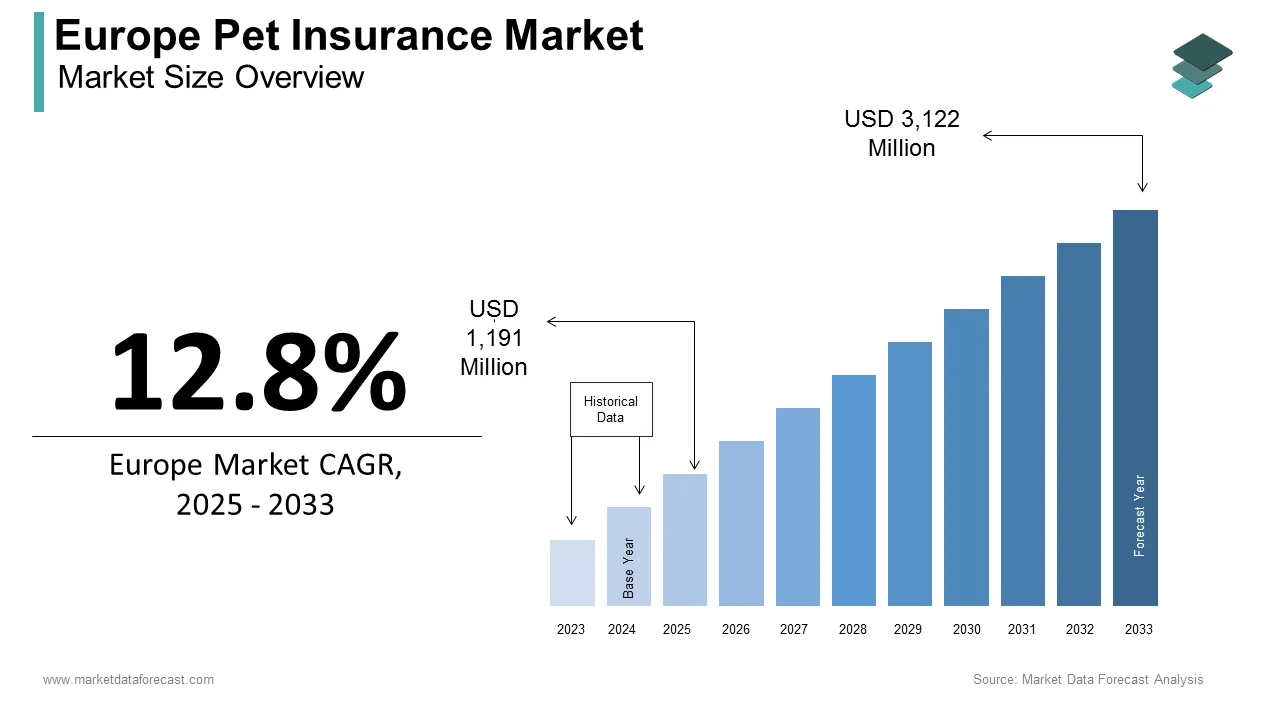
The European pet insurance market was valued at USD 1,191 million in 2025, is projected to reach USD 1,344 million in 2026, and is expected to expand to USD 3,522 million by 2034, growing at a CAGR of 12.8% from 2026 to 2034. The growth of the European pet insurance market is driven by rising pet ownership, increasing veterinary care costs, and growing consumer awareness about financial protection against pet healthcare expenses. Expanding coverage options, including accident-only and comprehensive policies, along with digital claim management solutions, are further fueling market adoption.
Key Market Trends
- Rising demand for dog insurance policies, dominating the market landscape.
- Increasing awareness of comprehensive coverage for illness, accidents, and preventive care.
- Growth in digital claim management and online policy purchases.
- Expanding role of insurtech companies offering innovative, tech-enabled solutions.
- Strong market penetration in Western Europe, with emerging growth in Central and Eastern Europe.
Segmental Insights
- Based on policy, the dog insurance segment led the European pet insurance market in 2024, supported by high dog ownership rates and rising veterinary treatment expenses.
Regional Insights
- The United Kingdom dominated the European pet insurance market in 2024, reflecting a mature insurance landscape, widespread adoption of pet health policies, and established insurance providers.
- Germany and France are showing steady growth, driven by increasing awareness and expanding coverage options.
- Scandinavia continues to see strong uptake, benefiting from high levels of pet ownership and early adoption of pet health insurance.
- Southern and Eastern Europe remain underpenetrated but are expected to witness faster growth during the forecast period as awareness rises.
Competitive Landscape
Key players in the European pet insurance market include Petplan Pet Insurance, Embrace Pet Insurance Agency, Royal & Sun Alliance (RSA), Pethealth Inc., Agria Pet Insurance, Petfirst Healthcare, Nationwide Pet Insurance, PetSure Pty Ltd., Petsecure Pet Health Insurance, and Hartville Group. These companies are focusing on product diversification, expanding digital platforms, and strategic partnerships with veterinary clinics to strengthen their presence across Europe.
Europe Pet Insurance Market Size
The size of the European pet insurance market was worth USD 1,191 million in 2025. The European market is expected to grow at a CAGR of 12.8% from 2026 to 2034 and be worth USD 3,522 million by 2034 from USD 1,344 million in 2026.
The pet insurance is a reimbursement for veterinary expenses related to illness, injury, and, in some cases, preventive care for companion animals, primarily dogs and cats. These policies operate under diverse regulatory frameworks across EU member states, with coverage structures ranging from accident-only to comprehensive lifetime plans. As per the Federation of European Companion Animal Veterinary Associations, the average cost of treating common conditions such as cruciate ligament rupture or chronic kidney disease exceeds 1,500 euros, placing significant financial strain on owners without insurance.
MARKET DRIVERS
Rising Veterinary Care Costs and Advancement of Medical Interventions
The escalating cost of advanced veterinary treatments is a primary driver for the growth of the Europe pet insurance market. As per the Federation of European Companion Animal Veterinary Associations, the average price of diagnostic imaging, such as MRI for dogs, increased by 22% between 2019 and 2023. Complex procedures like orthopedic surgery or chemotherapy can exceed 3,000 euros, placing them beyond the reach of many households. This financial safety net not only improves animal outcomes but also aligns with Europe’s growing emphasis on responsible pet ownership and welfare standards.
Deepening Humanization of Pets and Emotional Bonding Trends
The conceptual shift of pets from property to family members has fundamentally reshaped consumer willingness to invest in their health, which is also to enhance the growth of Europe pet insurance market. EU pet owners consider their companion animals as integral members of the household, a sentiment strongest among urban millennials and Gen Z demographics. In France, the National Institute of Statistics and Economic Studies found that 57% of dog owners aged 25 to 40 purchased pet insurance within six months of adoption in 2023, citing emotional security as a key motivator.
MARKET RESTRAINTS
Low Awareness and Persistent Misconceptions About Policy Coverage
The European population remaining uninformed or misinformed about pet insurance functionality is degrading the growth of the Europe pet insurance market. As per a 2023 consumer survey by the European Insurance Consumer Forum, 52% of pet owners in Southern and Eastern Europe believed pet insurance only covers accidents, unaware of illness or chronic condition coverage. Additionally, 38% mistakenly assumed pre-existing conditions were routinely covered, leading to dissatisfaction upon claim denial. This knowledge gap stems from limited point-of-sale education and fragmented marketing. Unlike auto or health insurance, pet policies lack standardized terminology across EU jurisdictions, exacerbating confusion.
Regulatory Fragmentation and Lack of Harmonized Policy Standards
The absence of a unified EU regulatory framework for pet insurance creates operational complexity, and consumer uncertainty is also degrading the growth of the Europe pet insurance market. As per the European Insurance and Occupational Pensions Authority, pet insurance falls under national insurance laws, resulting in divergent rules on waiting periods, exclusions, and premium structures. For instance, while Sweden mandates coverage for hereditary conditions in dogs, Germany permits their exclusion. This patchwork discourages cross-border product development and confuses mobile pet owners relocating within the EU.
MARKET OPPORTUNITIES
Integration of Digital Health Platforms and Preventive Care Incentives
The integration of pet insurance with digital health technologies, with a shift from reactive reimbursement to proactive wellness management, is more likely to showcase new opportunities for the growth ofthe Europe pet insurance market. Insurers like Agria and Petplan have launched apps that sync with these devices to offer premium discounts for meeting exercise or vaccination milestones. Furthermore, the European Commission’s Digital Europe Programme allocated 35 million euros in 2023 to support AI-driven veterinary diagnostics by enabling insurers to predict and prevent costly conditions.
Expansion into Underserved Markets Through Microinsurance and Employer-Sponsored Plans
The new launch of pet insurance in undeveloped countries to attract pet owners with microinsurance and employer-sponsored plans is additionally to elevate the growth of the Europe pet insurance market. As per Eurofound, over 28 million new pets were adopted in these regions between 2020 and 2023, yet insurance uptake lags due to affordability concerns. Microinsurance models, by offering limited coverage at 5 to 10 euros monthly can bridge this gap. Partnerships with veterinary chains like AniCura also enable point-of-care financing and bundled insurance offers. These inclusive strategies democratize access and align with Europe’s broader financial inclusion objectives.
MARKET CHALLENGES
Adverse Selection and Rising Claims Frequency in Aging Pet Populations
Insurers face mounting pressure from adverse selection as policyholders disproportionately enroll older or high-risk pets, skewing risk pools, which is restraining the growth of the Europe pet insurance market. In the UK, the Animal Health Trust reported a 27% year-on-year increase in claims for diabetes and arthritis between 2021 and 2023. This trend forces insurers to raise premiums or tighten underwriting, which in turn deters healthy pet owners from enrolling by exacerbating the cycle. Lifetime policies, popular in markets like Sweden, compound the issue by locking in coverage regardless of future health deterioration.
Veterinary Sector Resistance and Lack of Standardized Billing Practices
The tensions between insurers and veterinary clinics hinder seamless claims processing and the customer experience is also restraining the growth of the Europe pet insurance market. As per the Federation of European Companion Animal Veterinary Associations, only 35% of EU clinics use standardized diagnostic and procedure coding systems, leading to inconsistent invoicing that complicates claim validation. Many veterinarians express concern that insurance encourages over-treatment or delays necessary care due to pre-authorization requirements.
REPORT COVERAGE
| REPORT METRIC | DETAILS |
| Market Size Available | 2025 to 2034 |
| Base Year | 2025 |
| Forecast Period | 2026 to 2034 |
| Segments Covered | By Pet, Policy Type, and country. |
| Various Analyses Covered | Global, Regional and Country-Level Analysis, Segment-Level Analysis, Drivers, Restraints, Opportunities, Challenges; PESTLE Analysis; Porter’s Five Forces Analysis, Competitive Landscape, Analyst Overview of Investment Opportunities |
| Countries Covered | UK, France, Spain, Germany, Italy, Russia, Sweden, Denmark, Switzerland, Netherlands, Turkey, Czech Republic, and the Rest of Europe. |
| Market Leaders Profiled | Petplan Pet Insurance, Embrace Pet Insurance Agency, Royal & Sun Alliance (RSA), Pethealth Inc., Allianz SE, Agria Djurförsäkring AB, PetFirst Healthcare, Nationwide Pet Insurance, PetSure Pty Ltd., Trupanion Inc., Petsecure Pet Health Insurance, Hartville Group, and Others. |
SEGMENTAL ANALYSIS
By Pet Insights
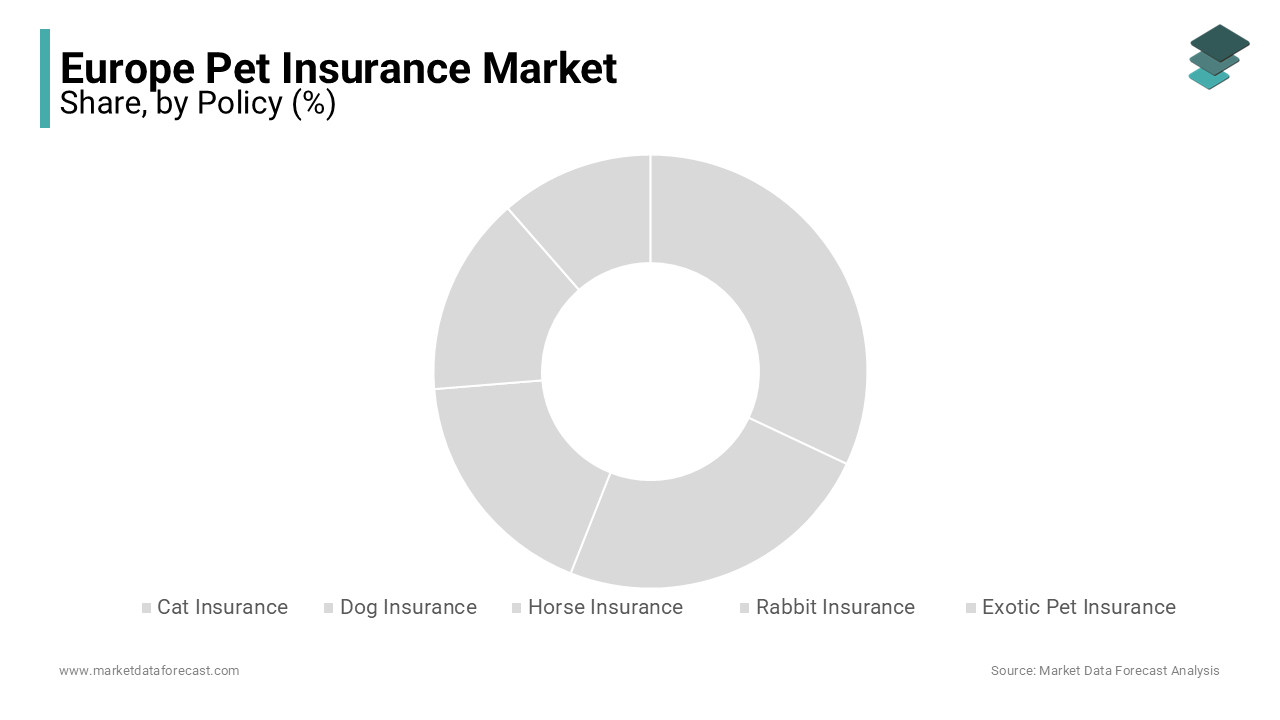
The dog insurance segment dominated the Europe Pet Insurance Market and accounted for a 68.4% share in 2025. This dominance of the segment was driven by higher veterinary expenditure per animal, greater liability exposure and cultural prioritisation of canine healthcare across all major European markets. Biological, economic, and social factors drive the pet market, making dogs more expensive to insure and more likely to have coverage than any other companion animal. This dynamic locks in a massive share of total insurance premiums that niche categories are unlikely to disrupt anytime soon.
Dogs generate significantly higher average claim costs than cats, rabbits or exotic pets due to larger body size, breed-specific health predispositions and owner willingness to pursue aggressive treatment options, translating directly into higher premiums and greater premium volume share. According to the Swedish Insurance Federation, large breed dogs sustain inherently higher veterinary claim frequencies and severe medical complications, compounding overall underwriting liabilities across mature Nordic insurance portfolios. Third-party liability coverage, mandatory in several European jurisdictions, adds a base premium layer absent in cat policies with minimum coverage limits. As per the European Insurance and Occupational Pensions Authority, statutory third-party liability requirements across specific European borders mandate fixed financial protection lines that separate domestic canine coverage models from feline contracts. According to the Federation of Veterinarians of Europe, emergency veterinary interventions and critical hospital stays command a substantial pricing premium over standard domestic animal checkups due to specialised intensive monitoring. These cost differentials mean each insured dog contributes substantially more premium revenue than other species, securing segment leadership through unit economics rather than policy count alone.
Dogs occupy unique cultural and functional positions in European societies as working animals, family members, and social companions, creating stronger insurance enrollment motivation than other pet categories regardless of cost considerations. According to FEDIAF European Pet Food Industry, European households care for over 91 million dogs, cementing a deeply humanised bond that prioritises domestic animal welfare budgets through fluctuating macroeconomic environments. As per the Swedish Insurance Federation, multi-pet ownership and pedigree registration networks exhibit high correlation with structured voluntary pet insurance plans among demographic groups with predictable discretionary income. Urbanisation trends have paradoxically increased dog insurance uptake as apartment-dwelling owners face stricter liability requirements and higher third-party risk exposure versus rural counterparts. Social media visibility of dog healthcare journeys normalises insurance purchasing among younger demographics who view coverage as a responsible ownership marker. These sociocultural embeddedness factors create demand resilience sustaining dog insurance leadership even as cat ownership numbers exceed canines in several European countries.
The cat insurance segment is predicted to witness the highest CAGR of 14.7% from 2026 to 2034 due to closing awareness gaps, veterinary advancement in feline medicine, and demographic shifts favouring cat ownership among urban younger populations previously underinsured.
Historical perception of cats as low-maintenance pets requiring minimal veterinary intervention is rapidly reversing as feline-specific medicine advances, creating new insurable risks and justifying coverage investment previously deemed unnecessary. According to the Federation of Veterinarians of Europe, enhanced veterinary diagnostics for feline endocrine and metabolic chronic conditions prolong life expectancy and elevate the value of lifelong therapeutic claims. As per the German Insurance Association, preventative and restorative animal dentistry has transitioned into a prominent premium driver as modern owners actively schedule advanced veterinary dental care. According to the Federation of Veterinarians of Europe, complex feline oncology interventions command multi-stage therapy tracks that generate high cumulative veterinary medical bills for modern animal owners. As per the German Insurance Association, long-term pharmaceutical management for degenerative feline arthritis maintains a steady claim footprint as options for animal comfort care expand. These medical advances convert previously uninsured fatal diagnoses into manageable chronic conditions, creating sustainable claim streams supporting actuarial viability of comprehensive feline products that did not exist a decade ago when cat insurance was limited to accident-only coverage.
Generational and geographic transitions in cat ownership concentrate animals among demographics with higher insurance propensity and digital native purchasing behaviours, accelerating market penetration beyond the traditional rural elderly cat owner base. According to Eurostat, expanding urban residential density across European major cities naturally creates a favourable demographic tailwind for feline ownership over spatially dependent canine choices. As per the Swedish Insurance Federation, younger age cohorts display substantially greater comfort with recurring subscription-based monthly pet healthcare protection services compared to older demographics. Apartment living increases indoor confinement, reducing accident risk but elevating obesity, dental disease and behavioural problem incidence, creating predictable claim patterns attractive to insurers developing feline-specific products. Delayed parenthood trends mean cats fulfil nurturing roles, increasing emotional investment and corresponding financial protection willingness. These converging demographic, technological, and cultural factors create favourable conditions for sustained above-market cat insurance growth as historical underpenetration corrects toward parity with canine coverage norms.
By Policy Type Insights
Lifetime cover policies dominate the European Pet Insurance Market and captured a 54.5% share in 2025. This leading position of the segment was attributed to superior consumer value proposition retention characteristics and alignment with chronic disease management needs that define modern veterinary practice across mature European markets.
Prevalence of lifelong conditions, including diabetes, epilepsy, arthritis and allergies, makes lifetime cover essential for meaningful financial protection since non-lifetime policies exclude continuing conditions after the first year, rendering them inadequate for actual veterinary cost patterns. According to the Swedish Insurance Federation, multi-year pharmaceutical treatments and ongoing veterinary monitoring for chronic animal diseases comprise a major component of persistent baseline indemnity claims. As per the German Insurance Association, lifetime coverage formats inherently generate superior policyholder persistence metrics compared to standard time-limited or basic accident policies. According to the Federation of Veterinarians of Europe, complex secondary referral cases represent an expanding share of institutional veterinary expenditures across highly developed consumer markets. The clinical reality embeds lifetime cover as the default choice for informed consumers seeking genuine protection rather than illusory coverage, creating a stable premium foundation resistant to economic cycles.
Decades of consumer education by veterinarians, breeders, and welfare organisations have established lifetime cover as the recommended standard, shifting purchasing behaviour away from cheaper inadequate alternatives toward comprehensive protection aligned with best practice guidance. According to the Federation of Veterinarians of Europe, proactive professional counselling by practitioners during early puppy and kitten checkups deeply influences long-term household risk-management strategies. As per the Swedish Insurance Federation, voluntary online consumer product evaluation trends underscore a persistent shift toward comprehensive lifetime pet protection options despite their higher structural underwriting premiums. Financial advisors and consumer advocacy groups consistently rate lifetime cover as superior value in comparative reviews influencing mid-purchase upgrades from inadequate initial choices. Regulatory interventions in Sweden and Denmark mandating clear disclosure of non-lifetime limitations further steer consumers toward comprehensive options. This informational ecosystem ensures lifetime cover maintains leadership through informed choice rather than marketing spend, creating a defensible position based on genuine consumer benefit recognition.
The wellness-integrated cover segment is estimated to register the fastest CAGR of 18.3% during the forecast period, owing to preventive care emphasis, engagement value creation, and differentiation strategies in increasingly commoditised core insurance markets. This segment combines traditional illness and accident protection with routine care benefits.
Inclusion of vaccination, parasite prevention, dental cleaning, and health screening benefits creates aligned incentives where insurer-subsidised prevention reduces future claim severity while providing tangible annual value, improving retention and acquisition economics. According to the Federation of Veterinarians of Europe, consistent preventative healthcare programs help mitigate severe downstream medical complications and improve overall long-term domestic animal welfare parameters. As per the German Insurance Association, the implementation of premium wellness modules within modern pet protection plans serves as an active driver for superior voluntary customer renewal frequencies. According to the Federation of Veterinarians of Europe, standard preventative dental prophylaxis and routine cleanings successfully lower the incidence of advanced, high-cost periodontal surgical procedures. Early disease detection through included screenings enables intervention at lower-cost stages. These measurable ROI dynamics transform wellness from marketing gimmick into actuarially sound product enhancement supporting sustainable growth beyond novelty phase.
Younger consumer cohorts accustomed to subscription services delivering continuous value expect similar engagement models from insurance providers, making static indemnity products feel outdated versus proactive wellness-integrated alternatives offering regular touchpoints and visible returns. According to the European Insurance and Occupational Pensions Authority, younger demographic brackets demonstrate a distinct preference for unified, subscription-based financial models that combine standard indemnity protection with routine preventative care features. As per the European Insurance and Occupational Pensions Authority, venture-backed digital insurtech enterprises are focusing heavily on expanding wellness-integrated protection frameworks to target the evolving subscription pet economy. App-based wellness tracking, gamification and personalised health insights create monthly engagement opportunities, maintaining top-of-mind awareness between claims events traditionally characterised by low interaction frequency and high churn risk. Corporate partnerships with pet food manufacturers, grooming chains and veterinary networks enable bundled value propositions distributing acquisition costs across ecosystem partners while enhancing perceived comprehensiveness. Digital natives view wellness integration as baseline expectation rather than premium add-on, forcing incumbent insurers to adapt or lose emerging customer segments. This structural preference shift ensures wellness-integrated cover growth continues as demographic transition progresses regardless of broader economic conditions affecting discretionary spending.
COUNTRY LEVEL ANALYSIS
United Kingdom Pet Insurance Market Analysis
The United Kingdom was the top performer in the Europe Pet Insurance Market and held a 32.1% share in 2025. This supremacy of the UK market shows the world’s highest pet insurance penetration rate, a mature regulatory framework, and a deeply embedded culture of comprehensive coverage established over a century of market development. According to the Association of British Insurers' 2023 statistics, 4.5 million pets are insured, representing 25 per cent of the UK dog and cat population, with gross written premiums reaching 1.8 billion pounds annually. Market maturity manifests in sophisticated product segmentation, with lifetime cover representing 72 per cent of active policies versus the 54 per cent European average, indicating advanced consumer understanding of coverage adequacy. Competition intensity drives innovation, with over 30 active providers offering differentiated propositions from budget accidental-only to premium lifetime wellness bundles, creating price points spanning 150 to 2500 pounds annually, accommodating diverse affordability levels. The veterinary profession actively promotes insurance through RCVS accreditation standards and client communication protocols, embedding coverage as a standard care expectation. However, Brexit created regulatory divergence from EU frameworks, potentially complicating cross-border operations for continental insurers while protecting domestic incumbents from new entrants. Rising veterinary costs and claim frequency have triggered premium inflation averaging 12 per cent annually since 2021, testing affordability limits and raising concerns about accessibility for lower-income households despite market leadership position.
Sweden Pet Insurance Market Analysis
Sweden was positioned second in the European pet insurance market and occupied a share of 14.6% share in 2025. It has the world’s highest pet insurance penetration, exceeding 40 per cent of dogs and 30 per cent of cats. This foundation, rooted in century-old mutual insurance traditions and strong social safety net analogies for animals, supported the growth of the market. According to Swedish Insurance Association 2023 data, Agria Folksam and If collectively insure 1.2 million pets with lifetime cover, representing 85 per cent of policies reflecting the cultural norm of comprehensive protection rather than selective risk coverage. Unique market features include standardised policy wording mandated by the Financial Supervisory Authority, enabling transparent comparison and preventing fine print exclusions common elsewhere. Direct settlement with veterinary clinics eliminates reimbursement delays, improving cash flow for practices and convenience for owners, creating a seamless experience reinforcing positive perceptions. Strong animal welfare legislation mandating veterinary care for suffering animals creates implicit insurance necessity since owners unable to afford treatment face legal consequences for neglect. However, the mature market shows slowing growth at 3 to 4 per cent annually as saturation approaches limits, with expansion dependent on premium deepening rather than new customer acquisition. An ageing pet population increases claim severity, pressuring loss ratios and triggering premium adjustments, testing affordability in a high-cost environment.
Germany Pet Insurance Market Analysis
Germany maintains a significant share of the European pet insurance market, which currently has a moderate penetration rate of around 10 per cent. However, strong underlying fundamentals like high pet ownership, an affluent population, and expanding veterinary infrastructure are accelerating its growth trajectory. According to German Pet Insurance Association GDV 2023 statistics, 1.8 million pets are insured, with annual premium volume reaching 420 million euros, growing 11 per cent annually above the European average, reflecting catch-up dynamics from a historically low base. Mandatory third-party liability insurance for dog owners in most federal states creates a natural entry point for upselling comprehensive health coverage, with 35 per cent of liability policyholders converting to full insurance within two years according to HUK Coburg conversion tracking data. Strong consumer protection regulations ensure transparent policy terms and fair claims handling, building trust in a category previously viewed sceptically. Veterinary cost inflation averaging 8 per cent annually drives awareness of financial risk, particularly among younger urban pet owners adopting humanisation attitudes faster than older rural demographics. Digital distribution channels are rapidly expanding, with insurtech entrants capturing 18 per cent of new business through app-based platforms appealing to tech-comfortable millennials. However, the fragmented veterinary landscape with 12000 independent practices complicates direct billing integration, slowing adoption of seamless claims experiences available in Nordic markets. Regional variation in insurance acceptance persists, with Western states showing double Eastern state penetration rates reflecting historical economic disparities.
France Pet Insurance Market Analysis
France grew steadily in the European pet insurance market, with penetration gradually increasing. This growth shows a slow and steady cultural shift toward accepting pet insurance among people who usually pay out of pocket. According to the France Assureurs, 850000 pets are insured, with premium volume reaching 320 million euros, growing 9 per cent annually, supported by veterinary association endorsement campaigns and media awareness initiatives. A unique French market characteristic is a strong bancassurance distribution channel, with banks and mutual insurers accounting for 55 per cent of sales, leveraging existing customer relationships and trust, transferring credibility to a relatively new product category. Government consideration of pet health savings accounts modelled on the human healthcare system could accelerate adoption if implemented, creating a tax-advantaged funding mechanism complementary to insurance. Younger generations show markedly higher acceptance, with 18 per cent penetration among owners under 35 versus 3 per cent over 60 according to an OpinionWay survey indicating demographic transition will drive future growth. However, complex reimbursement processes requiring upfront payment followed by claims submission deter adoption versus direct settlement models preferred in Nordic countries. Price sensitivity remains high, with 65 per cent of prospects citing cost as primary barrier necessitating affordable entry-level products alongside comprehensive options. Veterinary workforce shortages constrain service delivery capacity, limiting claim frequency realisation despite growing insured population.
Netherlands Pet Insurance Market Analysis
Netherlands contributes notably to the European pet insurance market. It serves as an early adopter for digital distribution, wellness integration, and alternative product formats leveraging a tech-savvy population and progressive regulatory environment. According to Dutch Insurance Association Verbond van Verzekeraars 2023 data, 650000 pets are insured, with penetration reaching 12 per cent among dogs and 8 per cent among cats, reflecting above-average acceptance. A strong insurtech ecosystem includes dedicated pet insurance startups like Petplan and Ohra, pioneering app-based claims processing, AI-powered underwriting and wellness bundle offerings subsequently adopted by larger European markets. High English proficiency enables cross-border product testing with UK and Nordic providers using the Dutch market as a validation platform before broader rollout. Progressive animal welfare legislation, including mandatory identification and registration, creates infrastructure supporting insurance administration and fraud prevention. However, small absolute market size limits standalone profitability for specialised players, encouraging consolidation or partnership strategies with general insurers. Competitive intensity has compressed margins, with average combined ratios exceeding 100 per cent for pure-play pet insurers forcing diversification or exit decisions. Consumer sophistication means product differentiation must deliver genuine value rather than marketing claims, raising the innovation bar versus less mature markets.
COMPETITIVE LANDSCAPE
Competition in the Europe Pet Insurance Market remains fragmented along national lines with domestic specialists competing against multinational insurers and emerging insurtech entrants within distinct regulatory and cultural environments. Incumbents leverage established veterinary relationships brand trust and claims infrastructure creating significant entry barriers despite technological disruption potential. Differentiation increasingly focuses on claims experience speed and seamlessness rather than coverage terms alone as core products converge toward lifetime comprehensive standards. Digital native challengers compete through superior user experience transparent pricing and innovative wellness bundles forcing traditional players to accelerate technology investment or risk losing younger demographics. Bancassurance and affinity partnerships provide distribution advantages for general insurers lacking specialist expertise but possessing customer access. Price competition intensifies in mature markets like UK and Sweden compressing margins and driving consolidation among smaller players unable to achieve scale efficiencies. Regulatory heterogeneity prevents true pan European competition protecting national champions while limiting consumer choice versus unified markets. Veterinary profession influence remains critical gatekeeper factor with endorsement or resistance significantly impacting provider success regardless of product merits. This complex competitive landscape rewards players balancing local market intimacy with technological sophistication and operational scale while navigating diverse stakeholder expectations across fragmented European ecosystem.
KEY MARKET PLAYERS
Some of the companies that are playing a dominating role in the Europe pet insurance market include
- Petplan Pet Insurance
- Embrace Pet Insurance Agency
- Royal & Sun Alliance (RSA)
- Pethealth Inc.
- Allianz SE
- Agria Djurförsäkring AB
- Petfirst Healthcare
- Nationwide Pet Insurance
- PetSure Pty Ltd.
- Trupanion Inc
- Petsecure Pet Health Insurance
- Hartville Group
TOP PLAYERS IN THE MARKET
- Agria Djurförsäkring AB maintains extensive involvement in the Europe Pet Insurance Market as a pioneer of lifetime cover models and veterinary integrated claims systems across Nordic and UK markets. Agria also launched AI powered preventive care reminders through its mobile application increasing wellness engagement and reducing preventable claim severity. These initiatives demonstrate commitment to transforming insurance from reactive indemnity to proactive health partnership while leveraging century long veterinary relationships to maintain trust and operational excellence in increasingly competitive digital landscape reshaping European pet insurance expectations and service standards.
- Trupanion Inc contributes significantly to the Europe Pet Insurance Market through technology driven underwriting and seamless veterinary hospital integration focusing on lifetime coverage without payout limits across UK Germany and France. Trupanion also introduced breed specific risk modeling incorporating genetic testing data allowing more accurate pricing and personalized coverage recommendations. These strategic investments reflect focus on reducing friction throughout claims experience while building defensible competitive advantages through deep veterinary practice integration that creates switching barriers and sustainable differentiation beyond price competition in maturing European markets.
- Allianz SE plays vital role in the Europe Pet Insurance Market leveraging pan European distribution networks bancassurance partnerships and brand recognition to offer standardized yet locally adapted pet insurance products across multiple jurisdictions. Allianz also established centralized European claims center in Barcelona achieving economies of scale while maintaining local language support and regulatory compliance. These actions demonstrate strategy of embedding pet insurance within broader personal lines ecosystem rather than operating as standalone product creating acquisition cost advantages and lifetime value optimization opportunities unavailable to specialist competitors focused exclusively on pet coverage in fragmented European regulatory environment.
TOP STRATEGIES USED BY KEY MARKET PARTICIPANTS
Key players in the Europe Pet Insurance Market prioritize veterinary clinic integration establishing direct billing and real time claims processing capabilities reducing friction for both providers and policyholders. Companies invest heavily in digital platforms and mobile applications enabling self service policy management wellness tracking and instant claim submission meeting younger consumer expectations. Strategic partnerships with pet food manufacturers veterinary chains and animal welfare organizations create bundled value propositions and distribution channels beyond traditional insurance marketing. Product diversification toward wellness integrated lifetime covers addresses chronic disease management needs while improving retention through continuous engagement. Geographic expansion focuses on underserved Southern and Eastern European markets showing high growth potential despite lower current penetration. Technology adoption including AI underwriting computer vision claims assessment and predictive analytics improves risk selection accuracy and operational efficiency. Customer education initiatives collaborate with veterinary professionals to normalize insurance as standard responsible ownership practice. These multifaceted approaches reflect recognition that European success requires balancing technological innovation with trusted relationships regulatory adaptation and cultural sensitivity across diverse national contexts rather than uniform continental strategies.
MARKET SEGMENTATION
This research report on the Europe pet insurance market has been segmented and sub-segmented into the following categories.
By Policy
- Cat Insurance
- Dog Insurance
- Horse Insurance
- Rabbit Insurance
- Exotic Pet Insurance
- Others
By Policy Type
- Lifetime Cover
- Accidental Cover
- Illness Cover
- Non-lifetime Cover
- Accidental Cover
- Illness Cover
By Region
- United Kingdom
- France
- Spain
- Germany
- Italy
- Russia
- Sweden
- Denmark
- Switzerland
- Netherlands
- Rest of Europe