- Product Description Description
- Table of Contents TOC
- List of Table & Figure LOT
- Get Free Sample PDF Sample PDF
Market Size, 2025
$72.56 BnMarket Estimate, 2026
$74.43 BnMarket Forecast, 2034
$91.25 BnCAGR, 2026–2034
2.58%UK Legal Services Market Report Summary
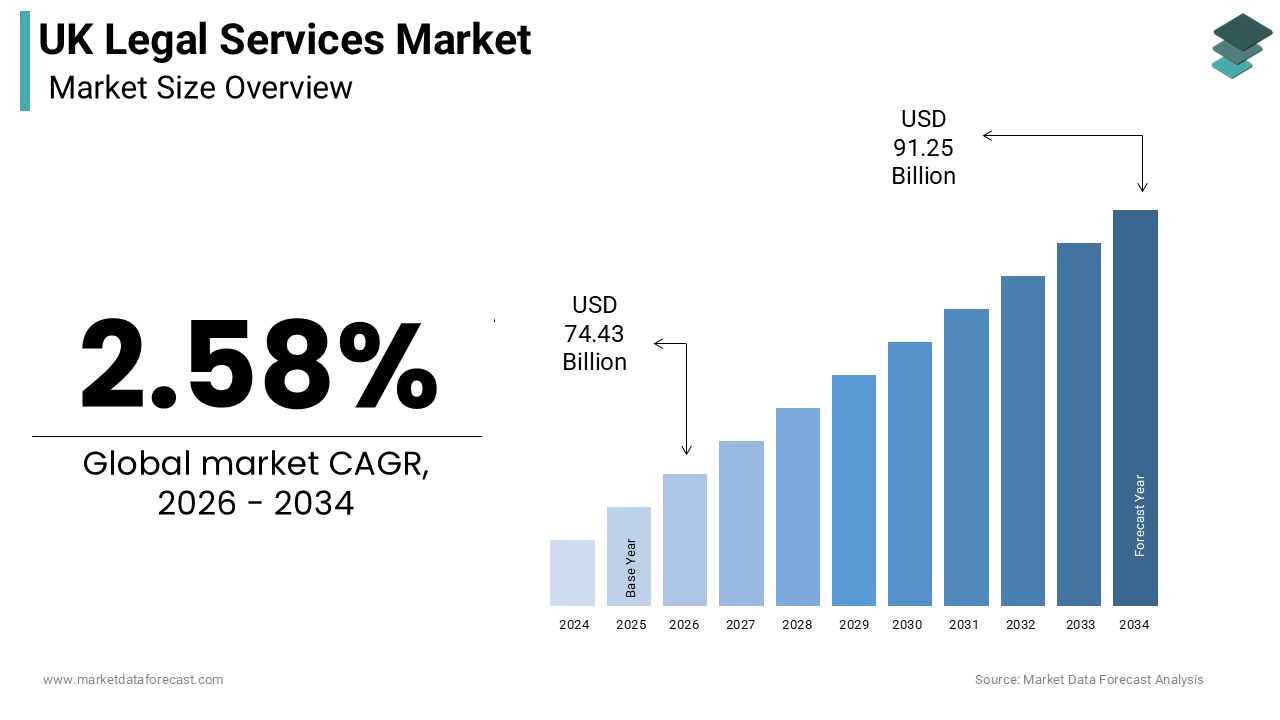
The United Kingdom legal services market was valued at USD 72.56 billion in 2025 and is projected to reach USD 91.25 billion by 2034, growing from USD 74.43 billion in 2026 at a CAGR of 2.58% during the forecast period. Market growth is driven by increasing demand for corporate legal advisory, regulatory compliance services, dispute resolution, and legal support for mergers and acquisitions. The growing complexity of business regulations, digital transformation, and international trade activities is further supporting the expansion of the UK legal services market.
Key Market Trends
- Rising demand for corporate and commercial legal services
- Increasing focus on regulatory compliance and risk management
- Growth in legal technology and AI-driven legal research solutions
- Expansion of cross-border legal advisory services
- Increasing demand for intellectual property and cybersecurity-related legal expertise
Segmental Insights
- Based on End User, the private consumers segment dominated the UK legal services market in 2025 by accounting for the largest share of the market, driven by demand for family law, property law, wills, probate, and personal legal advisory services.
- Based on Application, the corporate, financial, and commercial law segment held the leading share in 2025 due to increasing business transactions, mergers and acquisitions, financial regulations, and corporate governance requirements.
- Based on Service, the advisory and consulting services segment accounted for the largest market share in 2025, supported by growing demand for legal guidance, compliance support, and strategic business consulting.
- Based on Firm Size, the large law firms segment dominated the market in 2025, owing to their extensive service portfolios, international presence, and ability to manage complex legal matters for multinational clients.
Regional Insights
- The United Kingdom is expected to witness steady and progressive development across its legal services ecosystem over the forecast period. Growth is supported by its position as a global legal hub, strong financial sector, and increasing demand for specialized legal expertise.
- Scotland is anticipated to benefit from growing investments in renewable energy, infrastructure development, and related legal advisory services over the coming years.
- Wales is expected to strengthen its commercial legal services landscape through regional economic development, public sector projects, and expanding business activities.
Competitive Landscape
- The UK legal services market is highly competitive, with firms focusing on specialization, digital transformation, and global legal advisory capabilities. Market participants are investing in legal technology, AI-powered research tools, and cross-border service expansion to strengthen their market positions.
- Key players operating in the UK legal services market include DLA Piper, Clifford Chance, Linklaters, A&O Shearman, Freshfields, Herbert Smith Freehills Kramer, CMS Cameron McKenna Nabarro Olswang, Eversheds Sutherland, Pinsent Masons, Ashurst, Hogan Lovells, Norton Rose Fulbright, Bird & Bird, Taylor Wessing, and Mishcon de Reya.
UK Legal Services Market Size
The UK legal services market size was valued at USD 72.56 billion in 2025, and is projected to reach USD 91.25 billion by 2034 from USD 74.43 billion in 2026, growing at a CAGR of 2.58%.
Legal services comprise a sophisticated network of law firms, barristers' chambers, solicitors, and alternative business structures that provide expert counsel, representation, and regulatory compliance support across diverse sectors. This industry serves as a cornerstone of the national economy, facilitating commercial transactions, dispute resolution, and the administration of justice for individuals and corporations alike. The sector is globally recognized for its common law heritage and the prestige of institutions such as the Magic Circle firms, which handle high-value cross-border matters. As per data from the Office for National Statistics, the professional, scientific, and technical activities sector, which includes legal services, remains a significant contributor to the gross value added of the UK economy, reinforcing its foundational position. The market operates within a strict regulatory framework overseen by bodies like the Solicitors Regulation Authority, ensuring adherence to ethical standards and client protection. Recent years have witnessed a structural shift driven by digital transformation, where artificial intelligence and automation are reshaping traditional service delivery models. The demand for specialized expertise in areas such as intellectual property, cybersecurity, and environmental regulation continues to grow, reflecting the complexities of modern business environments. This dynamic landscape requires legal professionals to adapt continuously, balancing traditional advocacy with technological innovation to meet evolving client expectations and maintain competitive advantage in a globalized marketplace.
MARKET DRIVERS
Increasing Regulatory Complexity and Compliance Requirements Fuel Demand
The escalating complexity of domestic and international regulations is a key factor driving the growth of the UK legal services market. Businesses operating in highly regulated sectors, such as finance, healthcare, and energy, face an expanding web of compliance obligations that require specialized legal interpretation and strategic guidance. According to data from the House of Commons Library, thousands of new statutory instruments are enacted annually, which creates a continuous need for legal advisory services to ensure organizational adherence. The introduction of stringent data protection laws, environmental standards, and anti-money laundering directives forces companies to engage legal experts for risk mitigation and policy development. Brexit has further amplified this driver by necessitating the restructuring of contractual relationships and regulatory frameworks for firms trading with the European Union. Organizations cannot afford non-compliance due to the severe financial penalties and reputational damage associated with regulatory breaches. Consequently, corporate legal departments increasingly outsource complex compliance tasks to external firms with niche expertise. This structural reliance on legal counsel for navigating the regulatory maze ensures sustained demand for high-value advisory services, particularly in corporate governance and regulatory affairs.
Growth in Cross-Border Transactions and International Dispute Resolution
The expansion of cross-border transactions and the prominence of London as a global hub for international dispute resolution significantly drive demand for legal services in the UK, which is further boosting the UK market expansion. Despite geopolitical shifts, the UK remains a preferred jurisdiction for commercial arbitration and litigation due to the predictability and fairness of its common law system. According to statistics from the London Court of International Arbitration, the institution handled 362 referrals for its services in 2024, with 95% of cases being international in nature and involving parties from 101 jurisdictions. Global mergers and acquisitions, foreign direct investment, and international trade agreements require sophisticated legal structuring, tax planning, and due diligence, which UK firms are well-positioned to provide. The reputation of English law as the governing law for many international contracts ensures a steady flow of work for top-tier firms specializing in commercial law. Additionally, the rise of multinational corporations with complex supply chains necessitates legal support for intellectual property protection, labor law compliance, and contract enforcement across multiple countries. This global connectivity reinforces the UK legal market's position as a critical enabler of international commerce, driving revenue growth for firms with strong international practices.
MARKET RESTRAINTS
High Operational Costs and Fee Pressure Limit Profit Margins
The high operational costs and increasing pressure on fee structures that compress profit margins for many firms are primarily impeding the legal services market growth in the UK. Maintaining a workforce of highly qualified solicitors and barristers requires substantial investment in salaries, training, and retention programs in a competitive talent market. According to data from the Law Society, law firms have navigated rising overheads, including office expenditures in major metropolitan regions, though operational adaptations and higher recorded productivity have helped sustain financial resilience. Simultaneously, clients are demanding greater transparency and value for money, pushing back against traditional hourly billing models in favor of fixed fees or capped arrangements. This shift limits the ability of firms to pass on increased costs to clients, particularly in saturated practice areas such as conveyancing and personal injury. Small and medium-sized firms struggle to achieve economies of scale, making them vulnerable to price competition from larger entities and alternative legal service providers. The inability to maintain healthy margins restricts investment in innovation and expansion, forcing some firms to consolidate or exit the market. This financial squeeze acts as a persistent restraint on the overall growth and profitability of the sector.
Stringent Regulatory Compliance and Administrative Burdens Hinder Efficiency
Stringent regulatory compliance requirements and the associated administrative burdens are further hindering the expansion of the UK market. Law firms must adhere to rigorous standards set by the Solicitors Regulation Authority and other oversight bodies, which involve extensive reporting, auditing, and continuing professional development obligations. According to industry surveys, a significant portion of fee earner time is frequently diverted toward non-chargeable administrative tasks and compliance checks, which reduces overall focus on direct client service delivery. The implementation of anti-money laundering checks, know-your-customer protocols, and data protection measures requires dedicated staff and sophisticated systems, which increase operational complexity. Failure to comply can result in severe sanctions, including fines and loss of practicing certificates, creating a risk-averse culture that may stifle innovation. The constant evolution of regulatory guidelines necessitates continuous monitoring and adaptation, diverting resources from core legal services. For smaller firms, the cost of maintaining compliance infrastructure is disproportionately high, creating barriers to entry and growth. This regulatory heaviness slows down service delivery and increases the cost base, limiting the competitiveness of UK legal providers in a global market.
MARKET OPPORTUNITIES
Adoption of Legal Tech and Artificial Intelligence Enhances Service Delivery
The rapid adoption of legal technology and artificial intelligence is a substantial opportunity for UK legal service providers to enhance efficiency, reduce costs, and improve client outcomes. Tools such as natural language processing, machine learning algorithms, and automated document review systems enable lawyers to process vast amounts of data quickly and accurately. According to research from the University of Oxford, the strategic integration of artificial intelligence tools into daily workflows can free up nearly 40% of a lawyer's time from repetitive tasks, allowing them to shift focus toward high-value strategic decision making. Firms that invest in these technologies can offer faster turnaround times and more predictable pricing models, which appeal to cost-conscious corporate clients. Legal tech platforms also facilitate better case management, client communication, and knowledge sharing within organizations. The development of proprietary tech solutions creates new revenue streams through licensing and consulting services. Early adopters gain a competitive edge by differentiating themselves as innovative and efficient partners. As clients become more tech-savvy, the expectation for digital integration grows, making legal tech adoption not just an option but a necessity for future growth and relevance in the market.
Expansion of Alternative Business Structures and New Service Models
The expansion of Alternative Business Structures and the emergence of new service models offer significant opportunities for the UK legal services market. ABS licenses allow non-lawyers to own and manage law firms, bringing in fresh capital, management expertise, and diverse perspectives. According to data from the Solicitors Regulation Authority, 1,257 registered firms were operating with an ABS licence in the 2023 and 2024 reporting period, representing approximately 14% of all regulated law firms. This flexibility allows firms to tailor their offerings to specific client needs, such as bundled services for startups or integrated compliance packages for regulated industries. New entrants, including legal process outsourcing providers and online legal platforms, are disrupting traditional models by offering affordable, accessible, and scalable solutions. These models appeal to small businesses and individuals who previously found legal services prohibitively expensive. By embracing alternative structures, legal providers can access new customer segments, optimize operational efficiency, and foster a culture of innovation. This structural evolution opens pathways for growth beyond traditional legal boundaries, creating a more dynamic and inclusive market landscape.
MARKET CHALLENGES
Acute Talent Shortage and Retention Issues Impact Service Capacity
The UK legal services market faces a critical challenge in the form of acute talent shortages and difficulties in retaining skilled professionals, which impact service capacity and quality. The demand for qualified solicitors, particularly in specialized fields such as technology law and regulatory compliance, outstrips the supply of trained candidates. According to reports from the Legal Cheek website, recruitment struggles are prevalent across all levels, from trainees to senior partners, with many firms reporting prolonged vacancy periods. The high-stress environment, long working hours, and intense competition contribute to burnout and high turnover rates among junior lawyers. This instability disrupts client relationships and increases the workload on remaining staff, further exacerbating retention issues. The cost of recruiting and training new talent is substantial, placing a financial burden on firms already facing margin pressures. Additionally, the war for talent extends to legal technologists and data analysts, who are essential for digital transformation but often prefer tech companies over traditional law firms. Without a stable and skilled workforce, firms struggle to meet client demands and maintain competitive service levels, threatening their long-term viability.
Cyber Security Threats and Data Privacy Risks Undermine Client Trust
Cybersecurity threats and data privacy risks pose a significant challenge to the UK legal services market, as firms hold vast amounts of sensitive and confidential client information. Law firms are prime targets for cybercriminals seeking to exploit vulnerabilities for financial gain or espionage. According to the National Cyber Security Centre, the legal sector experiences a high frequency of phishing attacks, ransomware incidents, and data breaches, which can have devastating consequences. A single security incident can compromise client confidentiality, lead to substantial regulatory fines under the General Data Protection Regulation, and cause irreparable reputational damage. Ensuring robust cyber defenses requires continuous investment in advanced security infrastructure, staff training, and incident response protocols, which strains resources. Clients are increasingly scrutinizing the security posture of their legal providers, making cyber resilience a key factor in procurement decisions. The complexity of managing data across cloud platforms and remote working environments further increases vulnerability. Failure to adequately address these risks undermines client trust and can result in loss of business. Navigating this threat landscape requires vigilance and proactive management, which remains a persistent and evolving challenge for the industry.
REPORT COVERAGE
| REPORT METRIC | DETAILS |
| Market Size Available | 2025 to 2034 |
| Base Year | 2025 |
| Forecast Period | 2026 to 2034 |
| CAGR | 2.58% |
| Segments Covered | By End User, Application, Service, Firm Size, and Region. |
| Various Analyses Covered | Global, Regional and Country-Level Analysis, Segment-Level Analysis, Drivers, Restraints, Opportunities, Challenges; PESTLE Analysis; Porter’s Five Forces Analysis, Competitive Landscape, Analyst Overview of Investment Opportunities |
| Market Leaders Profiled | DLA Piper LLP, Clifford Chance LLP, Linklaters LLP, Allen Overy Shearman Sterling LLP, Freshfields LLP, Herbert Smith Freehills Kramer LLP, CMS Cameron McKenna Nabarro Olswang LLP, Eversheds Sutherland LLP, Pinsent Masons LLP, Ashurst LLP, Hogan Lovells International LLP, Norton Rose Fulbright LLP, Bird & Bird LLP, Taylor Wessing LLP, Mishcon de Reya LLP |
SEGMENTAL ANALYSIS
By End-User Insights
The private consumers segment led the market by holding the major share of the UK market in 2025 due to the high volume of civil litigation, family law disputes, and personal property transactions that require professional legal assistance. Individuals frequently engage solicitors for matters such as divorce, conveyancing, wills, and probate, which are essential life events requiring expert guidance. According to data from the Ministry of Justice, hundreds of thousands of family court cases are filed annually, demonstrating the consistent requirement for private client legal representation across the region. The complexity of property laws and the financial stakes involved in real estate transactions ensure that most homebuyers and sellers utilize legal services to protect their interests. Additionally, the rising awareness of individual rights has led to an increase in employment disputes and personal injury claims among the general public. Unlike corporate clients, who may have in-house counsel, private consumers rely entirely on external firms for legal advice. This dependency creates a broad and stable customer base for high street firms and specialized boutiques. The emotional and financial significance of these personal matters ensures that consumers are willing to invest in quality legal representation, securing the dominance of this segment in terms of case volume and widespread market presence across the country.
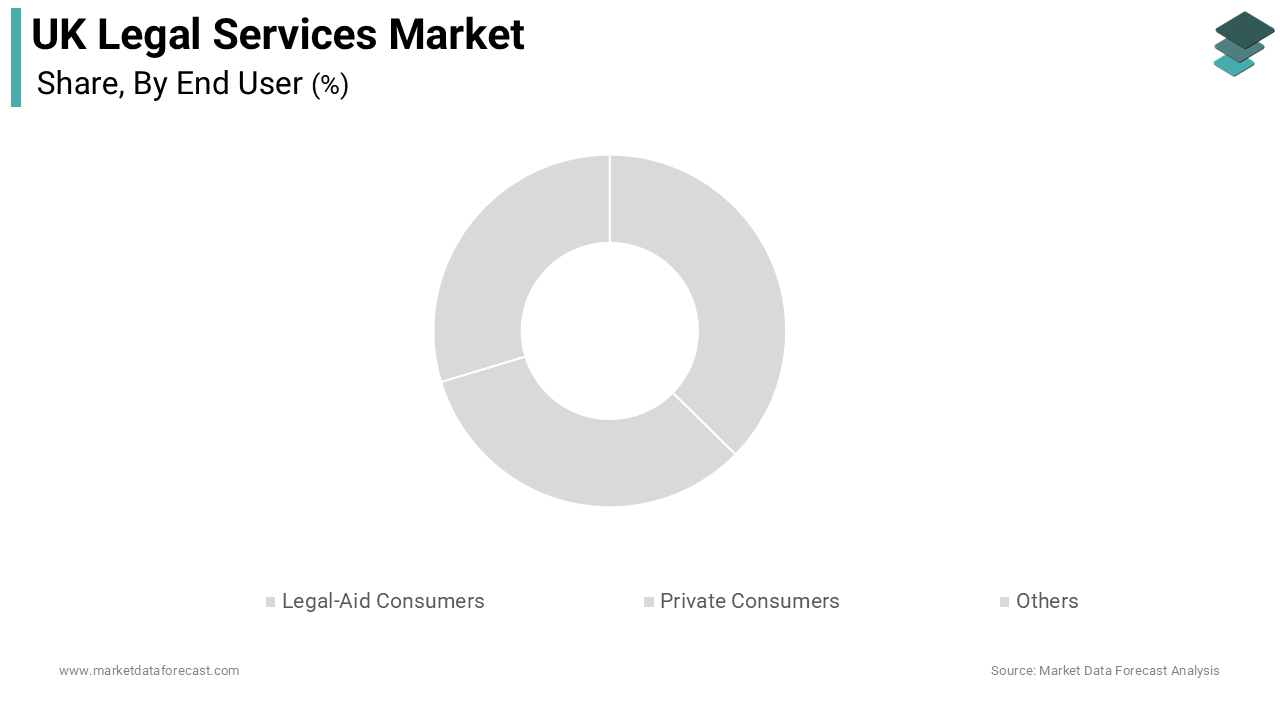
On the other side, the corporate and institutional clients segment is the fastest-growing segment in the UK legal services market and is predicted to grow at a promising CAGR during the forecast period, owing to the escalating regulatory complexity and the critical need for compliance expertise. Businesses operating in sectors such as finance, healthcare, and technology face a constantly evolving landscape of domestic and international regulations that require specialized legal interpretation. According to data from the House of Commons Library, thousands of new statutory instruments are enacted each year, creating an ongoing need for technical advisory support to mitigate corporate risks and maintain regulatory compliance. Companies are increasingly outsourcing complex compliance tasks to external law firms with niche expertise in areas such as data protection, environmental standards, and anti-money laundering. The aftermath of Brexit has further amplified this demand, as organizations restructure their legal frameworks to accommodate new trade relationships and regulatory divergences. Corporate clients view legal counsel as strategic partners in risk management rather than just service providers, leading to deeper and more frequent engagements. This structural shift towards proactive legal governance ensures sustained growth in corporate legal spending. The high value of these contracts and the recurring nature of compliance work contribute to the rapid expansion of this segment compared to more transactional private consumer services.
By Application Insights
The corporate, financial, and commercial law segment led the market by capturing the highest share of the UK market in 2025 because it underpins the fundamental operations of businesses and the broader economy. This application area covers contract drafting, corporate governance, mergers and acquisitions, and banking and finance, which are essential for commercial viability. According to data from The Law Society, corporate and commercial operations contribute the largest proportion of revenue for major UK legal practices, reflecting their foundational role in standard commercial activities. Every commercial transaction, from simple supply agreements to complex joint ventures, requires legal oversight to ensure enforceability and risk mitigation. The dominance of London as a global financial center further amplifies demand for high-value commercial legal services. Banks, investment firms, and multinational corporations rely on UK lawyers to structure deals and navigate regulatory requirements. The sheer volume of business entities registered in the UK ensures a steady stream of work for corporate lawyers. This segment benefits from the continuous need for legal structuring in a dynamic market economy. The critical nature of these services makes them indispensable, thereby securing the leading position of corporate and commercial law in the market.
On the other side, the intellectual property and technology law segment is the fastest-growing segment in the UK legal services market and is anticipated to grow at a healthy CAGR during the forecast period, owing to the surge in digital innovation and heightened concerns over data protection. As businesses increasingly rely on software, artificial intelligence, and digital platforms, the need to protect intellectual assets and ensure data compliance has become critical. According to data from the Intellectual Property Office, patent and trademark applications have risen significantly, reflecting the escalating importance of securing proprietary rights within the modern digital economy. The implementation of strict data privacy regulations, such as the UK General Data Protection Regulation, has created a new layer of legal complexity requiring specialized counsel. Companies seek legal advice to navigate licensing agreements, copyright issues, and cybersecurity liabilities. The rapid pace of technological change means that legal frameworks are constantly evolving, necessitating ongoing advisory services. This dynamic environment creates a high demand for lawyers with dual expertise in law and technology. The strategic value of intellectual property as a competitive asset further fuels investment in legal protection. This convergence of technology and law ensures that this segment continues to grow at the fastest rate.
By Service Insights
The advisory and consulting services segment held the major share of the UK market in 2025, as organizations increasingly prioritize proactive risk management and strategic guidance over reactive litigation. Businesses seek legal counsel to anticipate regulatory changes, structure transactions, and mitigate potential liabilities before they escalate into disputes. According to industry surveys, a substantial majority of corporate legal budgets are dedicated to ongoing advisory mandates rather than contentious court proceedings, showing a clear corporate shift toward dispute avoidance. Legal advisors play a crucial role in shaping business strategy, ensuring compliance, and facilitating smooth operations. The complexity of modern business environments requires continuous legal input on issues such as employment law, environmental regulations, and corporate governance. This ongoing relationship provides stability and predictable revenue for law firms. Clients value the preventive nature of advisory services, which helps avoid costly legal battles and reputational damage. The ability of lawyers to provide commercially aware advice that aligns with business objectives enhances their value as trusted partners. This focus on prevention and strategy secures the dominance of advisory and consulting services in the market.
However, the representation and litigation services segment is estimated to witness a prominent CAGR in the UK market during the forecast period, owing to the rising dispute resolution needs and an increase in employment claims. Economic uncertainties and organizational restructuring have led to a higher incidence of commercial disputes, contractual breaches, and workplace conflicts. According to data from the Employment Tribunals Service, single employment tribunal claims received by the service saw a marked increase of 33% in the second quarter of 2025 compared to the same period in the previous year, pointing to escalating labor market volumes. Individuals and businesses are increasingly willing to pursue legal action to protect their rights and recover losses. The complexity of commercial contracts and the high stakes involved in business disputes necessitate skilled litigation support. Additionally, the rise of class actions and group litigation orders has created new avenues for collective legal redress. Courts and arbitration bodies are seeing higher caseloads, requiring more legal representation. This trend is supported by the availability of conditional fee agreements, which make litigation more accessible. The increasing willingness to litigate ensures that representation services continue to grow at the fastest rate.
By Firm Size Insights
The large law firms segment occupied the leading share of the UK market in 2025 due to their capacity to handle complex, high-value matters and their extensive global networks. These firms possess the resources and specialized expertise required for major mergers and acquisitions, international arbitration, and multi-jurisdictional regulatory compliance. According to data from The Lawyer, top-tier legal entities continue to generate the majority of overall sector revenue, demonstrating the market's high concentration at the upper tier of commercial law. Their ability to deploy large teams of specialists across various practice areas allows them to serve multinational corporations and government entities effectively. The reputation and brand recognition of large firms attract premium clients who prioritize reliability and comprehensive service. These firms also invest heavily in technology and infrastructure to support large-scale operations. Their established relationships with key industry players create barriers to entry for smaller competitors. The financial strength of large firms enables them to weather economic downturns and invest in growth opportunities. This combination of scale, expertise, and reputation secures their leading position in the market.
On the other hand, the SME law firms segment is the fastest-growing segment in the UK legal services market and is expected to exhibit a healthy CAGR during the forecast period, owing to their agility and ability to provide personalized service to niche client segments. Smaller firms can adapt quickly to changing client needs and offer more flexible fee arrangements than larger counterparts. According to data from the Solicitors Regulation Authority, smaller legal businesses remain highly resilient, with many focusing their efforts on specialized local property transactions, immigration, and family law. Clients often prefer direct access to partners and tailored attention provided by SME firms. This personal touch builds strong client loyalty and generates positive word-of-mouth referrals. SME firms are also quicker to adopt new technologies and innovative service models to compete effectively. Their lower overheads allow them to offer competitive pricing for routine legal matters. The focus on specific niches allows them to develop deep expertise and a strong reputation in local markets. This combination of flexibility, personalization, and specialization drives the rapid growth of SME law firms.
REGIONAL ANALYSIS
UK Legal Services Market Analysis
The UK is poised to witness steady, progressive development across its entire legal services infrastructure over the next few years, maintaining its position as a dominant global center for international commercial law and digital legal tech adoption. London serves as a global legal hub, hosting the headquarters of most Magic Circle and US firms, which handle high-value international work. According to data from the Office for National Statistics, the professional services sector in London contributes significantly to the national economy. The presence of the Supreme Court and Court of Appeal establishes England as the center for precedent-setting legal decisions. The dense network of corporate clients in the financial district drives demand for top-tier commercial legal services. Regulatory bodies, such as the Solicitors Regulation Authority, are based in England, influencing national standards. The deep pool of legal talent from prestigious universities supports the high quality of service. This concentration of resources and influence ensures England remains the central engine of the UK legal market.
Scotland Legal Services Market Analysis
Scotland is anticipated to see increased alignment with high-value energy transitions and regional infrastructure projects over the coming years, strengthening its distinct market position. Edinburgh and Glasgow are the primary centers where firms specialize in energy, finance, and property law, reflecting the regional economy. According to statistics from the Law Society of Scotland, the profession is highly regulated and respected for its integrity and expertise. The distinct legal framework requires specialized knowledge, which creates a barrier to entry for non-Scottish firms. The strong presence of the oil and gas industry drives demand for specialized commercial litigation and regulatory advice. Scottish firms often collaborate with English counterparts for cross-border matters, enhancing their reach. The close-knit legal community fosters strong professional relationships and a reputation. Government support for the legal sector promotes international outreach. This unique legal heritage and specialized expertise ensure Scotland maintains a vital and respected position in the UK market.
Wales Legal Services Market Analysis
Wales is projected to expand its regional commercial footprint and public sector legal framework over the next few years, supported by localized legislative developments and economic investments. Cardiff serves as the main hub where firms handle matters related to devolved legislation and regional development. According to data from the Law Society of Wales, there is a strong emphasis on access to justice and community legal services. The growth of the legal sector is supported by government initiatives to boost the local economy. Welsh firms often specialize in areas such as agricultural law, environmental regulation, and language rights. The proximity to England allows for collaboration on cross-border cases. The bilingual nature of the legal system adds a unique dimension to practice. Efforts to promote Wales as a destination for legal services are gaining traction. This focused approach and community engagement ensure steady growth and relevance in the broader UK market.
COMPETITION OVERVIEW
The competition in the UK legal services market is intense and characterized by the presence of elite global firms alongside agile mid-tier practices and alternative legal service providers. Magic Circle and US firms dominate the high-value corporate and financial sectors, leveraging their brand prestige and extensive resources. They continuously invest in technology and talent to maintain their competitive edge and serve multinational clients effectively. Mid-tier firms compete by offering specialized expertise in niche areas such as family law, immigration, and regional commercial disputes. The rise of alternative business structures and legal tech startups disrupts traditional models by providing cost-effective and accessible solutions. Price transparency and client expectations for value drive firms to adopt flexible billing arrangements. Regulatory compliance and data security credentials have become key differentiators influencing client selection. This dynamic environment fosters innovation in service delivery and operational efficiency, ensuring a robust and evolving market landscape where adaptability and specialization are crucial for success.
KEY MARKET PLAYERS
A few major players of the UK legal services market include
- DLA Piper LLP
- Clifford Chance LLP
- Linklaters LLP
- Allen Overy Shearman Sterling LLP
- Freshfields LLP
- Herbert Smith Freehills Kramer LLP
- CMS Cameron McKenna Nabarro Olswang LLP
- Eversheds Sutherland LLP
- Pinsent Masons LLP
- Ashurst LLP
- Hogan Lovells International LLP
- Norton Rose Fulbright LLP
- Bird & Bird LLP
- Taylor Wessing LLP
- Mishcon de Reya LLP
Top Strategies Used by Key Market Participants
Key players in the UK legal services market employ several strategic approaches to maintain competitiveness and drive growth. Digital transformation is central, with firms investing in artificial intelligence automation and data analytics to enhance efficiency. Talent acquisition and retention strategies focus on diversity, well-being, and continuous professional development. Expansion into niche practice areas such as cyber security, environmental law, and intellectual property addresses emerging client needs. Strategic alliances and mergers enable firms to broaden their geographic reach and service offerings. Client-centric innovation involves developing fixed fee models and transparent pricing structures to build trust. Sustainability initiatives are integrated into operations to meet corporate social responsibility goals. These combined strategies enable market leaders to adapt to changing regulatory landscapes and technological advancements while sustaining profitability and reputation.
Leading Players in the UK Legal Services Market
- Clifford Chance LLP maintains a prestigious position in the UK legal services market as a leading global law firm with deep roots in London. The firm specializes in high-value corporate finance mergers and acquisitions and complex litigation for multinational clients. Recent actions include significant investments in legal technology platforms to enhance client service delivery and operational efficiency. Clifford Chance has expanded its digital capabilities by launching innovative tools for contract analysis and due diligence. The firm actively promotes diversity and inclusion initiatives to attract top-tier talent from diverse backgrounds. By strengthening its presence in key international markets and focusing on sector-specific expertise such as technology and energy, Clifford Chance reinforces its reputation for excellence. Its commitment to sustainability and responsible business practices further enhances its brand value and client trust in a competitive landscape.
- Linklaters LLP contributes significantly to the UK legal sector by providing comprehensive advice on capital markets, corporate transactions, and regulatory matters. The firm is renowned for its expertise in serving financial institutions and listed companies across various industries. Recent strategies involve enhancing its digital transformation agenda through the adoption of artificial intelligence and data analytics tools. Linklaters has invested in training programs to upskill its workforce in emerging technologies and legal tech applications. The firm continues to expand its global network by strengthening alliances with local practitioners in strategic jurisdictions. By focusing on client-centric innovation and sustainable legal solutions, Linklaters ensures it remains at the forefront of the market. Its proactive approach to regulatory changes and commitment to delivering practical commercial advice solidify its position as a trusted advisor.
- Freshfields Bruckhaus Deringer LLP plays a pivotal role in the UK legal market, offering integrated services in dispute resolution, antitrust, and corporate law. The firm leverages its extensive international footprint to handle cross-border matters for major corporations and governments. Recent actions include the expansion of its forensic and crisis management teams to address growing cybersecurity and regulatory challenges. Freshfields has invested heavily in knowledge management systems to improve collaboration and service consistency across offices. The firm actively engages in pro bono work and community initiatives to support access to justice. By prioritizing technological innovation and client responsiveness, Freshfields enhances its competitive edge. Its focus on developing specialized industry sectors such as life sciences and financial services ensures tailored and effective legal solutions for complex global issues.
MARKET SEGMENTATION
This research report on the UK legal services market is segmented and sub-segmented into the following categories.
By End User
- Legal-Aid Consumers
- Private Consumers
- Others
By Application
- Corporate/Financial/Commercial Law
- Personal Injury
- Others
By Service
- Representation
- Advisory and Consulting
- Others
By Firm Size
- Large
- SME Law Firms