- Product Description Description
- Table of Contents TOC
- List of Table & Figure LOT
- Get Free Sample PDF Sample PDF
Market Size, 2025
$60 BnMarket Estimate, 2026
$62.76 BnMarket Forecast, 2034
$89.94 BnCAGR, 2026–2034
4.60%Executive Summary: United Kingdom Recruitment Market
- Market Scope: Comprehensive global/regional market evaluation of the UK recruitment sector, analyzing types (permanent, temporary, others), industry verticals (IT & telecom, healthcare, BFSI, retail, manufacturing, others), recruitment types (internal, external), organization sizes (SMEs, large enterprises), and regional dynamics.
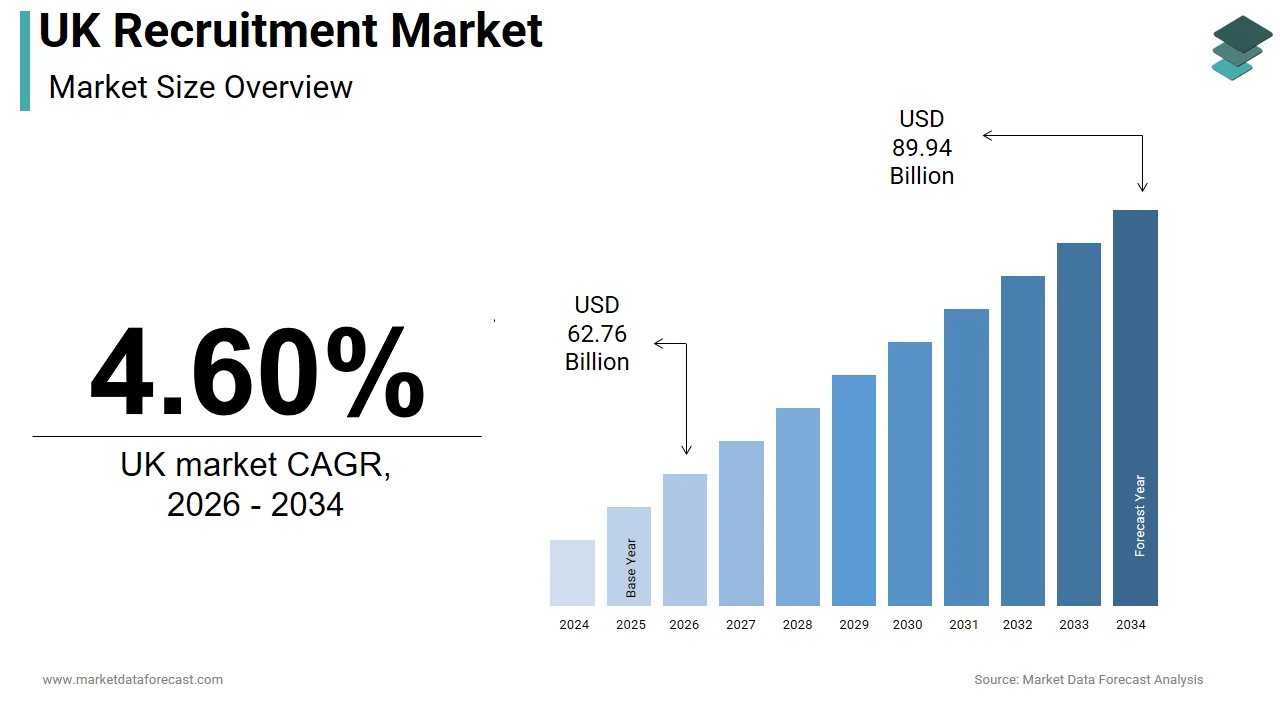
- Market Valuation: Valued at USD 60.00 billion in 2025, reaching USD 62.76 billion in 2026, and projected to expand up to USD 89.94 billion by 2034, registering a steady CAGR of 4.60% throughout the forecast period from 2026 to 2034.
- Primary Growth Drivers: Chronic skill shortages in specialized sectors like technology, healthcare, and engineering; rapid expansion of the gig economy and flexible hybrid work models; and increasing corporate demand for contingent workforce solutions.
Key Market Segment Metrics
| Category | Leading Segment (Base Year Position) | Fastest-Growing / High-Impact Segment |
|---|---|---|
| By Type, Vertical, Recruitment & Size | Permanent Employment Segment (leading type with 44.5% share), IT & Telecommunications Vertical (leading industry with 21.5% share), & Large Enterprises (dominant size capturing 56.1% share) | Temporary Employment Segment (fastest type growing at a 6.5% CAGR), Healthcare Vertical (fastest vertical growing at an 8.2% CAGR), & Small and Medium Enterprises (fastest-growing size at a 7.5% CAGR) |
| By Region / Country | United Kingdom (mature and highly regulated national market driven by dense job vacancies and robust enterprise needs) | Regional hubs outside major urban centers experiencing growth via remote and hybrid digital recruitment models. |
Major Market Players & Market Structure
Market Structure: A highly competitive landscape featuring large multinational recruitment firms, specialized boutique agencies, and digital platforms competing through AI-driven sourcing, niche expertise, and comprehensive workforce solutions.
Key Companies: Randstad, Adecco Group, ManpowerGroup, Robert Half International, Kelly Services, Hays plc, Allegis Group, Kforce Inc., TrueBlue Inc., PageGroup, Recruit Holdings Co. Ltd., Express Employment Professionals, Spherion Staffing Services, Robert Walters plc, Hudson Global Inc., Michael Page International, Fircroft Engineering Services Ltd, Impellam Group plc, SThree plc, and Alexander Mann Solutions.
UK Recruitment Market Size
The size of the UK recruitment market was worth USD 60 billion in 2025. The market is anticipated to grow at a CAGR of 4.60% from 2026 to 2034 and be worth USD 89.94 billion by 2034 from USD 62.76 billion in 2026.
The recruitment is an intermediary ecosystem connecting employers with talent across diverse sectors ranging from technology and healthcare to finance and construction. The regulatory environment is governed by strict employment laws and the Conduct of Employment Agencies and Employment Businesses Regulations, which mandate transparency and fair treatment of workers. Demographic shifts, such as an aging workforce and changing attitudes toward work-life balance, significantly influence hiring patterns. Employee retention has become a primary concern, with turnover rates reaching 15% in certain high-demand sectors. The rise of remote and hybrid working models has expanded the geographical scope of recruitment, allowing firms to source talent beyond traditional urban centers. This evolution requires recruiters to adapt their strategies to assess soft skills and cultural fit in virtual environments. The market operates within a dynamic economic context where skill shortages and wage inflation drive continuous innovation in sourcing techniques and candidate engagement methods.
MARKET DRIVERS
Persistent Skill Shortages in Key Sectors
The chronic skill shortages in industries, such as technology, healthcare, and engineering, is propelling the growth of the United Kingdom recruitment market. Employers struggle to find qualified candidates for specialized roles, leading them to rely heavily on external recruitment agencies to identify and attract scarce talent. According to data from the Office for National Statistics, there are over 1 million job vacancies in the UK, indicating a significant imbalance between labor supply and demand. Similarly, the healthcare sector grapples with staffing crises in nursing and general practice, driving aggressive recruitment campaigns. This scarcity empowers candidates to command higher salaries and better benefits, forcing employers to utilize specialized recruiters who have access to passive talent pools. Recruitment agencies leverage their extensive networks and industry expertise to locate candidates who are not actively seeking new roles. The complexity of these technical roles requires a nuanced understanding, which generalist HR departments often lack. Consequently, organizations outsource these critical hiring functions to experts who can navigate the competitive landscape effectively.
Expansion of the Gig Economy and Flexible Work
The rapid expansion of the gig economy and the widespread adoption of flexible work arrangements are driving the growth of the United Kingdom recruitment market. Organizations increasingly prefer contingent workforce solutions to manage fluctuating demand and reduce fixed labor costs. According to data from the Office for National Statistics, there are approximately 4.4 million people in the UK engaged in gig work or self-employment, representing a significant portion of the labor force. This shift creates a continuous need for recruiters who specialize in placing temporary contract and freelance professionals. Companies value the agility provided by contingent workers, allowing them to scale teams up or down without long-term commitments. Recruitment agencies facilitate this model by maintaining large databases of pre-vetted freelancers, who can be deployed quickly. The rise of remote work has further amplified this trend, enabling companies to hire talent from anywhere in the country or globally. Recruiters play a crucial role in managing compliance, payroll, and onboarding for these non-permanent workers. This operational support is essential for businesses navigating complex employment laws related to contractor status. The preference for flexibility among workers also drives supply, as many professionals choose freelance careers for better work-life balance.
MARKET RESTRAINTS
Economic Uncertainty and Budget Constraints
The economic uncertainty and tightening corporate budgets, causing hiring freezes and reduced expenditure on external agencies, are impeding the growth of the United Kingdom recruitment market. During periods of inflationary pressure and slow growth, organizations prioritize cost containment, leading to delays in filling non-essential roles. The business investment growth has stagnated, affecting confidence in expansion plans. Companies often opt to redistribute work among existing staff rather than incur the fees associated with agency placements. This internal redistribution increases workload but avoids immediate cash outflows. The hesitation to commit to long-term hires results in a shift toward shorter contracts, which offer lower margins for recruitment firms. Small and medium enterprises are particularly vulnerable as they lack the financial resilience to absorb unexpected costs. The unpredictability of market conditions makes long-term workforce planning difficult, leading to reactive rather than strategic hiring. Recruitment agencies face pressure to lower their fees or offer guarantee periods to secure business. This pricing pressure compresses profit margins and threatens the viability of smaller firms.
Regulatory Compliance and Administrative Burdens
The stringent regulatory compliance requirements and administrative burdens are additionally hindering the growth of the United Kingdom recruitment market. Agencies must adhere to complex employment laws, tax regulations, and right-to-work checks, which increase operational costs and processing times. According to the study, changes to off-payroll working rules known as IR35 have created confusion and increased liability for agencies and clients. The need to verify immigration status and conduct thorough background checks adds layers of bureaucracy to the placement process. Failure to comply can result in substantial fines and reputational damage, deterring some firms from operating in certain sectors. The General Data Protection Regulation imposes strict rules on how candidate data is stored and processed, requiring robust cybersecurity measures. These compliance obligations divert resources away from business development and candidate engagement. Smaller agencies struggle to keep pace with evolving legal requirements, lacking dedicated legal teams. The administrative load slows down the speed of placement, which is a key value proposition for clients. Clients may choose to handle recruitment internally to avoid sharing liability with third parties.
MARKET OPPORTUNITIES
Integration of Artificial Intelligence in Sourcing
The integration of artificial intelligence and machine learning technologies to enhance efficiency and candidate matching accuracy is certainly expected to create new opportunities for the growth of the United Kingdom recruitment market. AI-driven tools can analyze vast amounts of data to identify suitable candidates from multiple sources, including social media and professional networks. According to insights from Deloitte, organizations using AI in recruitment report a 30% reduction in time to hire due to automated screening processes. These technologies enable recruiters to focus on high-value activities, such as relationship building and negotiation, rather than manual resume sorting. AI-powered recommendations improve the quality of candidate shortlists by identifying skills and experiences that match job descriptions more precisely. Chatbots can engage with candidates 24/7, answering queries and scheduling interviews, which enhances the candidate experience. Predictive analytics help agencies forecast hiring trends and identify emerging skill gaps, allowing them to proactively build talent pipelines. The ability to remove unconscious bias from initial screening stages promotes diversity and inclusion, which is a growing priority for employers. Investment in these technologies allows firms to scale their operations without proportional increases in headcount.
Growth in Diversity and Inclusion Consulting
The increasing corporate focus on diversity and inclusion to expand into specialized consulting and sourcing services is also expected to fuel the growth of the United Kingdom recruitment market. Organizations are under pressure to build diverse workforces to reflect societal values and improve decision-making. Many UK employers have set specific diversity hiring targets. Recruitment agencies with expertise in sourcing underrepresented groups can offer valuable niche services that go beyond standard placement. This includes advising on inclusive job descriptions, unbiased interview techniques, and retention strategies. Agencies that build diverse talent pools become preferred partners for corporations aiming to meet environmental, social, and governance goals. The demand for female leaders in tech and minority representation in senior management drives specific search mandates. Specialized firms can charge premium fees for their deep networks and cultural competence. This shift allows recruiters to position themselves as strategic partners in organizational transformation rather than just suppliers of labor. The long-term nature of diversity initiatives ensures recurring revenue streams.
MARKET CHALLENGES
Intense Competition for Top Talent
The intense competition for top talent, as candidates hold significant power, is a quiet challenge for the growth of the United Kingdom recruitment market. High demand for skilled professionals leads to bidding wars that drive up salaries and make placements difficult to close. The wage growth has outpaced inflation in several sectors, reflecting the scarcity of skilled workers. Candidates are receiving multiple job offers simultaneously, giving them leverage to negotiate better terms. This environment increases the risk of offer rejection and counteroffers from current employers. Recruiters must invest more time and resources in nurturing candidate relationships to ensure commitment. The speed of the hiring process becomes critical as delays can result in losing candidates to competitors. Agencies face pressure to deliver results quickly while maintaining quality, which strains operational capacity. The emotional toll of repeated rejections affects recruiter morale and productivity. Clients may become frustrated with the difficulty of filling roles, leading to strained relationships. The need to constantly refresh talent pipelines requires significant marketing and networking efforts. This competitive intensity raises the cost of acquisition for both agencies and employers.
Candidate Expectations and Experience Gaps
Evolving candidate expectations regarding transparency, communication, and career development are another factor inhibiting the growth of the United Kingdom recruitment market. Modern job seekers demand a seamless and respectful recruitment process, often comparing agencies to consumer brands. Slow feedback loops and a lack of communication are the top complaints from job seekers. Recruiters often struggle to provide timely updates due to high volumes and client delays, leading to candidate drop-off. The expectation for personalized interactions conflicts with the need for efficiency in high-volume recruitment. Candidates also seek clarity on salary ranges and remote work policies early in the process, which some clients are reluctant to disclose. Misalignment between candidate expectations and reality leads to high withdrawal rates during the interview stage. Agencies must balance the needs of clients with the desires of candidates acting as mediators in a tense dynamic. Failure to manage expectations damages brand reputation and reduces future referrals. The rise of social media means negative experiences are shared widely, impacting agency credibility. Meeting these heightened expectations requires investment in customer relationship management tools and training.
REPORT COVERAGE
| REPORT METRIC | DETAILS |
| Market Size Available | 2025 to 2034 |
| Base Year | 2025 |
| Forecast Period | 2026 to 2034 |
| Segments Covered | By Type, Industry Vertical, Recruitment Type, Organization Size, and Region. |
| Various Analyses Covered | Global, Regional, and Country-Level Analysis, Segment-Level Analysis, Drivers, Restraints, Opportunities, Challenges; PESTLE Analysis; Porter’s Five Forces Analysis, Competitive Landscape, Analyst Overview of Investment Opportunities |
| Countries Covered | United Kingdom |
| Market Leaders Profiled | Randstad, Adecco Group, ManpowerGroup, Robert Half International, Kelly Services, Hays plc, Allegis Group, Kforce Inc., TrueBlue Inc., PageGroup, Recruit Holdings Co. Ltd., Express Employment Professionals, Spherion Staffing Services, Robert Walters plc, Hudson Global Inc., Michael Page International, Fircroft Engineering Services Ltd, Impellam Group plc, SThree plc, Alexander Mann Solutions. |
SEGMENTAL ANALYSIS
By Type Insights
The permanent employment segment was the largest by accounting for 44.5% of the United Kingdom recruitment market share in 2025, with the fundamental need for organizational stability and long-term workforce planning. Companies prefer permanent hires for core roles to ensure continuity, institutional knowledge retention, and cultural alignment. According to data from the Office for National Statistics, approximately 27 million people in the UK are employed on permanent contracts, representing the vast majority of the workforce. This dominance is underpinned by the desire of employees for job security benefits such as pensions and paid leave, which are typically associated with permanent roles. Employers invest significantly in training and development for permanent staff, expecting a long-term return on investment. The legal framework surrounding permanent employment provides clear guidelines on rights and responsibilities, reducing ambiguity for both parties. Permanent roles are essential for strategic functions where a deep understanding of business processes is important. Recruitment agencies focus heavily on this segment as it generates substantial fees and long-term client relationships. The prestige associated with permanent titles also attracts high-quality candidates who seek career progression.
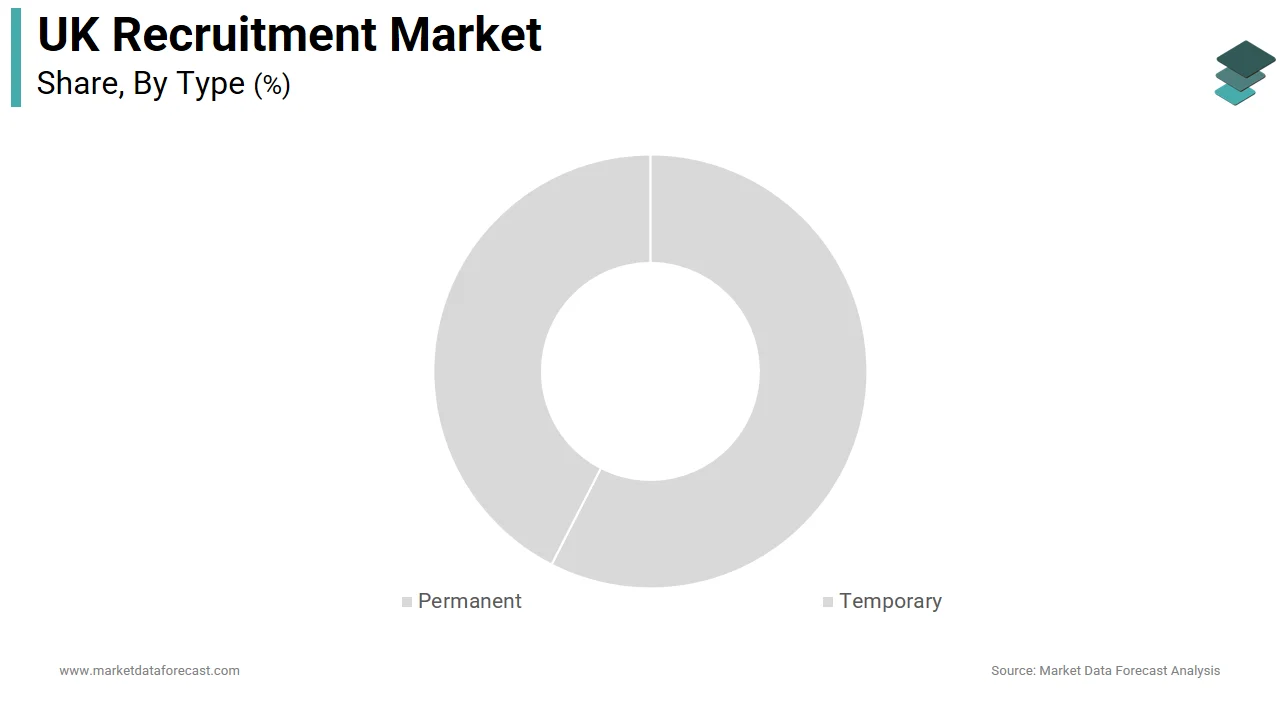
The temporary employment segment is expected to register the fastest CAGR of 6.5% during the forecast period, with the increasing need for workforce flexibility and the ability to manage fluctuating demand without long-term commitments. Organizations use temporary staff to cover seasonal peaks, project-based work, and employee absences. As per data from the Office for National Statistics, the number of temporary workers has increased by 15% in recent years, reflecting this shift. The rise of the gig economy and digital platforms has made it easier to source and manage contingent labor. Companies value the agility provided by temporary staffing, allowing them to scale operations quickly in response to market changes. As per reports from Deloitte, 60% of businesses plan to increase their use of contingent workers to enhance operational resilience. Temporary roles also serve as a trial period for potential permanent hires, reducing recruitment risk. The availability of specialized skills for short-term projects drives demand in technology and creative sectors. Regulatory changes such as IR35 have clarified the status of contractors, making temporary engagements more structured.
By Industry Vertical Insights
The IT and Telecommunications sector accounted in holding 21.5% of the United Kingdom recruitment market share in 2025 due to the role of technology in modern business operations and the acute shortage of digital skills. Every industry now relies on software, data, and connectivity, driving immense demand for developers, engineers, and IT support staff. According to data from Tech Nation, the UK tech sector employs over 1.6 million people, making it one of the largest and fastest-growing parts of the economy. The rapid pace of technological change requires continuous hiring to keep up with new tools and platforms. This scarcity drives high volumes of recruitment activity and elevated fees for agencies specializing in this vertical. The sector offers competitive salaries, attracting top talent from around the world. Recruitment agencies must possess deep technical knowledge to assess candidate capabilities accurately. The constant emergence of new technologies such as artificial intelligence and blockchain creates fresh demand for specialized roles.
The healthcare sector segment is likely to witness the fastest CAGR of 8.2% from 2026 to 2034, owing to an aging population, increasing prevalence of chronic diseases, and systemic staffing crises within the National Health Service. The demand for nurses, doctors, and care workers far exceeds supply, driving aggressive recruitment campaigns. Private healthcare providers are also expanding to meet demand for elective treatments, creating additional hiring needs. International recruitment has become essential, with thousands of health professionals hired from overseas each year. Recruitment agencies specializing in healthcare navigate complex regulatory requirements and credential verification processes. The emotional and physical demands of the role lead to higher turnover, requiring continuous replenishment of staff. Government funding increases aimed at reducing waiting lists further boost hiring budgets. This combination of demographic pressure and structural deficits positions healthcare as the most dynamic growth area.
By Recruitment Type Insights
The external recruitment segment held a significant share of the United Kingdom recruitment market in 2025, with the need for fresh perspectives, specialized skills and reduced administrative burden. Organizations often lack the internal resources or expertise to source candidates for hard-to-fill roles. This dominance is underpinned by the access agencies provide to passive candidates who are not actively looking for jobs. They handle the time-consuming tasks of screening, interviewing, and reference checking, allowing HR departments to focus on strategy. The speed of external recruitment is often faster due to established talent pools. For small and medium enterprises without dedicated HR teams, external recruitment is the only viable option. The objectivity of external recruiters helps reduce bias in hiring decisions. This reliance on external expertise ensures that this segment remains the largest in the market. The complexity of modern hiring requires specialized support that internal teams cannot always provide.
The internal recruitment segment is estimated to grow at the fastest CAGR of 5.5% from 2026 to 2034, with the increasing focus on employee retention, career development, and cost reduction. Organizations are recognizing the value of promoting from within to boost morale and retain institutional knowledge. Internal recruitment reduces hiring costs significantly as there are no agency fees or advertising expenses. The rise of internal talent powered by AI facilitates matching employees with open roles. This technology enables visibility of skills and interests across the organization. Companies view internal mobility as a key retention strategy. The focus on upskilling and reskilling supports internal movement into new roles. This strategic shift enhances employee engagement and reduces turnover. The cost-effectiveness and cultural fit of internal hires drive this growth.
By Organization Size Insights
The large enterprises segment was the largest by occupying 56.1% of the United Kingdom recruitment market share in 2025 due to their high volume of hiring needs and substantial budgets for talent acquisition. These organizations operate across multiple locations and sectors, requiring a constant influx of talent to maintain operations. The complexity of hiring for diverse roles ranging from entry-level to executive positions requires extensive support. Large enterprises often engage in graduate recruitment campaigns and employer branding initiatives that generate high volumes of applications. These companies have the financial resources to pay premium fees for specialized recruitment services. They also invest in advanced recruitment technologies and applicant tracking systems. The need for compliance and standardized processes favors established recruitment partners.
The small and medium enterprises segment is expected to register the fastest CAGR of 7.5% from 2026 to 2034, owing to the resilience of the SME sector and their increasing recognition of the need for professional recruitment support. According to data from the Federation of Small Businesses, there are 5.5 million SMEs in the UK employing 16 million people. The rise of digital recruitment platforms has made professional services more accessible and affordable for smaller firms. SMEs are increasingly outsourcing recruitment to save time and access wider talent pools. The need for specialized skills in digital marketing and technology drives this demand. Government support for business growth encourages hiring among SMEs. The agility of SMEs allows them to adapt quickly to market changes, requiring flexible staffing solutions.
COMPETITIVE LANDSCAPE
The United Kingdom recruitment market features intense competition characterized by large multinational firms, specialized boutique agencies, and emerging digital platforms vying for talent and client contracts. Major players leverage brand recognition and extensive databases to maintain strong positions, while niche operators differentiate through deep industry knowledge and personalized service. The competitive landscape is shaped by the acute shortage of skilled workers, which empowers candidates and drives up placement fees. Technological innovation is a key differentiator, with companies investing in AI-driven sourcing tools and automated communication systems. Regulatory compliance with employment laws adds complexity, requiring robust operational frameworks to mitigate risk. The rise of direct hiring by corporations using internal talent platforms challenges traditional agency models. Customer retention is due to high acquisition costs driving firms to enhance engagement through superior service.
KEY MARKET PLAYERS
The major players in the UK recruitment market include
- Randstad
- Adecco Group
- ManpowerGroup
- Robert Half International
- Kelly Services
- Hays plc
- Allegis Group
- Kforce Inc.
- TrueBlue Inc.
- PageGroup
- Recruit Holdings Co. Ltd.
- Express Employment Professionals
- Spherion Staffing Services
- Robert Walters plc
- Hudson Global Inc.
- Michael Page International
- Fircroft Engineering Services Ltd.
- Impellam Group plc
- SThree plc
- Alexander Mann Solutions
TOP PLAYERS IN THE MARKET
- Hays plc operates as a leading specialist recruitment firm connecting skilled professionals with employers across various sectors, including construction, technology, and healthcare. The company leverages its extensive global network to source high-quality candidates for permanent and temporary roles throughout the United Kingdom. Hays recently invested heavily in artificial intelligence tools to enhance candidate matching accuracy and streamline the hiring process for clients. The firm has expanded its digital platforms to offer seamless user experiences for both job seekers and hiring managers. Their commitment to diversity and inclusion initiatives helps clients build balanced workforces. These strategic advancements reinforce their reputation as a trusted partner in talent acquisition and workforce development.
- Adecco UK serves as a major provider of workforce solutions, offering comprehensive staffing services to businesses of all sizes across the nation. The company specializes in placing temporary contract and permanent staff in industries such as finance, engineering, and office support. Adecco recently launched enhanced upskilling programs to help candidates adapt to changing technological demands and improve employability. The firm has strengthened its partnerships with large enterprises to manage complex recruitment process outsourcing arrangements efficiently. Adecco focuses on sustainability by promoting ethical labor practices and supporting community employment initiatives. Their use of data analytics enables better forecasting of labor trends and client needs. This proactive approach ensures they remain agile and responsive to market fluctuations, while delivering consistent value to stakeholders.
- Randstad UK is a prominent player in the recruitment sector, providing innovative human resources services to a diverse range of industries, including life sciences and digital technology. The company utilizes advanced technology to connect talent with opportunities through its robust online platforms and mobile applications. Randstad recently introduced new flexible working models to meet the growing demand for hybrid and remote employment options among professionals. The firm has expanded its consulting services to assist organizations with workforce planning and organizational design strategies. Randstad emphasizes employee well-being by offering mental health support and career guidance to placed candidates. Their focus on building long-term relationships with clients and candidates fosters trust and loyalty.
TOP STRATEGIES USED BY KEY MARKET PARTICIPANTS
Key players in the United Kingdom recruitment market employ digital transformation as a primary strategy to enhance efficiency and candidate experience. Companies invest in artificial intelligence and machine learning tools to automate screening processes and improve matching accuracy significantly. This technological integration reduces time to hire and allows recruiters to focus on relationship building. Firms also prioritize niche specialization by developing deep expertise in specific sectors such as technology, healthcare, or engineering. Strategic partnerships with educational institutions help create pipelines of emerging talent for future workforce needs. Diversity and inclusion initiatives are central to service offerings as clients seek to build representative teams. Flexible workforce solutions, including temporary and contract staffing, provide agility for businesses managing fluctuating demand.
MARKET SEGMENTATION
This research report on the UK recruitment market has been segmented and sub-segmented based on the following categories.
By Type
- Permanent
- Temporary
- Others
By Industry Vertical
- IT and Telecommunications
- Healthcare
- BFSI
- Retail
- Manufacturing
- Others
By Recruitment Type
- Internal Recruitment
- External Recruitment
By Organization Size
- Small and Medium Enterprises (SMEs)
- Large Enterprises