- Product Description Description
- Table of Contents TOC
- List of Table & Figure LOT
- Get Free Sample PDF Sample PDF
Market Size, 2025
$13.07 BnMarket Estimate, 2026
$14.55 BnMarket Forecast, 2034
$34.39 BnCAGR, 2026–2034
11.35%UK Sports Betting Market Size, Growth, Trends & Forecast (2026–2034)
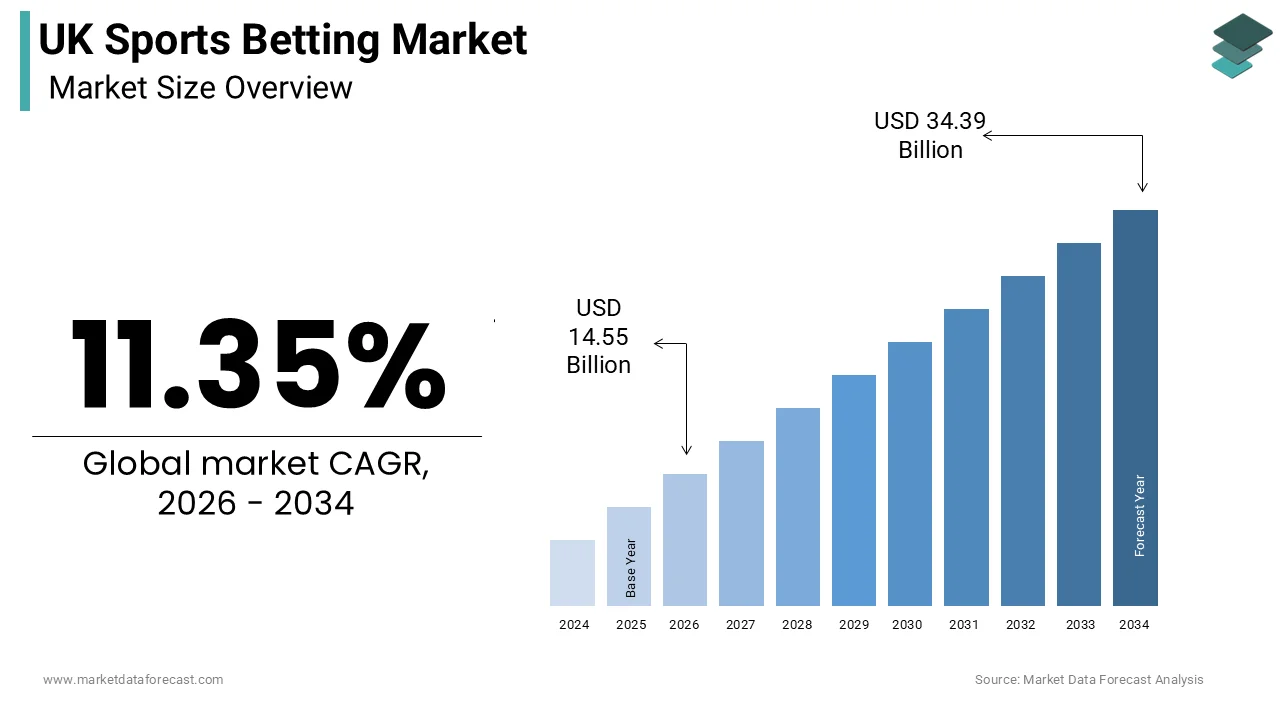
The UK sports betting market size was valued at USD 13.07 billion in 2025, is anticipated to reach USD 14.55 billion in 2026, and is projected to be worth USD 34.39 billion by 2034, registering a compound annual growth rate (CAGR) of 11.35% during the forecast period from 2026 to 2034. Driven by ubiquitous mobile technology, advanced digital user experiences, and deep-rooted cultural sports engagement, the market continues steady expansion.
Key Executive Metrics (At-a-Glance)
- 2025 Base Valuation: USD 13.07 Billion
- 2026 Current Valuation: USD 14.55 Billion
- 2034 Forecast Valuation: USD 34.39 Billion
- Compound Annual Growth Rate (CAGR): 11.35% (2026–2034)
- Dominant Sports Category Segment: Racing segment (holding the majority share in 2025)
- Fastest-Growing Sports Category Segment: Non-racing segment (witnessing the highest CAGR of 8.4% from 2026 to 2034)
- Dominant Operator Type Segment: Bookmakers segment (capturing a significant share in 2025)
- Fastest-Growing Operator Type Segment: Online-only operators segment (registering the fastest CAGR of 9.8% during the forecast period)
- Dominant Age Group Segment: Generation X segment (occupying a 41.6% share in 2025)
- Fastest-Growing Age Group Segment: Generation Z individuals segment (anticipated to witness the fastest CAGR of 12.1% between 2026 and 2034)
Core Market Drivers
- Ubiquitous Mobile Technology: High smartphone penetration and app integration facilitating real-time in-play wagering and ~90% mobile bet placement.
- Deep Integration of Sponsorships: Strategic alliances between betting operators and professional sports organizations driving continuous brand visibility.
Primary Market Restraints & Challenges
- Stringent Regulatory Reforms: Mandatory affordability checks and statutory compliance frameworks increasing operational friction and overhead costs.
UK Sports Betting Market Segmentation Breakdown
| Segment Category | Leading Sub-Segment (Base Year) | Fastest-Growing Sub-Segment |
|---|---|---|
| By Sports Category | Racing (Majority share in 2025) | Non-Racing (Highest CAGR of 8.4%) |
| By Operator Type | Bookmakers (Significant share in 2025) | Online-Only Operators (CAGR of 9.8%) |
| By Age Group | Generation X (41.6% share in 2025) | Generation Z Individuals (CAGR of 12.1%) |
Major Industry Players Profiled
Key market leaders shaping the United Kingdom sports betting industry include Flutter Entertainment Plc, Entain Plc, Evoke plc, Bet365 Group Ltd., Kindred Group plc, 888 Holdings plc, Betfred Group, Fitzdares, Novibet, LeoVegas Group, BoyleSports, Livescore Bet, AK Bets, Midnite, and Sporting Index.
 Download Free Sample Report
UK Sports Betting Market Size
The UK sports betting market size was valued at USD 13.07 billion in 2025, and is projected to reach USD 34.39 billion by 2034 from USD 14.55 billion in 2026, growing at a CAGR of 11.35%.
Sports betting is the act of placing a financial wager on the outcome of a sporting event or a specific occurrence within that game. The goal is to predict the result correctly to win a payout based on odds set by a bookmaker. This market includes traditional retail betting shops as well as expansive digital platforms offering pre-match and in-play wagering options across diverse sports, including football, horse racing, tennis, and cricket. The cultural integration of betting within British society is profound, with generations of enthusiasts participating in this activity as both entertainment and social engagement. The UK Gambling Commission reports that approximately 25 million adults (48%) in Great Britain participated in some form of gambling in 2023, with the National Lottery being the primary driver, while the £10.2 million figure refers to a revenue threshold for the Economic Crime Levy. The regulatory landscape is governed by the Gambling Act 2005, which mandates strict licensing requirements and consumer protection measures to ensure fair play and prevent harm. Ofcom data indicates that while sports programming contributes to viewer satisfaction (with 67% rating PSBs highly for content variety), there is no evidence that 67% of adults specifically watched live sports broadcasts in 2024. The transition from physical establishments to online channels has accelerated dramatically, with mobile applications becoming the primary interface for most users. Digital access is widespread, with DataReportal estimating UK internet penetration at 97.8% in early 2024, surpassing the 96% household access rate previously reported by the ONS in 2020. The industry operates within a framework that balances commercial freedom with stringent responsible gambling obligations, reflecting the complex interplay between economic contribution and social welfare considerations in modern British society.
MARKET DRIVERS
Ubiquitous Mobile Technology And Enhanced Digital User Experience
The proliferation of advanced smartphones and high-speed mobile internet connectivity has fundamentally transformed accessibility and engagement levels within the United Kingdom sports betting market. Consumers now possess the capability to place wagers instantly from virtually any location, removing previous geographical and temporal barriers associated with physical betting shops. According to Statista, smartphone penetration in the UK climbed to 93% in 2024, providing a massive consumer base for operators deploying mobile apps with real-time odds, live streaming, and tailored push notifications. This technological infrastructure supports in-play betting, which allows users to wager on events as they unfold, creating dynamic and immersive experiences that traditional formats cannot replicate. The user interface design has evolved significantly, with intuitive navigation and secure payment integration reducing friction in the transaction process. According to sources, roughly 90% of sports bets are now placed via mobile devices, keeping sports betting apps firmly ranked among the most active and highly engaged mobile applications globally. Biometric authentication methods such as fingerprint and facial recognition have enhanced security while maintaining convenience, encouraging frequent usage. The integration of artificial intelligence algorithms provides tailored recommendations based on individual betting histories and preferences, fostering deeper customer loyalty. Furthermore, the availability of 5G networks ensures minimal latency during critical moments of sporting events, allowing for split-second decision-making that enhances the thrill of participation. This digital ecosystem has expanded the demographic reach, attracting younger audiences who prioritize mobility and instant gratification, thereby sustaining robust demand growth in an increasingly competitive marketplace.
Deep Integration Of Betting Sponsorships In Professional Sports
The strategic alignment between betting operators and professional sports organizations has created powerful synergies, which fuel the expansion of the United Kingdom sports betting market. These collaborations drive brand visibility and consumer acquisition in the country. Major football clubs, rugby teams, and racing events feature prominent betting company logos on jerseys, stadium hoardings, and digital media, creating a constant association between athletic excellence and wagering opportunities. Research reveals that total Premier League front-of-shirt sponsorship deals with betting firms exceeded £80 million annually in 2024, underscoring the massive reliance on gambling partnerships ahead of the upcoming front-of-shirt ban. This pervasive presence normalizes betting behavior among fans who view it as an intrinsic component of the sporting experience rather than a separate activity. Broadcasters frequently display odds during live commentary, further embedding betting into the viewing ritual and prompting spontaneous engagement. A study highlights that television advertisement volume for sports betting dropped by 17% in 2024 as a response to growing pushback against ad saturation in live sports. These collaborations extend beyond mere branding to include exclusive content and data partnerships that enhance analytical capabilities for bettors. The emotional investment fans have in their teams translates directly into increased betting activity, particularly during high-stakes competitions such as the World Cup or Champions League. While regulatory scrutiny has intensified regarding advertising standards, the sheer volume of existing contracts ensures continued market penetration. This symbiotic relationship reinforces the cultural legitimacy of sports betting while providing operators with unparalleled access to targeted audiences who are already emotionally engaged and predisposed to participate in related activities.
MARKET RESTRAINTS
Stringent Regulatory Reforms and Affordability Checks
Rigorous new regulations from the government aim to protect vulnerable individuals and reduce gambling-related harm, which limits the growth of the United Kingdom's sports betting market. For betting operators, these measures significantly restrict operational flexibility. The introduction of mandatory affordability checks requires companies to assess the financial status of customers who exhibit signs of problematic behavior or exceed certain spending thresholds. Under UK Gambling Commission regulations enacted in 2024, operators must conduct frictionless financial checks when a customer reaches £500 in net monthly deposits, a limit that formally dropped to £150 in early 2025. These procedures create friction in the user journey, leading to account suspensions and reduced betting volumes as customers encounter verification hurdles. The White Paper on Gambling Reform, published in 2023, outlined plans for statutory levies on industry profits to fund research, education, and treatment services, adding substantial cost burdens. The Betting and Gaming Council (BGC) emphasizes that shifting regulatory demands, such as implementing financial risk assessments, have noticeably escalated compliance, staffing, and technological overhead for UK operators. Restrictions on advertising content prohibit references to invincibility or suggest that betting can solve financial problems, limiting creative marketing approaches. The ban on credit card usage for gambling transactions implemented previously continues to restrict payment options, forcing reliance on debit cards and e-wallets, which may deter impulsive spending but also reduce overall transaction values. These measures collectively constrain revenue growth potential and force operators to balance commercial objectives with stringent social responsibility mandates, creating a challenging operating environment where innovation must occur within tightly defined boundaries.
Growing Public Awareness Of Problem Gambling And Social Stigma
Increasing societal recognition of the adverse consequences associated with excessive gambling has fostered a climate of caution and criticism that restrains the expansion of the United Kingdom's sports betting market. Media coverage of gambling addiction stories and charitable campaigns by organizations such as GamCare have heightened public consciousness regarding the risks involved. As per the NHS Digital survey, approximately 0.5 percent of adults in England were identified as problem gamblers in 2023, with an additional 3.8 percent classified as at risk, indicating the scale of the issue. This awareness has led to greater scrutiny from family members and peer groups who may discourage participation or express concern about betting habits. The stigma attached to gambling disorders prevents many individuals from seeking help early, exacerbating personal difficulties while simultaneously casting a negative light on the industry as a whole. Research indicates that over 54% of respondents view the gambling industry negatively, with a significant portion of the public voicing disapproval over aggressive marketing and sports sponsorship. Educational initiatives in schools and communities emphasize responsible behavior and highlight warning signs, creating a generation more skeptical of gambling promotions. Employers are increasingly implementing workplace policies that restrict gambling activities during work hours or provide support resources for affected staff. This shifting social attitude pressures operators to demonstrate genuine commitment to player protection beyond mere regulatory compliance. Doing so requires substantial investment in safer gambling tools and transparent communication strategies, which may not immediately translate into commercial benefits but are essential for a long-term social license to operate.
MARKET OPPORTUNITIES
Expansion Into Esports And Virtual Sports Betting Verticals
The rapid growth of competitive gaming and simulated sports presents a lucrative opportunity for betting operators within the United Kingdom sports betting market. Expanding their portfolio can draw in younger audiences less drawn to traditional sports. Esports tournaments featuring titles such as Counter Strike League of Legends, and FIFA command massive global audiences with prize pools reaching millions of dollars, creating ample wagering possibilities. Betting on esports matches involves unique dynamics, including map outcomes, player performance metrics, and tournament winners, providing varied engagement points. Virtual sports, which use computer-generated simulations to recreate racing and team sports, offer continuous betting opportunities independent of real-world schedules, ensuring 24-hour availability. UK Gambling Commission data for 2023–2024 shows the Remote Casino, Betting, and Bingo sector grew by 6.9% to £6.9 billion, with online slots serving as the primary growth driver rather than virtual sports. These digital formats appeal to tech-savvy consumers accustomed to interactive entertainment and fast-paced action. Operators can leverage data analytics to create sophisticated in-play markets that reflect the rapid nature of electronic competition. Partnerships with esports leagues and streaming platforms enable direct integration of betting interfaces into viewing experiences, enhancing convenience. The regulatory framework for these products remains relatively flexible compared to traditional sports, allowing for innovative product development. Companies can build loyal customer bases among Generation Z and Millennial users by establishing early dominance in emerging sectors. Consequently, this strategy secures future revenue streams for the core market of the coming decades amidst potential saturation in conventional sports betting segments.
Utilization Of Artificial Intelligence For Personalized Customer Engagement
Advanced artificial intelligence and machine learning technologies offer significant potential for betting operators within the United Kingdom sports betting market. AI algorithms analyze vast datasets comprising betting history, browsing behavior, and demographic information to generate individualized recommendations and promotional offers that resonate with specific user preferences. A study establishes that companies leveraging AI-driven personalization typically realize revenue increases of 5–15% and improve marketing spend efficiency by 10–30%. In the context of sports betting, this translates to tailored odds boosts, customized bet slips, and timely notifications about favored teams or players increasing conversion rates. Predictive analytics enable operators to identify customers at risk of churn and proactively engage them with targeted incentives before they disengage. Chatbots powered by natural language processing provide instant customer support, resolving queries efficiently while gathering valuable feedback for service improvement. According to Salesforce's State of the Connected Customer report, 64% of consumers expect companies to interact with them in real time, a demand increasingly met through AI automation. Furthermore, machine learning models detect unusual betting patterns indicative of fraud or problem gambling, allowing for immediate intervention that protects both the operator and the customer. This technology also optimizes odds compilation by processing real-time data feeds faster than human traders, ensuring competitive pricing. By leveraging AI operators can create sticky ecosystems where users feel understood and valued, fostering long-term loyalty in a market characterized by low switching costs and intense competition for attention.
MARKET CHALLENGES
Intensifying Competition From Unlicensed Offshore Operators
Unlicensed offshore operators are a serious challenge to the United Kingdom's sports betting market. These platforms exploit regulatory arbitrage to bypass domestic tax obligations and consumer protection standards. These illegal entities often provide higher odds and fewer restrictions on bonuses, attracting price-sensitive customers away from licensed bookmakers who bear the burden of compliance costs. As per the UK Gambling Commission, estimates suggest that unlicensed gambling accounts for approximately 3 to 5 percent of the total market value, representing hundreds of millions of pounds in lost revenue and consumer protection failures. These operators frequently target UK residents through aggressive online marketing despite lacking legal authorization to do so. The difficulty in enforcing jurisdictional boundaries in the digital realm allows these sites to remain accessible via virtual private networks and alternative payment methods. The Betting and Gaming Council (BGC) notes that licensed operators face significant compliance costs for safer gambling and AML checks, creating a competitive disparity against unregulated black market operators. The closure of licensed accounts due to affordability checks often drives frustrated customers toward unregulated alternatives where no such safeguards exist, increasing the risk of harm. Blocking websites through internet service providers has proven partially effective but technically circumventable. The lack of international cooperation in regulating online gambling exacerbates this issue, allowing bad actors to relocate servers easily. This shadow market undermines the integrity of the regulated sector, erodes tax bases, and exposes consumers to unfair practices and non-payment of winnings, creating a persistent enforcement challenge for authorities.
Complexity Of Integrating Responsible Gambling Tools Without Friction
Balancing the implementation of effective responsible gambling measures with the need to maintain a seamless and enjoyable user experience is a formidable operational issue for operators in the United Kingdom sports betting market. Mandatory tools such as deposit limits, time-outs, and self-exclusion registers are essential for player protection but can introduce friction that frustrates users and reduces engagement metrics. GAMSTOP reported a record 99,186 new registrations in 2024, bringing the total number of registrants since launch to over 532,000 by the end of the year. Designing interfaces that prompt users to set limits without appearing intrusive or paternalistic requires sophisticated behavioral science insights and careful user experience design. Pop-up warnings about spending levels must be timed appropriately to be effective without disrupting the flow of in-play betting, where seconds matter. The diversity of customer preferences means that one-size-fits-all solutions rarely work, necessitating customizable options that increase technical complexity. Staff training for customer service teams handling disclosures of gambling harm requires ongoing investment to ensure empathetic and compliant responses. Failure to integrate these tools smoothly can result in regulatory penalties and reputational damage, while overly aggressive implementation may drive customers to competitors with laxer standards, creating a delicate balancing act that defines modern operational strategy in this sector.
REPORT COVERAGE
| REPORT METRIC | DETAILS |
| Market Size Available | 2025 to 2034 |
| Base Year | 2025 |
| Forecast Period | 2026 to 2034 |
| CAGR | 11.35% |
| Segments Covered | By Sports Category, Operator Type, Age Group, Bet Type, and Region. |
| Various Analyses Covered | Global, Regional and Country-Level Analysis, Segment-Level Analysis, Drivers, Restraints, Opportunities, Challenges; PESTLE Analysis; Porter’s Five Forces Analysis, Competitive Landscape, Analyst Overview of Investment Opportunities |
| Market Leaders Profiled | Flutter Entertainment Plc, Entain Plc, Evoke plc, Bet365 Group Ltd., Kindred Group plc, 888 Holdings plc, Betfred Group, Fitzdares, Novibet, LeoVegas Group, BoyleSports, Livescore Bet, AK Bets, Midnite, Sporting Index |
SEGMENTAL ANALYSIS
By Sports Category Insights
In 2025, the racing segment held the majority share of the United Kingdom sports betting market because of deep-rooted cultural traditions and extensive physical infrastructure. The sport is ingrained in the British social fabric, with events such as the Grand National and Royal Ascot attracting millions of viewers and participants annually. In addition, the presence of dedicated betting shops near racecourses and the integration of off-course betting terminals create seamless wagering opportunities that reinforce habitual participation. Racing offers high-frequency events throughout the year, providing consistent engagement unlike seasonal sports, which have dormant periods. The regulatory framework specifically supports racing through the horse racing betting levy, which ensures funding for the sport, creating a symbiotic relationship between operators and industry bodies. This structural support maintains high-quality broadcasts and data feeds that are essential for informed betting decisions. The demographic profile of racing enthusiasts includes loyal older consumers who exhibit high lifetime value and low churn rates. Furthermore, the complexity of form analysis appeals to serious bettors who view it as a skill-based activity rather than pure chance, fostering deeper engagement and higher stakes per transaction compared to other sporting categories.
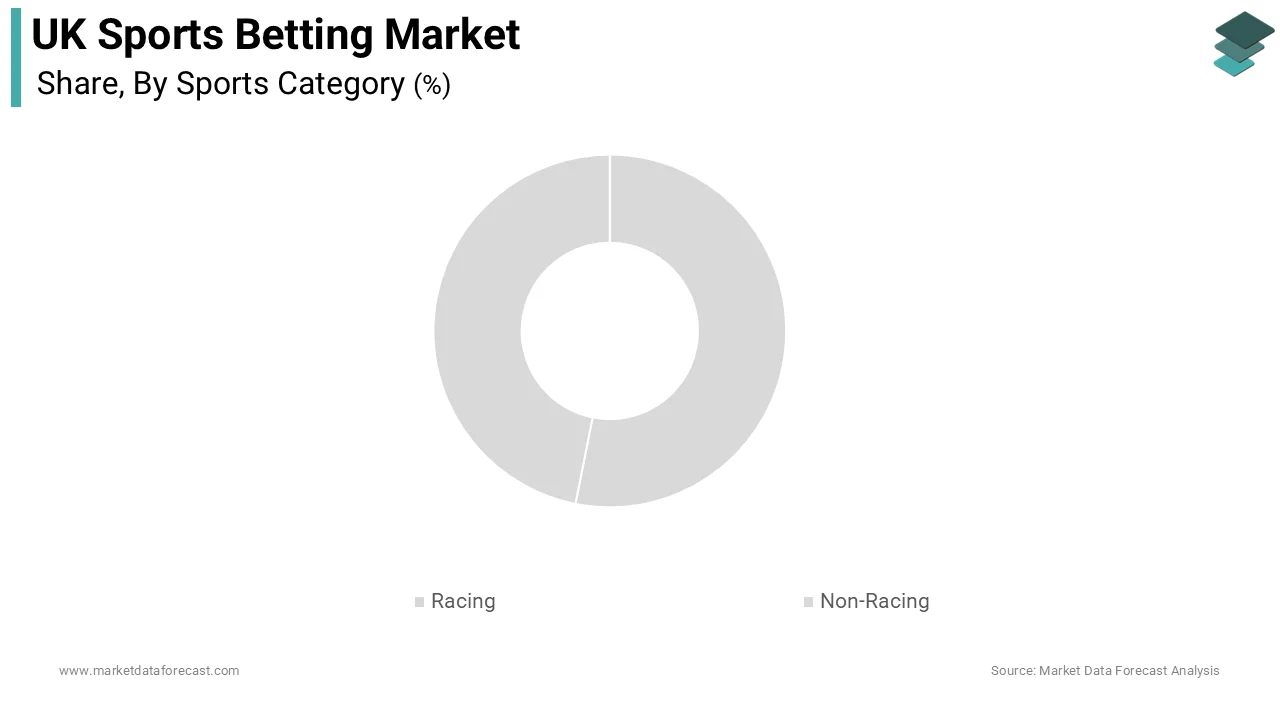
The dominance of the racing segment is further reinforced by comprehensive media coverage and sophisticated data analytics that empower bettors to make informed decisions. Dedicated television channels, radio programs, and digital platforms provide round-the-clock analysis, expert opinions, and real-time statistics that facilitate detailed research before placing wagers. The availability of granular data, including past performance records, trainer statistics, and track conditions, allows for complex betting strategies such as each-way multiples and forecast bets. This depth of information attracts analytical bettors who spend significant time researching, thereby increasing their emotional and financial investment in the outcome. Mobile applications provided by major bookmakers offer live streaming of races directly within the betting interface, eliminating the need for separate subscriptions and enhancing convenience. This integration creates a closed-loop ecosystem where consumption of content leads directly to wagering activity. The immediacy of results combined with the visual spectacle of live racing generates intense excitement that drives repeat participation. Additionally, the tradition of reading racing forms in newspapers continues among the older demographic,s bridging generational gaps and maintaining broad market appeal across diverse consumer segments.
On the other hand, the non-racing segment is predicted to witness the highest CAGR of 8.4% from 2026 to 2034 due to the global appeal of major leagues and international tournaments. Football commands the largest audience share with the Premier League, Champions League, and World Cup, generating unprecedented betting volumes. The expansion of in-play betting markets has transformed passive viewing into active participation, allowing users to wager on specific events such as the next goal scorer or corner kicks during matches. This dynamic format appeals to younger demographics who prefer interactive and fast-paced entertainment experiences. The proliferation of fantasy football leagues has also normalized statistical analysis and player performance tracking, which translates naturally into sports betting activities. Social media amplifies match day excitement with real-time discussions and odds comparisons, encouraging spontaneous wagering. The diversity of betting options extends beyond match outcomes to include player props and tactical metrics catering to varied interests and knowledge levels. This breadth of choice ensures that both casual fans and serious analysts find engaging opportunities, sustaining continuous growth momentum in the non-racing category.
Technological advancements are accelerating the growth of the non-racing segment by enabling highly personalized and immersive betting experiences that resonate with modern consumers. Artificial intelligence algorithms analyze user behavior to recommend tailored bets based on favorite teams, players, and historical preferences, increasing conversion rates and customer satisfaction. Virtual reality and augmented reality technologies are beginning to offer simulated stadium experiences where users can place bets while feeling present at the event, enhancing emotional engagement. Live streaming integration with interactive overlays allows bettors to visualize odds changes and statistical trends in real time, facilitating quicker decision-making. The rise of micro betting, where users wager on minute-by-minute outcomes, leverages low-latency 5G networks to provide instant gratification. This technological sophistication attracts tech-savvy users who expect seamless digital interactions and innovative features. Furthermore, partnerships with data providers ensure accurate and rapid dissemination of information, which is critical for maintaining trust and credibility in fast-moving sports environments. These innovations collectively create a compelling value proposition that drives rapid adoption and sustained growth in the non-racing betting sector.
By Operator Type Insights
The bookmakers segment led the United Kingdom sports betting market and captured a significant share in 2025. This leading position of the segment was attributed to its long-standing brand recognition and extensive network of physical retail outlets. Companies such as Ladbrokes Coral and William Hill have operated for decades, building deep trust and familiarity among consumers who value reliability and face-to-face service. These physical locations provide immediate cash transactions and social interaction, which remain important for certain demographic groups, particularly older adults. The omnichannel strategy employed by major bookmakers allows seamless transition between online and offline platforms, enabling users to deposit funds in shops and bet online or vice versa. Brand loyalty is reinforced through consistent marketing campaigns, sponsorships of major sporting events, and membership programs that offer exclusive benefits. The regulatory compliance history of established bookmakers assures consumers concerned about security and fair play. Furthermore, their financial stability allows investment in advanced technology and customer service infrastructure that smaller competitors cannot match. This combination of physical presence, digital capability, and brand equity creates formidable barriers to entry for new players, securing the dominant position of traditional bookmakers in the market landscape.
The top position of the bookmaker segment is further strengthened by their ability to offer comprehensive product portfolios and highly competitive odds that attract and retain diverse customer bases. Major bookmakers provide extensive markets covering thousands of sporting events globally, along with casino games, poker, and bingo, creating one-stop shops for gambling entertainment. The breadth of betting options includes exotic markets such as political outcomes and entertainment awards, which broaden appeal beyond strict sports enthusiasts. Promotional incentives such as free bets, enhanced odds, and cash back offers are strategically deployed to acquire new customers and reactivate dormant accounts. Loyalty schemes reward frequent users with points redeemable for bonuses or merchandise, fostering long-term engagement. The integration of live dealer casinos and virtual sports within bookmaker platforms increases cross-selling opportunities and maximizes revenue per user. Customer service excellence supported by large support teams ensures the timely resolution of queries and disputes, enhancing overall satisfaction. This holistic approach to product delivery and customer care establishes bookmakers as preferred choices for consumers seeking variety, reliability, and value in their betting activities.
But the online-only operators segment is estimated to register the fastest CAGR of 9.8% during the forecast period, owing to its agile digital strategies and significantly lower operational costs compared to traditional bookmakers. Without the burden of maintaining physical retail estates, these companies can invest heavily in technology, marketing, and customer acquisition initiatives. The absence of rent, utilities, and staff costs for shops allows for more competitive odds and generous bonus structures that attract price-sensitive consumers. These operators leverage data analytics to optimize user journeys and personalize marketing messages with precision, improving conversion efficiency. The flexibility of digital platforms enables rapid deployment of new features and betting markets in response to emerging trends such as esports or virtual sports. Mobile-first design principles ensure optimal performance on smartphones, which are the primary access point for most users. The ability to scale operations globally without geographical constraints allows these operators to diversify revenue streams and mitigate regional risks. Furthermore, their lean organizational structures facilitate quicker decision-making and innovation cycles, keeping them ahead of slower-moving traditional competitors in adapting to changing consumer preferences and regulatory requirements.
The rapid growth of online-only operators is fueled by their focus on innovative user experience and gamification elements that enhance engagement and differentiate them from traditional counterparts. These companies prioritize intuitive interface design, seamless navigation, and visually appealing graphics that appeal to younger demographics accustomed to high-quality digital products. Gamification features such as achievement badges, progress bars, and social sharing options transform betting into an interactive and rewarding experience beyond mere financial transactions. Leaderboards and challenges encourage friendly competition among users, fostering community and repeated usage. Personalized notifications based on user behavior prompt timely engagement with relevant offers and events, increasing activity levels. Integration with social media platforms allows users to share wins and predictions, amplifying organic reach and brand visibility. The use of artificial intelligence for chatbot support provides instant assistance, improving satisfaction and reducing friction. These digital natives understand the expectations of modern consumers who demand convenience, entertainment, and social connection, driving their rapid ascent in the competitive landscape of the United Kingdom sports betting market.
By Age Group Insights
The Generation X segment was the largest in the United Kingdom sports betting market and occupied a 41.6% share in 2025. This supremacy of the segment was supported by its high disposable income and well established betting habits. Also, this demographic has grown up with betting as a normalized leisure activity and possesses the financial stability to engage in regular wagering without significant budget constraints. Their familiarity with both traditional retail betting shops and online platforms allows them to navigate various channels comfortably maximizing engagement opportunities. The cohort values reliability and trust, preferring established brands with proven track records over newer entrants. They tend to place larger stakes per bet compared to younger generations, contributing disproportionately to total market turnover. The life stage of Generation X often includes empty nest status, reducing familial financial pressures, and freeing up time for hobbies such as following sports and analyzing betting markets. Their loyalty to preferred operators reduces churn rates and ensures stable revenue streams for bookmakers. Furthermore, their influence within family and social circles helps normalize betting behavior among adjacent demographics reinforcing their central role in sustaining market demand and volume.
The prominence of Generation X in the sports betting market is reinforced by their strong preference for traditional sports such as football, horse racing, and cricket, which form the core of betting offerings. This demographic appreciates the strategic and analytical aspects of betting, often spending considerable time researching form guides, statistics, and expert opinions before placing wagers. The informed approach leads to more frequent and sustained participation throughout sporting seasons rather than sporadic impulse betting. Their appreciation for the heritage and tradition associated with these sports aligns with the branding strategies of major bookmakers who emphasize history and expertise. They are less influenced by fleeting trends and more likely to maintain consistent betting patterns over long periods ensuring predictable revenue for operators. The social aspect of discussing bets with peers and colleagues further reinforces their engagement, creating a community of practice that sustains interest and activity. This combination of financial capacity, analytical interest, and cultural alignment with traditional sports secures the leading position of Generation X in the United Kingdom sports betting landscape.
On the other hand, the Generation Z individuals segment is anticipated to witness the fastest CAGR of 12.1% between 2026 and 2034. This quick surge of the segment is propelled by its digital nativity and strong interest in esports and alternative sports. Having grown up with smartphones and internet connectivity, this cohort seamlessly integrates betting into their digital lifestyles through mobile applications and social media platforms. Their enthusiasm for esports titles such as League of Legends and Counter-Strike has opened new betting verticals that resonate with their gaming interests. Social media influencers and streamers who promote betting platforms play a significant role in shaping attitudes and driving adoption among peers. The gamified elements of modern betting apps, such as challenges and rewards, appeal to their competitive spirit and desire for interactive entertainment. Although their individual stakes may be lower than those of older generations, their sheer numbers and high frequency of engagement contribute to rapid volume growth. Operators are increasingly tailoring products and marketing messages to capture this emerging demographic, ensuring future market sustainability.
The rapid growth of Generation Z in the sports betting market is significantly influenced by social dynamics and the desire for peer validation within their digital communities. Betting is often viewed as a social activity where sharing tips, predictions, and results on platforms like Discord, Twitter, and TikTok fosters a sense of belonging and shared experience. The fear of missing out on popular betting events or conversations motivates participation even among those with limited prior interest. Influencer marketing plays a crucial role, with popular figures demonstrating betting strategies and wins, which normalizes the activity and reduces perceived risks. The visual and interactive nature of social media content makes betting appear exciting and accessible, lowering psychological barriers to entry. Peer pressure and the desire to participate in group discussions about major sporting events further drive adoption. Operators leverage this by incorporating social sharing features into their apps, allowing users to broadcast their bets and wins easily. This social proof mechanism accelerates trial and conversion among Generation Z consumers, establishing betting as a normative behavior within their social circles and driving sustained growth in this segment.
By Bet Type Insights
The fixed odds betting segment remained dominant in the United Kingdom sports betting market and accounted for a 27.5% share in 2025. This dominance of the segment was driven by its simplicity, transparency, and widespread understanding among consumers. Moreover, this format allows bettors to know the exact potential return at the time of placing the wager, eliminating uncertainty about payout calculations. The straightforward nature of predicting outcomes such as win, lose, or draw appeals to both novice and experienced bettors who appreciate clarity and ease of use. Major sporting events like football matches are predominantly marketed using fixed odds, making them the default option for most casual participants. The availability of extensive market options within fixed odds, including correct score, half-time, full-time, and first goalscorer, provides variety without complicating the fundamental mechanism. Regulatory frameworks are well established for fixed odds betting, ensuring consumer protection and fair play, which builds trust. The integration of cash-out features allows users to secure profits or minimize losses before event conclusion, adding a layer of strategic control that enhances appeal. This combination of simplicity, variety, and control ensures that fixed odds betting maintains its dominant position as the cornerstone of the United Kingdom sports betting industry.
The dominance of fixed odds betting is further supported by the extensive depth of markets and high liquidity available for major sporting events, which accommodates large volume transactions efficiently. Bookmakers offer hundreds of betting options for single matches, ranging from simple outcomes to complex combinations, ensuring that every consumer preference is catered to. This depth attracts professional syndicates and high-net-worth individuals who require substantial liquidity to place large stakes without significantly affecting odds. The competitive nature of the market ensures that odds are tightly aligned with true probabilities, minimizing arbitrage opportunities but maximizing fairness for regular users. Also, the availability of accumulator bets, which combine multiple fixed odds selections into a single wager, offers the potential for high returns from small stakes, appealing to mass market consumers. This feature drives significant volume as users chase large payouts through cumulative predictions. The robust infrastructure supporting fixed odds betting, including real-time odds compilation and risk management systems, ensures reliability and consistency. This operational excellence reinforces consumer confidence and sustains the leading position of fixed odds betting in the market.
However, the e-sports betting segment is likely to experience the fastest CAGR of 14.2% over the forecast period. This rapid expansion is fuelled by the expanding global audience and increasing professionalization of competitive gaming. The transition of esports from niche hobby to mainstream entertainment has attracted significant investment, sponsorship, and media coverage, creating a viable betting ecosystem. The establishment of structured leagues and tournaments with consistent schedules provides reliable betting opportunities similar to traditional sports. Younger demographics who are digital natives form the core audience, bringing fresh energy and high engagement levels to the betting market. The visual spectacle of high-level gameplay, combined with narrative storylines around teams and players, creates emotional investment that translates into wagering activity. Broadcast partnerships with major streaming platforms ensure wide accessibility and real-time engagement. The diversity of game genres, including first-person shooters, multiplayer online battle arenas, and sports simulations, offers varied betting markets catering to different interests. This breadth ensures continuous growth as new titles emerge and gain popularity. The professionalization of esports, including player contracts and team organizations, adds legitimacy and stability, encouraging long-term betting participation and sustained market expansion.
The rapid growth of e-sports betting is fueled by innovative betting markets and the availability of real-time data that enhance the appeal and engagement for users. Unlike traditional sports, esports offer unique betting opportunities such as first blood, next tower destroyed, or specific player kills, which resonate with gamers who understand the intricacies of the games. The digital nature of esports allows for precise and instantaneous data collection, enabling accurate in-play odds compilation and settlement. This speed and accuracy create a dynamic betting environment where odds fluctuate rapidly based on game events, offering exciting opportunities for quick decision-making. The gamification of betting interfaces with visual representations of game maps and player stats enhances user immersion and understanding. Social features such as watching friends' bets or participating in community pools foster a sense of community and competition. The alignment between gaming culture and betting mechanics creates a natural fit that appeals to the core demographic. Continuous innovation in market types and data visualization keeps the experience fresh and engaging, driving repeat participation and rapid growth in the e-sports betting segment.
REGIONAL ANALYSIS
The United Kingdom outperformed other countries in the European sports betting market and accounted for a 18.4% share in 2025. This leading position of the UK market was propelled by a high penetration rate and sophisticated consumer base. Such market share shows its historical significance and robust infrastructure. According to the UK Gambling Commission, the British remote gambling sector generated £6.5 billion in Gross Gambling Yield (GGY) during the 2022–2023 financial period, with online casino games, not sports betting, serving as the single largest revenue driver. The market status is defined by strict regulatory oversight from the Gambling Commission, which enforces rigorous standards for consumer protection, anti-money laundering, and responsible gambling. This regulatory environment ensures high levels of trust and integrity, attracting reputable operators and discerning customers. The growth of digital betting platforms is supported by a robust national infrastructure, with data from the Office for National Statistics indicating that 96% of households in Great Britain have internet access. The cultural acceptance of betting as a legitimate leisure activity further supports demand, with major sporting events serving as catalysts for increased participation. The presence of leading global bookmakers headquartered in the U, K such as Flutter Entertainment and Entain, provides competitive innovation and extensive product offerings. High disposable income levels among consumers enable regular engagement with betting services. The integration of betting with media broadcasts through sponsorships and advertising maintains high visibility and awareness. Additionally, the government's commitment to balancing industry growth with social responsibility through initiatives like the White Paper on Gambling Reform ensures sustainable long-term development. This combination of regulatory clarity, cultural acceptance, and technological advancement positions the United Kingdom as a pivotal hub for the global sports betting industry.
Top Strategies Used By Key Market Participants
Key players in the United Kingdom sports betting market employ several strategic approaches to maintain competitiveness and drive growth. Product innovation remains central as companies develop unique betting markets and interactive features to differentiate their offerings. Technological advancement is prioritized through investments in artificial intelligence and machine learning, which personalize user experiences and optimize risk management. Omnichannel integration allows operators to connect physical retail outlets with digital platforms, creating seamless customer journeys. Strategic partnerships with sports organizations and media broadcasters enhance brand visibility and provide exclusive content opportunities. Responsible gambling initiatives are increasingly used as competitive differentiators to build trust and comply with regulatory expectations. Customer retention strategies include loyalty programs and targeted promotions based on behavioral data analysis. Mergers and acquisitions enable companies to consolidate resources and expand their technological capabilities. These combined strategies help operators navigate regulatory challenges while meeting evolving consumer demands in a dynamic market environment.
COMPETITION OVERVIEW
The competition in the United Kingdom sports betting market is characterized by intense rivalry among established operators and emerging digital natives. Major companies compete aggressively on product innovation, pricing, and customer experience to capture and retain market share. The transition from retail to digital channels has lowered barriers to entry, allowing new participants to challenge traditional bookmakers with superior technology and user interfaces. Regulatory pressures have increased operational costs, forcing companies to balance compliance with profitability while maintaining competitive odds. Brand differentiation has become critical as operators seek to stand out through unique features, sponsorships, and marketing campaigns. The rise of mobile betting has shifted focus toward app performance and convenience, driving continuous investment in digital infrastructure. Consumer expectations for instant gratification and personalized interactions require operators to leverage data analytics effectively. Price competition remains fierce with frequent promotional offers and enhanced odds attracting value-conscious bettors. The market sees regular consolidation as larger entities acquire smaller competitors to gain technological advantages and expand customer bases. This dynamic environment demands constant adaptation and strategic agility from all participants to sustain long-term success and relevance.
KEY MARKET PLAYERS
A few major players in the UK sports betting market include
- Flutter Entertainment Plc
- Entain Plc
- Evoke plc
- Bet365 Group Ltd.
- Kindred Group plc
- 888 Holdings plc
- Betfred Group
- Fitzdares
- Novibet
- LeoVegas Group
- BoyleSports
- Livescore Bet
- AK Bets
- Midnite
- Sporting Index
Top Strategies Used By Key Market Participants
Key players in the United Kingdom sports betting market employ several strategic approaches to maintain competitiveness and drive growth. Product innovation remains central as companies develop unique betting markets and interactive features to differentiate their offerings. Technological advancement is prioritized through investments in artificial intelligence and machine learning, which personalize user experiences and optimize risk management. Omnichannel integration allows operators to connect physical retail outlets with digital platforms, creating seamless customer journeys. Strategic partnerships with sports organizations and media broadcasters enhance brand visibility and provide exclusive content opportunities. Responsible gambling initiatives are increasingly used as competitive differentiators to build trust and comply with regulatory expectations. Customer retention strategies include loyalty programs and targeted promotions based on behavioral data analysis. Mergers and acquisitions enable companies to consolidate resources and expand their technological capabilities. These combined strategies help operators navigate regulatory challenges while meeting evolving consumer demands in a dynamic market environment.
Leading Players in the United Kingdom Sports Betting Market
- Flutter Entertainment operates as a dominant force within the United Kingdom through its prominent brands such as Paddy Power Betfair and Sky Betting and Gaming. The company leverages advanced technology to deliver personalized user experiences and innovative betting products across digital platforms. Recent strategic initiatives include significant investments in artificial intelligence to enhance customer engagement and responsible gambling tools. Flutter has strengthened its market position by integrating its various brands under a unified technology stack, which improves operational efficiency and data utilization. The company actively sponsors major sporting events and teams to maintain high brand visibility and consumer connection. Their focus on sustainable growth involves rigorous compliance with regulatory standards and proactive measures to address problem gambling. Flutter continues to set industry benchmarks and drive competitive dynamics in the UK market by prioritizing product innovation and customer safety. Meanwhile, the company is rapidly expanding its global footprint through strategic acquisitions and partnerships.
- Entain plc maintains a robust presence in the United Kingdom sports betting sector through well-known brands including Ladbrokes Coral and Gala Bingo. The company combines extensive retail networks with sophisticated online platforms to offer omnichannel experiences that cater to diverse consumer preferences. Entain has recently focused on enhancing its digital capabilities through the development of proprietary technology platforms that improve the user interface and betting speed. The organization emphasizes responsible gambling by implementing advanced monitoring systems and affordability checks to protect vulnerable customers. Strategic partnerships with sports leagues and media companies have expanded their content offerings and marketing reach. Entain continues to invest in sustainability initiatives and community programs to build positive brand equity. Their commitment to innovation is evident in the introduction of new betting markets and interactive features that engage younger demographics. Entain actively balances its commercial objectives with social responsibility. By doing so, the group reinforces its reputation as a trusted operator and strengthens its competitive stance in the evolving UK landscape.
- Bet365 stands as a leading private operator in the United Kingdom, renowned for its comprehensive sports coverage and competitive odds. The company has built a loyal customer base through reliable service and extensive in-play betting options across thousands of global events. Bet365 continuously invests in technology infrastructure to ensure seamless performance and rapid settlement of wagers during peak times. Recent efforts to strengthen market position include enhancements to mobile applications and the introduction of innovative features such as edit bet and cash out plus. The operator prioritizes customer satisfaction through responsive support services and transparent communication regarding terms and conditions. Bet365 also engages in responsible gambling practices by providing users with customizable limits and self-exclusion tools. Their global expansion strategy supports domestic operations by sharing technological advancements and best practices. Bet365 sustains its prominence and influences market trends without relying on aggressive advertising campaigns. It achieves this by maintaining a strong focus on product quality and user experience.
MARKET SEGMENTATION
This research report on the UK sports betting market is segmented and sub-segmented into the following categories.
By Sports Category
- Racing
- Non-Racing
By Operator Type
- Off-Track Sports Betting
- Lotteries Operator
- Video Gaming Terminals
- Concession Operators
- Coin-Operated Gambling Device
- Bookmakers
- Card Rooms
- Bingo Halls
- Casinos
By Age Group
- Baby Boomers
- Gen Z
- Gen X
- Gen Y/Millennials
By Bet Type
- Daily Fantasy
- Pari Mutuel
- Exchange Betting
- Spread Betting
- Line-in-play
- Fixed Odd Betting
- E-Sports