- Product Description Description
- Table of Contents TOC
- List of Table & Figure LOT
- Get Free Sample PDF Sample PDF
Market Size, 2025
$2.68 BnMarket Estimate, 2026
$2.89 BnMarket Forecast, 2034
$5.34 BnCAGR, 2026–2034
7.98%UK Sports Nutrition Market Size, Growth, Trends & Forecast (2026–2034)
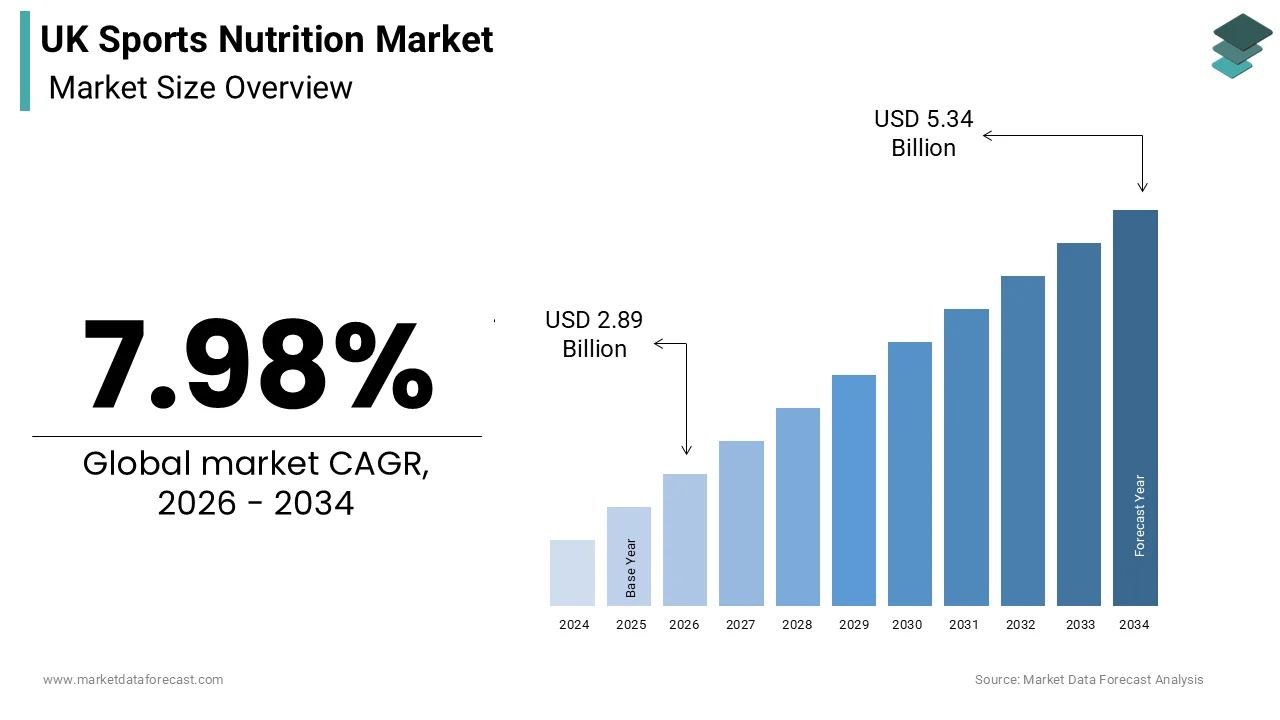
The UK sports nutrition market size was valued at USD 2.68 billion in 2025, is anticipated to reach USD 2.89 billion in 2026, and is projected to be worth USD 5.34 billion by 2034, registering a compound annual growth rate (CAGR) of 7.98% during the forecast period from 2026 to 2034. Driven by surging participation in fitness and gym culture, preventive health awareness, and plant-based supplement demand, the market continues steady expansion.
Key Executive Metrics (At-a-Glance)
- 2025 Base Valuation: USD 2.68 Billion
- 2026 Current Valuation: USD 2.89 Billion
- 2034 Forecast Valuation: USD 5.34 Billion
- Compound Annual Growth Rate (CAGR): 7.98% (2026–2034)
- Dominant Sports Nutrition Type Segment: Sports supplements segment (holding 45.3% market share in 2025)
- Fastest-Growing Sports Nutrition Type Segment: Sports bars segment (growing at a CAGR of 8.2% during the forecast period)
- Dominant End User Segment: Recreational users segment (holding a significant share in 2025)
- Fastest-Growing End User Segment: Commercial users segment (growing at a CAGR of 7.5% during the forecast period)
Core Market Drivers
- Surging Fitness Participation: Proliferation of gym culture, structured workout regimes, and accessible public fitness facilities driving regular supplement usage.
- Preventive Health Awareness: Focus on personalized wellness, macronutrient tracking, and age-appropriate nutrition (such as combating sarcopenia).
Primary Market Restraints & Challenges
- Strict Regulatory & Labeling Controls: FSA and EFSA mandates limiting health claims and requiring costly clinical validations, alongside intense price competition from private labels.
UK Sports Nutrition Market Segmentation Breakdown
| Segment Category | Leading Sub-Segment (Base Year) | Fastest-Growing Sub-Segment |
|---|---|---|
| By Sports Nutrition Type | Sports Supplements (45.3% share in 2025) | Sports Bars (CAGR of 8.2%) |
| By End User | Recreational Users (Significant share in 2025) | Commercial Users (CAGR of 7.5%) |
Major Industry Players Profiled
Key market leaders shaping the UK sports nutrition industry include Glanbia plc, The Hut Group (Myprotein), Optimum Nutrition, Applied Nutrition, USN UK, Bulk, Grenade, Maximuscle, Science in Sport, Nutrend, MuscleTech, Dymatize, Cellucor, Bio-Synergy, and Reflex Nutrition.
UK Sports Nutrition Market Size
The UK Sports Nutrition market size was valued at USD 2.68 billion in 2025 and is projected to reach USD 5.34 billion by 2034 from USD 2.89 billion in 2026, growing at a CAGR of 7.98%.
Sports nutrition is a specialized category of dietary supplements and functional foods designed to enhance athletic performance, support muscle recovery, and optimize overall physical health. This sector has transcended its traditional boundaries of serving only professional athletes to become a mainstream component of the wellness routines adopted by fitness enthusiasts and active individuals across the nation. The cultural integration of gym culture and outdoor activities has significantly influenced consumer behavior, driving demand for products such as protein powders, energy bars, amino acids, and hydration solutions. The rise of social media and digital fitness communities has further amplified awareness regarding the importance of targeted nutrition in achieving fitness goals. There is a growing preference among British shoppers for transparent labeling and scientifically backed ingredients, leading to increased scrutiny of product formulations. Retailers have responded by expanding their health and wellness sections to include dedicated sports nutrition aisles reflecting the category's evolution from niche to necessity.
MARKET DRIVERS
Surging Participation In Fitness Activities And Gym Culture Drives Demand
The escalating participation in fitness activities and the proliferation of gym culture are majorly fuelling the growth of the United Kingdom sports nutrition market. Consumers are increasingly engaging in structured exercise regimes ranging from weightlifting and high-intensity interval training to endurance running and cycling, which necessitate specific nutritional support for optimal performance and recovery. This widespread engagement creates a consistent demand for products that aid in muscle repair, energy sustenance, and hydration. The National Health Service emphasizes the role of regular physical activity in preventing chronic diseases, which has further motivated individuals to adopt comprehensive fitness lifestyles that include dietary supplementation. The social aspect of gym attendance and group classes fosters a community where knowledge about effective nutrition strategies is shared, accelerating product adoption. Furthermore, the availability of affordable gym memberships and public fitness facilities has democratized access to exercise, enabling a diverse demographic to participate.
Increasing Awareness Of Preventive Health And Personalized Wellness
The growing awareness of preventive health and the trend towards personalized wellness prompts consumers to view supplements as essential tools for maintaining long-term vitality. The increasing awareness of preventive health and personalised wellness is additionally bolstering the growth of the United Kingdom sports nutrition market. Individuals are becoming more educated about the specific roles of macronutrients and micronutrients in bodily functions, leading them to seek products tailored to their unique physiological needs and fitness goals. There is a rising interest in understanding how protein intake supports muscle maintenance, particularly among aging populations concerned about sarcopenia. This demographic shift is evident as older adults increasingly incorporate protein shakes and amino acid supplements into their daily routines to preserve strength and mobility. Data from the Office for National Statistics shows that the proportion of people aged 65 and over is projected to reach 16 million by 2040, creating a sustained demand for age-appropriate nutritional support. Additionally, the rise of digital health apps and wearable technology allows users to track their nutritional intake and activity levels with precision, enabling them to make informed decisions about supplementation. Consumers are moving away from generic solutions towards customized regimens that address specific deficiencies or performance targets. The emphasis on holistic well-being encourages the integration of sports nutrition into broader lifestyle choices, including sleep management and stress reduction.
MARKET RESTRAINTS
Regulatory Scrutiny And Strict Labeling Requirements Restrain Market Growth
The stringent regulatory frameworks and strict labeling requirements are enforced by authorities, such as the Food Standards Agency and the European Food Safety Authority. Is impeding the growth of the United Kingdom sports nutrition market. These regulations aim to protect consumers from misleading health claims and ensure the safety of ingredients, but they impose considerable compliance burdens on manufacturers. Only scientifically substantiated health claims can be used on packaging, which limits the ability of brands to communicate the benefits of their products effectively. This restriction requires companies to invest heavily in clinical trials and legal reviews to validate their marketing messages, increasing operational costs. Many small and medium-sized enterprises struggle to navigate the complex approval processes, leading to delayed product launches or withdrawn claims. Additionally, the introduction of clear allergen labeling and nutritional information mandates requires precise formulation and packaging adjustments, which can be costly and time-consuming. The Scientific Advisory Committee on Nutrition continues to review guidelines on supplement usage, prompting frequent updates to regulatory standards that manufacturers must adhere to. Non-compliance can result in severe penalties, product recalls, and reputational damage, which discourages innovation and risk-taking. Furthermore, the variability in international regulations complicates export opportunities for UK-based brands, limiting their global expansion potential.
Prevalence Of Counterfeit Products And Quality Concerns Deters Consumer Trust
The prevalence of counterfeit products and ongoing concerns regarding quality consistency are also restricting the growth of the United Kingdom sports nutrition market. The ease of online shopping has facilitated the proliferation of fake or substandard supplements that may contain harmful contaminants or incorrect ingredient dosages, posing serious health risks to users. High-profile cases of contamination with banned substances or heavy metals have received media attention, causing awareness among consumers about the safety of unverified brands. This fear leads many individuals to avoid sports nutrition products altogether or restrict their purchases to a few trusted legacy brands, limiting market expansion for newer entrants. The lack of standardized testing protocols across all manufacturers exacerbates the problem, making it difficult for consumers to distinguish between high-quality and inferior products. Additionally, the absence of mandatory approval for many supplement categories means that safety issues are often identified only after adverse events occur. These quality concerns force reputable companies to invest extensively in third-party certifications and transparency initiatives to rebuild trust.
MARKET OPPORTUNITIES
Expansion into Plant-Based and Vegan Nutrition Segments Presents Opportunities
The rising demand for plant-based and vegan nutrition, as consumers increasingly seek ethical and sustainable alternatives to traditional animal-derived supplements, is certainly to create new opportunities for the growth of the United Kingdom sports nutrition market. The shift towards vegetarianism and veganism is driven by environmental concerns, animal welfare considerations, and perceived health benefits, creating a lucrative niche for manufacturers. The number of vegans in the United Kingdom has quadrupled in the last decade, reaching approximately 600000 individuals, indicating a robust and growing target audience. Sports nutrition brands can capitalize on this trend by developing protein powder bars and amino acid supplements sourced from peas, rice, hemp, and other plant proteins. These products appeal not only to vegans but also to flexitarians who are reducing their meat consumption without eliminating it. Manufacturers can differentiate themselves by obtaining certifications such as the Vegan Society Trademark, which enhances credibility and attracts conscious consumers. Additionally, the development of innovative textures and flavors in plant-based proteins helps overcome previous limitations related to taste and mixability. By aligning with sustainability goals and ethical values, companies can build strong emotional connections with customers.
Integration Of Digital Health Technologies And Personalized Nutrition Solutions
The integration of digital health technologies and personalized nutrition solutions by enabling tailored recommendations and enhanced user engagement is also expected to promote the growth of the United Kingdom sports nutrition market. Advances in wearable devices, mobile apps, and artificial intelligence allow consumers to track their physical activity, metabolic rates, and nutritional intake with unprecedented accuracy. The use of health and fitness apps in the UK has surged, with millions of users relying on digital tools to monitor their wellness journeys. Sports nutrition brands can leverage this data to offer customized product recommendations, subscription services, and real-time coaching that align with individual goals. For instance, algorithms can analyze a user’s workout intensity and recovery needs to suggest optimal protein timing and dosage. The consumers are increasingly willing to share personal health data in exchange for personalized experiences and improved outcomes. Companies can partner with tech firms to develop integrated platforms that combine product purchasing with tracking features, fostering loyalty and repeat business. Additionally, virtual consultations with nutritionists via digital channels provide expert guidance, enhancing the value proposition of sports nutrition products.
MARKET CHALLENGES
Intense Competition From Private Label And Generic Brands Challenges Market Share
The fierce competition from private label brands offered by major retailers and generic manufacturers, which often undercut premium products on price, is a great challenge for the growth of the United Kingdom sports nutrition market. Supermarkets and pharmacy chains have developed their own ranges of protein powders, bars, and supplements that mimic the quality of established brands while offering lower prices. The private label products account for a significant portion of grocery sales in the UK, reflecting strong consumer acceptance of store brands, especially during periods of economic uncertainty. This trend poses a challenge for branded manufacturers who must justify their premium pricing through superior quality innovation or brand equity. Additionally, the proliferation of online marketplaces has enabled numerous generic brands to enter the market with minimal overhead cost,s flooding shelves with low-cost alternatives. This commoditization pressure forces established companies to continuously innovate and invest in marketing to maintain differentiation. Failure to demonstrate added value can result in margin erosion and loss of shelf space as retailers prioritize their own higher margin offerings.
Supply Chain Volatility And Raw Material Cost Fluctuations Impact Profitability
The supply chain volatility and fluctuating costs of key raw materials, such as whey protein, creatine, and exotic botanicals, are also to act as a major barrier for the growth of the United Kingdom sports nutrition market. Since many ingredients are imported, the sector is vulnerable to global agricultural disruption,s currency fluctuation,s and logistical bottlenecks. The United Kingdom relies heavily on imports for dairy derivatives and plant proteins, making the industry susceptible to international price swings. Recent geopolitical tensions and climate change-induced weather events have exacerbated these challenges, leading to unpredictable harvest yields and increased transportation costs. The droughts in major dairy-producing regions have affected whey availability, while trade barriers have complicated the import of certain amino acids. The British Retail Consortium has noted that input cost inflation has remained elevated, forcing manufacturers to either absorb costs or pass them on to consumers. Higher retail prices may dampen demand, particularly among price-sensitive shoppers who may reduce their supplementation frequency. Additionally, the perishable nature of some ingredients requires efficient cold chain logistics, which adds to operational expenses. Any disruption in this chain can lead to spoilage and waste, further eroding profit margins. Companies must therefore invest in robust supply chain management systems and diversify their sourcing strategies to mitigate these risks.
REPORT COVERAGE
| REPORT METRIC | DETAILS |
| Market Size Available | 2025 to 2034 |
| Base Year | 2025 |
| Forecast Period | 2026 to 2034 |
| CAGR | 7.98% |
| Segments Covered | By Sports Nutrition Type, End User, and Region. |
| Various Analyses Covered | Global, Regional and Country-Level Analysis, Segment-Level Analysis, Drivers, Restraints, Opportunities, Challenges; PESTLE Analysis; Porter’s Five Forces Analysis, Competitive Landscape, Analyst Overview of Investment Opportunities |
| Market Leaders Profiled | Glanbia plc, The Hut Group (Myprotein), Optimum Nutrition, Applied Nutrition, USN UK, Bulk, Grenade, Maximuscle, Science in Sport, Nutrend, MuscleTech, Dymatize, Cellucor, Bio-Synergy, Reflex Nutrition |
SEGMENTAL ANALYSIS
By Sports Nutrition Type Insights
The sports supplements segment was the largest by holding 45.3% of the United Kingdom sports nutrition market share in 2025. According to the study, approximately 55% of UK adults who exercise regularly consume some form of dietary supplement, indicating a high penetration rate. The dominance of this segment is underpinned by the scientific validation of key ingredients, such as whey protein and branched-chain amino acids, which are widely recognized for their role in muscle synthesis. The versatility of supplements allows them to be integrated into various dietary regimes, from keto to vegan, making them accessible to a broad demographic. Retailers support this dominance by offering extensive ranges of flavors and formulations, ensuring that consumers can find products that align with their taste preferences and health goals. Additionally, the rise of e-commerce has facilitated access to specialized brands that may not be available in physical stores, further boosting sales. The ability to customize dosage and timing gives users a sense of control over their nutrition, which is highly valued in the fitness community.
The sports bars segment is likely to exhibit the fastest CAGR of 8.2% during the forecast period, with the increasing demand for portable and ready-to-eat nutrition options that fit seamlessly into busy lifestyles. The influence of urbanization and longer working hours has led individuals to seek quick energy sources that do not require preparation or refrigeration. Manufacturers are responding by creating bars with clean-label ingredients, such as nuts, seeds, and natural sweeteners, to appeal to health-conscious shoppers. The trend towards functional nutrition further accelerates this growth as consumers look for bars that offer additional benefits like sustained energy or immune support. Additionally, the variety of textures and flavors available ensures that sports bars can satisfy cravings while providing nutritional value.
By End User insights
The recreational users segment held a significant share of the United Kingdom sports nutrition market in 2025 due to their large numbers and increasing engagement in casual fitness activities. The democratization of fitness through affordable gym memberships and home workout apps has encouraged this demographic to adopt sports nutrition products as part of their wellness routines. Data from the Office for National Statistics shows that health consciousness is a top priority for many households, leading to increased spending on supplements and functional foods. Recreational users are often influenced by social media trends and peer recommendations, driving demand for approachable and easy-to-use products. Retailers cater to this segment by offering entry-level products with clear labeling and appealing flavors. The focus on holistic well-being rather than just muscle building allows brands to market products as lifestyle enhancements.
The commercial users segment is expected to grow at the fastest CAGR of 7.5% during the forecast period, with the increasing professionalization of sports and the emphasis on marginal gains in performance. The investment in elite athlete support has increased significantly, leading to greater utilization of advanced nutrition strategies. Teams and organizations are partnering with specialized nutrition providers to develop customized protocols that optimize training outcomes and recovery times. The use of evidence-based supplements has become standard practice in high-performance environments. The demand for batch-tested and certified products ensures safety and compliance with anti-doping regulations, which is important for commercial entities. Manufacturers are responding by offering bulk purchasing options and tailored formulations for specific sports disciplines. The visibility of professional athletes using these products also influences consumer perception and drives brand credibility.
COMPETITION OVERVIEW
The competition in the United Kingdom sports nutrition market is intense and characterized by a mix of established multinational corporations and agile direct-to-consumer brands vying for consumer attention. Major players leverage their extensive distribution networks and marketing budgets to dominate shelf space in retailers and online platforms, while smaller niche brands focus on premium positioning and unique value propositions. The market sees frequent product launches as companies strive to innovate with new flavors, functional benefits, and sustainable packaging solutions to differentiate themselves. Price competition is significant, particularly between private label offerings from major retailers and branded products, forcing companies to balance quality with affordability. Consumer loyalty is increasingly driven by brand transparency, scientific validation, and alignment with health and wellness trends rather than just price. Digital marketing and community building have become battlegrounds, where brands engage directly with shoppers to foster repeat purchases.
KEY MARKET PLAYERS
A few major players in the UK sports nutrition market include
- Glanbia plc
- The Hut Group
- Optimum Nutrition
- Applied Nutrition
- USN UK
- Bulk
- Grenade
- Maximuscle
- Science in Sport
- Nutrend
- MuscleTech
- Dymatize
- Cellucor
- Bio-Synergy
- Reflex Nutrition
Top Strategies Used By Key Market Participants
Key players in the United Kingdom sports nutrition market employ several strategic approaches to maintain competitiveness and drive growth. Product innovation remains central as companies introduce new flavors, functional ingredients, and plant-based formulations to meet changing consumer demands. Sustainability initiatives are increasingly prioritized with brands adopting recyclable packaging and ethical sourcing practices to appeal to environmentally conscious shoppers. Strategic partnerships with athletes and fitness influencers ensure authentic brand endorsement and enhanced visibility. Digital engagement through social media and e-commerce platforms allows companies to reach broader audiences and gather valuable consumer insights. Expansion into niche segments such as recovery aids and mental focus supplements helps brands differentiate themselves in a crowded marketplace. Continuous investment in supply chain efficiency ensures product quality and availability, while cost management strategies help maintain competitive pricing structures in response to inflationary pressures.
Leading Players In The United Kingdom Sports Nutrition Market
- Myprotein stands as a dominant force in the United Kingdom sports nutrition sector, renowned for its direct-to-consumer model and extensive product range. The company has significantly strengthened its market position by expanding its manufacturing capabilities and investing in sustainable packaging initiatives. Myprotein launched new plant-based protein lines and collaborated with fitness influencers to enhance brand visibility among younger demographics. Its strategic focus on digital marketing and personalized customer experiences has driven high engagement levels. The brand continuously innovates its flavor profiles and product formats to meet evolving consumer preferences. This approach allows the company to maintain its leadership status while adapting to the growing demand for transparent and high-quality nutritional supplements in the UK market.
- Glanbia Performance Nutrition operates as a key player in the United Kingdom market through its prominent brands such as Optimum Nutrition and BSN. The company focuses on scientific innovation and quality assurance to build trust with serious athletes and fitness enthusiasts. Recent actions include the introduction of certified clean-label products and expansion into functional wellness categories beyond traditional muscle building. Glanbia invests heavily in research and development to create formulations that address specific performance needs. Its strong distribution network ensures widespread availability in both retail stores and online platforms. The company also engages in strategic partnerships with professional sports teams to validate product efficacy.
- Bulk has emerged as a significant competitor in the United Kingdom sports nutrition market by offering affordable and transparent supplement options directly to consumers. The company distinguishes itself through a minimalist branding strategy and a commitment to providing clear ingredient information without unnecessary additives. Recent efforts to strengthen its position include the launch of vegan-friendly ranges and eco-conscious packaging solutions. Bulk actively engages with its community through social media campaigns and educational content that demystifies sports nutrition. Its agile business model allows for rapid product development and response to emerging trends. The company continues to expand its product portfolio to include snacks and hydration solutions, thereby increasing customer retention and lifetime value in the competitive UK market.
MARKET SEGMENTATION
This research report on the UK sports nutrition market is segmented and sub-segmented into the following categories.
By Sports Nutrition Type
- Sports Food
- Sports Drink
- Sports Supplements
- Sports Bar
- Others
By End User
- Body Builders
- Athletes
- Commercial
- Recreational Users