- Product Description Description
- Table of Contents TOC
- List of Table & Figure LOT
- Get Free Sample PDF Sample PDF
Market Size, 2025
$15,154 MnMarket Estimate, 2026
$19,458 MnMarket Forecast, 2034
$143,752 MnCAGR, 2026–2034
28.40%U.S. Craft Spirits Market Size, Share, Trends & Forecast (2026–2034)
- Market Scope: Comprehensive U.S. craft spirits market analysis covering product types, distribution channels, state-level regional insights, and consumer-driven micro-distillery growth trends.
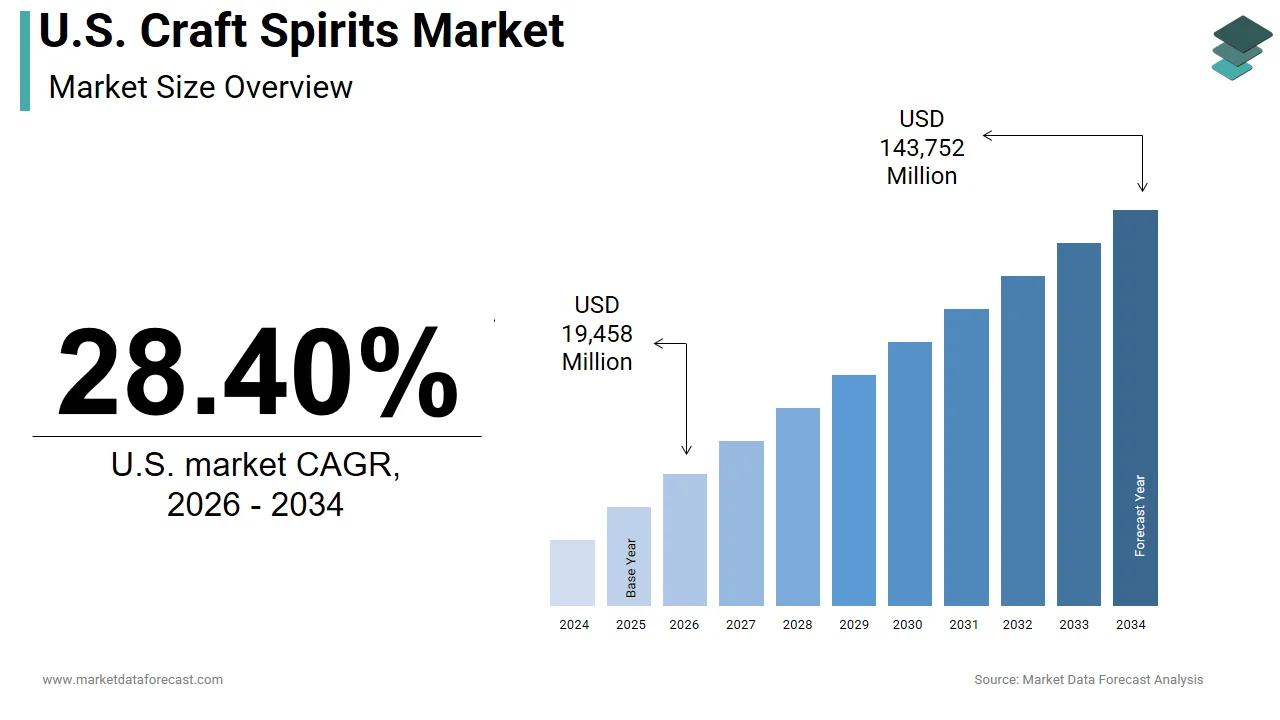
- Market Valuation: Valued at USD 15,154 million in 2025, estimated at USD 19,458 million in 2026, and projected to reach USD 143,752 million by 2034, registering an extraordinary CAGR of 28.40% from 2026 to 2034.
- Primary Growth Drivers: Rising consumer preference for authenticity, local sourcing, and farm-to-bottle narratives; rapid expansion of premium cocktail culture and professional mixology; and the surge in micro-distillery entrepreneurial activity with over 2,500 permitted distilled spirits plants in the U.S.
Key U.S. Craft Spirits Market Segment Metrics (2026–2034)
| Category | Leading Segment (2025 Position) | Fastest-Growing Segment |
|---|---|---|
| By Type | Whiskey (accounted for the largest share of the U.S. market in 2025, driven by deep cultural heritage and local grain sourcing) | Gin (estimated to record a 12.5% CAGR during the forecast period due to botanical and flavor innovation) |
| By Distribution Channel | Off-trade channel (held the largest share in 2025 due to broad retail accessibility and home consumption habits) | On-trade channel (expected to exhibit a 10.4% CAGR driven by hospitality and cocktail culture revival) |
| By Region | U.S. national market (undisputed regional leader driven by a strong local food/drink movement and state-level agricultural landscapes) | Direct-to-consumer and e-commerce distribution expansion markets |
Major U.S. Craft Spirits Market Players & Competitive Structure
Market Structure: Intense and highly competitive landscape characterized by a large population of independent distilleries vying for shelf space, leveraging unique storytelling, product differentiation, local identity, and experiential marketing.
Key U.S. Craft Spirits Companies: Diageo Plc., Pernod Ricard, Tito’s Handmade Vodka, Rémy Cointreau, High West Distillery, Balcones Distilling, William Grant & Sons Ltd., Rogue Ales, Anchor Brewers & Distillers, House Spirits, and Copper Fox Distillery.
U.S. Craft Spirits Market Size
The U.S. craft spirits market was valued at USD 15,154 million in 2025, is estimated to reach USD 19,458 million in 2026, and is projected to reach USD 143,752 million by 2034, growing at a CAGR of 28.40% from 2026 to 2034.
As per the Alcohol and Tobacco Tax and Trade Bureau, the number of permitted distilled spirits plants in the U.S. exceeded 2500 in 2024, which reflects a surge in entrepreneurial activity within the sector. This proliferation indicates a robust ecosystem of micro distilleries catering to niche consumer preferences. Furthermore, according to the Centers for Disease Control and Prevention, alcohol consumption patterns are shifting, with a notable increase in moderate drinking among adults aged 30 to 50, who prioritize quality over quantity. This demographic tends to favor premium products with compelling narratives and ethical production standards. The market is also influenced by the rise of cocktail culture, where mixologists seek distinctive base spirits to create innovative drinks. Regulatory frameworks vary significantly by state, impacting distribution and sales channels, which adds complexity to the operational landscape. The emphasis on localism and sustainability resonates with consumers who view their purchases as support for community economies. This cultural and economic context shapes a dynamic market where tradition meets modern consumer values, driving continuous innovation and diversification in product offerings.
MARKET DRIVERS
Consumer Preference for Authenticity and Local Sourcing
The demand for authenticity and locally sourced ingredients is primarily driving the growth of the U.S. craft spirits market, as consumers increasingly value transparency and connection to their communities. Modern drinkers are moving away from generic global brands toward products that tell a story of origin and craftsmanship. According to a 2024 NielsenIQ report, 85% of global consumers have shifted their purchase behavior toward more sustainable options, including alcoholic beverages. This trend is particularly strong in the spirits sector, where distilleries highlight regional grains, botanicals, and water sources to differentiate their offerings. The appeal of farm-to-bottle narratives resonates with individuals who prioritize sustainability and support for local agriculture. Craft distillers often partner with nearby farms to procure raw materials, reducing carbon footprints and fostering economic resilience in rural areas. This localization strategy builds trust and loyalty among consumers who appreciate the tangible link between their purchase and the local economy. Social media platforms amplify these stories, allowing distilleries to engage directly with their audience and share behind-the-scenes insights into their production processes. The desire for unique and memorable experiences drives visitors to distillery tasting rooms, where they can sample products and learn about the crafting process firsthand. This experiential aspect enhances brand affinity and encourages repeat purchases. The emphasis on authenticity also extends to labeling practices, with consumers scrutinizing ingredients and production methods to ensure alignment with their values. This driver ensures that craft spirits remain relevant and desirable in a crowded beverage landscape.
Growth of Premium Cocktail Culture and Mixology
The expansion of premium cocktail culture and the professionalization of mixology is further boosting the craft spirits market in the U.S. Bars and restaurants are increasingly featuring craft cocktails that highlight unique flavor profiles and high-quality base spirits, influencing consumer preferences at home. According to the National Restaurant Association, the demand for craft cocktails has revitalized interest in gin, with bars reporting increased sales of premium spirits. Mixologists play a crucial role in educating consumers about the nuances of different spirits, encouraging experimentation and appreciation for complex flavors. The availability of specialized bitters, syrups, and garnishes further enhances the appeal of craft spirits, making them versatile ingredients for creative concoctions. Home bartending has also gained popularity, driven by online tutorials and social media content that inspire enthusiasts to recreate professional drinks. This trend increases household consumption of craft spirits, as individuals seek to replicate the bar experience in their own spaces. Distilleries collaborate with bars to create exclusive bottlings or limited edition releases, generating buzz and exclusivity. The association of craft spirits with luxury and sophistication attracts affluent consumers who view these products as status symbols. This cultural shift toward refined drinking habits ensures sustained demand for high-quality artisanal spirits, driving growth and innovation within the market.
MARKET RESTRAINTS
Complex Regulatory Framework and Distribution Barriers
The intricate regulatory framework governing alcohol production and distribution presents a major restraint for the U.S. craft spirits market, which is creating significant operational hurdles for small distilleries. Each state has its own set of laws regarding licensing, taxation, and sales channels, resulting in a fragmented and often contradictory legal landscape. As per the Alcohol and Tobacco Tax and Trade Bureau, compliance with federal and state regulations requires substantial legal and administrative resources, which can be burdensome for small businesses with limited budgets. The three-tier system, which mandates separation between producers, distributors, and retailers, restricts direct-to-consumer sales in many jurisdictions, limiting market access and profitability. Some states allow direct shipping while others prohibit it entirely, forcing distilleries to navigate a patchwork of rules that increase costs and complexity. Obtaining permits can be a lengthy and expensive process, delaying product launches and hindering growth. Additionally, labeling requirements vary by state, requiring multiple versions of packaging for different markets. These regulatory barriers discourage new entrants and constrain the expansion of existing distilleries into new regions. The lack of uniformity creates uncertainty and risk, making it difficult for craft producers to plan long-term strategies. Until regulatory harmonization occurs, these constraints will continue to impede the efficient distribution and scalability of craft spirits, limiting their potential reach and market penetration.
High Production Costs and Supply Chain Volatility
High production costs and supply chain volatility is further hindering the growth of the U.S. craft spirits market. Craft distilleries often operate on smaller scales, lacking the economies of scale enjoyed by large industrial producers. As per the Bureau of Labor Statistics, import prices for foods, feeds, and beverages decreased 2.0% from November 2024 to November 2025, yet volatile agricultural pricing continues to impact raw material expenses for distillers. Energy costs for heating and cooling during the distillation process also contribute to higher operational expenditures. Small batch production requires meticulous attention to detail and manual labor, increasing labor costs compared to automated industrial processes. Supply chain disruptions, such as delays in glass bottle availability or cork shortages, can halt production and lead to stockouts. The reliance on specialized equipment and skilled personnel further adds to financial pressure. These costs are often passed on to consumers, resulting in higher retail prices that may limit appeal to budget-conscious buyers. Inflationary pressures exacerbate these challenges, reducing disposable income and potentially dampening demand for premium products. Distilleries must balance quality maintenance with cost management, a delicate act that requires strategic sourcing and operational efficiency. The inability to absorb sudden cost increases can threaten the viability of smaller operations, leading to consolidation or closure. Until supply chains stabilize and production efficiencies improve, high costs will remain a persistent barrier to growth and accessibility in the craft spirits sector.
MARKET OPPORTUNITIES
Expansion into Direct-to-Consumer E-Commerce Channels
The expansion into direct-to-consumer e-commerce channels offers a substantial opportunity for the U.S. craft spirits market, which is allowing distilleries to bypass traditional distribution barriers and build stronger customer relationships. Recent legislative changes in several states have legalized the direct shipping of spirits, opening new revenue streams for small producers. According to a ShipCompliant industry analysis, online alcohol sales in the U.S. grew by 25% in 2024, reflecting a shift in consumer purchasing behavior toward digital platforms. Distilleries can leverage websites and social media to sell limited edition bottles, subscription boxes, and merchandise directly to enthusiasts. This model enables higher margins by eliminating intermediary markups and provides valuable data on customer preferences and buying patterns. Personalized marketing campaigns and loyalty programs enhance engagement and retention, fostering a sense of community around the brand. Virtual tastings and online events further enrich the customer experience, connecting distant consumers with the distillery's story. The ability to reach national audiences without physical distribution networks reduces entry barriers for new brands. E-commerce also facilitates cross-selling with complementary products such as mixers and barware, increasing average order values. By investing in user-friendly platforms and secure payment systems, distilleries can capitalize on this growing channel. The flexibility and scalability of online sales allow for rapid adaptation to market trends and consumer demands, ensuring long-term competitiveness and growth in the digital age.
Development of Sustainable and Eco-Friendly Practices
The adoption of sustainable and eco-friendly practices presents a lucrative opportunity for the U.S. craft spirits market, appealing to environmentally conscious consumers who prioritize ethical production. Distilleries can differentiate themselves by implementing zero-waste initiatives, using renewable energy, and sourcing organic or regenerative agricultural ingredients. According to the Environmental Protection Agency, 60% of US consumers consider sustainability when making purchasing decisions, highlighting the market potential for green brands. Craft distillers can utilize spent grain as animal feed or compost, reducing waste and supporting local farmers. Water conservation techniques and energy-efficient distillation methods lower operational costs and environmental impact. Packaging innovations such as recyclable glass, biodegradable labels, and lightweight bottles further enhance sustainability credentials. Certifications such as B Corp or organic status provide third-party validation of these efforts, building trust and credibility. Marketing campaigns that highlight environmental stewardship resonate with younger demographics who value corporate responsibility. Collaborations with environmental organizations can amplify impact and raise brand awareness. The transition to sustainable practices not only attracts new customers but also fosters loyalty among existing ones who align with these values. By leading the way in ecological innovation, craft distilleries can position themselves as forward-thinking leaders in the beverage industry. This opportunity allows for the creation of a distinct brand identity that transcends product quality, appealing to holistic lifestyle choices and ethical consumption habits.
MARKET CHALLENGES
Intense Competition and Market Saturation
Intense competition and market saturation pose a significant challenge to the U.S. craft spirits market, as the number of distilleries continues to rise rapidly. With over 2500 permitted distilleries nationwide, standing out in a crowded marketplace becomes increasingly difficult for new and existing brands. According to the American Craft Spirits Association, the rate of new distillery openings has slowed due to market saturation in key regions, indicating heightened competition for shelf space and consumer attention. Established brands with larger marketing budgets dominate retail displays and bar menus, making it hard for smaller players to gain visibility. Price wars and promotional discounts erode profit margins, forcing distilleries to cut costs or innovate aggressively. The sheer volume of options can overwhelm consumers, leading to decision fatigue and brand switching. Differentiation through unique flavors or storytelling is essential but requires continuous investment in research and development. Retailers and distributors may prioritize established partners with proven sales records, limiting access for emerging brands. The need for constant innovation to maintain relevance strains resources and increases operational complexity. Without strong brand loyalty or distinctive positioning, craft distilleries risk being overshadowed by competitors. This competitive pressure necessitates strategic marketing, niche targeting, and exceptional product quality to survive and thrive. The challenge lies in balancing growth ambitions with sustainable business practices in an increasingly congested industry landscape.
Changing Consumer Preferences Toward Health and Moderation
Shifting consumer preferences toward health and moderation are another significant challenge to the U.S. craft spirits market, as individuals increasingly reduce alcohol consumption or seek healthier alternatives. The rise of the sober curious movement and low no alcohol beverages has diverted attention away from traditional spirits. According to the International Wine and Spirit Research group, sales of non-alcoholic spirits in the U.S. grew by 30% in 2024, reflecting a significant trend toward mindful drinking. Health-conscious consumers are scrutinizing calorie content, sugar levels, and additives in alcoholic beverages, prompting demand for cleaner and lighter options. Craft distilleries face pressure to reformulate products or introduce low alcohol variants to meet these changing needs. The perception of alcohol as detrimental to health and wellness conflicts with the indulgent image of premium spirits. Marketing messages must evolve to emphasize responsible drinking and moderate enjoyment rather than excess. The competition from functional beverages such as kombucha and adaptogenic drinks further fragments the market for adult refreshments. Distilleries must adapt by offering transparent nutritional information and promoting balanced consumption habits. Failure to address these health concerns may result in declining sales among key demographic groups. The challenge requires a strategic pivot toward wellness-aligned branding and product innovation to remain relevant in a health-focused society. Balancing tradition with modern health trends is critical for sustaining long-term growth and consumer engagement.
REPORT COVERAGE
| REPORT METRIC | DETAILS |
| Market Size Available | 2025 to 2034 |
| Base Year | 2025 |
| Forecast Period | 2026 to 2034 |
| Segments Covered | By Type, Distribution Channel, and Country. |
| Various Analyses Covered | Global, Regional, and Country-Level Analysis, Segment-Level Analysis, Drivers, Restraints, Opportunities, Challenges; PESTLE Analysis; Porter’s Five Forces Analysis, Competitive Landscape, Analyst Overview of Investment Opportunities |
| Countries Covered | New York, Massachusetts, Pennsylvania, Illinois, Ohio, Michigan, Texas, Florida, Georgia, California, Washington, Colorado. |
| Market Leaders Profiled | Diageo Plc., Pernod Ricard, Tito’s Handmade Vodka, Rémy Cointreau, High West Distillery, Balcones Distilling, William Grant & Sons Ltd., Rogue Ales, Anchor Brewers & Distillers, House Spirits, Copper Fox Distillery, and Others. |
SEGMENTAL ANALYSIS
By Type Insights
The whiskey segment accounted for the largest share of the U.S. market in 2025. The growth of the whiskey segment in the U.S. market is driven by its deep-rooted cultural heritage and the strong consumer preference for aged, complex flavor profiles. American consumers have a long-standing affinity for bourbon and rye, which are legally defined as American whiskeys, which is creating a natural home market advantage for domestic craft distillers. According to the Distilled Spirits Council of the U.S., whiskey accounted for approximately 35% of total distilled spirits volume sales in 2024, reflecting its entrenched status in American drinking culture. Craft distillers leverage this familiarity by producing small-batch bourbons and ryes that emphasize local grain sourcing and traditional barrel aging techniques. The perception of whiskey as a sophisticated and premium spirit appeals to older demographics and connoisseurs who value craftsmanship and history. The ability to age spirits in charred oak barrels imparts distinct vanilla, caramel, and spice notes that resonate with palates accustomed to these flavors. This segment benefits from high brand loyalty, as consumers often develop preferences for specific distillery styles or regional characteristics. The versatility of whiskey in both neat consumption and classic cocktails such as the Old Fashioned further sustains its demand. Craft producers often highlight the provenance of their corn, rye, and barley, connecting the final product to local agriculture. This narrative of authenticity and tradition strengthens the emotional connection with consumers, ensuring that whiskey remains the cornerstone of the craft spirits industry. The widespread availability of whiskey in bars and retail stores also reinforces its dominance, making it the default choice for many spirit drinkers.
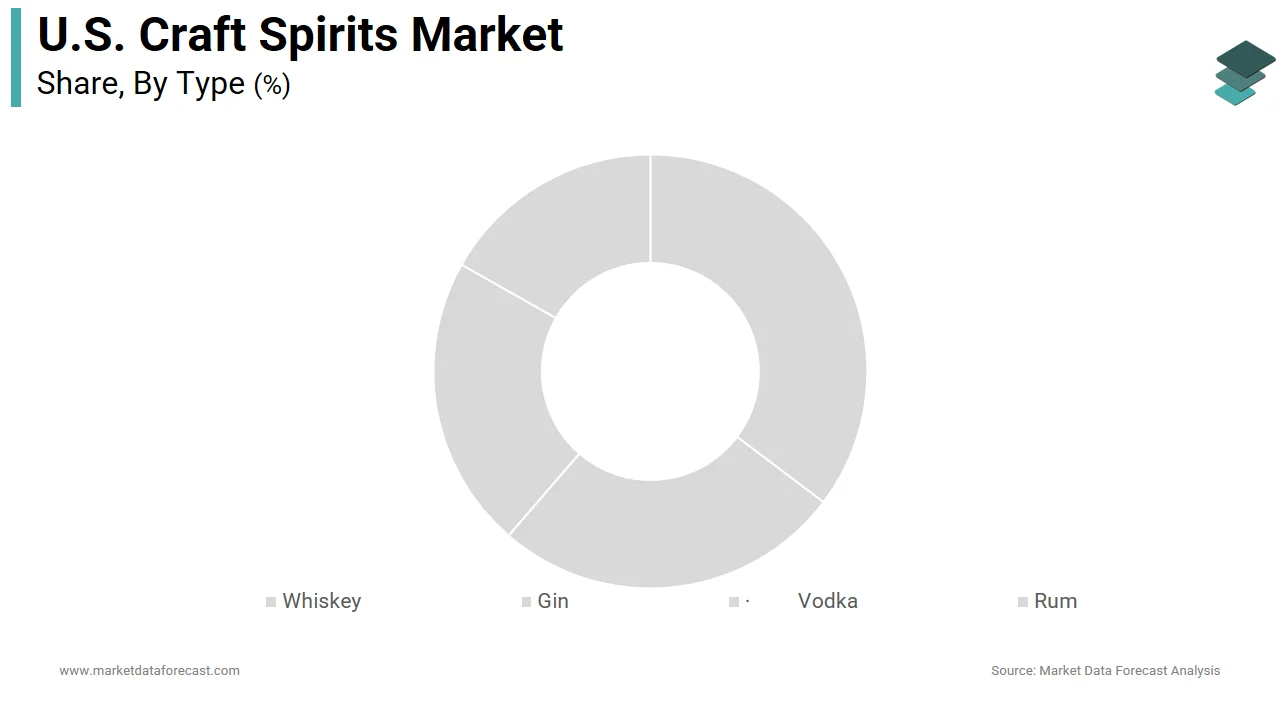
However, the gin segment is estimated to record a CAGR of 12.5% during the forecast period in the U.S. market owing to the extensive innovation in botanical profiles and flavor diversity. Unlike traditional juniper-heavy styles, craft distillers are experimenting with local and exotic botanicals such as cucumber, lavender, citrus peels, and herbs to create unique and refreshing flavor profiles. According to the International Wine and Spirit Research group, gin sales in the U.S. grew by 14% in 2024, outpacing other spirit categories. This growth is fueled by the versatility of gin in mixology, particularly in popular cocktails like the Gin and Tonic and the Martini. Craft producers appeal to modern consumers who seek lighter and more aromatic spirits that pair well with fresh ingredients and seasonal produce. The ability to customize botanical blends allows distilleries to differentiate their products and target niche preferences, such as floral or spicy notes. This flexibility encourages trial and repeat purchases among consumers looking for new taste experiences. The rise of craft tonics and mixers has also complemented the growth of gin, creating a holistic ecosystem for premium cocktail preparation at home. Bars and restaurants are increasingly featuring craft gin-based cocktails on their menus, exposing wider audiences to these innovative spirits. The visual appeal of clear spirits with suspended botanicals further enhances marketing potential on social media platforms. This continuous innovation keeps the category dynamic and engaging, attracting younger demographics who value creativity and uniqueness in their beverage choices.
By Distribution Channel Insights
The off-trade channel segment held the largest share of the U.S. craft spirits market in 2025 due to its broad accessibility and the established habit of home consumption. Consumers prefer the convenience of purchasing spirits for home use, where they can enjoy drinks in a comfortable and private setting. According to the Beverage Information Group, approximately 70% of distilled spirits sales in the U.S. occur through off-trade channels, reflecting the dominance of retail purchases. The proliferation of craft spirits in local liquor stores and boutique shops allows consumers to discover new brands and receive personalized recommendations from knowledgeable staff. The ability to browse shelves and compare prices empowers shoppers to make informed decisions based on their preferences and budgets. Off-trade retailers often host tasting events and promotions that drive trial and impulse purchases. The rise of home bartending, accelerated by recent global events, has further solidified the importance of this channel, as individuals invest in building their own home bars. Retailers benefit from the higher margins associated with premium craft spirits, incentivizing them to dedicate shelf space to local and artisanal brands. The stability of off-trade sales provides a reliable revenue stream for distilleries, less susceptible to the fluctuations of the hospitality industry demand. This channel also facilitates bulk purchases for parties and gatherings, increasing volume sales. The enduring preference for home consumption ensures that off-trade remains the primary distribution avenue for craft spirits.
On the other side, the on-trade channel segment is expected to exhibit a CAGR of 10.4% during the forecast period in the U.S. market, owing to the robust revival of the hospitality sector and the enduring popularity of cocktail culture. As pandemic restrictions eased, consumers returned to social venues in large numbers, seeking experiential dining and drinking opportunities. According to the National Restaurant Association, full-service restaurant sales increased by 12% in 2024, with beverage programs playing a key role in attracting patrons. Bars and restaurants are increasingly featuring craft spirits in their cocktail menus, highlighting local and artisanal brands to differentiate their offerings. Mixologists play a crucial role in educating consumers about the unique qualities of craft spirits, encouraging trial and appreciation. The social aspect of drinking in bars fosters community and engagement, which cannot be replicated at home. Craft distilleries collaborate with venues to create exclusive cocktails and host events, driving foot traffic and brand visibility. The premium nature of on-trade experiences allows for higher pricing, benefiting both venues and producers. The resurgence of nightlife and tourism further boosts demand for craft spirits in urban centers and tourist destinations. This channel serves as a vital showcase for new products, influencing consumer preferences and driving subsequent off-trade sales. The dynamic and interactive nature of the on-trade environment ensures its rapid growth and significance in the craft spirits ecosystem.
COUNTRY ANALYSIS
U.S. Craft Spirits Market Analysis
The U.S. stands as the undisputed leader in the North American craft spirits market by holding the highest share of the regional market in 2025 due to its large consumer base, favorable regulatory environment in many states, and strong culture of entrepreneurship. A primary driving factor is the widespread acceptance of craft beverages as part of the local food and drink movement, similar to the craft beer revolution. As per the Alcohol and Tobacco Tax and Trade Bureau, the number of craft distilleries in the U.S. has tripled in the last decade, reflecting robust industry growth and investment. Another significant driver is the diverse geographic and agricultural landscape, which allows distillers to source unique local ingredients such as corn, rye, wheat, and various botanicals. This regional diversity creates a rich tapestry of flavor profiles that appeal to a wide range of palates. The strong presence of tourism in states like Kentucky, Tennessee, and California further supports the industry, with distillery tours and tastings attracting millions of visitors annually. The cultural emphasis on innovation and individualism encourages experimentation and risk-taking among distillers. Regulatory reforms in several states have simplified licensing and allowed for direct sales, fostering a more conducive business environment. The combination of these factors ensures that the U.S. remains the dominant force in the regional craft spirits market, setting trends and standards that influence global practices. The maturity and vibrancy of the US market continue to drive expansion and innovation, sustaining its leadership position.
COMPETITIVE LANDSCAPE
The competition in the U.S. craft spirits market is intense and characterized by a large number of independent distilleries vying for consumer attention and shelf space. Established brands leverage strong reputations and distribution networks while emerging players rely on innovation and local appeal to gain traction. Price competition is less prevalent than differentiation through quality storytelling and unique flavor profiles. Manufacturers continuously invest in branding and marketing to create emotional connections with consumers who value authenticity and craftsmanship. The rise of e-commerce has lowered barriers to entry, allowing small distilleries to reach national audiences without extensive physical distribution. This dynamic landscape forces all participants to remain agile and responsive to changing trends such as health consciousness and sustainability. Collaborations with hospitality venues and influencers help build credibility and expand reach. The constant introduction of new products and experimental batches ensures that the market remains vibrant and engaging. Consumers benefit from this diversity, having access to a wide array of high-quality and distinctive spirits. The focus on community and local identity further intensifies competition as brands strive to establish themselves as regional favorites.
KEY MARKET PLAYERS
Some of the companies that are playing a dominating role in the U.S. craft spirits market include
- Diageo Plc.
- Pernod Ricard
- Tito’s Handmade Vodka
- Remy Cointreau
- High West Distillery
- Balcones Distilling
- William Grant and Sons Ltd.
- Rogue Ales
- Anchor Brewers & Distillers
- House Spirits
- Copper Fox Distillery
TOP PLAYERS IN THE MARKET
- Tito’s Handmade Vodka maintains a prominent position in the U.S. craft spirits market as a pioneer of the independent distilling movement. The company focuses on producing high-quality corn-based vodka using traditional pot still methods. Recent actions include significant investments in sustainability initiatives such as water conservation and renewable energy usage at its Austin facility. Tito’s has expanded its community outreach programs supporting local charities and environmental causes. The brand leverages strong social media engagement to connect directly with consumers and maintain brand loyalty. By emphasizing authenticity and approachability, Tito’s strengthens its appeal to a broad demographic. Its commitment to quality and corporate responsibility ensures sustained relevance and growth in a competitive landscape. The company continues to innovate in packaging and distribution to enhance consumer accessibility and brand visibility across the nation.
- High West Distillery contributes significantly to the U.S. craft spirits market through its diverse portfolio of whiskey, gin, and rum products. The company emphasizes innovation and experimentation with unique botanicals and aging techniques. Recent efforts involve expanding production capacity to meet growing demand and launching limited edition releases that attract collectors. High West actively participates in industry events and collaborations with bars to promote craft cocktail culture. The distillery prioritizes sustainable practices, including waste reduction and energy efficiency in its operations. By focusing on quality and creativity, High West builds a strong reputation among enthusiasts and professionals. Its strategic partnerships with retailers and distributors enhance market reach and brand recognition. The company continues to invest in research and development to introduce new flavors and products that resonate with evolving consumer preferences.
- Balcones Distilling plays a vital role in the U.S. craft spirits market by producing premium Texas-style whiskey and other spirits. The company is known for its innovative use of local ingredients such as blue corn and mesquite wood. Recent actions include the expansion of its distillery facility to increase production capabilities and support national distribution. Balcones engages in educational initiatives to inform consumers about the craft distilling process and regional heritage. The brand collaborates with chefs and mixologists to create unique pairing experiences and cocktails. By emphasizing terroir and craftsmanship, Balcones differentiates itself in a crowded market. Its commitment to quality and authenticity resonates with discerning consumers seeking distinctive spirits. The company continues to explore new markets and opportunities for growth while maintaining its core values of innovation and tradition.
TOP STRATEGIES USED BY KEY MARKET PARTICIPANTS
Key players in the U.S. craft spirits market primarily employ product differentiation and experiential marketing to maintain a competitive advantage. Companies frequently introduce limited edition releases and unique flavor profiles to attract enthusiasts and collectors. This strategy creates scarcity and drives demand among discerning consumers seeking novel experiences. Expansion into direct-to-consumer sales channels allows distilleries to build stronger relationships and capture higher margins. Strategic partnerships with bars and restaurants enhance brand visibility and educate consumers through curated cocktail menus. Sustainability initiatives such as eco-friendly packaging and local sourcing appeal to environmentally conscious buyers. Digital engagement through social media and online communities fosters brand loyalty and advocacy. These combined strategies enable participants to navigate regulatory challenges and sustain growth in a dynamic and fragmented market environment.
MARKET SEGMENTATION
This research report on the U.S. craft spirits market has been segmented and sub-segmented into the following categories.
By Type
- Whiskey
- Gin
- Vodka
- Rum
- Others
By Distribution Channel
- On Trade
- Off Trade
By Country
- New York
- Texas
- Florida
- Georgia
- California
- Rest of U.S.