- Product Description Description
- Table of Contents TOC
- List of Table & Figure LOT
- Get Free Sample PDF Sample PDF
Market Size, 2025
$17.02 BnMarket Estimate, 2026
$19.14 BnMarket Forecast, 2034
$49.04 BnCAGR, 2026–2034
12.48%Executive Summary: U.S. Remote Patient Monitoring Market
- Market Scope: Comprehensive country-level evaluation of remote patient monitoring in the United States covering product and service segments, application use cases, end users, and regional/state distribution frameworks.
- Market Valuation: Valued at USD 17.02 billion in 2025, estimated at USD 19.14 billion in 2026, and projected to reach USD 49.04 billion by 2034, registering a strong CAGR of 12.48% (2026–2034).
- Primary Growth Drivers: Rising prevalence of chronic diseases among an aging American demographic, favorable Centers for Medicare & Medicaid Services (CMS) reimbursement policies, and the rapid shift toward value-based care models.
Key Market Segment Metrics (2026–2034)
| Category | Leading Segment (2025 Position) | Fastest-Growing Segment |
|---|---|---|
| By Type | Products and Devices (held a significant share driven by wearable sensors, glucometers, and blood pressure monitors) | Services (projected to grow at a CAGR of 20.3% driven by data management and outsourced clinical interpretation) |
| By Application | Cardiovascular Diseases (held 58.3% market share in 2025 due to hypertension, heart failure, and arrhythmias) | Diabetes (projected to expand at a CAGR of 22.3% driven by continuous glucose monitoring technologies) |
| By End User | Providers (captured 42.6% market share in 2025 via hospitals, clinics, and ACOs utilizing tech for care coordination) | Payers (expected to grow at a CAGR of 18.3% driven by insurance and Medicare Advantage cost-reduction imperatives) |
| By Region / Country | The United States (exclusive national market featuring key state hubs including California, New York, Washington, and Oregon) | |
Major Market Players & Market Structure
Market Structure: Highly intensive and competitive U.S. digital health landscape featuring established medical device giants, telehealth providers, and specialized software startups competing on AI analytics, EHR interoperability, device accuracy, and HIPAA compliance.
Key Companies: Medtronic, Koninklijke Philips N.V., ResMed Inc., OMRON Corporation, GE Healthcare, Abbott, Boston Scientific Corporation, Siemens Healthineers AG, Teladoc Health, Inc., and Dexcom.
U.S. Remote Patient Monitoring Market Size
The U.S. remote patient monitoring market was valued at USD 17.02 billion in 2025, is estimated to reach USD 19.14 billion in 2026, and is projected to reach USD 49.04 billion by 2034, growing at a CAGR of 12.48% from 2026 to 2034.

The remote patient monitoring is an ecosystem of digital health technologies designed to collect medical and other forms of health data from individuals in one location and electronically transmit that information securely to healthcare providers in a different location for assessment and recommendations. As per the Centers for Disease Control and Prevention, 6 in 10 adults in the United States have a chronic disease, and 4 in 10 have two or more, creating a substantial population requiring consistent monitoring. The aging demographic further amplifies demand as the United States Census Bureau projects that by 2034, older adults will outnumber children for the first time in US history. Regulatory frameworks, such as those established by the Food and Drug Administration, ensure device safety and efficacy, while the Centers for Medicare and Medicaid Services provide reimbursement codes that incentivize provider adoption.
MARKET DRIVERS
Rising Prevalence of Chronic Diseases Among the Aging Population
The escalating prevalence of chronic diseases among the aging population, by creating an urgent need for continuous and proactive health management solutions, is amplifying the growth of the United States remote patient monitoring market. Chronic conditions, such as hypertension, diabetes, and heart failure, require regular monitoring to prevent complications and hospitalizations, which are costly and burdensome for patients. As per the Centers for Disease Control and Prevention, chronic diseases account for 90% of the nation’s 4.1 trillion dollars in annual health care expenditures, highlighting the economic imperative for efficient management strategies. The aging demographic exacerbates this issue as older adults are more likely to suffer from multiple comorbidities that necessitate complex care coordination. Remote patient monitoring enables healthcare providers to track vital signs and symptoms in real time, allowing for timely interventions that can prevent disease progression. This continuous oversight reduces the frequency of emergency room visits and hospital readmissions, which are key performance indicators for value-based care models. Patients benefit from the convenience of managing their health at home, which improves adherence to treatment plans and overall quality of life. The ability to detect early warning signs through automated alerts empowers clinicians to adjust medications or lifestyle recommendations promptly.
Favorable Reimbursement Policies and Regulatory Support
The favorable reimbursement policies and robust regulatory support by providing financial incentives for healthcare providers to adopt these technologies, which is additionally accelerates the growth of the United States remote patient monitoring market. The Centers for Medicare and Medicaid Services has established specific Current Procedural Terminology codes that allow physicians to bill for remote patient monitoring services, ensuring that providers are compensated for the time and resources invested in managing patient data. The expansion of telehealth and remote monitoring reimbursement during the public health emergency has been made permanent in many instances, encouraging long-term integration into clinical practice. These policies reduce the financial barrier to adoption, making it economically viable for hospitals and private practices to invest in necessary infrastructure and staff training. State-level parity laws further mandate that private insurers cover telehealth services, including remote monitoring at rates comparable to in-person visits. This regulatory clarity and financial support create a stable environment for growth, allowing healthcare organizations to focus on improving patient outcomes rather than navigating complex billing issues.
MARKET RESTRAINTS
Data Privacy and Security Concerns
The data privacy and security concerns are raising fears among patients and providers regarding the protection of sensitive health information is hindering the growth of the United States remote patient monitoring market. The transmission of personal health data over wireless networks and cloud platforms creates vulnerabilities that can be exploited by cybercriminals, leading to data breaches and identity theft. As per the Department of Health and Human Services, there were over 700 reported healthcare data breaches in recent years, affecting millions of individuals, which underscores the persistent risk associated with digital health technologies. Patients may hesitate to adopt remote monitoring devices if they perceive that their data is not secure, potentially limiting the effectiveness of these tools in managing chronic conditions. Healthcare providers also face stringent compliance requirements under the Health Insurance Portability and Accountability Act, which mandate rigorous safeguards for electronic protected health information. Failure to comply can result in substantial fines and reputational damage, discouraging some organizations from fully integrating remote monitoring into their workflows. The complexity of securing diverse devices and platforms requires ongoing investment in cybersecurity infrastructure and staff training, which can be prohibitive for smaller practices. Additionally, the lack of standardized security protocols across different manufacturers complicates the integration of various devices into unified systems.
Limited Broadband Access in Rural Areas
The limited broadband access in rural areas by creating a digital divide that prevents equitable access to digital health services is also hindering the growth of the United States patient monitoring market. Reliable high-speed internet is essential for the real-time transmission of data from remote monitoring devices to healthcare providers, yet many rural communities lack the necessary infrastructure. As per the Federal Communications Commission, approximately 24% of the population in rural areas lacks access to fixed broadband service at threshold speeds compared to only 1.5% in urban areas. This disparity disproportionately affects elderly and low-income populations, who are often the primary beneficiaries of remote patient monitoring due to higher rates of chronic disease and mobility issues. Without stable connectivity, patients cannot reliably transmit vital signs or participate in virtual consultations, rendering the technology ineffective. Healthcare providers in rural regions may also struggle to implement remote monitoring programs due to inadequate technical support and infrastructure. The lack of digital literacy among some patient populations further exacerbates the issue, making it difficult for them to navigate complex devices and applications. While federal initiatives aim to expand broadband access, the pace of deployment remains slow, leaving many communities underserved.
MARKET OPPORTUNITIES
Integration of Artificial Intelligence and Predictive Analytics
The integration of artificial intelligence and predictive analytics by enhancing the ability to predict health events and personalize care plans is solely to create new opportunities for the growth of the United States remote patient monitoring market. AI algorithms can analyze vast amounts of data collected from monitoring devices to identify patterns and anomalies that may indicate deteriorating health conditions before they become critical. The spending on artificial intelligence in the healthcare sector is projected to grow substantially, reflecting the increasing recognition of its value in improving clinical outcomes. Predictive analytics enable healthcare providers to intervene proactively by reducing the likelihood of hospitalizations and emergency visits. Machine learning models can also tailor treatment recommendations based on individual patient characteristics and historical data, improving the efficacy of interventions. The automation of data analysis reduces the workload on clinical staff, allowing them to focus on high-value tasks such as patient engagement and care coordination. Additionally, AI-driven insights can help identify high-risk patients who would benefit most from remote monitoring, optimizing resource allocation. The ability to provide real-time feedback to patients through mobile applications enhances engagement and adherence to treatment plans.
Expansion into Mental Health and Behavioral Monitoring
The expansion into mental health and behavioral monitoring by addressing the growing demand for accessible and continuous mental health support is also expected to expand the growth of the United States remote patient management market. Traditional mental health care often faces barriers, such as stigma, a shortage of providers, and limited access, particularly in underserved areas. Remote monitoring technologies can track behavioral indicators, such as sleep patterns, physical activity, and social interaction, using wearable devices and smartphone applications. Digital phenotyping allows clinicians to monitor changes in behavior that may signal worsening conditions, such as depression or anxiety, enabling timely interventions. Virtual therapy sessions combined with remote monitoring provide a comprehensive approach to mental health management that is convenient and less intimidating for patients. The integration of mood tracking and cognitive behavioral therapy tools into mobile platforms empowers patients to manage their mental well-being actively. Employers and insurance providers are increasingly recognizing the value of mental health monitoring in reducing absenteeism and healthcare costs.
MARKET CHALLENGES
Interoperability Issues Among Devices and Platforms
The interoperability issues among devices and platforms, hindering the seamless exchange of data between different systems and healthcare providers is likely to pose a new challenge for the growth of the United States remote patient monitoring market. The numerous manufacturers producing devices that use proprietary software and communication protocols make it difficult to integrate data into electronic health records. The lack of interoperability remains a significant barrier to the effective use of health information technology, leading to inefficiencies and potential errors in care delivery. Healthcare providers often struggle to aggregate data from multiple sources, creating a disjointed view of patient health that can compromise clinical decision-making. The absence of universal standards for data formatting and transmission requires custom interfaces and manual data entry, which increases administrative burden and costs. Clinicians may experience alert fatigue due to inconsistent data quality and volume, reducing the effectiveness of monitoring programs. Patients may also face difficulties using multiple apps and devices that do not communicate with each other, leading to frustration and non-adherence. Efforts to establish common standards, such as Fast Healthcare Interoperability Resources, are ongoing, but adoption remains uneven.
Patient Adherence and Engagement Difficulties
The patient adherence and engagement difficulties are caused by limiting the consistency and reliability of data collection required for effective care management, which additionally inhibits the growth of the United States remote patient monitoring market. Successful remote monitoring depends on patients regularly using devices and transmitting data, yet many individuals struggle to maintain these habits over time. Factors contributing to non-adherence include device complexity, lack of technical proficiency, forgetfulness, and perceived lack of immediate benefit. Elderly patients may find wearable devices uncomfortable or difficult to operate, while younger users may lose interest if the technology does not provide engaging feedback. The absence of direct human interaction can reduce motivation, making it harder for patients to stay committed to monitoring protocols. Healthcare providers often lack the resources to provide continuous support and education to troubleshoot issues or encourage usage. Poor data quality resulting from irregular use can lead to inaccurate clinical assessments and missed opportunities for intervention. Addressing adherence requires user-centered design, gamification, and personalized coaching, which add complexity and cost to remote monitoring programs.
REPORT COVERAGE
| REPORT METRIC | DETAILS |
| Market Size Available | 2025 to 2034 |
| Base Year | 2025 |
| Forecast Period | 2026 to 2034 |
| Segments Covered | By Type, Application, End User, and Country. |
| Various Analyses Covered | Global, Regional, and Country-Level Analysis, Segment-Level Analysis, Drivers, Restraints, Opportunities, Challenges; PESTLE Analysis; Porter’s Five Forces Analysis, Competitive Landscape, Analyst Overview of Investment Opportunities |
| Countries Covered | New York, Massachusetts, Pennsylvania, Illinois, Ohio, Michigan, Texas, Florida, Georgia, California, Washington, Colorado. |
| Market Leaders Profiled | Koninklijke Philips N.V., OMRON Corporation, Medtronic, GE Healthcare, Abbott, Oracle, Boston Scientific Corporation, NIHON KOHDEN CORPORATION, Siemens Healthineers AG, Baxter, Biobeat, VitalConnect, VivaLNK, Inc., Clear Arch, Inc., Optum, Inc. (Vivifyhealth), Blue Spark Technologies, Inc., Lightbeam, Cloud Diagnostics Canada ULC, Teladoc Health, Inc., Guangdong Transtek Medical Electronics Co., Ltd., Dexcom, CareSimple Inc., TimeDoc, Inc., MD Revolution Inc., Optimize Health, Inc., Health Recovery Solutions, and Others. |
SEGMENTAL ANALYSIS
By Type Insights
The products and devices constitute a segment that held a significant share of the United States remote patient monitoring market, driven by the fundamental necessity of hardware to capture physiological data for transmission and analysis. The widespread adoption of wearable sensors, connected glucometers, blood pressure monitors, and pulse oximeters that serve as the primary interface between patients and healthcare systems is also boosting the growth of the segment. The number of cleared digital health devices has increased significantly, with hundreds of new approvals annually reflecting the rapid innovation and availability of medical-grade hardware. The tangible nature of these assets requires upfront procurement by healthcare providers or patients, creating substantial initial revenue streams. Manufacturers invest heavily in miniaturization and battery life improvements by making devices more user-friendly and less intrusive. The integration of Bluetooth and cellular connectivity allows seamless data transfer to cloud platforms, enhancing the utility of these products. Furthermore, reimbursement codes often cover the cost of devices provided to patients under specific chronic care management programs, encouraging adoption.
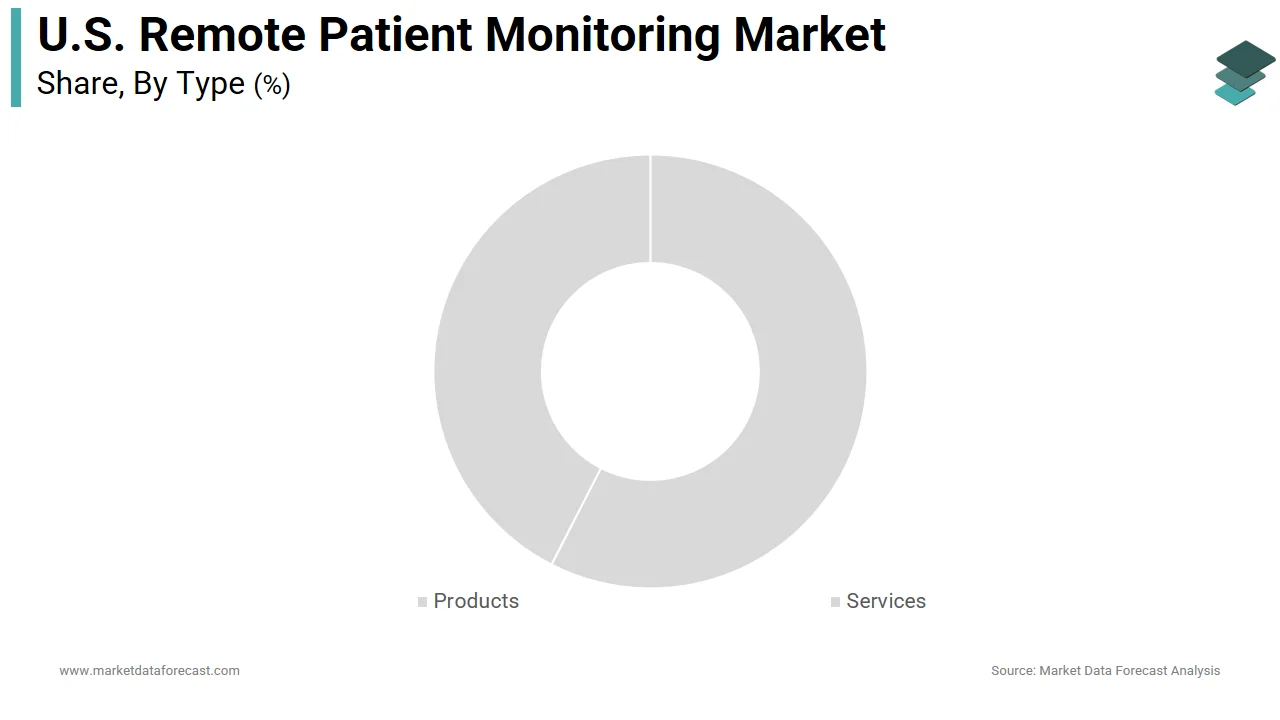
The services segment is likely to grow at an anticipated CAGR of 20.3% from 2026 to 2034, with the increasing complexity of data management and the need for clinical interpretation. The adoption of remote physiologic monitoring codes has surged as physicians recognize the value of outsourced monitoring services that reduce administrative burden. The shift toward value-based care models, where outcomes are prioritized over volume, requires continuous engagement and proactive care management. Service providers offer comprehensive solutions, including patient onboarding, technical support, data analytics, and clinical review, which are for successful program implementation. The shortage of healthcare professionals exacerbates the demand for managed services that allow clinics to scale their remote monitoring capabilities without hiring additional staff. Artificial intelligence-driven analytics services enhance the ability to predict adverse events, improving patient safety and reducing hospital readmissions. Additionally, the integration of telehealth consultations with monitoring data creates a holistic care experience that improves patient satisfaction.
By Application Insights
The cardiovascular diseases segment was the largest by holding 58.3% of the United States remote patient monitoring market share in 2025 due to the high prevalence of conditions, such as hypertension, heart failure, and arrhythmias, which require consistent tracking to prevent acute events. The need to monitor vital signs, such as blood pressure, heart rate, and oxygen saturation, in real time to manage disease progression effectively. As per the Centers for Disease Control and Prevention, heart disease remains the leading cause of death in the United States, accounting for one in every five deaths, escalating the urgent need for effective management tools. Remote monitoring allows clinicians to detect early signs of decompensation in heart failure patients, such as weight gain or changes in blood pressure, enabling timely medication adjustments. This proactive approach significantly reduces hospital readmissions, which are costly and penalized under value-based care initiatives. The availability of FDA-cleared devices for cardiac monitoring, such as implantable loop recorders and wearable ECG patches, facilitates accurate data collection. Reimbursement policies specifically support remote monitoring for chronic cardiovascular conditions, encouraging provider adoption. Patients benefit from the ability to manage their condition at home, reducing the need for frequent clinic visits.
The diabetes segment in the United States remote patient monitoring market is projected to expand at an anticipated CAGR of 22.3% during the forecast period, with the rising incidence of type 2 diabetes and the advancement of continuous glucose monitoring technology. As per the Centers for Disease Control and Prevention, more than 37 million Americans have diabetes, and approximately 96 million adults have prediabetes, creating a vast population requiring ongoing management. Continuous glucose monitors provide real-time data that can be shared remotely with healthcare providers, allowing for personalized insulin dosing and dietary recommendations. This continuous feedback loop improves glycemic control and reduces the risk of hypoglycemic or hyperglycemic episodes. The integration of glucose data with mobile applications enhances patient engagement and self-management capabilities. Insurance coverage for continuous glucose monitors has expanded, making these devices more accessible to a broader demographic. The ability to correlate glucose levels with lifestyle factors through digital platforms empowers patients to make informed health decisions.
By End User Insights
The providers constitute segment was the largest by capturing 42.6% of the United States remote patient monitoring market share in 2025, with their central role in delivering care and managing patient outcomes. Hospitals, physician practices, and accountable care organizations adopt remote monitoring technologies to enhance care coordination, reduce readmissions, and comply with value-based care requirements. The significant majority of hospitals have implemented some form of telehealth or remote monitoring services to extend their reach and improve efficiency. These revenues help offset the costs of technology implementation and staff training by making adoption economically viable. Providers utilize remote monitoring to manage high-risk populations more effectively by ensuring that patients adhere to treatment plans and receive timely interventions. The integration of monitoring data into electronic health records streamlines workflows and provides a comprehensive view of patient health. Additionally, regulatory mandates regarding quality metrics and patient safety encourage providers to adopt technologies that demonstrate improved outcomes.
The payers segment is expected to grow at an estimated CAGR of 18.3% during the forecast period, with the imperative to reduce overall healthcare costs and improve population health. Insurance companies, Medicare Advantage plans, and employers are increasingly investing in remote monitoring programs to prevent costly hospitalizations and emergency department visits among members with chronic conditions. Remote monitoring allows payers to identify high-risk individuals and provide targeted interventions that mitigate disease progression. The data generated by these programs enables payers to refine risk adjustment models and negotiate better rates with providers. Value-based contracts often include incentives for using remote monitoring technologies, aligning the interests of payers, providers, and patients. The ability to track member engagement and health status in real time enhances care management capabilities and reduces administrative friction. Payers also leverage remote monitoring to differentiate their offerings in competitive markets, attracting members who value proactive health support.
COMPETITIVE LANDSCAPE
The competition in the United States remote patient monitoring market is intense and characterized by the presence of established medical device manufacturers, technology companies, and emerging digital health startups vying for market share. Major players compete based on device accuracy, platform usability, and integration capabilities with existing healthcare infrastructure. Differentiation is achieved through advanced analytics, artificial intelligence, and personalized care solutions that improve patient outcomes and reduce costs. Price competition is moderate as healthcare providers prioritize quality and reliability over cost alone. Strategic collaborations with hospitals, insurers, and technology firms are common to enhance product offerings and expand reach. The market sees continuous innovation in wearable technology and mobile applications, driving the rapid evolution of standards. Customer retention relies on demonstrating tangible value through reduced hospital readmissions and improved chronic disease management. Regulatory compliance and data security are critical factors influencing competitive dynamics as stakeholders prioritize patient safety.
KEY MARKET PLAYERS
Some of the companies that are playing a dominating role in the U.S. remote patient monitoring market include
- Koninklijke Philips N.V.
- OMRON Corporation
- Medtronic
- GE Healthcare
- Abbott
- Oracle
- Boston Scientific Corporation
- NIHON KOHDEN CORPORATION
- Siemens Healthineers AG
- Baxter
- Biobeat
- VitalConnect
- VivaLNK, Inc.
- Clear Arch, Inc.
- Optum, Inc. (Vivifyhealth)
- Blue Spark Technologies, Inc.
- Lightbeam
- Cloud Diagnostics Canada ULC
- Teladoc Health, Inc.
- Guangdong Transtek Medical Electronics Co., Ltd
- Dexcom
- CareSimple Inc.
- TimeDoc, Inc.
- MD Revolution Inc.
- Optimize Health, Inc.
- Health Recovery Solutions
TOP PLAYERS IN THE MARKET
- Medtronic plc is a global leader in the United States remote patient monitoring market, offering advanced devices for chronic disease management, including diabetes and cardiovascular conditions. The company integrates its hardware with digital platforms to provide continuous data transmission and clinical insights. Recent actions include the expansion of its CareLink ecosystem, which allows seamless sharing of patient data with healthcare providers. Medtronic has invested heavily in artificial intelligence to enhance predictive analytics for early detection of health deterioration. The company focuses on interoperability, ensuring its devices connect efficiently with electronic health records. These initiatives enable healthcare providers to deliver personalized care while reducing hospital readmissions. The commitment to innovation and comprehensive disease management solutions solidifies its role as a key driver in the remote patient monitoring landscape.
- Philips NV contributes significantly to the United States remote patient monitoring market through its integrated health technology solutions that span from home care to hospital settings. The company offers a wide range of connected devices and software platforms designed to support chronic care management and post-acute care. Recent actions involve the enhancement of its HealthSuite digital platform, which facilitates secure data exchange and advanced analytics. Philips has partnered with major health systems to deploy scalable remote monitoring programs that improve patient outcomes. The company emphasizes interoperability and ease of use, ensuring that both patients and clinicians can navigate the technology effortlessly. These efforts reinforce its reputation as a trusted provider of innovative and reliable remote care technologies that address complex healthcare challenges.
- ResMed Inc plays a pivotal role in the United States remote patient monitoring market, specializing in connected care solutions for sleep apnea and chronic respiratory diseases. The company utilizes cloud-based technology to transmit patient data from home devices to healthcare providers, enabling timely interventions. Recent actions include the expansion of its AirView platform, which provides detailed insights into patient adherence and therapy effectiveness. ResMed has focused on integrating machine learning algorithms to predict treatment issues and optimize therapy plans. The company collaborates with payers and providers to demonstrate the cost-effectiveness of remote monitoring in reducing hospital visits. These strategies strengthen its market presence by addressing the growing need for efficient and effective management of respiratory conditions in home settings.
TOP STRATEGIES USED BY KEY MARKET PARTICIPANTS
Key players in the United States remote patient monitoring market primarily focus on integrating artificial intelligence and machine learning to enhance data analytics and predictive capabilities. Companies are increasingly prioritizing interoperability with electronic health records to ensure seamless data flow and improved clinical workflows. Strategic partnerships with healthcare providers and payers help expand market reach and demonstrate value through improved patient outcomes. Investment in user-centric design ensures that devices are easy to use and comfortable for patients, encouraging long-term adherence. Expansion into chronic disease management beyond cardiovascular and respiratory conditions diversifies revenue streams. Emphasis on cybersecurity and data privacy builds trust among users and complies with regulatory standards.
MARKET SEGMENTATION
This research report on the U.S. remote patient monitoring market is segmented and sub-segmented into the following categories.
By Type
- Products
- Multi-parameter Monitoring
- Respiratory Monitoring
- Blood Glucose Monitoring
- Cardiac Monitoring
- Others
- Services
By Application
- Oncology
- Diabetes
- Cardiovascular Diseases
- Others
By End User
- Payers
- Providers
- Patients
By Country
- California
- Washington
- Oregon
- New York
- Rest of the United States