- Product Description Description
- Table of Contents TOC
- List of Table & Figure LOT
- Get Free Sample PDF Sample PDF
Market Size, 2025
$2.67 BnMarket Estimate, 2026
$2.88 BnMarket Forecast, 2034
$5.25 BnCAGR, 2026–2034
7.80%U.S. Ultrasound Market Summary
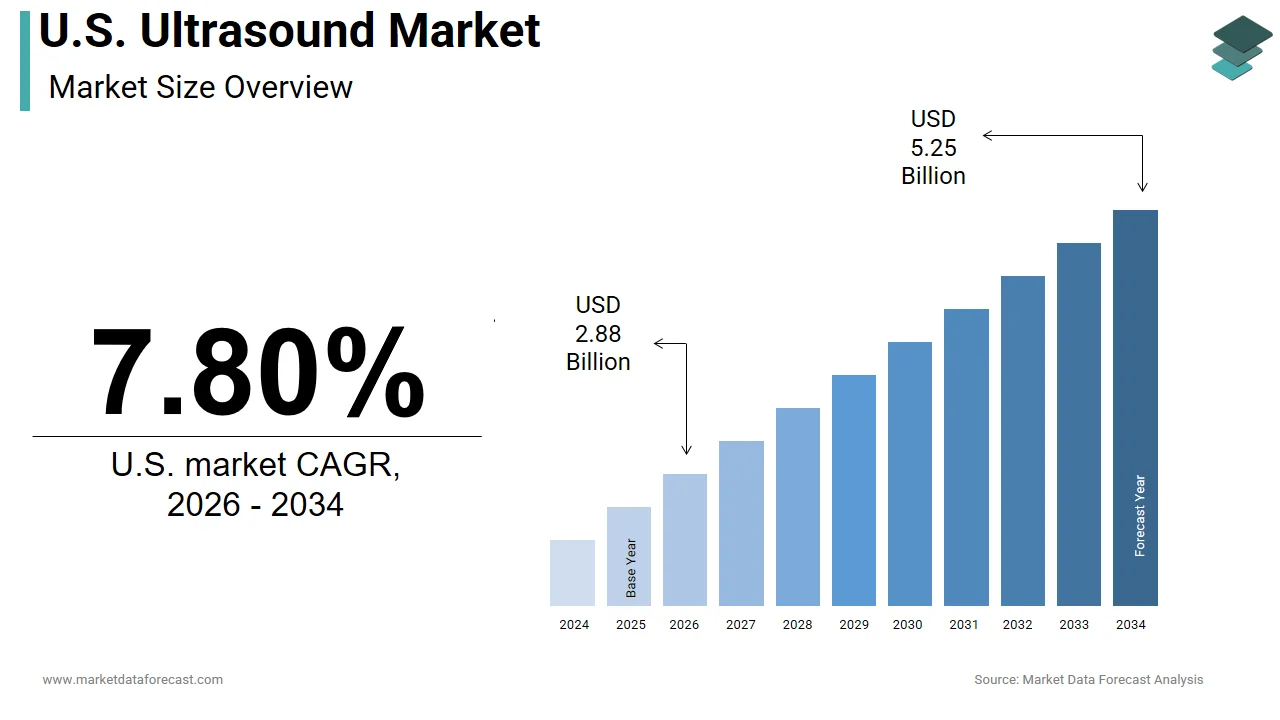
The U.S. ultrasound market was valued at USD 2.67 billion in 2025, is estimated to reach USD 2.88 billion in 2026, and is projected to reach USD 5.25 billion by 2034, growing at a CAGR of 7.80% from 2026 to 2034. The growth of the U.S. ultrasound market is driven by the increasing prevalence of chronic diseases, rising demand for minimally invasive diagnostic imaging, technological advancements in ultrasound devices, and growing applications of ultrasound in point-of-care and emergency medicine.
Key Market Trends
- Increasing adoption of 3D and 4D ultrasound imaging systems in obstetrics and gynecology.
- Rapid integration of AI-powered ultrasound technologies for improved image accuracy and workflow efficiency.
- Expanding use of portable and handheld ultrasound devices in emergency care and remote diagnostics.
- Rising application of ultrasound-guided therapies in cardiology, oncology, and musculoskeletal care.
- Growing preference for radiation-free diagnostic imaging for pediatric and prenatal applications.
Segmental Insights
- Based on product, the diagnostic segment accounted for a significant share of the U.S. ultrasound market in 2024, driven by the widespread use of ultrasound for medical imaging and disease diagnosis across various clinical disciplines.
- Based on portability, the cart-based ultrasound systems segment was the largest in 2024, holding a dominant share due to their high image resolution, advanced functionality, and integration in hospital and specialty clinic environments.
- Based on application, the obstetrics and gynecology segment accounted for 24.3% of the U.S. ultrasound market share in 2024, owing to the growing adoption of ultrasound imaging in prenatal screening and fetal monitoring.
- Based on end-use, the hospitals segment dominated the U.S. ultrasound market in 2024, supported by extensive infrastructure for advanced imaging procedures and increasing investments in ultrasound-based diagnostic technologies.
Competitive Landscape
The U.S. ultrasound market is highly competitive and innovation-driven, with major players focusing on technological advancements, AI integration, and portable system development. Companies are investing in R&D and strategic collaborations to enhance image quality, usability, and connectivity. Prominent players dominating the market include Zimmer MedizinSysteme GmbH, General Electric Healthcare, Fujifilm Corporation, Hitachi Ltd., Mindray Medical International Limited, Samsung Healthcare, Siemens Healthineers AG, Koninklijke Philips N.V., Canon Inc., and ESAOTE SPA.
U.S. Ultrasound Market Size
The U.S. ultrasound market was valued at USD 2.67 billion in 2025, is estimated to reach USD 2.88 billion in 2026, and is projected to reach USD 5.25 billion by 2034, growing at a CAGR of 7.80% from 2026 to 2034.
According to the Centers for Disease Control and Prevention, approximately 3.6 million births occurred in the United States in 2025, establishing obstetrics and gynecology as a foundational application segment for ultrasound technology. As per the American College of Radiology, ultrasound is the preferred initial imaging modality for evaluating abdominal pain in children and pregnant women due to its lack of ionizing radiation. The Food and Drug Administration regulates these devices as Class II medical instruments, ensuring safety standards for acoustic output and electrical safety. Technological advancements such as three-dimensional, four-dimensional, and contrast-enhanced ultrasound have expanded clinical utility beyond traditional diagnostics into interventional procedures. As per the National Institute of Biomedical Imaging and Bioengineering, ultrasound is increasingly utilized for guiding needle biopsies and vascular access, improving procedural success rates. This market is characterized by a shift toward portability and connectivity, enabling deployment in emergency rooms, intensive care units, and remote clinics. The integration of artificial intelligence for image optimization and automated measurements further defines the contemporary landscape, enhancing diagnostic accuracy and workflow efficiency for healthcare providers across diverse specialties.
MARKET DRIVERS
Rising Prevalence of Chronic Diseases and Cardiovascular Disorders
The increasing burden of chronic diseases, particularly cardiovascular conditions, is one of the major factors driving the U.S. ultrasound market growth. According to the Centers for Disease Control and Prevention, heart disease remains the leading cause of death in the United States, accounting for approximately one in every five deaths annually. As per the American Heart Association, approximately 130.6 million adults in the U.S. have some form of cardiovascular disease or hypertension, requiring regular monitoring and diagnostic evaluation. Echocardiography, which relies on ultrasound technology, is the gold standard for assessing cardiac structure and function, including valve abnormalities and ejection fraction. The aging population exacerbates this trend, with the U.S. Census Bureau projecting that individuals aged 65 and older will comprise 21.7% of the population by 2040. Older adults are disproportionately affected by heart failure and arrhythmias, necessitating frequent imaging studies. Furthermore, the rise in obesity rates contributes to a higher incidence of diabetes and liver disease, driving demand for abdominal ultrasounds to detect fatty liver and other complications. According to the National Institute of Diabetes and Digestive and Kidney Diseases, an estimated 38.4 million people in the United States have diabetes, increasing the risk of associated cardiovascular and renal issues. Healthcare providers must invest in advanced systems to manage the volume and complexity of cases.
Expansion of Point-of-Care Ultrasound in Emergency and Critical Care
The widespread adoption of point-of-care ultrasound in emergency departments and intensive care units is further contributing to the U.S. market expansion. According to the Society of Academic Emergency Medicine, over 90% of emergency medicine residency programs now include comprehensive ultrasound training, reflecting its critical role in acute care. As per clinical guidelines, ultrasound is essential for the rapid assessment of trauma patients using the Focused Assessment with Sonography for Trauma protocol to detect internal bleeding. The ability to perform immediate bedside imaging reduces time to diagnosis and improves patient outcomes in time-sensitive situations. The American College of Emergency Physicians emphasizes that ultrasound guidance for central line placement reduces complication rates such as pneumothorax and arterial puncture. Furthermore, the portability of modern handheld devices allows clinicians to extend imaging capabilities beyond traditional radiology suites into ambulances and rural clinics. According to the National Rural Health Association, access to diagnostic imaging in underserved areas is limited, making portable ultrasound a vital tool for telemedicine and remote consultations. The integration of wireless connectivity enables real-time image sharing with specialists, facilitating collaborative decision-making.
MARKET RESTRAINTS
Shortage of Skilled Sonographers and Technical Expertise
The persistent shortage of qualified sonographers and the technical complexity of image interpretation are hampering the U.S. ultrasound market growth. According to the Society of Diagnostic Medical Sonography, the United States faces a projected shortfall of over 10,000 sonographers by 2030 due to a retiring workforce and insufficient training pipeline capacity. As per the Bureau of Labor Statistics, employment of diagnostic medical sonographers is projected to grow by 13% through 2034, but supply remains insufficient to meet rising demand, particularly in rural and underserved areas. The operation of advanced ultrasound systems requires specialized knowledge of anatomy, physics, and pathology, which takes years to develop. Without skilled operators, image quality may be compromised, leading to misdiagnosis or the need for repeat scans. As per the American Registry for Diagnostic Medical Sonography, certification requirements are rigorous, limiting the speed at which new professionals can enter the field. Furthermore, physician reliance on sonographers for image acquisition creates bottlenecks in workflow, especially in high-volume settings. The lack of standardized training for point-of-care ultrasound among non-radiologist physicians also poses challenges for consistent image quality. For instance, many healthcare facilities report difficulties in recruiting and retaining experienced staff, leading to increased overtime costs and burnout.
High Cost of Advanced Systems and Reimbursement Limitations
The substantial capital expenditure required for acquiring high-end ultrasound systems, combined with restrictive reimbursement policies, constrains the U.S. market growth. According to the American Hospital Association, the average cost of a premium cart-based ultrasound system ranges from 100,000 to 250,000 dollars, while specialized three-dimensional or four-dimensional units can exceed 300,000 dollars. As per the Centers for Medicare and Medicaid Services, reimbursement rates for ultrasound procedures have remained stagnant or declined in real terms despite rising operational costs. Healthcare providers face pressure to justify large equipment purchases through volume and efficiency, which is challenging in value-based care models. Private insurers often impose prior authorization requirements for advanced imaging, limiting patient access and revenue predictability. According to the Medical Group Management Association, many independent practices operate on thin margins, making it difficult to fund capital upgrades without incurring significant debt. Furthermore, the total cost of ownership includes maintenance contracts, software upgrades, and transducer replacements, which add to the financial burden. These economic constraints force providers to delay replacements or opt for refurbished equipment, slowing the adoption of new technologies.
MARKET OPPORTUNITIES
Integration of Artificial Intelligence and Automation Technologies
The incorporation of artificial intelligence and automated measurement tools is a lucrative opportunity for the U.S. ultrasound market. According to the Radiological Society of North America, AI algorithms can automate routine tasks such as fetal biometry, left ventricular ejection fraction calculation, and thyroid nodule classification, reducing operator dependence. As per industry developments, manufacturers are embedding AI directly into ultrasound consoles to provide real-time guidance for image optimization and probe positioning. This technology assists less experienced users in acquiring diagnostic-quality images, addressing the sonographer shortage challenge. The Food and Drug Administration has cleared numerous AI-enabled ultrasound applications, fostering innovation and clinical adoption. According to research published in the Journal of Ultrasound in Medicine, AI-assisted measurements reduce scan time by up to 30%, allowing providers to see more patients efficiently. Furthermore, predictive analytics can identify potential abnormalities, prompting further investigation and improving early detection rates. The integration of cloud-based platforms enables continuous algorithm updates and remote expert support, enhancing system capabilities over time.
Growth in Musculoskeletal and Interventional Ultrasound Applications
The expanding use of ultrasound for musculoskeletal diagnostics and interventional procedures is also offering significant potential for the U.S. ultrasound market growth beyond traditional applications. According to the American Academy of Orthopaedic Surgeons, ultrasound is increasingly preferred for evaluating soft tissue injuries such as tendon tears and ligament sprains due to its dynamic imaging capabilities. As per clinical trends, sports medicine clinics and orthopedic practices are procuring dedicated musculoskeletal ultrasound systems to provide immediate diagnosis and treatment planning. The ability to visualize structures in real time during movement provides functional insights that static imaging modalities like MRI cannot offer. Furthermore, ultrasound guidance is becoming the standard for joint injections, nerve blocks, and biopsy procedures, improving accuracy and patient comfort. The American Society of Regional Anesthesia and Pain Medicine reports that ultrasound-guided nerve blocks reduce opioid consumption and accelerate recovery times. This shift toward minimally invasive pain management drives demand for high-resolution systems with specialized transducers. Additionally, the rise of regenerative medicine techniques such as platelet-rich plasma injections relies heavily on precise ultrasound guidance.
MARKET CHALLENGES
Variability in Image Quality and Operator Dependence
The inherent variability in image quality and strong dependence on operator skill pose significant challenges to the U.S. ultrasound market expansion. According to the American College of Radiology, ultrasound is widely recognized as an operator-dependent modality where image acquisition and interpretation vary significantly based on user experience. As per studies published in Academic Radiology, interobserver variability can lead to inconsistent diagnoses, particularly in complex cases such as fetal anomaly detection or cardiac assessment. This subjectivity undermines confidence in ultrasound results and may necessitate confirmatory testing with CT or MRI, increasing healthcare costs. The lack of standardized protocols for certain examinations further exacerbates this issue, creating discrepancies between institutions. According to the Joint Commission, variations in practice patterns can impact patient safety and quality of care metrics. Furthermore, the physical limitations of ultrasound, such as poor penetration in obese patients or interference from bowel gas, restrict its diagnostic utility in certain populations. The National Institutes of Health notes that body habitus changes in the U.S. population, with rising obesity rates, present technical challenges for sonographers.
Cybersecurity Vulnerabilities in Connected Devices
The increasing connectivity of ultrasound systems to hospital networks and cloud platforms exposes them to cybersecurity threats and data privacy breaches, which further challenge the U.S. market growth. According to the Food and Drug Administration, the agency has issued warnings regarding vulnerabilities in medical imaging devices that could allow unauthorized access or manipulation. As per the Department of Health and Human Services, healthcare data breaches involving connected medical devices have increased significantly, compromising patient safety and confidentiality. Hackers targeting ultrasound systems can potentially alter images, disrupt workflows, or steal sensitive personal health information. The Internet of Medical Things expands the attack surface, making it difficult to secure every connected endpoint. According to the Ponemon Institute, the average cost of a healthcare data breach exceeds 10 million dollars, including remediation, legal fees, and reputational damage. Manufacturers must invest heavily in cybersecurity measures such as encryption and regular software patches to protect devices throughout their lifecycle. However, legacy systems cannot often receive security updates, leaving them vulnerable.
REPORT COVERAGE
| REPORT METRIC | DETAILS |
| Market Size Available | 2025 to 2034 |
| Base Year | 2025 |
| Forecast Period | 2026 to 2034 |
| Segments Covered | By Product, Portability, Application, End-use, and Region. |
| Various Analyses Covered | Global, Regional, and Country-Level Analysis, Segment-Level Analysis, Drivers, Restraints, Opportunities, Challenges; PESTLE Analysis; Porter’s Five Forces Analysis, Competitive Landscape, Analyst Overview of Investment Opportunities |
| Countries Covered | New York, Massachusetts, Pennsylvania, Illinois, Ohio, Michigan, Texas, Florida, Georgia, California, Washington, Colorado. |
| Market Leaders Profiled | Zimmer MedizinSysteme GmbH, General Electric Healthcare, Fujifilm Corporation, Hitachi, Ltd., Mindray Medical International Limited, Samsung Healthcare, Siemens Healthineers AG, Koninklijke Philips N.V., Canon Inc., ESAOTE S.p.A. |
SEGMENTAL ANALYSIS
By Product Insights
The diagnostic ultrasound devices segment dominated the market by holding 84.4% of the U.S. market share in 2025. The growth of the diagnostic ultrasound devices segment in the U.S. market is driven by the broad clinical applicability of diagnostic ultrasound across diverse medical specialties. According to the American College of Radiology, ultrasound is the primary imaging modality for obstetric monitoring, with approximately 3.6 million births occurring in the United States in 2025 requiring regular fetal assessment. As per the American Heart Association, echocardiography, which utilizes Doppler and 2D ultrasound, is essential for diagnosing cardiovascular diseases affecting over 130.6 million Americans. The ability of diagnostic systems to evaluate abdominal organs, thyroid glands, and musculoskeletal structures without ionizing radiation makes them indispensable in pediatric and prenatal care. The Centers for Disease Control and Prevention notes that ultrasound is preferred for initial evaluation of abdominal pain in children, reducing exposure to harmful radiation from computed tomography scans.
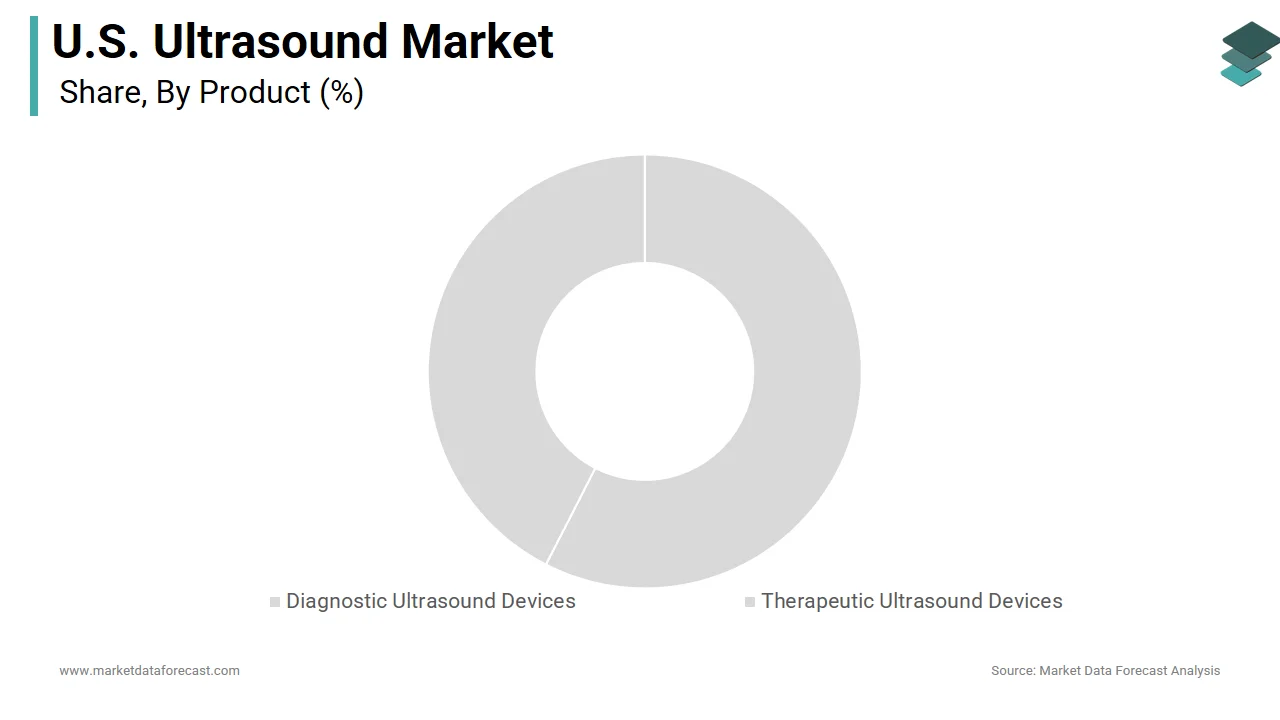
However, the therapeutic ultrasound devices segment is predicted to showcase a promising CAGR of 12.2% during the forecast period in the U.S. market, owing to the adoption of High Intensity Focused Ultrasound and Extracorporeal Shockwave Lithotripsy for non-invasive treatments. The increasing patient and provider preference for minimally invasive therapies significantly drives the exceptional growth of therapeutic ultrasound devices. According to the American Urological Association, extracorporeal shockwave lithotripsy is the standard of care for treating kidney stones, affecting approximately 11% of the U.S. population. As per industry data, the number of lithotripsy procedures has increased steadily due to the rising prevalence of obesity and dietary factors contributing to stone formation. High Intensity Focused Ultrasound offers a non-invasive alternative for treating uterine fibroids, prostate cancer, and essential tremor, avoiding the risks and recovery time associated with surgery. The Food and Drug Administration has approved several High Intensity Focused Ultrasound systems, expanding the range of treatable conditions.
By Portability Insights
The cart or trolley-based ultrasound systems segment captured the leading share of 58.4% of the U.S. market in 2025. These high-performance systems are primarily installed in radiology departments, cardiac labs, and obstetrics units. The superior image quality and comprehensive feature set of cart-based systems significantly sustain their market dominance in high acuity settings. According to the American College of Radiology, complex diagnostic procedures such as detailed fetal anomaly scans and advanced cardiac assessments require the high processing power and large monitors provided by cart systems. As per clinical standards, these systems offer advanced capabilities including spectral Doppler, three-dimensional reconstruction, and contrast-enhanced imaging, which are essential for accurate diagnosis. Hospitals and large imaging centers prioritize cart systems for their ability to handle high patient volumes with consistent performance. The Society of Diagnostic Medical Sonography notes that sonographers prefer cart-based units for ergonomic reasons and ease of access to controls during lengthy examinations.
On the other hand, the handheld ultrasound segment is predicted to grow at a CAGR of 17.7% in the U.S. market during the forecast period, owing to the proliferation of point-of-care testing and remote care models. The rapid adoption of handheld devices in emergency departments, intensive care units, and primary care settings significantly drives expansion in this segment. According to the Society of Academic Emergency Medicine, handheld ultrasound enables immediate bedside assessment for trauma, pneumothorax, and cardiac function, reducing time to diagnosis. As per industry data, the compact size and battery operation of handheld devices allow clinicians to carry them during rounds and respond quickly to patient needs. The American College of Emergency Physicians emphasizes that point-of-care ultrasound improves procedural safety for central line placements and lumbar punctures. Furthermore, the lower cost of handheld units compared to cart systems makes them accessible to smaller clinics and rural practices. The National Rural Health Association notes that portable ultrasound bridges the gap in diagnostic access for underserved communities.
By End Use Insights
The hospitals segment led the market by holding 68.6% of the U.S. market share in 2025. The growth of the hospitals segment is mainly attributed to the high volume of patients and the breadth of services offered by hospitals. According to the American Hospital Association, U.S. hospitals conduct millions of ultrasound examinations annually across emergency, radiology, obstetrics, and cardiology departments. As per the Centers for Medicare and Medicaid Services, hospitals are reimbursed for a wide range of diagnostic and therapeutic ultrasound procedures, ensuring steady revenue streams. The presence of specialized units such as neonatal intensive care and trauma centers necessitates a large fleet of both cart-based and portable ultrasound systems. The Society of Diagnostic Medical Sonography notes that hospitals employ the majority of registered sonographers, creating a centralized hub for expertise and equipment utilization.
On the other side, the imaging centres segment is projected to grow at a promising CAGR of 10.5% during the forecast period in the U.S. market, owing to the shift toward outpatient care and specialized diagnostics. The strategic shift toward outpatient care and the cost efficiency of independent imaging centers significantly drive expansion in this segment. According to the Ambulatory Surgery Center Association, more diagnostic procedures are moving out of hospitals to lower-cost settings. As per the Centers for Medicare and Medicaid Services, reimbursement policies encourage outpatient imaging to reduce overall healthcare spending. Imaging centers offer specialized ultrasound services with shorter wait times and personalized patient experiences, attracting self-referred and physician-referred patients. The American College of Radiology notes that freestanding imaging centers often invest in niche technologies such as musculoskeletal or vascular ultrasound to differentiate themselves. Furthermore, the lower overhead costs of imaging centers allow for competitive pricing and flexible scheduling.
COUNTRY ANALYSIS
US Ultrasound Market Analysis
The United States is projected to maintain a commanding position in the global ultrasound market over the next few years due to the convergence of advanced healthcare infrastructure, high healthcare expenditure, and a strong culture of diagnostic innovation. The sophisticated healthcare infrastructure and high rate of diagnostic utilization in the United States significantly propel its market dominance. According to the Centers for Medicare and Medicaid Services, the U.S. spends more on healthcare per capita than any other nation, enabling widespread access to advanced imaging technologies. As per the American College of Radiology, the density of imaging facilities, including hospitals and outpatient centers, is highest in the U.S., ensuring broad geographic coverage. The presence of leading ultrasound manufacturers and research institutions fosters a dynamic innovation ecosystem. The Food and Drug Administration maintains a rigorous yet efficient regulatory pathway that encourages the launch of new ultrasound technologies. According to the National Institute of Biomedical Imaging and Bioengineering, federal funding for biomedical research supports the development of novel ultrasound applications.
COMPETITIVE LANDSCAPE
The United States ultrasound market features intense competition among global medical technology corporations and specialized device manufacturers. Established players leverage extensive distribution networks, brand recognition, and clinical expertise to maintain leadership, while emerging companies differentiate through innovative handheld technologies and artificial intelligence integration. Competition centers on image quality and ease of use, with companies investing billions in research to develop advanced beamforming and automated measurement tools. Pricing strategies vary significantly, with premium brands emphasizing comprehensive feature sets and value-oriented competitors focusing on affordability and portability. The shift toward point-of-care diagnostics drives demand for compact and wireless devices, creating new competitive dynamics. Patent protection and intellectual property rights remain critical battlegrounds as firms seek to protect proprietary algorithms and transducer designs. Strategic collaborations with software developers and telehealth platforms accelerate product enhancement and market entry. Regulatory compliance and cybersecurity standards serve as key differentiators, ensuring patient safety and data privacy. This dynamic environment fosters continuous innovation, improving diagnostic capabilities while companies strive for sustainable growth and market relevance in a highly regulated sector.
KEY MARKET PLAYERS
Some of the companies that are playing a dominating role in the U.S. ultrasound market include
- Zimmer MedizinSysteme GmbH
- General Electric Healthcare
- Fujifilm Corporation
- Hitachi, Ltd.
- Mindray Medical International Limited.
- Samsung Healthcare
- Siemens Healthineers AG
- Koninklijke Philips N.V.
- Canon Inc.
- ESAOTE SPA
TOP PLAYERS IN THE MARKET
- GE HealthCare Technologies Inc maintains a prominent position in the United States ultrasound market through its comprehensive portfolio of diagnostic imaging systems. The company leverages advanced artificial intelligence and cloud connectivity to enhance image quality and workflow efficiency for clinicians. GE HealthCare recently strengthened its market position by launching the LOGIQ Elite series, which offers superior performance for general imaging and specialized applications. The company actively collaborates with healthcare providers to integrate ultrasound solutions into value-based care models. GE HealthCare also invests heavily in research and development to advance handheld and point-of-care devices. These initiatives reinforce its commitment to innovation while addressing diverse clinical needs across hospitals and ambulatory care centers in the U.S. healthcare system.
- Siemens Healthineers AG contributes significantly to the U.S. ultrasound market with its ACUSON platform, known for high-resolution imaging and versatile applications. The company utilizes proprietary technology such as Virtual Touch Imaging to provide detailed tissue characterization for better diagnostic confidence. Siemens Healthineers recently expanded its portfolio by introducing new cardiology and women's health-specific probes that enhance clinical capabilities. The company strengthens its position by partnering with academic institutions to validate clinical outcomes and support education. Furthermore, Siemens Healthineers focuses on digital health integration, allowing seamless data sharing and remote collaboration. These efforts demonstrate its dedication to improving patient care through precise diagnostics while maintaining a strong presence in both hospital and outpatient settings across the United States.
- Koninklijke Philips NV plays a pivotal role in the U.S. ultrasound market with its EPIQ and Affiniti systems designed for exceptional image clarity and ease of use. The company is renowned for its microPure technology, which enhances visualization of subtle structures in challenging patients. Philips recently announced significant investments in artificial intelligence-driven automation tools to streamline scanning processes and reduce operator dependency. The company actively pursues collaborations with telehealth providers to expand access to ultrasound services in remote areas. Philips also emphasizes sustainability in its manufacturing and supply chain operations. Through sustained innovation and strategic expansion, Philips reinforces its leadership in providing connected and intelligent ultrasound solutions that address critical diagnostic needs in the United States.
TOP STRATEGIES USED BY KEY MARKET PARTICIPANTS
Key players in the United States ultrasound market employ strategic approaches to maintain competitive advantages and drive growth. Companies prioritize technological innovation by integrating artificial intelligence and machine learning into imaging systems for enhanced diagnostic accuracy. Strategic partnerships with healthcare providers facilitate the adoption of point-of-care ultrasound in diverse clinical settings. Manufacturers invest heavily in research and development to create portable and handheld devices that expand access to imaging. Regulatory compliance and quality assurance initiatives ensure the safety and efficacy of new products. Digital transformation efforts focus on cloud connectivity and data analytics to improve workflow efficiency. Market participants also emphasize education and training programs to support sonographers and physicians. These coordinated strategies enable companies to navigate complex regulatory environments while delivering high-value imaging solutions to diverse healthcare sectors effectively.
MARKET SEGMENTATION
This research report on the U.S. ultrasound market has been segmented and sub-segmented into the following categories.
By Product
- Diagnostic Ultrasound Devices
- 2D
- 3D/4D
- Doppler
- Therapeutic Ultrasound Devices
- High-intensity Focused Ultrasound
- Extracorporeal Shockwave Lithotripsy
By Portability
- Handheld
- Compact
- Cart/Trolley
- Point-of-Care Cart/Trolley Based Ultrasound
- Higher-end Cart/Trolley Based Ultrasound
By Application
- Cardiology
- Obstetrics/Gynaecology
- Radiology
- Orthopaedic
- Anaesthesia
- Emergency Medicine
- Primary Care
- Critical Care
By End-use
- Hospitals
- Imaging Centres
- Research Centres
By Country
- New York
- Texas
- Florida
- Georgia
- California
- Rest of U.S.